This site is supported by our readers. We may earn a commission, at no cost to you, if you purchase through links.
 You’ll find nine woodpecker species thriving across Wyoming’s diverse landscapes.
From tiny Downy Woodpeckers at backyard feeders to specialized American Three-toed Woodpeckers in beetle-damaged forests, each species has carved out its perfect niche.
The Northern Flicker hunts ants on the ground, while Red-naped Sapsuckers drill neat rows of holes for tree sap.
Wyoming’s mix of coniferous forests, aspen groves, and open plains creates ideal habitats for these drumming dynamos.
Whether you’re exploring Yellowstone’s towering pines or your own backyard, these remarkable birds are busy excavating nest holes, hunting insects, and communicating through rhythmic tapping.
Simple strategies can transform your property into a woodpecker paradise by making a few changes to support these amazing birds.
Table Of Contents
- Key Takeaways
- Woodpecker Species in Wyoming
- Attracting Woodpeckers to Your Yard
- Wyoming’s Natural Beauty
- Appreciating Wyoming’s Woodpeckers
- In-Depth Information
- Birds Choice Cake Suet Feeder Taupe Brown
- Solar Bird Bath Fountain Pump
- Frequently Asked Questions (FAQs)
- Where do woodpeckers live?
- Where do Lewis’s woodpeckers live?
- Where do downy woodpeckers live?
- Where do black backed woodpeckers live?
- Where do three-toed woodpeckers live?
- Are woodpeckers good to have in your yard?
- How can you tell a sapsucker from a woodpecker?
- Why is a northern flicker not called a woodpecker?
- What does it mean when woodpeckers pecking at your house?
- What time of year do woodpeckers migrate?
- Conclusion
Key Takeaways
- You’ll find nine woodpecker species thriving in Wyoming’s diverse landscapes, from tiny Downy Woodpeckers at backyard feeders to specialized American Three-toed Woodpeckers in high-elevation beetle-damaged forests.
- You can transform your yard into a woodpecker paradise by offering suet feeders with high-fat content, leaving dead trees standing for nesting sites, and providing fresh water sources year-round.
- Wyoming’s vast 97,813 square miles with low population density creates perfect habitats for woodpeckers, from coniferous mountain forests to aspen groves and open plains where different species find their ideal niches.
- You’ll have the best woodpecker watching success during early morning hours when they’re most active, and you can identify species by their unique behaviors like Northern Flickers hunting ants on the ground or Red-naped Sapsuckers drilling neat sap wells.
Woodpecker Species in Wyoming
You’ll find nine woodpecker species calling Wyoming home, from the tiny Downy Woodpecker to the impressive Lewis’s Woodpecker with its colorful plumage.
These birds range from year-round residents like the Northern Flicker to seasonal visitors such as the Red-Headed Woodpecker, each with unique habits and preferred habitats across the state’s diverse landscapes.
American Three-Toed Woodpecker
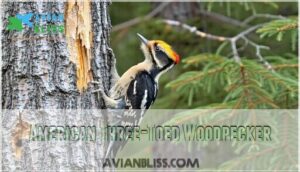
You’ll find American Three-toed Woodpeckers in Wyoming’s high-elevation spruce forests, typically above 2,700 meters.
These specialized climbers thrive where few birds dare—in Wyoming’s towering spruce wilderness above the clouds.
Their habitat preference centers on coniferous forests experiencing bark beetle outbreaks.
Diet specifics include beetle larvae extracted from tree bark using their three-toed adaptation.
Conservation status remains concerning due to limited woodpecker habitat availability.
Listen for their rattling calls during nesting habits in spring.
These Wyoming birds demonstrate remarkable woodpecker identification features through their distinctive foraging behavior in disturbed forest environments.
They often establish territories in areas exhibiting mixed-severity fire, which provides a mosaic of live and dead trees.
Black-Backed Woodpecker
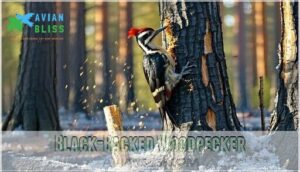
Among Wyoming’s fire-adapted species, you’ll spot the Black-backed Woodpecker thriving in post-fire habitat where other birds can’t survive.
This specialist has unique adaptations that make it perfectly suited for recently burned coniferous forests.
- Beetle larvae specialist – Feeds exclusively on wood-boring insects in charred trees
- Fire-following behavior – Arrives quickly after forest fires and beetle outbreaks
- Conservation status concerns – Requires careful forest management to maintain suitable habitat
Downy Woodpecker
You’ll spot Wyoming’s smallest woodpecker species at your suet feeders year-round.
Downy identification becomes easy once you notice their distinctive black and white spotted wings and tiny size—just seven inches long.
These backyard habitats favorites nest in dead tree cavities and demonstrate fascinating feeding habits by foraging on small branches that larger Wyoming woodpeckers can’t access.
Their nesting behavior includes both parents excavating holes, making bird identification simple when you see their gentle pecking style, and it’s a key part of their backyard habitats and feeding habits, which involve dead tree cavities.
Hairy Woodpecker
Looking beyond the downy’s petite frame, you’ll encounter Wyoming’s hairy woodpecker – a bird that’s all business in terms of serious tree work.
This black-and-white woodpecker species prefers habitat preferences that include mature forests and burned forests where dead timber provides prime real estate.
Physical traits help with woodpecker identification – they’re remarkably larger than downys with longer bills perfect for deep excavation.
Their nesting habits involve creating cavities in dead trees, while their insect diet keeps them busy hunting beetle larvae and ants throughout Wyoming woodpeckers’ diverse range.
- Excavates nest cavities in dead or dying trees
- Maintains steady drumming patterns for territorial communication
- Forages primarily on trunk bark for hidden insects
Lewis’s Woodpecker
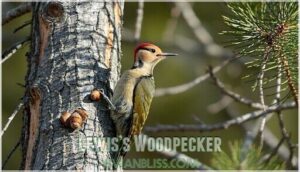
Lewis’s Woodpecker stands out among Wyoming woodpeckers with its pink belly and green back.
This unique woodpecker species prefers open ponderosa pine forests and burned areas for its habitat preference. You’ll notice its distinctive flight pattern resembles a crow’s lazy wingbeats.
Diet specifics include catching insects mid-air and storing acorns. Juvenile plumage appears brownish without the bright colors.
Conservation status remains concerning due to habitat loss throughout its Wyoming range, making protection efforts essential. The Montana Field Guide offers information about species identification for this and other birds.
Northern Flicker
You’ll spot Northern Flickers hopping across Wyoming’s lawns like feathered comedians.
These medium-sized Wyoming woodpeckers break the mold with their ground feeding habits, hunting ants instead of boring into bark.
Listen for their distinctive wicka-wicka calls echoing through neighborhoods.
Flicker subspecies create a fascinating puzzle – red-shafted birds dominate western areas while yellow-shafted varieties appear eastward, with flicker hybrids mixing their colorful traits where ranges overlap.
- Flicker behavior: They spend more time on ground than other woodpecker species
- Flicker diet: Ants make up 75% of their food intake during breeding season
- Bird watching tip: Look for their white rump patch during undulating flight patterns
- Subspecies identification: Males show either red or black mustache stripes depending on variety
Red-Headed Woodpecker
With its bright crimson head and bold black wings, the Red-headed Woodpecker stands out among Wyoming’s woodpeckers.
Red-headed ID becomes simple once you spot those distinctive white wing patches flashing during flight.
These remarkable birds showcase unique food storage habits, caching acorns and nuts in tree crevices for winter survival.
Their habitat preference leans toward open woodlands and oak savannas, though they’ve adapted to pine forests across Wyoming.
Unfortunately, their conservation status remains concerning due to habitat loss.
Nesting habits include excavating cavities in dead trees, making them excellent subjects for birdwatching in Wyoming.
The Redheaded Woodpecker truly represents Wyoming wildlife’s resilience and beauty.
Red-Naped Sapsucker
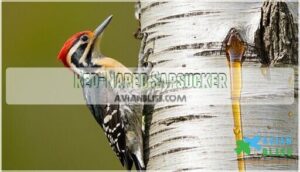
The Red-naped Sapsucker transforms Wyoming’s aspen forests into natural maple syrup operations.
This striking woodpecker species creates perfectly aligned sap wells, then returns to lap up the sweet treasure with its specialized brush-tipped tongue.
You’ll find these dedicated drillers in western Wyoming’s mountain forests during breeding season. Alarm calls warn of nearby predators.
- Sap Feeding: Uses unique tongue adaptations to harvest tree sap and trapped insects
- Habitat Preference: Prefers aspen, pine, and birch forests in mountainous regions
- Nesting Habits: Excavates cavities in dead or dying trees for raising young
- Identification Tips: Look for red cap, black-and-white striped face, and distinctive sap wells
Williamson’s Sapsucker
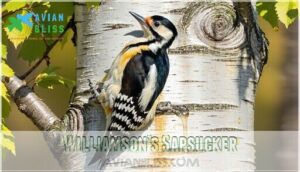
Among Wyoming’s woodpecker species, you’ll find Williamson’s Sapsucker in mature aspen forests during breeding season.
This identification guide reveals their distinctive sap-feeding habits and habitat preferences in western mountains.
| Feature | Details |
|---|---|
| Feeding Habits | Drills sap wells, licks tree sap |
| Habitat Preferences | Mature aspen forests, mountain regions |
| Breeding Behavior | Nests in old-growth woodpecker habitats |
| Conservation Status | Declining populations need protection |
Attracting Woodpeckers to Your Yard
You can transform your backyard into a woodpecker paradise by providing the right food, shelter, and nesting spots that these birds need year-round.
Simple changes like adding suet feeders, leaving dead trees standing, and planting native berry bushes will attract Wyoming’s nine woodpecker species to your property.
Offer Suet and Black Sunflower Seeds

You’ll attract Wyoming woodpeckers with the right food combination. High-fat suet and black oil sunflower seeds create an irresistible buffet for these birds.
To keep them coming back, consider using high quality suet.
- Suet Types: Offer plain, nut, or insect-filled varieties year-round
- Seed Variety: Choose black oil sunflower seeds over striped versions
- Feeder Placement: Position feeders near trees for natural perching
- Squirrel Deterrents: Use caged feeders to protect food supplies
- Refilling Frequency: Replace suet cakes weekly during peak seasons
Leave Dead Trees
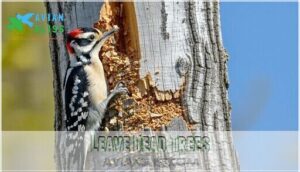
Dead trees aren’t eyesores—they’re woodpecker magnets.
These snags create perfect nesting sites while boosting insect abundance that draws hungry birds.
In Wyoming’s national forests and national parks, decomposition benefits the entire ecosystem by supporting forest health through natural recycling.
When you leave standing dead trees, you’re providing habitat creation that woodpeckers desperately need.
The decaying wood becomes a buffet of beetle larvae and carpenter ants.
Your yard transforms into a wildlife paradise, giving these incredible birds exactly what they’re searching for naturally.
Use Nest Boxes
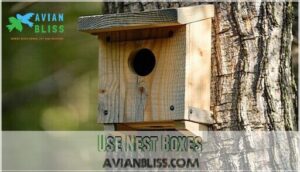
Beyond leaving standing timber, nest boxes offer another pathway to woodpecker nesting success in Wyoming.
These artificial bird habitats provide critical alternatives when natural cavities are scarce.
Box size matters substantially for different species, while entry hole diameter determines which woodpeckers can access your offering.
Material choice affects durability and insulation.
Strategic placement tips include mounting boxes 10-15 feet high with predator guards for bird conservation.
Many people purchase specialized woodpecker houses to attract these birds.
- Select appropriate box dimensions for target species
- Position entrance holes facing away from prevailing winds
- Install sturdy predator guards below mounting points
- Clean boxes annually to maintain healthy bird nesting conditions
Plant Native Fruit-bearing Plants
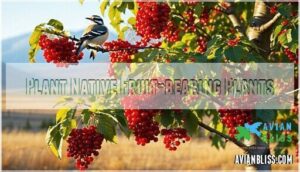
During fall migration, native fruit-bearing trees become magnets for hungry woodpeckers.
You’ll attract woodpeckers by planting chokecherry, serviceberry, and elderberry—these Wyoming natives offer seasonal fruits that supplement their insect diets.
Local nurseries stock these berry varieties that create essential bird habitats.
Plant serviceberry in sunny spots with well-draining soil, while chokecherry thrives in partial shade.
These trees support bird conservation by providing natural food sources year-round.
Your planting guide should include diverse species to guarantee continuous fruit production throughout different seasons, which is essential for native fruit-bearing trees and supports the overall woodpecker population.
Provide a Water Source
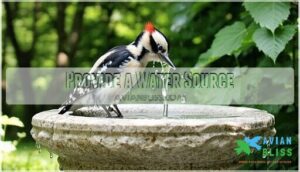
Water draws woodpeckers like magnets. Bird bath types range from simple bowls to solar fountains that keep water moving.
Water source placement matters—position your bath near trees but away from bird feeders to prevent contamination from suet and sunflower seeds. Maintaining cleanliness prevents disease spread among visiting birds.
Winter water sources become critical when natural options freeze. Alternative sources include dripping faucets or heated baths.
Many people buy woodpecker-friendly bird baths online. Clean water attracts more species than peanut butter feeders, enhancing your birdwatching experience year-round.
Wyoming’s Natural Beauty

You’ll discover that Wyoming’s vast landscapes create perfect homes for nine different woodpecker species across its 97,813 square miles.
The state’s mountains, forests, and grasslands provide the diverse habitats these birds need to thrive year-round.
Size and Population of Wyoming
Looking at Wyoming’s impressive statistics reveals why woodpeckers thrive here.
The Wyoming area spans 97,813 square miles with just 578,000 residents, creating incredibly low population density.
This sparse human presence means abundant habitat availability for Wyoming bird species.
- Woodpecker distribution benefits from minimal urban development across vast wilderness
- Conservation impact remains positive due to Wyoming’s commitment to preserving natural woodpecker populations
Geographic Features of Wyoming
Wyoming’s mountain ranges create distinct climate zones that shape forest distribution across the state.
The Rocky Mountains and Bighorn Range rise above 13,000 feet, while river systems like the Snake and Yellowstone carve through valleys below.
These elevation impacts determine where Wyoming forests thrive, from alpine spruce at treeline to cottonwoods along waterways.
This diverse terrain supports Wyoming’s rich avian diversity, making Wyoming birdwatching exceptional for spotting various Wyoming bird species.
Mountain bluebirds also thrive in Wyoming’s open terrains, and often perch on fenceposts.
Appreciating Wyoming’s Woodpeckers
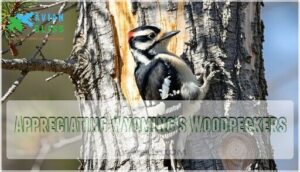
You can make a real difference in woodpecker conservation by appreciating these incredible birds in Wyoming’s wild spaces.
Early morning offers the best birdwatching opportunities when woodpeckers are most active.
- Rise at dawn to catch peak activity periods
- Bring binoculars for clear species identification
- Wear earth-toned clothing and move quietly
- Document nesting sites and feeding behaviors
Creating backyard habitats helps support local populations. Notice how woodpeckers play essential ecological roles by controlling insects and creating cavities for other wildlife.
Wyoming birdwatching reveals amazing woodpecker distribution patterns across different bird habitats in Wyoming, from pine forests to riparian areas, which is crucial for conservation and understanding their behavior in various wild spaces.
In-Depth Information

You’ll find detailed range maps that show exactly where each woodpecker species lives throughout Wyoming’s different regions and seasons.
These maps help you understand which birds you’re most likely to spot in your specific area, along with unique traits that make each species special.
Range Maps for Each Woodpecker Species
Range maps reveal where you’ll spot each woodpecker species across Wyoming’s diverse landscapes.
These detailed charts show breeding ranges, wintering areas, and migration patterns for all nine species.
You’ll notice habitat overlap between similar species like Downy and Hairy Woodpeckers, while others occupy distinct elevation limits.
Northern Flickers demonstrate the most extensive woodpecker distribution in Wyoming, from plains to mountains.
Understanding woodpecker range maps helps you predict which species visit your area seasonally, making identification easier during your backyard birdwatching adventures.
South Carolina, for example, hosts eight woodpecker species.
Unique Characteristics of Specific Woodpeckers
Beyond basic field marks, Wyoming’s woodpeckers showcase remarkable adaptations.
Downy ID becomes easier when you notice their corkscrew tongues extending two inches deep into bark crevices.
Flicker Subspecies display striking differences—red-shafted males sport crimson cheek patches while yellow-shafted variants show black mustaches.
Sapsucker Habits include drilling precise sap wells that other birds depend on.
Lewiss Coloration features that distinctive purplish-red belly contrasting with gray collars.
Red-headed Storage behavior involves caching live insects in bark crevices for winter survival—nature’s own pantry system.
Birds Choice Cake Suet Feeder Taupe Brown
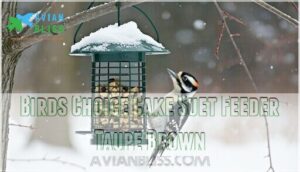
That sturdy Birds Choice suet feeder in taupe brown becomes your ticket to Wyoming’s woodpecker parade. The taupe color benefits include natural camouflage that doesn’t spook nervous birds, while the double-cake suet feeder design accommodates hungry Hairy and Downy Woodpeckers simultaneously.
You’ll appreciate how cake suet types like no-melt varieties prevent messy drips during Wyoming’s temperature swings. High-energy suet cakes are essential for birds in colder months.
Here’s your setup strategy for successful birdwatching:
- Position near dead trees – Feeder placement tips suggest 10-15 feet from natural foraging spots
- Stock high-fat suet cakes – Choose beef fat or peanut butter varieties for energy
- Clean monthly – Cleaning frequency prevents mold and keeps woodpeckers healthy
This weather-resistant poly-lumber construction survives Wyoming’s harsh winters while delivering front-row seats to fascinating bird behavior.
Solar Bird Bath Fountain Pump
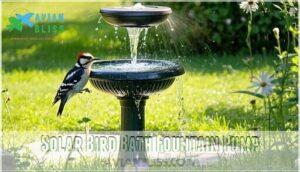
Adding a solar bird bath fountain pump transforms your Wyoming yard into a woodpecker magnet. The gentle sound of moving water attracts these fascinating birds while creating a peaceful atmosphere.
Solar pump types vary from simple fountains to multi-spray models that create different fountain spray patterns. Water depth impact affects pump performance, so maintain 2-3 inches for peak function.
- Clean solar panels weekly to maximize sunlight absorption and pump efficiency
- Check water levels daily since Wyoming’s dry climate increases evaporation rates
- Position pumps in areas receiving 6+ hours of direct sunlight for consistent operation
- Remove debris regularly to prevent clogging and maintain smooth water flow
Proper placement and sunlight exposure guarantee your fountain attracts Wyoming’s diverse woodpecker species year-round.
Frequently Asked Questions (FAQs)
Where do woodpeckers live?
You’ll find woodpeckers in forests, woodlands, parks, and your backyard.
They prefer areas with plenty of trees for nesting and feeding, from mountain pine forests to suburban neighborhoods with mature trees.
Where do Lewis’s woodpeckers live?
These absolutely stunning birds call Wyoming’s mountainous regions home, especially areas with old-growth forests and Ponderosa Pines.
You’ll spot them in elevated terrain where mature pine trees provide perfect nesting spots and abundant food sources, making these areas ideal for their survival.
Where do downy woodpeckers live?
You’ll spot downy woodpeckers in deciduous woods, suburban backyards, parks, and woodlots.
They’re comfortable around people and thrive in residential areas with mature trees, making them frequent visitors to your neighborhood feeders.
Where do black backed woodpeckers live?
Picture smoke-scarred forests where burned conifers reach skyward like blackened fingers.
You’ll discover black-backed woodpeckers throughout boreal forests from Alaska to Newfoundland, preferring recently burned areas where beetle larvae thrive beneath charred bark.
Where do three-toed woodpeckers live?
You’ll discover three-toed woodpeckers in Wyoming’s high-elevation coniferous forests, especially areas with spruce and fir trees.
They prefer burned or beetle-damaged forests where dead trees provide abundant insect prey beneath loose bark.
Are woodpeckers good to have in your yard?
Yes, you’ll definitely want woodpeckers in your yard! They’re natural pest controllers, eating thousands of harmful insects yearly. They’ll also entertain your family with their drumming and acrobatic feeding displays.
How can you tell a sapsucker from a woodpecker?
Sapsuckers are actually a type of woodpecker, not a separate bird family.
You’ll recognize them by their distinctive sap-drilling behavior and neat rows of holes they create in tree bark to feed.
Why is a northern flicker not called a woodpecker?
Like a square peg in a round hole, the Northern Flicker breaks woodpecker tradition.
You’ll find it’s actually classified as a woodpecker, but it spends most time ground-feeding on ants instead of drilling trees.
What does it mean when woodpeckers pecking at your house?
Woodpeckers peck at your house because they’re searching for insects, creating nest cavities, or defending territory.
They’re attracted to wood-boring bugs, soft wood, or resonant surfaces that amplify their drumming calls.
What time of year do woodpeckers migrate?
Like nomadic travelers following nature’s calendar, most woodpeckers don’t migrate at all.
However, Yellow-bellied Sapsuckers head south in fall, typically September through October, returning north during spring’s arrival in March and April.
Conclusion
Remarkably, woodpeckers can drum up to 20 times per second without brain damage thanks to specialized skull structures.
You’ve now discovered the fascinating world of woodpeckers in Wyoming, from the tiny Downy to the striking Lewis’s Woodpecker.
By offering suet feeders, preserving dead trees, and planting native berry bushes, you’ll create an inviting habitat these remarkable birds can’t resist.
Start implementing these proven strategies today, and you’ll soon enjoy front-row seats to Wyoming’s most entertaining avian performers year-round, with the woodpeckers being one of the most entertaining birds to watch.
- https://wgfd.wyo.gov/sites/default/files/content/PDF/Wildlife/Handbook-BioTechniques/19-NG_Birds_2013_revision.pdf
- https://scholarworks.umt.edu/cgi/viewcontent.cgi?article=1718&context=etd
- https://www.srs.fs.usda.gov/pubs/ja/ja_shakelford001.pdf
- https://www.fs.usda.gov/pnw/sciencef/scifi57.pdf
- https://www.uwyo.edu/wyndd/_files/docs/reports/WYNDDReports/U14POC02WYUS.pdf