This site is supported by our readers. We may earn a commission, at no cost to you, if you purchase through links.
 A cracked ceramic bird bath sitting in your garden isn’t just an eyesore—it’s a missed opportunity. These glazed beauties can transform your yard into a bird sanctuary while adding serious curb appeal, but they demand respect for their quirks.
Ceramic offers a sweet spot between artistry and function that plastic can’t match and concrete can’t replicate, yet extreme temperatures and careless handling can turn your investment into shards.
Understanding what ceramic bird baths deliver—and where they fall short—helps you decide if their charm outweighs their fragility for your specific garden conditions and maintenance style.
Table Of Contents
- Key Takeaways
- Ceramic Bird Bath Benefits
- Drawbacks of Ceramic Bird Baths
- Maintenance and Cleaning Considerations
- Cost, Value, and Longevity
- Choosing The Right Bird Bath Material
- Frequently Asked Questions (FAQs)
- What are the pros and cons of a bird bath?
- Why should you choose a concrete bird bath?
- Are plastic bird baths durable?
- Are bird baths a good idea?
- Can you bring a bird bath indoors?
- Do Bird baths attract birds?
- How often should ceramic bird baths be sealed?
- What basin depth is safest for small birds?
- Are handmade ceramic bird baths more fragile than manufactured?
- Conclusion
Key Takeaways
- Ceramic bird baths attract more birds than feeders alone (up to 65 species) because they provide water for birds that eat insects and nectar instead of seeds, especially when paired with textured surfaces for safe footing and strategic placement near natural cover.
- Temperature swings are ceramic’s biggest weakness—freeze-thaw cycles crack 22% of baths after one winter, and rapid heating or cooling creates internal stress that can destroy 85% of the material’s strength, making indoor winter storage essential in cold climates.
- While ceramic costs more upfront ($70-$200) than plastic, it lasts 8-12 years with proper care and retains 50-70% of its value if resold, working out to just $1.25-$1.50 per month—but only if you’re willing to clean it weekly and protect it from freezing.
- Algae thrives in ceramic’s porous surface (3-7% water absorption), establishing colonies in 5-7 days and supporting 10 times more microbial growth than smooth materials, so you’ll need to change water every 1-2 days in summer and use copper discs or UV sterilization to keep it safe for birds.
Ceramic Bird Bath Benefits
A ceramic bird bath can transform your garden into more than just a pretty space. It brings real benefits for both you and your feathered visitors.
Here’s what makes ceramic worth considering when you’re weighing your options.
Attracting Birds to Your Garden

Ceramic bird baths turn your garden into a genuine wildlife habitat. The presence of water draws in species you wouldn’t normally see at feeders—birds that thrive on insects and nectar rather than seeds.
Consider what makes your setup irresistible:
- Water depth matters: Two to three inches with a gentle slope lets birds wade safely while drinking
- Texture attracts cautious visitors: Rough ceramic surfaces give better footing than slippery glazed finishes
- Strategic garden layout works wonders: Position your bird bath near native plants and natural perches to encourage lingering
- Sound creates curiosity: Adding a simple dripper transforms static water into an audible invitation
Research shows backyards with water features can attract up to 65 bird species when paired thoughtfully with bird friendly plants and shelter. By incorporating a bird bath, you can create a balanced ecosystem that sustains local wildlife.
Enhancing Garden Aesthetics

Beyond attracting wildlife, your ceramic option can become a real showstopper in landscape design. Professional designers recommend ceramic bird baths as focal points—and for good reason.
These pieces elevate garden aesthetics through color schemes that coordinate beautifully with surrounding plants. Vibrant glazes boost visual appeal by reflecting light and creating garden symmetry. Decorative designs blend seamlessly into formal layouts, improving overall balance while doubling as outdoor decor that feels both artistic and functional.
When choosing a ceramic bird bath, consider the various ceramic bird options to find the perfect fit for your garden.
Supporting Bird Health and Hygiene
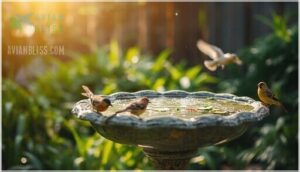
While beauty draws the eye, what happens beneath the surface matters more for bird health. Clean ceramic bird baths actively support disease prevention by reducing pathogen loads—regular cleaning can drop disease prevalence by over 30%.
Fresh water quality helps birds maintain feather care through effective bathing, which cuts visible parasites by up to 40%. When you change water every few days, you’re limiting algae growth and creating safer hygiene conditions that keep local populations thriving.
Durability Compared to Other Materials

You can expect moderate longevity from ceramic—properly glazed baths usually last 5–10 years, though stone or concrete models often stretch past 15 years with less fuss.
Weather resistance is solid in mild climates, but frost durability drops sharply once temperatures dip below freezing. Crack prevention matters here: ceramic withstands heat without warping, yet those freeze-thaw cycles increase your maintenance burden and shorten lifespan compared to metal or resin alternatives.
Drawbacks of Ceramic Bird Baths

Ceramic bird baths aren’t perfect, and it’s worth knowing the downsides before you buy one. They can be tricky in certain weather conditions, need careful handling, and require more upkeep than you might expect.
Here’s what to watch out for.
Vulnerability to Extreme Temperatures
Temperature fluctuations can make ceramic bird baths surprisingly fragile. When cold water hits a sun-heated basin—or freezing temps arrive overnight—the thermal stress builds fast. Here’s what you’re up against:
- Thermal expansion rates of 4.5–7.5 × 10⁻⁶ /°C create internal tension during rapid changes
- Surface temps can hit 40°C in summer sun, then drop sharply with rain or night air
- Freeze damage occurs when water expands 9% inside pores, exerting pressure up to 5 MPa
- Glaze durability weakens as crazing develops from repeated heating and cooling cycles
- Ceramic degradation accelerates with each freeze-thaw event, losing up to 85% strength after sudden drops
Extreme temperatures and weather resistance don’t mix well with standard ceramic—especially in climates with frequent freezing temperatures.
Risk of Cracking or Shattering
Cracking isn’t just a winter problem—ceramic bird baths face threats year-round. Around 22% of owners report cracks after the first winter, but thermal stress, material weakness, and accidental impacts add up fast. Here’s what drives the damage:
| Cause | Risk Factor |
|---|---|
| Freeze damage below 32°F | Water expands 9%, creating internal pressure |
| Accidental tipping or wind | 18% breakage rate from physical impact |
| Poor glaze quality | Factory seconds show 33% more hidden flaws |
You’ll see the worst cracking in unglazed areas—37% of winter damage hits those vulnerable spots. Pets, unsecured pedestals, and thin basins (under 1 cm) all reduce impact resistance.
Well-glazed ceramics from solid manufacturers stay intact for 10+ years in 74% of installations, but fragile edges and weather conditions still chip away at durability. If you’re in a climate with more than 10 freezing days annually, expect higher risk.
Porosity and Algae Build-Up
Porosity is the hidden weak spot that makes ceramic bird baths harder to keep clean than you’d think. Standard ceramics absorb 3–7% water through tiny pores, creating damp zones where algae latch on and multiply fast.
Porous surfaces support up to 10 times more microbial growth than smooth ones, and algae can establish colonies in just 5–7 days. Proper ceramic glaze drops water absorption below 1%, but cracked or unglazed spots let moisture seep through—accounting for 80% of algae problems.
Regular maintenance and high-fired designs boost microbial control and long-term durability.
Weight and Handling Challenges
Ceramic bird baths aren’t exactly featherweights—most range from 18 to 38 pounds, making relocation strategies a real consideration. You’ll likely need two people for safe Heavy Lifting, especially when winter rolls around and you’re moving them indoors.
Their weight offers stability against wind and bigger birds, but also makes Handling Tips critical: one wrong move on uneven ground and that fragile ceramic cracks.
Storage Solutions require indoor space and muscle, balancing durability with maintenance hassle.
Maintenance and Cleaning Considerations
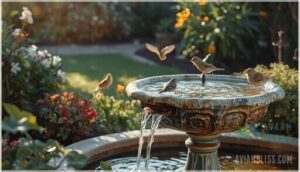
You can’t just fill a ceramic bird bath and forget about it. Regular upkeep keeps birds healthy and your bath looking good.
Here’s what you need to know about keeping things fresh and preventing problems.
Cleaning Frequency and Techniques
You’ll want to clean your ceramic bird bath at least once a week, though every two to three days works better during summer when algae loves to crash the party.
Use a soft brush with a simple mix of one part white vinegar to nine parts water for ceramic sanitizing.
Rinse twice after cleaning to remove all traces of cleaning solutions, and let it air dry before the next water change.
Preventing Algae and Bacteria Growth
Keep algae and bacteria at bay with a few smart moves. Fresh water every one to two days cuts bacterial presence by roughly 75%, while shading your bath slows algae’s sun-powered growth markedly.
Here are three simple algae control methods:
- Copper Inhibitors – Drop a copper disc or two pennies per gallon into the water to disrupt algae formation within 48 hours.
- UV Sterilization – Solar-powered UV units eliminate 99.9% of harmful bacteria and algae spores instantly.
- Enzyme Treatments – Add beneficial bacteria every two weeks to consume organic waste and outcompete algae naturally.
Water circulation also helps, disrupting growth cycles before blooms take hold.
Seasonal Care and Winter Storage
Once algae control is working, winter protection becomes your next focus. When temperatures drop below 32°F, ceramic bird baths face serious freeze damage—about 70% develop cracks within two seasons if left outside.
Bring yours indoors to a garage or shed for best results. If that’s not possible, flip it upside down in a sheltered spot or wrap it in burlap after drying completely.
Proper winterizing extends your bath’s life by roughly 45% compared to year-round outdoor exposure.
Water Change Recommendations
Beyond winterizing, water quality demands regular attention. Change your bird bath water at least twice weekly in spring and fall to stop bacteria from building up. Summer heat is different—you’ll want daily or every-other-day swaps since algae blooms fast and mosquitoes breed within 48 hours of standing water.
- Shaded baths need less frequent changes than those baking in full sun
- High bird traffic means water dirties faster, so monitor usage patterns
- Cloudy or discolored water signals immediate replacement, regardless of your schedule
Cost, Value, and Longevity
Buying a ceramic bird bath isn’t a small decision when you’re thinking about what you’ll actually get for your money. The upfront cost matters, but so does how long it’ll hold up in your backyard and whether it’s worth more than cheaper alternatives.
Here’s what affects the price tag and lifespan of ceramic bird baths.
Price Range and Investment Value
Ceramic bird baths occupy a mid-range price bracket, typically costing between $37 and $215. Tabletop styles are available for around $35 to $70, while pedestal designs average $120 to $180. Although these prices are 35–60% higher than concrete options, the investment is justified by their 8–12 year lifespan.
Glazed finishes enhance both durability and value retention. Well-maintained ceramic bird baths can retain 50–70% of their purchase price if resold within two years. Over a decade, ceramic models prove cost-effective, with monthly ownership costs ranging from $1.25 to $1.50. This makes them a surprisingly budget-friendly long-term investment when the numbers are broken down.
| Price Tier | Style Type | Typical Range |
|---|---|---|
| Budget-Friendly | Tabletop/Compact | $35–$70 |
| Mid-Range | Standard Pedestal | $120–$180 |
| Premium | Decorative/Large | $150–$215 |
| Maintenance | Annual Upkeep | $15–$25 |
| Replacement | Basin Only | $25–$60 |
Lifespan Under Different Conditions
Your bird bath’s lifespan hinges on where you live and how you care for it. High-fired glazed ceramic models last 8–10 years in moderate climates, but drop to just 3–5 years in areas with harsh frosts. Temperature fluctuations and environmental factors play a huge role in material durability and weather resistance.
Factors That Impact Ceramic Bird Baths:
- Climate Effects – Freezing temps below -5°C increase cracking risk by 40–60%, while daily swings over 20°C boost microfracture rates by 33%
- Seasonal Maintenance – Bringing your bath indoors during winter extends lifespan by 60%; neglecting this leads to 70% breakage odds
- Weather Conditions – High rainfall areas see 3–5 year lifespans versus 7–10 in dry zones; humidity above 70% increases moss growth by 25%
- Urban vs. Rural – Urban pollutants cut lifespan by 15%, but easier maintenance access adds 1–2 years back
- Proper Placement – Avoiding direct sunlight and hazards boosts longevity by 25%; six-plus hours of sun daily accelerates glaze fading by 20%
Cost Comparison With Other Materials
When you stack up material costs, plastic wins at $10–$55, making it the go-to budget option. Ceramic sits mid-range at $70–$200, while concrete hovers around $50–$150 and metal climbs to $60–$200+.
But here’s the tradeoff: cheaper plastic sacrifices durability for savings, whereas ceramic and metal offer better value analysis through longer lifespan and weather resistance.
Factors Affecting Longevity
Quality makes or breaks how long your ceramic bird bath will last. Glaze quality and firing temperature above 1,200°C boost durability by up to 40%, helping resist freeze damage. Dense glazing and thermal resistance handle weather conditions better, stretching service life to 10–15 years when cared for properly.
Material composition with kaolin-rich clay adds strength, while climate exposure—especially freeze-thaw cycles—can cut lifespan in half.
Regular maintenance keeps algae from causing surface erosion.
Choosing The Right Bird Bath Material

Picking the right material for your bird bath isn’t just about looks—it affects how often you’ll clean it, whether it’ll survive your winters, and which birds will actually use it. Ceramic has its strengths, but concrete, plastic, and metal each bring something different to the table. Let’s compare them so you can choose what works best for your garden and the birds you want to attract.
Ceramic Vs. Concrete, Plastic, and Metal
When you’re deciding between materials, you’ll find each has tradeoffs worth weighing. Concrete bird baths offer excellent weather resistance and can last over 20 years when sealed, but they’re heavy—40 to 80 pounds—and require more scrubbing since porous surfaces boost algae buildup by 25 to 35 percent.
Ceramic bird baths balance durability with aesthetic appeal, lasting 8 to 15 years in mild climates while staying easier to clean. Plastic costs less but degrades under UV exposure within 3 to 5 years. Metal options resist rust for 15-plus years but heat up fast in summer.
Aesthetic and Functional Differences
Your bird bath isn’t just functional—it’s garden jewelry. Ceramic bird baths lead design options with vibrant glazes that boost bird visits by 25 percent compared to plain stone. Consider these aesthetic and functional wins:
- Color options span from bold blues to earth tones, with medium-tone glazes increasing bird interaction by 27 percent
- Material texture in hand-painted ceramics delivers 32 percent higher satisfaction for garden integration
- Bird preferences lean toward textured surfaces, raising visits by 18 percent over slippery smooth designs
Wide, shallow bowls improve safety while enhancing aesthetic appeal in any landscape.
Suitability for Local Climate
Your local climate makes or breaks ceramic durability. Temperate zones with mild winters let ceramic bird baths shine for 7–12 years, but harsh freeze-thaw cycles slash that to just 3–6 years. If you face over 20 annual freezes, concrete or heavy-duty plastic outlasts ceramic by 50 percent.
Desert heat demands deeper basins and shade, while coastal salt air gradually erodes glazes—though slower than metal corrosion.
Safety and Bird Preferences
Birds won’t use a bath that feels unsafe, and ceramic design matters. Smooth glazes turn slippery—over 80 percent of experts say textured surfaces or added rocks prevent falls. Keep water 1–2 inches deep so smaller bird species don’t struggle, and place your bath at least 5 feet from dense shrubs to reduce predator ambush risks.
Lead-free glazing protects bird health and safety, while daily water swaps cut disease transmission by 60 percent through better avian hygiene practices.
Frequently Asked Questions (FAQs)
What are the pros and cons of a bird bath?
A welcoming water feature isn’t just decoration—it’s a lifeline for feathered visitors. The benefits include attracting diverse bird species, supporting their health through bathing, and beautifying your garden.
However, drawbacks like maintenance demands, algae growth, and weather vulnerability require regular attention and care.
Why should you choose a concrete bird bath?
Concrete offers exceptional durability, often lasting 30 to 40 years with proper care. Its substantial weight resists wind and tipping, while the textured surface mimics natural water sources that birds love.
You’ll find it easier to maintain than ceramic alternatives.
Are plastic bird baths durable?
Plastic bird baths usually hold up for three to five years outdoors. UV exposure causes yellowing and cracking, while freezing temperatures make them brittle. Look for UV-stabilized options to extend their life to around ten years.
Are bird baths a good idea?
Yes, bird baths are a good idea. They support bird health by providing clean water for drinking and bathing, which helps with hygiene and parasite control.
Plus, they attract diverse wildlife to your garden and boost its visual appeal.
Can you bring a bird bath indoors?
You can absolutely bring a ceramic bird bath indoors, though it becomes more of a decorative water feature than a functional bathing spot for wild birds.
Indoor placement increases humidity through evaporation, which can help dry winter air but may encourage mold growth if your space lacks ventilation.
Do Bird baths attract birds?
Bird baths absolutely work. They draw birds in by offering fresh water for drinking and bathing—two essentials that boost bird behavior and species diversity.
Bath placement near cover, plus good water quality, makes your yard irresistible. Strategic attraction starts with understanding what birds need.
How often should ceramic bird baths be sealed?
Like a shield that needs reinforcing before the next storm, ceramic bird baths require sealing every one to two years for maximum durability.
If you’re in a colder climate with freeze-thaw cycles, annual sealing cuts cracking risk and boosts water absorption resistance—keeping your bath looking sharp and functioning longer.
What basin depth is safest for small birds?
Keep your ceramic bird bath shallow—about 1 to 2 inches deep. Small birds can’t handle deeper water safely.
Sloped edges help them wade in gradually, and textured surfaces give them solid footing while they bathe and drink.
Are handmade ceramic bird baths more fragile than manufactured?
Handmade ceramic bird baths often crack easier than factory versions. Firing techniques and material composition matter more than you’d think.
Manufacturers use higher temperatures and quality control, creating denser, less fragile ceramics with better glaze quality and thermal shock resistance.
Conclusion
Last winter, a neighbor watched her prized hand-painted ceramic bird bath crack down the middle after one brutal freeze—she’d skipped bringing it inside. That’s the trade-off in brief.
Ceramic bird bath pros and cons boil down to this: you get stunning looks and bird-friendly features, but you’re signing up for careful handling and seasonal vigilance.
If you’re willing to treat it like garden art rather than an install-and-forget fixture, ceramic rewards you with years of beauty and busy wings.
- https://www.outdoorartpros.com/blogs/news/what-are-the-best-materials-for-a-durable-bird-bath
- https://joyofbirdwatching.com/choosing-the-best-bird-bath/
- https://santafe.wbu.com/water-for-birds-and-birdbaths
- https://www.outdoorescape.com.au/blogs/news/the-ultimate-bird-bath-guide-do-not-buy-the-bird-bath-until-you-read-this
- https://thecrownedgoat.com/clean-ceramic-glazed-birdbath/