This site is supported by our readers. We may earn a commission, at no cost to you, if you purchase through links.
 A parakeet in your living room isn’t just colorful company—it’s a twenty-year commitment that hinges on decisions you make in the first few weeks. Many new bird owners discover too late that their quiet apartment conflicts with a cockatiel’s dawn serenades, or that their work schedule leaves a social parrot spending lonely hours in a cage.
The gap between expectation and reality often stems from underestimating how different avian needs are from cats or dogs. Birds demand specialized nutrition, daily socialization, and environmental conditions that protect their delicate respiratory systems.
When you match the right species to your home environment and understand their care requirements from day one, you create a foundation for a relationship that enriches both your lives. The choices you make about housing, diet, and veterinary care will determine whether your bird thrives or merely survives.
Table Of Contents
- Key Takeaways
- Choosing The Right Pet Bird
- Preparing Your Home for a Bird
- Selecting The Ideal Bird Cage
- Essential Bird Cage Accessories
- Providing a Nutritious Bird Diet
- Maintaining Bird Health and Hygiene
- Finding and Choosing an Avian Veterinarian
- Socializing and Bonding With Your Bird
- Encouraging Exercise and Mental Stimulation
- Budgeting and Long-Term Bird Care
- Frequently Asked Questions (FAQs)
- Conclusion
Key Takeaways
- Choosing the right bird species demands an honest assessment of your daily schedule and living situation—parrots need three to five hours of interaction while canaries thrive with minimal handling, and mismatches between bird personality and owner availability drive most rehoming decisions.
- Your bird’s physical environment directly determines their health outcomes, requiring species-appropriate cage dimensions (at least twice wingspan), strategic placement away from kitchen fumes and drafts, and daily access to flight time that studies show reduces stress hormones by 40% and prevents muscle atrophy.
- Preventive veterinary care saves lives because birds instinctively mask illness until 60% of diseases reach late stages—annual checkups with an avian specialist enable early detection up to 40% sooner and increase treatment success rates by 30%.
- Long-term financial planning matters as much as daily care since lifetime costs can reach $50,000 for large parrots, and aging birds past 20 years require 30-50% higher annual budgets for geriatric care, specialized nutrition, and mobility adaptations.
Choosing The Right Pet Bird
Picking the right bird for your home isn’t just about finding the prettiest feathers—it’s about understanding what each species truly needs to thrive. You’ll want to think through size, noise level, lifespan, and how much daily attention your new companion will require.
Let’s walk through the key factors that’ll help you find a bird that fits seamlessly into your life.
Bird Species for Beginners
Choosing a pet bird means finding the right match for your home and heart. Beginner species offer manageable care needs while still providing the joy of avian companionship. Here are five top choices:
- Budgerigars (budgies) – These sociable parrots thrive on interaction and are incredibly forgiving as you learn bird behavior and bird socialization basics.
- Cockatiels – Affectionate and expressive, they’re perfect for families seeking a responsive pet bird without overwhelming demands.
- Canaries – Low-maintenance singers ideal when choosing a pet bird with minimal hands-on requirements.
- Parrotlets – Small but intelligent, they fit apartment living while keeping pet bird costs reasonable.
- Zebra finches – Social and gentle, best kept in pairs to support natural avian nutrition and behavioral needs.
Each beginner species brings unique rewards to bird species selection. When selecting a pet bird, it’s vital to research their specific bird care needs to guarantee a happy and healthy relationship.
Size, Noise, and Lifespan Considerations
Once you’ve settled on a beginner species, you’ll need to weigh bird size factors, noise pollution, and lifespan commitment carefully. These species selection criteria directly shape your environmental impact and daily routine.
Here’s a quick comparison:
| Species | Size | Noise Level | Lifespan | Cage Size |
|---|---|---|---|---|
| Budgies | 6-8 inches | 65-70 dB | 5-10 years | 18x18x18 inches |
| Cockatiels | 12 inches | 65-70 dB | 15-20 years | 24x24x24 inches |
| Conures | 9-16 inches | 120 dB | 20-30 years | 36x24x24 inches |
| Macaws | 33 inches | 102-135 dB | 50-100 years | 48x36x60 inches |
| African Greys | 12 inches | 70-90 dB | 40-60 years | 36x24x36 inches |
Larger bird species mean louder calls, longer commitments, and bigger housing needs—all factors that affect bird health and safety long-term. Understanding the bird lifespan factors is essential for making informed decisions about pet bird care.
Matching Birds to Your Lifestyle
Beyond the measurements and decibel levels, bird personality and owner traits determine whether pet compatibility will thrive or fail. Lifestyle assessment reveals that parrots need three to five hours of daily engagement, while canaries suit owners with under one hour available.
Bird species differ dramatically in social needs—isolation exceeding six hours increases stereotypic behaviors by 50 percent in parrots.
Avian matching works best when you honestly evaluate your work schedule, energy level, and household structure before choosing the right pet bird.
Birds for Families and Kids
If you have kids at home, choosing pet birds for kids requires attention to safety and temperament. Budgerigars and cockatiels lead as kid-friendly birds because they display low aggression and minimal bite force—critical bird safety tips for preventing injury. Experts recommend children reach age twelve before independent ownership, since prey birds startle easily around sudden noise.
Here are three family bird care priorities when introducing child-bird interaction:
- Supervision matters most—even gentle species can bite when frightened, and proper oversight prevents most incidents while teaching responsible pet bird handling
- Daily routines build responsibility—feeding and cleaning tasks averaging twenty-five minutes daily strengthen empathy and patience through consistent avian family benefits
- Shared time strengthens bonds—families with birds report over seven hours weekly of joint activity, improving household connection through bird socialization and care
Parent co-ownership ensures feeding schedules and vet visits stay consistent, reducing neglect risk while children learn lifelong bird care skills.
Preparing Your Home for a Bird

Before your bird arrives, you’ll need to create a safe environment that fosters their health and well-being. This means identifying and eliminating hazards that could harm your feathered companion.
Let’s walk through the essential steps to bird-proof your home, remove toxic elements, and maintain proper environmental conditions.
Bird-Proofing Your Space
Think of bird-proofing your home as creating toxic-free zones where airborne hazards can’t reach your feathered friend. Nonstick cookware releases fumes above 400°F that kill birds within minutes, so remove PTFE-coated pans from your kitchen.
Apply window decals spaced 5 centimeters apart to prevent glass collisions—reflective surfaces cause over 1 billion bird deaths annually. Cover electrical cords to reduce electrocution risk by 85%, and keep ceiling fans off when your bird’s out.
Chemical controls matter too: skip aerosol sprays and scented candles near cages, since 60% of avian household poisonings involve aerosolized compounds that overwhelm their delicate respiratory systems.
Removing Toxic Plants and Hazards
Around 73% of households with pets keep poisonous plants indoors, including philodendron and peace lily—both toxic to birds. You’ll need to remove avocado, oleander, and dieffenbachia from accessible areas since they cause cardiac failure and neurological symptoms.
Household hazards for birds extend beyond toxic plant removal: relocate aerosols, cleaners, and lead-containing items to bird-safe zones.
Emergency response improves 96% with prompt veterinary care, so keep activated charcoal and your avian vet’s number nearby for birdproofing your home effectively.
Managing Temperature and Lighting
Most pet birds maintain thermal comfort between 68°F and 77°F with stable humidity around 55% to support feather health and respiratory function. Effective temperature control and humidity management create a birdsafe environment that protects avian health from cold stress and heat exhaustion.
You’ll need lighting systems providing 10–12 hours of full-spectrum UVA/UVB exposure daily for proper temperature regulation and hormone cycles—place UVB bulbs 6–12 inches above perches, replacing them every six months.
Selecting The Ideal Bird Cage
Your bird’s cage isn’t just a place to sleep—it’s their home, gym, and safe haven all rolled into one. Choosing the right enclosure means thinking about size, design, and placement in your space.
Let’s walk through the essentials so you can set up a cage that keeps your feathered friend healthy and happy.
Cage Size and Bar Spacing
Your bird’s cage dimensions and bar spacing aren’t just about comfort—they’re critical for bird welfare and enclosure safety. Aim for cage sizes at least twice your bird’s wingspan in width and depth, allowing genuine flight space between perches.
Bar spacing matters too: finches need 1/4″–1/2″ gaps, while larger parrots require 3/4″–1.5″ spacing to prevent injury and guarantee your birdsafe cage setup promotes natural movement.
Flight Cages Vs. Standard Cages
Choosing between flight cages and standard cages directly affects your bird’s physical health and mental well-being. Research shows flight cages—usually measuring three to four times your bird’s wingspan in length—reduce stress hormones by over 40% and boost daily activity by nearly 30% compared to standard setups. Here’s what you need to know about flight cage benefits:
- Enhanced Exercise: Birds display 2.6 times more wing-flapping and achieve better cardiovascular fitness in flight-style bird housing options
- Lower Stress Levels: Larger bird enclosure designs decrease chronic stress markers and aggressive behaviors by approximately 30%
- Improved Cognition: Flight cage setups increase interaction with toys and foraging devices by 40%, supporting brain health
- Better Physical Health: Studies document reduced blood lactate and improved muscle tone in birds with regular flight opportunities
Standard cages work for smaller species or temporary housing, but flight cages offer excellent avian welfare outcomes.
Cage Placement in The Home
Where you put your bird’s cage shapes their daily health more than you might expect. Position the cage in a warm, draft-free room away from kitchens—fumes from non-stick pans can be fatal, and 16% of birds housed near cooking areas face documented respiratory risks.
Secure cage placement against two walls at chest height provides cage security while preventing stress from looming threats. Maintain proper ventilation systems and air quality by avoiding high-traffic zones, and provide 10–12 hours of quiet darkness for noise reduction and restorative sleep.
Essential Bird Cage Accessories

Once you’ve chosen the perfect cage, it’s time to transform it into a comfortable home your bird will thrive in. The right accessories aren’t just decorative—they support your bird’s physical health, mental well-being, and natural behaviors.
Let’s look at the essentials every bird cage needs.
Perches and Ladders
Your bird’s feet depend on the right perch materials and ladder designs to stay healthy. Natural wood perches mimic what they’d find in the wild and help prevent pressure sores, while varied diameters—allowing toes to grip three-quarters of the way around—support proper foot health.
Ladders encourage bird climbing and boost cage layout usage by up to 26%. Place perches at multiple levels in your bird cage setup, keeping the highest one sturdy for roosting, and never position bird accessories directly above food or water dishes.
Food and Water Bowls
Stainless steel bowls offer the safest choice for water quality and hygiene practices—they resist bacterial growth far better than plastic options. You’ll want at least two bowls per bird: one for food, one for fresh water.
Position them at opposite ends of the cage, away from perches, to prevent droppings from contaminating your bird’s diet and nutrition.
Replace water daily and wash bowls with hot, soapy water to support healthy feeding techniques and maintain proper bowl placement.
Toys and Foraging Activities
Beyond clean bowls, your bird needs foraging toys and bird enrichment activities to thrive mentally and physically. These bird toys mimic natural behaviors wild birds spend 60–70% of their day performing.
Foraging toys like puzzle feeders and treat-dispensing balls provide cognitive stimulation and can reduce feather plucking by up to 60%. Keep two to three toys in the cage at once, rotating from a stash of eight to twelve weekly. Toy rotation prevents boredom and keeps your bird curious and engaged.
Providing a Nutritious Bird Diet

Your bird’s diet is the foundation of their health, affecting everything from feather quality to immune function. Getting nutrition right means understanding the balance between pellets, seeds, fresh foods, and supplements. Let’s look at the key components that’ll keep your feathered friend thriving.
Pellets Vs. Seeds
Your bird’s nutritional foundation depends on getting the balance right between pelleted diet and seeds. Pellets deliver consistent nutrient balance—especially vitamins A and D3, plus calcium—while seed-heavy avian diets often lead to deficiencies and obesity.
Most avian veterinarians recommend 60–70% pellets as the cornerstone of bird nutrition, with seeds serving as occasional treats rather than staples. This approach to bird feeding and nutrition fosters healthier plumage, stronger immunity, and better long-term outcomes than seed alternatives alone.
Safe Fruits and Vegetables
Colorful plates aren’t just for show—fresh fruit and fresh veggies offer essential nutrition and hydration in your bird diet. Mangoes, papayas, and berries make healthy treats, but keep Fruit Nutrition under 10% of daily intake.
Prioritize Vegetable Safety: raw carrots, leafy greens, and snap peas are birdsafe, while avocado and onion are toxic plants best avoided.
Vitamin and Mineral Supplements
Many pellet-based diets already contain balanced micronutrients, so you won’t need extra vitamin and mineral supplements unless your avian veterinarian recommends them.
However, seed-heavy diets often create vitamin deficits—over 95% of pet birds consume insufficient vitamin D3 and calcium. Routine dietary enrichment with quality supplements prevents mineral imbalance and promotes avian nutrition.
Just remember: supplement safety matters, since excessive vitamin A can harm liver and bone health in your bird.
Maintaining Bird Health and Hygiene
Keeping your bird healthy means staying on top of cleanliness and watching for early warning signs. A clean environment prevents disease, while regular grooming keeps your bird comfortable and looking its best.
Let’s walk through the essential hygiene practices and health checks every bird owner should know.
Cleaning Cages and Accessories
Your bird’s cage is their sanctuary—keeping it clean protects them from preventable illness. Daily waste removal and weekly deep cleaning reduce bacterial pathogens like Salmonella by over 90%, giving your feathered friend the healthy home they deserve.
- Remove droppings and food debris daily to stop bacteria from multiplying in those hidden corners
- Deep clean weekly using bird-safe disinfectants like diluted white vinegar, scrubbing bars and accessories thoroughly
- Replace porous perches every 6–12 months since wood and rope harbor pathogens you can’t wash away
Bathing and Grooming Practices
Think of bathing as your bird’s spa day—regular sessions keep feathers glossy and skin comfortable. Offer a shallow dish or gentle mist three to four times weekly using plain water at 27–32°C. Morning baths allow proper drying time.
For grooming, trim nails every 4–6 weeks and use natural perches to manage beak growth naturally. Wing clipping requires symmetrical technique to preserve safe gliding ability.
Recognizing Signs of Illness
Your bird’s body language speaks volumes—learning to read it can save their life. Persistent fluffed-up feathers signal illness in 70% of sick birds, while reduced appetite appears in 53% of diagnosed cases. Abnormal droppings (present in 67% of gastrointestinal diseases), labored breathing (55% of respiratory infections), and lethargy (69% of acute illness) are also critical indicators.
Behavioral alerts like sitting at the cage bottom or sudden silence often precede serious health problems. Trust your instincts when something feels off.
Finding and Choosing an Avian Veterinarian
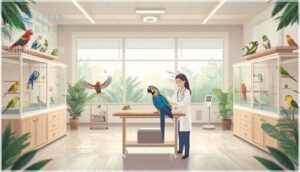
Finding the right avian veterinarian is one of the most important decisions you’ll make as a bird owner. Not all vets have specialized training in avian medicine, so you’ll need to locate a qualified professional who understands your bird’s unique anatomy and health needs.
Let’s explore the key steps to guarantee your feathered companion receives expert medical care throughout their life.
Importance of Annual Checkups
Your bird’s annual checkup isn’t just routine—it’s lifesaving. Birds mask illness instinctively, so by the time symptoms show, 60% of diseases are already at a late stage. Regular veterinary visits enable early intervention and disease detection up to 40% sooner than waiting for visible signs.
Birds hide illness instinctively—by the time symptoms appear, 60% of diseases are already advanced, making annual checkups lifesaving
Annual vet visits for birds include physical exams, weight monitoring, fecal testing, and bloodwork that uncover hidden problems in 15% of apparently healthy birds.
This preventive care approach to bird health and safety increases treatment success rates by 30% and extends lifespan by 18%, making your avian vet an essential partner in bird health care.
Isolating New Birds for Health
Before introducing a new bird to your flock, isolate it in a separate room for 30 to 60 days. This quarantine window catches diseases like PBFD and Avian Bornavirus before they spread.
During isolation, your avian vet will perform disease testing through PCR swabs and fecal analysis, while you monitor daily for respiratory distress or abnormal droppings.
Strict biosecurity measures—separate feeding tools, handwashing between birds, and filtered ventilation—protect your resident birds from airborne pathogens that can travel several meters.
Emergency Bird Care
Beyond routine isolation, you need a bird emergency plan ready before crisis strikes. Stock an Avian First Aid kit with seven days of food, water, sterile saline, and heat support equipment—delays beyond 30 minutes drop survival rates by 45%.
Respiratory distress causes 35% of avian emergencies, so oxygen therapy and a calm, darkened recovery space can improve outcomes by 40%.
Keep your avian vet’s contact information visible, practice evacuation drills twice yearly, and learn to recognize trauma, toxicity exposure, and breathing difficulties immediately.
Socializing and Bonding With Your Bird
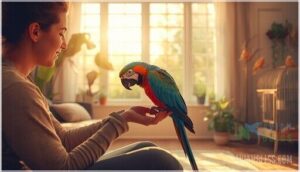
Building a strong bond with your bird takes patience, consistency, and understanding of avian behavior. The key is creating positive experiences that help your bird feel safe and valued in your home.
Let’s explore practical techniques you can use every day to strengthen this connection.
Daily Interaction Techniques
Your bird needs routine social contact to thrive emotionally—ideally, two sessions daily of 30 to 60 minutes helps prevent stress-related issues like feather plucking. Start each morning with gentle greetings to establish predictable patterns that reduce anxiety.
During playtime activities, include vocal training by talking, singing, or whistling together, which strengthens social bonding and encourages mimicry. Light misting during these interactions promotes respiratory health while reinforcing positive associations.
This daily interaction combined with behavioral enrichment creates the emotional support companion birds naturally seek.
Training With Positive Reinforcement
Reward-based methods accelerate learning and deepen your bond. Clicker training works especially well—pair an audible click with an immediate treat, and your bird will connect the sound to the desired action within seconds.
Studies show birds trained this way learn 65% faster and retain behaviors with over 80% proficiency even after weeks of inactivity.
Keep sessions brief—two to three minutes prevents overstimulation while maximizing retention. Focus on reinforcement timing: deliver rewards within one second of the click for best results.
Reducing Stress and Aggression
Tension often stems from environmental disruption or poor socialization. Frequent human interaction—at least 30 minutes daily—reduces aggression by 38% within six weeks. Environmental enrichment, like climbing structures and foraging toys, lowers chronic stress behaviors by 33%.
Try calming techniques such as relocating your bird’s cage to quieter areas, which drops stress indicators by 18% in one week.
Watch for signs of stress: feather damage, pacing, or excessive vocalization. Recognizing bird stress early helps you adjust behavioral therapy and aggression management strategies before problems escalate.
Encouraging Exercise and Mental Stimulation
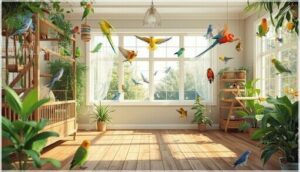
Just like people, birds need both physical activity and mental challenges to stay happy and healthy. Without proper stimulation, your feathered friend can develop behavioral problems or fall into depression.
Here are three proven ways to keep your bird engaged and thriving.
Out-of-Cage Flight Time
Your bird’s wings aren’t just for looks—they’re built for flight, and daily cage-free time is essential for both physical and mental health. Supervised flight sessions allow your bird to stretch, strengthen muscles, and burn energy while reducing stress-related behaviors like feather plucking. Aim for these daily guidelines:
- Cockatiels need 2–3 hours of supervised out-of-cage flight time minimum.
- Conures thrive with at least 4 hours of free movement each day.
- Parrots benefit from 4–6 hours, with some owners offering 8–10 hours on dedicated bird days.
- Extended flight (8+ hours) markedly improves feather condition and prevents obsessive behaviors.
Bird-proof your space first—cover windows, secure ceiling fans, and remove flight risks like open water or hot surfaces. While only 44% of owners provide regular supervised flight, this avian enrichment is non-negotiable for preventing obesity, muscle atrophy, and psychological distress.
Birds allowed natural bird exercise and flight show better cardiovascular health, coordination, and autonomous exploration. Your commitment to providing fresh air and structured bird training and bonding during these sessions directly impacts your bird’s quality of life and longevity.
Puzzle Toys and Foraging
Puzzle feeders turn mealtime into mental exercise—and your bird will thank you for it. Studies show birds using foraging techniques spend over 100 minutes daily engaged in problem-solving, doubling the time compared to basic bowls.
These bird toys offer outstanding puzzle toy benefits: improved memory, reduced anxiety, and healthier feathers. Even with free food available, 40–50% of parrots still choose cognitive stimulation through puzzles.
Rotate toys weekly and vary treat locations to maintain interest and optimize bird enrichment activities for lasting engagement.
Rotating Activities for Enrichment
Your bird’s environment shouldn’t feel like watching the same movie every day—enrichment schedules keep their world fresh and engaging. Rotating bird enrichment activities every 7–14 days maintains mental stimulation and reduces boredom-related behaviors like feather plucking by 49%.
Here’s how activity rotation optimizes behavioral enrichment:
- Weekly changes reduce stereotypic behaviors by preventing habituation to static environments
- Varied textures and functions—wood, rope, climbing structures—boost exploratory behaviors by 65%
- Three enrichment categories (physical, sensory, nutritional) enhance cognitive performance
- Regular monitoring lets you adjust based on your bird’s interaction patterns
Environmental changes through systematic bird stimulation keep activities for pet birds engaging while enhancing bird socialization and enrichment naturally.
Budgeting and Long-Term Bird Care

Bringing a bird into your home isn’t just about the first few months—it’s a financial and emotional commitment that can span decades. Understanding the full scope of costs and care needs helps you prepare for every stage of your bird’s life.
Let’s break down what you’ll need to budget for now and in the years ahead.
Initial and Ongoing Costs
Before you bring a feathered companion home, you’ll want to understand the cost of pet bird ownership. Bird purchase prices vary widely—budgies may cost as little as $10, while rare macaws can exceed $11,000.
Monthly expenses for food budgeting, toys, and cleaning supplies usually range from $25 to $130. Veterinary costs add another layer, with annual checkups running $50 to $200 and emergencies sometimes exceeding $500.
Essential bird supplies like quality cages can reach $1,500 for larger species. These cost considerations of pet birds and bird cost factors shape your lifetime expenses notably.
Planning for Lifelong Commitment
You’re adopting a companion that might outlive you—that’s not a casual decision. Bird estate planning ensures your feathered friend receives lifetime care if you can’t provide it.
Calculate annual costs (usually $500–$1,200) and multiply by your bird’s expected lifespan to estimate lifetime costs, which can reach $50,000 for large parrots. Avian trust funds, designated caregivers, and living wills safeguard financial sustainability and long-term care.
This level of cost and commitment of bird ownership demands realistic planning now to prevent heartbreaking rehoming later.
Preparing for Senior Bird Needs
As your bird ages past 20 years, you’ll face rising veterinary costs and specialized care needs. Geriatric care includes biannual checkups to catch age-related diseases like arthritis, cataracts, and cardiac issues early.
Senior nutrition shifts toward lower-calorie pellets with enhanced calcium and vitamin D. Environmental adaptations—like foam-wrapped perches and ramp systems—prevent falls and reduce pododermatitis.
Budget an extra 30–50% annually for bird health maintenance as mobility declines and health issues emerge.
Frequently Asked Questions (FAQs)
What sounds do different bird species make?
Different species produce distinct calls and songs. Parrots mimic speech with impressive accuracy, canaries deliver melodic tunes, while finches chirp in simpler patterns.
Sound frequencies vary widely, from soft contact calls to cockatoos reaching 135 decibels.
How do I introduce multiple birds safely?
Think of quarantine like a safety net—it protects everyone. Before introducing multiple birds, quarantine newcomers for at least 30-45 days to prevent disease spread.
Gradual exposure over several weeks reduces aggression and builds bird companionship through positive reinforcement and daily socialization sessions.
Can birds live with other household pets?
Cohabitation with cats and dogs poses predation risks and stress concerns for pet birds. Species compatibility varies—smaller parrots like cockatiels face higher danger than larger species.
Supervised interaction, training strategies, and physical barriers enable safe cohabitation, though constant vigilance is necessary to protect your bird’s welfare.
What breeding considerations should I know about?
Nesting isn’t just about putting two birds together—it’s about breeding age, environmental conditions, nutritional needs, and vigilance.
Your bird’s health depends on proper breeding age (lovebirds 1-3 years, budgies 8-12 months), ideal temperatures (65-85°F), a calcium-rich bird diet, monitoring common complications like egg binding, and thorough post-breeding care with your avian vet.
How do I handle molting and feather plucking?
Molting cycles happen once or twice yearly, lasting six to twelve weeks depending on species. During this time, boost protein intake with sprouted seeds, eggs, and quality pellets to support feather regrowth.
Feather plucking often stems from stress, boredom, or medical issues—address it through environmental enrichment, humidity control, and veterinary evaluation.
Conclusion
Think of caring for pet birds at home as tending a garden—it thrives when you understand what each living thing needs to flourish. The initial choices you make about species, habitat, and veterinary partnerships create roots that either anchor your bird’s well-being or leave it vulnerable.
When you commit to daily interaction, proper nutrition, and environmental safety, you’re not just keeping a pet alive—you’re nurturing a sentient companion whose trust and vitality become the measure of your care.
- https://agriculture.vic.gov.au/livestock-and-animals/animal-welfare-victoria/other-pets/pet-birds/petcare-practices-research-results
- https://www.grandviewresearch.com/industry-analysis/pet-bird-health-market-report
- https://www.dvm360.com/view/pet-birds-need-fewer-seeds-more-formulated-diets
- https://www.revivalanimal.com/learning-center/providing-your-bird-with-intellectual-stimulation
- https://simhcottumwa.org/your-brainy-pet-bird-thrives-on-stimulation/