This site is supported by our readers. We may earn a commission, at no cost to you, if you purchase through links.
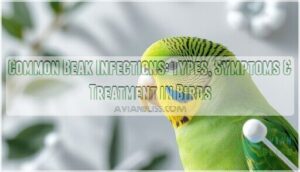 A parakeet’s beak splits down the center overnight. A cockatoo’s once-bright bill turns chalky and begins to crumble. These aren’t rare accidents—they’re warning signs of common beak infections that strike both pet birds and wild populations without notice.
Viral, bacterial, and fungal pathogens target the beak’s delicate keratin structure, causing deformities that can prevent birds from eating, preening, or defending themselves. The stakes climb even higher for endangered species, where a single outbreak can threaten an entire population’s survival.
Early recognition changes everything. When you spot discoloration, unusual texture, or abnormal growth patterns, you’re catching infections at a stage where treatment still works and your bird’s quality of life remains intact.
Table Of Contents
- Key Takeaways
- What Are Common Beak Infections?
- Types of Beak Infections in Birds
- Key Symptoms of Beak Infections
- How Beak Infections Are Transmitted
- Risk Factors for Beak Infections
- Diagnosing Beak Infections
- Treatment Options for Beak Infections
- Preventing Beak Infections in Birds
- Impact on Bird Health and Conservation
- Frequently Asked Questions (FAQs)
- Conclusion
Key Takeaways
- Beak infections stem from three pathogen types—viral (like PBFD, which persists in environments for 18 months), bacterial (showing up to 90% antibiotic resistance in some strains), and fungal (affecting roughly 4% of birds)—each requiring distinct treatment approaches and early detection for successful outcomes.
- Parrots face the highest infection risk, with African Greys showing PBFD rates up to 58% and transmission occurring through direct contact, contaminated surfaces, and parent-to-offspring routes, making strict biosecurity and 30-day quarantine periods essential for new birds.
- Watch for early warning signs like beak discoloration, surface roughness, feather dystrophy, and behavioral changes (lethargy, decreased vocalization, social withdrawal) since catching infections before structural damage occurs dramatically improves your bird’s prognosis and quality of life.
- Treatment combines supportive care (pain management, soft foods, proper hydration), targeted medications (antibiotics for 7-45 days or antifungals for 2-4 weeks based on susceptibility testing), and long-term strategies like pellet-based diets with 60-70% formulated food plus vitamin A supplementation to strengthen beak integrity and immune function.
What Are Common Beak Infections?
Beak infections can turn your bird’s healthy, strong beak into a brittle, deformed structure that affects everything from eating to preening. These infections stem from viruses, bacteria, or fungi that attack the beak tissue and often spread to feathers and nails.
Beak infections—caused by viruses, bacteria, or fungi—can transform a healthy beak into a brittle, deformed structure that disrupts eating and preening
While all birds face some risk, parrots and other psittacine species are particularly vulnerable to these conditions.
Definition of Beak Infections
Your bird’s beak functions as more than a tool for eating—it’s a window into overall health. Beak infections are diseases caused by infectious agents like viruses, bacteria, or fungi that trigger structural changes and functional impact in avian tissues.
These conditions create beak deformities through cellular changes at the microscopic level, affecting bird health across species. Understanding infectious etiology helps veterinary medicine address these critical avian diseases effectively. One such viral cause is psittacine beak disease.
Overview of Viral, Bacterial, and Fungal Causes
Three distinct pathogen categories cause beak infections, each with unique characteristics. Viral infections like BFDV show prevalence rates reaching 70% in certain wild populations, making these avian diseases particularly concerning. Bacterial infections from psittacosis impact both birds and humans, while fungal sources like Aspergillus species thrive where growth conditions include high humidity and poor ventilation—factors directly affecting bird health.
- BFDV creates permanent beak deformities you can’t reverse
- Bacterial infections spread rapidly through contaminated environments
- Fungal spores lurk in moldy substrates around your bird’s habitat
- Each pathogen type requires different treatment approaches
- Early detection greatly improves your bird’s outcome
Bacterial diseases are common, so consider bacterial infections in birds when observing symptoms.
Species Most Commonly Affected
Understanding which birds face the highest infection risk helps you protect your flock. Parrots—especially African Greys, Cockatoos, and Lovebirds—show high prevalence rates of Parrot PBFD, with some species reaching up to 58%. Wild Turkeys frequently contract Avian Pox, while captive finches are prone to bacterial infections due to poor hygiene. Psittacine birds remain universally susceptible to these conditions.
| Species Group | Primary Infection | Prevalence Rate |
|---|---|---|
| African Grey Parrots | PBFD | Up to 58.33% |
| Cockatoos | PBFD | Around 34.42% |
| Lovebirds | PBFD | Approximately 26.6% |
| Wild Turkeys | Avian Pox | High susceptibility |
| Captive Finches | Bacterial infections | Common occurrence |
Types of Beak Infections in Birds
Beak infections in birds fall into three main categories, each with distinct causes and challenges. Understanding the difference between viral, bacterial, and fungal infections helps you recognize what your bird might be facing.
Let’s look at the most common types you’ll encounter.
Psittacine Beak and Feather Disease (PBFD)
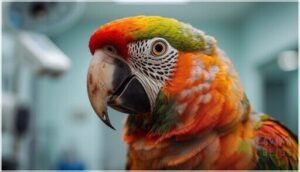
Psittacine Beak and Feather Disease (PBFD), also called Psittacine Circoviral Disease, strikes parrots worldwide through a stubborn circovirus (BFDV) that survives in environments for years.
You’ll notice feather dystrophy first—abnormal shafts and growth patterns—followed by deformed beaks requiring regular beak trimming. PBFD diagnosis relies on PCR testing, but there’s no cure.
BFDV resistance to standard disinfectants makes virus transmission prevention challenging, and infected birds need lifelong supportive care.
Bacterial Beak Infections
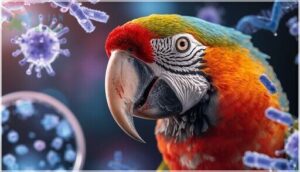
Unlike viral infections, bacterial beak infections stem from diverse pathogens—both Gram-negative organisms like E. coli and Klebsiella, and Gram-positive culprits including Staphylococcus and Streococcus species.
Your bird faces heightened zoonotic risk when resistant bacteria colonize damaged beak tissue. Treatment options require careful sample collection for culture-based diagnosis, revealing:
- Pathogen diversity necessitating targeted antimicrobial therapy
- Antimicrobial resistance patterns in up to 50% of avian E. coli isolates
- Extended treatment durations for improved bird health outcomes
Fungal Beak Infections
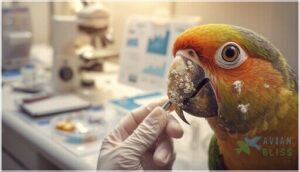
Fungal beak infections affect roughly 4% of caged and free-living birds. Aspergillus accounts for 40% of cases, while Candida infections primarily target the crop, causing sour crop symptoms. Macrorhabdus infections lead to regurgitation and the passage of undigested food.
Diagnosis methods combine fecal wet mounts, radiographs, and PCR testing.
Treatment success varies—amphotericin shows promise, though many birds remain asymptomatic carriers of avian disease.
Key Symptoms of Beak Infections
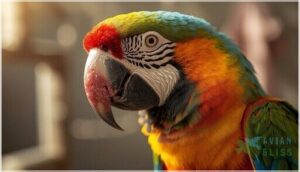
Catching a beak infection early can make all the difference in your bird’s outcome. The symptoms range from obvious physical changes you’ll spot right away to subtle behavioral shifts that tell you something’s wrong.
Here’s what to watch for in your bird’s beak, feathers, and overall health.
Changes in Beak Appearance and Texture
One of the first signs you’ll notice is beak discoloration—a glossy surface turns dull, brittle, and sometimes develops grey or brown patches. Surface roughness, flaking, and even pitting follow as the disease progresses.
Beak and feather disease often causes deformity or overgrowth, with brittleness leading to fractures. Swelling, lesions, and necrotic areas signal late-stage beak disease, especially when secondary infections take hold.
Feather and Nail Abnormalities
You’ll often see feather loss paired with beak disease. 100% of birds with PBFD show symmetrical feather abnormalities. Dystrophic feathers appear clubbed and malformed in 93% of cases, with keratin disruption causing brittle, overgrown nails in 30% of affected birds.
African Grey Parrots and cockatoos show the highest species variation, with nail deformities accompanying structural feather disorders in most confirmed infections.
Systemic and Behavioral Signs
Beyond visible beak and feather damage, systemic illness hits hard. You’ll notice behavioral changes that signal deeper problems with bird health:
- Lethargy and weakness affecting daily activity by up to 70%
- Social withdrawal from flock mates or handlers
- Decreased vocalization patterns, sometimes dropping 50-70% in frequency
- Aggression signs including biting when stressed
- Weight loss paired with secondary bacterial infections
These avian diseases affect multiple organ systems, making veterinary medicine for birds critical for managing social interaction deficits.
How Beak Infections Are Transmitted
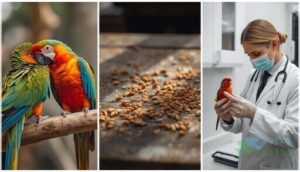
Understanding how beak infections spread helps you protect your birds from exposure. These diseases don’t just appear out of nowhere—they follow specific transmission routes that you can interrupt with proper care.
Let’s look at the three main ways infections pass between birds and through their environment.
Direct Bird-to-Bird Contact
When birds interact closely, infections spread quickly through your flock. Mutual preening, pecking at each other’s beaks, and gathering at feeding sites create prime opportunities for transmission.
In fact, up to 94% of wild flocks can carry diseases like PBFD through direct contact. Carrier birds often show no symptoms yet remain infectious for months, making outbreak amplification a serious threat to avian health and bird health management.
Environmental Contamination
Contaminated surfaces pose an even greater risk than direct contact. Water contamination, food sources, and airborne transmission through feather dust can all harbor infectious agents for weeks.
Soil contamination near nest sites and surface contamination on equipment create persistent reservoirs. PBFDV survives in organic matter for up to 18 months, while avian polyomavirus persists in water for 21 days, making environmental management critical for bird health and wildlife disease management.
Parent-to-Offspring Transmission
Infected parents can pass viral diseases in pet birds directly to their chicks through several routes. Vertical transmission occurs when pathogens travel through eggs—egg contamination rates for bacteria like Salmonella reach 58%. Poor nest hygiene increases this risk substantially.
While maternal antibodies offer temporary protection, they decline within 30 days. Beak and feather disease spreads efficiently this way, with over 56% of infected birds actively shedding the virus, threatening bird health across generations.
Risk Factors for Beak Infections
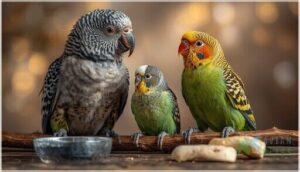
Not all birds face the same risk regarding beak infections. Some factors make certain birds more vulnerable than others, from their age and species to how you care for them.
Understanding these risk factors helps you protect your bird before problems start.
Species and Age Susceptibility
Your bird’s species and age play important roles in infection risk. Parrots, cockatoos, and other psittacine birds show high susceptibility to Beak and Feather Disease, with juvenile vulnerability particularly pronounced due to immature immune systems.
Genetic factors also influence how severely your bird might be affected. Age-related changes mean young birds face acute infections, while older parrots may develop chronic conditions requiring long-term management.
Environmental and Husbandry Risks
How you care for your bird directly impacts infection risk. Poor cage hygiene and inadequate ventilation can increase pathogen loads by over 99%, while overcrowding stress doubles disease transmission rates.
Diet quality matters too—vitamin A deficiencies weaken beak structure and immunity.
Proper parrot care includes regular beak maintenance, clean enclosures, and balanced nutrition. These pet bird health fundamentals form your first line of defense against infections.
Immune System Compromise
When stress immunosuppression strikes, your bird’s defenses crumble. Viral infections like PBFD directly attack immune cells, leaving young parrots especially vulnerable.
Concurrent diseases—think IBDV and MD in poultry—compound the damage. This immune system compromise opens the door to secondary infections requiring antimicrobial treatment.
Stress remains the top trigger, making your bird’s immune response fragile when it’s needed most.
Diagnosing Beak Infections

When your bird shows signs of a beak problem, your vet won’t just look at the beak itself. A proper diagnosis starts with understanding your bird’s full health picture and ruling out other conditions that might be causing the symptoms.
Here’s what the diagnostic process usually involves.
Clinical Examination and History
Your veterinarian begins with owner observations—what you’ve noticed at home. This initial conversation affects diagnostic accuracy greatly.
The physical examination duration usually runs 15 to 30 minutes, depending on complexity. During beak assessment, your vet inspects symmetry, texture, and lesion identification while checking for deformities or cracks.
Blood tests or sterile swabs may confirm infections affecting bird health and diseases, guiding proper veterinary diagnosis and treatment in avian veterinary medicine.
Identifying Underlying Conditions
Why does your bird’s beak look abnormal? Lab analysis through PCR testing, tissue examination, or blood work pinpoints the exact cause.
PBFD diagnosis detects circovirus DNA in feather biopsies, while Avian Pox shows wart-like lesions.
Psittacosis symptoms include respiratory distress and diarrhea from Chlamydia psittaci.
AKD cause involves a newly identified Poecivirus affecting beak structure in multiple species.
Treatment Options for Beak Infections
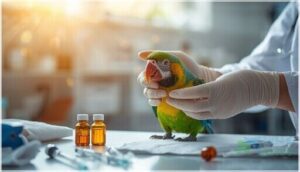
Treating beak infections depends on what’s causing the problem and how severe it is. Your vet will focus on managing symptoms, fighting infections with the right medications, and supporting your bird’s immune system.
Let’s look at the main treatment approaches that can help your bird recover.
Supportive and Symptomatic Care
When your bird can’t fight infection alone, supportive care becomes the safety net. You’ll focus on comfort and stability while the body works to recover. Pain Management with NSAIDs like Meloxicam reduces discomfort and speeds healing. Consider these key strategies:
- Nutritional Support: Offer soft foods and high-quality pellets to maintain strength
- Hydration Protocols: Provide oral fluids for mild dehydration or seek veterinary IV therapy
- Husbandry Adjustments: Keep cages clean and provide 6-8 hours of sunlight daily
- Stress Reduction: Create quiet, calm environments away from sick birds
This thorough approach directly impacts Bird Health and Disease outcomes in Parrot Care and Management, particularly with conditions like Beak and Feather Disease requiring intensive Veterinary Care.
Use of Antibiotics and Antifungals
Targeted medication attacks the infection directly, but choosing the right drug matters. When bacterial infections strike, you’ll rely on enrofloxacin for 7-14 days against Mycoplasma and E. coli, or doxycycline for 45 days treating Chlamydia. Fungal issues demand fluconazole at 20 mg/kg every 48 hours for 2-3 weeks.
However, resistance trends complicate treatment—E. coli now shows 82% resistance to ampicillin and 90% to tetracyclines, making susceptibility testing essential before starting therapy.
| Medication Type | Common Drugs | Typical Duration |
|---|---|---|
| Bacterial (Fluoroquinolones) | Enrofloxacin, Ciprofloxacin | 7-14 days |
| Bacterial (Tetracyclines) | Doxycycline | 45 days |
| Fungal (Azoles) | Fluconazole, Itraconazole | 2-4 weeks |
| Fungal (Allylamines) | Terbinafine | 2-4 weeks |
Long-Term Management Strategies
Managing chronic beak infections demands a multi-layered approach beyond medication alone.
Dietary adjustments are crucial—switching to 60-70% pellets with added vitamin A boosts keratin integrity by 27%.
Regular checkups every six months catch relapses early in 70% of cases.
Environmental control through HEPA filtration and stress reduction extends survival in Beak and Feather Disease carriers from 18% to 45%, while preventative therapies strengthen compromised immune systems against Avian Viral Infections.
Preventing Beak Infections in Birds

Preventing beak infections takes a proactive approach rather than waiting for problems to develop. The good news is that most infections are preventable with the right strategies in place.
Let’s look at three essential areas that’ll help keep your bird’s beak healthy and infection-free.
Biosecurity and Quarantine Practices
Protecting your birds from infectious diseases starts with strict biosecurity and quarantine practices. When you bring new birds home, isolate them for at least 30 days before introducing them to your existing flock. This quarantine duration allows you to monitor bird health and disease signs while preventing avian diseases from spreading.
- Movement restrictions during outbreaks reduce infection rates by 91% in affected populations
- Compliance levels remain concerningly low, with only 21% of farmers using proper hand hygiene after handling birds
- Surveillance measures, including regular testing and disease monitoring, help detect infections early and improve intervention outcomes
Environmental Sanitation
Once you’ve established quarantine protocols, maintaining a clean environment becomes your next line of defense against avian diseases. Clean your bird’s enclosure daily to reduce pathogen loads by 80–90%. Disinfect surfaces with EPA-registered quaternary ammonium compounds that achieve 99.9% virus inactivation.
Proper waste management prevents environmental contamination—replace bedding every three days and maintain 45–55% humidity for best air quality and bird health.
Nutrition and Natural Beak Maintenance
Beyond keeping things clean, what you feed your bird directly impacts beak health and infection rates. Dietary protein boosts immune function and lymphocyte counts, strengthening your parrot’s defense against beak and feather disease. Vitamin A deficiencies in seed-based diets lead to beak abnormalities and infections. Support natural beak maintenance with:
- Formulated pellets (60–70% of diet) plus fresh vegetables
- Sweet potatoes and spinach for vitamin A
- Natural wood perches in varied textures
- Safe chew toys for physical enrichment
Balanced nutrition prevents the deficiencies that open the door to bacterial and fungal beak infections in parrots.
Impact on Bird Health and Conservation

Beak infections don’t just affect the individual bird in front of you—they ripple outward in ways that can reshape entire populations. Whether you’re caring for a pet parrot or working to protect wild flocks, understanding these broader impacts helps you see why prevention and control matter so much.
Let’s look at how these diseases influence bird welfare, population health, and conservation efforts.
Effects on Individual Bird Welfare
When your bird develops a beak infection, the toll on individual welfare is staggering. Pain management becomes critical as over 70% of parrots with Psittacine Beak and Feather Disease experience persistent discomfort from beak deformity and feather loss.
You’ll notice behavioral changes—reduced grooming, depression, and social withdrawal—that signal declining quality of life.
Proper parrot care focusing on nutrition and supportive treatment can help maintain feather condition and comfort during illness.
Consequences for Wild and Captive Populations
Across wild and captive populations, Psittacine Beak and Feather Disease drives severe consequences you need to understand. Over 90% of wild Australian parrots carry the virus, and thirty percent of global psittacine species now face threats linked to this infection.
Transmission dynamics shift seasonally—prevalence jumps from 3.8% in summer to much higher rates in spring. In captivity, infection rates exceed 26% in some parrot groups, with the pet trade spreading disease across forty countries.
Conservation Efforts and Disease Control
Strategic intervention makes the difference between species survival and extinction. Australia listed Psittacine Beak and Feather Disease as a Key Threatening Process in 2001, triggering strict biosecurity protocols and policy regulation nationwide.
Reintroduction programs for endangered Mauritius parakeets increased populations from under 20 birds to over 600 through prevalence tracking and enhanced nest hygiene.
However, significant research gaps remain in wildlife conservation efforts, particularly for avian conservation and welfare outside established wildlife diseases surveillance zones.
Frequently Asked Questions (FAQs)
Can beak infections spread to other pet species?
Like a biological wildfire, most avian beak diseases rarely threaten cats or dogs directly. However, environmental contamination from infected birds poses minimal cross-species transmission risk, though zoonotic potential warrants basic hygiene precautions.
How long does PBFD virus survive in environments?
The PBFD circovirus persists in your environment for up to 18 months in organic matter like feather dust and feces.
Viral load on fomites demands strict biosecurity protocols and environmental management to prevent transmission implications.
Are there blood tests for all beak infections?
Blood tests like PCR and serology work well for viral and some bacterial infections, but not all cases. Fungal infections often need tissue biopsies, while localized bacterial infections require cultures for accurate veterinary diagnosis.
Whats the recovery timeline for bacterial beak infections?
Recovery from bacterial beak infections generally takes 30 to 45 days with antibiotics, though severe cases may require several months.
Early diagnosis and treatment greatly improve prognosis rates and long-term outcomes in birds.
Do overcrowded aviaries increase fungal infection rates?
Just as canaries warned coal miners of danger, overcrowding signals serious risk for your psittacine birds.
Poor ventilation, high humidity, and stress suppress immunity while fungal loads soar—turning aviaries into infection hotspots.
Conclusion
Like a crack in a dam that widens overnight, common beak infections can escalate from subtle discoloration to life-threatening damage before you realize what’s happening. Your vigilance makes the difference between early intervention and irreversible harm.
Watch for texture changes, unusual growth patterns, or feeding difficulties. Consult an avian veterinarian at the first sign of trouble. When you act decisively, you don’t just treat an infection—you preserve your bird’s ability to thrive.
- https://www.msdvetmanual.com/exotic-and-laboratory-animals/pet-birds/bacterial-diseases-of-pet-birds
- https://www.merckvetmanual.com/exotic-and-laboratory-animals/pet-birds/mycotic-diseases-of-pet-birds
- https://en.wikipedia.org/wiki/Psittacine_beak_and_feather_disease
- https://www.cdc.gov/psittacosis/about/index.html
- https://www.researchgate.net/publication/391920617_A_Meta-Analysis_of_Global_Prevalence_of_Psittacine_Beak_and_Feather_Disease_Virus_Infection_and_Associated_Risk_Factors