This site is supported by our readers. We may earn a commission, at no cost to you, if you purchase through links.
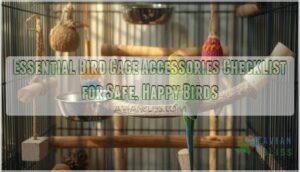 A rescued cockatiel I examined last month had developed severe foot deformities—not from disease, but from perching on identical dowels for three years. Her owner had invested in an expensive cage but overlooked the accessories that actually determine a bird’s quality of life.
Your cage setup does more than house your bird; it shapes their physical health, mental well-being, and natural behaviors. The difference between a bare enclosure and a properly equipped habitat isn’t just comfort—it’s the difference between survival and thriving.
Getting the essentials right from day one prevents the behavioral problems and health issues that send most birds to veterinary clinics.
Table Of Contents
Key Takeaways
- Cage setup directly impacts physical health and prevents common veterinary issues like foot deformities, which develop from poor perch variety and inappropriate accessories rather than disease alone.
- Proper cage selection requires species-specific minimum dimensions, safe materials like stainless steel to avoid metal toxicity, and strategic placement away from kitchens where non-stick fumes cause 11% of annual poisoning cases.
- Daily maintenance routines—including liner replacement, dish sanitization, and spot-cleaning—prevent up to 80% of contamination risks and protect respiratory health through consistent bacterial control.
- Mental stimulation through toy rotation, foraging accessories, and direct social interaction prevents stress-related behaviors like feather plucking more effectively than mirrors or bells, which can trigger aggression and auditory stress.
Choosing The Right Bird Cage
Your bird’s cage isn’t just housing—it’s their entire world. Getting it right from the start protects their health and gives them room to thrive.
Your bird’s cage isn’t just shelter—it’s their entire world, and getting it right from the start protects their health and gives them room to thrive
Let’s break down what you need to examine when selecting the foundation of your bird’s environment.
Ideal Cage Size for Different Species
Your bird’s wingspan determines the cage you’ll need. Research species-specific cage size guidelines first—budgies thrive in cages at least 18 x 18 x 24 inches, while cockatiels need 36 x 24 x 36 inches minimum. Finches require horizontal space for flight, with pairs needing 30 inches lengthwise.
Proper cage dimension standards prevent stress and guarantee bird safety and security through adequate space requirements. When selecting a cage, consider the cockatiel cage size guidelines to guarantee a healthy environment.
Safe Cage Materials and Construction
Once you’ve settled on cage size, material safety becomes non-negotiable. Stainless steel offers unrivaled cage durability and prevents metal toxicity—it won’t rust or release harmful substances when chewed. Powder-coated options cost less but require inspection for chips exposing zinc underneath. Bar spacing matters too: 1/4″ for finches up to 1.5″ for macaws prevents injury. When selecting a cage, consider the cage size guidelines to guarantee your bird’s well-being.
Key construction checkpoints for bird safety and security:
- Verify welds are smooth and rust-free on all joints
- Check bar spacing matches your species’ size requirements
- Confirm powder coating is lead- and zinc-free certified
- Inspect latches and locks for secure, escape-proof closure
- Avoid galvanized wire, brass, or any aromatic wood accessories
Proper Cage Placement in The Home
Where you position the cage matters as much as what you put inside it. Eye level positioning lets your bird feel secure without vulnerability—research shows this reduces anxiety. Corner placement offers visual control and draft prevention, supporting bird welfare.
Keep the cage away from kitchens, where non-stick fumes cause 11% of poisoning cases yearly. Choose a room with noise reduction, stable temperatures, and natural light for ideal bird safety.
Must-Have Food and Water Accessories
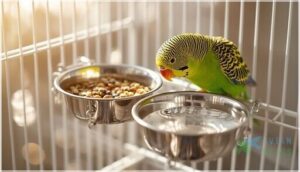
Your bird’s food and water dishes aren’t just containers—they’re the foundation of daily health and hygiene. The right accessories prevent contamination, secure firmly to cage bars, and make your cleaning routine straightforward.
Let’s look at what you need to keep your bird nourished and safe.
Secure Food and Water Dishes
You can’t afford to take food safety lightly—loose or flimsy food and water dishes invite contamination and escape attempts. Choose tip-proof bowls with secure dish mounting, and position them away from overhead perches to cut droppings contamination by 39%.
Over 67% of new cage models now feature integrated locking mechanisms that reduce spills by up to 85%. Proper cage accessories protect your bird’s health daily.
Choosing Hygienic Dish Materials
Material matters for food dishes and water dishes—stainless steel leads the pack with bacterial resistance rates under 1%, outperforming plastic by 85% in preventing harmful bacterial growth. Ceramic safety depends on food-grade glazes; avoid chipped bowls that compromise dish sanitization.
Material comparison studies confirm proper cage accessories promote bird health and hygiene. Choose dishwasher-safe options for reliable bird hygiene maintenance.
Daily Cleaning and Maintenance Tips
Daily disinfecting keeps your bird healthy—bacterial control starts with waste removal every evening before sleep. Protect your bird’s respiratory system with three essential cage sanitation steps:
- Replace cage liners daily to eliminate bacteria and mold exposure
- Wash food and water dishes thoroughly with soap each morning
- Spot-clean bars and perches with a damp cloth targeting visible droppings
Consistent cage maintenance prevents up to 80% of contamination risks.
Essential Perches and Cage Furniture
Your bird’s feet spend every waking moment gripping perches, so choosing the right ones isn’t just about comfort—it’s about preventing serious health issues. Different diameters, textures, and materials keep feet strong and arthritis-free while giving your bird the variety they need.
Let’s look at what makes a perch safe, how many you’ll need, and which woods won’t harm your feathered friend.
Variety in Perch Sizes and Materials
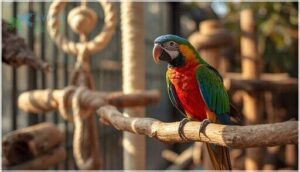
Your bird’s feet face the same challenge every day: gripping identical surfaces. Perch size diversity is critical—studies confirm that birds given at least three different diameters show a 40% drop in foot lesions. Material selection matters just as much. Natural wood stimulates foot health and beak exercise, while varied textures improve grip variety, keeping your feathered friend comfortable and injury-free.
| Perch Type | Key Benefit |
|---|---|
| Natural wood (manzanita, Java) | Reduces foot injuries by 27%, aids natural nail trimming |
| Rope perches | Preferred by 75% for sleeping, promotes flexibility |
| Textured/irregular shapes | Cuts required nail trims by 48%, boosts muscle development |
Placement and Number of Perches
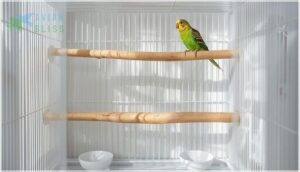
You need at least three perches at different heights—high perch placement satisfies natural roosting instincts and 85% of nighttime sleep happens on elevated spots. Space them so your bird can stretch its wings and turn comfortably, ideally 24 inches apart for large species to support bird movement and reduce collision injuries by 29%.
- Position one perch at the cage’s highest point to provide security and natural roost comfort
- Keep perches 4–6 inches apart vertically to prevent debris transfer and cut foot health issues by 32%
- Never place perches directly above food dishes to avoid contamination and improve hygiene by 61%
Safe Woods for Perches
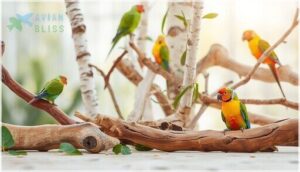
Choosing the right perch materials is crucial for protecting your bird from hidden toxins. Woods like cedar, yew, and chemically treated varieties can trigger illnesses in 8-12 cases per 10,000 birds annually. Wood density also matters: manzanita and maple (above 50 kg/m³) are ideal for large parrots and can last up to six months, while apple and birch are better suited for smaller species in your bird cage setup and maintenance routine.
| Safe Woods | Toxic Woods |
|---|---|
| Apple, bamboo, birch | Cedar, yew, apricot |
| Maple, willow, manzanita | Treated or resinous pine |
| Ash, beech, elm | Oak (high tannin varieties) |
To ensure safety, always remove bark and wash perches with vinegar before installation. Proper wood treatment significantly reduces health complaints, cutting them nearly in half, and keeps cage accessories bird-safe.
Lighting and Environmental Needs
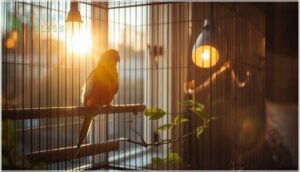
Your bird’s health depends on more than food and water—lighting and environment play a critical role in their daily rhythm and comfort.
Birds need consistent light cycles to regulate sleep, maintain hormone balance, and support overall well-being.
Let’s cover how to create the right conditions without putting your bird at risk.
Importance of Natural Light Cycles
Your bird’s internal clock runs on a 24-hour rhythm, just like yours does. Disrupted circadian rhythms from inadequate proper lighting affect melatonin production, sleep patterns, and even vitamin D synthesis—all critical for bird health.
Light pollution in your avian care routine can trigger hormonal imbalances and reproductive issues. Consistent natural light cycles in your bird cage setup and maintenance protect these essential biological processes.
Bird-Safe Lighting Options
Once you understand your bird’s light needs, you’ll want to choose the right bulbs. Full-spectrum UV lighting delivers both UV-A and UV-B wavelengths—critical for bird vision and vitamin D3 production. Look for fixtures emitting around 12% UVA and 2.4% UVB.
LED options work well if they’re warm-colored (2100–2200 Kelvin) and flicker-free. Smart controls let you automate day-night cycles, supporting avian health and welfare effortlessly.
Avoiding Drafts and Temperature Extremes
Beyond lighting, temperature control and draft prevention protect your bird’s respiratory system and overall health. Windows and doors cause significant fluctuations—sometimes dropping temperatures by 10°F near cages.
Here’s how to stabilize your cage environment:
- Position cages away from windows, vents, and exterior walls
- Seal gaps with weather stripping—reduces heat loss by 20%
- Use thermal cage covers during cold periods
- Check air circulation without creating direct drafts
Enrichment, Toys, and Mental Stimulation
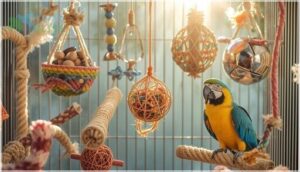
Birds are intelligent creatures that need mental challenges just as much as they need physical space. Without proper stimulation, your bird can develop stress-related behaviors like feather plucking or repetitive movements.
Here’s how to keep your bird’s mind active and engaged.
Types of Bird Toys for Engagement
Your bird’s mental health thrives when you offer a mix of toys designed for specific behaviors. Foraging toys replicate natural food-seeking instincts and dramatically reduce feather plucking. Chewing toys maintain beak health, while climbing structures build muscle strength. Interactive games strengthen your bond, and sensory stimulation through swings mimics wild movement. This variety ensures full bird enrichment and stimulation.
Rotating Toys to Prevent Boredom
Even the best bird toys lose their appeal when your feathered companion sees them every day. Toy rotation schedules matter—swap out 3-5 toys weekly to maintain mental stimulation techniques and prevent boredom behaviors.
This simple bird enrichment strategy cuts feather plucking by up to 40%. Watch your bird’s engagement level closely; highly active parrots need fresh options every 4-5 days to satisfy their psychological needs.
Foraging and Puzzle Accessories
Puzzle feeders and foraging toys transform mealtime into cognitive stimulation that mimics wild behavior—parrots naturally spend 70% of their day hunting for food. Hide birdseed and treats inside vine balls, treat dispensers, or multi-level compartments to challenge problem-solving skills.
These bird enrichment accessories reduce feather plucking while keeping food and water dishes available for daily nutrition. Choose natural materials like untreated wood, stainless steel, or safe acrylics.
Mirrors, Bells, and Social Interaction
Social bonding with you beats any toy. Mirrors can trigger aggression and self-mutilation in parrots, while bells pose auditory stress (100-125 dB) and toxicity risks from lead or zinc. Skip these risky accessories.
Instead, prioritize daily interaction alongside foraging puzzles and safe chew toys. This enrichment approach caters to bird behavior and psychology, creating a stimulating bird environment that fosters genuine mental stimulation without the hazards.
Frequently Asked Questions (FAQs)
How often should I replace cage liners?
Clean slates matter—replace cage liners daily for ideal cage hygiene and pathogen control. This daily waste management routine prevents bacterial buildup, safeguards bird health, and keeps your bird cage fresh, making cage maintenance straightforward and effective for bird care.
What cage cover material works best for sleep?
Blackout fabrics excel for bird cage accessories, blocking 90-99% of light while maintaining fabric breathability.
Choose bird-safe materials like heavy polyester for enhanced noise reduction and cover durability.
Proper cage covers support natural sleep cycles in your cage setup.
Can birds share perches with other species safely?
Sharing perches between species carries significant Perch Sharing Risks. Disease Transmission and Interspecies Conflict concerns arise, as stress elevates corticosterone and increases pathogen exposure.
Proper Perch Design Safety, quarantine protocols, and monitoring Bird Behavior support Avian Health and Wellness.
How do I disinfect toys without harming birds?
Think of toy sanitizing like a gentle reset button. Use diluted vinegar disinfectant or mild soap for bird-safe cleaning.
Soak, scrub, rinse thoroughly, and air-dry. Natural sterilization protects your flock without harsh fumes.
What temperature range is safest for pet birds?
Your bird thrives between 65°F and 80°F. Below 60°F risks respiratory problems and hypothermia, while above 80°F triggers heat stress and dehydration.
Stable avian thermoregulation through proper temperature control and climate management protects bird health and welfare.
Conclusion
The devil’s in the details regarding avian welfare. That cockatiel’s foot deformities could have been prevented with the right essential bird cage accessories checklist—varied perches, proper dishes, enrichment toys, and appropriate lighting.
Your bird depends on you to create an environment that fosters natural behaviors and prevents medical problems. Review your setup today, make the necessary changes, and give your feathered companion the habitat they deserve to flourish.
- https://www.omlet.us/guide/parakeets/perches_for_cages/safe_wood/
- https://www.reddit.com/r/petbudgies/comments/18pa4w7/safe_vs_unsafe_perches/
- https://www.facebook.com/groups/1024490957622648/posts/1920241361380932/
- https://docs.google.com/document/d/1gM8D4NS9Pu3EQQrlUES-jiC6f47xCpMQom_88IBfw4I/mobilebasic
- https://lovebirdcare.com/food-water-setup/