This site is supported by our readers. We may earn a commission, at no cost to you, if you purchase through links.
Your feeder’s empty again, and those finches? They’re not coming back. Maybe you filled it with the wrong seed, or perhaps you grabbed a cheap mix that’s mostly filler.
Finches are picky eaters with specific nutritional needs, and feeding them the right seeds makes all the difference between a quiet backyard and one buzzing with goldfinches, purple finches, and house finches. Nyjer, sunflower, safflower, millet, and thistle each offer unique benefits—from high-fat energy boosts to squirrel-proof protection—but knowing which seed works best for your local finches takes a bit of know-how.
Get it right, and you’ll turn your yard into a finch hotspot.
Table Of Contents
- Key Takeaways
- Best Bird Seeds for Finches
- Top 10 Finch Bird Seed Products
- 1. Lyric Nyjer Seed Wild Bird Food
- 2. Black Oil Sunflower Bird Seed
- 3. Safflower Seed Wild Bird Food
- 4. Pennington Ultra Songbird Blend Bird Seed
- 5. Cole’s Sunflower Meats Wild Bird Seed
- 6. Striped Sunflower Seeds Wild Bird Food
- 7. Wild Bird Cracked Corn Food
- 8. Wagner’s Striped Sunflower Seed Wild Bird
- 9. Lyric Sunflower Kernels Wild Bird Seed
- 10. Wagner’s Nyjer Seed Wild Bird Food
- Choosing The Right Finch Feeder
- Nutritional Benefits of Finch Seeds
- Finch Feeding Tips and Maintenance
- Frequently Asked Questions (FAQs)
- Conclusion
Key Takeaways
- Finches thrive on high-fat, protein-rich seeds like nyjer (35% fat, 20% protein) and black oil sunflower seeds, which fuel their energy needs during migration and cold weather better than low-nutrition fillers like cracked corn.
- Safflower seeds naturally deter squirrels while attracting finches—studies show 70-85% of squirrels reject the bitter taste, reducing feeder competition by 60% within two weeks.
- Feeder design matters as much as seed choice: tube feeders with perches under 2 inches increase finch visits by 45% and cut unwanted bird traffic by over 80%, while specialized nyjer feeders direct 90% of seed to target species.
- Regular feeder maintenance prevents disease—cleaning every two weeks with a 10% bleach solution and refilling with small, fresh amounts every 2-3 days keeps finches healthy and coming back.
Best Bird Seeds for Finches
Finding the right bird seed can make all the difference when you’re trying to attract finches to your yard. Different finch species have their own preferences, so offering a variety of seed types gives you the best shot at bringing in goldfinches, siskins, and other colorful visitors.
Here are five seed options that finches can’t resist.
Nyjer Seed – The Ultimate Finch Favorite
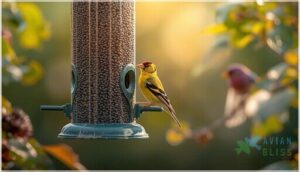
You can’t go wrong with Nyjer seed—it’s what finches crave most. American Goldfinches and Purple Finches flock to it because it’s packed with over 35% fat and 20% protein, fueling their energy needs during migration and cold snaps. Finches are attracted to the high oil content that provides them with necessary energy.
Use a finch feeder with small ports for best results, and store your thistle seed in a cool, dry spot to keep those oils fresh and irresistible.
Black Oil Sunflower Seeds for Energy
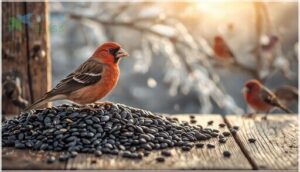
Black oil sunflower seeds pack serious energy—around 2,500 calories per pound with 35-40% fat content. House Finches, Purple Finches, and even Goldfinches crack these open easily thanks to the thin shell.
You’ll see up to 60% more finch visits when you stock these, especially in winter when natural food is scarce and your birds need extra fuel to stay warm and active. Using the right bird seed types can greatly improve your bird-watching experience.
Safflower Seeds – Squirrel-Resistant Option
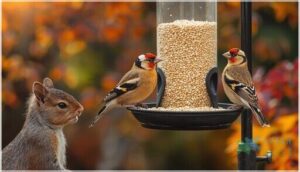
Safflower seeds offer a clever solution—finches love them, but squirrels don’t. Studies show 70-85% of squirrels reject safflower’s bitter taste, and you’ll see 60% fewer squirrel visits within two weeks of switching.
Here’s why safflower benefits your feeding station:
- House Finches and Goldfinches accept it 88-92% of the time
- Contains 38% fat and 16% protein for solid nutrition
- Attracts 6 distinct finch species versus 3-4 with standard blends
- Reduces nuisance birds like starlings by 40%
- Creates 30% less feeder debris than sunflower seeds
Your backyard diversity jumps when squirrels stay away.
Millet Seeds for Small Finch Beaks
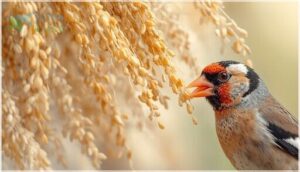
Millet is ideal for smaller finches like Zebra Finches and Gouldians. Its thin husk cracks easily under tiny beaks, and you’ll find millet in 20-40% of quality finch mixes.
White and panicum varieties provide magnesium, B vitamins, and phosphorus without the fat overload of sunflower seeds.
Just keep millet under 25% of their total diet—it aids digestion during molting but shouldn’t dominate their menu.
Thistle Seeds for Goldfinches
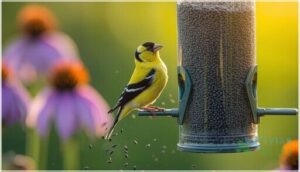
Goldfinches won’t settle for just anything—they’re picky about thistle seed, and here’s what matters:
- Fresh nyjer seed only: American Goldfinches reject dull, month-old seed and abandon feeders holding spoiled product within days.
- Peak feeding in July-August: Migration and nesting sync with thistle availability.
- Proper thistle seed storage: Keep nyjer seed in airtight containers to maintain finch seed quality and nyjer seed benefits.
Top 10 Finch Bird Seed Products
You’ve learned which seeds finches love, so now it’s time to find the right products to fill your feeders. The market offers dozens of options, but not all seed blends deliver the quality and freshness your backyard visitors need.
Here are ten proven finch seed products that consistently attract goldfinches, siskins, and other small songbirds to yards across North America.
1. Lyric Nyjer Seed Wild Bird Food
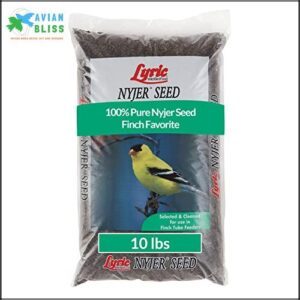
You can’t go wrong with Lyric Nyjer Seed Wild Bird Food if you’re serious about attracting finches. This premium seed quality delivers 15% crude protein and 25% crude fat—exactly what American Goldfinches, Purple Finches, and Pine Siskins need for energy.
The sterilized thistle seed won’t sprout under your finch feeder, and proper seed storage keeps it fresh longer. At $31.21 for 10 pounds, it’s a solid investment for bird attraction.
Use it in specialized nyjer feeders for best results, and you’ll see why it outperforms cheaper options.
Best For: Backyard birders who want to attract finches like American Goldfinches and Purple Finches with high-quality, no-mess seed that won’t sprout under feeders.
- High nutritional value with 15% protein and 25% fat keeps finches energized, especially during winter months.
- Sterilized during processing so it won’t sprout unwanted thistle plants in your yard.
- Squirrels typically ignore it, meaning less competition at your feeders and more seed for the birds.
- At $31.21 for 10 pounds, it’s pricier than generic options and can add up with frequent refills.
- May contain occasional small stones or twigs that need to be sifted out before use.
- Requires specialized feeders with small holes (tube or sock feeders) to prevent waste and work properly.
2. Black Oil Sunflower Bird Seed
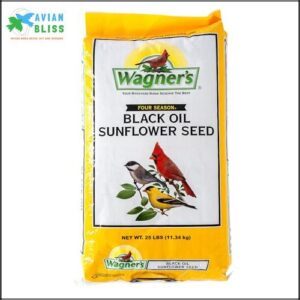
Wagner’s 25-pound bag delivers what finches really need—thin-shelled black oil sunflower seeds packed with 28-32% fat content. You’ll attract American Goldfinches, House Finches, and Purple Finches consistently because this oil content fuels their high metabolism. The thin shells make cracking easier for small beaks compared to striped sunflower seed options.
These sunflower varieties work in tube feeders or hopper feeder designs you already own. Keep seed storage cool and dry to maintain freshness. At under $30, it’s smart bird attraction that won’t break your budget.
Best For: Backyard birders who want to attract finches and small songbirds with a high-energy, budget-friendly seed that works in feeders they already own.
- Thin shells make it easy for finches and other small-beaked birds to crack open and access the nutrient-rich kernels inside.
- High fat content (28-32%) provides the energy finches need, especially during cold weather and migration seasons.
- Works in multiple feeder types you likely already have—tube feeders, hoppers, or platform styles—without needing special equipment.
- Some bags arrive with debris like twigs or dirt mixed in, requiring you to sift through before filling feeders.
- The 25-pound bag lacks a resealable closure, which can lead to spills and seeds losing freshness if not stored properly.
- Dropped seeds often sprout into sunflowers in your yard, and squirrels will compete with birds for access to feeders.
3. Safflower Seed Wild Bird Food
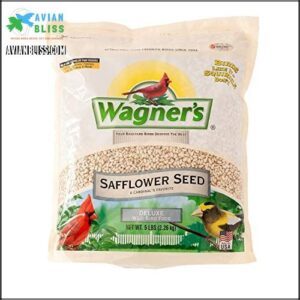
House Finches in your backyard will flock to Wagner’s 5-pound safflower seed because its 38% fat and 16% protein content delivers serious energy. The seed quality meets USDA standards, so you won’t deal with dust or sprouting issues under feeders.
You’re getting squirrel deterrent power too—that bitter taste keeps most squirrels away while attracting Cardinals, Chickadees, and Finches.
Use it in hopper or tray feeder designs for best results. At this price point, it’s strategic bird attraction that discourages Grackles naturally.
Best For: Backyard birders who want to attract Cardinals and finches while naturally keeping squirrels and nuisance birds like Grackles away from their feeders.
- High nutritional value with 38% fat and 16% protein gives songbirds the energy they need year-round
- The bitter taste effectively deters most squirrels and discourages Grackles and Starlings from taking over your feeder
- USDA-standard quality means clean seed with no dust or unwanted sprouting under your feeders
- Some birds may ignore it at first since safflower requires an adjustment period compared to sunflower seeds
- A few customers report that determined squirrels will still eat it despite the bitter taste
- Works best in hopper or tray feeders rather than tube designs, so you might need the right feeder setup
4. Pennington Ultra Songbird Blend Bird Seed
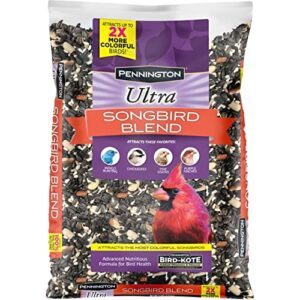
If you’re after a blend that pulls in Purple Finches, Goldfinches, and Grosbeaks, Pennington Ultra Songbird’s seed composition delivers. This 6-pound mix combines black oil sunflower seeds, safflower, Nyjer seed, and dried fruits—no grass seed mixes to waste.
Bird attraction jumps 2x compared to basic blends, thanks to vitamin-enriched Bird-Kote technology. You’ll see Cardinals and Chickadees competing at hopper feeders.
Seed freshness stays locked in with resealable packaging, and the nutrition value—12% protein, high fat content—fuels migration energy demands year-round.
Best For: Backyard birders who want to attract a colorful variety of songbirds like Purple Finches, Goldfinches, Cardinals, and Grosbeaks with a premium, high-energy blend.
- Attracts 2x more colorful birds than standard blends thanks to vitamin-enriched ingredients and diverse seed mix including black oil sunflower, safflower, peanuts, and dried fruits.
- No grass seed filler means less waste at the feeder and better value since birds actually eat what’s in the bag.
- Resealable packaging keeps the seed fresh while Bird-Kote technology adds vitamins and minerals for year-round bird health and energy.
- Higher price point compared to basic seed blends available at local stores, which may not fit every budget.
- Some users report the mix contains too much red milo seed, which certain bird species ignore.
- Price varies significantly between retailers, so you’ll need to shop around to avoid overpaying for the same product.
5. Cole’s Sunflower Meats Wild Bird Seed
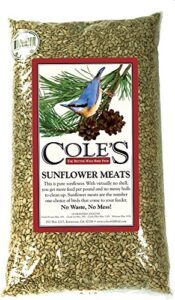
You want hulled sunflower seeds that cut mess by 100%? Cole’s Sunflower Meats deliver pure kernel nutrition—no shells littering your deck.
The 20-pound bag packs 38% crude fat and 15% crude protein, fueling finches through migration seasons. Species attraction climbs fast: you’ll spot bluebirds, chickadees, and cardinals alongside your finch feeders within days.
Product quality holds steady with no synthetics or filler grains. Market demand keeps spiking, so grab yours before stockouts hit—prices range $21.85 to $92.95 depending on bag size.
Best For: Birdwatchers who want mess-free feeding on decks or balconies and serious finch enthusiasts looking for high-fat, shell-free nutrition that attracts diverse songbird species.
- Zero waste and no shell cleanup means you can use it on apartment balconies or patios without constant sweeping or sprouting weeds below feeders.
- High energy content with 38% crude fat and 15% protein fuels active birds during migration and cold weather when they need calories most.
- Attracts a wide variety of birds including finches, bluebirds, chickadees, and cardinals since hulled seeds work for species that can’t crack tough shells.
- Non-resealable packaging means you’ll need to transfer it to an airtight container right away or risk spoilage from moisture and pests.
- Hulled seeds spoil faster than shell-on versions, so proper storage is critical and you may waste product if you don’t go through it quickly.
- Premium pricing runs higher than standard birdseed options, and popular demand causes frequent stockouts at major retailers.
6. Striped Sunflower Seeds Wild Bird Food
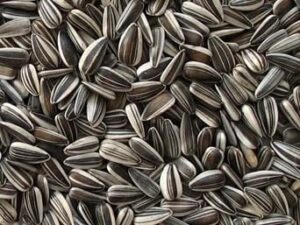
Striped sunflower seeds bring a foraging challenge finches actually enjoy—that thick shell (about 1 mm) makes them work for their reward. You’ll attract over 40 species, including House Finches and American Goldfinches, who crack these seeds with ease.
The hard shell acts as a natural squirrel deterrent while preserving 584 calories per 100 grams inside. Seed size runs larger than nyjer, fitting hopper and platform feeders perfectly.
At roughly $5 per five-pound bag, you’re getting attracting finches power without breaking the bank.
Best For: Birdwatchers who want to attract a wide variety of songbirds while naturally discouraging squirrels, and don’t mind cleaning up seed shells.
- Attracts over 40 species of seed-eating birds including finches, cardinals, blue jays, and woodpeckers, creating an active and diverse backyard environment.
- The thick shell (0.9–1.2 mm) acts as a natural squirrel deterrent while keeping the nutrient-rich kernel fresh and protected from moisture.
- High energy content (584 kcal/100g) with 36–40% fat provides essential nutrition that supports wild birds during seasonal food shortages.
- Seed shells create mess around feeders and on the ground that requires regular cleanup.
- Some bags may contain debris like stems, heads, or undersized seeds that reduce overall value.
- Priced higher than black oil sunflower seeds (around $4.95 per 5 lbs vs. lower alternatives), making it a more expensive feeding option.
7. Wild Bird Cracked Corn Food
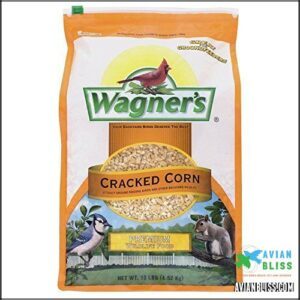
Cracked corn shows up in seed mixes everywhere, but here’s the truth—finches rarely choose it. While doves and juncos gobble it up, your goldfinches and siskins will pass right by.
The nutritional value sits lower than other options: only 8-10% protein with minimal fat content. Cost analysis reveals it’s budget-friendly at $8.75 per 50 pounds, yet aflatoxin risks spike when moisture creeps in.
Platform and hopper feeder types work best if you’re diversifying your bird food strategy, though premium finch-focused seed mixes wisely leave it out.
Best For: Backyard birders looking to attract ground-feeding species like doves, juncos, and jays on a budget, rather than finches specifically.
- Most affordable wild bird food option at around $8.75 per 50-pound bag, making it economical for feeding large quantities or multiple species.
- Effectively attracts diverse ground-feeding birds and wildlife including cardinals, chipmunks, and rabbits, plus works well as a squirrel diversion tactic.
- Versatile feeding methods—works in platform feeders, hoppers, or scattered directly on the ground for waterfowl and ground birds.
- Finches show minimal interest in cracked corn compared to nyjer or millet, so it won’t attract your target goldfinch or siskin visitors.
- High risk of aflatoxin contamination when exposed to moisture, with up to 18% of samples showing dangerous mold levels that can be fatal to birds.
- Non-resealable bag design leads to spills and mess, plus packaging issues reported with cracking during shipping.
8. Wagner’s Striped Sunflower Seed Wild Bird
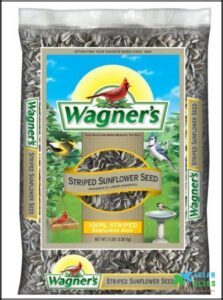
Wagner’s striped sunflower seed targets larger songbirds like cardinals and grosbeaks, but finches—especially house finches—will crack these hefty shells when hungry. At 16.5% protein and 25% fat, the nutritional profile bolsters energy needs, though shell thickness makes them tougher work than black oil varieties.
You’ll attract jays and woodpeckers alongside your finches using hopper or platform feeders. Fair warning: squirrel attraction runs high with this seed.
The 5-pound bag costs more per ounce than alternatives, yet feeding methods suit multi-species backyard setups perfectly.
Best For: Backyard birders wanting to attract larger songbirds like cardinals, jays, and grosbeaks while accepting that smaller birds may struggle with the thicker shells.
- High energy content with 25% fat and 16.5% protein supports bird health year-round, especially during harsh weather.
- Attracts a solid variety of larger species including woodpeckers, chickadees, and titmice alongside the marquee cardinals and jays.
- Works well in multiple feeder types (hopper, platform, tray) and creates less waste since target birds actually eat what they take.
- Thicker shells make these seeds harder for smaller birds like sparrows to crack, limiting your backyard variety.
- Squirrels find these irresistible, so you’ll likely deal with unwanted furry visitors raiding your feeders.
- Costs more per ounce than black oil sunflower seeds, which offer similar nutrition with broader bird appeal.
9. Lyric Sunflower Kernels Wild Bird Seed
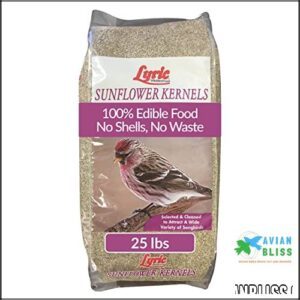
Lyric Sunflower Kernels flip the script entirely—no shells means zero waste beneath your feeders. These hulled sunflower seeds pack 20–27% fat and around 17% protein, fueling house finches and goldfinches without the mess of hull buildup that stunts your lawn.
You’ll attract chickadees, nuthatches, and cardinals too, making this bird seed a multi-species magnet. Compatible with tube, hopper, and platform feeders, the kernels stay fresh in weather-protected setups.
At 25 pounds, they cost more upfront, but the waste-free benefits and broad finch appeal justify the premium.
Best For: Backyard birders who want to attract finches, chickadees, and cardinals without dealing with messy shells or stunted grass under feeders.
- Zero waste and no shell cleanup—kernels are 100% edible, so nothing piles up beneath your feeder or kills your lawn.
- High fat and protein content (20–27% fat, ~17% protein) keeps finches and other songbirds energized year-round.
- Attracts 10 species including goldfinches, nuthatches, and woodpeckers across tube, hopper, and platform feeders.
- Higher upfront cost compared to traditional in-shell sunflower seeds due to the hulling process.
- Price can fluctuate with sunflower crop shortages, making budgeting less predictable.
- Packaging may arrive damaged during shipping, though product quality inside typically remains intact.
10. Wagner’s Nyjer Seed Wild Bird Food
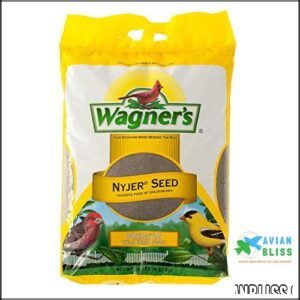
With roughly 150,000 seeds per pound, Wagner’s Nyjer Seed Wild Bird Food maximizes every feeder visit for American goldfinches, house finches, and purple finches.
This premium bird seed delivers over 35% fat and 18–20% protein—energy-dense nutrition that keeps finches coming back.
Sourced from African daisy plants and heat-treated to prevent sprouting, it’s extra-clean and mess-free in your finch feeder.
Available in 5- to 20-pound packages, Wagner’s Nyjer Seed costs around $2.20 per pound, offering unparalleled finch attraction without waste.
Best For: Backyard birders who want to attract goldfinches and other small finches with a high-energy, no-mess seed that won’t sprout under feeders.
- Delivers over 35% fat and 18–20% protein, providing energy-dense nutrition that keeps finches visiting throughout the year, especially during winter months.
- Extra-clean and heat-treated to prevent germination, resulting in virtually no waste or unwanted plant growth below your feeder.
- Contains approximately 150,000 seeds per pound, maximizing the number of feeder visits and extending the time between refills.
- Priced around $2.20 per pound, making it more expensive than many standard birdseed blends on the market.
- Bag closure design can be difficult to secure properly, potentially affecting seed freshness during storage.
- Some seeds may still fall to the ground despite low-waste design, occasionally attracting larger bird species or other wildlife you may not want at your feeder.
Choosing The Right Finch Feeder
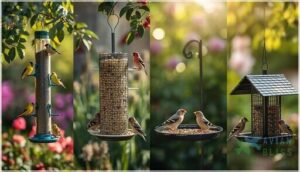
The right feeder makes all the difference when you’re trying to attract finches to your yard. Different finch species have unique feeding habits, so matching the feeder to their needs helps you get the best results.
Here are four proven feeder types that work well for finches.
Tube Feeders With Small Perches
You’ll want a tube feeder with perches shorter than 2 inches—this setup keeps out larger birds while giving finches easy access. Studies show these designs increase finch visits by 45% and cut unwanted guests by over 80%.
More perches mean less squabbling, and proper maintenance slashes disease transmission. Clean weekly, check for blockages monthly, and your feeder will last years.
Specialized Nyjer Feeders for Thistle
Specialized nyjer feeders use 4-5 mm mesh or ports—perfect for tiny finch beaks while keeping bigger birds out. Over 90% of nyjer seed goes straight to finches, and goldfinches prefer these by a 3:1 ratio.
Here’s what makes them work:
- Mesh design allows airflow, cutting disease risk by 40%
- Sterilized seed prevents invasive thistle growth (99.9% effectiveness)
- Fresh refills every 3-4 weeks triple daily finch visits
Platform Feeders for Ground-Feeding Species
Platform feeders are an excellent way to attract a diverse range of birds to your yard, with up to 88.8% of North American feeder species visiting these open trays. Ground-feeding birds such as juncos, sparrows, and doves are particularly fond of platform feeders, visiting them 34% more often than tube-style finch feeders.
Feeder Placement and Ground Feeding Setup
| Factor | Recommendation |
|---|---|
| Height from ground | 16 feet from bushes reduces predation by 48% |
| Drainage design | Screen-bottom trays cut mold risk by 62% |
| Seed mixes | Millet, safflower, sunflower for bird diversity |
| Cleaning schedule | Every two weeks prevents disease transmission |
| Capacity | Accommodates 12 birds, 320 grams of seed |
Proper feeder maintenance is crucial to keeping seed preferences fresh and ensuring the health of your finches. Regular cleaning and attention to feeder placement can make a significant difference in the number and variety of birds that visit your yard.
Sock Feeders for Fresh Seed Access
Sock feeders are one of the most affordable ways to attract finches, costing 30–70% less than tube feeders. The soft mesh design mimics natural feeding habits on thistle plants, letting goldfinches cling and pull Nyjer seed through small openings.
You’ll see up to 42% more visits when you use fresh thistle seed and clean weekly to prevent mold in humid climates.
Nutritional Benefits of Finch Seeds
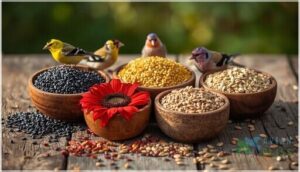
Understanding what makes finch seeds so valuable helps you choose the right food for your backyard visitors. Different seeds offer unique nutritional benefits that support finch health, energy levels, and overall well-being.
Let’s break down what each seed type brings to the table and how they stack up against each other.
High-Calorie Content for Energy Needs
Finches burn through calories like tiny feathered furnaces—up to 30% of their body weight daily—so Energy Dense Seeds aren’t optional, they’re survival fuel. Black Oil Sunflower Bird Food packs 584 calories per 100 grams, while Nyjer seed delivers 480-520.
Finches burn up to 30% of their body weight daily, making energy-dense seeds like black oil sunflower and nyjer essential survival fuel
During winter, Caloric Intake demands double. These energy-rich options support Metabolic Rates that keep your finches thriving through cold snaps and migration seasons.
Essential Oils and Fats
Beyond calories, your finches need the right Fatty Acid Profiles to thrive. Here’s what makes quality seeds stand out for Avian Health Benefits:
- Nyjer seed delivers 45.5–65.8% linoleic acid—critical for membrane formation
- Black Oil Sunflower Bird Food contains up to 85% essential fatty acids
- Sunflower seeds and sunflower hearts provide 40%+ crude fat
- Seeds show 97–99% fat digestibility
- Oil Content Analysis reveals Niger yields 30–44% oil by weight
That’s Seed Nutrition Facts supporting real Finch Diet Optimization.
Protein Requirements for Finches
Your finches need about 8–10% dietary protein for everyday maintenance, but breeding pairs and growing chicks demand 18–25%. Thistle seed and black oil sunflower seeds offer some protein, though finch seed mixes alone rarely meet breeding requirements.
You’ll want to add boiled eggs or mealworms during nesting season—those amino acid profiles support feather growth and muscle development that standard nyjer seed can’t deliver.
Comparing Seed Nutritional Values
Once you compare seed types side by side, you’ll notice huge differences. Sunflower hearts pack 584 kcal per 100 grams—the highest energy value—while nyjer delivers 480–550 kcal with better protein (18–20%). Millet sits lower at 360–400 kcal but adds fiber for gut health.
Quality finch seed mixes rotate these options so your flock gets balanced nutrition instead of gaps in vitamins A, D3, and essential amino acids.
Finch Feeding Tips and Maintenance
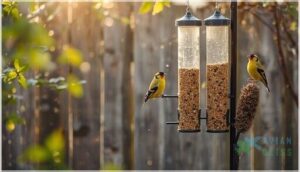
Getting finches to visit your yard is one thing, but keeping them healthy and happy takes a bit of know-how. You’ll want to think about where you put your feeders, how often you clean them, and what changes throughout the year.
Here’s what you need to do to maintain a thriving finch feeding station.
Proper Feeder Placement Strategies
Where you place your finch feeder makes all the difference between a bustling bird hub and an empty station. Follow these feeder placement guidelines to enhance feeding activity:
- Hang feeders 5–6 feet high for ideal bird flight patterns and visibility
- Position 10–15 feet from cover like shrubs for predator deterrents
- Keep 10+ feet from hiding spots to prevent ambush attacks
- Install baffles on poles to stop climbing predators
- Choose sheltered, low-traffic areas for comfortable feeding
Regular Cleaning and Refilling Schedule
Consistently maintaining your finch feeder protects your backyard flock from disease and keeps seed fresh. Clean feeders every two weeks with a 10% bleach solution, soaking for 10 minutes to kill pathogens. Refill when seed runs low—usually every 2–3 days for active feeders. Weekly cleaning works best during wet weather or heavy traffic.
Disease prevention starts with cleaning schedules. Research shows routine sanitation reduces salmonellosis and other finch illnesses markedly.
| Task | Frequency | Method |
|---|---|---|
| Feeder sanitation | Every 2 weeks | 10% bleach solution, 10-min soak |
| High-traffic cleaning | Weekly | Hot soapy water + bleach rinse |
| Refill intervals | Every 2–3 days | Monitor seed levels, don’t overfill |
| Ground cleanup | Every 2 weeks | Remove hulls and spilled seed |
| Deep cleaning cycle | Monthly | Empty feeder, scrub all parts |
Preventing Seed Spoilage and Mold
Moisture control is your best defense against mold and spoilage. Store bird seed in airtight containers in cool, dry spots—this extends seed freshness up to six months.
Check for spoilage signs like clumping, musty odors, or seed hulls coated in fuzz. Refill feeders with small amounts you’ll use in two days, and use drainage holes or lids to keep seed dry.
Seasonal Feeding Considerations
Your finch feeding habits need to shift with the calendar. Winter nutrition demands high-fat seeds like black oil sunflower, as finches burn 25–38% more calories during cold months. Adjust your feeding strategies seasonally:
- Spring: Boost protein-rich sunflower hearts and add calcium supplements for breeding pairs
- Summer: Reduce quantities as natural seeds become plentiful
- Fall: Increase seed rotation to support finch migration and pre-winter fat storage
Climate adaptation matters—northern regions see peak activity in late winter, while southern feeders attract more birds during migratory stopovers.
Frequently Asked Questions (FAQs)
What plants naturally attract finches to gardens?
Your garden becomes a finch magnet when you plant native flower choices like sunflowers and coneflowers alongside seed-bearing plants and finch-friendly grasses. These bird-attracting shrubs create a finch-friendly environment naturally.
How do finches crack open different seeds?
You’ll notice finches use powerful jaw muscles to crack seeds. Their beak structure generates impressive bite force—up to 70 Newtons—while precise lateral jaw movement helps them apply shear force for efficient seed manipulation.
Can finches eat human food scraps safely?
No, you shouldn’t feed finches human food scraps. Toxic foods like avocado, chocolate, and onions can poison birds, while high-fat or salty scraps cause nutritional imbalances, undermining a healthy diet and finch-friendly environment.
Do finches prefer feeding alone or in groups?
Birds of a feather flock together” rings especially true for finches. These social birds prefer group feeding at finch feeders, where social learning and group dynamics help them discover nutritious bird seed sources together in a finch-friendly environment.
What time of day do finches eat most?
Finches show peak feeding habits during early morning and late afternoon hours. These diurnal behavior patterns align with their activity peaks, making dawn and dusk the best times to refill your finch feeder with fresh bird seed.
Conclusion
Stock your feeder with the right types of bird seeds for finches, and you won’t just attract a few visitors—you’ll create a backyard sanctuary they return to season after season. Whether you choose nyjer for goldfinches or safflower to outsmart squirrels, each seed fulfills a purpose.
Clean feeders regularly, place them strategically, and watch your efforts pay off. The finches are out there, waiting. Give them a reason to stay.
- https://fmbrown.com/product/nyjer-thistle-seed/
- https://www.targetfeeds.com/nyjer-seeds
- https://www.lyricbirdfood.com/birding-hub/feeding-tips/5-fascinating-facts-about-nyjer-seed/
- https://www.birdwatchingdaily.com/beginners/attracting-birds/laura-erickson-tells-why-finches-might-not-eat-the-nyjer-seed-you-provide/
- https://shop.jacobijayne.com/blogs/news/do-finches-prefer-thistle-or-nyjer-seed