This site is supported by our readers. We may earn a commission, at no cost to you, if you purchase through links.
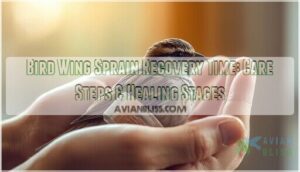 A wild sparrow slammed into your window, and now one wing drags uselessly behind it. Your first question isn’t about whether to help—it’s about whether that fragile limb will ever support flight again.
Bird wing sprain recovery time varies dramatically based on injury severity, species, and the quality of care provided during those critical first weeks. Sprains generally heal within two to four weeks with proper stabilization, while fractures and nerve damage can extend recovery to several months.
Understanding the healing stages and implementing structured rehabilitation techniques means the difference between a bird that soars back to freedom and one that never regains flight capability.
Table Of Contents
Key Takeaways
- Bird wing sprains typically heal within two to four weeks with proper stabilization and care, while fractures and nerve damage can extend recovery to several months, with nerve injuries showing the poorest prognosis at only 13.6% successful release rates.
- Recovery time depends critically on injury severity, bird age and species, and the quality of supportive care—juvenile birds heal 30% faster than geriatric birds, and providing 20-30% dietary protein with proper vitamin supplementation accelerates tissue repair significantly.
- Successful rehabilitation requires structured phases including immediate wing stabilization with figure-of-8 bandaging changed every 2-3 days, daily wound care for the first 3-5 days, and progressive physical therapy exercises that improve joint mobility by 20-40 degrees over 2-4 weeks.
- Professional veterinary intervention becomes essential when you observe persistent swelling, abnormal wing positioning that doesn’t improve, behavioral changes like lethargy or food refusal, or any signs of infection, as these complications can prevent full recovery without expert treatment.
Common Types of Bird Wing Injuries
When you’re caring for an injured bird, understanding what type of wing injury you’re dealing with makes all the difference in providing the right care. Wing injuries range from relatively minor soft tissue damage to severe fractures that require immediate veterinary attention.
Let’s look at the most common types of wing injuries you might encounter and what sets them apart.
Sprains Vs. Strains
When your bird injures its wing, understanding whether it’s a sprain or strain shapes your care approach. Sprains affect ligaments connecting bones, causing joint swelling and instability, while strains involve muscle injuries or tendon damage, presenting as tenderness without bruising.
Most ligament injuries heal within 2-4 weeks, whereas muscle injuries recover faster—usually 1-3 weeks—with proper immobilization reducing inflammation and pain throughout recovery. Birds are prone to these injuries during physical activity, such as flying or playing.
Fractures and Dislocations
While sprains and strains cause discomfort, fractures represent the most serious wing injuries you’ll encounter. These breaks occur when crushing force damages delicate bones—35.96% of all avian long bone fractures affect the wing. Dislocations happen when joints separate from normal alignment, requiring 3-5 weeks of immobilization.
Healing time varies: simple closed fractures need 4-6 weeks, while complicated cases demand 6-10 weeks with supportive care and sometimes surgical options to restore proper joint alignment. The bird’s age and species also greatly impact recovery prospects.
Soft Tissue and Nerve Injuries
Beyond fractures, soft tissue injuries—including bruises, lacerations, and inflammation—affect 78% of rehabilitated birds of prey. These wounds generally heal within 10–14 days if properly treated.
Nerve damage carries the poorest prognosis, with only 13.6% of affected birds released successfully. That’s why early recognition matters: complications arise in 43% of severe cases, making supportive care and rehabilitation measures critical for recovery.
Nerve damage in bird wings has the worst outlook, with early intervention being critical to prevent complications in nearly half of severe cases
Factors Influencing Bird Wing Recovery Time

Not every bird with a wing injury heals at the same pace. Several key factors determine whether your bird will recover in a few weeks or need months of rehabilitation.
Understanding what influences healing time helps you set realistic expectations and provide the right care from the start.
Severity and Location of Injury
Not all wing injuries are created equal—the severity of injury and location of injury dramatically shape your bird’s recovery timeline. Mild sprains heal within 2 to 4 weeks, while compound fractures extend healing stages of injured wing to 36 days or more.
Fracture location matters too: proximal injuries near the shoulder require longer rehabilitation than distal wounds. Tissue involvement, nerve damage, and vascular damage further complicate factors influencing healing time, greatly reducing successful injury recovery rates.
Age and Species of Bird
When age and species are considered, healing times for birds can vary significantly. Juvenile birds typically recover from sprains within 2–3 weeks, while geriatric birds may experience extended recovery periods due to complications, which can prolong healing by 30%. Species variation also plays a crucial role in determining healing timeframes.
Here are some examples of healing times for different avian species:
- Raptor recovery averages 3–4 weeks for uncomplicated injuries
- Parrots often heal minor sprains within 2 weeks
- Wood pigeons require 60–80 days for full rehabilitation
- Clinical intervention within 24 hours boosts juvenile outcomes by 27%
These factors highlight the importance of providing species-specific care to ensure optimal healing outcomes for each type of bird.
Nutrition, Health, and Stress Levels
You can’t ignore the connection between what your bird eats and how quickly it bounces back. Injured birds need 20–30% dietary protein for tissue repair, while vitamin deficiencies slow wound healing by up to 30%. Malnutrition weakens immune response, and fluid therapy corrects dangerous electrolyte imbalances.
Stress hormones also matter—chronically stressed birds lose body mass early on, though controlled environments and nutritional support help them regain strength. Nutritional deficiencies directly impact outcomes, so stress reduction and targeted nutritional support become as important as bandaging the wing itself.
| Factor | Impact on Recovery | Key Intervention |
|---|---|---|
| Dietary Protein | 20–30% needed for tissue repair | High-protein rations |
| Vitamin Deficiencies | 30% slower wound closure | Vitamin A supplementation |
| Stress Hormones | Mass loss, delayed healing | Stress reduction protocols |
Healing Stages of a Sprained Bird Wing
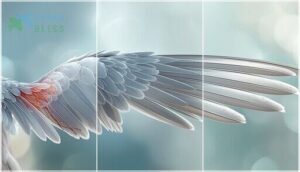
Understanding what happens inside your bird’s wing during recovery helps you know what to expect and when to worry. A sprained wing moves through distinct healing phases, each with its own timeline and physical changes.
Let’s walk through these stages so you can recognize the signs of progress along the way.
Inflammation and Swelling Phase
When you discover a bird with a sprained wing, the first five days after injury mark the inflammation and swelling phase. Immediate vascular changes trigger vasoconstriction, followed by vasodilation within 30 minutes. You’ll notice leukocyte infiltration beginning 2–6 hours post-injury, with elevated WBC counts appearing in about 33% of acute trauma cases.
Key inflammatory markers you should understand include:
- Serum amyloid A concentrations reaching 78.10 ng/mL in severe cases, signaling the body’s acute response
- Haptoglobin activity increasing 2.1 times above normal levels during this critical healing window
- Heterophilia patterns potentially escalating to leukemoid reactions, with values exceeding 50 × 10³/μL in serious injuries
This phase demands your attention to supportive care for healing. Pain management keeps your bird comfortable while its body orchestrates this complex biological response. Proper nutritional support and wound care during inflammation swelling set the foundation for successful recovery.
Tissue Repair and Remodeling
After the initial inflammation settles, your bird’s body shifts into repair mode around day 7. Fibroblast proliferation kicks in, lasting up to three weeks as cells deposit collagen to rebuild damaged tissue.
ECM grafts can accelerate this process, closing soft tissue injuries within four to six weeks.
During bone remodeling, soft callus formation transitions to hard callus formation, gradually restoring tensile strength through organized collagen deposition and cellularity reduction.
Regaining Wing Function and Strength
Once hard callus forms, your bird enters the functional recovery phase, where regaining function depends on structured rehabilitation therapy.
Daily PROM Progress improves joint flexibility by up to 35%, while muscle conditioning in flight cages increases pectoral mass by 21% over four to six weeks.
Flight Assessment confirms readiness when birds complete 10 uninterrupted wing beats, with Success Rates reaching 75–92% following Physical Rehabilitation protocols.
Supportive Care and Rehabilitation Steps
Once the initial swelling settles and healing begins, your bird needs consistent support to recover properly. This means going beyond basic rest to include wing stabilization, careful wound management, proper nutrition, and gentle rehabilitation exercises.
The following steps will guide you through each essential component of supportive care.
Proper Wing Stabilization Techniques
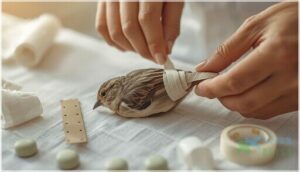
Proper wing stabilization forms the cornerstone of successful recovery. You’ll need to master several techniques to support your bird’s healing journey:
- Apply figure-of-8 bandaging for sprains, changing every 2-3 days over 2-3 weeks
- Use body strap bandages wrapped twice, monitoring breathing within 1-2 minutes
- Replace splints every 7-10 days for orthopedic injuries
- Maintain bandage tension firm enough to insert one finger underneath
- Position the wing to match the healthy side’s natural alignment
Wound Care and Infection Prevention
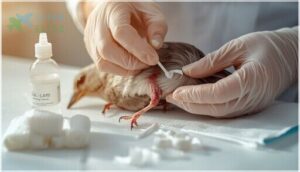
Beyond stabilizing the wing, you’ll need to tackle wound care with precision to prevent infection.
Clean open wounds with diluted chlorhexidine or betadine, avoiding contamination of the mouth and ears. Change bandages daily for the first 3-5 days to reduce infection risk—most wounds heal within 10-14 days when you follow proper antiseptic protocols and biosecurity measures.
Nutrition and Hydration for Healing
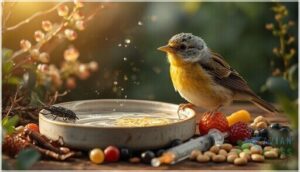
While you’re caring for external wounds, you can’t overlook what’s happening inside. Your bird’s recovery hinges on nutritional support for birds—specifically high protein intake (at least 42% crude protein) to accelerate tissue repair. Micronutrient needs like calcium and vitamins A, D, and E are equally important, while hydration protocols delivering 50–150 mL/kg daily prevent malnutrition from delaying healing.
- Energy considerations matter: recovery diets with 22% fat content fuel metabolic demands without causing nutritional deficiencies
- Feeding techniques like tube-feeding guarantee adequate food intake when birds refuse to eat voluntarily
- Supplemental feeding with vitamin-dusted insects bolsters insectivorous species during convalescence
Physical Therapy and Alternative Therapies
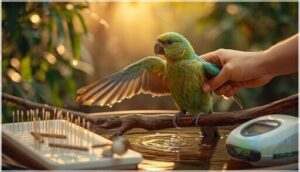
Once your bird’s nutritional foundation is solid, you’ll want to introduce physical therapy exercises that rebuild strength and flexibility. ROM exercises—like assisted wing flapping and controlled extension—improve joint mobility over 2-4 weeks of daily sessions. Alternative modalities such as acupuncture, ultrasound therapy, and hydrotherapy (shallow water movement) improve pain management and accelerate functional recovery, with PT protocols achieving 60-85% success rates.
| Therapy Type | Application Method |
|---|---|
| ROM Exercises | Assisted flapping, passive stretching |
| Acupuncture | Pain relief, inflammation reduction |
| Ultrasound | Joint contracture treatment |
| Hydrotherapy | Water immersion for muscle engagement |
Clinical monitoring through weekly joint assessments ensures your bird progresses safely. Release statistics show that structured physical rehabilitation reduces healing time by 15-30% compared to immobilization alone.
When to Seek Professional Veterinary Help
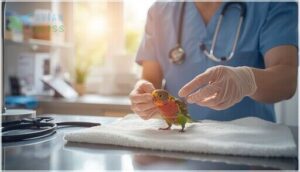
Even with the best home care, some wing injuries need professional attention to heal properly. Knowing when to call an avian veterinarian can make the difference between full recovery and permanent loss of flight.
Here are the key situations that require expert evaluation and treatment.
Recognizing Signs of Complications
Even minor wing injuries can spiral into serious problems if you miss the warning signs. Infection indicators like persistent swelling or discharge around the wound site demand urgent intervention.
Watch for abnormal positioning—a drooping wing that doesn’t improve suggests delayed healing or potential complications like joint stiffness.
Behavioral changes, including lethargy or refusing food, often signal wound infection requiring immediate veterinary help before the situation worsens.
Monitoring Recovery Progress
How effectively is your bird responding to treatment? Monitoring recovery means tracking range of motion weekly—you’re looking for joint angles to improve by 20–40 degrees in straightforward sprain cases. Weight monitoring flags nutritional issues if your bird drops more than 5% body weight.
Watch for swelling reduction and behavioral signs like improved alertness. Flight testing and physical examination confirm readiness before considering release criteria.
Deciding on Rehabilitation or Release
Once your bird’s recovery plateaus, you’ll face critical release criteria decisions. Rehabilitation services evaluate flight strength, predator avoidance, and foraging ability—ethical considerations demand birds demonstrate full wing extension before release. Legal frameworks prohibit releasing birds with permanent disabilities.
Post-release outcomes vary by species, with raptors showing 75% success rates. If captivity welfare concerns arise, wildlife rehabilitation centers assess whether permanent sanctuary placement benefits your bird’s best interests.
Frequently Asked Questions (FAQs)
How do you safely handle an injured bird?
Approach gently, covering the bird with a towel to minimize stress. Use proper containment—a ventilated box with air holes.
Assess injuries carefully, provide first aid if needed, and transport to a licensed rehabilitator promptly.
What pain medications are safe for birds?
You must consult an avian veterinarian before giving pain medication.
Safe options under veterinary oversight include meloxicam (an NSAID) and butorphanol (an opioid), with dosages adjusted to species, injury severity, and individual response.
Do indoor birds recover faster than outdoor birds?
Your bird’s healing timeline often depends on whether they’re sheltered indoors or braving the elements outside.
Indoor birds usually recover faster—usually within 3-6 weeks—thanks to reduced environmental stressors, consistent veterinary access, and controlled supportive care conditions.
Should I keep the injured bird isolated or not?
Yes, you should isolate your injured bird. Isolation Benefits include Stress Reduction and Disease Control, while Cage Rest in a Safe Environment allows focused Monitoring, Wound Care, and Supportive Care—though consider their Social Needs during recovery.
Conclusion
A healed wing transforms a grounded bird into a creature of sky and wind once more. Your attentiveness during those critical healing weeks—stabilizing the injury, providing proper nutrition, monitoring for complications—directly determines whether that transformation occurs.
Bird wing sprain recovery time hinges on consistent, informed care rather than hope alone. When you combine veterinary guidance with patient observation, you’re not just treating an injury; you’re restoring the fundamental ability that defines what it means to be a bird.
- https://www.birdful.org/how-long-does-it-take-for-a-birds-wing-to-heal/
- https://crowclinic.org/about-crow/in-the-news/case-of-the-week/crow-caws-physical-therapy-is-for-birds-too/
- https://www.msdvetmanual.com/exotic-and-laboratory-animals/pet-birds/traumatic-injury-of-pet-birds
- https://krishikosh.egranth.ac.in/items/14617b1c-d5d6-4a28-92a5-fb7a8da32fb7
- https://pmc.ncbi.nlm.nih.gov/articles/PMC11305546/