This site is supported by our readers. We may earn a commission, at no cost to you, if you purchase through links.
 A cardinal slams into your window at dawn, flutters to the ground, and sits motionless with one wing hanging at an odd angle. Your backyard chickens suddenly show reluctance to roost, favoring one side when they walk. These scenarios happen more often than most bird owners realize, yet diagnosing wing problems in birds requires a careful eye and systematic approach that many people lack.
Wing injuries represent some of the most common yet misunderstood conditions affecting both wild and domestic birds. The delicate architecture of avian wings—with their intricate network of bones, joints, and flight muscles—makes them vulnerable to trauma, disease, and developmental issues. What appears as a simple droop or awkward positioning often signals complex underlying problems that demand immediate attention.
Recognizing the early warning signs and understanding proper assessment techniques can mean the difference between successful rehabilitation and permanent disability for an injured bird.
Table Of Contents
Key Takeaways
- Wing injuries in birds often present through subtle behavioral changes like altered vocalizations, reluctance to fly, and abnormal wing positioning before visible damage becomes apparent, making early recognition crucial for successful treatment outcomes.
- Only 18% of birds with wing fractures achieve successful rehabilitation and return to flight, with oblique fractures showing better healing prospects than transverse breaks, emphasizing the importance of immediate professional veterinary intervention.
- Emergency stabilization requires proper immobilization techniques using figure-of-eight bandages or body wraps, combined with stress reduction through dimmed lighting, warmth maintenance at 80-85°F, and gentle handling during transport to veterinary care.
- Recovery success depends heavily on the bird’s age, species, overall health status, and nutritional support, with juvenile birds healing faster (3-10 days versus 7-21 days for adults) but requiring specialized rehabilitation protocols that include 42% crude protein and proper calcium-phosphorus ratios.
Signs of Wing Problems in Birds
When a bird’s wing isn’t right, it often shows up in more ways than one. You’ll notice certain signs before you see the injury itself. Here’s what to watch for next.
Abnormal Wing Positions
An alert observer notices telltale clues in Bird Posture and Flight Patterns—the wing droops, juts out at an odd angle, or crosses awkwardly against the body. Abnormal Wing Orientations often stem from Skeletal Issues, such as Dislocations or Fractures, or soft tissue Wing Injuries. Even subtle changes in Feather Alignment mean something’s amiss with Wing Anatomy.
Birds suffering from wing growth issues can exhibit noticeable abnormalities in their flight patterns and overall health.
Visible Deformities and Swelling
When you spot a lump, bent wing, or feathers jutting at odd angles, these visible deformities are red flags. Wing fractures and dislocations, along with swelling, hint at deeper damage. Feather damage and odd bulges are clear signs of wing injuries or broken wing issues.
Understanding swelling causes and deformity types can guide your injury prevention strategy and next steps. Birds in cold climates are prone to cold weather issues that can exacerbate wing problems.
Changes in Vocalization and Behavior
Beyond bent wings or swelling, pay attention to Vocalization Patterns and Behavioral Changes. A bird that falls strangely quiet or shifts to harsh, higher-pitched calls is sending out Stress Signals and Pain Indicators.
You might see Social Withdrawal or new Lethargy—clear Signs of a broken wing. Even subtle Vocalization Changes or awkward movements often reflect deeper Changes in Behavior.
Difficulty Flying or Perching
If your bird starts avoiding flight, struggles to move, or perches in an altered way, it’s sounding the alarm for you to look closer. Watch for these five shifting patterns in Wing Anatomy and Avian Physiology:
- Inability to fly
- Unsteady landings
- Reluctant wing movement
- Changing perching behaviors
- Sudden falls
Each signals possible wing injuries needing rehabilitation.
Common Causes of Bird Wing Injuries

Bird wing injuries don’t happen by accident—they usually have a clear cause. Understanding how and why these injuries occur is key to protecting your bird’s health.
Here are some of the most common reasons birds end up with wing problems.
Trauma and Accidents
Imagine your bird crashes into a window or gets caught in a ceiling fan—collision risks like these are the leading culprits behind trauma-induced wing injuries.
In fact, Trauma Scores help us assess the severity of such accidents, guiding emergency response and rehabilitation techniques for broken wing cases.
Proactive accident prevention goes a long way, but quick emergency care can save both lives and flight.
Fractures, Dislocations, and Soft Tissue Injuries
Fragility defines every wing: fractures, dislocations, and Soft Tissue Injuries can surface in an instant, demanding skilled Avian Orthopedics. Picture these three scenarios—1. a bent bone or snapped joint (Bone Healing and Joint Stabilization), 2. bruised muscles needing Soft Tissue Repair, 3. the hallmark reluctance to fly following a dislocated wing. Wing Fracture Treatment starts here.
Underlying Health Conditions
Vulnerability takes many forms in avian health—infectious diseases, metabolic disorders, nutritional deficiencies, and chronic illnesses each leave their own imprint on wing function. Joint instability, weakness, or altered flight can stem from metabolic bone disease, thiamine deficiency, or even environmental stressors. A bird’s anatomy reveals every setback, making a careful eye your best defense.
| Issue | Example Condition | Impact on Wings |
|---|---|---|
| Infectious diseases | Avian influenza | Drooping, paralysis |
| Metabolic disorders | Metabolic bone disease | Malformed, fractured |
| Nutritional deficiencies | Thiamine deficiency | Paralysis, weakness |
| Chronic illnesses | Hepatic lipidosis | Reduced mobility |
| Environmental stressors | Confinement | Chronic drooping, weakness |
Step-by-Step Wing Assessment
Evaluating a bird’s wing takes patience and a careful eye. Before you start, it helps to know what to look for and how to keep your bird calm. Here’s what you’ll want to focus on next.
Safe Handling and Initial Observation
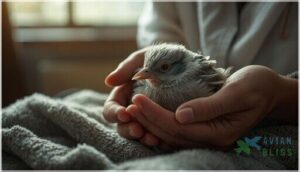
Before you touch a wing, your eyes do the first work. Gentle restraint methods using a towel reduce stress while you observe pain indicators like fluffed feathers or labored breathing.
Safe handling starts with evaluating environmental risk factors—did the bird hit a window? Pre-handling cues reveal much about the injury.
Keep your movements calm, minimizing contact time to prevent additional trauma during transport preparations.
Visual and Physical Examination Techniques
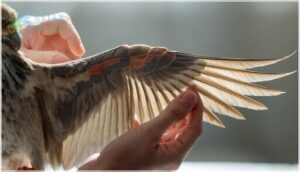
Your visual examination starts with Wing symmetry—note any drooping, unusual angles, or feather analysis that reveals damage patterns.
Palpation methods come next: gently feel along bones for crepitus, Swelling, or Bruising while your bird remains calm.
Range of motion tests assess Joint mobility at the shoulder and elbow, revealing pain or restriction.
Condition scoring evaluates muscle mass over the keel, helping you distinguish injury from systemic illness.
Comparing Both Wings for Abnormalities
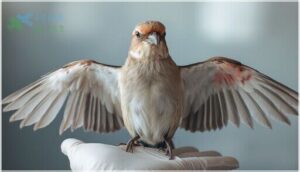
Think of each wing as a mirror; subtle differences—like swelling, bruising, or visible deformity—reveal much. Comparing both sides catches early asymmetry impact, whether bilateral or unilateral.
Even slight changes in angle measurements or abnormal wing position matter, given observer variance and morphological disparity. Movement quality and side-by-side shape tell you where the trouble truly lies.
When to Use Diagnostic Tools (X-ray, CT)
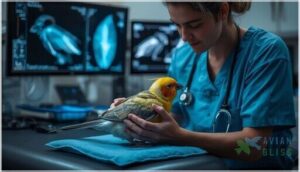
If you notice abnormal movement or swelling during the physical examination, X-ray indications guide your next diagnostic steps. Radiographs are often your first stop, revealing fractures or dislocations clearly.
For complex cases or when radiographs miss something subtle, CT indications come into play. An avian vet weighs safety considerations, choosing the diagnostic technique that maximizes accuracy and minimizes your bird’s stress.
Emergency Care and Immediate Actions
If you suspect a wing injury, every moment counts. The right first steps can help limit further harm and ease your bird’s pain. Here’s what you need to do right away.
Providing Temporary Immobilization
When faced with a wing injury, proper immobilization becomes your bird’s lifeline until professional help arrives. Emergency care requires specific bandage materials and taping techniques to prevent further injury during safe bird transport.
- Figure-of-eight bandages using soft roll gauze for fractures below the shoulder
- Body wrap methods with self-adherent material for upper wing injuries
- Vetrap or masking tape for temporary field immobilization
- Canvas carrying bags as splint alternatives for larger birds
- Monitoring complications like increased stress or breathing difficulties
Managing Pain and Stress
Once you’ve immobilized the wing, managing pain and stress becomes your next priority. Injured birds experience significant discomfort that can worsen their condition if left untreated.
Create a stress-free space by dimming lights, reducing noise, and maintaining warmth around 80-85°F. Pain management through gentle handling and minimizing movement helps prevent shock while supporting your bird’s natural healing processes during injury rehabilitation.
Safe Transport to a Veterinarian
After stabilizing your bird’s condition, getting to a veterinarian quickly becomes paramount.
Carrier preparation involves selecting a secure, well-ventilated container sized appropriately for your bird. Temperature control matters—keep the carrier warm but avoid overheating.
Veterinary communication before departure ensures they’re ready for emergency bird care. Gentle bird handling during transport prevents further injury while maintaining transport safety.
First Aid Supplies for Birds
A well-stocked first aid kit can mean the difference between life and death during avian emergencies. Essential medical supplies include styptic powder for bleeding control, sterile gauze for wound care, and vet wrap for bird bandages.
Don’t forget antiseptic solutions for wound cleaning, oral syringes for fluid therapy, and your emergency veterinary contact information.
Factors Affecting Recovery and Prognosis

Not every bird with a wing injury will bounce back the same way, and understanding what influences recovery can help you set realistic expectations.
Several key factors determine whether your feathered friend will return to full flight or face ongoing limitations.
Let’s examine the main elements that shape a bird’s healing journey and long-term prognosis.
Age, Species, and Overall Health
Just like people, your bird’s age and species dramatically influence wing injury recovery outcomes. Juvenile birds heal faster but face higher fracture rates, while adults show better rehabilitation success despite longer healing times. Overall health status determines whether your feathered friend bounces back or faces complications.
Key factors affecting recovery include:
- Age Factors: Juveniles (6-12 months) represent 50% of wing fracture cases but heal in 3-10 days versus 7-21 days for adults
- Species Variability: Smaller birds like parakeets recover within 21 days, while larger species like cockatoos need up to 40 days
- Health Outcomes: Poor nutrition increases complication risks, with malnutrition rates reaching 16.8% in some wild bird species
- Rehabilitation Success: Only 40% of birds with wing injuries successfully return to flight, with mortality rates varying markedly by species and overall condition
Your bird’s cardiovascular health, muscle tone, and nutritional status directly impact healing. Birds in peak condition before injury show markedly better outcomes than those with underlying health issues or poor body condition.
Severity and Type of Wing Injury
Complexity determines everything regarding wing injuries in your bird. Simple wing fractures heal successfully in most cases, while compound fractures involving both radius and ulna bones often lead to euthanasia decisions.
Oblique fractures represent 49% of cases with better outcomes than transverse breaks. Unfortunately, only 18% of birds with wing fractures achieve successful rehabilitation outcomes.
While oblique wing fractures heal better than transverse breaks, only 18% of birds with wing injuries ever fly again
Nutritional Support for Healing
Think of nutrition as your bird’s internal repair crew—without proper fuel, healing stalls completely. You’ll need to provide at least 42% crude protein and 22% crude fat for ideal recovery.
Vitamin supplementation, especially calcium-phosphorus ratios of 1.5-2:1, accelerates bone healing. Fluid therapy corrects dehydration while nutrient balance aids tissue repair and immune function.
Importance of Professional Rehabilitation
Professional wildlife rehabilitation transforms what seems hopeless into extraordinary recoveries. You can’t replicate specialized avian therapy at home—rehabilitation techniques require expertise that dramatically improves survival rates:
- Flight restoration protocols rebuild strength through gradual reconditioning
- Sophisticated veterinary care tackles complex fractures and nerve damage
- Behavioral conditioning ensures successful wild reintegration
Professional help means the difference between permanent disability and soaring free again.
Frequently Asked Questions (FAQs)
Can birds survive permanently with one wing?
While birds can’t weather the storm of wing amputation in the wild, survival rates in captivity reach only 40%, with many facing quality of life challenges requiring specialized long-term care and rehabilitation.
How much does avian wing surgery typically cost?
Avian wing surgery costs range from $700-$2,000, with surgical fees comprising 60-85% of veterinary bills.
Cost factors include injury complexity, species size, and geographic location, while insurance options may offset recovery expenses.
Do wild birds feel pain like mammals?
Surprisingly, your feathered friend experiences pain just like you do. Birds possess cutaneous nociceptors and ascending pain pathways identical to mammals, with opioid receptors that respond to painful stimuli through measurable physiological and behavioral changes.
Which bird species recover fastest from injuries?
Raptors demonstrate the fastest recovery timeline from wing injuries, with a median rehabilitation duration of just 32 days.
Their sturdy physiology and specialized flight therapy protocols make these birds remarkably resilient compared to other species.
Are there legal requirements for helping injured birds?
Imagine discovering an injured hawk in your backyard—your good intentions could land you in legal trouble. Federal permits, state laws, and wildlife protection regulations strictly govern who can legally provide emergency care and rehabilitation licensing for wild birds.
Conclusion
Like a detective solving a puzzle, diagnosing wing problems in birds requires patience, observation, and methodical assessment. Your quick recognition of abnormal positioning, behavioral changes, or visible injuries can save a bird’s ability to fly—and often its life.
Remember that wing injuries rarely heal properly without professional intervention. When you spot the warning signs, don’t hesitate to seek veterinary care. Your vigilance transforms a potentially devastating injury into a story of recovery and renewed flight.