This site is supported by our readers. We may earn a commission, at no cost to you, if you purchase through links.
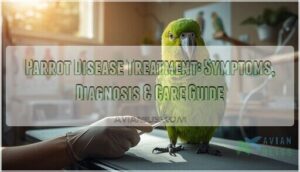
A parrot’s sudden loss of appetite and ruffled feathers might seem like a minor issue, but these subtle signs could indicate psittacosis—a bacterial infection that threatens both your bird’s life and your own health. This zoonotic disease, caused by Chlamydia psittaci, affects thousands of pet birds annually and can spread to humans through contaminated droppings or respiratory droplets.
The good news? When caught early, effective parrot disease treatment exists, combining targeted antibiotics with supportive care to restore your bird’s health. Understanding how to spot the symptoms, secure an accurate diagnosis, and follow through with proper treatment protocols can mean the difference between a full recovery and serious complications for both you and your feathered companion.
Table Of Contents
Key Takeaways
- Psittacosis, caused by Chlamydia psittaci bacteria, spreads between birds through respiratory fluids and droppings while posing serious zoonotic risks to humans—especially through inhaling contaminated dust during cage cleaning.
- Early detection matters because subtle symptoms like ruffled feathers and appetite loss can quickly progress to multi-organ failure, with mortality reaching 9-16% in untreated birds.
- Treatment requires a full 45-day course of doxycycline antibiotics combined with supportive care like fluid therapy and temperature control, since stopping early drives relapse rates up to 22%.
- Prevention depends on strict 30-45 day quarantine for new birds, thorough disinfection with proper contact times, and consistent use of N95 masks during all cage maintenance to block transmission.
What is Psittacosis in Parrots?
Psittacosis, also called parrot fever, is a bacterial infection that affects birds in the parrot family and can spread to humans. The disease stems from Chlamydia psittaci, a bacterium that lives in infected birds and contaminates their environment through droppings and respiratory secretions.
Understanding what causes this disease, how it moves between birds, and the risks it poses to you’ll help protect both your feathered companions and your household.
Causes of Parrot Disease
Beyond the bacterial culprit Chlamydia psittaci, parrot disease stems from multiple intertwined factors. Environmental stressors like crowding, poor air quality, and transport trigger bacterial shedding in your birds. Nutritional deficiencies—especially vitamin A and calcium—weaken immunity, opening doors to infection.
Viral predispositions and fungal exposure compound the risk, while contaminated droppings promote zoonotic transmission between birds and humans. Diets lacking proper nutrition can lead to vitamin A deficiencies, impacting parrot health.
Bacterial Transmission Among Birds
Transmission between birds happens through multiple pathways. Horizontal transmission dominates—your parrots spread Chlamydia psittaci via respiratory fluids and droppings during direct contact or through contaminated surfaces. Vertical transmission, though rarer, passes infection from hen to egg in some species.
Environmental contamination keeps bacteria viable on perches and feeders for days. Interspecies dynamics during quarantine failures and overcrowding exacerbate outbreaks, especially when stressors trigger increased bacterial shedding.
This pathogen is a zoonotic disease agent affecting both birds and humans.
Zoonotic Risks to Humans
You face direct zoonotic disease risk when handling infected parrots. Inhalation of contaminated dust—not just bird contact—causes most human transmission of psittacosis.
Handling infected parrots exposes you to psittacosis primarily through inhaling contaminated dust, not just direct bird contact
Males aged 40-79, farmers, and immunocompromised individuals show higher vulnerability. Clinical presentation includes fever, headache, and pneumonia after a 5-15 day incubation period.
Hospitalization rates reach 42%, though prompt antibiotic treatment dramatically improves outcomes. Preventive measures include proper ventilation and protective equipment during cage cleaning.
Recognizing Psittacosis Symptoms
Catching psittacosis early can make all the difference in your parrot’s recovery and your own safety. The symptoms aren’t always obvious at first, and they can range from subtle changes in behavior to life-threatening illness.
Here’s what you need to watch for in your bird and why these signs matter for everyone in your household.
Early Signs in Parrots
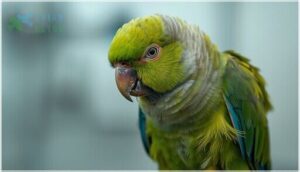
Spotting psittacosis in birds early can make all the difference in treatment outcomes. You’ll notice anorexia, lethargy, and feather ruffling in up to 57% of infected parrots during the incubation period.
Watch for oculonasal discharge (38% of cases), appetite changes with weight loss (64%), and respiratory distress like sneezing.
Conjunctivitis signs appear in 19% of birds, particularly smaller parakeets, serving as key clinical signs for avian disease diagnosis.
Severe and Systemic Symptoms
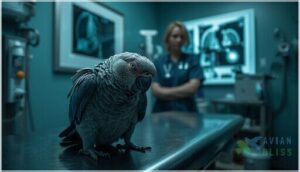
When psittacosis progresses, your bird faces life-threatening challenges affecting multiple body systems. Here’s what to watch for:
- Multi-organ Involvement: Liver enzymes spike over 50 IU/L, and spleen enlargement occurs in 60% of severe cases
- Respiratory Distress: 75-85% develop severe breathing difficulties requiring oxygen
- Gastrointestinal Effects: Diarrhea and weight loss exceeding 8% body mass
- Neurological Signs: Tremors and convulsions in 8-22% of birds
- Fatality Trends: Mortality reaches 9-16% without prompt antibiotic treatment
Complications in Birds and Humans

Both species suffer serious complications when psittacosis spreads beyond the lungs. Your bird might develop hepatitis (seen in 42% of severe outbreaks), neurological effects like tremors, or cardiac problems including endocarditis. Humans face similar risks—pneumonia affects nearly 60% of cases, while meningitis, hepatitis, and cutaneous signs occur less frequently but demand immediate medical attention.
| Complication Type | Birds | Humans |
|---|---|---|
| Neurological Effects | Tremors, convulsions, head twisting | Encephalitis (9%), confusion, seizures |
| Hepatic Issues | Liver lesions, granulomas | Hepatitis (42% in outbreaks) |
| Cardiac Problems | Rarely documented | Endocarditis, myocarditis (<2%) |
| Reproductive Risks | Decreased egg production | Fetal mortality (83%), miscarriage risk |
Diagnosing Psittacosis in Birds
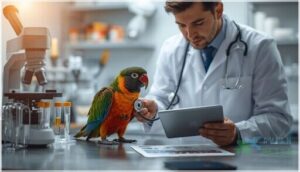
Diagnosing psittacosis in your bird isn’t always straightforward. Your veterinarian will need to gather information about your bird’s history and symptoms, then run specific tests to confirm the infection.
Let’s look at what goes into making an accurate diagnosis and why it can sometimes be tricky.
Clinical Evaluation and History
Your veterinarian will start by asking detailed questions about your bird’s exposure history and symptom timeline. This includes documenting which species you own, when symptoms appeared, and whether you’ve acquired new birds recently.
Medical history matters too—occupational risk factors, familial clustering of illness, and any previous respiratory issues help piece together the diagnosis of parrot fever. Bird exposure details are critical for identifying parrot fever symptoms accurately.
Challenges in Accurate Diagnosis
Diagnosis isn’t as straightforward as you’d hope. Clinical overlap with other respiratory diseases leads to misdiagnosis in up to half of cases.
Laboratory barriers complicate things further—single diagnostic tests lack sensitivity, and PCR remains costly and limited in availability. Antibody tests require paired samples over two weeks, while early presentations in birds often show no distinctive findings.
Access constraints and molecular limitations frequently delay accurate results when you need them most.
Effective Treatment Options for Psittacosis
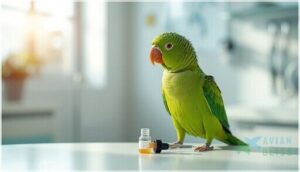
Once your bird receives a psittacosis diagnosis, prompt treatment becomes essential to prevent serious complications and reduce the risk of transmission to other birds or people.
The good news is that this bacterial infection responds well to specific antibiotics when administered correctly and consistently.
Your veterinarian will recommend a treatment plan based on your bird’s condition, but understanding your options helps you provide the best care possible.
Antibiotic Therapies for Birds
When treating your parrot for psittacosis, doxycycline stands as the preferred antibiotic therapy, usually administered at 25–50 mg/kg twice daily for 45 days. You’ll need this extended treatment duration because tetracyclines only work against actively multiplying bacteria.
If your bird doesn’t tolerate doxycycline well, alternative antibiotics like azithromycin offer effective options, though resistance monitoring remains important throughout therapy.
Supportive Care and Management
Beyond antibiotics like doxycycline and tetracyclines, your parrot’s recovery depends on thorough supportive care.
Fluid therapy at 100 ml/kg/day corrects dehydration, while nutritional support with high-energy formulas provides up to twice the normal caloric needs.
You’ll need proper housing management with temperatures of 27–32°C, oxygen therapy for respiratory distress, and vigilant complication prevention through daily monitoring of hydration markers and organ function.
Treatment Duration and Monitoring
Your parrot needs 45 days of doxycycline or tetracycline antibiotics. Stopping early drives relapse rates up to 22%.
You’ll monitor treatment success through weekly PCR tests and track symptoms like weight and breathing twice per week. Two negative swabs, spaced seven days apart, signal you’ve cleared the infection.
Compliance issues often arise from the lengthy antibiotic course, but cutting it short risks symptom recurrence and treatment failure.
Addressing Relapses and Resistance
Even with proper care, symptom recurrence happens if you face re-exposure or underlying persistence challenges. Resistance genes in some Chlamydia strains limit antimicrobial treatment effectiveness, requiring alternative antibiotics like fluoroquinolones or extended doxycycline courses.
Relapses signal incomplete bacterial eradication—source control matters for public health. Monitor your bird closely post-treatment, as antibiotic resistance and relapse factors demand vigilant antibiotic treatment options adjustments.
Preventing and Controlling Psittacosis Spread

Once you’ve treated an infected bird, the next challenge is stopping psittacosis from spreading to other birds—or to you. Prevention isn’t complicated, but it requires consistency with quarantine, cleaning, and safe handling practices.
Let’s walk through the key steps that’ll protect both your flock and your family.
Bird Quarantine and Biosecurity
When you bring a new bird home, quarantine isn’t just a suggestion—it’s your first line of defense. International trade has moved millions of parrots across borders, but many arrived with limited or inconsistent isolation.
That’s why proper quarantine effectiveness depends on strict protocols:
- Isolate new arrivals for 30–45 days minimum
- Prevent shared transport between quarantined and existing birds
- Monitor for disease surveillance through veterinary testing
- Follow avian health regulations and biosecurity compliance measures
Facilities with enforced guidelines report pathogen introduction rates below 2%, compared to nearly 20% without proper isolation precautions. This dramatic difference in outbreak prevention shows how risk assessment and biosafety practices protect both your flock and yourself.
Cleaning and Disinfection Protocols
Once your quarantine space is ready, effective disinfection starts with thorough organic removal—all droppings, feathers, and debris must go before any disinfectant touches a surface. Organic matter blocks disinfectants, so scrub everything with hot soapy water first.
| Disinfectant Type | Concentration | Contact Time |
|---|---|---|
| Quaternary ammonium | 1:1,000 dilution | 15+ minutes |
| Sodium hypochlorite | 1 oz/gallon water | 10–15 minutes |
| Virkon S | Per label | 10 minutes |
| 70% isopropyl alcohol | Ready-to-use | 5–10 minutes |
| Phenolics (Lysol) | Per label | 10 minutes |
Application techniques matter: spray surfaces without creating airborne particles that you might inhale. PPE compliance—coveralls, gloves, N95 masks—protects you during this psittacosis prevention work. After disinfection dries completely, efficacy monitoring through environmental sampling confirms treatment success before reintroducing birds.
Safe Handling and Reporting Practices
Beyond cleaning alone, safe handling merges PPE usage with strict hand hygiene—wash thoroughly after every bird contact—while reporting requirements demand you notify public health authorities within 24 hours of confirmed psittacosis cases. This reportable disease triggers biosecurity measures that protect everyone:
- Use N95 respirators, gloves, and disposable gowns during all bird handling
- Wet surfaces before cleaning to prevent infectious dust dispersal
- Isolate symptomatic birds immediately in dedicated quarantine protocols
- Report laboratory-confirmed cases to state health departments promptly
- Conduct risk assessment and biosafety reviews after any outbreak
Reducing Human Exposure Risks
Protecting yourself begins with respiratory protection—N95 masks block contaminated dust during cage cleaning—while solid-sided cage design prevents droplet transmission between birds.
If you live within 500 meters of bird habitats, your infection risk jumps nearly fourfold.
Contact tracing after exposure, public education on zoonotic collaboration, and avoiding close contact with sick birds form your frontline prevention strategy against psittacosis.
Frequently Asked Questions (FAQs)
Can psittacosis be transmitted between different bird species?
Yes, psittacosis spreads readily between bird species through respiratory secretions and contaminated droppings. Asymptomatic carriers shed the bacterium during stress, and environmental persistence allows cross-species transmission in shared spaces, confirmed by outbreak evidence.
What disinfectants effectively kill Chlamydia psittaci bacteria?
You’ll need a disinfectant proven effective against Chlamydia psittaci bacteria. Bleach effectiveness tops the list—a 1:100 household solution works within 10 minutes.
Quaternary ammonium compounds, 70% alcohol, and 3% hydrogen peroxide also reliably inactivate this pathogen.
Are there vaccines available for preventing psittacosis?
Think of prevention like waiting for armor that’s still in the blacksmith’s forge—no commercially licensed vaccines exist for psittacosis in parrots as of Experimental vaccines show promise in research settings, and China registered recombinant MOMP vaccines for poultry, but the commercial landscape remains barren for pet birds.
Safety studies in chickens and ducks demonstrate strong immune responses, yet future development faces regulatory hurdles and strain diversity challenges.
Until vaccine availability improves, you’ll rely on prophylactic antibiotics like doxycycline and tetracycline for prevention of psittacosis in your flock.
How long does immunity last after recovery?
Unfortunately, parrots don’t develop lasting immunity after psittacosis recovery.
Reinfection can occur within weeks or months of treatment with antibiotics like doxycycline or tetracycline, as antibody responses remain transient and incomplete.
Can outdoor birds contract psittacosis from wild populations?
Wild birds absolutely pose transmission pathways for outdoor birds—they’re like rolling disease vectors.
Environmental contamination from droppings increases psittacosis risk by 4 times, with regional outbreaks confirming cross-species zoonotic disease transmission.
Conclusion
Think of psittacosis like smallpox in birds—once widespread, now manageable through vigilant care. Your parrot’s recovery hinges on swift action: recognizing symptoms early, securing proper diagnosis, and committing to complete antibiotic courses.
Effective parrot disease treatment doesn’t end when symptoms fade; continued monitoring prevents relapses. By maintaining clean environments and practicing safe handling, you’ll protect both your feathered companion and your household.
Early intervention transforms this serious infection into a treatable condition with excellent outcomes.
- https://rarediseases.org/rare-diseases/psittacosis/
- https://pmc.ncbi.nlm.nih.gov/articles/PMC10536718/
- https://www.harrisonsbirdfoods.com/wp-content/uploads/2024/03/434-456-Ch17-Antimicrobial-Therapy.pdf
- https://www.merckvetmanual.com/exotic-and-laboratory-animals/pet-birds/viral-diseases-of-pet-birds
- https://www.msdvetmanual.com/bird-owners/disorders-and-diseases-of-birds/disorders-affecting-multiple-body-systems-of-pet-birds