This site is supported by our readers. We may earn a commission, at no cost to you, if you purchase through links.
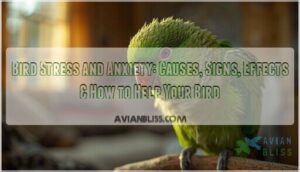
Your parrot suddenly lunges at your hand, feathers fluffed and eyes pinning—a bird you’ve trusted for years. Or maybe your canary has gone silent, huddled in the corner of the cage, plucking at her chest until bare skin shows through. These aren’t random behaviors or signs of a “moody” bird. They’re distress signals, and they mean your companion is struggling with something real.
Bird stress and anxiety don’t always announce themselves with obvious symptoms, but once you know what to look for, the signs become impossible to ignore. Chronic stress doesn’t just make your bird miserable in the moment—it weakens immunity, disrupts digestion, and can even shorten lifespan.
The good news is that most causes are fixable once you understand what’s triggering the response and how to create an environment where your bird feels safe, engaged, and understood.
Table Of Contents
Key Takeaways
- Bird stress manifests through specific behaviors like sudden aggression, feather plucking, hiding, and vocal changes—these aren’t personality quirks but actual distress signals that demand immediate attention and intervention.
- Chronic stress weakens your bird’s immune system by up to 40%, reduces reproductive success by over 20%, and creates behavioral problems that compound over time if left unaddressed.
- Environmental enrichment through foraging toys, predictable routines, and consistent social interaction can reduce stress-related behaviors by more than 50% within weeks of implementation.
- Professional help from an avian veterinarian becomes essential when stress signs persist despite home interventions, as underlying medical issues or severe anxiety may require behavioral therapy or medication alongside environmental changes.
Common Signs of Stress and Anxiety in Birds
Birds show stress and anxiety in ways that can be easy to miss if you’re not looking for them. Knowing what to watch for helps you catch problems early and support your bird’s well-being.
Here are some of the most common signs to keep on your radar.
Biting and Aggressive Behaviors
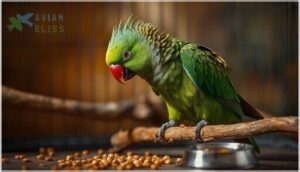
When your bird bites or acts aggressively, it’s often a sign of stress in birds—not just hostility. Territorial Aggression, Hormonal Influence during breeding, Trauma History, Social Isolation, and poor Bite Management all play a role in anxiety and behavioral issues. Sometimes, this aggression stems from underlying discomfort or illness.
Watch for:
- Sudden lunges
- Guarding food or cage
- Flared feathers
- Intense staring
- Quick retreats
Changes in Vocalization Patterns

Just as biting signals stress in birds, sudden changes in vocalizing—like persistent shrieking or going unusually quiet—often reveal emotional distress. You might catch signs of stress in birds through higher pitches or louder calls, especially in noisy areas. Song complexity and vocal amplitude shift with stress. Recognizing these shifts is key, as body language signals can also indicate a bird’s anxiety. Even age influences how Stress Vocalizations and Behavioral Issues show up.
| Symptom | What You Might Hear |
|---|---|
| Repetitive Screaming | Louder, sharper calls |
| Sudden Quietness | Noticeable drop in singing/cheeping |
| Urban Noise Impact | Calls rise in pitch or volume |
| Loss of Song Complexity | Simple, broken patterns |
| Age Influence | Young birds show bolder changes |
Feather Picking and Self-Mutilation

Just like a sudden hush, feather plucking or self-mutilation stands out as a red flag for stress in birds. You’re not just seeing harmless preening—you’re witnessing root cause analysis through the bird’s actions. Watch for:
- Bare patches where feathers once grew.
- Bleeding or irritated skin.
- Persistent nibbling even after molting.
Untreated, these behavioral compulsions can spark secondary infections—highlighting why prevention strategies and right treatment options matter most.
Hiding and Hypervigilance
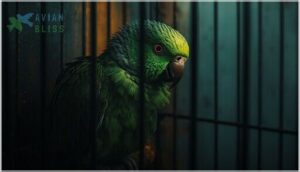
After noticing feather picking, you might see your bird hiding in a corner or scanning the room with anxious eyes. As prey species, their threat perception runs high, especially in captive environments.
Hypervigilance—staying alert and motionless—is a behavioral response to stress. These anxiety symptoms, shaped by physiology and even genetics, often reveal themselves before physical health problems surface.
Physical Indicators (Tremoring, Rapid Breathing)

When your bird’s feathers quiver or you notice rapid, shallow breathing, these are classic stress indicators—stress-induced tremors and quick breaths often go hand in hand. These combined manifestations tell you your feathered friend is overwhelmed.
If these anxiety symptoms linger, they might signal deeper trouble and deserve careful attention, as clinical relevance is high for such warning signs.
Major Causes of Bird Stress and Anxiety
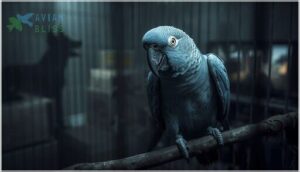
Birds are sensitive to what goes on around them, and a lot can shake up their sense of security. When life changes or their comfort zone gets rattled, stress can creep in fast.
Let’s look at some of the most common reasons your bird might start feeling anxious.
Environmental Changes and Loud Noises
Ever wonder why your bird seems edgy after a thunderstorm or home renovation? Sudden Environmental Changes and Loud Noises spark Anxiety in birds, much like a storm cloud disrupting a sunny day.
Common triggers include:
- Noise Pollution and Light Pollution
- Habitat Disruption from home improvements
- Urban Stressors such as ongoing traffic or sirens
- Stress in Birds from abrupt changes in routine
Lack of Social Interaction
Every bird, especially social species like parrots, craves companionship the way people crave connection. Social Isolation—be it from a missing flockmate or Lack Of Interaction—triggers Bird Loneliness and disrupts healthy Flock Dynamics. Birds deprived of social learning or meaningful contact may grow anxious, lose curiosity, and develop abnormal behaviors.
| Symptom | Why It Happens | What You Might See |
|---|---|---|
| Less play | Misses companions | Quiet, withdrawn bird |
| Nervous actions | Feels vulnerable | Startles easily |
| Loss of appetite | Emotional distress | Eats poorly |
| Strange habits | Needs social cues | Paces, plucks |
Dietary and Nutritional Deficiencies
A bird’s diet is the cornerstone of both its mood and health. Nutritional deficiencies in birds—especially Vitamin Deficits and Mineral Imbalances from unvaried or seed-heavy diets—lead to stress, feather plucking, and even self-mutilation.
Balanced Nutrition, timely diet changes, and targeted Nutrient Supplements can reverse Malnutrition Effects and help with true Dietary Rehabilitation, supporting your bird’s resilience and calm.
Changes in Routine or Habitat
A sudden shift in your bird’s world—like a new home environment or cage relocation stress—can feel like an earthquake beneath their feet. Environmental instability unsettles even the calmest companion. Key impacts include:
- Routine change impact: confusion, anxiety, or vocal changes
- Habitat disruption effects: hiding, biting, or feather picking
- Mitigation strategies: gradual environmental adjustments and consistent routines calm your bird’s nerves.
Exposure to Pollutants and Urban Stressors
Imagine living in a city that never sleeps—your bird feels this too. Noise pollution, light pollution, and poor air quality chip away at their sense of calm.
Heavy metals lurking in dust, constant loud noises, and abrupt environmental changes become invisible stressors.
These urban stressors heighten anxiety, disrupt routines, and undermine your bird’s health and happiness.
Effects of Stress on Bird Health and Behavior

Stress doesn’t just change a bird’s mood—it can take a real toll on their body and mind. You’ll notice the effects showing up in the way they act, eat, and even how healthy they seem.
Let’s look at what stress can actually do to your bird.
Immune System Suppression
Stress hormone impact on avian health runs deeper than you might expect. When your bird experiences chronic stress, elevated corticosterone suppresses the immune system, shrinking essential organs like the thymus and bursa. This increases disease susceptibility dramatically.
Environmental stressors and maternal stress compound these effects, reducing vaccine effectiveness and leaving your feathered companion vulnerable to infections that a healthy immune system would normally fight off.
Behavioral Problems and Depression
Beyond immune problems, chronic stress reshapes your bird’s mental health dramatically. Social isolation and unmet psychological needs trigger behavioral changes like feather picking, self-mutilation, and repetitive behaviors such as head bobbing or pacing.
Recognizing bird depression means watching for vocal decline, excessive startle response, and withdrawal from interaction. These stereotypical behaviors signal emotional distress that requires your immediate attention and intervention.
Weight Loss and Poor Nutrition
Stress doesn’t just affect your bird’s mood—it directly impacts weight and nutrition. When birds feel anxious, their appetite decreases, and they eat less frequently or stop eating entirely.
This creates a dangerous cycle: chronic stress leads to measurable weight loss, while nutritional deficiencies like low calcium, vitamin A, and iron weaken your bird’s body further. Balanced diet becomes impossible to maintain without addressing the underlying stress.
Reduced Reproductive Success
When stress becomes chronic, it doesn’t just hurt your bird’s current health—it can interfere with breeding success too. Hormone imbalance from anxiety disrupts egg viability and breeding failure rates climb sharply.
Stress indicators like elevated corticosterone reduce fertility rates and clutch sizes. Reproductive decline affects both breeding birds and eggbound complications. Here’s what happens:
- Fertility rates drop by over 20% in highly stressed birds
- Hatching failure increases from 17% to 44% in affected species
- Clutch sizes decrease by 1-2 eggs per breeding pair
- Maternal stress reduces hatch rates by up to 15%
- Urban stress lowers offspring survival by 15-25%
The effects of stress on birds extend across generations, impacting not just parents but their offspring’s survival too.
Effective Strategies for Reducing Bird Stress
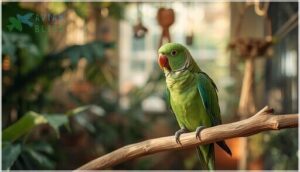
Once you understand what’s causing your bird’s stress, you can take real steps to help them feel safe and secure again. The good news is that reducing stress doesn’t require expensive equipment or complicated techniques.
Here are practical strategies that make a genuine difference in your bird’s daily life and overall well-being.
Environmental Enrichment and Mental Stimulation
Your bird’s mind needs exercise just like yours does. Environmental enrichment through foraging devices, sensory stimulation, and cognitive challenges keeps your feathered friend engaged and reduces stress-related behaviors by over 50%. Implementing enrichment activities includes rotating toys, puzzle feeders, and social housing when appropriate.
Here’s what these behavioral benefits look like:
| Enrichment Type | Examples | Mental Stimulation Benefits |
|---|---|---|
| Foraging toys | Hidden treats, puzzle feeders | Encourages natural food-seeking behaviors |
| Sensory items | Mirrors, bells, colorful objects | Stimulates curiosity and exploration |
| Cognitive challenges | Stackable toys, problem-solving games | Improves learning and memory |
| Social opportunities | Companion birds, interactive play | Reduces loneliness and boredom |
Creating Safe and Predictable Spaces
In your bird’s world, predictability is everything. Safe spaces with shelters and refuges reduce stress markers like elevated heart rates by 22%. Here’s how to build that security:
- Position the cage in a quiet environment away from sudden movements and loud noises
- Provide at least two hiding spots using visual barriers or foliage
- Maintain consistent routine stability with predictable feeding and cleaning times
- Use stable lighting effects, ideally matching natural daylight cycles
- Guarantee caregiver consistency so your bird recognizes familiar faces and voices
Noise reduction and environmental predictability lower stress hormones by up to 40%, creating the calm sanctuary your bird deserves.
Supporting Social Needs and Interaction
Since 59% of pet birds live without companionship from other birds, you’ll need to fill that gap. Regular human bonding fulfills social needs of parrots and reduces anxiety behaviors. Interaction benefits include lower stress hormones and improved trust.
Most pet birds live alone, so regular human interaction becomes essential to meet their social needs and reduce anxiety
Without it, social deprivation triggers feather plucking and abnormal vocalization. Strong bonds prevent stress transmission effects, keeping your companion mentally healthy and emotionally secure.
Positive Reinforcement and Training Techniques
Reward-based training transforms anxious birds into confident companions. Training compliance jumped from 76% to 86% using positive reinforcement, with some birds eliminating self-mutilation entirely within six weeks.
Here’s how you can start:
- Use clicker training for behavior shaping through operant conditioning
- Offer favorite treats immediately when your bird cooperates
- Keep sessions short, gradually building cognitive enrichment
- Practice bird training techniques daily for lasting stress reduction
Importance of Routine and Stability
Think of your bird’s routine as their anchor in an unpredictable world. Predictable feeding schedules and a stable environment reduce stress markers within days, while routine disruption triggers behavioral withdrawal and decreased feeding activity.
You’ll notice long-term effects like stronger immunity and behavioral stability when you maintain consistent daily patterns. That’s why establishing predicability matters—it’s not just helpful, it’s essential for your bird’s well-being.
When and How to Seek Professional Help

Sometimes, despite your best efforts, your bird’s stress won’t improve on its own. That’s when it’s time to bring in the experts who can dig deeper into what’s going on and offer solutions you mightn’t have considered.
Here’s when and how to reach out for professional support.
Consulting an Avian Veterinarian
When your bird’s stress signs persist or worsen, an avian veterinarian becomes your strongest ally. Early consultation helps catch problems before they spiral, and avian vet teams use stress minimization techniques during visits.
Here’s what to expect from avian veterinary care:
- Physical exams paired with behavioral and nutritional histories
- Diagnostic approaches like blood work and radiographs to rule out illness
- Symptom recognition training for you to monitor at home
- Medical consultation combined with customized treatment plans
These veterinary benefits can transform your bird’s well-being.
Behavioral Modification and Training Support
Sometimes veterinary care isn’t enough on its own, and that’s when a bird behaviorist or behavioral consultation becomes invaluable. These specialists design therapy plans using gradual desensitization and positive reinforcement training to reshape anxiety-driven behaviors. They’ll teach you techniques specific to your bird’s triggers, with progress monitoring guiding adjustments.
Bird training paired with socialization support helps build confidence, replacing fear with trust through consistent, reward-based approaches.
| Training Method | How It Helps |
|---|---|
| Gradual Desensitization | Reduces fear through controlled, stepwise exposure |
| Positive Reinforcement Training | Rewards calm behavior, building trust and confidence |
| Socialization Support | Alleviates isolation-related anxiety through interaction |
| Progress Monitoring | Tracks improvement, allowing real-time plan adjustments |
Medication Options for Severe Anxiety
When behavioral strategies aren’t enough, medication can offer relief under strict veterinary oversight. SSRIs like fluoxetine and clomipramine show strong efficacy in reducing feather plucking and compulsive behaviors after several weeks. Benzodiazepines work quickly for acute crises but carry sedation and dependency risks. Gabapentin helps birds with nerve-related anxiety, while combination therapy—pairing medications with environmental changes—delivers the best results. Always follow dosage guidelines your avian vet provides.
Monitoring and Assessing Stress Reduction Efforts
After medication or any intervention begins, tracking your bird’s progress matters just as much as the treatment itself. Behavioral monitoring through owner observation—noting calmer behavior, improved feeding, and social engagement—gives you real-time feedback.
Your avian vet may assess physiological markers like heart rate or bloodwork, use outcome metrics such as recovery time, and review behavioral history to validate tools and adjust the routine around identified stressors.
Frequently Asked Questions (FAQs)
Can stress be contagious between different bird species?
Yes, stress can spread between bird species. Research shows that when stressed birds share space with calm ones, the unstressed birds often reduce activity and show behavioral changes, even without direct stressors.
How long does recovery from chronic stress take?
Recovery timeframes vary widely among birds. Hormonal recovery and behavioral changes often improve within 24 hours to several days, while immune recovery and behavioral resilience may take weeks.
Influencing factors include stress severity and early life experiences.
Do wild birds experience stress differently than pets?
Wild birds generally show a stronger CORT response and longer physiological stress reactions to threats. In contrast, captive birds develop adaptive behaviors through acclimation, reducing anxiety over time despite facing different environmental factors and stressors.
What role does cage size play in stress?
Cage size affects your bird’s stress considerably. Confinement in smaller spaces increases behavioral restrictions, elevates physiological markers like corticosterone, and weakens immune response.
Space recommendations emphasize larger environments to reduce anxiety through environmental adjustments.
Can birds develop PTSD from traumatic experiences?
Emerging research shows birds can develop PTSD-like symptoms after trauma. Studies document persistent behavioral changes, neural alterations in the amygdala and hippocampus, and heightened vigilance lasting weeks—though standardized diagnostic criteria remain limited.
Conclusion
You don’t need to fix everything overnight. Even small changes—adding foraging toys, keeping a consistent routine, or simply spending quiet time near your bird—can ease bird stress and anxiety in ways that matter.
Watch how your bird responds, adjust as you go, and don’t hesitate to reach out to an avian vet if behaviors persist. Your awareness and effort create the foundation for a calmer, healthier companion who feels truly at home.
- https://www.floridamuseum.ufl.edu/science/noise-pollution-causes-stress-in-birds/
- https://pmc.ncbi.nlm.nih.gov/articles/PMC8086359/
- https://www.pnas.org/doi/10.1073/pnas.1706164114
- https://royalsocietypublishing.org/doi/10.1098/rspb.2024.1961
- https://fidarfeed.com/pet/pet-bird/stress-in-pet-birds-a-comprehensive-guide-to-causes-prevention-and-treatment/