This site is supported by our readers. We may earn a commission, at no cost to you, if you purchase through links.
Your bird feeding station works hard until it doesn’t. A cracked platform sends seeds tumbling to the ground. A bent pole arm refuses to hold that new finch feeder. A missing baffle turns your sanctuary into an all-you-can-eat buffet for squirrels. These small failures add up fast.
The good news is that most feeding stations use modular designs. You can replace worn parts instead of buying a whole new setup. But not all bird feeding station parts are created equal. Metal components outlast plastic in harsh weather. Some baffles actually stop squirrels while others just slow them down.
Choosing the right replacement parts and accessories keeps your station running smoothly and your feathered friends well fed.
Table Of Contents
Key Takeaways
- Bird feeding stations use modular designs that let you replace individual worn parts like platforms, poles, and baffles instead of buying entirely new setups, saving money while maintaining functionality.
- Metal components consistently outlast plastic in outdoor conditions due to superior rust resistance and weatherproofing, though recycled plastic offers decent durability at lower cost with less environmental impact during production.
- Proper part compatibility matters critically—you must match exact model numbers and measure dimensions before purchasing replacements since most manufacturers design parts that won’t fit other brands or product lines.
- Regular maintenance extends station lifespan significantly: clean feeders every 1-2 weeks with a bleach solution, space multiple feeders 10 feet apart to prevent disease transmission, and position stations 5-6 feet high to deter predators while attracting birds.
Essential Bird Feeding Station Parts
Your bird feeding station works because all its parts function together. Each component plays a specific role in attracting birds and keeping your setup stable.
Here’s what you need to know about the main parts that make up a complete feeding station.
Feeder Bases and Platforms
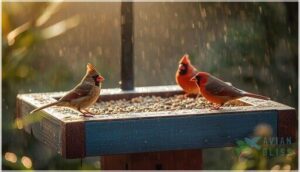
Platform design determines which birds visit your feeder. Bases made from recycled plastic or weather-treated wood handle rain and sun without cracking. Open platforms attract 88.8% of North American feeder species because multiple birds can feed at once. You’ll need to clean these bases weekly to prevent disease. Look for removable trays and drainage holes. Cardinals enjoy feeders with spacious feeding areas.
Small Mahogany Base and Cobalt Blue Base options fit specific feeder models.
Pole Sections and Stabilizers
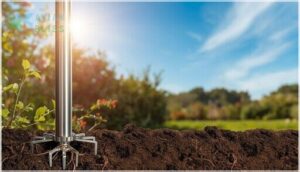
You need sturdy pole sections to hold your bird feeding station upright. Most systems use three pole sections that reach 6 to 12 feet tall. Steel and aluminum are your best material choices because they resist rust. Push each pole section 18 to 24 inches deep into the ground. Stabilizer attachment prongs anchor the base so wind won’t tip it over.
Modular systems let you adjust pole height as needed. For example, you can purchase a forked bottom pole for extra stability.
Perches, Hooks, and Arms
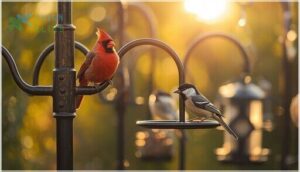
Once your poles are stable, you need perches, hooks, and arms to position feeders. Metal hooks support over 10 pounds and resist rust with powder coating. Bird feeder arms extend 18 to 36 inches from poles to reduce squirrel access. Small arm attachments cost $10 to $12 and use EZ-attach designs for quick setup.
- Hook weight limits determine how many feeders you can hang safely
- Perch material safety affects bird comfort and feeding success
- Arm length impact controls squirrel baffle integration and predator protection
Doors, Windows, and Frames

Many decorative feeders include door components, window components, and frame components that improve their charm. These replacement doors and replacement windows need UV protection to prevent cracking. Material durability matters since sun exposure causes brittleness within two years.
Window clarity affects bird collisions—placing feeders more than 30 feet from home windows reduces strikes.
Frame maintenance includes cleaning to prevent seed spoilage and checking for weather damage.
Chimneys, Signs, and Lenses
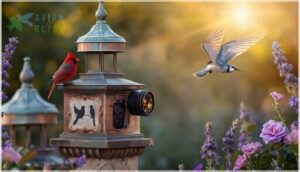
Decorative feeder chimneys add charm but can create swift sanctuaries that attract roosting birds. However, chimney components for feeders may pose health hazards if droppings accumulate.
Informational signage helps identify visiting species and improves feeding practices by 25%. Camera integration with lens components for feeders lets you track bird activity—some systems record over 118,000 visits.
Market growth shows rising demand for these specialized parts.
Replacement Parts by Bird Feeder Model
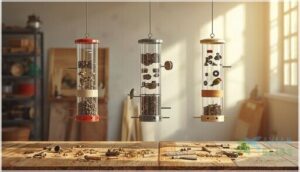
Each decorative birdfeeder model uses its own unique replacement parts. You need to match the part to your specific model number to guarantee proper fit.
Let’s look at the replacement components organized by feeder series.
General Store Series Replacement Parts
You can order General Store Birdfeeder replacement parts directly from North States using model number lookup. The 3-year warranty covers manufacturing defects but not weather or wildlife damage.
Bird feeder parts like chimneys and perches are available separately for DIY repairs. Side walls come preassembled and aren’t sold individually.
Check part availability and material durability specs on their website. Bird feeder accessories help extend your station’s life.
Early Bird Cafe Series Parts
The Early Bird Cafe birdfeeder uses brown door colors and arched window panes that let you check seed levels easily.
You’ll find replacement chimney styles and large tray/perch options sold separately to keep your feeder working smoothly.
Mounting cables provide squirrel-proof hanging stability. These bird feeder components extend your station’s life without replacing the whole unit.
Lighthouse Birdfeeder Components
The Lighthouse birdfeeder holds 8 pounds of seed and features three feeding ports with removable perches. You can check seed levels through clear windows around the top. The lift-off top lid makes refilling simple. The large seed tray detaches for cleaning.
Replacement components include door parts, window frames, and lighthouse lenses. These bird feeder parts fit specific models and extend your feeder’s working life.
Lakeside Cabin and Bed & Breakfast Parts
Your Lakeside Cabin Birdfeeder and Bed Breakfast Birdfeeder share similar construction with weather-resistant plastic and classic white window panes. Both hold about 5 pounds of seed.
You can find bird feeder parts including:
- Turquoise or harbor blue chimney replacements for lift-off filling access
- Large removable seed tray perches for easy cleaning
- Squirrel-resistant hanging cables with mounting poles
- Clear window components to monitor seed levels
These birdhouse accessories and parts keep your station working reliably.
Old Town Pub and Antique Store Parts
Your Old Town Pub Birdfeeder (Model 9281) needs green door and window frame replacements to maintain its classic look.
The Antique Store Birdfeeder (Model 9263) offers white store sign components, tall window frames, and gray porch frame parts. You can also find moss green chimney styles for Model 9264.
These pub door and antique store sign components keep your feeding station looking sharp while birds visit regularly.
Bird Feeding Station Accessories Compared

You’ve got your main feeder picked out, but the right accessories make your station work better for you and the birds.
Some add-ons keep things stable and secure. Others help you attract more species or manage the clever squirrels that show up uninvited.
Suet Feeders and Trays
Suet feeders hold high-energy cakes that draw woodpeckers, nuthatches, and chickadees to your bird feeding station parts. The wire cage design allows clinging birds to access food while squirrel deterrents like small mesh openings keep larger animals away.
- Suet cake types include plain fat, seed blends, and insect varieties for different bird preferences
- Mesh tray attachments catch crumbs and simplify cleaning
- Top hook hardware makes installation on poles or branches easy
- Tray materials range from rust-resistant metal to UV-protected recycled plastic
- Feeder placement near trees attracts insect-eaters during winter months
Pole Stabilizers and Arm Attachments
Pole stabilizers keep your bird feeding station parts upright in strong winds. Heavy-duty ground anchors resist gusts up to 45 mph, while weighted bases offer portability without soil penetration.
Arm attachments, like the Ashman Premium Bird Feeder Small Arm, let you mount multiple feeders on one pole. The Bird Feed Station Pole Stabilizer Attachment Prongs secure poles in packed earth with minimal effort.
Squirrel Baffles and Seed Trays
Baffles stop squirrels better when you use two or three spaced 2-3 feet apart on hanging feeders. This achieves 100% baffle effectiveness. Material durability matters—galvanized steel resists chewing and rust longer than standard metal. Mesh trays with drainage screens prevent seed spillage and mold. Large-capacity seed components for feeders hold up to 3 gallons, improving feeding efficiency between refills.
Multiple baffles spaced properly achieve total squirrel control, while galvanized steel and mesh trays keep feeders efficient and mold-free
- Single baffle replacement for feeders reaches 20% success on hanging stations
- Dome-shaped squirrel baffles in powder-coated steel last years without weathering
- Tray capacity of 3 gallons reduces refill frequency considerably
- Drainage mesh prevents water accumulation and seed spoilage
- UV-resistant polycarbonate baffles flex under impact without cracking
Premium Hooks and Hanging Solutions
Your hanging hooks determine whether your station lasts years or fails in months. Rust-resistant steel hooks support up to 10 lbs each and last over 8 years outdoors. S-hooks appear in 61% of backyard setups because they work.
Mounting brackets handle 15 lbs on walls while deck clamps grip rails up to 3 inches thick. Monthly cleaning with these durable materials extends lifespan by 22%.
Material Quality and Durability Factors

The materials you choose for your feeding station parts determine how long they last and how well they hold up to weather and wildlife. Metal and plastic both have strengths, but they perform differently regarding rust, UV damage, and daily wear.
Let’s look at what makes each material work and how to pick parts that won’t let you down.
Metal Vs. Recycled Plastic Components
Choosing between metal and recycled plastic for your feeder’s frame, base, door, window, and chimney components affects material durability and functional properties. Metal parts outlast plastic but carry a higher environmental footprint during production.
Recycled plastic offers a lower cost analysis point and decent weather resistance. Metal provides greater structural strength while plastic stays lighter and easier to handle.
Your choice balances longevity against initial investment.
Rust Resistance and Weatherproofing
When metal feeder components face rain and bird droppings, rust becomes your main concern. You need protective coating technologies and smart material selection to keep your station functional.
Here are four longevity treatments that work:
- Apply marine-grade sealant annually to extend life by four years
- Choose stainless steel parts with 95% rust resistance after two years
- Use powder-coated metal to increase rust-free lifespan by 400%
- Clean monthly to reduce early rust by 40%
Environmental stressors like freeze-thaw cycles degrade finishes fast. Regular maintenance protocols protect your investment in bird feeder accessories and parts—especially frame components, door components, and chimney components for feeders.
UV Protection and Eco-Friendly Materials
When sunlight hits your feeder components daily, UV degradation effects weaken plastic parts unless you choose materials with UV inhibitor types built in. Recycled plastic lifespan extends up to five times longer than wood for base components and door components.
Sustainable material sourcing with eco-friendly coatings protects window components from yellowing while reducing landfill waste. These bird feeder accessories and parts resist brittleness and maintain transparency outdoors.
Ease of Cleaning and Maintenance
Design for cleaning directly impacts how often you’ll maintain your station. Smooth surfaces on frame components and door components require less scrubbing than porous materials. Metal mesh designs allow thorough bleach solution access every two weeks.
Bird feeder replacement parts with modular base replacement for bird feeders sections disassemble quickly. Window components with drainage holes prevent moisture buildup.
Proper cleaning methods protect bird health while extending component lifespan.
Choosing The Right Parts for Your Station

You need to match the right parts to your specific feeder model or risk wasting money on pieces that won’t fit. Beyond compatibility, you’ll want to weigh cost against quality and consider whether smart upgrades make sense for your setup.
Let’s walk through the key factors that’ll help you choose parts that last.
Compatibility and Model Fit
You need to check that replacement parts match your specific feeder before you buy them. Many parts work only with certain model lineages or product lines. Brand compatibility matters because most manufacturers design parts that won’t fit other brands.
Here are three key steps for fit verification:
- Match exact model numbers from your feeder to the replacement part listing
- Measure pole diameter and flange sizes to confirm physical dimensions align
- Check for universal parts that use adjustable clamps or standard mounting systems
Bird feeder model parts like base components for feeders, door components for feeders, window components for feeders, and frame components for feeders typically call for precise measurement importance to assure proper installation and function.
Pricing and Availability Comparison
Prices for bird feeder parts vary widely based on material cost impact and brand price differences. You’ll find poles from $18 to $110 and perches from $6 to $13.
Online vs. retail channels show different availability. Seasonal price swings occur during spring and fall.
Check if items are in stock or out of stock before ordering. Compare regular price to sale price. Shipping cost effects can change your final total when you add to cart.
Upgrade Options and Smart Features
You can upgrade your bird feeding station with smart feeder cameras that identify species with 80-95% accuracy. Solar-powered feeders eliminate battery changes, while automated feeding systems deliver up to 24 timed portions daily.
Modular feeder designs let you add arms, cables, and baffle attachments. These durable materials and accessories extend your station’s function beyond basic feeders.
Tips for Long-Term Station Care
Once you’ve upgraded your bird feeding station, a consistent routine keeps it running for years. Clean feeders every 1 to 2 weeks using a 9:1 water-bleach solution to prevent disease spread. Inspect regularly for cracks or rust. Weatherproof wooden parts with polyurethane. Move stations every 4 to 6 weeks to reduce pathogen buildup.
- Check pole section replacement needs when rust or instability appears
- Rotate accessories between multiple bird feeding stations to balance wear
- Apply UV-resistant coatings to extend material longevity against environmental factors
- Keep spare parts ready for immediate damage prevention and repairs
- Document your routine maintenance schedule for consistent long-term care
Frequently Asked Questions (FAQs)
What spacing prevents disease transmission between multiple feeders?
You should space bird feeders at least 10 feet apart. This distance reduces disease transmission by limiting bird crowding and contact with contaminated surfaces at your bird feeding station.
How often should stations be disinfected to prevent illness?
You should disinfect bird feeders twice monthly during regular use. Increase cleaning frequency to weekly if you notice sick birds visiting.
Hummingbird feeders need fresh cleaning every three to five days.
What height placement deters predators but attracts birds?
Place your feeding station at 5 to 6 feet high for predator deterrence. This height stops cats and raccoons while attracting cardinals and finches.
Add squirrel baffles and position stations near protective cover but keep sight lines open.
Conclusion
A warped platform sent one feeder owner on a wild parts hunt. She replaced it with a metal base and added a proper baffle. Her goldfinches returned within days.
Your station deserves the same attention. Quality bird feeding station parts mean fewer repairs and more time watching your visitors. Match components to your model. Choose durable materials. Keep your setup working season after season. Your backyard birds will notice the difference.
- https://avianreport.com/tray-platform-bird-feeder/
- https://www.kingsyard.com/blog/which-birds-are-attracted-to-platform-feeders/
- https://jcswildlife.com/products/jcs-wildlife-colossal-ground-fly-thru-feeder-holds-16-cups-of-bird-seed
- https://www.flockingaround.com/post/the-best-bird-feeder
- https://www.natureswaybirds.com/blogs/news/cleaning-your-bird-feeders