This site is supported by our readers. We may earn a commission, at no cost to you, if you purchase through links.
single damaged feather rarely signals a cosmetic problem—it often signals something deeper. Feathers account for roughly 10% of a bird’s total body weight, and they perform jobs no other structure can: regulating core temperature, waterproofing the skin, and enabling flight mechanics that would fail without precise structural integrity.
When feather health declines, so does everything else.
Poor nutrition, chronic stress, inadequate humidity, and neglected cage conditions don’t announce themselves loudly—they show up quietly in brittle shafts, patchy molts, and feathers a bird pulls out itself.
Understanding feather health and bird hygiene gives you the tools to catch those early signals and act before they escalate.
Table Of Contents
- Key Takeaways
- The Role of Feathers in Bird Health
- Nutrition for Optimal Feather Health
- Feather Maintenance and Grooming Habits
- Bird Hygiene and Clean Living Environments
- Common Feather Problems and Solutions
- Frequently Asked Questions (FAQs)
- How to improve feather quality in birds?
- How long do germs stay on feathers?
- Can you wash feathers with Dawn dish soap?
- How do feathers impact a bird’s flight abilities?
- Can household air quality affect feather health?
- What toys help reduce feather-related stress?
- Are certain bird species more prone to feather issues?
- How does sunlight exposure influence feather condition?
- How does bird age affect feather quality?
- Can stress cause permanent feather damage in birds?
- Conclusion
Key Takeaways
- Feathers aren’t just cosmetic — they drive thermoregulation, waterproofing, and flight mechanics, so any decline in feather quality signals a deeper health problem worth investigating immediately.
- During molt, your bird needs 16–20% high-quality protein alongside key micronutrients like zinc, biotin, and omega fatty acids to rebuild strong, well-structured plumage from the follicle up.
- Consistent cage hygiene, humidity kept between 40–60%, and full-spectrum lighting aren’t optional extras — they’re front-line defenses against feather-damaging bacteria, parasites, and stress.
- Feather plucking, shaft bleeding, powder down loss, and abnormal pin feathers are early warning signs that warrant prompt veterinary attention before the damage becomes permanent.
The Role of Feathers in Bird Health
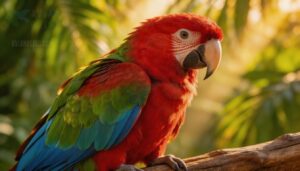
Feathers do a lot more than make your bird look beautiful — they’re the foundation of its health and survival. Understanding how they work helps you catch problems early and keep your bird thriving.
Keeping those feathers in top shape starts from the inside, and essential vitamins for bird health play a bigger role than most owners realize.
Here’s what every owner should know about the role feathers play.
Feather Structure and Function
Think of each feather as a precisely engineered tool. The rachis support — that central shaft anchoring every feather — holds the entire vane in shape, built from the same keratin forming your bird’s claws. From this shaft, barbs extend outward, and barbules bearing tiny hooklets create a pennaceous interlocking network, giving contour feathers their smooth, aerodynamic surface. When hooklets break, feather aerodynamics suffer visibly — vanes fray and separate. Powder down coating, produced by specialized feathers, absorbs excess moisture and distributes oils during preening.
Five structural components you should know:
- Rachis — central shaft providing structural support
- Barbs — lateral branches forming the vane surface
- Barbules — microscopic extensions ensuring hooklet integrity
- Down feathers — loosely arranged for feather insulation
- Flight feathers — stiff, anchored structures enabling feather biomechanics
Feathers in Thermoregulation and Protection
Feathers don’t just look impressive—they’re your bird’s entire climate control system.
Down Air Insulation traps warm air close to the skin, while the Vane Wind Barrier formed by interlocking contour feathers limits heat loss from cold air penetration.
Waterproofing Oil from preen gland secretions keeps plumage dry, because waterlogged feathers lose insulating power fast.
The Radiation Heat Buffer effect of dense plumage separates skin temperature from ambient conditions, and the Camouflage Protection Layer shields delicate tissue from abrasion and UV exposure simultaneously.
| Feather Function | Mechanism | Owner Benefit |
|---|---|---|
| Thermoregulation | Down Air Insulation traps body heat | Fewer cold-stress episodes |
| Vane Wind Barrier | Interlocking barbules reduce airflow | Stable core temperature |
| Waterproofing | Preen gland secretions repel moisture | Maintained feather insulation |
| Radiation Heat Buffer | Plumage separates skin from environment | Reduced thermal stress |
| Camouflage Protection Layer | Outer feathers shield inner layers | Less skin injury and parasite exposure |
Feathers and Bird Communication
Your bird’s plumage does far more than regulate temperature—it’s a refined communication system that rivals any vocal call. Color signaling drives courtship, with bright feather coloration and UV-reflective plumage catching attention in ways your eyes can’t fully detect. Display postures paired with wing flicks or tail spreads reinforce social messages instantly.
Acoustic feather sounds during flight add another layer, conveying aggression or readiness without a single chirp. Seasonal plumage shifts reflect changing social needs throughout the year. Even feather texture cues matter during close encounters.
The structural integrity of flight feathers relies on interlocking barbs and barbules that provide stiffness while allowing flexibility.
- Iridescent feathers signal genetic fitness to potential mates
- Fluffed plumage communicates stress or illness clearly
- Tail fan displays establish territorial boundaries without conflict
- Preening behavior maintains display quality and feather structure and composition
- Plumage patterns reveal age and social rank within flocks
Nutrition for Optimal Feather Health
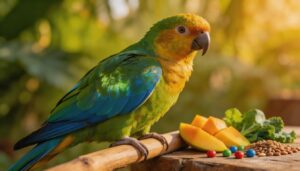
What your bird eats directly shapes the quality of every feather on its body. The right nutrients make the difference between a dull, brittle coat and strong, vibrant plumage.
For a deeper look at which foods actually deliver results, best bird food for strong, vibrant feathers breaks down the key nutrients your bird needs most.
Here’s what you need to know about feeding for feather health.
Essential Nutrients for Feather Growth
Your bird’s plumage is only as strong as what’s on its plate.
Protein Quality matters most—target 16–20% high-quality protein during molt, with Essential Amino Acids like methionine and cysteine driving keratin production.
Biotin Supplementation promotes follicle integrity, while Zinc Trace Mineral and Omega Fatty Acids maintain skin barrier and feather sheen.
Vitamins A, D3, and E complete the Nutritional requirements for healthy feathers.
| Nutrient | Role in Feather Growth | Source Example |
|---|---|---|
| Essential Amino Acids | Build keratin structure | Eggs, legumes |
| Zinc Trace Mineral | Promotes oil gland function | Seeds, fortified pellets |
| Omega Fatty Acids | Maintains skin and sheen | Flaxseed, fish oil |
Importance of Hydration
Proper hydration does more than quench thirst — it quietly powers every system that keeps plumage healthy. During molting hydration cycles, water helps follicle circulation and feather flexibility.
Here’s what adequate intake actually does:
- Helps Preen Oil Hydration for even oil distribution
- Maintains Respiratory Moisture in airways
- Aids Digestive Hydration for nutrient absorption
- Reduces Heat Stress Hydration risks
- Allows effective water bathing for birds in shallow water baths
Effects of Malnutrition on Feathers
When nutrition falls short, your bird’s plumage tells the story first. Keratin deficiency from low protein causes brittle plumage, frayed edges, and abnormal feather growth. Zinc deficiency and low vitamins A, D3, and E trigger skin dermatitis and color discoloration. Here’s what nutritional deficiencies produce:
- Rough, malformed feathers from methionine and cystine shortages
- Discolored or darkened plumage from lysine imbalance
- Inflamed skin patches disrupting new feather development
A balanced diet with high-quality protein corrects this.
Feather Maintenance and Grooming Habits
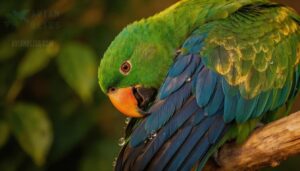
Keeping your bird’s feathers in top shape takes more than good food — it takes consistent grooming habits.
There are a few key practices that make a real difference in feather condition and overall health. Here’s what every owner should know.
Preening and The Preen Gland
Your bird’s daily preening isn’t idle behavior—it’s precision maintenance. The preen gland, a small uropygial structure near the tail base, secretes oil that your bird collects with its beak and distributes across every feather surface.
These volatile oil compounds waterproof plumage and block microbial growth. Regular preening stimulates healthy gland secretion; skipping it risks gland impaction.
| Preen Gland Factor | What It Means for Your Bird |
|---|---|
| Anatomy location | Near tail base, paired structure |
| Oil distribution mechanics | Beak transfers oil across feathers |
| Volatile oil compounds | Repel fungi, bacteria, moisture |
| Seasonal preening patterns | Increase during molt cycles |
| Gland impaction prevention | Consistent preening keeps oil flowing |
Bathing and Misting Benefits
A clean bird is a comfortable bird—and that comfort starts with water. Regular water bathing for birds removes dust, debris, and mites that quietly compromise plumage integrity.
Misting offers an alternative for birds that resist full submersion, targeting the outer feather surface for effective germ control without heavy soaking. Controlled moisture also helps enhance flexibility, keeping barbs supple enough for thorough preening afterward.
- Lukewarm mist baths reduce stress behaviors linked to feather irritation
- Improved skin comfort follows consistent bathing and grooming routines
- Warm, draft-free drying areas increase drying efficiency post-bath
Molting and Feather Replacement
Molting strips your bird down to the follicle and rebuilds it—feather by feather, in a deliberate sequence. The follicle cycle drives this process, pushing old growth out as replacement feathers emerge. Wing feather sequence follows a set pattern, moving inward to outward.
Energy demands spike during this phase, so increase protein intake and minimize stress. Captive molting care means steady warmth, consistent diet, and feather health monitoring throughout the molting cycle.
Bird Hygiene and Clean Living Environments
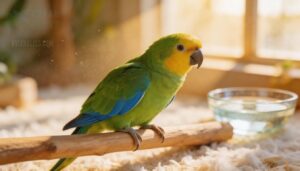
A clean living space is just as important as good nutrition regarding your bird’s health. Bacteria, parasites, and airborne debris build up faster than most owners expect, and feather condition takes the hit first.
Here’s what you need to know about keeping your bird’s environment working in their favor.
Cage and Aviary Cleaning Practices
Your bird’s cage is its entire universe — and a dirty one puts its feathers at real risk. A consistent Liner Replacement Schedule and Perch Wiping Routine form the backbone of strong cage hygiene. Follow this weekly maintenance framework:
- Remove and replace liners daily; scrub trays weekly
- Apply nontoxic cleaning products with proper Disinfectant Contact Time
- Use a Tool Segregation System to prevent cross-contamination
- Make sure complete Drying and Ventilation before reassembling
Spot cleaning between sessions keeps cage sanitation consistent.
Preventing Disease Through Hygiene
Good cage hygiene doesn’t stop at scrubbing perches — it’s your first defense against disease. Hand Hygiene before and after handling cuts greatly reduces pathogen transfer. Tool Disinfection between enclosures prevents cross‑contamination. Follow these core practices:
| Hygiene Practice | Why It Matters |
|---|---|
| Water Purification | Prevents microbial and biofilm buildup |
| Quarantine Protocols | Stops new birds from spreading illness |
| Regular Cleaning | Reduces bacterial and fungal growth |
| Personal Protective Equipment | Shields you and your flock from zoonotic risk |
| Cage Hygiene Checks | Helps feather health monitoring and parasite prevention |
Dust bathing and parasite control work alongside these steps, preventing parasites and skin infections in birds before they escalate.
Environmental Factors Affecting Feather Quality
Hygiene practices set the foundation, but your bird’s environment does quiet work in the background — and it’s worth paying close attention to it.
Humidity impact is real: damp air slows feather drying, promotes microbial growth, and weakens the feather’s water-shedding barrier over time. Aim for moderate humidity levels between 40–60%.
Temperature stress disrupts molting timing and accelerates plumage wear, so consistent temperature regulation is crucial.
UV exposure from full-spectrum artificial lighting enhances healthy pigmentation and growth cycles when natural sunlight isn’t available.
Meanwhile, airborne pollution deposits particulates that interfere with preening and waterproofing, while wind abrasion damages feather tips, reducing their ability to interlock properly.
Monitor these environmental factors carefully:
- Ventilation and air quality — keep cages away from smoke and chemical fumes
- Stable humidity and temperature to prevent brittle or fungus-prone plumage
- Full-spectrum artificial lighting when natural UV access is limited
- Adequate space to support dust bathing and parasite control routines
- Toxin-free surroundings, including pesticides and cigarette smoke
Common Feather Problems and Solutions
Even with the best care, feather problems can still show up — and catching them early makes all the difference. Knowing what to look for and why it’s happening puts you in control before things get worse.
Here are the most common issues you’ll want to watch for.
Feather Picking Causes and Management
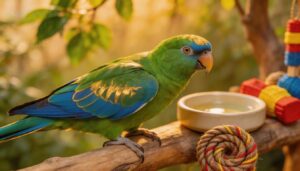
Feather plucking rarely has a single cause.
Stress Triggers like Social Isolation, Lighting Issues, and boredom are common culprits, but so are Parasite Infestations and nutrient gaps.
Balanced Diet and environmental enrichment — rotating toys, puzzle feeders, and regular bathing — form the backbone of stress reduction.
| Cause | Management Strategy |
|---|---|
| Social Isolation | Increase daily interaction |
| Parasite Infestations | Veterinary parasite control |
| Lighting Issues | Full-spectrum lighting |
| Nutritional Deficiency | Balanced Diet adjustment |
| Boredom | Behavioral Enrichment rotation |
Recognizing Signs of Feather Disease
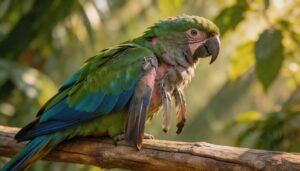
Plucking isn’t always the whole story. Sometimes what looks like a grooming habit is actually feather disease quietly taking hold. Watch your bird closely for these warning signs:
- Powder down loss, leaving plumage looking dull or uneven
- Shaft bleeding or abnormal feather growth, including pin feathers that won’t mature
- Pigment symmetry changes paired with missing flight feathers
These signs point to compromised feather health. Feather health monitoring and tracking feather condition each molt can catch disease before it accelerates.
When to Seek Veterinary Care
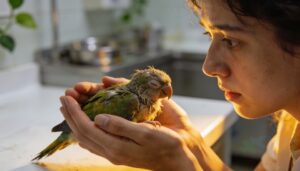
Knowing when to consult an avian veterinarian can make the difference between a full recovery and a serious decline. Some signs demand same-day care, not a wait-and-see approach. Trust what you observe — your bird can’t tell you it’s struggling.
When your bird can’t tell you it’s struggling, same-day veterinary care can mean the difference between recovery and decline
- Respiratory distress, including open-mouth breathing or wheezing sounds
- Sudden weakness, loss of balance, or collapse
- Toxic exposure to fumes, chemicals, or ingested metals
- Uncontrolled bleeding from feathers or skin injuries
- Appetite loss lasting more than one full day
Feather health monitoring and professional avian veterinary consultation go hand in hand. Identifying feather health issues early keeps small problems from becoming emergencies.
Frequently Asked Questions (FAQs)
How to improve feather quality in birds?
Better feather quality starts with a balanced diet rich in protein, vitamins, and omega-3s.
Add UV lighting, perch variety, enrichment toys, and stress management to keep plumage strong and vibrant.
How long do germs stay on feathers?
Germs can linger on feathers far longer than most owners realize. Under cold storage conditions, infectious avian viruses have survived up to 160 days, while warm storage shortens that window considerably.
Can you wash feathers with Dawn dish soap?
Like cutting grease from a pan, Dawn dish soap can remove heavy oil from feathers in emergencies, but diluted soap application, thorough rinsing, residue removal, and proper feather drying protocol, with veterinary guidance needed, are essential.
How do feathers impact a bird’s flight abilities?
Every flight feather works like a precision-engineered airfoil.
Wing feather aerodynamics depends on feather barbs interlocking tightly, enabling lift generation mechanics and drag reduction strategies that keep your bird airborne with impressive feather biomechanics efficiency.
Can household air quality affect feather health?
Think of your bird’s lungs as a canary in a coal mine — they signal danger first.
Airborne irritants, mold spores, aerosol chemicals, and dust particulate load all compromise bird respiratory health directly.
What toys help reduce feather-related stress?
Puzzle Foraging Toys, Chewable Wood Toys, and Soft Fiber Toys reduce feather plucking by redirecting stress into safe activity.
Ladder Perch Toys add exercise and enrichment for feather condition, while Safe Material Toys support healthy chewing opportunities without risk.
Are certain bird species more prone to feather issues?
Yes, certain species are more vulnerable.
Budgerigars, lovebirds, cockatoos, and African greys face higher risks from viral infections, species-specific parasite susceptibility, genetic feather disorders, and seasonal molt stress than most other pet birds.
How does sunlight exposure influence feather condition?
Sunlight acts like a double-edged sword for feather condition.
UV exposure promotes preening behavior and UVB-driven health, but prolonged light causes UV photobleaching, keratin denaturation, and pigment fading—gradually dulling even the most vibrant plumage.
How does bird age affect feather quality?
Bird age directly shapes feather quality. Juvenile feather wear runs high, while adult feather durability improves after molt cycles replace weaker early plumage with stronger, more uniform growth.
Can stress cause permanent feather damage in birds?
Stress can cause lasting feather damage.
Corticosterone elevation disrupts molt timing, and chronic stress effects drive feather-damaging behaviors. Stress-induced feather fragility, follicle injury, and stress-related plumage loss may result in permanent feather scarring without intervention.
Conclusion
Neglecting your bird’s feather health is like ignoring a ticking time bomb—small issues can snowball into catastrophic problems overnight. By prioritizing feather health and bird hygiene, you’re not just preventing disease; you’re safeguarding your bird’s quality of life.
Regular checks, balanced nutrition, and a clean environment are your best defenses. Stay vigilant, and you’ll be rewarded with a vibrant, thriving companion that brings joy for years to come, every day.
- https://birdsupplies.com/blogs/news/signs-of-bird-malnutrition-and-how-to-save-your-bird-now
- https://www.bestbirdfoodever.com/2019/07/avian-malnutrition-feather-condition/
- https://www.harrisonsbirdfoods.com/signs-info/
- https://vcahospitals.com/know-your-pet/preening-or-uropygial-gland-in-birds
- https://www.birdhealth.com.au/resaerch-preen-glands