This site is supported by our readers. We may earn a commission, at no cost to you, if you purchase through links.

Each spring, millions of birders travel thousands of miles to witness migrations, camp in remote habitats, and chase rare species—activities that carry their own environmental costs. Carbon emissions from travel, disturbance at nesting sites, and habitat degradation from increased foot traffic represent measurable consequences of this popular pastime.
The environmental impact of birding reveals a paradox: those most devoted to observing and protecting birds may inadvertently contribute to the pressures threatening them.
Yet understanding these impacts doesn’t require abandoning binoculars. Research shows that informed birding practices, combined with habitat restoration efforts and sustainable tourism models, can shift the balance from harm to meaningful conservation support.
Table Of Contents
Key Takeaways
- Birding creates measurable environmental harm through carbon emissions from travel (over 60% of typical trip footprints), habitat disturbance that causes up to 41% nesting failure in coastal species, and stress responses that reduce feeding trips by 15–28% near active nests.
- Birds provide critical ecosystem services including seed dispersal for forest regeneration, pollination that boosts crop yields, nutrient cycling through guano deposition, and natural pest control that reduces agricultural chemical dependence.
- Climate change, habitat loss, and pollution compound to threaten bird populations—range shifts push species toward cooler regions, pesticide exposure cuts insect prey by 20–50%, and building collisions kill 400–700 million birds annually worldwide.
- Sustainable birding practices like choosing local sites over distant travel, maintaining 100–300 meter buffer zones from nests, and supporting habitat restoration programs can shift birdwatching from environmental liability to meaningful conservation contribution.
Key Ecosystem Services Provided by Birds
Birds quietly shape the natural world in more ways than most of us realize. Their daily work bolsters entire ecosystems and keeps nature’s cycles in motion.
Here’s a closer look at the essential services birds provide.
Seed Dispersal and Forest Regeneration

When you think about forest regeneration, it’s impossible to overlook the quiet power of Avian Seed Dispersal. Birds—especially frugivore guilds—play a key role by:
- Spreading seeds to expand habitat connectivity
- Supporting strong forest biomass recovery
- Limiting seed predation in new growth stands
- Boosting conservation by naturally replanting diverse ecosystems
Their ongoing work shapes your environment daily. This highlights the importance of family in nature’s ecosystems.
Birds as Pollinators in Ecosystems
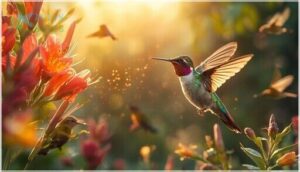
Just as birds plant forests with dropped seeds, they also stitch together landscapes as tireless pollinators. Avian Pollination Ecology reveals that hummingbirds and sunbirds, visiting countless flowers daily, boost fruit yields and sustain food webs. Their migration weaves essential Pollination Network Dynamics—ensuring resilient crops, wildflowers, and communities. These processes are tracked using marketing strategies to analyze visitor behavior.
| Bird Pollinator | Key Contribution |
|---|---|
| Hummingbird | Boosts fruit yield |
| Sunbird | Enhances seed viability |
| Migratory species | Cross-habitat gene flow |
| Local nectar-feeder | Sustains rare plants |
Nutrient Cycling and Soil Formation

You mightn’t notice it as you watch a flock settle on a riverbank, but their presence sparks nutrient hotspots that power the land. Avian guano enriches soils, feeding soil microbiomes and speeding up litter decomposition.
Seasonal deposition—especially during nesting—shapes soil formation and nutrient transfer, anchoring ecosystem services that ripple outward. Sustainable birding practices help protect these unseen, essential cycles.
Birds as Scavengers and Pest Controllers
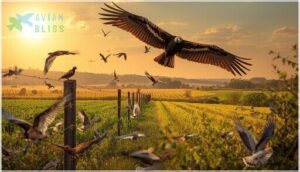
When vultures sweep across a landscape, they accelerate scavenging decomposition rates, minimizing disease and recycling nutrients.
Closer to home, pest control birds—like insectivorous house sparrows and starlings—offer natural pest control, suppressing pest populations without chemicals. Even falconry pest suppression and rodent pests check-ins by raptors help crops thrive.
You gain safer, more resilient environments when these natural allies flourish.
Human Activities Impacting Bird Populations
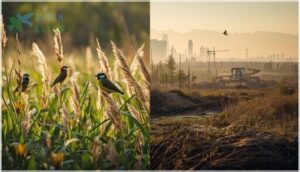
Many of the challenges birds face today are linked to how people interact with the environment. Different human activities shape the landscapes and conditions that birds depend on.
Here are some of the main ways our actions impact bird populations.
Habitat Loss and Degradation
Imagine losing an essential piece of a puzzle: that’s what Forest Loss, Prairie Decline, and Tropical Deforestation mean for bird habitats. Urban Expansion further chips away at spaces birds need, while gaps in Protected Areas make conservation tougher.
Understanding how habitat loss and degradation drive environmental impact helps you embrace sustainable birding practices for a healthier, more resilient world.
Effects of Climate Change on Birds
As global temperatures rise, you’ll notice climate change reshaping bird populations in ways that demand your attention. Range shifts push species toward cooler latitudes and elevations, while phenological mismatches reduce reproductive success by 20–40% in affected populations.
Consider these climate-driven challenges:
- Extreme weather increases mortality by up to 25% during breeding seasons
- Habitat loss threatens 30% of montane birds by 2100
- Flyway disruptions alter migration timing and body condition
- Warming erases suitable environments for specialist species
Understanding these impacts strengthens your commitment to birdwatching and conservation.
Pollution, Pesticides, and Poaching
Across rural wetlands and farmlands, pollution and pesticide usage combine to undermine bird survival in ways you mightn’t expect. Pesticide exposure reduces insect prey by 20–50%, while habitat contamination through heavy metals lowers fledging success by 15–25%.
Poaching effects compound these threats—illegal harvesting drives 6–14% annual declines in protected populations.
Conservation enforcement and sustainable birding practices offer pathways to reverse these losses and protect vulnerable species.
Collisions With Buildings and Wind Turbines
Building collisions kill 0.4–0.7 billion birds worldwide each year, with glass reflections accounting for half of urban fatalities. Wind turbines add hundreds of millions more, particularly near migration corridors. Habitat fragmentation intensifies these risks by 15–25%.
Mitigation strategies like window treatments and turbine curtailment reduce deaths by 30–60%, though data gaps in standardized reporting challenge thorough avian conservation efforts in environmental impact assessment.
Environmental Impacts of Birding Activities
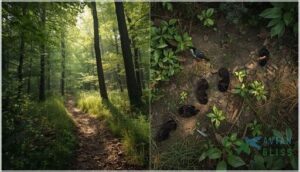
While birdwatching connects people to nature, the activity itself carries environmental consequences that deserve your attention.
From the miles you travel to spot rare species to the unintended stress your presence places on bird populations, these impacts add up in ways you mightn’t expect.
Understanding these effects helps you make informed choices about how you pursue this beloved hobby.
Carbon Footprint From Birdwatching Travel
When you set out to spot that rare warbler, you’re probably not thinking about climate change—but travel emissions from birdwatching add up fast. Air travel accounts for over 60% of the carbon footprint in typical birding trips, making sustainable birding practices essential.
Here’s how you can reduce your environmental impact of tourism:
- Choose local birding sites within driving distance to cut emission reduction by 30–70%
- Support carbon offsetting programs tied to your trips for verified reductions
- Opt for ground transport over flights when exploring regional hotspots
Disturbance of Nesting and Feeding Sites
When you venture into a bird’s nesting site, your presence carries more weight than you might realize. Human proximity effects during breeding seasons are severe: nesting failures in coastal passerines reach 41% due to disturbance, while ground-nesting species face a 12-percentage-point drop in hatching probability.
Your presence near nesting birds carries serious weight—coastal passerines face 41% nesting failure when disturbed during breeding season
Conservation area management must balance ecological education with wildlife protection, especially when birdwatching enthusiasts linger within 50 meters of active nests.
Effects on Breeding Success and Bird Stress Levels
Beyond nesting disturbance lies a deeper concern: stress hormones in birds rise by 17% under repeated birdwatching pressure, directly impairing breeding phenology and reproductive outcomes. You’ll notice feeding trips decline 15–28% when visitors linger near nests, while habitat type compounds these effects—wetland-adjacent pairs face 9–14% higher nest failure.
Mitigation implications are clear: buffer zones of 100–300 meters restore fledging success by 8–16%, protecting avian ecology’s delicate balance.
Prioritization of Rare Species and Resulting Impacts
When birdwatching communities rally around rare species, you might assume conservation wins across the board. Yet focusing on rarity creates conservation trade-offs—common species decline by 6–12% in some ecosystems as resources shift. Sampling bias inflates extinction risk perceptions by 15–30%, though habitat restoration paired with rarity prioritization does deliver biodiversity gains of 8–14%.
- Red-list impacts appear 3–7 years after habitat protection begins for targeted species
- Wildlife conservation actions increase 25–40% in protected areas prioritizing rare finds
- Environmental awareness of these trade-offs helps balance nature preservation strategies
Strategies for Bird Conservation and Sustainable Birding

Protecting bird populations requires a thoughtful combination of habitat conservation, policy reform, and changes in how you approach birdwatching itself. The good news is that effective strategies exist at multiple levels, from international agreements to individual choices you can make during your next birding trip.
Let’s explore four key approaches that balance conservation goals with the continued enjoyment of birding.
Protecting and Restoring Bird Habitats
Reversing habitat degradation through targeted restoration techniques offers measurable gains for bird populations. Protected areas reduced habitat loss by 28% over a recent decade, while native plantings yielded four to nine times higher fledgling survival than non-native communities.
Urban rehabilitation with native flora supported up to 2.7 times greater species richness. Adaptive management and environmental awareness drive these wildlife preservation successes in environmental conservation.
Implementing Sustainable Farming Practices
Restoring habitats begins on cultivated ground, too. Sustainable farming practices—like reduced pesticide use and bird-friendly hedgerows—give migratory species a fighting chance and aid natural pest control in agricultural settings. Supporting birds depends on choices such as:
- Incentivizing habitat integration in fields
- Embracing agroecology adoption with less chemical input
- Using policy incentives promoting bird-friendly farming
International Collaboration for Conservation
Since migratory birds cross borders, you can’t protect them in isolation. International collaboration brings 97 countries together through data sharing platforms, funding reserves exceeding $1.2 billion, and policy frameworks like the Bonn Convention.
These efforts establish habitat corridors, reduce plastic along migration routes, and support sustainable tourism that benefits conservation.
When nations coordinate monitoring and restoration, targeted species show population growth of 1.5% to 3.0% annually.
Promoting Eco-Friendly Birding Initiatives
You can reduce your carbon footprint by choosing eco-travel certification programs, which 62% of birders now favor. Sustainable destinations implementing minimum-impact practices—quiet viewing, staying on trails—saw a 14% rise in eco-conscious visitors.
Community programs partnering with local NGOs cut disturbance at nesting sites by 21%. Eco-label premium experiences in ecotourism and birdwatching support green initiatives while protecting the birds you love.
Top 3 Books on Birding and Environmental Impact

If you’re looking to deepen your understanding of birding’s environmental dimensions, a handful of well-crafted books can serve as trusted companions on that journey. These three titles offer distinct perspectives—from personal memoir to practical guidance—that highlight both the joys and responsibilities of birdwatching.
Here’s what each brings to your reading list.
1. Better Living Through Birding Memoir
You’ll find a mirror to your own identity exploration in Christian Cooper’s Better Living Through Birding, a 304-page memoir that weaves personal growth through birdwatching adventures across the globe.
Cooper, who introduced gay storylines in comics before embracing birding full-time, offers memoir impact beyond the Central Park incident. His narrative bridges social justice with sustainability themes that inspire ecotourism advocates.
While some readers expect faster pacing, you’ll discover how his perspective as a Black, gay birder transforms ordinary observation into profound eco-friendly practice. This connects nature writing with lived experience in ways that resonate deeply.
Best For: Readers seeking a thoughtful memoir that blends personal identity, social justice, and nature writing through the lens of a Black, gay birder’s global adventures.
- Offers a rare and compelling perspective on birding as a tool for self-discovery and navigating identity as a Black, gay man in America.
- Combines multiple interests—memoir, nature writing, comics history, and social justice—making it accessible to diverse audiences.
- Inspires readers to engage with the natural world while reflecting on themes of belonging and acceptance.
- The focus on birding may feel slow-paced or less engaging for readers expecting a narrative centered on the Central Park incident.
- Tone and reflective style may not appeal to those who prefer fast-paced, plot-driven storytelling.
- Themes involving racism and homophobia could be challenging or triggering for some readers.
2. Birding While Indian Memoir by Gannon
You’ll encounter a powerful intersection of Lakota identity and birding passion in Thomas Gannon’s Birding While Indian, where cultural heritage meets nature observation. This 256-page memoir weaves racism experiences with birdwatching adventures across the Great Plains, offering memoir analysis that challenges how sustainability and ecofriendly practices connect to Indigenous perspectives.
Gannon’s humor softens hard truths about colonialism, though some readers find the social commentary overwhelming. His approach shows how birding transcends a simple hobby—it becomes a lens for understanding displacement, belonging, and the land itself.
Best For: Readers seeking a thoughtful blend of nature writing and cultural memoir that explores Indigenous identity, colonialism, and environmental connection through the lens of birding on the Great Plains.
- Combines birding observations with deeply personal reflections on mixed-blood Lakota heritage, offering a rare perspective that bridges nature writing and Indigenous experience.
- Uses humor and accessible storytelling to tackle difficult subjects like racism and displacement without becoming preachy or heavy-handed.
- Provides genuine insights into how cultural identity shapes our relationship with land and wildlife, making it relevant for readers interested in both conservation and social justice.
- The focus on racism and colonial history may feel intense or challenging for readers expecting a lighter, traditional birding memoir.
- Humor and satirical tone won’t resonate with everyone, particularly those unfamiliar with the nuances of Native American experiences.
- At 256 pages, some readers may find the cultural commentary overshadows the birding content they came for based on the title.
3. Birding for a Better World Guide
You’ll discover environmental justice woven into birding through Molly Adams and Sydney Golden Anderson’s Birding for a Better World, priced at $8.78. This accessible guide connects inclusive birding with community building, featuring 90 illustrations and self-reflection prompts.
While experienced birders may find it basic, the book offers actionable steps toward eco-friendly birding initiatives and sustainable tourism. You’ll see how environmental conservation efforts link to equity, transforming birdwatching from solitary observation into collective action.
Though packaging proves flimsy and depth limited, it helps beginners seeking meaningful nature connection alongside social impact.
Best For: Beginners and nature lovers who want to explore birding as a community-centered practice while learning about environmental justice and inclusive outdoor spaces.
- Combines birding basics with social justice themes, making it unique for readers interested in both nature and activism
- Features 90 original illustrations and journaling prompts that encourage personal reflection and mindfulness
- Priced affordably at $8.78, making it accessible for gift-giving or casual purchase
- Too basic for experienced birders who already know the fundamentals
- Lacks sufficient detail on building inclusive birding communities and accessibility practices
- Flimsy packaging may result in shipping damage
Frequently Asked Questions (FAQs)
How does birding affect freshwater aquatic ecosystems?
Birds shape freshwater ecosystems through avian nutrient input and sediment resuspension, driving macrophyte colonization and microbial shifts. However, oxygen depletion from anthropogenic factors threatens ecosystem health, making sustainable tourism essential for preserving these delicate environmental balances.
What regulations govern birdwatching in protected areas?
Protected areas use permitting systems, seasonal closures, and visitor quotas to safeguard nesting birds.
Compliance monitoring enforces disturbance penalties, supporting wildlife conservation and natural resource management while balancing birdwatching access with environmental protection.
How do birding apps impact bird behavior patterns?
You mightn’t realize it, but birding apps can trigger acoustic disturbance that elevates stress hormone levels by 7–9% during dawn choruses.
Meanwhile, nesting proximity alerts help reduce breeding phenology shifts and support healthier population dynamics.
What carbon offset programs exist for birding travel?
When you offset flights, programs fund reforestation—$10 to $50 per CO2 ton—with verification standards ensuring traceability.
Climate change demands emission reduction emphasis first, but birding travel offsets support habitat restoration when chosen carefully.
Conclusion
Picture binoculars resting on a restored meadow where native grasses now shelter nesting sparrows—this image captures birding’s potential transformation. The environmental impact of birding isn’t predetermined; your choices determine whether observation becomes exploitation or stewardship.
By minimizing travel emissions, respecting habitat boundaries, and supporting restoration projects, you convert passive watching into active conservation. Each mindful outing strengthens the ecosystems birds depend upon, proving that careful observation can heal rather than harm the landscapes we cherish.
- https://www.birds.cornell.edu/home/u-s-bird-populations-continue-alarming-decline-new-report-finds/
- https://www.audubon.org/magazine/sweeping-new-report-shows-us-birds-declining-sharply-across-range-habitats
- https://wildlife.org/birds-move-north-but-still-cant-beat-the-heat/
- https://bryanpfeiffer.com/2021/12/02/birdwatchings-carbon-problem/
- https://www.cec.org/wp-content/uploads/7.-Monitoring_eng_web.pdf