This site is supported by our readers. We may earn a commission, at no cost to you, if you purchase through links.
A small bird with a broken wing won’t survive long in the wild, and domesticated species face just as many threats inside our homes. Window collisions account for nearly half of all household injuries in pet birds, while toxic fumes from nonstick cookware can kill within minutes.
African greys develop feather-plucking disorders at rates reaching 20%, and finches in certain populations carry air mites at a staggering 63%. Your home likely contains dozens of hazards you haven’t considered—exposed electrical cords, open water sources, even seemingly harmless carpeting.
Understanding these risks and implementing targeted safety measures doesn’t require ideal execution, but it does demand consistent attention to the details that separate thriving birds from preventable tragedies.
Table Of Contents
Key Takeaways
- Your bird’s natural instinct to hide illness means you need to watch for subtle behavioral changes—like lethargy, altered eating patterns, or social withdrawal—since these often appear before obvious physical injuries and can signal serious problems within 24 hours.
- Window collisions account for nearly half of household bird injuries, while everyday hazards like Teflon fumes, exposed electrical cords, and open water sources create preventable dangers that require consistent environmental modifications and proper cage placement away from kitchens.
- Species-specific vulnerabilities matter significantly, with African greys showing 20% feather-plucking rates and finches carrying air mites at 63% in certain populations, which means your prevention strategies must match your bird’s unique biological and behavioral needs.
- Only 12.4% of bird owners schedule annual veterinary visits, yet daily observation combined with routine health checks catches 92% of physical and behavioral warning signs within 24 hours and reduces injury complications by nearly half when treatment starts promptly.
Why Pet Birds Are Prone to Injuries
Pet birds face a unique set of risks that many owners don’t anticipate until an injury occurs. Their naturally curious behavior, combined with fragile anatomy and a home environment designed for humans, creates a perfect storm of potential dangers.
Understanding what makes your bird vulnerable is the first step toward keeping them safe—and it starts with recognizing three major categories of risk.
Common Household Hazards
Within your home, everyday conveniences create hazards for pet birds. Toxic substances like Teflon fumes, cleaning agents, and heavy metals from batteries pose serious threats. Collision risks with windows account for nearly half of household injuries, while electrical dangers from exposed cords can cause fatal electrocution.
Water hazards—open toilets, hot liquids—and ingested objects like carpet fibers round out the primary threats requiring preventive measures and careful birdproofing. Owners should also be aware of toxic plants in the home, which can be poisonous if ingested.
Behavioral and Environmental Risks
Your bird’s environment shapes their safety just as much as physical hazards do. Cage crowding increases aggression dynamics and injury rates, while social isolation raises stress-induced injury risk by over twofold.
To create a safe environment for pet birds, consider these preventative measures:
- Provide adequate space to reduce territorial conflicts
- Offer varied perches and foraging opportunities
- House compatible species together when possible
- Monitor social interactions during supervised flight time
- Enrich cages daily with rotating toys and activities
Enrichment deficiencies correlate with feather-damaging behavior affecting up to 30% of cockatoos, demonstrating how avian safety depends on mental stimulation alongside injury prevention protocols. A common cause of trauma includes attacks from other animals, especially cats and dogs.
Species-Specific Vulnerabilities
Beyond general hazards, your bird’s species dictates unique injury risks requiring specific preventive measures. Parrot feather plucking affects up to 20% of African greys, while finch air mites infest 63% of certain populations. Raptor fracture risks climb to 14% in undersized enclosures, and pigeon pododermatitis reaches 22% with poor perching.
Turkey pecking injuries average nearly 10% per flock, demonstrating how avian injuries demand species-informed bird injury prevention strategies.
Recognizing Early Signs of Injury
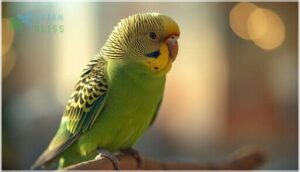
Birds are masters at hiding illness, a survival instinct that makes detecting injuries especially challenging for owners. By the time symptoms become obvious, the condition may already be serious.
Birds instinctively hide illness, so by the time injuries become obvious, the condition may already be serious
Learning what to watch for—from subtle physical changes to shifts in behavior—can mean the difference between a quick recovery and a life-threatening emergency.
Physical Symptoms to Watch For
Your bird’s body tells you when something is wrong—you just need to know how to read the signs. Feather abnormalities like fluffed plumage or bleeding from pin feathers often signal trauma. Mobility issues such as limping, drooping wings, or inability to perch indicate injury.
Visible trauma including lacerations, bruising, or active bleeding requires immediate attention. Watch for dropping changes, sensory deficits like balance problems, and lethargy—all critical injury indicators you shouldn’t ignore.
Behavioral Changes Indicating Injury
When your bird’s personality shifts, injury may be the hidden culprit. Behavioral changes often appear before obvious physical signs, making daily observation essential.
- Lethargy signs: Up to 60% of injured birds huddle quietly in corners or rest at the cage bottom, abandoning their usual perches
- Eating changes: Anorexia occurs in 61% of injury cases, with altered water intake following trauma
- Movement issues: Difficulty perching affects 32% of injured birds, while ataxia appears in 18% after head trauma
- Feather damage: Self-mutilation develops in 44% of birds within a month of untreated injury
- Social changes: Withdrawal from interaction affects 42% of post-injury birds, often paired with increased aggression
When to Seek Immediate Help
The moment you notice these symptoms, emergency veterinary care becomes critical. Birds displaying labored breathing or respiratory distress require immediate evaluation, as do those with uncontrolled bleeding—hemorrhage can prove fatal within 30 minutes given their limited blood volume.
Neurological signs like seizures warrant urgent attention. Fracture severity increases when bones protrude, and delayed intervention causes permanent disability in 60% of cases. Signs of illness, including persistent lethargy, correlate with a rapid decline within 24 hours.
| Critical Emergency Signs | Time-Sensitive Action Required |
|---|---|
| Breathing difficulties, seizures, paralysis | Survival drops below 30% after two hours delay |
| Uncontrolled bleeding from beak, feet, vent | Death possible within 30 minutes without intervention |
| Refusal to eat for 24 hours (12 for young birds) | Predictor of crisis requiring immediate help |
Creating a Safe Home Environment
Your bird’s home should be a sanctuary, not a source of hidden dangers. From the cage itself to the accessories inside, every element plays a role in keeping your feathered companion safe and healthy.
Let’s walk through the essential areas you’ll need to address to create an injury-free environment.
Bird-Proofing Cages and Aviaries
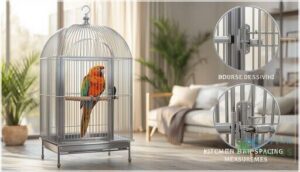
Think of your bird’s cage as the foundation of its daily life—every detail matters. Steel cages dominate the market for good reason: durability and safety. When selecting or maintaining an enclosure, prioritize these avian safety measures:
- Cage bar spacing must prevent head entrapment; verify spacing matches your species’ size
- Secure latches stop escapes; test all doors since 20% of plastic enclosures fail here
- Non-toxic materials like stainless steel eliminate poisoning risks
- Proper placement away from kitchens protects against fumes
Safe Perches, Toys, and Accessories
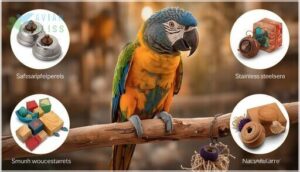
Your bird’s feet bear its weight every waking moment, so perch materials demand attention. Natural wood perches with varying diameters prevent pododermatitis, while sand-covered or sandpaper perches cause abrasive pressure sores.
For cage accessories and enrichment safety, choose stainless-steel toys over galvanized metals containing zinc. Cotton rope presents entanglement hazards when frayed.
Creating a birdsafe environment means selecting non-toxic, bird-specific items that support pet safety without introducing toy toxicity or habitat safety risks.
Preventing Window Strikes and Escapes
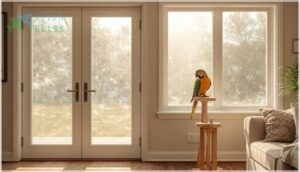
Window collisions kill up to 988 million birds annually in the United States, making window strike prevention essential.
Apply ultraviolet bird-friendly window film on exterior surfaces with decal spacing no wider than two inches apart. Position feeders within three feet or beyond thirty feet from windows to reduce collision risks.
Install escape-proof screens and use double-door aviaries to maintain a birdsafe environment while effectively birdproofing against both strikes and escapes.
Preventive Care and Routine Health Checks
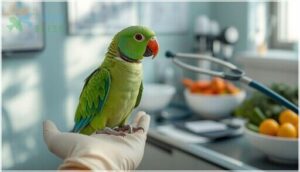
The old saying “an ounce of prevention is worth a pound of cure” holds especially true for bird health. Establishing consistent routines that include veterinary oversight, dietary monitoring, and daily observation can catch problems before they escalate into injuries or emergencies.
These three foundational practices form the backbone of preventive care that keeps your bird healthy and safe.
Regular Veterinary Visits
Most bird owners skip the veterinarian’s office, with only 12.4% bringing their pets in annually. Your bird needs a physical examination at least once or twice yearly—especially during youth or senior years.
These routine health checks include bloodwork, weight assessment, and stool testing. They catch silent issues before they escalate, directly reducing injury complications and boosting long-term wellness. Don’t wait for symptoms to appear.
Monitoring Diet and Hygiene
Beyond veterinary visits, what your bird eats and how you maintain hygiene best practices directly influence disease prevention and injury risk. In fact, 63% of bird owners rely on nutrient-deficient seed mixes, fueling obesity and weakening immunity. Feeding safe food choices and cleaning dishes daily reduces water contamination risks and keeps toxic materials out of reach.
Core nutrition and bird hygiene strategies:
- Switch to pelleted diets supplemented with leafy greens to combat nutrient deficiency signs and reduce fatty liver disease.
- Clean food and water bowls daily—not weekly—to prevent bacterial growth and respiratory infections.
- Never place containers under perches, limiting fecal contamination and cutting infection odds considerably.
- Avoid avocados, chocolate, and caffeine, as these food sources trigger acute crises and dietary impact behaviors like self-mutilation.
Importance of Daily Observation
You can feed perfectly and scrub diligently, but early detection depends on watching your bird every single day. Birds observed daily show 60% better injury identification than those checked sporadically.
Behavior tracking captures 75% of stress signals before they escalate, while consistent monitoring slashes morbidity reduction by 48% and boosts survival rates to 82% when treatment starts within 12 hours.
Physical signs like posture shifts and behavioral alerts—reduced activity, feather ruffling—appear within 24 hours in 92% of cases, making welfare enhancement possible through simple, structured observation routines.
Emergency Preparedness and First Aid
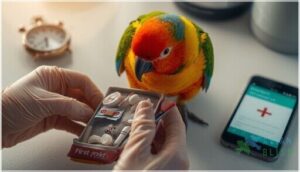
Even with the best preventive measures in place, accidents can happen, and knowing how to respond quickly can make the difference between recovery and tragedy. Your ability to recognize an emergency and provide immediate first aid will directly impact your bird’s chances of survival.
Let’s walk through the essential skills you need to handle emergencies confidently and stabilize your bird until professional help is available.
Safe Handling During Emergencies
During an emergency, proper restraint techniques make all the difference. Use a towel to gently secure your pet bird, placing one hand under the abdomen and the other across the back—this approach reduces fractures by up to 40%. Keep movements calm and deliberate to minimize stress.
Handler training greatly improves outcomes, so discuss first aid strategies with your veterinarian beforehand. Always have your emergency kit ready for safe transport.
Steps for Stabilizing Injured Birds
Once you’ve transported your injured bird safely, stabilization begins with hemorrhage control—apply firm pressure to any bleeding wounds using gauze.
Thermal support is critical; maintain environmental temperatures between 80 and 90°F to reduce metabolic stress.
If your bird shows signs of shock, fluid resuscitation may be necessary, but this requires immediate avian vet intervention. Fracture immobilization and respiratory support are best handled by an avian emergency care specialist who understands species-specific needs.
Long-Term Strategies for Injury Prevention
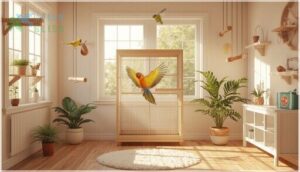
Beyond immediate first aid, keeping your bird safe requires a consistent approach that covers behavior, environment, and your own knowledge as a caregiver. These strategies work together to reduce risks before injuries happen.
Let’s look at three key areas that help create lasting protection for your feathered companion.
Environmental Enrichment for Safety
A thoughtfully designed bird habitat does more than look attractive—it actively prevents injuries while keeping your pet engaged. Research shows that parrots given foraging opportunities spend 60–70% of daylight hours engaged in natural behaviors, reducing stress and related injuries. Safe environment adjustments centered on habitat complexity deliver measurable welfare improvements.
- Choose toy safety by selecting welded, closed-chain links and avoiding brittle plastics or open rings that cause entrapment
- Add sensory stimulation through destructible substrates and foraging opportunities that decrease repetitive behaviors by up to 37%
- Rotate enrichment elements unpredictably to maintain mental stimulation and exploratory behaviors
- Match environmental adjustments to your species’ ecological needs—perch type and placement alone can reduce falls by 25%
The right birdproofing solutions integrate social interaction and physical engagement. When you provide species-appropriate complexity, you’re not just entertaining your bird; you’re creating conditions that naturally minimize risky behaviors and support long-term health.
Training and Socialization Techniques
Building trust through positive reinforcement directly prevents injury. Birds trained with clicker training techniques show a 54% reduction in self-injury rates and 60% fewer handling accidents.
The table below outlines proven methods:
| Technique | Injury Prevention Benefit |
|---|---|
| Daily 5-minute sessions | 65% reduction in biting incidents |
| Target training | 67% decrease in avoidance behaviors |
| Socialization protocols | 49% fewer household accidents annually |
| Trust-building interaction | 3.2x more voluntary approach behavior |
Consistent training creates behavioral changes that support stress reduction and safe social interaction.
Ongoing Education for Bird Owners
Staying informed prevents injuries far more effectively than reacting to emergencies. Only 11.7% of pet owners utilize avian vets regularly, yet practices with certified handling education report 75% fewer monthly injuries.
Workshop participation—like hands-on behavior seminars—provides actionable safe practices specific to demographic needs.
Digital resources, from species-specific care sheets to video tutorials, help you maintain a safe environment through continuous learning and preventive measures in daily bird care.
Frequently Asked Questions (FAQs)
How do seasonal changes affect bird injury risks?
Migration collisions spike during autumn as naïve juveniles navigate unfamiliar hazards. Breeding hazards intensify due to territorial behavior, while weather extremes and visibility risks during climate sensitivity periods compound environmental hazards, making seasonal concerns essential for preventing bird injuries.
Are certain cage materials safer than others?
Like a knight’s armor, your bird’s cage should shield rather than harm. Stainless steel reigns safest—no metal toxicity, easy to sanitize, and lasting over fifteen years. Certified powder-coated options work too when properly inspected for coating safety.
What role does lighting play in preventing accidents?
Proper lighting prevents disorientation and window collisions. Light intensity, wavelength selection, and photoperiod management reduce stress-related accidents. UV light aids health when controlled.
Bird-friendly landscaping and light pollution reduction create safer environments indoors and outdoors.
Should multiple birds be housed together for safety?
Housing multiple pet birds together often raises aggression risks and disease transmission concerns. Species compatibility, adequate space requirements, and continuous monitoring behavior prove essential.
Cohabitation benefits rarely outweigh potential trauma when preventive measures and safe practices aren’t strictly maintained.
Conclusion
Picture your bird preening contentedly on its perch, free from the dangers lurking in everyday surroundings. That vision becomes reality when you commit to vigilant observation and environmental modifications.
Preventing injuries in pet birds requires consistent attention to physical hazards, behavioral cues, and species-specific needs. Your willingness to implement these safety measures—from veterinary checkups to cage design—directly determines whether your bird simply exists or genuinely thrives under your care.
- https://journals.plos.org/plosone/article?id=10.1371%2Fjournal.pone.0306362
- https://pmc.ncbi.nlm.nih.gov/articles/PMC11305546/
- https://www.unsustainablemagazine.com/animal-bird-friendly-fence-design/
- https://www.veterinarypaper.com/pdf/2023/vol8issue6/PartD/8-6-20-883.pdf
- https://zupreem.com/how-to-provide-enrichment-and-exercise-for-pet-birds/