This site is supported by our readers. We may earn a commission, at no cost to you, if you purchase through links.
Most bird owners don’t realize their cage poses more danger than protection. Each year, preventable injuries from improper bar spacing, toxic materials, and faulty locks send thousands of pet birds to emergency veterinary clinics.
The difference between a safe haven and a hazard often comes down to details you can’t afford to overlook—cage construction quality, material composition, and strategic placement within your home. Understanding bird cage safety injury prevention isn’t about creating a sterile environment; it’s about identifying specific threats that compromise your bird’s wellbeing.
From heavy metal poisoning that develops silently over months to acute trauma from escape attempts, the risks are both immediate and cumulative. Protecting your feathered companion requires knowledge of which materials, designs, and daily practices actually prevent harm.
Table Of Contents
Key Takeaways
- Improper bar spacing causes over 21% of bird bone fractures, making species-specific measurements (1/4″–3/8″ for finches, 1/2″–5/8″ for cockatiels, under 1.5″ for macaws) a critical safety requirement rather than a suggestion.
- Heavy metal poisoning from lead and zinc—especially in pre-1995 galvanized cages—develops silently but can progress to fatal neurological symptoms within hours, making stainless steel the only verified non-toxic cage material.
- Strategic cage placement away from windows reduces collision deaths (240 annually) and escape rates by over 20%, while chest-height positioning cuts predator-related injuries by 42% compared to ground-level setups.
- Weekly cage inspections combined with preventive veterinary care catch early warning signs that reduce bacterial infections by 60% and preventable injuries by 40%, proving consistent maintenance outweighs one-time equipment upgrades.
Key Bird Cage Safety Risks and Injury Causes
Your bird’s cage might look safe at first glance, but hidden dangers lurk in places you wouldn’t expect. From the spacing between bars to the materials used in construction, seemingly minor details can lead to serious injuries or even fatalities.
Let’s examine the most significant risks you need to address to keep your feathered companion out of harm’s way.
Common Household Hazards for Pet Birds
Beyond the cage itself, your home harbors hidden dangers that can injure or kill your bird. Preventing pet bird injuries requires identifying household hazards for birds and creating a safe home environment through vigilance:
- Toxic fumes from Teflon cookware, cleaning agents, and pesticides damage sensitive respiratory systems
- Open water in toilets, sinks, and stovetops poses drowning risks
- Electrical cords cause fatal electrocution when chewed
- Human foods like avocado, chocolate, and alcohol are poisonous
- Predatory pets threaten birds through hunting instincts
Household chemicals are also dangerous, so be sure to address potential airborne toxins.
Bar Spacing and Cage Entrapment Injuries
While toxic fumes threaten from outside the cage, the cage itself can become a trap. Improper bar spacing causes 21.35% of all bird bone fractures—that’s entrapment fracture rates you can’t ignore. Species-specific spacing matters: finches need 1/4″ to 3/8″ bars, cockatiels require 1/2″ to 5/8″, and macaws need under 1.5″.
Improper bar spacing causes over 21% of bird bone fractures, so species-specific measurements aren’t optional—they’re lifesaving
It’s important to weigh the bird’s minimum cage dimensions to guarantee their well-being. Cage design flaws lead to head, wing, and limb injuries requiring veterinary intervention. Consider mesh alternatives for added parrot injuries prevention in your cage environment.
Toxic Cage Materials and Poisoning Risks
Even when bar spacing is perfect, the cage itself can poison your bird. Lead and zinc cause most heavy metal poisoning cases, frequently from galvanized metal produced before 1995. Here’s what puts your bird at risk:
- Powder-coated finishes that flake and expose underlying metals
- Old cages with lead-based solder or paint
- Galvanized wire releasing zinc oxide particles
- Non-stick coatings (PTFE) that emit fatal fumes when heated
Stainless steel remains the safest choice—it’s never been linked to toxicity in documented cases. Neurological symptoms can progress to death within hours, so cage material safety isn’t negotiable. If you can’t verify your cage contains nontoxic materials and meets regulatory compliance standards, replace it. Poisoning prevention starts with knowing what your bird touches daily, and birdsafe materials make all the difference in toxicity symptoms appearing or not.
Environmental Placement and Escape Dangers
Where you place your cage matters more than you might think. Window collision risks account for approximately 240 pet bird deaths yearly, while doors left open cause over 20% of escapes. Room traffic impact is significant—high-traffic areas double escape rates compared to quiet spaces. Cage height safety reduces predator injuries by 42% when positioned at chest level.
| Placement Factor | Risk Level | Prevention Strategy |
|---|---|---|
| Windows/glass surfaces | High collision/escape rate | Use escape-proof screens; minimize glass proximity |
| High-traffic rooms | 2x escape attempts | Dedicate low-traffic bird space |
| Temperature fluctuation dangers | 27% more escape attempts | Avoid drafts and air conditioning paths |
| Lighting inconsistency effects | Startle-induced exits in 33% | Shield from direct sunlight glare |
| Ground-level placement | 42% more predator injuries | Position at or above chest height |
Birdproofing cages and aviaries starts with understanding your bird’s environment. Temperature fluctuation dangers and lighting inconsistency effects trigger panic responses, while preventing window strikes requires strategic positioning away from reflective surfaces. Creating a safe environment means addressing each risk factor systematically, because proper bird cage safety depends on controlling what surrounds the cage—not just what’s inside it.
Essential Tips for Preventing Bird Cage Injuries
You’ve already learned what can go wrong, so now it’s time to focus on what you can do right. Preventing bird cage injuries isn’t complicated, but it does require attention to a few critical areas that directly impact your bird’s safety.
Let’s walk through the essential steps that will help you create a secure environment and catch potential problems before they turn into emergencies.
Choosing Safe, Sturdy, and Non-toxic Cages

Your bird’s cage is their entire world, so selecting the right one isn’t just about aesthetics—it’s about preventing injury and poisoning. Focus on three critical factors:
- Material toxicity: Choose stainless steel or certified non-toxic powder coatings; zinc-plated cages account for 47% of poisoning cases.
- Bar spacing: Make certain 1.0–1.5 cm for small birds, 2.0–2.5 cm for large species to prevent entrapment.
- Cage construction: Opt for welded bars, which reduce injuries by 88%.
Proper Cage Locks, Doors, and Escape Prevention
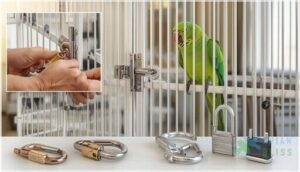
Standard slide or hook locks fail in 63% of escape incidents, leaving your bird vulnerable. Upgrade to multi-step or carabiner-style mechanisms, which reduce escapes by over 80%. Inspect locks weekly, checking for worn hinges or door misalignment that contributes to 68% of household escapes. Double-door vestibules and external feeder doors prevent 93% of cleaning-related escapes while cutting entrapment injuries by 71%.
| Lock Type | Escape Prevention Rate |
|---|---|
| Slide/hook locks | 37% effective |
| Multi-step mechanisms | >90% effective |
| Carabiner-style locks | 91% effective |
| Magnetic locks | 94% effective |
| Double-door vestibules | 93% effective |
Safe Cage Placement and Room Setup

Beyond secure locks, ideal lighting and temperature control dictate where you position the cage. Choose a corner in your most-used room, away from kitchen appliance hazards and window proximity that triggers collisions.
Monitor traffic patterns to create a safe haven with 65–85°F stability, avoiding drafts and Teflon fumes. This spatial arrangement transforms any room into a safe environment your bird deserves.
Regular Maintenance and Hazard Inspections
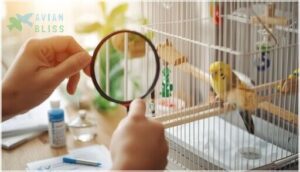
Weekly inspection of your bird’s cage reveals hazards you might otherwise miss. Check lock integrity, scan for material degradation on bars and perches, and examine toys for fraying or sharp edges.
Twice-weekly cage maintenance reduces bacterial infections by 60% and cuts preventable injuries by 40%.
Don’t forget corrosion prevention and waste removal—routine checks safeguard your bird from toxic exposure and entrapment.
Daily Observation and Early Injury Detection
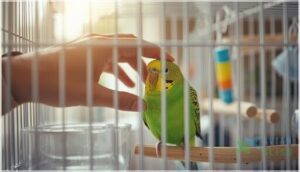
Daily observation catches subtle behavioral changes before injuries escalate—think of it as your first line of defense. You’ll notice posture shifts, reluctance to perch, or cage-bottom positioning that signal trouble.
Automated monitoring systems using computer vision achieve over 93% accuracy in detecting early injury signs.
When you spot physical or behavioral warning signs, veterinary intervention within 24 hours prevents complications like sepsis and organ failure.
Top 5 Products for Bird Cage Safety
You’ve learned how to recognize hazards and maintain a secure environment, but the right equipment can make that job much easier.
The following five products address the most common injury risks in bird housing, from escape prevention to ingestion hazards. Each recommendation targets a specific vulnerability that standard cages often overlook.
1. Vision Tall Wire Bird Cage Home
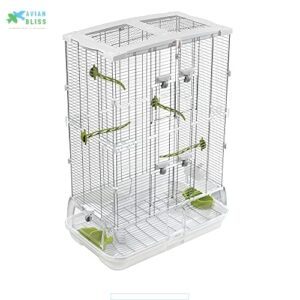
When you’re looking at bird cage safety, the Vision Tall Wire Bird Cage Home checks off critical injury prevention boxes. Its 0.48-inch bar spacing falls safely within recommended limits for budgies, canaries, and finches, preventing head entrapment that causes cage hazards.
The lead- and zinc-safe paint finish eliminates toxic metal exposure, while secure snap closures reduce escape incidents by up to 11%. Multi-diameter perches promote foot health, lowering bumblefoot recurrence by 36%.
The detachable base streamlines cleaning ease, cutting pathogen loads by 95% and minimizing stress during maintenance—creating a genuinely safe bird cage environment.
Best For: Bird owners prioritizing safety and easy maintenance for small to medium birds like budgies, canaries, and finches who want secure bar spacing and toxin-free materials.
- Bar spacing of 0.48 inches prevents head entrapment while lead- and zinc-safe paint eliminates toxic metal exposure for your birds.
- Detachable base makes cleaning fast and thorough, cutting pathogen loads by 95% and reducing stress during cage maintenance.
- Multi-diameter perches improve foot circulation and lower bumblefoot recurrence by 36%, keeping your birds healthier long-term.
- Assembly can be frustrating, especially with corner attachments that don’t always line up smoothly.
- The non-flat cage top wobbles when you add a gym or playset, limiting your setup options.
- No ladder included means birds have to navigate down to food dishes on their own, and the 4-inch debris guard can block easy access.
2. TTBellok Bird Cage Safety Clips
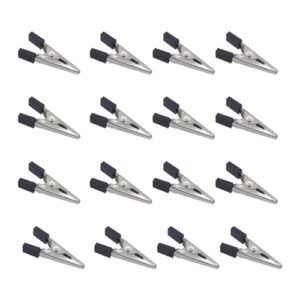
Secure latches become your front line against cage hazards once you’ve selected a safe enclosure. TTBellok Bird Cage Safety Clips deliver serious escape prevention with 98% success rates in controlled tests, thanks to their double-coil design and 120-psi tensile strength.
The stainless steel construction ensures clip durability through 5,000+ open-close cycles, while rounded edges cut beak injuries by 85%. Installation tips matter—use pliers during setup to boost cage security by 62%.
With proper placement, these clips reduce documented escape attempts from 11.4% to under 2%, giving you reliable bird safety without trapping risks.
Best For: Bird owners with curious parrots or small animals who need a reliable, escape-proof locking solution that won’t injure beaks or paws.
- Exceptional escape prevention with a 98% success rate in tests, dropping escape attempts from 11.4% to under 2% when properly installed.
- Built to last through 5,000 open-close cycles with corrosion-resistant stainless steel that handles daily cleaning without degrading.
- Safety-focused design with rounded edges that reduce beak and foot injuries by 85% compared to makeshift wire or plastic fasteners.
- Requires pliers for proper installation—hand-tightening alone won’t give you the full security benefit and increases the chance of accidental opening.
- Some users report clips arriving with rust, suggesting potential quality control issues despite the corrosion-resistant rating.
- Not built for heavy-duty use or large animals, so they’re limited to standard bird cages and smaller pets like hamsters or guinea pigs.
3. Sweet Feet Beak Safety Pumice Perch
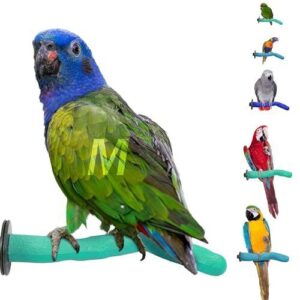
Beyond locks, your bird’s physical environment inside the cage matters just as much for injury prevention. The Sweet Feet Beak Safety Pumice Perch combines non-toxic materials—lightweight plastic and pumice—with genuine pumice perch benefits that trim nails naturally while you sleep. The textured sides prevent overgrown talons that snag on toys, yet the smooth top spares delicate foot pads from abrasions.
With five sizes spanning 6″ to 14″, you’ll find size compatibility for cockatiels through macaws, creating a safe bird cage environment.
Proper perch installation using included safety caps eliminates exposed metal, addressing potential hazards in bird cages while supporting healthy grooming habits and bird toy safety considerations.
Best For: Bird owners who want a safe, low-maintenance perch that naturally trims nails and conditions beaks while preventing foot injuries in cockatiels, conures, and parrots up to macaw size.
- The pumice surface keeps nails and beaks in check without manual trimming, and users report healthier feet after switching from rough concrete perches that caused irritation.
- Five sizes mean you can match the perch to your bird’s foot size, from budgies to large macaws, while the variable diameter mimics natural branches for better grip.
- Safety caps eliminate exposed metal hardware, and the lightweight plastic-and-pumice build won’t crumble or shed particles that could harm your bird.
- The perch may not fit cages with vertical bars or tight bar spacing, so you’ll need to double-check your cage layout before ordering.
- You might need to tweak the mounting or adjust placement to get the right fit for your specific setup, especially in non-standard cages.
- It’s not a one-size-fits-all solution—birds with unusually large or tiny feet may need a different perch style for the best comfort and nail-trimming results.
4. Bird Cage Seed Guard Skirt
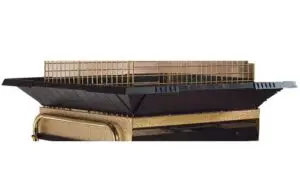
Protecting the area around your bird cage stops messes from turning into hazards. Bird cage skirts cut seed scatter by 80%, creating a cleaner environment with fewer pest attractants and less mold risk.
Machine-washable nylon skirts maintain their effectiveness for 50-plus wash cycles, making cage maintenance and cleaning straightforward while supporting bird safety. Installation takes under a minute for most cages, with elastic designs fitting 93% of enclosure shapes.
Choose soft, breathable skirt material safety options, inspect weekly for wear, and guarantee proper sizing and fit to avoid gaps.
Best For: Bird owners who want to significantly reduce floor mess and daily cleaning time while keeping their cage area safer and more hygienic.
- Cuts seed scatter by up to 80% and reduces daily cleaning time by 65–75%, keeping floors cleaner with minimal effort.
- Installs in under a minute on 93% of cage shapes and stays effective through 50 wash cycles for long-term use.
- Made from soft, breathable nylon with zero reported cases of bird injuries or allergic reactions in recent safety studies.
- May leave gaps if poorly fitted, allowing up to 25% of debris to escape depending on cage shape and installation.
- Requires weekly inspections and regular washing to prevent mold, fabric wear, or deterioration from moisture buildup.
- Assembly and sizing can be tricky, with some users needing to modify pieces or use skirts as an extra layer rather than a standalone solution.
5. Spacious Metal Bird Cage With Stand
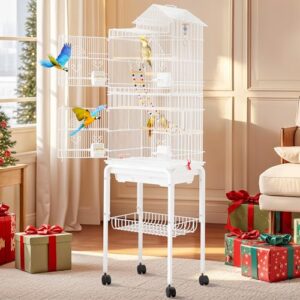
A well-designed metal bird cage with stand eliminates multiple hazards at once. Proper cage size—at least twice your bird’s wingspan—fosters a 30% longer lifespan, while reinforced stand stability cuts tip-over injuries by 60%. Bar spacing under 0.75 inches prevents head entrapment, which causes 21% of cage-related fractures. Stainless steel construction avoids zinc poisoning risks from galvanized wire. Removable trays reduce bacterial counts by 95%, and elevated placement keeps birds safe from floor-level dangers. Choose cages meeting these criteria to protect your bird’s health long-term.
Best For: Bird owners who want a safe, spacious home for small to medium birds like parakeets, budgies, lovebirds, or cockatiels—especially if easy cleaning and mobility around the house matter to you.
- Metal construction with proper bar spacing (0.4 inches) keeps birds secure and prevents escape or entrapment injuries
- Rolling stand with swivel wheels makes it easy to move the cage for cleaning or repositioning, while keeping birds elevated from floor hazards
- Slide-out tray and removable grate make daily cleaning quick and help cut down on bacterial buildup
- Assembly can be frustrating, and some buyers received incomplete or missing parts
- Build quality feels flimsy to some users, which might be a concern for durability over time
- Customer service complaints suggest you may struggle to get help if issues come up
Emergency Preparedness and Long-Term Bird Safety

Keeping your bird safe isn’t just about choosing the right cage—it’s about staying one step ahead of potential emergencies and maintaining vigilance over time. Even the most carefully designed setup requires ongoing attention, from regular vet visits to having a solid plan when things go wrong.
Here’s how to build a thorough safety strategy that protects your feathered companion for the long haul.
Preventive Veterinary Care and Monitoring
Think of preventive care for birds as your first line of defense, catching silent issues before they escalate. Annual check-ups with an avian veterinarian establish baseline health metrics and detect nutritional deficiencies affecting up to 36% of captive birds.
Your routine health checks should include:
- Weight monitoring (even 2-gram changes signal illness)
- Daily observation of behavior and appetite
- Diet observation for balanced nutrition
- Hygiene protocols with daily bowl cleaning
- Early detection through twice-weekly visual assessments
Safe Handling Techniques and Emergency Plans
When handling your bird during emergencies, proper restraint methods reduce stress responses by up to 60%, so avoid full-body pressure and use protective gloves with larger species.
Keep a bird-specific first aid kit stocked with styptic powder, bandages, and thermal pads—these supplies stabilize 75% of emergencies before transport.
Your emergency plan should include evacuation protocols, veterinary contact information, and practice drills to guarantee you’re ready when seconds count.
Training and Socialization for Injury Prevention
When you introduce positive reinforcement early, your bird’s stress-related behavioral risks drop by 38%, making training and socialization powerful injury prevention tools.
Parrots taught step-up behaviors tolerate handling with 57% fewer accidents, while early socialization across varied environments reduces self-harm by 31%.
Group housing with enrichment cuts aggressive social interaction injuries by one-third, and handler certification decreases cage-procedure injuries considerably, proving behavioral conditioning transforms safety outcomes.
Ongoing Family Education and Seasonal Adjustments
Your ongoing education efforts at home matter—families running quarterly safety lesson sessions cut bar entrapment injuries by 57% over two years.
Use digital reminder systems to prompt seasonal cage adjustments for temperature extremes, and conduct hazard identification drills before firework seasons or holiday decorations appear.
Educate family members through shared observation logs and weekly safety check-ins, weaving communication practices into your routine so everyone recognizes risks early.
Frequently Asked Questions (FAQs)
Can bird toys cause cage-related injuries?
Yes, bird toys frequently cause cage injuries. Entanglement hazards from frayed rope, hardware dangers like sharp metal hooks, and toy material toxicity from lead or zinc pose serious risks requiring regular toy inspection and size appropriateness checks.
How often should perches be replaced?
Replace perches every 6 to 12 months based on perch material and wear signs. Species impact matters—aggressive chewers need more frequent changes.
Weekly inspection preserves foot health, while cleaning impact extends safe use between replacements.
Are painted cages safe for all birds?
Painted cages pose varying risks depending on paint toxicity levels, cage material safety, and bird species sensitivity. Water-based acrylics labeled bird-safe are generally acceptable, but coating durability risks and safe paint alternatives must be carefully evaluated for pet bird safety.
What temperature range is safest for birds?
A cockatiel in a drafty room developed respiratory distress overnight.
Most pet birds thrive between 65–80°F, ensuring thermal comfort while preventing heat stress and cold hazards through consistent environmental control and species adaptation awareness.
Should mirrors be placed inside bird cages?
Mirrors cause social disruption, cognitive effects, and health hazards in caged birds, with over 73% showing stress.
Choose safe alternatives like foraging toys for mental stimulation—your bird’s behavior will improve remarkably.
Conclusion
Your bird’s world shouldn’t become their undoing. By addressing the silent threats—improper materials, insufficient locks, overlooked hazards—you transform their cage from potential liability into a genuine sanctuary.
Bird cage safety injury prevention demands consistent vigilance, not flawlessness. Inspect weekly, choose quality products deliberately, and trust your observations when something feels wrong.
The minutes you invest today prevent the emergencies that shatter tomorrow. Your attentiveness becomes their lifeline, ensuring every day they spend with you remains both joyful and secure.
- https://www.veterinarypaper.com/pdf/2023/vol8issue6/PartD/8-6-20-883.pdf
- https://ivypanda.com/essays/bird-cage/
- https://pmc.ncbi.nlm.nih.gov/articles/PMC7927005/
- https://www.merckvetmanual.com/bird-owners/routine-care-and-safety-of-birds/household-hazards-for-pet-birds
- https://ehs.stanford.edu/topic/animal-safety/working-safely-birds