This site is supported by our readers. We may earn a commission, at no cost to you, if you purchase through links.

If you’ve ever seen a parrot shift from foot to foot or choose the same weathered branch day after day, you know birds don’t put up with uncomfortable real estate. One rough spot, the wrong diameter, or a slick surface underfoot—and suddenly, injury risk climbs fast.
Safe perches for injury prevention aren’t about fancy shapes or bright colors. They’re about the right materials and clever design, all working together to protect your bird’s feet with every landing and takeoff. Miss a detail, and the risks quietly pile up. Get it right, and you set the groundwork for strong, healthy grip—day in, day out.
Table Of Contents
Key Takeaways
- Choose perches made from untreated hardwood, stainless steel, safe rope fibers, or natural wood, and avoid materials with zinc coatings, synthetic chemicals, plastics, or pesticides.
- Use a variety of perch diameters, shapes, and surfaces to support natural grip, prevent injuries like bumblefoot, and keep your bird’s feet healthy.
- Place and space perches at multiple heights and angles with enough horizontal distance to reduce collisions and crowding, supporting safe movement and resting.
- Clean and inspect perches regularly, and replace them at the first sign of wear or damage to prevent bacteria buildup and injury risks.
Essential Safe Perch Materials and Designs
Your bird’s safety starts with the materials you choose for their perch. Not all perches are created equal, and some materials can actually harm your bird instead of helping them.
Let’s look at what makes a perch truly safe and which materials you should reach for or avoid.
Non-toxic Materials for Bird Perches
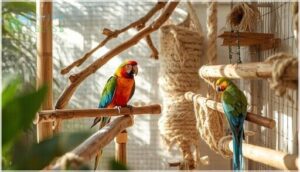
When choosing nontoxic bird perches, you want natural materials that won’t harm your bird. Safe wood types include apple, maple, and willow—more than 25 hardwoods work when untreated. Bamboo safety is proven if chemical-free. Cotton and hemp rope materials provide grip without toxicity.
Avoid metal toxicity from galvanized zinc; stainless steel is safe. Plastic concerns arise from smooth surfaces and chewing risks.
For example, maple is bird-safe when untreated and pesticide-free.
Natural Wood, Bamboo, and Bird-safe Plastics
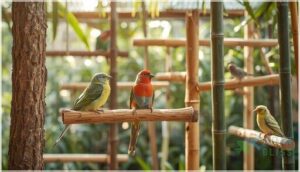
Natural wood perches reduce bumblefoot by up to 60% compared to synthetic options. Java wood’s irregular texture improves circulation and prevents pressure sores. Natural wood perches also help file down nails.
Bamboo offers durability with 28,000 psi tensile strength but can be too smooth for smaller birds—add textured surfaces. Bird-safe plastics like polypropylene clean easily but cause 30% more pressure sores than mixed-material setups. You’ll prevent most foot injuries by rotating between different perch materials.
Safe Metal and Rope Perch Options
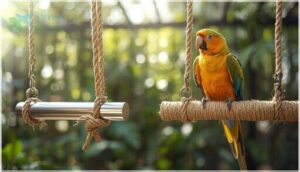
Stainless steel and aluminum offer safe metal perch options with over 10-year lifespans. Metal perches resist corrosion and clean easily with zero metal toxicity risk when you use bird-safe materials. For rope fiber safety, stick with hemp, abaca, or sisal—they’re non-toxic and prevent pressure sores better than synthetics.
- Stainless steel perches last 10+ years without flaking or corrosion
- Aluminum creates harmless powder rather than toxic particles
- Hemp rope stays mold-resistant in humid environments for 5 years
- Natural rope causes 85% fewer toe injuries than synthetic options
Avoiding Toxic and Hazardous Materials
While safe materials protect your bird, toxic chemicals lurk in common perch materials. Heavy metal risks include lead and zinc from galvanized coatings—zinc toxicity ranks among the top causes of avian poisoning. Synthetic chemical hazards like PFAS can accumulate in liver tissue at dangerous levels. Pesticide exposure from treated wood causes fatalities, even at low doses.
Toxic metals, chemicals, and pesticides hiding in common perch materials can seriously poison or even kill your bird
Unsafe wood treatments with arsenic-based preservatives and hazardous netting materials create toxicity risks you can avoid by choosing raw hardwoods and stainless steel for safe perches.
| Hazard Type | Common Sources | Health Risk |
|---|---|---|
| Heavy Metals | Galvanized wire, recycled metals | Lead, zinc, iron poisoning |
| Synthetic Chemicals | Plastic coatings, fire retardants | Liver damage, hormone disruption |
| Wood Treatments | Varnish, pesticides, preservatives | Respiratory failure, organ toxicity |
Ergonomic Perch Features for Injury Prevention

Even the safest materials won’t protect your bird if the perch itself isn’t built right. The shape, texture, and placement of a perch directly affect whether your bird stays injury-free or ends up with foot problems and fractures.
Here’s what makes a perch truly ergonomic and how to set up your cage to prevent common injuries.
Ideal Perch Diameter and Shape
Your bird’s foot health depends on getting perch diameter right. Mismatched sizes lead to muscle strain, pressure sores, and joint problems.
Follow these diameter guidelines by species needs:
- Small birds (finches, canaries): 3/8 to 3/4 inch diameter
- Medium birds (cockatiels): 1/2 to 7/8 inch diameter
- Large parrots: 3/4 to 1.5 inch diameter
- Extra-large birds (macaws): 3/4 to 2.5 inch diameter
Mix perch shapes—flat, round, and irregular branches—to prevent foot issues and strengthen grip.
Contoured, Sloped, and Adjustable Perches
Smart perch design keeps your birds safe. Contoured and sloped structures reduce falls by 22% when angles stay below 45 degrees. Adjustable systems let you customize height from 15 to 88 centimeters, improving bone health by 24% at 40 weeks.
These orthopedic perches prevent foot problems while supporting your bird’s musculoskeletal development.
| Perch Type | Key Safety Feature | Injury Reduction |
|---|---|---|
| Contoured | Angles under 45° | 28% fewer foot lesions |
| Sloped | Gradual height changes | 18% fewer fractures |
| Adjustable | Custom positioning | 26% safer access |
Soft and Cushioned Perch Surfaces
Cushioning your bird’s perch surfaces prevents serious health issues. Soft materials cut keel bone health fractures by 39% and bumblefoot prevention improves within one week. Non-toxic polyurethane and silicone eliminate material toxicity concerns while reducing pressure sores on birds’ feet by 40%.
Clinical outcomes show your birds prefer these surfaces 70% of the time, proving comfort drives better behavioral preference.
Placement and Spacing to Prevent Injuries
Vertical spacing determines whether your birds land safely or risk fractures. Install perches at heights of 33, 58, 81, and 103 cm to reduce collision injuries by 22% while supporting natural locomotion safety.
Here’s your cage setup checklist:
- Position perches 20-30 cm apart horizontally for controlled movement
- Provide 17 cm linear space per bird to prevent crowding effects
- Stagger perches at different angles for safe transitions
- Place lower perches near feeders for easy access timing
- Add flat platforms so birds can rest their feet fully
This spacing creates a safe environment that cuts musculoskeletal injuries by 21%.
Cleaning, Maintenance, and Replacement Tips
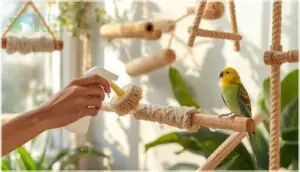
Keeping your bird’s perches clean and in good condition is just as important as choosing the right materials. Regular maintenance prevents bacteria buildup and catches wear before it becomes a safety hazard.
Here’s what you need to know about cleaning, inspection, and knowing when it’s time to swap out old perches.
Routine Cleaning for Hygiene and Health
Keeping perches clean isn’t optional—it’s your first line of defense against disease and injury. You should spot-clean daily and deep-scrub weekly using warm water and bird-safe disinfectants. This routine slashes bacterial loads and cuts foot injury rates by 30-40%. Hot water above 80°C works without chemicals.
Clean perches maintain proper grip, preventing slips that lead to fractures and pressure sores.
Inspecting for Wear and Damage
Your birds often notice damage before you do. Watch for behavior changes like perch avoidance—this signals structural integrity issues in 53% of cases.
Inspect bird perches every two weeks for material degradation: cracks, splinters, fraying rope, or rust. These damage warning signs matter because 79% of keel bone fractures trace back to poorly maintained perch materials. Safe materials require consistent inspection frequency for effective injury prevention and maintenance.
When and How to Replace Perches
Once you spot damage indicators like cracks, splinters, or fraying rope, don’t wait—replace the perch immediately. Safe removal means taking out one perch at a time so your bird isn’t stressed.
For replacement frequency, swap heavily soiled perches every six months. Injured birds need even more attention; keep their surfaces soft and clean.
Good hygiene practices and regular maintenance protect perch material durability and wear.
Top 5 Safe Perches for Injury Prevention
Choosing the right perch can make a real difference in keeping your bird healthy and injury-free. The following five options combine safe materials with smart design to protect those tiny feet. Here’s what to look for in each one.
1. Sweet Feet Beak Safety Pumice Perch
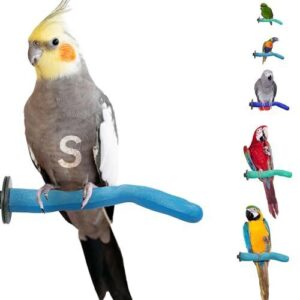
The Sweet Feet and Beak Safety Pumice Perch stands out for bird perch safety and comfort. Its pumice perch design features a smooth top with textured sides made from cosmetic-grade pumice and high-density plastic. This material composition keeps your bird’s nails and beaks trimmed naturally without harsh abrasion.
The nail trimming benefits are real—some owners report going years without manual trims. For injury prevention, capped plastic hardware eliminates exposed metal risks.
Cleaning methods are simple: soap and water work perfectly since pumice resists bacterial growth.
Best For: Bird owners looking for a low-maintenance perch that naturally keeps nails trimmed while protecting their pet’s feet from irritation and injury.
- Cosmetic-grade pumice gently conditions nails and beaks without the harsh abrasion of concrete or sand perches
- Smooth top surface protects foot pads from sores while textured sides handle grooming naturally
- Easy to clean with just soap and water, and the pumice resists bacteria buildup
- May not fit cages with vertical bars or unusual bar spacing configurations
- Sizing needs to match your bird’s species closely for effective nail trimming
- Some users report needing to adjust or modify the perch to get it installed properly
2. Sweet Feet Comfort Grip Bird Perch
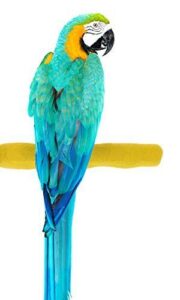
Another strong option in the comfort grip category is the Sweet Feet Comfort Grip Bird Perch. Its ergonomic design pairs a smooth top surface with pumice texture benefits on the sides—gentle enough for foot health yet effective for nail conditioning.
Consumer reviews consistently highlight bird perch safety and comfort, with many noting it becomes their bird’s favorite resting spot.
Mounting versatility lets you position it horizontally or vertically, and capped hardware means no exposed metal. For bird perches focused on comfort grip safety, this one delivers.
Best For: Bird owners who want a comfortable everyday perch that also helps keep nails naturally trimmed without being too rough on their bird’s feet.
- Smooth top surface provides cushioned support while the pumice sides gently condition nails, reducing trips to the groomer
- Made with non-toxic materials and capped hardware so there’s no exposed metal to worry about
- Mounts horizontally or vertically, giving you flexibility in cage setup
- Sizing can be tricky—some owners find the perch too small for medium-sized birds
- The pumice texture feels too rough for some birds, so it may take trial and error
- Price point feels steep to some buyers compared to basic perch options
3. Natural Wood Bird Perches Variety Set
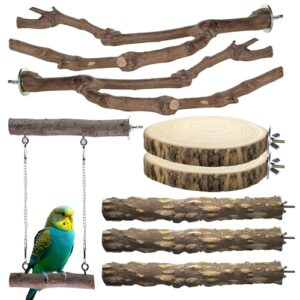
If you want safe bird perch materials rooted in natural wood, a variety set is worth considering. These natural wood bird perches commonly include wood types like manzanita, java wood, and applewood. Diameter ranges span 0.5 to 1.5 inches, letting your bird choose what feels right.
Set configurations often mix Y-shaped, platform, and swing perches. Bark texture adds grip for better balance.
Species compatibility covers cockatiels, parakeets, budgies, and lovebirds. Multi-diameter options reduce bumblefoot risk by up to 40%.
Best For: Bird owners with small to medium parrots like cockatiels, parakeets, budgies, and lovebirds who want a natural, foot-healthy perching setup.
- Multiple perch shapes and diameters help prevent bumblefoot and keep feet healthy through varied gripping positions
- Made from non-toxic natural wood that’s safe for birds to chew and stand on
- Easy installation with included hardware—no extra tools or parts needed
- Some perches may arrive smaller than expected based on product photos
- Quality can be inconsistent, with occasional rough edges or jagged ends that need sanding
- Softer wood components may wear out faster and need replacement sooner than harder varieties
4. Natural Wood Bird Perches Set
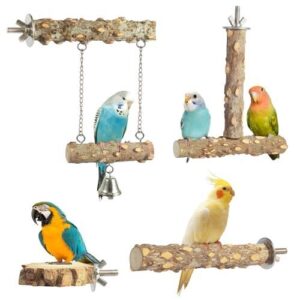
Natural wood bird perches made from prickly ash wood offer solid texture and grip for comfortable foot exercise. This lovyoCoCo set includes four pieces—a wooden perch, O-shaped platform, swing, and T-shaped perch—giving your bird perch diameter variance to prevent pressure sores.
Wood species safety matters here since natural materials like prickly ash are nontoxic bird perch reviews favorites. Installation hardware safety comes from stainless steel wing nuts and bolts.
Durability and lifespan run strong with safe bird perch materials built for small to medium birds.
Best For: Bird owners who want a safe, varied, and natural set of perches for small to medium-sized birds like parakeets, cockatiels, and conures.
- Made from bird-safe, all-natural prickly ash wood with textures that support healthy grip and foot exercise.
- Includes four different styles (straight perch, T-perch, swing, and O-platform) for enrichment and stress relief.
- Stainless steel hardware makes installation easy and secure, fitting most cages.
- Perches may be bulkier or heavier than expected for small cages.
- Requires hand washing and regular maintenance to stay hygienic.
- Not suitable for larger or heavier birds that need thicker or reinforced perches.
5. Natural Wood Bird Perch Set
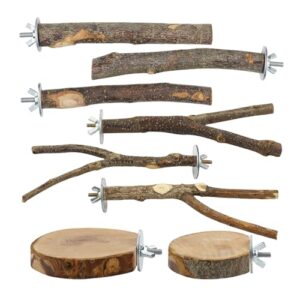
Imagine providing your birds with a Natural Wood Bird Perches Set that checks every critical box: sourced from safe materials like pine and manzanita, delivering ergonomic variety with multiple diameters, and textured benefits for grip and nail health.
Installation security comes from stainless steel hardware—no zinc risks here. Hardware safety and wood source transparency keep things above board.
Choosing natural wood perches with solid, non-toxic construction gives both you and your birds confidence in long-term injury prevention.
Best For: Pet bird owners who want a safe, natural, and stimulating perch set for small to medium birds like parakeets, canaries, and budgies.
- Made from non-toxic, natural woods like pine and manzanita for optimal safety and foot health.
- Ergonomic variety with multiple perch diameters and textures to support exercise and prevent foot injuries.
- Stainless steel hardware offers secure, rust-resistant installation without toxic metals.
- Set may be too small for larger birds or some medium parrots.
- Some users report the clamps can slip and the perches may vary in cleanliness on arrival.
- Limited variety in perch lengths and occasional mixed feedback on long-term durability.
Frequently Asked Questions (FAQs)
Can birds develop allergies to certain perch materials?
Like dust stirring in sunlight, avian hypersensitivity may flare up around certain perch materials. While feather picking sometimes hints at allergies, diagnostic testing seldom confirms true perch allergens as a direct avian safety threat for most pet birds.
How often should perch heights be changed?
You should adjust perch heights in your bird cage setup every 2–3 weeks. Gradual changes and height increments keep birds active, support bird health, reduce injury risks, and boost mental stimulation. Frequent adjustment frequency improves behavioral impacts and musculoskeletal strength.
Are heated perches beneficial for preventing foot injuries?
Much like a blanket offers warmth but doesn’t fix a sagging mattress, heated perches boost thermal comfort but don’t prevent bird foot injuries.
Proper orthopedic perches, varied shapes, and materials do more for bird foot health and injury prevention.
Should perches be used in outdoor aviaries year-round?
You can use perches in outdoor aviaries year-round as long as you manage seasonal risks.
Focus on shade and ventilation in summer and wider, natural materials in winter.
Check for safety, foot health, and always have contingency planning.
Do birds need different perches as they age?
Picture an older bird searching for comfort—over time, geriatric perch needs shift.
Senior birds benefit from softer, varied perch materials to ease foot problems and prevent pressure sores, adapting to arthritic joints and changing accessibility.
Conclusion
Picture your bird gripping a well-chosen perch—solid underfoot, safe, and fitting just right. That’s more than comfort; it’s a long-term investment in joint health, balance, and daily safety.
With safe perches for injury prevention, every hop, rest, or playful shuffle aids your bird’s well-being. You hold the reins: picking the right materials, sizes, and shapes, and knowing when it’s time to refresh their space.
In the end, safety grows from each thoughtful, simple choice.
- https://journals.plos.org/plosone/article?id=10.1371%2Fjournal.pone.0122568
- https://pmc.ncbi.nlm.nih.gov/articles/PMC4988547/
- https://www.sciencedirect.com/science/article/pii/S1056617124000722
- https://worksitemed.com/essential-ppe-for-fall-prevention-in-the-workplace/
- https://www.hermanmiller.com/research/categories/white-papers/the-art-and-science-of-pressure-distribution/