This site is supported by our readers. We may earn a commission, at no cost to you, if you purchase through links.
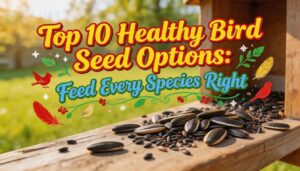
Most backyard feeders run on autopilot—same generic mix, same feeder, year after year. But a cardinal and a goldfinch don’t share the nutritional needs any more than a marathon runner and a sprinter share the same training diet. The wrong seed doesn’t just go uneaten; it can attract pests, grow mold, and leave birds burning energy they can’t replace.
Seed fat delivers 9 calories per gram—more than twice what protein or carbohydrates provide—making fat content one of the sharpest indicators of seed quality. Healthy bird seed options range from thin-shelled black oil sunflower packed with vitamin E to oil-rich Nyjer that fuels finches through cold snaps. Knowing which seeds deliver real nutritional value, and which species need them most, turns your feeder from a decoration into genuine wildlife support.
Table Of Contents
- Key Takeaways
- What Makes Bird Seed Healthy
- Best Healthy Bird Seed Types
- Top 10 Healthy Bird Seed Options
- 1. Wagner Variety Wild Bird Seed
- 2. Lyric Fruit and Nut Wild Bird Seed
- 3. Wagners Black Oil Sunflower Seed
- 4. Shafer Safflower Bird Seed
- 5. Wagner Nyjer Seed Bird Food
- 6. Shafer White Proso Millet Bird Seed
- 7. Kaytee Spray Millet Bird Treat
- 8. Wagner Cracked Corn Bird Food
- 9. Lyric Peanut Bird Food
- 10. Morning Song Ground Feeding Bird Seed
- Match Seeds to Bird Species
- Feed and Store Seed Safely
- Frequently Asked Questions (FAQs)
- What is the healthiest bird seed for birds?
- Why should you sprinkle coffee grounds around your bird feeder?
- What seeds do birds eat?
- Are bird seeds safe for parrots?
- Are bird seed mixes good for birds?
- How do I choose the right bird seed mix?
- How do I keep my birds healthy?
- What seeds attract birds?
- Can birds eat sprouted seeds safely?
- Do wild birds need seed changes by season?
- Conclusion
Key Takeaways
- Fat delivers 9 calories per gram — more than double protein or carbs — making oil-rich seeds like black oil sunflower and nyjer the most energy‑efficient choices you can offer to wild birds.
- Matching seed to species matters more than variety: nyjer’s tiny, oil‑dense seeds, cardinals thrive on safflower and sunflower, and ground feeders like doves rely on white proso millet.
- Filler grains like milo, wheat, and oats inflate bag weight without nutritional payoff, so always check that the first ingredients are sunflower, safflower, or nyjer before buying.
- Even the best seed turns into a health hazard if stored incorrectly — keep it sealed in airtight containers between 4°C and 21°C, clean feeders weekly in warm months, and discard anything that clumps, smells off, or shows discoloration.
What Makes Bird Seed Healthy
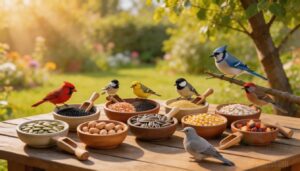
Not all bird seed is created equal, and what’s inside the bag matters more than most people realize. Healthy seed comes down to a handful of key factors — things like nutrient density, freshness, and what’s not in the mix.
Knowing which seeds actually nourish versus which ones just fill space is a good place to start — how bird seeds affect bird health breaks that down pretty clearly.
what to look for before you fill that feeder.
Protein, Fat, and Energy Density
Think of bird seed as fuel — and not all fuel burns the same. Three macronutrient factors determine quality:
- Protein Quality — promotes muscle, feathers, and chick growth (roughly 4 kcal/g)
- Seed Fat Content — healthy fats deliver 9 kcal/g, making energy-dense seeds the most calorie-concentrated option
- Energy Density Metrics — fatty acid profile and macronutrient balance together determine how much energy fits in each bite
Essential Vitamins and Minerals
Beyond macronutrients, vitamins and minerals quietly run the show.
Vitamin E in sunflower seeds shields cells from oxidative stress during flight, while thiamine from nyjer helps nerve function at 0.43 mg per 100 g.
Calcium drives eggshell formation, zinc boosts immune responses, iron sustains stamina, magnesium helps bone strength, and phosphorus powers cellular energy transfer — each seed contributing its own piece of the puzzle.
Every seed delivers its own mineral gift — calcium, zinc, iron, magnesium, and phosphorus each quietly powering a different piece of bird survival
Selenium in sunflower seeds provides a essential selenium antioxidant role by helping glutathione peroxidase activity.
Fiber and Digestibility
Minerals lay the foundation, but dietary fiber keeps the whole digestive process of birds consuming seeds running smoothly. Soluble fiber benefits nutrient absorption by slowing digestion, while insoluble fiber’s role adds bulk that drives gut motility.
Your birds’ gizzard grinding efficiency improves with fiber-rich seeds like sunflower, which deliver 8.6 g per 100 g — supporting gut microbe fermentation and fiber-driven satiety simultaneously.
Low-filler Ingredient Lists
Fiber aids digestion, but ingredient transparency is what separates a genuinely nutritious mix from a bag padded with seed mix fillers like milo, wheat, and oats.
label reading tips: the first ingredients should be nutrient‑rich seeds — black oil sunflower, safflower, or nyjer.
seed ratio prioritization and filler grain reduction keep waste low, while premium organic ingredients and high‑protein seeds deliver real nutrient density focus.
Freshness, Cleanliness, and Seed Quality
Even the most nutrient-dense seed loses its value quickly if moisture, heat, or contamination enters the picture. Seed moisture levels above safe thresholds accelerate mold growth, while poor container ventilation traps humidity. Purity testing methods catch weed seeds and debris before they reach your feeder.
- Check shelf-life indicators: uniform color, no dust, no foul odor
- Store seed at a stable storage temperature in airtight, ventilated bins
- Discard any seed showing mold prevention failures — clumping or discoloration signals contamination risk
Best Healthy Bird Seed Types
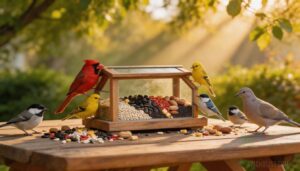
Not every seed earns a spot in a healthy feeder, and the type you choose makes a real difference in which birds show up and how well they thrive. Six seed types consistently deliver strong nutritional value across a wide range of backyard species.
Here’s what each one brings to the table.
Black Oil Sunflower Seeds
Think of black oil sunflower as the universal currency of backyard feeding. Its High Oil Content and Thin Shell Advantage mean birds from cardinals to chickadees can crack and digest it efficiently.
The Nutrient Density is impressive — delivering protein, healthy fats, vitamin E, and calcium.
Feeder Design Compatibility is broad, fitting tubes, hoppers, and trays, making Seasonal Feeding Timing straightforward year‑round.
Safflower Seeds
Safflower seed earns its place through a combination of solid bird nutrition and natural pest control.
Its Hard Shell Advantage filters out squirrels and starlings, while the Bitter Taste Deterrent keeps nuisance visitors away.
Packed with healthy fats, protein, and Mineral Richness — magnesium, phosphorus, iron — its energy density of seeds for birds rivals sunflower.
As a Drought-Resilient Crop, it stores reliably; just prioritize Shelf-Life Management by keeping it sealed and dry.
Nyjer Seeds
Nyjer seed packs roughly 40 percent oil, making it one of the most energy dense bird foods you can offer. That Oil Richness fuels American goldfinches, pine siskins, and dark-eyed juncos through cold months.
Heat Sterilization at 248°F eliminates germination risk, though Aflatoxin Risk rises in damp storage.
Feeder Compatibility matters here — use small-port tube or mesh feeders, since standard ports waste this tiny seed.
White Proso Millet
White proso millet is an affordable grain that delivers roughly 11% crude protein and 8.5% fiber — solid numbers for ground-feeding species with high digestibility needs. Its rapid maturity (60–100 days) keeps supply consistent, and low moisture storage below 13% prevents mold.
Three species that rely on it most:
- Mourning doves
- Dark-eyed juncos
- Native sparrows
Sunflower Hearts and Kernels
Strip the shell away, and you’re left with pure nutrition. Sunflower hearts and kernels deliver roughly 51% fat with a strong unsaturated fat profile — mostly linoleic and oleic acids — plus 21% protein.
That combination makes them a reliable seasonal energy boost, especially in winter.
Zero waste feeding is another real advantage.
Coarse chip size suits smaller birds, while magnesium richness helps muscle and nerve function year‑round.
Peanuts for High-protein Feeding
Few seeds match peanuts for raw protein density — about 25.8 grams per 100 grams, supporting protein for muscle maintenance and sustained flight. Shelled peanut accessibility makes them easier for smaller birds like titmice and wrens to handle.
Always prioritize aflatoxin risk management by sourcing tested, unsalted peanuts. High-oleic peanut stability also helps preserve nutritional benefits of birdseed during storage, protecting avian health season after season.
Top 10 Healthy Bird Seed Options
Knowing which seeds deliver real nutrition is one thing — finding products that actually deliver is another. The following ten options cover a range of species, feeding goals, and budgets, so you’re not guessing at the store.
Here’s what’s worth your money.
1. Wagner Variety Wild Bird Seed
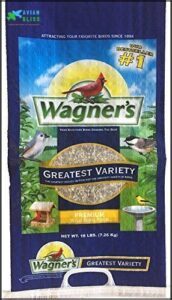
Few blends pack this much nutritional range into a single bag. Wagner’s Greatest Variety Blend combines 11 ingredients, with sunflower making up 40 percent of the mix — giving birds a fat- and protein-rich anchor alongside millet, nyjer, safflower, and peanut pieces.
That diversity means cardinals, chickadees, finches, and nuthatches can all find something useful at the same feeder.
Just transfer the seed to a sealed container after opening, since the bag itself won’t keep moisture out.
| Best For | Backyard bird watchers who want to attract a wide variety of songbirds with a single, nutritionally diverse seed blend. |
|---|---|
| Price | $27.98 |
| Weight | 15.54 lb |
| Origin | USA |
| Life Stage | All stages |
| Feeder Type | Tube/hopper/platform |
| Resealable | No |
| Additional Features |
|
- 11-ingredient mix draws in everything from finches and chickadees to cardinals and woodpeckers
- Works in tube, hopper, or platform feeders, so you’re not locked into one setup
- Made in the USA with a solid sunflower base that gives birds real nutritional value
- Bag isn’t resealable or waterproof, so you’ll need a separate airtight container right away
- Peanuts, raisins, and nuts in the mix can pull in squirrels as much as birds
- A few buyers have reported receiving moldy or insect-contaminated seed, so inspect before filling your feeder
2. Lyric Fruit and Nut Wild Bird Seed
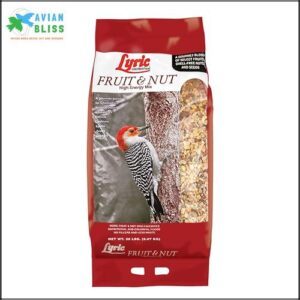
Lyric’s Fruit & Nut blend takes a different approach — instead of anchoring around one seed, it builds a 12-ingredient mix of shelled peanuts, almonds, cashews, pecans, pistachios, sunflower kernels, pumpkin seeds, corn, dried cranberries, and raisins.
nut-and-fruit combination delivers concentrated fat and protein, drawing species you won’t see at a basic sunflower feeder — orioles, cedar waxwings, and grosbeaks included.
Use a hopper or covered tray feeder, since the larger pieces can clog narrow tube ports.
| Best For | Backyard birders who want to attract a wide variety of species — including less common visitors like woodpeckers, waxwings, and grosbeaks — and don’t mind paying a bit more for a premium, no-filler mix. |
|---|---|
| Price | $40.70 |
| Weight | 19.75 lb |
| Origin | USA |
| Life Stage | All stages |
| Feeder Type | Hopper/tray/tube/mesh |
| Resealable | No |
| Additional Features |
|
- Pulls in a impressive range of birds that basic seed mixes simply won’t attract
- All-natural with zero filler ingredients, so you’re not paying for stuff birds ignore
- Low-mess formula means less hull buildup and cleanup around your feeder
- At $40.70 for under 20 lbs, it’s noticeably pricier per pound than standard sunflower mixes
- Large nut and fruit pieces can clog tube feeders — you’ll want a hopper or tray setup
- Some birds struggle with whole nuts, so you may need to crush them for smaller species
3. Wagners Black Oil Sunflower Seed
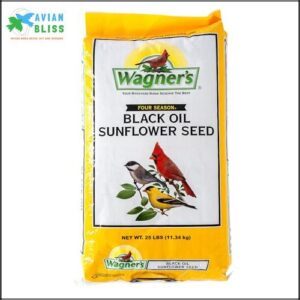
If the Lyric blend is a full buffet, Wagner’s 76027 is the reliable house specialty — one ingredient, done right. This 25 lb bag delivers 100% black oil sunflower seed, thin-shelled and calorie-dense, drawing cardinals, chickadees, nuthatches, finches, and woodpeckers to a single feeder.
The thin shell matters: small-beaked birds crack it without effort, extracting the high-fat kernel quickly.
One practical note — transfer the bag into an airtight container, since it lacks a resealable closure.
| Best For | Backyard birders who want a simple, no-fuss seed that pulls in a wide variety of songbirds without the mess of a mixed blend. |
|---|---|
| Price | $41.98 |
| Weight | 25 lb |
| Origin | USA |
| Life Stage | All stages |
| Feeder Type | Tray/hopper |
| Resealable | No |
| Additional Features |
|
- Thin shells make it easy for small birds like chickadees and finches to crack open and eat
- High calorie content gives birds the energy they need, especially through winter
- Single-seed formula cuts down on feeder competition and wasted seed
- No resealable closure on the bag, so you’ll want a separate airtight container to keep it fresh
- Some batches come with extra debris like stems and chaff that can clog feeders
- Dropped seeds can sprout into unwanted sunflower plants, and squirrels will absolutely show up for the spillage
4. Shafer Safflower Bird Seed
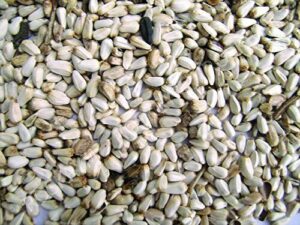
One ingredient, one clear purpose — Shafer’s 25 lb safflower offering is built around a single nutritional strategy. Safflower delivers 14.4 g protein and 38.5 g fat per 100 g, giving cardinals, chickadees, grosbeaks, and nuthatches a solid energy source.
naturally bitter shell chemistry discourages squirrels, raccoons, grackles, and starlings, so your preferred birds actually get to feed.
You can offer it straight, blend it into a custom mix, or use it in tube, platform, or ground feeders.
| Best For | Backyard bird enthusiasts who want to attract cardinals and songbirds without constantly fighting off squirrels and nuisance birds. |
|---|---|
| Price | $47.68 |
| Weight | 25 lb |
| Origin | USA |
| Life Stage | All stages |
| Feeder Type | Bulk/hopper |
| Resealable | No |
| Additional Features |
|
- Squirrels, raccoons, and blackbirds naturally avoid safflower, so your target birds actually get to eat
- No fillers or additives — just pure seed, which means no mystery ingredients messing with your feeder
- Buying 25 lbs at once brings the cost per pound down compared to grabbing smaller bags off a store shelf
- The packaging can be hit or miss — some customers have gotten boxes that weren’t sealed well during shipping
- A 25 lb bag is overkill if you have a small yard or only feed birds occasionally
- It mainly draws certain species, so if you want a wide variety of birds, you’d need to supplement with other seed types
5. Wagner Nyjer Seed Bird Food
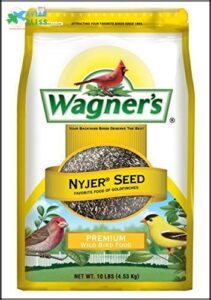
If you’re feeding goldfinches, this is the seed built for them. Wagner’s Nyjer packs roughly 150,000 seeds per pound — all oil-rich, husk-free, and high in fat and protein.
That density means fewer refills and almost no mess under the feeder.
American goldfinches, purple finches, and pine siskins are the primary visitors, drawn by the seed’s concentrated energy.
Use it in a tube feeder with small ports, and you’ll keep larger birds and squirrels from taking over.
| Best For | Backyard birders who want to attract goldfinches and other small finches with minimal mess and hassle. |
|---|---|
| Price | $14.99 |
| Weight | 10 lb |
| Origin | USA |
| Life Stage | Adult |
| Feeder Type | Finch feeder |
| Resealable | Yes |
| Additional Features |
|
- Roughly 150,000 seeds per pound means you get a lot of feeding for your money
- Almost no husk waste, so cleanup under the feeder stays easy
- High fat and protein content gives birds the energy they need, especially in winter
- The bag can develop leaks, so you might end up with seed spilling before you even get to the feeder
- Rodents can get into the fine seeds, so feeder placement really matters
- High-traffic feeders need refilling about once a week, which adds up fast
6. Shafer White Proso Millet Bird Seed
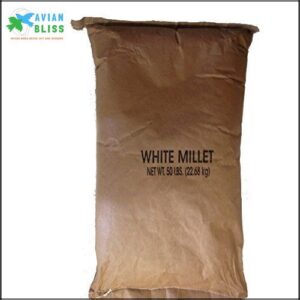
Ground-feeding birds like doves, juncos, and native sparrows have specific dietary needs — and Shafer’s 100% white proso millet meets them cleanly. Each seed delivers roughly 11% crude protein and 3–4% fat, giving ground feeders a reliable calorie source without filler grains competing for space.
Spread it near shrubs or low platform feeders where these species naturally forage.
The 50-lb bulk bag at $54.99 keeps your stations stocked longer, though you’ll want dry, airtight storage to prevent germination and bacterial growth.
| Best For | Backyard birders who regularly feed ground-foraging species like doves, juncos, and sparrows and want a clean, high-volume seed without filler. |
|---|---|
| Price | $54.99 |
| Weight | 50 lb |
| Origin | USA |
| Life Stage | All stages |
| Feeder Type | Ground/tray |
| Resealable | No |
| Additional Features |
|
- 100% white proso millet with no filler grains — birds actually eat what you put out
- 50-lb bulk bag keeps feeders stocked for a long time and works out to a solid price per pound
- Versatile enough to spread on the ground, use in platform feeders, or blend into custom mixes
- The bag seal can fail, and one reviewer reported a hole that caused a messy spill
- Bulk size is overkill if you only feed birds occasionally and don’t have good dry storage
- Sewn-close packaging means you need scissors just to get into it — a small but annoying extra step
7. Kaytee Spray Millet Bird Treat
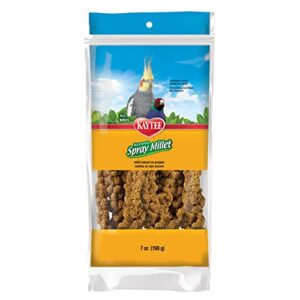
Millet in its natural spray form does something a bowl of loose seed can’t — it triggers genuine foraging behavior.
Kaytee’s Natural Spray Millet contains 100% millet sprays with no artificial additives, delivering 7.5% crude protein and 3% fat per serving.
Hang it from a clip near a perch, and your bird works for each seed, which enhances mental stimulation alongside nutrition.
It’s best used as a treat rather than a staple, since the fat content adds up quickly.
| Best For | Bird owners who want a natural, enrichment-focused treat that encourages foraging in parakeets, canaries, finches, and other small birds at any life stage. |
|---|---|
| Price | $5.19 |
| Weight | 6.08 oz |
| Origin | USA |
| Life Stage | All stages |
| Feeder Type | Cage/aviary clip |
| Resealable | No |
| Additional Features |
|
- 100% natural millet with no artificial colors or flavors — clean and simple
- Hanging spray form gets birds actively foraging instead of just eating from a dish
- Works for all ages, from weaning fledglings all the way to adults
- High fat content means you have to watch how much you offer
- Sprays can dry out over time, getting messy as seeds fall off
- A bit pricier per ounce compared to other millet options out there
8. Wagner Cracked Corn Bird Food
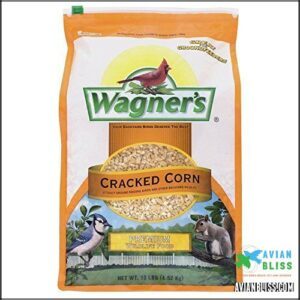
Cracked corn is the unsung workhorse of ground-level feeding. Wagner’s single-ingredient formula delivers roughly 7% crude protein and 10% fiber, making it a carbohydrate-dense energy source that Blue Jays, Cardinals, Mourning Doves, Juncos, Quail, and Pheasants actively seek out.
Because the kernels are mechanically cracked, birds don’t struggle to break them down.
You can scatter it directly on bare ground, use a tray feeder, or place it at a separate squirrel station to keep your main feeders undisturbed.
| Best For | Backyard birders who want to attract ground-feeding birds and wildlife without spending a lot on specialty seed. |
|---|---|
| Price | $9.99 |
| Weight | 10 lb |
| Origin | USA |
| Life Stage | Adult |
| Feeder Type | Ground/tray |
| Resealable | No |
| Additional Features |
|
- Draws a huge variety of birds and wildlife — Blue Jays, Cardinals, Doves, Quail, squirrels, rabbits, you name it
- Works great as a decoy feed at a separate squirrel station to keep your main feeders peaceful
- Easy to mix into custom blends or scatter straight on the ground with no feeder needed
- The bag doesn’t reseal, so you’ll need a separate container to keep the seed fresh after opening
- Ten pounds goes fast if you’re feeding a busy yard — buying in bulk would save you money long-term
- It pulls in squirrels and other critters, which might not be what you’re going for if you want a birds-only setup
9. Lyric Peanut Bird Food
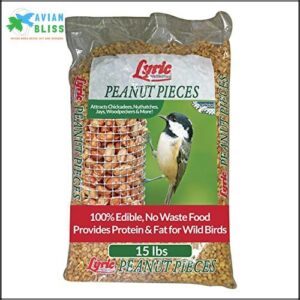
Few seeds pack as much nutritional punch as shelled peanuts. Lyric’s 15 lb formula delivers 25% crude protein and 40% crude fat — numbers that directly fuel winter foraging, nest building, and high metabolism in active species.
Because the shells are already removed, there’s zero waste and no hull buildup under your feeder.
Chickadees, nuthatches, woodpeckers, jays, and titmice all respond well to it.
Just keep the feeder dry; moisture invites mold quickly.
| Best For | Backyard bird enthusiasts who want to attract a wide variety of songbirds and woodpeckers with a high-energy, no-waste feed they can use all year long. |
|---|---|
| Price | $32.99 |
| Weight | 15 lb |
| Origin | USA |
| Life Stage | All stages |
| Feeder Type | Tube/mesh/hopper/platform |
| Resealable | No |
| Additional Features |
|
- High protein and fat content gives birds real fuel, especially during winter and nesting season
- No shells means no mess piling up under your feeder, so cleanup stays minimal
- Works with most feeder types — tube, hopper, platform, mesh, you name it
- Peanuts can mold fast if they get wet, so you’ll need to keep an eye on the feeder after rain
- Whole peanuts won’t fit in finch or small-opening tube feeders, so check your setup first
- Squirrels and chipmunks love these too, which can be a problem if you’re trying to feed birds only
10. Morning Song Ground Feeding Bird Seed
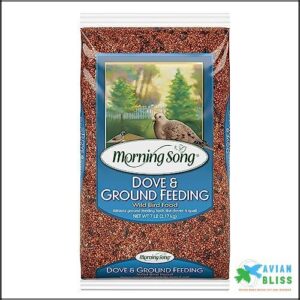
Not every bird visits a hanging feeder. Mourning doves, quail, juncos, and towhees prefer foraging low — and that’s exactly where Morning Song Ground Feeding Bird Seed performs.
White proso millet anchors the formula, pulling in native sparrows and juncos, while black oil sunflower adds concentrated fat for cold-weather energy.
Sprinkle it directly on bare ground or use a low platform tray.
The 7 lb bag keeps things manageable, and no added dyes or flavorings means birds get clean, straightforward nutrition.
| Best For | Backyard birders who want to attract ground-feeding birds like mourning doves, quail, and juncos without a hanging feeder setup. |
|---|---|
| Price | $8.99 |
| Weight | 7 lb |
| Origin | USA |
| Life Stage | All stages |
| Feeder Type | Platform/tray/ground |
| Resealable | No |
| Additional Features |
|
- White proso millet and black oil sunflower give ground feeders exactly what they need, especially in colder months
- No added dyes or flavorings — just clean seed that birds actually eat
- Flexible placement works on bare ground, trays, or low platforms
- Costs more than generic seed blends, so it adds up if you feed frequently
- Sorghum in the mix can sprout and draw in unwanted visitors like turkeys
- The 7 lb bag might be awkward to handle for some people, and allergen cross-contact is worth noting if that’s a concern
Match Seeds to Bird Species
Not every bird at your feeder wants the same thing on the menu. Matching right seed to the right species makes a real difference in who shows up and how well they thrive.
Here’s a breakdown of the best seed choices for the birds you’re most likely to see.
Best Seeds for Finches and Siskins
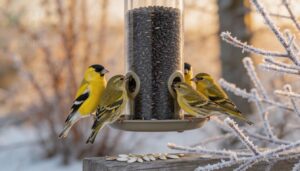
Finches and siskins have a clear, tiny seed preference — their slender bills are built for it. Nyjer seed, with its high oil content, delivers the winter energy needs these birds depend on.
Shell-free options like hulled black oil sunflower reduce effort and waste.
Match feeder port size to nyjer’s small diameter, and you’ll consistently meet their nutritional benefits of birdseed and seed preferences by species.
Best Seeds for Cardinals and Grosbeaks
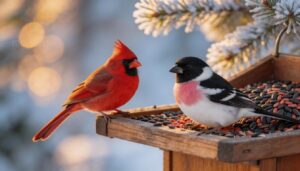
Cardinals and grosbeaks have strong, thick bills built for cracking hard shells — a completely different feeding profile than finches. Here’s what works best for them:
- Black oil sunflower seeds offer high oil content and thin shells, perfect for their bill size match.
- Safflower seed deters squirrels while staying a cardinal favorite.
- Shell-free seeds reduce feeder mess.
- Hopper feeders support your feeder placement strategy for a reliable winter energy boost.
Best Seeds for Chickadees and Nuthatches
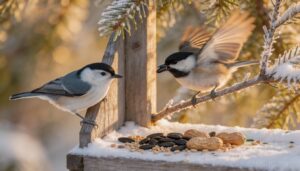
While cardinals rely on brute bill strength, chickadees and nuthatches work smarter — grabbing a seed, flying to nearby cover, and hammering it open.
That’s why thin shell seeds like black oil sunflower are ideal; the high fat seeds deliver a serious winter energy boost without wasting energy on cracking.
Peanuts and nutrient dense mixes round out their high‑protein seed diet perfectly.
Best Seeds for Doves and Juncos
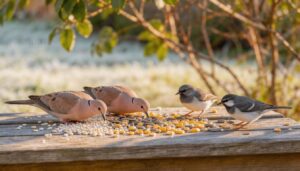
Unlike chickadees that dart to cover, doves and juncos are natural ground foragers — and matching their seed preferences by bird species makes a real difference.
Your best options for Ground Foraging Benefits:
- White proso millet — their top choice, low in fillers
- Sunflower seeds — high fat, strong Nutrient Ratio Balance
- Cracked corn — affordable carbohydrate energy
Use low‑height feeders with drainage for moisture management and predator‑safe placement near shrubs.
Best Seeds for Jays and Woodpeckers
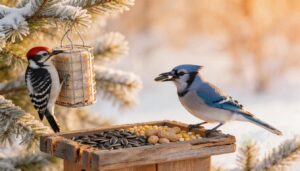
Jays and woodpeckers thrive on High Fat Energy foods — black oil sunflower seeds (49 g fat per 100 g) and peanut pieces deliver exactly that. Striped sunflower’s Shell Toughness suits jays’ Caching Strategies, while suet provides a Winter Nutrient Boost for woodpeckers.
Set Feeder Height at eye level, and offer cracked corn and high‑protein seeds on platform trays.
Squirrel-resistant Seed Choices
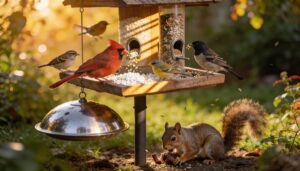
Squirrels are persistent, but the right seed mix selection makes your feeder far less rewarding for them. Bitter Safflower repels most mammals on taste alone, while Nyjer Tube Feeders dispense seeds too small to bother with. Hot Pepper Treatment on squirrel‑proof seeds adds another layer of defense.
- Bitter Safflower – low waste, cardinals love it
- Nyjer Tube Feeders – squirrel‑resistant seed with tiny ports
- Millet Ground Feeding – high‑protein seeds for sparrows, not squirrels
- Squirrel Baffle Design – blocks access before seed choice even matters
Feed and Store Seed Safely
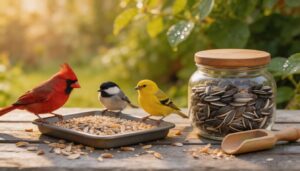
Choosing the right seed is only half the job — how you handle and store it matters just as much for your birds’ health.
A few straightforward habits can prevent mold, reduce waste, and keep your feeders working the way they should.
Here’s what you need to know to do it right.
Choosing Single Seeds Vs Mixes
Single seeds give you precise nutrient targeting and species specificity — Nyjer pulls in goldfinches, safflower draws cardinals.
Seed mixes broaden bird preference dynamics but often include fillers that birds reject, hurting waste reduction and cost efficiency.
For the best nutritional bird seeds, check ingredient lists carefully. Understanding seed preferences by bird species helps you decide which approach — single seeds or seed mixes — actually delivers the nutritional benefits of birdseed where it counts.
Avoiding Waste, Dust, and Mold
Waste and mold are silent threats — wet, clumped seed can sicken birds before you notice anything’s wrong.
Spill Prevention Strategies like using tray feeders with drainage holes, reduce ground buildup.
Feeder Drying Protocols — fully air-drying before refilling — stop mold at the source.
Moisture-Resistant Storage containers with tight lids preserve freshness, while Dust Minimizing Mixes cut contamination risk and keep your feeding station clean.
Using The Right Feeder Type
The feeder you choose is just as important as the seed inside it.
Tube feeders with narrow port sizes suit nyjer and black oil sunflower for finches, while hopper feeders handle safflower and mixed blends for cardinals.
Feeder material matters too — metal resists squirrel chewing better than plastic.
Add a squirrel baffle, consider seasonal placement near shelter, and you’ll increase both safety and species diversity.
Cleaning Feeders Regularly
Once feeder is positioned correctly, keeping it clean becomes the next line of defense. A solid Cleaning Frequency Schedule — weekly during warm months, biweekly in mild weather — prevents seed contamination risk and mold prevention in seed from becoming serious problems.
Use a 1:9 bleach-water Sanitizing Solution with a bottle brush, for Tool Recommendations that support feeder hygiene, feeder sanitation, Disease Prevention, and reduced Environmental Impact.
Storing Seed in Cool, Dry Containers
Clean feeders matter, but so does what you’re filling them with. Seed stored in a damp garage loses nutritional value quickly.
Choose airtight container selection options — metal tins or thick food-grade plastic — and follow temperature control guidelines of 4°C–21°C. Silica gel packets handle seed moisture control, extending seed shelf life.
Label containers clearly for easy pest‑proof storage solutions and mold prevention in seed.
Rotating Seed Options by Season
Storing seed well sets you up — but what you store should shift with the calendar.
Think of it as seasonal feeding strategies for backyard birds: Winter calls for a Winter Energy Boost with black oil sunflower and peanuts, those energy-dense seeds that fuel cold nights.
Spring favors a Spring Light Mix, Summer demands a Summer Protein Surge, and Fall needs Fall Migration Fuel.
Frequently Asked Questions (FAQs)
What is the healthiest bird seed for birds?
Black oil sunflower seeds top the list for nutrient density and calorie efficiency, delivering roughly 40% healthy fats and 20% protein — core micronutrients for birds that fuel migration, feather growth, and daily survival.
Why should you sprinkle coffee grounds around your bird feeder?
Sprinkling used coffee grounds around your feeder works as a Squirrel Deterrent, Pest Repellent, and Zero‑Cost Remedy — all at once.
That one‑inch ring of grounds keeps squirrels, ants, and slugs away without harming birds.
What seeds do birds eat?
Birds eat a wide variety of seeds based on seed preferences by bird species, size, and season.
Black oil sunflower, nyjer seed, safflower seed, and millet are among the most commonly consumed.
Are bird seeds safe for parrots?
Yes, bird seeds are safe for parrots in moderation, but Oil Seed Risks, like Calorie Overload and Nutrient Imbalance, are real.
Prioritize Additive-Free Mixes, and variety to avoid seed contamination risks and deficiencies.
Are bird seed mixes good for birds?
Seed mixes offer solid nutritional benefits of birdseed when built around energy-dense ingredients.
A quality blend maintains nutrient balance, reflects seed preferences by bird species, and delivers real economic value without sacrificing bird health indicators.
How do I choose the right bird seed mix?
Choose based on local habitat matching, seasonal nutrient needs, feeder compatibility, and target species.
Prioritize pest resistant options like safflower, skip budget blends that are heavy with fillers, and rotate selections as bird populations shift.
How do I keep my birds healthy?
Keeping your birds healthy comes down to five pillars:
Hydration Quality, Seasonal Nutrition with protein and Magnesium, Vitamin B6 intake, Nutrient Absorption, Exercise Enrichment, Stress Management, and consistent Disease Monitoring for lasting avian health.
What seeds attract birds?
Black oil sunflower, Nyjer seed, safflower seed, and millet each tap into bird diet diversity, drawing different species based on seed size impact, regional seed availability, seasonal seed preferences, and feeder placement influence.
Can birds eat sprouted seeds safely?
Yes, birds can eat sprouted seeds safely when sprouts pass freshness checks — no slime, odor, or discoloration.
Fresh germination boosts nutrient availability, but mold prevention and bacterial hygiene protocols matter just as much as the sprouts themselves.
Do wild birds need seed changes by season?
Absolutely — wild birds shift their nutritional needs with every season.
Winter fat requirements rise sharply.
breeding protein surges matter for chick growth.
migration energy strategy demands easily digestible, energy-dense seeds throughout each phase.
Conclusion
What happens when your backyard becomes a haven for vibrant birds, each species thriving on the right nutrition? By choosing the right seeds, you create a balanced ecosystem.
Healthy bird seed options like Nyjer and sunflower seeds provide essential energy. As you explore these choices, remember that a well-fed bird is a happy one. With this knowledge, you can turn your feeder into a haven, supporting a diverse range of species with precision and care every day.