This site is supported by our readers. We may earn a commission, at no cost to you, if you purchase through links.
You scatter sunflower seeds across your feeder and wait. Within minutes, chickadees arrive. Then cardinals. Then sparrows push everyone aside, and suddenly your carefully chosen seed blend attracts exactly three species while squirrels devour half your supply. The problem isn’t your dedication—it’s the mismatch between what you’re offering and how you’re serving it.
Pairing the right seed with the proper feeder design changes everything. A tube feeder filled with nyjer attracts goldfinches that won’t touch a platform scattered with millet, while woodpeckers ignore both but hammer away at suet cages.
Strategic combinations don’t just save money on wasted seed—they transform your backyard into a stopover site for over 40 species, each drawn by specific nutritional needs and feeding behaviors that most setups completely overlook.
Table Of Contents
- Key Takeaways
- Best Bird Seed and Feeder Combinations
- 1. Bird Feeder With Adjustable Ports
- 2. Metal Wild Bird Seed Feeder
- 3. Kaytee Nut and Fruit Wild Bird
- 4. Wild Bird Nut Fruit Blend
- 5. Clean Wild Bird Seed Mix
- 6. Squirrel Resistant Metal Bird Feeder
- 7. Wagner’s Black Oil Sunflower Bird Seed
- 8. C&S Orange Delight Suet Cakes
- 9. Wagner’s Nyjer Seed Wild Bird Food
- 10. Wingfield Farm Virginia In Shell Peanuts
- Choosing The Right Bird Feeder
- Matching Seed Types to Bird Species
- Seed Blend Nutrition and Bird Health
- Feeder Placement for Maximum Attraction
- Seasonal Strategies for Bird Feeding
- Maintaining Feeders for Bird Safety
- Storing Bird Seed for Freshness
- Customizing Setups for Local Bird Diversity
- Frequently Asked Questions (FAQs)
- Conclusion
Key Takeaways
- Matching specific seed types to appropriate feeder designs dramatically increases bird diversity—tube feeders with nyjer attract finches, while platform feeders with mixed seeds draw cardinals and sparrows, creating targeted feeding stations rather than generic setups.
- Black oil sunflower seeds function as the universal backbone for songbird attraction, delivering 40% oil content and thin shells that over 48 species prefer, making them the most cost-effective foundation for any backyard feeding program.
- Feeder placement within 10-15 feet of natural cover balances predator protection with escape routes, increasing visits by 60%, while positioning feeders either within 3 feet or beyond 30 feet of windows prevents the billion annual collision deaths.
- Seasonal seed rotation directly impacts survival rates—winter feeding requires high-fat blends with 25% nuts to support overnight energy reserves, while spring demands protein-rich options like mealworms for successful nesting and chick development.
Best Bird Seed and Feeder Combinations
You don’t need to guess which seeds and feeders work best together—some combinations consistently outperform others in attracting diverse bird species to your yard. The right pairing depends on the birds you want to see, your local environment, and how much maintenance you’re willing to handle.
Here are ten proven seed and feeder combinations that deliver results for backyard birders across different regions and preferences.
1. Bird Feeder With Adjustable Ports
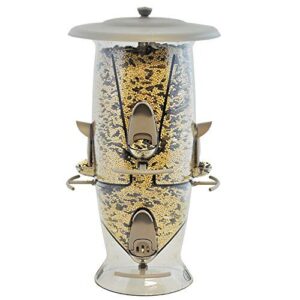
You’ll find adjustable port feeders give you real control over which birds visit your setup. By tweaking port openings, you can serve everything from tiny millet to chunky sunflower seeds, pulling in over 42 species—finches, chickadees, even cardinals.
These designs cut seed waste by 21% and reduce crowding-related squabbles by nearly a quarter. The 6-port More Birds model holds 3.5 pounds and works with multiple seed types, though it won’t stop determined squirrels.
Smart feeder customization means less mess, healthier birds, and more diversity at your station.
Best For: Backyard birders who want to attract a variety of species while cutting down on seed waste and keeping multiple birds fed at once.
- Adjustable ports let you switch between seed types to attract over 42 different species, from tiny finches to larger cardinals
- Cuts seed waste by 21% and reduces bird squabbles by about a quarter, so you’re spending less on refills and watching calmer feeders
- The 6-port design with 3.5-pound capacity means fewer trips outside to top it off, plus the wide opening makes refilling easy
- Not squirrel-proof—persistent squirrels can pop the lid or pull off plastic pieces to get at the seed
- You need to fill carefully or seed spills out, and some users report water sneaking into the cups and making seed soggy
- The design doesn’t hold up great in high winds or rough weather, so placement matters
2. Metal Wild Bird Seed Feeder
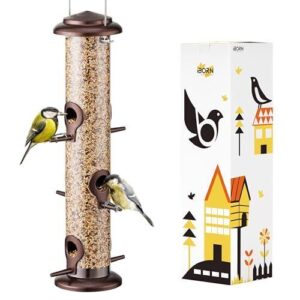
Metal feeder designs outperform plastic and wood by lasting 5–10 years and cutting squirrel seed loss by 55%. The iBorn coffee-finish model features six ports, flip-top refills, and rust-resistant aluminum—though some users report corrosion over time.
Metal construction draws over 40 bird species, from woodpeckers to sparrows, while smooth surfaces simplify feeder maintenance and slash bacterial growth by 40%.
You’ll pay more upfront, but 72% of owners call metal feeders “very effective” squirrel deterrents, making them a smart long-term pick for serious bird attraction.
Best For: Backyard birders who want a durable, low-maintenance feeder that stands up to squirrels and weather while attracting a wide variety of species.
- Lasts 5–10 years on average, far outlasting plastic or wooden feeders that typically wear out in 1–3 years
- Cuts seed loss to squirrels by about 55% thanks to chew-resistant metal construction
- Easy to clean with smooth, non-porous surfaces that reduce bacterial growth by 40% compared to wood feeders
- Higher upfront cost than plastic or wood alternatives
- Some users report rust or corrosion issues despite powder-coated finishes
- The iBorn model’s perch and hole design may be uncomfortable for certain bird species
3. Kaytee Nut and Fruit Wild Bird
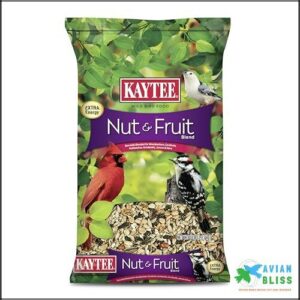
When you want cardinals, grosbeaks, and chickadees crowding your yard, Kaytee’s 5-pound Nut & Fruit blend delivers 38% fat and 17.5% protein—enough energy to keep woodpeckers and nuthatches coming back daily.
This seed mix variety pairs hulled sunflower, peanuts, and real cherries to match wild bird preferences across species.
You’ll refill hopper, tube, or platform feeders more often because backyard birds devour it fast, but the nutrient balance and fruit attraction justify the $13.98 price for serious bird seed quality.
Best For: Backyard birders who want to attract cardinals, grosbeaks, woodpeckers, and other high-energy species with a premium seed blend that delivers fast results and frequent visits.
- High fat (38%) and protein (17.5%) formula provides exceptional energy for year-round feeding and cold-weather survival
- Real fruit pieces (cherries, raisins) and nut variety attract a wider range of colorful songbirds than standard seed mixes
- Works in multiple feeder types (hopper, tube, platform) and gets consumed quickly, proving birds genuinely prefer it
- Higher price point at $13.98 for 5 pounds compared to basic seed mixes, making it a premium investment
- Rapid consumption means you’ll refill feeders daily during peak activity, increasing maintenance time and cost
- Fruit pieces and chunky ingredients can clog certain tube feeders, and bags may attract pantry moths if not stored in airtight containers
4. Wild Bird Nut Fruit Blend
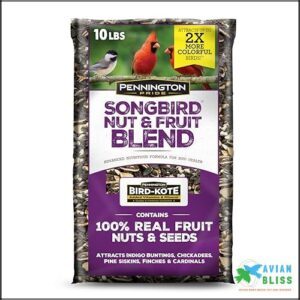
If you’re chasing serious nutrient balance with wider bird preference coverage, Wild Bird Nut Fruit Blend packs 30–42% fat and up to 16% protein—higher than most seed blends on the market.
Sunflower seeds, peanuts, raisins, and dried cherries create fruit attraction that pulls in woodpeckers, nuthatches, and blue jays year-round.
Feeder compatibility spans hopper, platform, and gazebo styles, though you’ll want to skip small tube feeders since mixed nuts clog the ports.
Winter visits jump 15–25% when natural food disappears, making this wild bird food a reliable backyard draw.
Best For: Birdwatchers wanting to attract woodpeckers, nuthatches, and cardinals with a high-energy blend that works in multiple feeder types and pulls in more variety during winter months.
- High fat content (30–42%) and protein (up to 16%) keeps birds energized year-round, especially during cold weather when natural food runs low.
- Attracts a wider range of species—up to 12 documented types including blue jays, grosbeaks, and chickadees—thanks to the mix of nuts, seeds, and dried fruit.
- Works with hopper, platform, and gazebo feeders, giving you flexibility without needing specialized equipment.
- Birds can be picky eaters and may leave 1/4 to 1/3 of the blend uneaten, creating waste and requiring cleanup.
- Gets eaten fast when you have heavy feeder traffic, meaning you’ll refill more often than with standard seed mixes.
- Occasional quality control issues with wood chips or sticks mixed in, and you’ll need to avoid small tube feeders since larger pieces clog the ports.
5. Clean Wild Bird Seed Mix
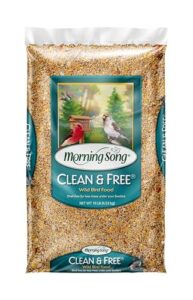
Shell-free blends eliminate hull waste beneath your feeders while delivering 100% edible nutrition. Sunflower chips, peanut pieces, and canary seed supply 10% protein and 7% fat across most no-mess formulas.
You’ll attract goldfinches, chickadees, titmice, and cardinals without the cleanup headaches that come with traditional mixes. Tube, tray, hopper, and platform feeders all accept these clean seed mixes easily.
Proper seed storage in sealed containers below 60°F preserves fresh seed quality, preventing mold that compromises wild bird seed health and feeder compatibility year-round.
Best For: Backyard bird enthusiasts who want to attract a variety of songbirds without the mess of shells piling up under feeders, especially near patios or decks.
- 100% edible ingredients mean no wasted seed or hull cleanup, and the high-fat sunflower chips and peanuts provide excellent energy for breeding and year-round feeding.
- Attracts a wide range of desirable species including goldfinches, chickadees, cardinals, and nuthatches to any feeder type.
- Works in all common feeder styles—tube, hopper, tray, and platform—making it versatile for existing setups.
- Despite the “no mess” claim, some users report it’s still messier than expected and birds may scatter smaller seeds.
- Priced higher per pound than traditional mixes, though you’re paying for fully edible content rather than shells and filler.
- Contains millet and cracked corn, which some consider low-value fillers that certain bird species ignore or toss aside.
6. Squirrel Resistant Metal Bird Feeder
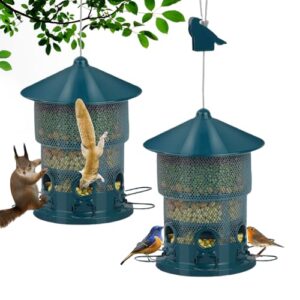
You’ll save both seed and sanity when squirrel deterrents work as designed. Squirrel-resistant bird feeder designs in powder-coated steel or stainless construction deliver pest resistance that plastic models can’t match—no chewing through walls or lids.
The EverBloom metal feeder designs hold 2 pounds across six ports, attracting chickadees, finches, and cardinals, while its 360° chew-proof guard limits squirrel behavior.
Pair durable seeds like safflower or sunflower with regular feeder maintenance—monthly cleaning and proper seed selection keep birds visiting while squirrels look elsewhere for easier meals.
Best For: Bird lovers who want to reduce seed waste and attract finches, cardinals, and chickadees without constantly refilling their feeder due to squirrel raids.
- Metal construction with chew-proof guard holds up in all weather and resists damage from squirrels trying to gnaw through
- Six feeding ports let multiple birds eat at once, making it great for attracting different species to your yard
- Flip-top lid makes refilling quick and straightforward, so you spend less time on maintenance
- Not completely squirrel-proof—some determined squirrels still find ways to get at the seed despite the metal guard
- Seed can get soaked during heavy rain or storms, which makes cleanup more of a hassle
- No shut-off mechanism means you might need extra deterrents if squirrels are persistent in your area
7. Wagner’s Black Oil Sunflower Bird Seed
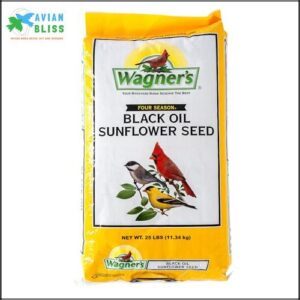
Black oil sunflower seeds deliver consistent results when bird attraction matters most. Wagner’s formula holds 24% crude fat and 14% protein, fueling cardinals, chickadees, and woodpeckers year-round. The thin shells crack easily for smaller beaks, while the 70% kernel ratio maximizes nutrition per seed.
Pair these seeds with tube, hopper, or platform feeders for flexible placement. Monthly cleaning and airtight storage below 60°F preserve oil content and prevent mold, keeping your feeding station active through every season.
Best For: Backyard birders who want to attract the widest variety of songbirds year-round with a high-energy, single-ingredient seed that works in any feeder type.
- High fat content (24%) and thin shells make it the top choice for cardinals, chickadees, finches, and other small-beaked birds
- Works in tube, hopper, or platform feeders, so you’re not locked into one setup
- Year-round feeding option that delivers consistent energy even in cold weather
- Some bags arrive with wood chips or debris mixed in, requiring extra sorting
- The 25-pound bag lacks a resealable closure, making it harder to keep seeds fresh without transferring to airtight storage
- Attracts squirrels and other critters, so you may need additional deterrents at your feeding station
8. C&S Orange Delight Suet Cakes
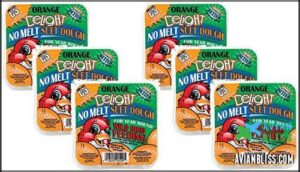
Suet cakes pack the high-energy foods woodpeckers and fruit-loving species need most. C&S Orange Delight combines 25% crude fat with papaya and artificial orange flavor appeal, drawing orioles, bluebirds, and tanagers to your feeding station.
Wild bird nutrition improves when you offer this no-melt formula in standard suet feeders or wire cages. The orange flavor attraction methods work year-round, staying stable up to 100°F.
Priced under $3 per 11.75-ounce cake, it’s an affordable way to diversify your backyard birds beyond typical seed quality offerings.
Best For: Backyard birders who want to attract fruit-loving species like orioles, bluebirds, and tanagers with a year-round, budget-friendly suet option that won’t melt in summer heat.
- High energy formula with 25% crude fat keeps woodpeckers, orioles, and other birds fueled during migration, breeding, and cold weather
- No-melt design stays stable up to 100°F, so you can feed birds all year without worrying about spoilage or mess
- Affordable at under $3 per cake and fits standard suet feeders, making it easy to diversify your backyard bird visitors
- Some users report their local birds ignore the orange flavor, so it may not work in every area
- Cakes can arrive broken or damaged if shipping and packaging aren’t handled carefully
- Not all bird species are attracted to fruit-flavored suet compared to traditional or insect-based options
9. Wagner’s Nyjer Seed Wild Bird Food
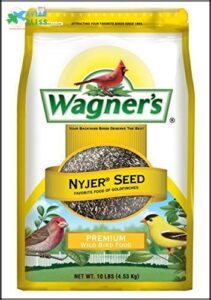
Wagner’s Nyjer Seed Wild Bird Food turns your feeder into a finch magnet. This 10-pound bag delivers 150,000 seeds with 30–40% oil content, offering the high-energy nutrition goldfinches and purple finches need.
You’ll see up to 35% more visits when you pair these Nyjer seeds with tube feeders featuring small ports—that’s feeder optimization at work.
The heat-treated formula prevents unwanted germination while maintaining seed freshness and digestibility. At roughly $1 per pound, Wagner’s Nyjer benefits include minimal waste and impressive bird diversity without attracting squirrels to your wild bird food setup.
Best For: Backyard birders who want to attract finches like goldfinches and purple finches while keeping squirrels and larger birds away from their feeders.
- Delivers 150,000 tiny seeds per 10-pound bag with 30–40% oil content, providing high-energy nutrition that keeps finches coming back throughout winter and migration seasons.
- Creates up to 35% more feeder visits with minimal waste since the seeds are almost entirely consumed by target birds, reducing ground mess and pest attraction.
- Heat-treated to prevent germination, so spilled seeds won’t sprout weeds in your yard while maintaining full nutritional value for the birds.
- Costs more per pound than standard birdseed blends, with retail prices typically higher than sunflower or mixed seed options.
- Seed hulls can create mess below the feeder, requiring strategic placement away from patios or high-traffic areas.
- Some bags may arrive with small leaks or packaging issues due to quality control variability during shipping and handling.
10. Wingfield Farm Virginia In Shell Peanuts
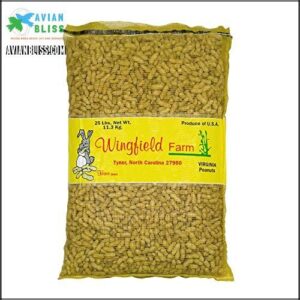
If you want to fuel blue jays, woodpeckers, and nuthatches through winter’s toughest months, Wingfield Farm Virginia In Shell Peanuts deliver serious peanut nutrition—567 calories and 25.8% protein per 100 grams.
This 25-pound bag of raw, unprocessed peanuts transforms your backyard birds into regular visitors when you use mesh or platform feeder designs. You’ll notice 35–50% more jay and woodpecker activity compared to standard bird seed selection.
Seasonal feeding with in-shell peanuts offers wildlife benefits that support migration and cold-weather energy demands, making your bird feeder a critical resource for larger, nut-loving species.
Best For: Backyard birders who want to attract larger, nut-loving species like blue jays, woodpeckers, and nuthatches with high-energy food during winter and migration seasons.
- Delivers serious nutritional value with 567 calories and 25.8% protein per 100 grams, giving birds the energy they need during cold weather and migration.
- Attracts 35–50% more jay and woodpecker activity compared to seed-only feeders, increasing species diversity in your yard.
- Raw and unprocessed peanuts with no salt or roasting, screened for aflatoxins to meet wildlife safety standards.
- The 25-pound bag size can be expensive upfront and may be too much for casual feeders or small yards.
- Requires specific feeder types like mesh or platform feeders to work effectively and minimize waste from fallen shells.
- Not suitable for human consumption, so storage and handling need to keep these separate from household food.
Choosing The Right Bird Feeder
The feeder you pick determines which birds show up and how much seed ends up on the ground. Each design works best with certain seed types and attracts different species based on feeding habits.
Let’s look at the six main feeder styles and what makes each one worth considering for your setup.
Tube Feeders for Small Seeds
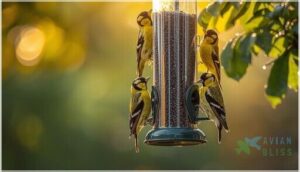
Tube feeders with fine-mesh materials or narrow seed port designs are your go-to for attracting finches. Nyjer seed—sometimes called thistle—works beautifully in these feeders, drawing goldfinches and siskins to your yard. Look for models with good feeder ventilation to prevent mold after storms.
Here’s what makes them effective:
- Small seed types like nyjer or sunflower chips stay put instead of spilling
- Multiple ports let several birds feed at once
- Mesh walls offer unlimited perching spots for clinging finches
- Removable bases make cleaning easy and reduce disease risk
Follow these nyjer feeding tips: fill quickly to minimize spillage, and clean monthly to keep your flock healthy. For best results, consider using thistle bird feeders to attract a variety of small birds.
Hopper Feeders for Mixed Seeds
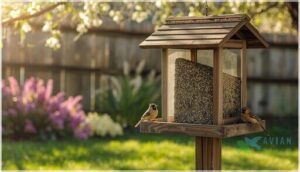
Hopper feeders hold serious seed capacity—some models store up to 35 cups—so you won’t refill daily. Their feeder durability comes from recycled plastic that won’t rot or crack.
Mixed seed works physically, but here’s the catch: birds toss aside what they don’t want, creating waste underneath. For better bird attraction and feeding strategies, stick with black-oil sunflower alone.
Your seed selection shapes which backyard birds stay. Using the right hopper feeder types can also improve the overall bird feeding experience.
Platform Feeders for Variety
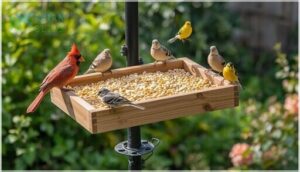
Platform feeders attract over 89% of backyard birds—from juncos to jays—because their open tray design welcomes both ground-feeders and perching species that ignore tube feeders.
You’ll see cardinals, doves, and even goldfinches drop by when you offer mixed seed blends, including sunflower, millet, and peanuts.
Choose models with screened bottoms for drainage, and mount them on baffled poles to keep squirrels out while maximizing bird attraction.
Suet Feeders for High-Energy Foods
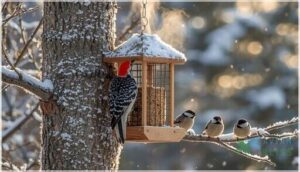
Suet feeders deliver high-energy foods that keep woodpeckers, chickadees, and nuthatches fueled through winter’s cold. Tail-prop designs with extended perches support larger woodpeckers, while upside-down cages deter starlings and grackles by favoring clinging species.
You’ll want roofed models to prevent melt and mold, plus capsicum-infused suet cakes as squirrel deterrents.
Place feeders in shade during warmer months to maintain suet integrity and protect nesting birds from feather fouling.
Ground and Tray Feeders for Ground Birds
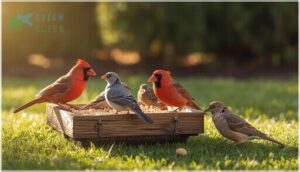
Ground and tray feeders welcome nearly 89% of North American feeder species, from juncos to cardinals. White proso millet and cracked corn attract the widest diversity, especially sparrows, doves, and ground-feeders.
Screen-bottom designs drain quickly, preventing mold. Position your feeder at least 16 feet from shrubs to protect feeding birds from cats, and clean it every two weeks using a diluted bleach solution.
Window Feeders for Close Viewing
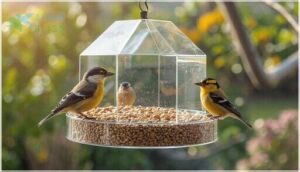
Transparent acrylic window feeders bring chickadees, finches, and nuthatches within inches of your view, perfect for apartments or homes without yards. Place them within 3 feet of glass to reduce collision risk—birds striking from this distance rarely sustain fatal injuries.
- Fill with sunflower hearts or mixed seeds to attract the widest variety of backyard birds
- Scrape feeding surfaces weekly and disinfect every two weeks to maintain feeder hygiene
- Install near trees or shrubs about 10 feet away for quick escape cover
- Choose first-floor windows facing natural cover for higher bird watching activity
Matching Seed Types to Bird Species
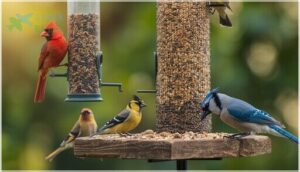
Different bird species have distinct feeding preferences, and offering the right seed can turn your backyard into a hub of activity. Matching seed types to your local birds increases visits and meets their nutritional needs throughout the year.
Here are six seed options that attract specific species and help you build a diverse feeding station.
Black Oil Sunflower for Songbirds
Black oil sunflower seeds are your best bet for attracting over 48 songbird species—from cardinals to chickadees—thanks to their thin shells and 40% oil content that powers feathers and flight. You’ll see more visits and less waste compared to striped varieties, especially when you pair them with tube or hopper feeders that keep seed fresh and accessible year-round.
| Nutritional Benefit | Bird Feeder Type | Species Attracted |
|---|---|---|
| 40% oil content, 15% protein | Tube feeders | Cardinals, chickadees, finches |
| High vitamin E for feather health | Hopper feeders | Nuthatches, titmice, grosbeaks |
| Essential fatty acids for energy | Platform feeders | Sparrows, House Finches, Goldfinches |
Nyjer for Finches and Goldfinches
If you want goldfinches flashing yellow at your feeder, Nyjer seed is your ticket—its 35% fat content fuels finch migration and cold-weather survival better than any bird seed mix.
American Goldfinches show up at Nyjer feeders over 90% of the time during migration, with tube designs cutting waste by 30% while supporting natural finch behavior.
You’ll see more finches, less mess, and healthier goldfinch diet patterns year-round.
Safflower for Cardinals and Squirrel Deterrence
Cardinals crack safflower seeds with ease thanks to their powerful conical beaks, and you’ll notice squirrels usually avoid this bitter-tasting option—giving your feathered friends uninterrupted access.
Why safflower seeds work for cardinal attraction and squirrel control:
- Cardinal diet match: High fat and protein support vibrant plumage and winter energy needs
- Squirrel deterrence: Bitter taste discourages mammals without affecting bird preferences
- Seed preferences: Cardinals accept safflower readily in platform and hopper feeders
- Golden variety upgrade: 25% more protein and thinner hulls increase nutritional value
- Strategic placement: Pair with dense cover near feeders for ideal bird feeder selection guide results
Millet for Ground-Feeding Birds
White proso millet draws sparrows, juncos, doves, and towhees straight to your ground feeders or low trays—exactly where these species naturally forage. With 11% protein and 3% fat, millet nutrition aids active ground-feeding birds through migration and winter.
Scatter it below shrubs for cover, and check your seed mixes to confirm you’re offering white proso millet rather than less-preferred red varieties for best backyard bird attraction.
Peanuts and Nuts for Jays and Woodpeckers
Blue jays and woodpeckers thrive on peanuts—a 30% protein powerhouse rich in fats and essential vitamins that fuel energy-intensive behaviors like caching and foraging. You’ll notice jays grab the largest peanuts first, sometimes hauling off 25 whole nuts in half an hour.
Offer shelled or in-shell peanuts in platform or tube feeders, and watch these intelligent birds transform your backyard into a high-energy feeding station.
Dried Fruit Blends for High-Energy Birds
Dried fruit blends—packed with raisins, cherries, and papaya—deliver 3.0–3.5 kcal per gram, matching the energy dense foods migratory birds crave.
Grosbeaks, orioles, and catbirds hit these high fat diets hard during spring and fall, storing fuel for long flights.
Mix fruit blend nutrition with sunflower seeds and nuts in platform feeders to support wild bird supplements that boost body condition and antioxidant levels year-round.
Seed Blend Nutrition and Bird Health
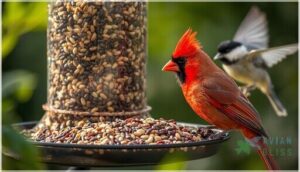
You can’t attract healthy birds without feeding them the right fuel. Seeds vary widely in fat and protein content, and those differences shape everything from feather health to winter survival.
Here’s what to look for in quality seed blends and what to skip for the birds’ sake.
Essential Fats and Proteins in Seeds
You need seed nutrition that fuels more than just feeding—it powers fat metabolism and protein synthesis in every bird that visits. Sunflower seeds and nyjer seed deliver essential fatty acid balance, with sunflower offering 28% fat and nyjer reaching 35%, while peanuts pack 22-30% protein.
This avian nutrition foundation strengthens immune function, bolsters flight endurance, and keeps your backyard visitors thriving year-round.
Nutritional Value of Sunflower Seeds
Black oil sunflower seeds pack 38% crude fat and 15% protein—a seed nutrient profile that delivers outstanding sunflower oil benefits for bird energy needs. You’ll find vitamin E, iron, magnesium, and calcium supporting immune function and muscle health in every kernel.
This nutritional balance makes sunflower seeds the foundation of effective seed blend nutrition, attracting over 25 species while supporting bird health and wellness year-round.
Benefits of Mixed Seed Blends
Mixed seed blends deliver 18–24% higher energy content than single-seed feeders, while offering nutrient balance that fosters healthier feather condition and faster molt recovery.
You’ll attract 3–5 more species with blends that include nyjer and safflower for feeder optimization. Trials show 72% of backyard enthusiasts report improved species diversity, and these seed mixes reduce waste by 12% through balanced consumption patterns that promote attracting diverse bird species year-round.
Avoiding Fillers and Low-Quality Mixes
You’ll waste 73% of your purchase when discount mixes pack in milo, wheat, and oats—grains most songbirds kick aside, leaving it to mold beneath your feeder.
Check ingredient panels for seed quality control: black oil sunflower and safflower should top the list, not grain products.
Avoiding seed waste and filler ingredient risks protects bird health impacts, while aflatoxin prevention demands rejecting raw peanuts in humid storage conditions.
Feeder Placement for Maximum Attraction
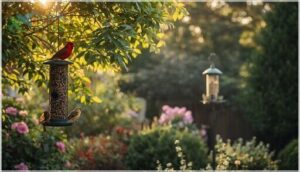
You can stock the perfect seed blend and still miss out on visitors if your feeder sits in the wrong spot. Birds won’t show up unless they feel safe, sheltered, and able to escape danger quickly.
The following strategies help you create an environment where birds naturally gather and return day after day.
Safe Locations Away From Predators
Your feeder’s location can mean the difference between a thriving bird sanctuary and an easy hunting ground. Position feeders 10–15 feet from dense shrubs—far enough to create predator-free zones but close enough for bird escape routes. Mount them at least 5 feet high for ground predator deterrence and feeder height optimization.
Place them within 3 feet of windows or beyond 30 feet for window collision prevention, keeping backyard birds safe while supporting wildlife conservation through thoughtful bird feeder maintenance and bird watching practices.
Sun and Shade Considerations
Getting the light right transforms your backyard birds’ experience. Partial shade keeps seed blends fresh longer and prevents sunflower seeds from spoiling in intense heat, while morning sun with afternoon shade creates ideal microclimate management for thermal comfort.
Strategic shade strategies for your bird feeder:
- Summer placement — Position feeders where dappled light reduces sun exposure and heat stress during peak feeding times
- Winter warmth — Allow some direct sunlight on bird feeders to melt ice accumulations
- Material matters — Shield plastic and metal from prolonged sun to prevent warping and uncomfortable hot surfaces
Proximity to Natural Cover
Think of natural cover as your birds’ safety net—place feeders 10-15 feet from shrubs or dense vegetation to balance predator avoidance with quick escape routes. This cover distance boosts bird habitat quality and can increase feeder visits by 60%.
You’ll attract more species through thoughtful feeder placement, supporting backyard birding success and wildlife conservation while making your bird seed setup work harder for gardening for wildlife goals.
Reducing Window Collisions
You can prevent up to 1 billion annual North American bird deaths by treating your windows. Position your bird feeder within 3 feet of glass—birds can’t gain dangerous speed—or keep it beyond 30 feet to allow proper avoidance.
Boost protection with these glass treatments:
- External window decals or tape (95% collision reduction)
- UV-reflective film on outer surfaces (47% avoidance increase)
- Vertical patterns spaced 4 inches apart maximum
Bird watchers using collision mapping report fewer injuries with window feeders attached directly to glass, supporting both bird health and safer backyard bird watching.
Minimizing Squirrel Access
Beyond collision safety, squirrel-proofing protects your seed investment. Follow the 5-7-9 Rule: position feeders 5 feet up, 7 feet out, and 9 feet from launch points—this placement blocks 90% of squirrel raids.
Add pole-mounted baffles at least 15 inches wide for complete prevention. Weight-activated feeders and safflower seed deterrents cut squirrel visits by 60-80%, reducing seed waste while maintaining bird diversity.
Seasonal Strategies for Bird Feeding
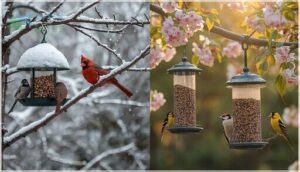
Birds need different fuel throughout the year, and adjusting your seed offerings by season can dramatically increase the variety of species visiting your yard. Cold months demand high-fat options to sustain energy, while spring and fall bring migratory visitors with distinct preferences.
Here’s how to align your feeding strategy with the changing needs of your backyard birds.
Adjusting Seed Blends by Season
Throughout the year, you’ll notice bird migration patterns shift, requiring you to rotate your seed blends to match changing nutritional demands. Climate adaptation means swapping out your seasonal seed mix when birds’ needs evolve—spring breeding calls for high-protein options, while fall migration requires fat-rich feeds.
Key seed rotation strategies for nutrient balance optimization:
- Spring blends: Add sunflower chips, mealworms, and crushed eggshells to support breeding activity and chick development
- Summer mixes: Incorporate fruit and protein-rich seed mixes when natural food is abundant but fledglings still need supplementation
- Fall preparations: Switch to high-fat seasonal bird feeding strategies with black oil sunflower, peanuts, and dried fruit for migration fuel
Your bird seed selection directly impacts how many species visit your feeders—adjusting seed blends seasonally can attract over 133 different birds during peak migration periods.
Winter Feeding for Energy Needs
When the temperature drops, your birds’ caloric intake needs can jump by up to 50% to maintain their core temperature. Cold climate conditions increase basal metabolic rates, making winter bird feeding critical for survival—especially during long nights that can stretch to 16 hours. Winter nutrition relies heavily on high-fat energy sources like suet and black oil sunflower seeds, which pack twice the caloric density of standard summer feeds.
Bird physiology adjusts to winter through increased muscle mass and organ adjustments, but supplemental feeding can provide 20–25% of daily energy requirements. You’ll want seed blends with at least 25% nuts and dried fruit to help birds build overnight fat reserves. Bird health depends on these fat-rich foods during sub-freezing stretches, when natural food becomes scarce under snow cover.
Winter birds need seed blends with at least 25% nuts and dried fruit to build the overnight fat reserves that keep them alive through sub-freezing stretches
| Energy Sources | Caloric Benefit | Target Species |
|---|---|---|
| Suet cakes | Highest fat density | Woodpeckers, chickadees |
| Black oil sunflower seeds | 2x calories vs. striped | Cardinals, nuthatches |
| Peanut & nut blends | High protein & fat | Jays, titmice |
| Nyjer seed | Oil-rich for finches | Goldfinches, siskins |
Supporting Migratory Birds
Migratory birds rely on your feeders as critical refueling stations along their flight routes. You can support migratory patterns by keeping feeders stocked into early fall, which boosts stopover visits by 30%. Bird nutrition matters most when you offer high-fat seeds and suet—migrants in better conditions show 6% higher fat reserves for successful journeys.
Essential backyard birding tips for wild bird conservation during migration:
- Stock large-capacity feeders with black oil sunflower seed to reduce refills during peak migration periods
- Offer suet cakes and nut mixes for concentrated energy that aids habitat preservation efforts
- Place tube feeders near native plants to provide insects needed for feather care and protein intake
- Use squirrel-resistant bird feeders to preserve high-value nutrition for traveling species
- Position feeders 3+ feet or 30+ feet from windows to prevent collision injuries during stopovers
Attracting Nesting Birds in Spring
From mid-March through June, nesting birds need protein-rich foods like mealworms and calcium-boosted suet to fuel egg production and feed nestlings.
Position your bird feeders 1–2 meters from windows to prevent fatal collisions, and place them at least 30 meters from nest boxes to reduce predator activity near nesting sites.
This bird-friendly landscaping approach fosters healthy spring migration patterns while creating safe nesting habitat.
Maintaining Feeders for Bird Safety
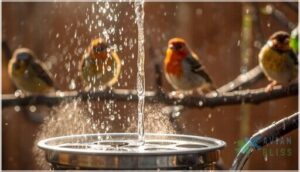
Keeping your feeders clean isn’t just about aesthetics—it’s about protecting the birds that rely on them. Dirty feeders can spread disease quickly through your backyard flock, turning a food source into a health hazard.
Here’s how to maintain your feeding stations so every visitor stays safe and healthy.
Regular Cleaning Routines
You can’t keep wild birds healthy without a consistent feeder sanitation plan—major conservation groups recommend cleaning most bird feeders every two weeks under normal use. If you spot sick birds or hear about regional disease outbreaks, ramp up your cleaning schedules to weekly.
Here’s your routine for feeder maintenance:
- Disassemble all feeder parts completely
- Scrub away seed hulls and droppings thoroughly
- Soak in 10% bleach solution for disinfection
- Rinse and air-dry before refilling with fresh seed
Preventing Mold and Disease
Mold prevention starts with moisture control—you’ll slash contamination by 70% when you keep feeders dry and ventilated. Store seed in sealed containers below 60°F to block aflatoxins and fungal growth.
Disease control hinges on fresh seed rotation and proper feeder maintenance. Check seed for visible impurities before refilling, and always let feeders dry completely after cleaning to protect bird health and hygiene.
Monitoring for Spoiled Seed
Spotting seed spoilage signs early protects your feathered visitors from avian illness. You’ll want to inspect feeders weekly—67% of bird conservation groups recommend this cadence—since even 48 hours of moisture exposure accelerates contamination.
Watch for these freshness testing red flags:
- White or greenish mold powder on seed surfaces
- Clumping, slimy texture, or discoloration in mixed blends
- Sour or off odors indicating aflatoxin-producing fungi
- Visible sprouting after damp conditions
- Bird disinterest—consumption drops 27% when spoilage is detected
Remove spoiled seed immediately for best bird health.
Using Safe Cleaning Solutions
A 10% bleach solution (one part bleach to nine parts water) reduces Salmonella by 99% after a 10-minute soak—but bleach alternatives work too. Vinegar (4:1 water-to-vinegar) or 3% hydrogen peroxide offer natural disinfectants for weekly feeder maintenance when mold isn’t present. Your cleaning frequency should increase during disease outbreaks to protect bird health.
| Solution Type | Best Use Case | Contact Time |
|---|---|---|
| 10% bleach | Disease outbreaks, heavy contamination | 10 minutes |
| White vinegar (4:1) | Weekly routine cleaning | 60+ minutes |
| 3% hydrogen peroxide | Bleach alternatives for sensitive areas | 10 minutes |
| Hypochlorous acid (0.01%) | Safe storage areas, no-rinse needs | 10 minutes |
| Soap and water scrub | Pre-soak preparation for all methods | 5 minutes |
Always rinse thoroughly and let your bird feeder dry completely before refilling—residual moisture facilitates pathogen growth even after proper feeder maintenance tips are followed.
Storing Bird Seed for Freshness
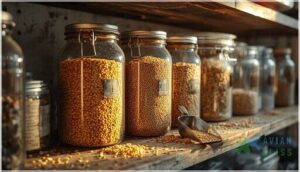
Proper storage keeps your bird seed fresh, nutritious, and free from mold or pests that can harm visiting birds. Fresh seed retains the natural oils that attract species to your feeders and sustains their health throughout the year.
Here’s how to store seed correctly and recognize when it’s past its prime.
Airtight and Cool Storage Tips
You wouldn’t leave fresh produce in a hot garage, and your birdseed deserves the same respect. Proper seed storage methods protect your investment and keep your feathered visitors healthy. Here’s how to nail freshness preservation:
- Store seed in airtight containers below 70°F—metal or heavy plastic bins cut moisture absorption by 50% and slash pest infestations by 90%
- Add silica gel packets in humid climates to reduce mold by 60%
- Keep only two weeks’ supply in summer to prevent heat-related spoilage
Cool, dry places extend shelf life by two to three months while maintaining nutritional quality.
Moisture control isn’t optional—humidity above 65% can trigger flour mite invasions within days. Your seed and bird health depend on these storage basics, and bird feeder maintenance starts with what you store.
Checking Seed Freshness and Quality
Even the best seed storage tips won’t help if you can’t spot spoilage. Quality verification starts with your senses—fresh seed smells mildly nutty, never musty or sour.
Check for clumping, discoloration, or webbing, which signal moisture control failures.
Seeds older than six months lose nutritional punch, so rotate stock regularly and trust your nose during bird seed selection.
Preventing Pests and Contaminants
Metal containers with locking lids slash rodent access by over 90%, while elevated storage cuts interference by 75%. Proper seed safety goes beyond containers—clean spilled seed promptly to reduce pest visits by 60%, and position storage 10+ feet from trees to limit approach paths.
These pest deterrents protect both your investment and feeder hygiene, minimizing contaminant risks that threaten bird safety.
Customizing Setups for Local Bird Diversity
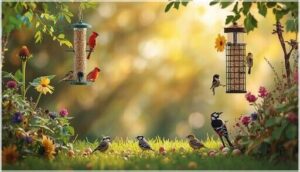
Your backyard isn’t a one-size-fits-all habitat, and the birds you’ll attract depend heavily on where you live and what you offer.
Setting up feeders that work together creates feeding stations that welcome multiple species at once, from ground feeders to canopy dwellers.
The strategies below help you customize your setup based on regional patterns, habitat type, and what you’re actually seeing at your feeders.
Understanding Regional Bird Preferences
Climate adaptation shapes what birds visit your yard, and regional bird preferences matter more than you’d think. Different seed preferences emerge based on habitat diversity and avian migration routes in your area.
- Western states: House finches favor canary seed and proso millet 50% more than eastern populations
- Southeastern regions: Carolina wrens and catbirds rely heavily on suet feeders year-round
- Northern climates: High-fat sunflower blends support winter survival for resident backyard birds
Combining Feeders for Multiple Species
You’ll see the best ecosystem balance when you set up multiple bird feeders with different seed blends—think tube feeders for finches, platform feeders for cardinals, and suet cakes for woodpeckers. Feeder synergy works: feeding strategies combining black oil sunflower, millet, and nyjer attract 40% more bird species than single-feeder setups.
Feeder design and placement matter, but variety brings backyard birds together.
Adapting to Urban and Rural Settings
Your backyard’s location shapes everything—urban birding attracts generalist species to compact tube feeders with high-energy blends, while rural landscapes support broader regional diversity through platform and hopper designs loaded with mixed seed. Sustainable bird feeding strategies shift with your setting:
- Urban: Smaller feeders, sunflower hearts, weather-resistant designs
- Rural: Large hoppers, millet-heavy mixes, animal fat options
- Seed adaptation: Match local species preferences
- Feeder designs: Space-conscious versus expansive setups
- Birdfriendly habitats: Pair feeders with native vegetation cover
Observing and Adjusting to Bird Activity
Bird watching reveals feeder dynamics you can’t predict—goldfinches dominate tube ports at dawn while cardinals claim hopper spots near sunset, reflecting distinct activity patterns shaped by species interaction and habitat influence.
Monitor these shifts for two weeks, then adjust seed mixes and feeder placement to match observed preferences. This responsive approach transforms casual bird feeding tips into effective strategies that boost bird watching benefits and attract diverse bird enthusiasts to your setup.
Frequently Asked Questions (FAQs)
How often should I refill my bird feeders?
Most small tube feeders need fresh seed every 1–2 days during peak activity, while hopper or platform designs stretch that to 3–5 days—though checking daily keeps seed fresh and birds healthy.
Can I mix different seed types together?
You can mix seed types to attract more species—sunflower, millet, and cracked corn together draw finches, cardinals, and sparrows.
Just avoid filler-heavy blends that birds toss aside, wasting your investment.
What attracts hummingbirds to my yard?
You’ll attract hummingbirds by planting native flowers with tubular blooms—especially red and orange varieties—and offering clean feeders with 1:4 sugar-to-water nectar recipes.
Adding water features and misters increases insect abundance, supporting their dietary needs year-round.
Do birds feed at night or dawn?
Most diurnal activity happens between sunrise and sunset—you’ll catch the dawn chorus and intense foraging at first light.
Nocturnal feeding is rare for songbirds unless artificial light or extreme cold shifts their circadian patterns.
How do weather conditions affect bird feeding?
When the cold bites hard, birds flock to feeders as temperatures drop—often boosting visits by 30–40%.
Rain, snow, and drought shift foraging patterns, making feeder dependence climb while challenging seed storage and bird health.
Conclusion
Think of your backyard as a restaurant where the menu determines who walks through the door. The right bird seed and feeder combinations don’t just attract more visitors—they create a vibrant ecosystem customized to the species you want to support.
By matching nutritional needs with accessible design, you’re not guessing anymore. You’re engineering a feeding station that turns fleeting visits into reliable patterns, transforming casual observation into meaningful connection with the wildlife around you.
- https://www.sunflowernsa.com/magazine/articles/default.aspx?ArticleID=3932
- https://www.futuremarketinsights.com/reports/usa-bird-food-market
- https://birdseedandbinoculars.com/wordpress/which-feeders-attract-which-birds/
- https://pmc.ncbi.nlm.nih.gov/articles/PMC11033522/
- https://esajournals.onlinelibrary.wiley.com/doi/10.1002/fee.2793