This site is supported by our readers. We may earn a commission, at no cost to you, if you purchase through links.
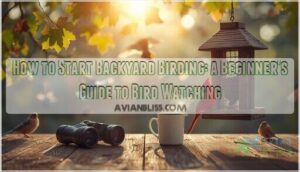
The first cardinal at your window changes everything. One moment you’re drinking morning coffee, the next you’re Googling “red bird with black face” and wondering why you never noticed the dozen other species flashing through your yard.
Backyard birding sneaks up on people this way—it starts with casual curiosity and quickly becomes a daily ritual that connects you to the wild rhythm happening just outside your door. You don’t need expensive gear or expert knowledge to start; you need a willingness to slow down and pay attention.
The birds are already there, going about their business with surprising drama and personality. Once you learn to read their patterns—the feeding frenzies before storms, the territorial squabbles at dawn, the quiet lulls of midday—your backyard transforms into a living theater where the cast changes with the seasons.
Table Of Contents
Key Takeaways
- Backyard birding starts with simple, low-cost steps—position feeders 10-15 feet from cover, set realistic goals like tracking 10-20 species over three months, and observe daily patterns like pre-sunset feeding peaks and cold-weather visit spikes.
- The right gear makes identification effortless: 8×42 binoculars balance stability and detail, while blending field guides with apps like Merlin Bird ID (98% accuracy) sharpens your skills without draining batteries mid-session.
- Native plants form the backbone of a thriving bird habitat because they support the insects and seeds that fuel bird populations—yards with 70%+ native cover can sustain breeding populations, while non-native landscapes often can’t.
- Strategic feeder choices attract specific species—nyjer seed in mesh socks draws goldfinches within 24 hours, suet feeders with tail props bring woodpeckers, and peanut wreaths double as squirrel diversions to protect your seed stations.
Steps to Begin Backyard Birding
Starting a backyard birding practice doesn’t require a complex strategy—just a few thoughtful decisions about where you’ll watch, what you hope to see, and how you’ll track your discoveries. The key is building habits that keep you engaged without feeling overwhelmed by endless species lists or fancy equipment.
Here are four foundational steps that’ll help you shift from curious observer to confident backyard birder.
Choosing The Best Spot in Your Yard
Before you hang your first feeder, scan your yard for a spot roughly 10–15 feet from trees or shrubs—close enough for birds to dash into cover but far enough to thwart ambushing cats. Aim for moderate sun exposure and a clear view from your window, so you can watch backyard birding unfold without spooking visitors.
Good feeder placement and thoughtful yard layout make all the difference. To guarantee a positive experience, consider implementing bird feeding practices that support local wildlife.
Setting Realistic Birding Goals
Once you’ve found your sweet spot, set goals that match your schedule. Many backyard birding beginners start by committing to one session per week—about 67 days yearly for active participants. That’s your baseline.
- Track weekly species counts to build bird identification skills
- Join seasonal birding challenges like February’s Great Backyard Bird Count
- Aim for 10–20 different species over your first three months
These yearly milestones keep you motivated without overwhelming your calendar. To further improve your experience, consider developing a bird watching plan to help you stay organized and focused.
Observing Bird Behavior and Patterns
You’ll notice feeding peaks about two hours before sunset—visitation climbs through the day, then drops sharply in that final hour. Cold snaps bring more visitors; chickadees and titmice double their feeder trips when temperatures fall. Watch for these daily rhythms to decode flock behavior and song patterns that reveal nesting habits and migration timing.
| Time of Day | Activity Level | Common Behaviors |
|---|---|---|
| Pre-sunrise | Moderate | Early foraging, territorial song patterns |
| Midday | Low | Resting, preening, reduced feeder dynamics |
| Late afternoon | Peak | Intense feeding, flock behavior before roost |
Keeping a Birding Journal or Log
Your daily sightings deserve more than memory. A birding journal sharpens observation skills and reveals backyard trends you’d otherwise miss—field notes build data analysis chops over time. Log date, location, species, weather, and behaviors in any format you prefer. Citizen science platforms like eBird welcome beginner birding entries, connecting you to a global birding community while you track your own bird identification wins.
- Record date, precise location, and weather conditions for each session
- List all species observed, including visual and auditory detections
- Note start and end times to track birding effort consistently
- Describe unusual plumage, vocalizations, or behaviors before consulting guides
- Sync paper field notes with digital apps for backup and sharing
Essential Tools for Beginner Birders
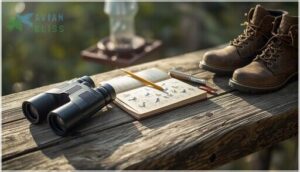
You don’t need much to start birding, but a few key tools will make all the difference between squinting at blurry shapes and actually watching birds. The right gear helps you identify what you’re seeing, stay comfortable outside, and keep track of your discoveries along the way.
Here’s what belongs in your birding toolkit—from the essentials you’ll use every time to the extras that can take your hobby further.
Selecting The Right Binoculars
You’ll want binoculars that don’t feel like you’re wrestling a telescope—8x magnification paired with 40-42mm objective lenses strikes that sweet spot between detail and steady views. Most birders prefer 8×42 configurations because they deliver bright images and wide field views without the shake you’d get from 10x models.
Look for close focus under 10 feet, decent eye relief if you wear glasses, and a weight that won’t tire your arms during those magical dawn sessions.
| Feature | What to Look For |
|---|---|
| Magnification | 8x for stability and detail balance |
| Objective Lens | 40-42mm for brightness without excess weight |
| Field of View | Minimum 6° to track fast-moving birds |
| Close Focus | Under 10 feet for backyard species |
| Weight | 485-650g range for comfortable handheld use |
Using Field Guides and Birding Apps
Modern birders blend analog wisdom with digital speed—field guides offer detailed range maps and plumage variations, while apps like Merlin Bird ID deliver instant species identification from photos or songs. You’ll build sharper bird identification techniques by cross-referencing both tools during backyard sessions.
- Merlin Bird ID reaches 98% accuracy and assists 10 million users worldwide
- Field guides provide habitat descriptions without draining batteries mid-hike
- eBird syncs your species tracking data with global research networks
- Photo guides show realistic field plumage that paintings sometimes miss
- Sound ID features transform mysterious calls into confirmed identifications
Choosing Comfortable Outdoor Gear
Long birding sessions feel better when you’re dressed for comfort. Breathable fabrics keep you cool, while waterproof gear shields against surprise showers. Hiking boots with ankle support protect your feet on uneven trails, and binocular straps prevent neck strain during two-hour vigils.
Outdoor seating, like portable cushions, transforms cold logs into observation posts, letting you focus on spotting species instead of shifting around uncomfortably.
Optional Tools: Cameras and Notebooks
Capturing birds through photography or logging sightings in notebooks deepens your birding experience beyond casual wildlife observation. In 2022, 60% of U.S. wildlife watchers invested in photographic equipment for bird identification and documentation. Entry-level mirrorless cameras paired with telephoto lenses help you learn camera settings for sharp bird photography, while notebooks—whether paper journals or apps like eBird—track patterns that transform you from observer to citizen scientist contributing to global conservation efforts through detailed wildlife filming and digital editing records.
Essential tips for documenting your backyard discoveries:
- Master shutter priority mode for capturing birds in flight during active feeding times
- Use binoculars first to confirm bird identification before switching to camera gear
- Record date, weather, and behavior notes that reveal seasonal migration patterns
- Practice digital editing techniques to improve details like plumage coloration and field marks
- Join eBird or similar platforms where your sightings support real conservation research
Creating a Bird-Friendly Backyard Habitat
You don’t need a sprawling estate to attract birds—just a few thoughtful additions to your backyard can transform it into a thriving habitat. Think of it as setting out a welcome mat with everything birds need: food, water, shelter, and a safe place to raise their families.
Let’s walk through the key elements that’ll turn your yard into a bird haven.
Providing Food With Feeders and Seeds
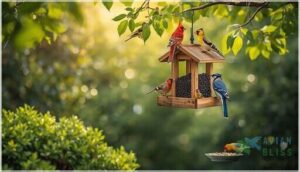
Selecting the right bird seed makes all the difference in who shows up. Black oil sunflower draws the widest variety of songbirds, while nyjer seed in specialized feeders attracts finches like goldfinches and siskins.
Position your bird feeder near cover—shrubs or trees—so birds feel safe while eating.
Regular feeder maintenance prevents disease, and proper seed storage keeps your offerings fresh and nutritious.
Ensuring a Clean Water Source

Water quality matters as much as food when you’re providing water for birds. Change your birdbath every 2–3 days—daily during summer heat—to prevent disease transmission and mosquito control.
Scrub the basin weekly with diluted bleach to remove biofilm. Keep depth around 1–2 inches for water safety.
Clean water attracts more species and protects the health of your backyard flock.
Planting Native Trees, Shrubs, and Flowers

Beyond feeders and fresh water, your garden design unlocks something deeper—a living ecosystem restoration project right in your yard. Native plants form the backbone of bird-friendly gardens because they support the insects, seeds, and fruits that fuel bird habitats throughout the year.
Here’s why native plant selection transforms backyard birding:
- Native oaks feed over 550 butterfly and moth species—that’s breakfast, lunch, and dinner for insectivorous songbirds raising their young.
- Yards with 70%+ native cover produce enough Carolina Chickadees to sustain breeding populations, while heavily non-native landscapes can’t support reproduction.
- Native shrubs like toyon and manzanita offer winter fruits and protective cover, keeping both resident and migratory species fed when other resources disappear.
Think of sustainable landscaping as setting the table for an entire food web. You’re not just planting pretty flowers—you’re engineering urban wildlife conservation one yard at a time.
Sustainable landscaping engineers an entire food web, not just pretty flowers—it’s urban wildlife conservation one yard at a time
Adding Birdhouses and Safe Shelter
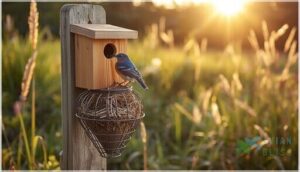
Once your native plants take root, nest boxes enhance what you’ve built. Around 84% of installed boxes get used within four years—proof that your shelter matters. Choose solid wood at least ¾-inch thick to prevent overheating. Mount boxes 5+ feet high facing north-northeast to boost fledgling success by nearly 25%, and add predator guards beneath to raise nest survival by 6–7%.
| Feature | Why It Matters | Quick Tip |
|---|---|---|
| Wood thickness | Insulates against temperature extremes | Use ¾–1 inch solid lumber |
| Entrance size | Excludes competitors and predators | 1.25 inches for bluebirds |
| Orientation | North-facing boxes produce more fledglings | Avoid southwest exposure |
| Predator guards | Blocks climbing mammals and snakes | Install cone or cylinder baffles |
Top 5 Products for Backyard Birding
You don’t need a garage full of gear to attract a remarkable variety of birds to your backyard. A few well-chosen products can transform your space into a feathered highway that keeps species coming back season after season.
Here are five essentials that’ll get you started on the right foot, each one designed to appeal to different bird families and feeding behaviors.
1. Nyjer Seed Wild Bird Food
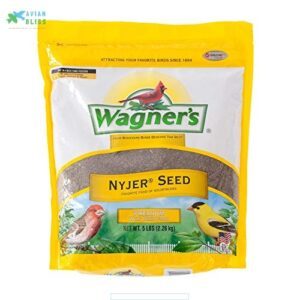
If you’re serious about attracting goldfinches and other small songbirds to your backyard birding setup, nyjer seed is the ticket. This tiny, oil-rich seed packs around 35-45% crude fat—perfect fuel for finches during cold snaps or molting.
A pound holds roughly 150,000 seeds, so your bird feeder won’t run dry quickly. Wagner’s 5-pound bag keeps things simple with extra-clean seed and a handy reclosable slider.
Just remember: store it in an airtight container to avoid mold, and clean your bird seed feeder every two weeks for happy, healthy bird watching.
Best For: Backyard birders who want to attract goldfinches, siskins, and other small finches while keeping squirrels and larger birds away from the feeder.
- Packed with 35-45% fat for high energy, especially during cold weather or molting season
- A single pound contains 150,000 seeds, so feeders stay full longer and you get more mileage per bag
- Heat-treated to prevent sprouting, meaning no messy weeds under your feeder
- Goes rancid or moldy within 6-12 months if not stored in an airtight container in a cool, dry spot
- Some finches ignore it entirely, so results can vary depending on your local bird population
- Requires a specialized feeder with small ports, and you’ll need to clean it every two weeks to prevent bacterial buildup
2. Finch Feeder Nyjer Seed Socks
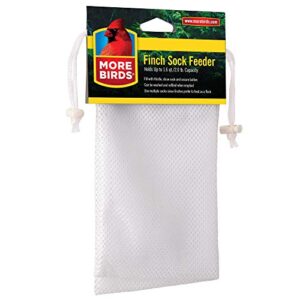
Now that you’ve got the nyjer seed ready, those soft mesh socks are your best bet for serving it up. They let goldfinches cling comfortably while pulling seed through tiny holes—15 to 20 birds can show up on a good morning.
Hang your bird feeder about five feet high in a dry spot, refill when it’s light, and you’ll see American goldfinches, pine siskins, and chickadees within a day.
Clean every two weeks to keep your backyard birding station healthy and buzzing.
Best For: Backyard birders who want to attract goldfinches and smaller songbirds without dealing with larger, aggressive species or squirrels raiding the feeder.
- Attracts finches fast—goldfinches, pine siskins, and chickadees often show up within 24 hours of hanging
- Compact and easy to fill, clean, and hang in tight spaces like balconies or small yards
- Naturally deters bigger birds and some squirrels since the mesh design only works for clinging species
- Durability can be hit or miss—hanging wires may break and the mesh wears out after a few months of heavy use
- Seed gets mushy and spoils quickly in rain or humid conditions, requiring frequent checks and cleaning
- Not squirrel-proof, as determined squirrels can still hang on or spin the sock to get at the nyjer seed
3. Recycled Plastic Suet Bird Feeder
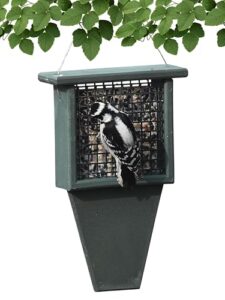
Suet feeders made from recycled plastic milk jugs offer a smart, eco-friendly choice for backyard birding—you’re keeping waste out of landfills while attracting woodpeckers, chickadees, and nuthatches. The tail prop lets larger birds balance comfortably, mimicking how they’d cling to tree bark.
Hold one standard suet cake, hang it near cover, and you’ll watch chickadees dart in within hours.
Clean every week or two with hot soapy water to prevent mold, and you’re set for years—these feeders outlast wood five times over.
Best For: Backyard birders who want an eco-conscious feeder that attracts woodpeckers and small songbirds while lasting through years of weather without rotting or splitting.
- Made from recycled plastic milk jugs, diverting waste from landfills and reducing environmental impact compared to virgin materials
- Lasts up to five times longer than wooden feeders with no cracking, fading, or weather damage
- Tail prop gives woodpeckers and larger birds a stable perch, letting you watch their natural feeding behavior up close
- Too small for larger woodpecker species like Hairy or Pileated Woodpeckers
- Costs more upfront than basic wire suet cages
- Needs regular cleaning every week or two to prevent mold buildup
4. Whole Peanut Bird Feeder Wreath
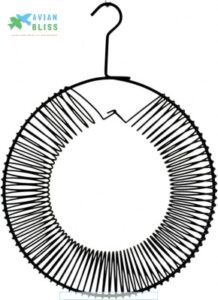
A wreath-style peanut feeder brings blue jays, woodpeckers, and nuthatches right to your backyard birding setup—spiral metal coils hold whole peanuts in their shells, challenging birds to work for their high-fat reward.
You’ll spend around $21 for a 13-inch black ring that holds 1.5 pounds of nuts, enough to keep your bird feeders busy for days.
Hang it away from seed stations as a squirrel deterrent, clean every two weeks with soapy water, and watch chickadees and titmice master the art of shell-cracking acrobatics.
Best For: Backyard birders who want to attract jays, woodpeckers, and nuthatches while keeping squirrels occupied at their own food station instead of raiding seed feeders.
- Draws in nut-loving species like blue jays and woodpeckers that might skip standard seed feeders, adding more variety to your backyard wildlife.
- Works as a squirrel diversion—give them their own peanut wreath and they’ll leave your other feeders alone.
- Durable metal construction holds up through weather and even handles raccoons climbing on it without falling apart.
- Peanut shells pile up underneath and can get messy, which might bother you or your neighbors if you’re not cleaning regularly.
- You’ll need a baffle or careful placement to stop squirrels from emptying the whole thing in one afternoon.
- Smaller birds sometimes struggle to pull peanuts out of the tight coil, so you might miss out on visits from less determined species.
5. Best Hummingbird Glass Feeder Choice
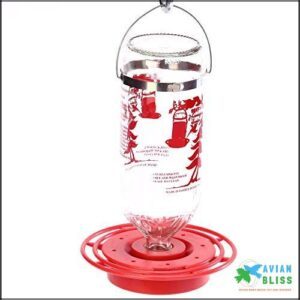
A 20-ounce glass hummingbird feeder with four ports balances durability and maintenance. You’ll clean it every few days in summer heat, scrubbing smooth non-porous surfaces with hot water and vinegar to prevent mold without soap residue.
Glass outlasts plastic by years under UV exposure, won’t leach chemicals into your nectar recipes, and stays clear so you can monitor freshness.
Look for built-in ant moats and bee guards to protect visiting hummers, then hang your feeder near red flowers where hummingbird attraction peaks naturally in your backyard birding setup.
Best For: Backyard birders who want a long-lasting feeder that stays clean easily and supports multiple hummingbirds without frequent replacements.
- Glass resists UV damage and scratching far better than plastic, maintaining clarity and structural integrity for multiple seasons without yellowing or cracking.
- Smooth, non-porous surfaces prevent mold buildup and allow thorough cleaning with just hot water and vinegar, no soap residue to worry about.
- Built-in ant moats and bee guards keep pests away from the nectar, protecting your hummingbirds and reducing waste.
- Higher upfront cost compared to plastic feeders, though the multi-year lifespan offsets replacement expenses over time.
- Heavier weight requires sturdier mounting hardware like reinforced brackets or thick branches to support the glass safely.
- Requires cleaning every 1-3 days in warm weather to prevent fermentation, which demands more frequent maintenance than some birders expect.
Frequently Asked Questions (FAQs)
What time of day is best for birding?
The Dawn Chorus awakens like nature’s orchestra—early morning delivers peak bird watching action. Songbirds sing loudest within two hours after sunrise, while late afternoon brings a second wave of activity before dusk.
How do I identify birds by their songs?
Start by learning common birding calls in your yard. Apps like Merlin Sound ID achieve 86% correct species identification, analyzing acoustic features such as peak frequencies and syllable patterns. Practice regularly, and you’ll soon recognize vocal learning differences between bird species through audio analysis.
What should I do if I find an injured bird?
Finding an injured bird can feel like a full-blown emergency—but don’t panic.
Contact a licensed wildlife rehabilitator immediately for proper bird rescue tips and emergency bird help, as handling wild birds yourself violates federal law.
How can I attract specific bird species to my yard?
Match your offerings to their diet—tube feeders with black oil sunflower seeds pull in cardinals and chickadees, while nyjer socks attract goldfinches.
Native plants like oaks and berry shrubs support specific bird species year-round.
Are there birding communities or groups I can join?
You’d think you’re alone with your binoculars, but there are 96 million fellow birders nationwide!
Join National Audubon Society chapters, local bird clubs, online forums like eBird, or social media groups to share sightings and build birdwatching community engagement.
Conclusion
Studies show that regular backyard birders identify an average of 40 different species annually from a single location—far more diversity than most people imagine exists in their own neighborhoods. That cardinal at your feeder represents just the opening act.
How to start backyard birding isn’t complicated: set up food and water, grab binoculars, and watch consistently. The expertise builds itself through repetition. Your yard’s already staging the show; you’re simply learning to recognize the performers.
- https://www.sossaveoursongbirds.org/bird-news/national-survey-1-in-3-us-adults-reports-watching-birds
- https://www.audubon.org/magazine/birding-booming-hobby-and-big-business
- https://www.birdcount.org/2025-final-results/
- https://insideclimatenews.org/news/13122024/todays-climate-birding-economics-outdoor-recreation/
- https://pmc.ncbi.nlm.nih.gov/articles/PMC11111068/