This site is supported by our readers. We may earn a commission, at no cost to you, if you purchase through links.

A single chicken carcass can harbor enough H5N1 virus to survive 26 hours on your work gloves—long enough to transfer from barn to kitchen if you’re not careful. The current bird flu outbreak has already jumped from poultry to dairy cattle in 59% of U.S. cases, proving this pathogen doesn’t respect the boundaries we assume keep us safe.
Your exposure risk depends less on whether an outbreak reaches your county and more on how you handle the birds, eggs, and surfaces in your daily routine.
Effective bird virus prevention tips start with understanding transmission pathways: respiratory droplets, contaminated surfaces, and direct contact with infected animals all create opportunities for zoonotic spread. The gap between casual backyard flock management and clinical-grade biosecurity protocols determines whether you’re protected or exposed.
Table Of Contents
- Key Takeaways
- What is Bird Flu and How It Spreads
- Recognizing Bird Flu Symptoms
- Who is Most at Risk for Bird Virus
- Safe Handling of Birds and Poultry
- Food Safety Practices to Prevent Infection
- Biosecurity Measures for Bird Owners
- Personal Hygiene and Protective Steps
- Vaccination and Medical Prevention Options
- Community and Public Health Actions
- Frequently Asked Questions (FAQs)
- How can you prevent bird flu?
- How can I prevent H5N1 bird flu?
- How do I limit my exposure to bird flu?
- What should I avoid if I have avian influenza?
- Can oseltamivir be used to treat bird flu?
- Can bird flu survive on clothing and shoes?
- Is it safe to feed wild birds?
- How long does bird flu last on surfaces?
- Can indoor pet birds get bird flu?
- Should I avoid parks with wild birds?
- Conclusion
Key Takeaways
- H5N1 survives 26 hours on plastic surfaces and 4.5 hours on human skin, making strict equipment disinfection and PPE use non-negotiable after handling birds, eggs, or contaminated materials.
- All 26 global human H5N1 cases from January through August 2025 traced back to direct animal contact, with 59% of U.S. infections linked to dairy cattle rather than poultry alone.
- Cooking poultry to 165°F and choosing only pasteurized dairy products eliminates infectious virus—standard pasteurization reduces H5N1 by 10,000-fold while raw milk from infected cows still harbors live virus.
- Early oseltamivir treatment within 48 hours of symptom onset reduces H5N1 mortality by 49% in hospitalized patients, making immediate medical contact after bird exposure critical for survival.
What is Bird Flu and How It Spreads
Bird flu—also called avian influenza or H5N1—is a virus that primarily infects poultry and wild birds, but it doesn’t stop there. This virus can jump to mammals, including cattle, pigs, and even humans, which is why the CDC has been monitoring the current U.S. outbreak so closely.
Understanding how the virus works and spreads is your first line of defense in protecting yourself and those around you.
Bird Flu Virus Overview
The bird flu virus—technically known as avian influenza or H5N1—is an Influenza A pathogen that strikes domestic poultry, wild birds, and increasingly, mammals like cattle and pigs. You’re witnessing global outbreaks driven partly by bird migration along flyways.
The currently dominant strain, clade 2.3.4.4b, has spread to 82 countries by 2024, reaching even Antarctica and confirming this threat’s truly worldwide scope. Understanding avian flu risks is vital for prevention and public health.
Animal-to-Human Transmission
You contract avian influenza through close, unprotected contact with infected birds or mammals—particularly during handling, culling, or butchering. From January through August 2025, all 26 global human H5N1 cases traced back to animal exposure.
Zoonotic spread occurs when virus-laden respiratory droplets, secretions, or feces reach your eyes, nose, or mouth. In the U.S., 59% of infections linked to dairy cows show transmission risks extend beyond poultry, underscoring why infection control and monitoring human exposure remain critical for limiting zoonotic diseases.
Understanding avian flu risks is essential for preventing the spread of the disease.
Environmental and Surface Contamination
H5N1 doesn’t vanish when infected animals leave. The virus survives 26 hours on plastic surfaces and 4.5 hours on human skin—long enough for fomite transmission through contaminated milking equipment, clothing, or tools.
H5N1 survives 26 hours on plastic and 4.5 hours on skin—long enough to spread through contaminated equipment and clothing
In water contamination scenarios, it persists up to 207 days in distilled water at cooler temperatures.
That’s why strict biosecurity measures, surface disinfection protocols, and proper PPE use remain your frontline defense against environmental risks.
Recognizing Bird Flu Symptoms

You need to know what bird flu looks like in people and animals to catch it early. The symptoms differ depending on whether you’re monitoring your own health or watching for warning signs in birds and livestock.
Here’s what to look for in both humans and animals.
Symptoms in Humans
Your first encounter with avian influenza often starts with red, irritated eyes—conjunctivitis dominated the initial U.S. cases. You’ll usually develop respiratory issues like sore throat, cough, or runny nose within three days of exposure. Watch for fever management needs when your temperature hits 100°F or higher.
Mild human flu signs include fatigue and muscle aches, but severe neurological effects—seizures, altered consciousness—signal this zoonotic disease’s dangerous progression requiring immediate public health intervention.
Symptoms in Birds and Other Animals
Recognizing avian influenza in your flock or local wildlife requires vigilance. Sudden death without warning strikes poultry with 75-100% mortality rates, while wild birds often hide their infection until neurological signs emerge.
- Poultry health: Watch for respiratory distress, nasal discharge, reduced egg production with soft shells, and purple-tinged combs signaling HPAI progression
- Wild bird symptoms: Look for eye swelling, tremors, seizures, and unusual mortality especially in raptors like bald eagles
- Animal infections: Dairy cows show dramatic milk production drops (15.5 kg daily), while cats develop severe respiratory disease and neurological complications within days
Who is Most at Risk for Bird Virus

You’re not at equal risk if you work behind a desk versus handling live poultry every day. Certain jobs and activities put you in direct contact with infected birds or animals, which increases your exposure markedly.
Let’s look at who faces the highest risk and what makes these groups vulnerable.
Occupational Exposure Risks
If you work with poultry or livestock, your risk jumps sharply. Farm worker safety data shows 70 human H5N1 cases among poultry and dairy workers from March to July 2024.
Veterinary risks extend to labs too—2% of surveyed veterinarians tested positive for bird flu antibodies.
You’ll need personal protective equipment like N95 respirators, yet only 26% of exposed dairy workers used them. Biosecurity measures aren’t optional anymore.
Backyard and Hobbyist Bird Owners
Your backyard flock puts you in a distinct risk category—from February 2022 through October 2025, over 1,100 noncommercial U.S. flocks tested positive for highly pathogenic avian influenza.
Strengthen your defense with these biosecurity measures:
- Separate poultry housing from wild bird contact zones and contaminated water sources
- Wear personal protective equipment—gloves, coveralls, and eye protection—during bird health checks
- Clean thoroughly before applying disinfectants; organic material inactivates most products
Mixed-species flocks, especially those including ducks, carry higher avian influenza testing rates.
Hunters and Wildlife Enthusiasts
Hunters face an elevated risk when field-dressing waterfowl. The CDC classifies anyone handling sick or dead wild birds at close range without protection as high-risk for H5N1.
Wild birds carrying avian influenza shed the virus through saliva and feces, contaminating surfaces you touch. Avian flu risks multiply when you’re processing game barehanded.
Proper hunter precautions include N95 respirators, disposable gloves, and eye protection during all bird handling and wildlife safety protocols in contaminated areas.
Safe Handling of Birds and Poultry
If you work with birds or poultry, you’re walking a fine line between routine care and potential exposure. The good news is that you can protect yourself with a few smart practices.
Here’s what you need to know about handling birds safely and reducing your risk.
Avoiding Contact With Sick or Dead Birds
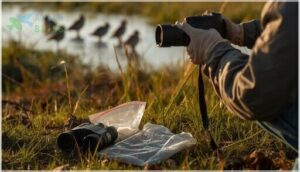
Wild birds carry H5N1 even when they look healthy, making avian flu prevention critical. You’ll want to observe birds from a distance rather than approaching them directly—this simple step dramatically reduces bird contact risks.
To protect yourself from avian influenza through proper wild bird handling and dead bird disposal:
- Never touch sick or dead birds with bare hands—71 confirmed U.S. cases since 2024 link back to animal contact
- Use disposable gloves or an inverted plastic bag when picking up carcasses
- Double-bag remains and dispose in regular trash following local biosecurity guidelines
Report unusual bird deaths to your state wildlife agency at 1-866-487-3297 immediately. If flu-like symptoms develop within 10 days of bird exposure, seek medical care. These bird safety tips form your first defense against transmission.
Proper Use of Personal Protective Equipment

Personal protective equipment forms your frontline defense against avian influenza when handling birds or contaminated materials. You’ll need a NIOSH-approved N95 respirator for respiratory protection, properly fitted safety goggles for eye protection, fluid-resistant coveralls, disposable gloves, and rubber boots.
PPE training is essential—learn correct donning and doffing procedures to prevent self-contamination. Incomplete glove usage or skipping eye protection doubles your infection risk during biosecurity and hygiene practices.
Cleaning and Disinfecting Equipment

Equipment sanitizing requires mechanical cleaning before disinfection—removing manure and debris cuts microbial load by 90%.
You’ll then apply EPA-registered disinfectants at labeled concentrations: 40–80% ethanol or 70% isopropanol achieves complete virus inactivation within 15 seconds. For heavily soiled surfaces, use 3–10% foaming detergents before disinfectant application.
Proper biosecurity and hygiene practices demand strict contact times and drying between steps to guarantee virus inactivation on all surfaces.
Food Safety Practices to Prevent Infection

What you eat matters just as much as how you handle it. The bird flu virus doesn’t survive high heat or pasteurization, which means your kitchen habits can be your strongest line of defense.
Here are three food safety practices that’ll keep you and your family protected.
Cooking Poultry and Eggs Thoroughly
Heat is your most reliable defense against avian influenza in the kitchen. Proper cooking transforms potentially contaminated food into safe meals through thermal inactivation—the science behind virus-killing temperatures.
Follow these poultry cooking tips and egg safety measures:
- Cook all poultry to 165°F (74°C) internally, checking the thickest part with a thermometer—color alone won’t confirm safety
- Heat egg dishes to 160–165°F (71–74°C) until yolks and whites are completely firm
- Avoid runny eggs and undercooked meat near bones, where virus particles may survive
- Use separate cutting boards for raw poultry and wash hands for 20 seconds before and after handling
These food handling practices provide a substantial safety margin, as research shows bird flu viruses die rapidly at standard cooking temperatures—often within seconds at 72°C.
Choosing Pasteurized Dairy Products
Just as temperature safeguards your poultry, pasteurization protects dairy from H5N1. During the 2024–2025 outbreak, infectious virus was detected in raw milk from infected dairy cows, yet 297 tested pasteurized products contained zero viable virus—only harmless genetic fragments.
| Dairy Type | H5N1 Status |
|---|---|
| Raw milk | Infectious virus present |
| Pasteurized milk | No infectious virus |
| Raw cheese | Virus survives 60+ days |
| Pasteurized cheese | Virus inactivated |
Standard pasteurization (72°C for 15 seconds) reduces H5N1 by 10,000-fold. Always verify “pasteurized” appears on labels—your simplest defense against milk-borne avian influenza and other pathogens.
Avoiding Raw or Undercooked Animal Products
Beyond dairy, raw or undercooked animal products from outbreak areas carry avian influenza risk. The WHO groups raw meat, eggs, and poultry as high-risk exposures—no confirmed H5N1 foodborne cases exist, yet proper cooking temperatures and pasteurization methods remain your strongest food safety tips against cross contamination:
- Cook poultry to 165°F to inactivate bird flu virus
- Never eat eggs with runny yolks during outbreaks
- Avoid raw meat risks from sick animals entirely
- Choose only pasteurized dairy—raw milk can harbor virus
- Separate raw and cooked foods to prevent cross contamination
Thorough cooking eliminates avian influenza along with Salmonella and other pathogens.
Biosecurity Measures for Bird Owners
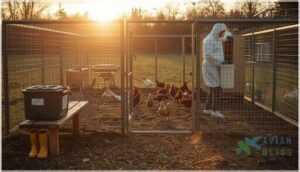
If you keep birds, strong biosecurity practices can make the difference between a healthy flock and an outbreak. These measures create protective barriers that keep avian influenza from reaching your birds in the first place.
Here are three essential biosecurity steps every bird owner should follow.
Limiting Access to Bird Flocks
Think of your flock as a fortress—every visitor is a potential breach. Strict flock access control and visitor restrictions form your first line of defense against avian influenza. You’ll dramatically reduce exposure risks by implementing these biosecurity measures.
| Access Barrier | Impact on Bird Flu Prevention and Control |
|---|---|
| Visitor logs | Tracks all property entrants, essential for backyard flocks |
| Restricted signage | Limits unauthorized contact with birds |
| 30-day quarantine protocols | Isolates new birds before flock integration |
| Essential personnel only | Minimizes biosecurity breaches during high-risk seasons |
Keep family and friends away from your birds. Limit contact to caretakers who follow public health guidelines and proper protective protocols.
Monitoring and Reporting Sick Birds
Vigilance saves flocks. Wild bird monitoring and avian influenza reporting protect your backyard birds and the broader poultry industry. You can’t fight what you don’t see coming.
Watch for these sick bird alerts daily:
- Sudden deaths—clusters signal avian influenza spread
- Respiratory distress or nasal discharge in multiple birds
- Swollen heads, twisted necks, or neurological signs
- Sharp drops in egg production across your flock
- Lethargy combined with purple discoloration of combs
Report unusual deaths immediately to your state veterinarian or USDA hotline (866-536-7593). Poultry disease tracking depends on your observations. Don’t wait—biosecurity requires action, not hesitation.
Disinfecting Clothing and Tools
Fomites carry the virus. Scrub boots free of manure, then immerse them in hypochlorite solution at shed entry. Launder protective clothing daily in hot water with standard detergent—machine drying completes viral inactivation. Dedicate separate garments to each poultry house.
Clean hand tools before moving between flocks: remove debris, apply approved disinfectant, and maintain contact time per label.
Biosecurity protocols demand consistent equipment sterilization and clothing disinfection to prevent avian influenza transmission.
Personal Hygiene and Protective Steps

You can’t always control where birds fly or what surfaces they touch, but you can control what happens after you’ve been around them. Simple hygiene habits act as your first line of defense against picking up the virus from contaminated hands, clothes, or equipment.
Here’s how to protect yourself through practical, everyday steps.
Frequent Handwashing Techniques
You can dramatically reduce your avian influenza risk with proper hand hygiene. Scrub your hands with soap and clean water for at least 20 seconds—covering palms, backs, between fingers, and under nails. This technique removes influenza viruses more effectively than shorter washing periods.
When soap isn’t available, use hand sanitizers with at least 60% alcohol. Always practice these hygiene practices after handling personal protective equipment or touching potentially contaminated surfaces.
Avoiding Touching Face After Animal Contact
Your hands become direct pathways for avian influenza after animal contact—studies show people touch their faces up to 45 times per hour, often contacting eyes, nose, and mouth. These self-inoculation methods bypass your body’s external defenses.
Even with personal protective equipment and hand hygiene practices, contamination control fails if you touch your face before washing.
Maintain face touch prevention as a critical biosecurity measure against zoonotic diseases.
Safe Disposal of Contaminated Materials
Contaminated materials become hidden vectors if you don’t dispose of them correctly. Your protective equipment, clothing, and cleaning supplies hold viral particles that spread avian influenza long after you’ve finished working. Following proper waste management protocols during a disease outbreak response protects both animal health and human safety.
Implement these disposal procedures immediately:
- Double-bag all disposable PPE using inverted plastic bags before placing in designated receptacles
- Launder contaminated coveralls onsite using hot water cycles with detergent before any transport
- Seal bird carcasses for burial within 24 hours or transport to permitted landfills coordinating with site managers
- Apply composting methods maintaining temperatures above 95°F for a minimum of 36 hours to inactivate the virus
- Clean reusable equipment thoroughly before applying EPA-registered disinfectants effective against influenza
These biosecurity measures prevent environmental contamination during zoonotic disease outbreaks. Following burial guidelines and landfill protocols stops viral spread beyond your property boundaries.
Vaccination and Medical Prevention Options

Getting vaccinated won’t shield you from H5N1 directly, but it’s still one of your best moves for staying ahead of complications. Right now, scientists are working on targeted bird flu vaccines while existing antivirals offer a safety net if you do get infected.
Let’s look at what’s actually available and when you should reach out for medical help.
Seasonal Flu Vaccine Benefits
Getting your seasonal flu shot cuts your risk of laboratory-confirmed Influenza A by 40% to 60%, and that immunity boost matters more than you might think. While it won’t protect against Avian Influenza directly, vaccination prevents coinfection scenarios and sharpens your body’s disease reduction response.
For those around birds or livestock, this simple flu prevention step reduces healthcare visits and hospitalization odds markedly.
Bird Flu Vaccine Development
Beyond seasonal shots, specialized Avian Influenza vaccines are advancing through clinical trials. Companies like CSL Seqirus and Moderna are ramping up vaccine production, with CSL delivering 4.8 million doses in 2024 and stockpiles aiming for 10 million by spring 2025.
Key developments include:
- mRNA platforms targeting H5N1 specifically
- Intranasal formulas showing promising Immunization Strategies
- Preclinical candidates countering Virus Mutation threats
- Government-funded Vaccine Development accelerating Vaccine Efficacy
These bird flu innovations could soon protect at-risk workers directly.
Antiviral Treatments and When to Seek Care
If symptoms appear after bird or animal exposure, contact your healthcare provider immediately. Oseltamivir (brand name Tamiflu) is the primary antiviral therapy—most effective when started within 48 hours of symptom onset.
Treatment timing matters: early Oseltamivir dosage can improve survival rates markedly.
Seek emergency care for shortness of breath, high fever, or consciousness changes. Call ahead so clinics can prepare for possible Avian Influenza evaluation and Bird Flu medication.
Community and Public Health Actions
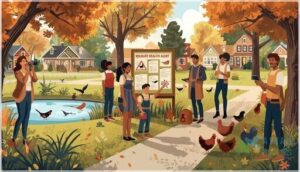
Keeping bird flu out of your community takes more than individual effort—it requires everyone working together. You play a critical role in monitoring local wildlife, alerting health officials when something seems off, and protecting the animals in your care.
Here’s how you can contribute to broader public health efforts while safeguarding your own household.
Reporting Unusual Bird Deaths
You play a critical role when you spot multiple dead birds in one location. Report five or more sick or dead wild birds immediately through your state’s online reporting portal or Wildlife Services hotline—these clusters often signal avian influenza outbreaks before they reach domestic flocks. Your timely report triggers rapid testing, strengthens wild bird surveillance systems, and protects backyard flocks and public health through early biosecurity interventions.
Key reporting priorities:
- Location clusters: Multiple bird deaths (≥5) at the same site within days
- Species matters: Waterfowl and shorebirds carry highest avian mortality risk
- Multiple channels: Contact state wildlife agencies, agricultural departments, and USDA Wildlife Services simultaneously
Following Local Health Guidelines
Your local health department updates avian influenza guidance faster than federal channels. Check your county website weekly for bird flu surveillance data, movement restrictions, and high-risk area designations.
Community compliance with local health messaging directly impacts pandemic preparedness through coordinated public awareness campaigns.
When influenza prevention protocols shift, you’ll receive biosecurity updates via text alerts if you’ve registered with your jurisdiction’s public health notification system for guideline adherence monitoring.
Protecting Pets and Other Animals
Pet safety measures are essential for controlling avian influenza. You can protect your animals and community with these steps:
- Keep pets indoors or supervised—limit wildlife interaction.
- Discontinue raw diets; use only pasteurized products.
- Separate pets from farm areas—practice farm biosecurity.
- Report sudden illness or death in pets.
- Restrict pet contact with potentially contaminated clothing or equipment—supporting pet isolation practices and animal health.
Frequently Asked Questions (FAQs)
How can you prevent bird flu?
Better safe than sorry—reduce your avian influenza risk through strict biosecurity measures, proper personal protective equipment when handling birds, thorough handwashing, cooking poultry to 165°F, avoiding sick animals, and getting seasonal flu vaccination for pandemic preparedness.
How can I prevent H5N1 bird flu?
You can prevent H5N1 by maintaining distance from sick birds, using proper PPE during high-risk handling, and implementing strict biosecurity measures.
Additionally, cooking poultry to 165°F and choosing pasteurized dairy are essential food safety practices.
How do I limit my exposure to bird flu?
You’ll reduce your risk by avoiding direct contact with sick or dead birds and livestock, wearing protective gear during farm work, and following strict handwashing protocols after handling potentially contaminated materials.
What should I avoid if I have avian influenza?
Experiencing symptoms? You should isolate for 14 days, avoiding public places, work, and school.
Don’t share personal items, skip fever reducers that mask worsening signs, and maintain distance from household members and sick animals.
Can oseltamivir be used to treat bird flu?
Yes, oseltamivir treats bird flu effectively. The CDC recommends 75 mg twice daily for five days in adults.
Early treatment within 48 hours maximizes survival, reducing mortality by approximately 49% in hospitalized H5N1 patients.
Can bird flu survive on clothing and shoes?
Virus survival on fabrics is surprisingly brief—roughly one day on clothing under typical conditions. However, rubber boots can harbor infectious particles for up to three days, making shoe decontamination and clothing disinfection critical biosecurity measures against fomite transmission and zoonotic diseases.
Is it safe to feed wild birds?
Feeding wild birds remains safe for most people when you follow basic hygiene practices. Songbirds carry low avian influenza risk, but you should clean feeders regularly and avoid handling sick or dead birds.
How long does bird flu last on surfaces?
The H5N1 avian influenza virus survives on surfaces from hours to days—about 26 hours on plastic and up to 7 days in bird feces under typical conditions, with cold temperatures extending persistence markedly.
Can indoor pet birds get bird flu?
While your feathered friend stays safely inside, contaminated shoes, clothing, or feed can still bring the virus home.
Risk stays minimal with proper biosecurity—sealed food storage, dedicated indoor footwear, and routine surface cleaning protect your pet birds effectively.
Should I avoid parks with wild birds?
You don’t need to avoid parks entirely. The CDC rates public health risk as low for casual visitors.
Keep distance from wild birds, don’t touch sick or dead animals, and wash hands after outdoor activities.
Conclusion
Protection persists through preparation, not panic. Your daily decisions—disinfecting boots, cooking poultry completely, reporting sick birds—form the first line of defense against a virus that doesn’t announce itself before it spreads.
These bird virus prevention tips work because they address every point where H5N1 meets human behavior. Stay vigilant with your flock management and food handling.
The barrier between exposure and infection exists in the protocols you practice consistently, not the ones you postpone.
- https://www.frontiersin.org/journals/veterinary-science/articles/10.3389/fvets.2025.1653543/full
- https://www.nature.com/articles/s41598-025-25351-3
- https://pmc.ncbi.nlm.nih.gov/articles/PMC11247270/
- https://www.aphis.usda.gov/sites/default/files/fs-manage-wildlife-prevent-ai.508.pdf
- https://www.propublica.org/article/bird-flu-airborne-usda-pandemic