This site is supported by our readers. We may earn a commission, at no cost to you, if you purchase through links.
Heated Teflon pans have killed pet birds in minutes—not hours—because a bird’s lungs never get a break from the air around them. Unlike mammals, birds push air through their respiratory system in one continuous loop, meaning every breath pulls whatever is floating in your home straight across sensitive lung tissue.
That same biology makes the wrong cage cleaner as dangerous as a lit candle in a gas-filled room. Most standard household products—bleach, scented sprays, even "fresh linen" surface wipes—leave chemical residue and fumes that overwhelm a bird’s airways long before you’d notice any smell yourself.
Choosing the right non toxic bird cage cleaning supplies protects your bird at the source.
Table Of Contents
- Key Takeaways
- Why Non-Toxic Cleaners Matter
- Safe Ingredients for Bird Cages
- Enzyme-based Cleaners for Droppings and Stains
- Fragrance-free and Low-residue Formulas
- PH-balanced Cleaners for Metal and Plastic Cages
- Biodegradable Ingredients and Eco-friendly Formulas
- White Vinegar and Water for Mineral Buildup
- Baking Soda Paste for Dried Messes
- Castile Soap for Gentle Cage Washing
- Hydrogen Peroxide for Careful Disinfection
- 10 Top Non-Toxic Cleaning Supplies
- 1. Absolutely Clean Bird Cage Cleaner
- 2. Natures Miracle Bird Cage Surface Cleaner
- 3. Absolutely Clean Bird Cage Cleaner Deodorizer
- 4. Stainless Steel Bird Cage Cleaning Set
- 5. Bird Cage Cleaning Brush Set
- 6. Oxyfresh Pet Crate Cleaner
- 7. Teladeshx Bird Cage Brush Scraper
- 8. Stainless Steel Bird Cage Scraper Brush
- 9. QBLEEV Bird Cage Cleaning Brush
- 10. QBLEEV Three In One Bird Brush
- Safe Bird Cage Cleaning Methods
- Daily Spot-cleaning for Droppings and Food Waste
- Weekly Deep-cleaning for Cages and Accessories
- Proper Dilution for Concentrated Cleaners
- How Long to Let Enzyme Cleaners Sit
- Wiping, Rinsing, and Drying Before Reentry
- Ventilation During and After Cleaning
- Cleaning Perches, Bowls, Trays, and Toys Safely
- When Steam Cleaning Works Best
- Choosing The Best Cleaning Supplies
- Cleaner Type: Spray, Concentrate, or Deodorizer
- Tool Selection for Tight Bars and Corners
- Surface Compatibility for Metal, Wood, and Plastic
- Odor Control Without Harsh Scents
- Ergonomic Handles and Long-reach Brushes
- Stainless Steel Versus Plastic Cleaning Tools
- Storage, Durability, and Easy Maintenance
- Best Supplies for Daily Versus Deep Cleaning
- Frequently Asked Questions (FAQs)
- What cleaning products are not safe for birds?
- What disinfectants are safe for birds?
- Can I use homemade cleaners for bird cages?
- How do I clean around a nervous bird?
- What temperature water works best for cleaning?
- Should I wear gloves when cleaning bird cages?
- How long should cages dry before returning birds?
- Can enzyme cleaners expire or lose effectiveness over time?
- Are bird cage cleaners safe for pregnant owners?
- How should cleaning supplies be stored near bird cages?
- Conclusion
Key Takeaways
- Birds’ lungs work like a one-way conveyor belt, so every airborne chemical you use hits their respiratory tissue directly and fast — there’s no buffer like we have.
- Bleach, scented sprays, and even "fresh linen" wipes are genuinely dangerous for birds; stick to fragrance-free, enzyme-based cleaners that break down waste without leaving toxic residue.
- A consistent two-step routine — daily spot-cleaning with an enzyme spray and a weekly deep clean with safe tools — keeps bacterial buildup and odor from ever getting out of hand.
- When picking cleaning supplies, pH-balanced, biodegradable formulas protect your cage’s metal, plastic, and wood surfaces while keeping your bird’s air clean — one choice that covers all the bases.
Why Non-Toxic Cleaners Matter
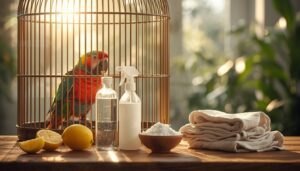
Your bird’s lungs are far more vulnerable than yours—what seems like a mild cleaner to you can be genuinely dangerous for them. Choosing the right products isn’t just about a clean cage; it’s about keeping your bird breathing safely every single day.
For a deeper look at what’s actually safe to use, this bird cage cleaning guide for healthy birds breaks it down product by product.
A clean cage isn’t just tidy—it’s the difference between your bird breathing safely or not
Before picking up that spray bottle, here’s what you need to know.
Birds’ Sensitive Respiratory Systems
Birds breathe differently than we do — and that difference matters. Their air sac dynamics push air continuously through the lungs, enabling cross-current gas exchange that exposes respiratory surfaces during both inhalation and exhalation. Their mucociliary defense helps clear debris, but particulate inhalation risk remains significant. Respiratory stress markers can appear quickly.
Here’s what makes their system so delicate:
- Air sacs increase exposure to airborne substances
- Continuous airflow means irritants reach lung surfaces longer
- Mucociliary clearance can be overwhelmed by chemical residues
- Sensitive tissues react faster than in mammals
That’s why avian respiratory safety depends on a nontoxic cage cleaner that’s genuinely safe for respiratory health — keeping your bird’s chemical-free environment a true priority. The heated Teflon toxicity case demonstrates how certain fumes can be instantly lethal to birds.
Risks of Bleach, Fumes, and Artificial Fragrances
That delicate respiratory system has real consequences when it meets bleach. Chlorine gas forms fast — even small residues trigger respiratory irritations in birds within minutes. Fragrance VOCs from scented cleaners linger as persistent odor buildup in enclosed spaces. Mixing chemical hazards accidentally? That is toxic aerosol exposure waiting to happen.
For avian respiratory safety, choosing chemical-free, fragrance-free products is not optional — it’s the baseline for safe cleaning for birds.
Benefits of Unscented, Bird-safe Formulas
Switching to unscented, bird-safe cleaning products makes a real difference. Fragrance-free, chemical-free formulas deliver a Lower Allergen Load, so birds with sensitivities breathe easier.
Bioenzymatic options improve Enhanced Air Quality without volatile residues on perches — that means Cleaner Perch Traction and Prolonged Cage Aesthetics over time.
Less chemical stress also promotes Minimized Behavioral Stress, keeping your bird calmer during routine cleaning.
Why Spray-and-wipe Cleaners Appeal to Buyers
Ready-to-use convenience is a big reason these cleaners are so popular. Just grab the bottle and spray product on soiled areas — no mixing, no measuring. That targeted spray control means you hit exactly the mess you see without soaking everything else.
Quick spot cleaning fits into any busy day, and no need to rinse saves even more time.
Low water footprint, easy to use, done.
Reducing Chemical Exposure During Routine Cage Care
Every time you clean your bird’s cage, you’re managing chemical exposure — for your bird and yourself. Wear protective gloves and use closed-system applicators to keep contact minimal.
Stick to bird-safe cleaning products with bio-enzymatic action, and follow up with water-only rinses.
Creating chemical-free zones around food dishes adds another layer of protection.
Small habits like exposure tracking help you stay consistent and safe.
Safe Ingredients for Bird Cages

Not every cleaning product on the shelf is safe for your bird, so knowing what’s actually in your cleaner matters. The right ingredients can get rid of droppings and odors without putting your bird’s respiratory system at risk. Here are the safest options worth keeping in your cleaning routine.
Enzyme-based Cleaners for Droppings and Stains
Enzyme-based cleaners function like a targeted cleanup crew, with each enzyme performing a specific role. Protease breaks down protein-based droppings, lipase tackles greasy residue, and amylase addresses food messes—demonstrating multi-enzyme synergy in action.
This bioenzymatic action ensures reliable odor neutralization without relying on bleach or harsh fumes. As a bird droppings remover, the solution is nontoxic and genuinely effective, even on older stains.
Fragrance-free and Low-residue Formulas
When choosing bird-safe cleaning solutions, fragrance-free doesn’t always mean scent-free. Some products use fragrance masking agents to hide odors without adding obvious perfume. That’s why reading the SDS matters.
Low-residue surfactants evaporate quickly, leaving less than 5% surface film after wiping. These solutions prioritize minimal residue to protect your bird’s health.
An enzyme-based cleaning formula built on bioenzymatic action delivers a chemical-free clean while meeting regulatory compliance standards your bird’s lungs will thank you for.
PH-balanced Cleaners for Metal and Plastic Cages
Think of pH like a safety dial for your cage materials. A pH-balanced cleaner sitting between 6.5 and 7.5 protects both metal and plastic surfaces without damage.
Here’s what neutral pH delivers:
- Corrosion Prevention — stops rust on steel bars and chrome fittings
- Color Retention — prevents plastic from hazing or fading over time
- Static Reduction — leaves smooth surfaces clean without charge buildup
- Durability Benefits — keeps hinges, bolts, and coatings intact longer
- Safe for birds — non-toxic cleaning agents mean no harsh fumes near sensitive lungs
Biodegradable Ingredients and Eco-friendly Formulas
What goes into your cleaner matters as much as what stays out. Today’s eco-friendly cleaning products rely on plant surfactants like coco-glucoside, natural enzymes, and renewable solvents that break down completely within days.
Bio-based preservatives replace synthetic ones without accumulating in waterways, while compostable packaging and concentrate formats cut plastic waste.
It’s a genuinely biodegradable cleaning formula — good for your home and the planet.
White Vinegar and Water for Mineral Buildup
Hard water leaves mineral rings around your bird’s water dish almost overnight. Plain white vinegar—diluted 1:1 with warm water—dissolves those deposits safely.
The warm water boosts the speed of acetic acid concentration, so the ideal contact time is just 10–30 minutes. Rinse thoroughly and avoid stone surfaces.
This method provides a chemical-free, non-toxic solution that’s genuinely safe for birds and their health and hygiene.
Baking Soda Paste for Dried Messes
Vinegar manages mineral buildup well, but dried droppings need something with a little more grip. That’s where a baking soda paste earns its place. For tough messes, mix three parts baking soda to one part water—your thickening ratio—to create a paste that clings effectively.
Let the paste sit (dwell-time: 5–15 minutes), then gently scrub with a soft brush. Rinse thoroughly, and you’re done. This method is a simple, chemical-free, non-toxic cleaning agent ideal for tackling caked, dried droppings in bird cages.
It serves as a reliable DIY cage cleaning option with a biodegradable advantage, ensuring safety and effectiveness without harsh chemicals.
Castile Soap for Gentle Cage Washing
Baking soda manages the tough stuff, but sometimes you just need a gentler wash. That’s where castile soap comes in—a plant-based, chemical-free option with an olive oil base that creates soft, gentle lather without harsh residue.
Use unscented varieties only. Essential oils are toxic to birds.
Here’s a simple approach:
- Mix 1 tablespoon of fragrance-free castile soap per quart of warm water.
- Scrub bars, trays, and perches using a soft brush for best results.
- Use clean rinse water—quality matters—and rinse twice to remove all soap film.
- Air dry completely before returning your bird.
These natural cleaning agents make castile soap one of the safest, most non-toxic options for routine cage washing.
Hydrogen Peroxide for Careful Disinfection
3% hydrogen peroxide works well for disinfecting metal and plastic cage surfaces. Spray lightly, allow a five-minute dwell time, then rinse thoroughly—residue inspection is important here.
Follow basic mixing precautions: never combine with vinegar. Store under proper storage conditions, away from light. Gloves are essential protective gear.
This remains one of the safer surface disinfectant choices within safe cleaning practices for pet birds.
10 Top Non-Toxic Cleaning Supplies
Finding the right cage cleaner doesn’t have to be overwhelming. These ten products cover everything from enzyme sprays to scrubbing tools — all vetted for avian safety.
Let’s walk through each one so you can pick what works best for your bird’s setup.
1. Absolutely Clean Bird Cage Cleaner

Absolutely Clean Bird Cage Cleaner is one of the simplest swaps for your bird’s safety. The 16 oz bottle uses natural enzymes to break down droppings and odors in just 2 to 5 minutes — no rinsing needed. It’s fragrance-free and veterinarian-approved, which matters given how vulnerable avian airways are.
Spray it on, wait briefly, then wipe. Safe on metal, plastic, and perches, it handles daily maintenance without exposing your bird to harsh chemical residues.
| Best For | Bird owners who want a safe, low-effort cleaner that handles daily cage maintenance without putting their pet at risk. |
|---|---|
| Product Type | Enzyme Spray |
| Bird Safe | Yes, vet-approved |
| Primary Material | Natural enzymes |
| Cage Compatible | Yes |
| Multi-Surface Use | Yes |
| Price (USD) | ~$14.99 |
| Additional Features |
|
- Natural enzymes break down dried droppings and odors fast — usually within a few minutes
- Vet-approved and bird-safe, so no need to worry about toxic residue after cleaning
- Works on multiple surfaces (cage bars, perches, upholstery, patio furniture), so one bottle does a lot
- Some users notice a distinct scent despite the fragrance-free claim, which may bother sensitive birds or people
- Heavily caked droppings might need extra dwell time — it’s not quite 100% effortless on tough buildup
- Occasional reports of bottles leaking in transit, which means you might get less product than you paid for
2. Natures Miracle Bird Cage Surface Cleaner
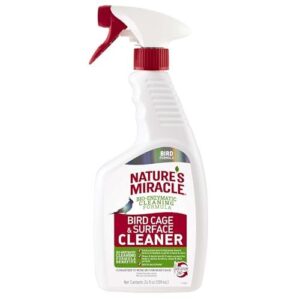
If you’re looking for something that does more than just clean, Nature’s Miracle Bird Cage & Surface Cleaner is worth keeping on your shelf. Its bio-enzymatic formula breaks down organic waste at the source — droppings, food debris, embedded odors — rather than covering them up.
The OdorCapture 360 technology neutralizes ammonia-based smells.
It’s unscented, so your bird’s sensitive air sacs stay protected.
Spray it on cages, perches, fabrics, or feeders.
At around $5.29, it’s practical, affordable, and genuinely bird-safe.
| Best For | Bird owners who want a safe, no-fuss cleaner that actually eliminates odors and breaks down droppings without risking their pet’s respiratory health. |
|---|---|
| Product Type | Enzyme Spray |
| Bird Safe | Yes, pet-safe |
| Primary Material | Bio-enzymes |
| Cage Compatible | Yes |
| Multi-Surface Use | Yes |
| Price (USD) | ~$5.29 |
| Additional Features |
|
- Bio-enzymatic formula dissolves organic waste and neutralizes ammonia smells at the source — no masking, just gone
- Unscented and bird-safe, so you’re not pumping harsh fragrances near sensitive avian airways
- Works on cages, perches, fabrics, carpet, and wood, making it handy across the whole house
- Needs 5–15 minutes of dwell time to work properly, so it’s not a quick wipe-and-go solution
- Can discolor porous wood or delicate finishes if left too long — always spot test first
- Only comes in a single bottle size, which gets inconvenient if you’re cleaning multiple cages regularly
3. Absolutely Clean Bird Cage Cleaner Deodorizer
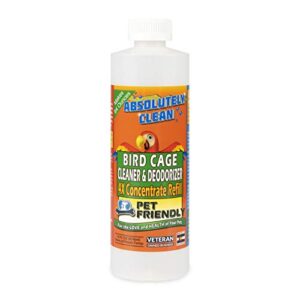
For bird owners seeking serious odor control without chemical worry, this deodorizer delivers. Its enzyme formula targets ammonia and organic waste at the source—eliminating odors rather than masking them.
Fragrance-free and designed for bird safety, it’s ideal since birds inhale nearly everything airborne. Spray directly on cages, perches, and bowls, let it sit briefly, then wipe clean. No rinsing is required in most cases.
Available in large 128-ounce bottles, it ensures you won’t run out mid-cleaning.
| Best For | Bird owners who want a safe, effective cleaner that handles tough messes like dried droppings and sticky residue without exposing their birds to harsh chemicals. |
|---|---|
| Product Type | Enzyme Concentrate |
| Bird Safe | Yes, vet-approved |
| Primary Material | Natural enzymes |
| Cage Compatible | Yes |
| Multi-Surface Use | Yes |
| Price (USD) | ~$23.99 |
| Additional Features |
|
- Enzyme-based formula actually breaks down odors at the source instead of just covering them up
- Super concentrated — one 16 oz bottle makes 64 oz of ready-to-use cleaner, so it stretches a long way
- Versatile enough to use beyond the cage on upholstery, patio furniture, and other household surfaces
- A few users noticed a chemical or faint herbal smell, which could be a concern for birds with sensitive respiratory systems
- Food and water dishes should be rinsed after use to avoid any residue — adds an extra step
- Cleaning results depend on giving it enough dwell time; rushing the process means it won’t work as well
4. Stainless Steel Bird Cage Cleaning Set
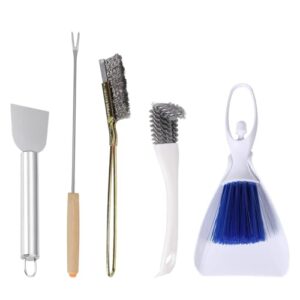
This five-piece stainless steel set tackles the physical side of cage cleaning, offering tools like a shovel, cage-post scraper, wire brush, multi-purpose brush, and a small broom. Each tool is sized for small to medium cages, ensuring practicality for various cleaning tasks.
The stainless steel construction resists rust and prevents odor absorption between uses, maintaining hygiene and durability. This material choice ensures long-term reliability without compromising cleanliness.
Each tool features a hanging hole, streamlining storage and keeping workspaces tidy. This design detail emphasizes convenience and organization.
Exercise caution with powder-coated bars, as the wire brush may damage surfaces if excessive pressure is applied. Gentle use is recommended to preserve cage finishes.
| Best For | Bird and small animal owners who want purpose-built tools to keep small- to medium-sized cages clean without the hassle of repurposing household items. |
|---|---|
| Product Type | 5-Piece Tool Kit |
| Bird Safe | Yes, no chemicals |
| Primary Material | Stainless steel |
| Cage Compatible | Yes |
| Multi-Surface Use | Limited |
| Price (USD) | ~$9.99 |
| Additional Features |
|
- Five dedicated tools cover every corner of the cage — from the bottom pan to tight cage-post gaps
- Stainless steel construction holds up to repeated scraping and won’t rust between cleans
- Hanging holes on every tool make storage dead simple, whether on a wall or the cage bars themselves
- The wire brush can strip protective coatings off delicate or powder-coated cage bars if you scrub too hard
- Too small for large aviaries or heavy-duty setups — these are hobbyist-scale tools
- Stainless steel edges can be aggressive on softer surfaces, so you’ll need a light touch in certain spots
5. Bird Cage Cleaning Brush Set
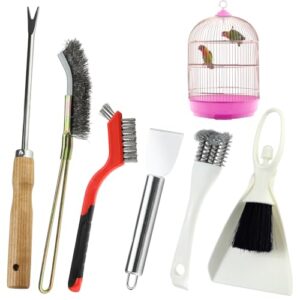
A good brush set is the workhorse of your cage cleaning routine. This six-piece kit includes a fork, two metal wire brushes, a smaller detail brush, a spatula, and a broom with dustpan — all at $13.49.
The wire brushes effectively reach tight corners and textured perches where droppings tend to hide. Built-in hanging holes ensure everything stays within arm’s reach between cleanings.
Stick to dry or lightly damp surfaces; wet cage bars can turn scrubbing into a smearing problem fast.
| Best For | Bird owners who want an all-in-one cleaning kit that handles everything from stubborn dried droppings to loose seed on the floor. |
|---|---|
| Product Type | 6-Piece Tool Kit |
| Bird Safe | Yes, no chemicals |
| Primary Material | Stainless steel & wood |
| Cage Compatible | Yes |
| Multi-Surface Use | Limited |
| Price (USD) | ~$13.49 |
| Additional Features |
|
- Six tools for $13.49 is solid value — you get a fork, brushes, spatula, and a broom/dustpan combo in one kit
- Wire brushes get into tight corners, perch grooves, and cage doors that a regular cloth just can’t reach
- Built-in hanging holes keep everything organized and easy to grab during daily cleanings
- Smaller brushes may struggle with bigger messes or larger cage styles
- Metal brushes can develop an odor over time and need careful inspection for rust or stray metal particles
- Only works well on dry or lightly damp surfaces — wet bars turn scrubbing into smearing fast
6. Oxyfresh Pet Crate Cleaner
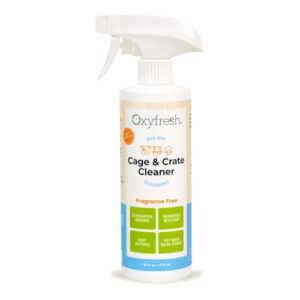
Oxyfresh takes a different approach to odor control. Instead of enzymes, it uses stabilized chlorine dioxide (Oxygene) to neutralize odor molecules on contact rather than masking them.
The formula is bleach-free, alcohol-free, and fragrance-free, which matters a lot for birds’ sensitive airways.
You just spray, wipe, and you’re done — no rinsing needed. It works on metal and plastic surfaces, and a standard 16-oz bottle keeps things simple for everyday cage maintenance.
| Best For | Bird and small pet owners who want a no-fuss, fragrance-free cleaner that’s gentle on sensitive respiratory systems. |
|---|---|
| Product Type | Enzyme Spray |
| Bird Safe | Yes, non-toxic |
| Primary Material | Natural enzymes |
| Cage Compatible | Yes |
| Multi-Surface Use | Yes |
| Price (USD) | ~$17.95 |
| Additional Features |
|
- Spray-and-wipe application means no rinsing — quick and easy for daily upkeep
- Completely free of bleach, alcohol, dyes, and fragrance, so it’s safe around birds and small mammals
- Works on both metal and plastic surfaces, making it versatile across different cage types
- Heavy or dried-on messes may need extra soak time and some scrubbing
- Not a disinfectant, so it won’t tackle microbial contamination on its own
- The bottle size can run out fast if you’re cleaning large enclosures regularly
7. Teladeshx Bird Cage Brush Scraper
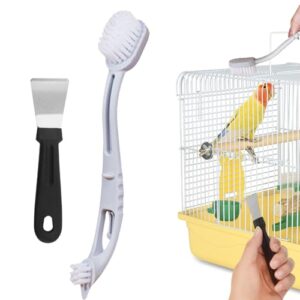
The Teladeshx Bird Cage Brush Scraper earns its place quickly. It combines a stainless-steel scraper and a brush head into a single long-handled tool, eliminating the need to fumble between two things mid-clean.
The scraper lifts dried droppings from tray bottoms without scratching, and the bristles sweep debris from the bars in the same pass.
At $6.78, it’s an easy add. Just rinse it with warm water after each use and let it air dry.
| Best For | Bird and small pet owners who want a no-fuss, affordable tool to keep cages and enclosures clean without a lot of effort. |
|---|---|
| Product Type | Brush & Scraper Kit |
| Bird Safe | Yes, no chemicals |
| Primary Material | Eco-plastic & steel |
| Cage Compatible | Yes |
| Multi-Surface Use | Limited |
| Price (USD) | ~$6.78 |
| Additional Features |
|
- Two interchangeable brush heads plus a stainless-steel scraper in one kit — no switching between tools
- Long handle reaches tight corners and narrow gaps without dismantling the cage
- At $6.78, it’s a low-risk buy that genuinely earns its spot in the cleaning routine
- No instructions included, so the purpose of some parts might leave you guessing at first
- Brush heads can wear down over time with heavy scrubbing
- The small overall size may not cut it for larger or deeper enclosures
8. Stainless Steel Bird Cage Scraper Brush

The Stainless Steel Bird Cage Scraper Brush delivers durability and versatility. Its dual-action head combines a wire-brush side for scrubbing and a flat scraper edge for lifting caked-on droppings — one tool, two jobs done.
At 11.8 inches long, it reaches deep into the cage, keeping your hands safely away from the mess. The stainless steel bristles resist rust and shedding, ensuring hygiene near food dishes.
The built-in hanging loop keeps the tool conveniently accessible between cleanings, streamlining maintenance.
| Best For | Bird owners who want a no-fuss, durable cleaning tool that handles both scrubbing and scraping without burning through disposable brushes. |
|---|---|
| Product Type | Dual-Action Brush |
| Bird Safe | Yes, no chemicals |
| Primary Material | Stainless steel |
| Cage Compatible | Yes |
| Multi-Surface Use | Limited |
| Price (USD) | ~$7.99 |
| Additional Features |
|
- Dual-action head means you’re not swapping between tools — wire brush for scrubbing, flat scraper for dried-on droppings, all in one
- Stainless steel bristles hold up to repeated use and won’t rust, so it stays hygienic near food and water dishes
- The hanging loop is a small thing that makes a real difference — it keeps the brush handy right on the cage between cleanings
- The bristles and scraper edge can scratch painted surfaces or wood, so you have to be careful if your cage has a coated finish
- At nearly 12 inches, it’s a bit bulky for very small cages where space is tight
- Heavy, caked-on messes can still give it trouble — some users find they need a smaller or more precise blade to really get into stubborn spots
9. QBLEEV Bird Cage Cleaning Brush
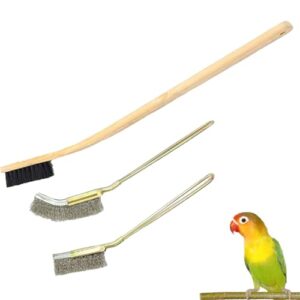
QBLEEV Bird Cage Cleaning Brush offers a comprehensive solution for thorough cleaning. The set includes three bamboo-handled brushes—long, curved, and narrow—each featuring stainless steel bristles that resist rust and prevent shedding into food dishes.
The curved head excels at reaching corners often missed by standard brushes, while the narrow wire brush tackles tight gaps between cage bars.
Priced at $11.99, this set is practical, reusable, and designed to pair seamlessly with unscented bird-safe cleaner.
| Best For | Bird owners who want a quick, no-dismantle weekly clean for parrot, parakeet, or canary cages—and anyone who needs a solid brush set for tight corners around the house too. |
|---|---|
| Product Type | 3-Brush Set |
| Bird Safe | Yes, no chemicals |
| Primary Material | Bamboo & steel |
| Cage Compatible | Yes |
| Multi-Surface Use | Limited |
| Price (USD) | ~$11.99 |
| Additional Features |
|
- Three brush shapes (long, curved, narrow) mean you can actually reach the spots that usually get skipped
- Bamboo handles keep things lightweight, and the stainless steel bristles won’t rust or shed into food dishes
- At $11.99, it’s a reusable alternative to going through disposable sponges every week
- The bristles are pretty sharp—easy to nick yourself or scratch a delicate cage finish if you’re not careful
- Handle length can fall short for deep or extra-tall cages
- Three brushes might not cut it for larger, more complex setups that need more coverage
10. QBLEEV Three In One Bird Brush
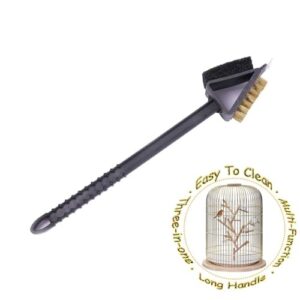
If the bamboo set feels like a specialized kit, the QBLEEV Three-in-One Bird Cage Cleaning Brush keeps things simple. One handle, three functions: a stainless-steel wire brush, nylon scrub pad, and flat metal scraper. At 14.2 inches long, it reaches deep into large parrot cages without awkward angles.
The scraper lifts dried droppings cleanly, while the nylon pad manages softer residue. This design ensures thorough cleaning for varied messes.
At $5.99, it’s an easy grab for daily spot-cleaning routines, offering practicality without complexity.
| Best For | Bird owners with large parrot or cockatiel cages who want a simple, all-in-one cleaning tool for daily spot-cleaning without spending much. |
|---|---|
| Product Type | 3-in-1 Brush |
| Bird Safe | Yes, no chemicals |
| Primary Material | Stainless steel & nylon |
| Cage Compatible | Yes |
| Multi-Surface Use | Limited |
| Price (USD) | ~$5.99 |
| Additional Features |
|
- Three tools in one handle — wire brush, nylon pad, and scraper — so you’re not swapping tools mid-clean.
- At $5.99, it’s genuinely cheap and easy to replace if it wears out.
- The 14.2-inch handle reaches deep into cage corners without you having to contort your arm.
- Some users reported it broke on the very first use, which is a red flag for durability.
- Metal bits or paint chips could flake off and land inside the cage — not great if your bird is a grazer.
- The fixed long handle makes it clunky in tight or low-angle spots where a shorter tool would do better.
Safe Bird Cage Cleaning Methods
Having the right products is only half the job — knowing how to use them makes all the difference. Your bird’s safety depends on a consistent cleaning routine, from quick daily touch-ups to a thorough weekly reset.
Here are eight practical methods to keep the cage clean, fresh, and safe for your feathered companion.
Daily Spot-cleaning for Droppings and Food Waste
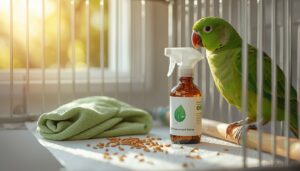
Daily spot-cleaning serves as your first line of defense. Rapid Dropping Removal—ideally within 60 minutes—prevents bacterial spread.
Use the Microfiber Wipe Method with an enzyme cleaner for avian cages: spray, wait briefly, then wipe clean.
Food Waste Tracking effectively prevents mold growth.
Non-toxic cleaning agents and spray solutions safe for birds simplify consistent spot scheduling.
Always finish with Tool Sanitization after each use.
Weekly Deep-cleaning for Cages and Accessories
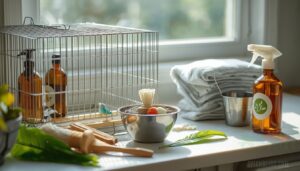
Once a week, take things further than a quick wipe-down. Cage Disassembly lets you reach every corner properly. Soak removable accessories—bowls, perches, toys—in a non-toxic cleaning agent or castile soap solution. Accessory Soaking loosens stubborn buildup without scrubbing.
After Enzyme-Based Cleaning for bird cages, Full Rinsing removes all residue. Tool Sterilization and a Post-Clean Inspection confirm everything is truly safe for birds before they return.
Proper Dilution for Concentrated Cleaners

Concentrated cleaners save money, but only if you mix them right. Always shake the bottle well before use — this activates the formula properly. Add water first, then your concentrated cleaning concentrate, to reduce splashing. Use a measuring cup for accuracy, and keep a ratio reference nearby.
Label your container clearly. Following the directions for use protects both your bird and your cage surfaces.
How Long to Let Enzyme Cleaners Sit
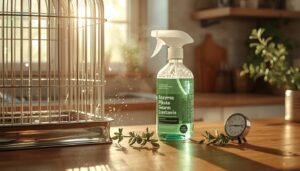
Enzyme-based cleaners for bird cages require time to work effectively. Most labels recommend letting the solution sit for at least 10 to 15 minutes. Hard plastic responds faster than porous wood, as surface dwell times vary significantly.
Moisture retention is critical: if it dries out, enzyme activity halts. For stubborn build-up, extended overnight application proves highly effective.
Ideal temperature around 20–30°C ensures the enzymes function optimally, maintaining their concentration effect at peak performance.
Wiping, Rinsing, and Drying Before Reentry
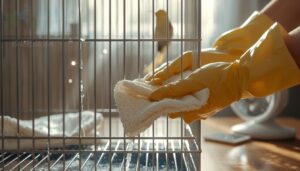
Once the enzyme cleaner has done its job, the real work begins—and the order matters.
- Start with a Top Down Wipe, using cloth rotation to avoid spreading mess back onto clean areas
- Use Cool Rinse Water to remove residue without warping materials
- Do a quick Moisture Inspection of bars, joints, and crevices
- Pat dry, then use Airflow Drying to finish
- Confirm surfaces are dry before reentry
Ventilation During and After Cleaning

Fresh air isn’t optional — it’s part of the cleaning process. Start cross ventilation before spraying, and maintain it for at least 20 minutes afterward. Airflow timing matters significantly, often more than people realize.
A HEPA air purifier or filtration system aids in capturing fumes when windows alone are insufficient. Prioritizing good air quality for pets involves reducing airborne toxins for birds at every stage.
Cleaning Perches, Bowls, Trays, and Toys Safely
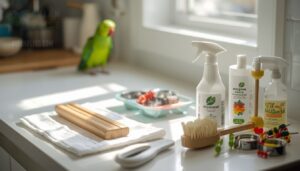
Each part of the cage needs its own approach. Wood Perch Treatment requires scrubbing with a soft brush using bird-safe cleaning solutions, then drying completely—moisture prevention is non-negotiable.
Stainless Bowl Care involves daily washing with non-toxic cleaning agents and thorough rinsing.
For Plastic Tray Hygiene, avoid abrasive scrubbers.
Toy Disassembly Cleaning works best with enzyme-based cleaning solutions for bird cages, applied to crevices using chemical-free, surface-safe cleaning agents.
When Steam Cleaning Works Best
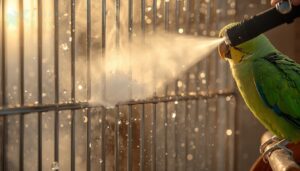
Steam works beautifully for deep cleaning bird cages, especially on metal bars with tough caked and dried droppings. It’s chemical-free and safe for birds when used correctly.
- Ideal temperature runs 200–230°F with steady pressure levels
- Pre-heat warm-up with hot water loosens stubborn residue first
- Allow a 30-second dwell time before wiping
- Surface age matters — newer cages handle heat better
Choosing The Best Cleaning Supplies
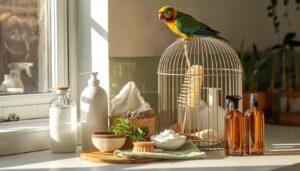
Not every cleaner or tool works the same way, and picking the wrong one can make cleaning day harder than it needs to be. The right supplies depend on your cage setup, your bird’s needs, and how often you’re cleaning.
Here’s what to look for before you buy.
Cleaner Type: Spray, Concentrate, or Deodorizer
Which cleaner type fits your routine best? Spray Efficiency wins for quick tasks—just point, mist, and wipe.
Concentrate Economics suit weekly deep cleans, as Custom Dilution allows strength adjustments.
Deodorizers with Deodorizer Longevity and OdorCapture 360 technology combat lingering smells between washes.
An Adjustable Nozzle targets tight spots, while chemical-free, bird-safe cleaning solutions ensure safety without guesswork.
Tool Selection for Tight Bars and Corners
Getting into tight corners is where most cage cleaning falls apart. That’s where the right tools make all the difference.
- Right-angle adapters and slim bar scrapers reach spots standard brushes miss
- Flexible shaft extensions and tri-corner brush heads handle inner corners with ease
- Magnetic pickers grab debris from crevices; long-handled brushes support deep cage cleaning
Multitool sets with ergonomic design and extended grips keep the whole job manageable.
Surface Compatibility for Metal, Wood, and Plastic
Not every cleaner plays nicely with every surface. Metal sealant durability holds up well with pH-balanced, ammonia-free formulas (ideally between 6.5 and 7.5). For wood finish preservation, use neutral, water-based agents that won’t warp soft grain. Plastic surface clarity requires avoiding abrasive cleaners entirely.
| Surface | What Works Best |
|---|---|
| Metal | Corrosion-free alloys + enzyme spray |
| Wood | Castile soap, thorough drying |
| Plastic | Non-chlorine, non-abrasive wash |
| Hybrid cage interfaces | pH-balanced, surface-safe cleaning agents |
Chemical-free options protect every material without compromise.
Odor Control Without Harsh Scents
Controlling cage odors doesn’t mean trading one problem for another. Harsh scents stress your bird’s airways just as much as the mess itself. The smartest approach targets odor at the source.
- Bioenzymatic cleaning breaks down droppings before they off-gas
- Fragrance-free, low-VOC formulas won’t irritate sensitive air sacs
- Activated charcoal and odor-binding clays absorb volatile compounds naturally
- Natural absorbents like baking soda neutralize odor molecules chemically
- Biofilm management with an odorless cleaner prevents bacterial regrowth
Odor neutralizing technology works quietly — no fumes, no stress.
Ergonomic Handles and Long-reach Brushes
Reaching inside a large cage without straining your back starts with the right tool. Long-handled brushes for deep cage cleaning extend 24 to 36 inches, so you’re not contorting to hit far corners.
Textured slip-resistant grips and ergonomic design reduce grip fatigue greatly. These features ensure comfort and control during use.
Adjustable shaft lengths, counterbalance weighting, and replaceable brush heads make these lightweight and compact cleaning tools genuinely worth owning.
Stainless Steel Versus Plastic Cleaning Tools
Stainless steel wins on almost every front. It offers corrosion resistance, heat tolerance, and stiffness retention that plastic simply can’t match.
Unlike plastic, steel won’t develop micro-scratches that trap bacteria or absorb odors from non-toxic cleaning agents.
It stays inert with bird-safe cleaning products, so there’s no risk of chemical leaching onto cage surfaces.
For durable stainless steel tools for pet cage maintenance, it’s the smarter choice.
Storage, Durability, and Easy Maintenance
Modular Rack Systems and Space-Saving Brackets keep lightweight, compact cleaning tools organized and accessible. Quick-Swap Trays simplify rotation, supporting a Tool Hygiene Protocol between uses.
Durable stainless steel tools for pet cage maintenance resist wear and tear, while Corrosion-Resistant Fasteners ensure structural integrity.
Chemical-free options provide safer storage near your bird’s space.
Best Supplies for Daily Versus Deep Cleaning
Not every cleaning task needs the same tool. Daily care calls for Disposable Wipes, Microfiber Cloths, and Quick‑Dry Sprays to handle fresh droppings fast.
Weekly deep cleans require Long-handled brushes for deep cage cleaning and Enzyme-Based Cleaning for Bird Cages products. A simple Cleaning Frequency Chart paired with a Tool Rotation Schedule ensures consistency.
- Use Lightweight and compact cleaning tools daily for quick spot checks
- Switch to Safe chemical-free cage cleaning methods for weekly scrubs
- Rely on Eco-friendly bird cage cleaning products to protect your bird’s air quality
- Rotate tools regularly to prevent cross-contamination between sessions
Frequently Asked Questions (FAQs)
What cleaning products are not safe for birds?
Bleach, ammonia, scented fresheners, strong degreasers, fabric fresheners, drain cleaners, household disinfectants, chemical cleaners, and toxic cleaning agents all release fumes that seriously harm your bird’s sensitive respiratory system.
Pesticides and quaternary ammonium compound (QAC) disinfectant cleaner products also release fumes that seriously harm your bird’s sensitive respiratory system.
What disinfectants are safe for birds?
Think of disinfectants like medicine — the right dose helps, the wrong one harms. Chlorhexidine solution, quaternary ammonium compounds, and diluted hydrogen peroxide are safe options when mixed and rinsed correctly.
Can I use homemade cleaners for bird cages?
DIY cleaning works well. Baking soda paste or diluted castile soap manages most messes safely.
Always label your mixtures, avoid combining ingredients, and watch your bird closely after cleaning.
How do I clean around a nervous bird?
Keep a consistent schedule so your bird knows what to expect. Approach from the side, use short sessions, and gentle brushing.
A calm approach protects your bird’s sensitive respiratory system throughout.
What temperature water works best for cleaning?
Warm water between 38–49°C (100–120°F) hits the sweet spot. It loosens droppings fast, keeps enzyme activity temperature ideal, and won’t warp plastic or irritate your bird’s sensitive airways.
Should I wear gloves when cleaning bird cages?
Gloves protect you, but they don’t make you invincible. Wear disposable gloves with good fit dexterity to guard your skin and prevent cross-contamination during bird health and hygiene routines.
How long should cages dry before returning birds?
Wait 45 to 90 minutes before returning your bird. Run your fingers along joints and corners — no dampness means it’s ready. Good ventilation cuts that window considerably.
Can enzyme cleaners expire or lose effectiveness over time?
Yes, enzyme cleaners do retire quietly over time. Enzyme potency decline usually begins after one to two years.
Heat or light degradation can accelerate this process, even before the expiration indicators on the label become visible.
Are bird cage cleaners safe for pregnant owners?
Most non-toxic, fragrance-free options are safer choices during pregnancy.
Always conduct product label checks, limit inhalation hazards by ensuring good ventilation, and stick to a safe cleaning schedule.
Use non-spray alternatives whenever possible.
How should cleaning supplies be stored near bird cages?
Store cleaners at least six feet from the cage in a lockable cabinet with a clear label system.
Use spill-resistant containers, keep them closed, and store them in a dry, cool place inside a dedicated tool bin.
Conclusion
Your bird’s lungs are an open window to everything in the air—what you clean with matters as much as how often you clean. The right non-toxic bird cage cleaning supplies remove the guesswork and the risk at the same time.
Enzyme cleaners, safe brushes, and fragrance-free formulas aren’t luxuries; they’re the baseline your bird deserves.
Keep the routine simple, stay consistent, and your bird’s environment stays genuinely safe.
- https://avianenrichment.com/staging/learn/physical-needs/safety/bird-safe-household-cleaning-products
- https://www.msdvetmanual.com/multimedia/table/common-household-poisons
- https://www.parrotproblemsolving101.com/bird-safe-cleaning
- https://bestfriends.org/pet-care-resources/bird-safe-cleaning-products-and-air-purifiers-birds
- https://petperchlove.wixsite.com/petlove/post/bird-safe-cleaning-solutions-what-to-use-and-what-to-avoid