This site is supported by our readers. We may earn a commission, at no cost to you, if you purchase through links.

When temperatures drop below freezing, birds face a silent killer that’s often more dangerous than the cold itself: dehydration. While most backyard birders stock their feeders with high-energy seeds and suet, they overlook a critical fact—birds need liquid water daily to metabolize food, regulate body temperature, and maintain their insulating feathers. A chickadee might survive days without food, but just hours without water in severe cold can prove fatal.
Learning how to heat bird baths safely transforms your backyard from a seasonal feeding station into a genuine winter refuge. The right approach combines thermostatic controls, proper electrical safeguards, and strategic placement—keeping water accessible without creating hazards for the very creatures you’re trying to help.
With heated bird baths now available in energy-efficient models that cost mere pennies per day, providing this lifeline doesn’t require significant expense, just informed choices about equipment and installation.
Table Of Contents
- Key Takeaways
- Why Safe Bird Bath Heating Matters
- Safe Methods to Heat a Bird Bath
- Essential Safety Features for Bird Bath Heaters
- Top 9 Heated Bird Bath Products for Winter
- 1. K&H Birdbath Deicer Ice Eliminator
- 2. Farm Innovators Heated Bird Bath
- 3. API Heated Bird Bath Winter
- 4. API Utility Bucket De Icer
- 5. Farm Innovators Bird Bath De-Icer
- 6. K and H Bird Bath Deicer
- 7. SYSAI Heavy Duty Birdbath De-icer
- 8. Farm Innovators Submersible Water De Icer
- 9. All Seasons Heated Bird Bath
- Installation and Maintenance Best Practices
- Energy Efficiency and Cost Considerations
- Frequently Asked Questions (FAQs)
- Conclusion
Key Takeaways
- Dehydration kills winter birds faster than starvation because frozen water sources eliminate liquid access, making heated bird baths a critical survival tool that requires thermostatically controlled heaters with UL or CSA certification to prevent electrical hazards.
- Safe heating depends on enclosed heating elements, GFCI-protected outlets, outdoor-rated cords, and automatic shutoff features, with most energy-efficient models drawing just 50-80 watts and costing pennies per day when thermostats cycle on only near freezing.
- Water depth should stay between 1-2 inches for safety, requiring daily level checks to prevent overheating from exposed elements, while regular cleaning every 1-2 days with diluted bleach prevents bacterial diseases like Salmonellosis.
- Strategic placement in full sun 6-10 feet from feeders combines passive solar heating with thermal mass materials like dark stones, reducing energy costs while attracting diverse species that might otherwise skip traditional seed feeders.
Why Safe Bird Bath Heating Matters
When winter’s freeze locks up natural water sources, birds face a survival challenge that goes beyond finding food. Providing heated water isn’t just a nice gesture—it’s often the difference between life and death for your backyard visitors.
Let’s look at why keeping a bird bath safely heated throughout the cold months matters so much for the birds that depend on it.
Preventing Dehydration and Supporting Bird Survival
Understanding winter bird survival starts with recognizing their urgent hydration needs. Birds must drink at least twice daily, yet frozen sources eliminate access to liquid water. Dehydration threatens survival faster than starvation, as cold air increases respiratory water loss and energy demands during shivering thermogenesis.
In winter, dehydration kills birds faster than starvation—frozen water sources threaten survival within days
Heated baths provide critical water access, supporting:
- Essential daily hydration preventing rapid dehydration
- Thermoregulation during energy-intensive warming
- Metabolic processes aiding digestion
- Alertness for predator avoidance
- Overall avian hydration and safe winter bird care
To conserve energy, birds will also fluff their feathers.
Importance of Open Water for Winter Birds
When frozen lakes and ponds turn your region into an ice-locked landscape, open water becomes scarce for weeks or months. In northern areas, surface freshwater can freeze for over 100 consecutive days, forcing birds to travel kilometers between remaining water patches—burning calories they can’t spare.
Your heated bath transforms into an important oasis, supporting winter bird survival and reducing energetic costs when natural sources disappear. The Cornell Bird Lab endorses heated bird baths as part of winter bird care.
Benefits for Feather Maintenance and Health
That open water does more than quench thirst—it’s your birds’ spa and pharmacy rolled into one.
Bathing aids feather maintenance by:
- Improving feather waterproofing through oil distribution during preening
- Loosening dirt and enabling parasite removal from plumage
- Providing keratin hydration that restores bent feather structures
- Maintaining insulation quality by keeping feathers aligned and fluffy
- Offering molting support by softening emerging pin-feather sheaths
Clean, well-maintained plumage directly improves winter bird survival by reducing heat loss and energy costs.
Attracting a Variety of Bird Species
When seed feeders go quiet, your heated bath becomes the neighborhood gathering spot. Species diversity jumps when you offer open water—attracting a variety of winter birds that might skip your feeders entirely.
Rural richness studies show heated baths draw an impressive winter bird population variety, from cardinals and bluebirds to uncommon species like Northern Flickers and American Robins. These social hubs support species richness when natural sources freeze solid.
| Feeder Visitors | Bath-Only Visitors |
|---|---|
| Chickadees, finches | American Robins |
| Cardinals, sparrows | Northern Flickers |
| Goldfinches | Northern Mockingbirds |
| Wrens | Bluebirds (winter) |
Safe Methods to Heat a Bird Bath
Keeping your bird bath ice-free during winter doesn’t require complicated equipment or expensive systems. You have several practical options that range from electric heaters with built-in safety features to simple, no-power solutions that work with nature.
Let’s look at the most effective and safest methods you can use to provide open water for birds all winter long.
Thermostatically Controlled Heaters

You don’t want a heater running full blast all winter, wasting energy and money. Thermostatically controlled heaters solve this by activating only when water temperatures drop near 32–40°F, then cycling off once it’s above freezing.
These units meet UL or CSA Safety Standards, ensuring safe bird bath heating solutions. Most models draw just 50–150 watts, minimizing Energy Consumption while providing reliable Winter Performance and excellent Material Compatibility with plastic or metal baths.
Submersible and Immersion Heaters
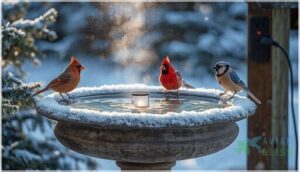
Submersible heaters sit directly in the water, with fully enclosed heating elements that prevent electrical shock while providing Weather Resistance through waterproof construction. These safe bird bath heating solutions feature Thermostat Activation that reduces Energy Consumption by cycling on only near freezing.
Look for Safety Certification from UL or MET labs, and follow Operational Practices like using GFCI outlets and monitoring water levels to guarantee proper thermostat control and safety through sound electrical safety practices.
Solar Heating Solutions and Thermal Mass

Solar heating solutions utilize passive solar energy through dark surfaces that absorb sunlight, warming the water naturally. Adding black rocks or bricks creates thermal mass that stores heat during the day and releases it slowly at night, delaying ice formation.
Material choice matters—heavy stone or metal basins retain warmth better than plastic. Solar circulation pumps keep water moving, further reducing freeze risk while minimizing energy costs.
Strategic Placement for Maximum Sun Exposure
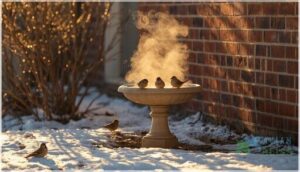
Think of sunlight as free heating for your bird bath. Strategic placement in full sun—especially near heat-retaining structures—maximizes solar heating and complements thermal mass materials already in the basin.
Position it where south-facing walls reflect warmth and wind shelter protects from drafts, creating microclimate benefits that slow freezing.
Keep the bath 10–15 feet from shrubs for predator distance while maintaining height visibility.
Essential Safety Features for Bird Bath Heaters
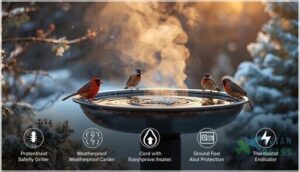
Not all bird bath heaters are created equal, and the difference between a safe model and a hazardous one comes down to specific design features. When you’re shopping for a heater, you’ll want to look for several key safety elements that protect both the birds and your home.
Here are the essential features that separate quality heaters from ones you should avoid.
Enclosed Heating Elements and Waterproof Design
The best bird bath heaters isolate live components from water using enclosed heating elements wrapped in fully insulated, cast aluminum shells. This waterproof construction meets immersion resistance standards—many pass IPX7 testing for 1-meter submersion—so you prevent electrical shock even when housing materials face splashing, snow, and rain.
Element insulation directs heat upward while built-in temperature control limits surface temperature, ensuring safe bird bath heater usage without exposing birds to energized parts.
UL and CSA Certifications
Look for UL or CSA marks—they’re your guarantee that testing standards have caught electrical hazards before you plug in. These certification bodies evaluate shock and fire risks, and combined listings like cULus mean one de-icer passes both U.S. and Canadian code compliance.
That third-party validation confirms safe bird bath heater usage, confirming insulation, leakage limits, and product implications for wet outdoor conditions.
GFCI Protection and Cord Safety
Plug your bird bath heater only into a GFCI-protected outlet—the 2020 National Electrical Code requires GFCI protection for most outdoor receptacles to prevent electric shock when moisture meets electricity.
Use outdoor-rated extension cords with intact insulation, route them clear of foot traffic and water pooling, and inspect monthly for cuts or heat buildup. These electrical safety steps address the most common electrical hazards around winter water features.
Automatic Shutoff and Overheat Prevention
Beyond GFCI protection, automatic shutoff mechanisms guard against electrical hazards by cutting power when heaters exceed safe temperatures. Thermostat control maintains water just above freezing, then shuts off—reducing energy waste by 50-70% while preventing overheating.
Look for UL or CSA design standards confirming these safety features, which meet rigorous testing for overheat technologies that protect both birds and your property.
Top 9 Heated Bird Bath Products for Winter
You’ll find a range of heated bird bath products designed to keep water accessible through even the coldest months, each offering different features suited to specific needs and budgets. From complete heated units to simple de-icer add-ons, these nine options provide reliable solutions backed by safety certifications and thermostat controls.
Here’s what works best for maintaining open water when your feathered visitors need it most.
1. K&H Birdbath Deicer Ice Eliminator
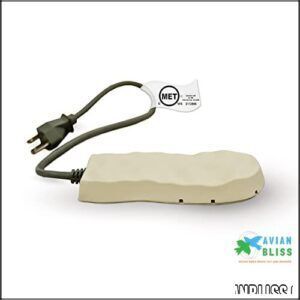
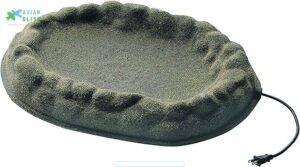
You’ll appreciate the K&H Birdbath Deicer Ice Eliminator for its practical reliability in harsh winters. This submersible design uses thermostatic control to activate automatically near freezing, conserving energy with just 50 watts of power consumption.
Its durable enamel coating resists corrosion and cleans easily, while the rock-like appearance blends naturally into your backyard. MET Labs safety certification ensures it exceeds USA and Canada electrical safety standards, protecting birds from electric shock.
When fully submerged, it maintains open water down to 20 degrees below zero, giving overwintering species a dependable drinking source.
Best For: Backyard birders in cold climates who want a reliable, energy-efficient way to keep water accessible for wild birds throughout winter without constant monitoring.
- Thermostatic control automatically cycles on and off near freezing, keeping operating costs low at around $5-6 per month while maintaining open water down to 20 degrees below zero.
- Durable enamel finish resists rust and mineral buildup, cleans easily, and can even be spray painted to match your birdbath’s color.
- MET Labs certified to exceed North American electrical safety standards with fully submersible, sealed construction that’s safe for plastic birdbaths.
- The 18-inch cord may be too short for birdbaths located far from outdoor outlets, requiring an extension cord.
- Must stay fully submerged to work properly, so you’ll need to monitor water levels during extended cold snaps.
- Only keeps a small area of open water rather than the entire birdbath ice-free, which may limit access for multiple birds at once.
2. Farm Innovators Heated Bird Bath
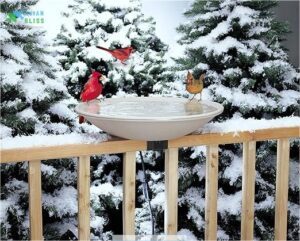
The Farm Innovators heated bird bath steps up to 75 watts, giving you stronger performance when temperatures plummet to -10°F. Its thermostat control cycles the element only when needed, keeping daily operating costs around 13 cents while preventing electrical hazards through a hidden, weather-protected connection.
The 15-inch plastic basin holds roughly one quart and offers three mounting options—deck post, clamp, or ground legs—so you can position it wherever birds gather.
User feedback highlights reliable ice prevention, though the shallow depth means you’ll refill more often in windy conditions.
Best For: Backyard birders in harsh-winter climates who need reliable ice-free water down to -10°F without running up their electric bill.
- 75-watt thermostat keeps water liquid in extreme cold while cycling off during milder stretches to save energy
- Three mounting options (deck post, clamp, ground legs) let you place the bath wherever birds visit most
- Hidden electrical connection and weather-resistant plastic design stand up to snow, rain, and freezing conditions
- Shallow one-quart basin requires frequent refilling in windy or dry weather
- Ground-leg mount feels less sturdy than the deck and post options, especially if you move the bath often
- Lightweight construction may tip in strong gusts unless you weight it down or use a fixed mount
3. API Heated Bird Bath Winter
At 50 watts, the API Birdbath Heater De-Icer gives you a compact 12-inch heated bird bath that keeps water open when temperatures dive below freezing. Its thermostatically controlled element activates near 40°F and cycles off automatically, saving electricity while preventing ice—helpful when you’re weighing energy consumption against reliable heating performance.
The weather-resistant plastic basin sits on a 30-inch metal stand, and its enclosed element earns CSA certification for electrical safety. You’ll find it straightforward to install on deck rails or anchor with ground stakes in your garden.
Best For: Bird watchers who need a reliable, energy-efficient heated bath to keep water accessible for birds and small wildlife through freezing winter weather.
- Thermostatically controlled 50-watt heater activates automatically below 40°F and cycles off to minimize electricity use while preventing ice formation
- CSA-certified enclosed heating element protects birds from direct contact with hot surfaces and shields components from weather damage
- Versatile installation with 30-inch rust-resistant metal stand, ground stakes for stability, and deck-mount option for closer observation
- Assembly can be challenging and the metal stand may prove unstable or prone to breaking with heavy use
- Mounting hardware isn’t always sturdy enough, and some users report difficulty leveling the bath properly
- May require purchasing additional outdoor-rated extension cords or waterproof connectors to safely reach power outlets
4. API Utility Bucket De Icer
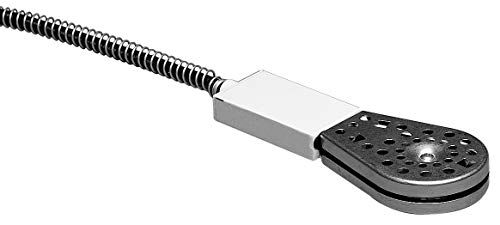
You’ll recognize the API Utility Bucket De-Icer (Model 250D) by its low-profile, finned aluminum design and 250-watt capacity, suitable for containers up to 30 gallons.
Its thermostat operation cycles on near 48°F and off at 66°F, conserving energy while maintaining open water—a practical choice when balancing energy consumption with reliable de-icer placement in bird baths.
The coated aluminum resists corrosion, offering material durability that withstands outdoor conditions, and cULus safety certification confirms electrical safety standards. The 6-foot anti-chew cord pairs well with GFCI outlets for added protection.
Best For: Bird bath owners and small-scale livestock keepers who need reliable freeze protection for containers up to 30 gallons without overspending on energy or oversized equipment.
- Thermostat cycles on at 48°F and off at 66°F, cutting energy waste compared to always-on heaters while keeping water from freezing.
- Coated aluminum construction resists corrosion and works safely in plastic containers, making it versatile for bird baths, buckets, and small stock tanks.
- CULus certified with a 6-foot anti-chew cord, meeting electrical safety standards and pairing well with GFCI outlets for outdoor use.
- Mixed durability reports, with some units failing after short periods or developing hard water scale buildup that affects performance.
- May struggle to keep water nipples or very small openings thawed in extreme cold, as the 250-watt output is sized for general container heating rather than pinpoint de-icing.
- Warranty and return issues noted by some customers, which can complicate replacements if the unit stops working prematurely.
5. Farm Innovators Bird Bath De-Icer
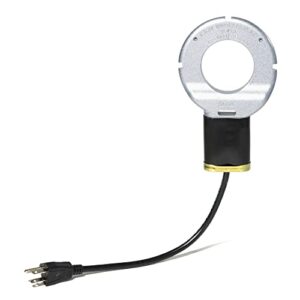
The Farm Innovators Bird Bath De-Icer offers two models: a 44-watt economy unit and a 150-watt cast aluminum version designed for harsher winters. The premium model features thermostat control, which activates near 35°F to minimize energy waste while ensuring water remains accessible even in -10°F ambient conditions.
Material safety is confirmed across plastic, concrete, and metal baths, and the three-year warranty underscores confidence in durability. For electrical safety, GFCI outlets and outdoor-rated cords are essential practices to protect both users and visiting birds.
Best For: Bird lovers in cold climates who need a reliable, energy-efficient way to keep birdbath water ice-free through winter without constant monitoring.
- Thermostat control cycles on near 35°F and off around 42–47°F, cutting energy use compared to always-on heaters
- Safe for plastic, concrete, and metal birdbaths with a heavy-duty cast aluminum build designed for outdoor durability
- Three-year warranty on the 150-watt model gives peace of mind for multi-season use
- Short cord typically requires an outdoor extension cord, adding setup hassle and potential connection points for weather exposure
- Some users report the unit only lasts one to two winters despite the warranty, suggesting mixed real-world durability
- Evaporation from warming water means you’ll need to refill the bath more often during cold snaps
6. K and H Bird Bath Deicer
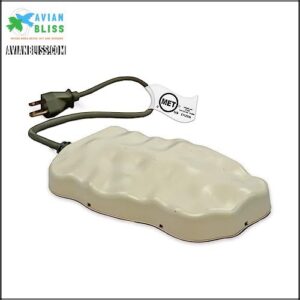
The K&H Bird Bath Deicer balances modest wattage with dependable performance, offering 50-watt and 80-watt models tested to maintain open water down to -20°F. Its thermostatically controlled design cycles on only near freezing, reducing energy consumption while preventing ice formation.
MET safety certification and enclosed heating elements ensure electrical safety across plastic, concrete, and metal basins. The enamel-coated housing resists corrosion, supporting multi-season durability.
For bird bath integration, this submersible deicer sits flat on the basin floor, blending naturally while providing essential winter hydration.
Best For: Bird lovers in cold climates who want to keep their bird baths ice-free without running up their electric bill.
- Thermostat cycles the heater on and off automatically, so you’re not wasting energy when it’s warm enough
- Works in concrete, plastic, and metal baths without melting or damaging the basin
- Keeps water open down to -20°F with the 80-watt model, giving birds reliable access to water all winter
- The 18-inch cord is pretty short and might not reach your outlet without an extension
- Some users report the unit failing earlier than expected, despite the warranty
- Won’t hold up in extreme cold below -10°F with the smaller 50-watt version
7. SYSAI Heavy Duty Birdbath De-icer
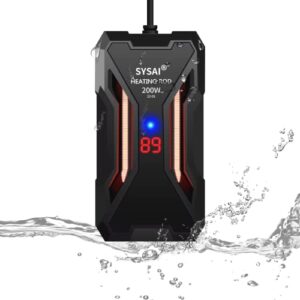
The SYSAI Heavy Duty Birdbath De-icer delivers 50 watts of thermostatically controlled heating performance through a fully enclosed cast aluminum plate, maintaining open water in standard bird baths down to freezing temperatures.
Safety controls include automatic shutoff when overheated and a waterproof PVC cord rated for sustained outdoor use.
This submersible deicer sits flat in metal, plastic, or stone basins, providing essential winter hydration while its thermostatic design minimizes energy consumption.
Installation requires full submersion and proximity to a GFCI-protected outlet for electrical safety.
Best For: Backyard birders who need reliable freeze protection for small birdbaths in moderate winter climates without running up their electric bill.
- Thermostatic control cycles heating automatically to save energy and prevent overheating
- Fully enclosed aluminum heating plate protects birds from direct contact with hot elements
- Compatible with metal, plastic, stone, and glass birdbaths for flexible placement
- 50-watt output may struggle in extremely cold regions or larger water volumes
- 4-foot cord requires nearby outdoor outlet or weatherproof extension
- Requires consistent water coverage above the heater to prevent damage from dry operation
8. Farm Innovators Submersible Water De Icer
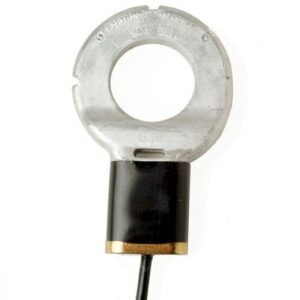
When cold snaps threaten to seal water sources, you need reliable heating that won’t compromise bird safety. The Farm Innovators Submersible Water De-Icer brings 500 watts of thermostatically controlled power to containers up to 50 gallons, activating near 35°F and shutting off around 45°F.
Its cast aluminum build houses enclosed heating elements, preventing direct contact while delivering consistent performance. This UL-listed deicer works in plastic, metal, or rubber bird baths, offering submersible heaters that balance wattage consumption with winter bird survival needs through automatic thermal cycling.
Best For: Bird owners and small livestock keepers who need dependable ice prevention in outdoor water containers without constant monitoring.
- Thermostatically controlled operation saves energy by cycling on only when temperatures drop near freezing
- Cast aluminum construction with enclosed heating elements keeps birds and animals safe from direct contact with hot surfaces
- UL-listed safety certification and waterproof design provide peace of mind for continuous outdoor winter use
- Some users report durability issues with units failing after short-term use
- 500-watt output may be excessive for very small bird baths, causing rapid evaporation and wasted energy
- Aluminum housing can develop mineral buildup when used with softened water, requiring periodic cleaning
9. All Seasons Heated Bird Bath
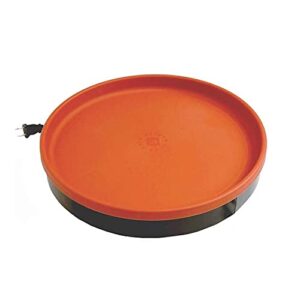
If you prefer a complete system over add-on heaters, the All Seasons Heated Bird Bath delivers deck-post, clamp, or ground mounting flexibility alongside a 75-watt thermostat-controlled element. Its terracotta powder-coated basin measures 14 by 14 inches, holding roughly a quart while concealing the electrical connection beneath the bowl—an advantage when birds perch along shallow edges.
Testing confirms open water at −10°F, and customer ratings average 4.7 stars.
Pair it with GFCI protection to prevent shock, and check water levels daily since evaporation accelerates in shallow heated designs.
Best For: Bird lovers who want a reliable, year-round birdbath with flexible mounting options and built-in heating instead of separate add-ons.
- Three mounting options (deck post, clamp, or ground legs) let you place it wherever birds feel safest in your yard.
- Thermostat-controlled 75-watt heater keeps water ice-free down to −10°F while only running when needed to save energy.
- Hidden cord routing through the base creates a cleaner look and keeps wires away from perching spots.
- Shallow 2.8-inch depth means you’ll need to refill frequently as water evaporates faster, especially on cold days.
- Some users report stability issues with the mounting bracket, so double-check your setup before winter hits.
- Cord may not reach your nearest outlet—budget for a quality outdoor-rated extension cord.
Installation and Maintenance Best Practices
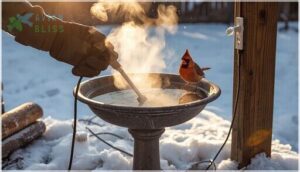
Getting your heated bird bath up and running safely requires more than just plugging it in and walking away. From choosing the right electrical setup to maintaining clean water throughout winter, each step plays a role in protecting both the birds and your investment.
Let’s walk through the essential practices that’ll keep your heated bath functioning reliably all season long.
Using GFCI Outlets and Outdoor-Rated Cords
When you’re working with electricity near water, GFCI protection isn’t optional—it’s essential for shock prevention and safe operation in wet outdoor conditions. These outlets detect electrical hazards and cut power instantly, reducing electrocutions by roughly 80%.
You’ll also need outdoor-rated extension cords marked with a “W” designation to withstand moisture and meet code compliance standards, preventing equipment risks.
Managing Cords and Ensuring Waterproof Connections
After you’ve chosen outdoor-rated extension cords and GFCI outlets, focus on weatherproof connections. Keep cord junctions off the ground, away from pooled water, and use connector covers to prevent electrical hazards.
Secure cords along posts or railings to avoid physical damage and wildlife interference. Regular cord inspection and smart cord placement make a real difference in bird bath safety.
Checking Water Levels and Preventing Overheating
Once your cords are secure, you’ll want to inspect water levels at least once daily when temperatures drop. Freeze-thaw cycles lower water faster than you’d expect, and partial heater submersion raises overheating risk.
To safeguard your setup:
- Maintain 2.5–5 cm depth to keep elements fully covered
- Watch for rim ice signaling low fill
- Test GFCI monthly alongside visual inspections
Thermostatically controlled units with automatic shutoff help maintain safe water temperature.
Regular Cleaning and Bacterial Prevention
Beyond daily water checks, you’ll need to scrub your heated bath every 1–2 days in winter to prevent biofilm and algae buildup. Warm, open water sustains bacteria even below freezing, raising disease risks like Salmonellosis.
Use a 10% bleach solution—1 part bleach to 9 parts water—let it sit 5 minutes, rinse thoroughly, and refill. Maintaining a healthy bird bath environment protects visiting species from preventable illness.
Inspecting Heaters and Cords for Damage
Check your heater and power cords monthly for cord damage signs—cracks, fraying, or discoloration that invite moisture intrusion and electrical shock prevention failures. Heating equipment causes roughly 52,000 annual U.S. home fires, so inspecting heating elements and cords isn’t optional.
If your GFCI protection trips repeatedly, the cord may be compromised. Repair or replace damaged components immediately to avoid the potential risks of bird bath heaters and prevent electrical hazards before they escalate.
Energy Efficiency and Cost Considerations
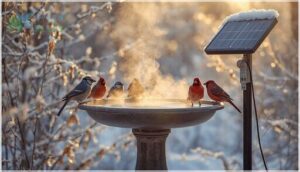
Keeping water ice-free for birds doesn’t have to drain your wallet or send your electricity bill through the roof. With the right equipment and a few smart choices, you can provide life-saving open water while keeping operating costs reasonable throughout the winter months.
Let’s look at how you can balance effective heating with energy efficiency, choosing models and practices that work for both the birds and your budget.
Choosing Low-Wattage, Energy-Saving Models
If you’re looking to trim your electricity bill while keeping water accessible, low-wattage bird bath heaters offer an attractive solution. Energy-efficient models generally consume 40 to 80 watts—far below older 150 to 250 watt designs—and can cost as little as 24 cents daily when running continuously.
- Power consumption: Most energy-saving de-icers draw between 44 and 80 watts, considerably reducing energy costs over winter.
- Cost savings: A 50 watt heater operating 24 hours may add around 29–30 dollars to your seasonal bill, compared to substantially higher costs from older, high-wattage units.
- Design features: Cast aluminum construction and insulated heating elements concentrate warmth upward, improving efficiency at lower wattages.
- Climate suitability: Low-wattage heaters work well in moderate climates down to about −10 °F, while extreme cold may require higher-wattage models.
- Wattage comparison: Energy-efficient 50 watt units can keep baths ice-free near 3 °F, proving that lower power consumption doesn’t sacrifice performance when matched to bath size.
Strategic product selection balances energy efficiency with your local winter temperatures, ensuring you provide reliable water without unnecessary power drain.
Thermostatic Controls to Minimize Power Use
Thermostatic control acts like a guard that switches your heater on only when temperatures approach freezing, cutting duty cycles and energy consumption by half or more.
A 50-watt thermostatically controlled unit might cost you just four to seven cents daily instead of fourteen, because temperature thresholds prevent unnecessary operation.
Power ratings stay low, safety features prevent overheating, and passive integration with sunlight further trims your bill.
Off-Season Storage and Extending Heater Lifespan
Proper offseason storage and heater longevity depend on cleaning techniques that remove mineral scale and organic residue before you pack equipment away. Three steps extend service life and maintain weatherproof integrity:
- Rinse with a 1:9 vinegar solution to dissolve limescale and improve heating efficiency.
- Air-dry for 24 hours to prevent corrosion on electrical contacts.
- Coil cords loosely and store in cool, dry locations to protect insulation from moisture and rodents.
Regular maintenance, bacterial prevention, and warranty guidance help your de-icer last multiple winters while reducing seasonal wear.
Balancing Effective Heating With Operating Costs
Wattage selection matters more than you might think—a 50-watt thermostatically controlled heater adds just 24 cents to your daily electric bill, while a 150-watt unit may triple power consumption without extra benefit in moderate climates.
You’ll slash energy costs by pairing low-wattage units with passive heating strategies: placement in direct sunlight, dark-colored basins, and insulation around the rim boost thermostat efficiency while your monthly expenses stay reasonable.
Frequently Asked Questions (FAQs)
Can I use hot water instead of a heater?
You can use warm water temporarily, but hot water poses thermal risks, including material damage from rapid temperature shifts, fast refreezing rates, and potential bird safety issues.
Energy-efficient bird bath heaters with ice prevention features offer safer alternatives.
How deep should the water be for safety?
How deep is safe enough? Keep winter bath depth between one and two inches—shallow enough for small songbirds to wade safely while still providing adequate water access to prevent dehydration and support larger species.
What temperature should the water stay at?
Keep your bird bath water between 35°F and 40°F—just above freezing. This ideal temperature prevents ice formation while avoiding thermal shock to birds, and thermostatically controlled bird bath heaters maintain it efficiently.
Do birds prefer moving or still water?
Birds strongly prefer moving water because it signals freshness and safety. Water circulation attracts species from greater distances, encourages bathing behaviors, and increases species diversity.
Design implications favor gentle flow for best bird bath appeal and ice prevention.
How close to feeders should I place it?
Place your bird bath at least 6–10 feet from feeders to reduce contamination risk and disease spread while maintaining bird visibility.
This spacing balances winter bird care, water access, and bird safety with window safety and predator avoidance.
Conclusion
When winter’s chill sets in, don’t leave your feathered visitors out in the cold—or worse, high and dry. Mastering how to heat bird baths safely means selecting certified equipment with thermostatic controls, maintaining proper water levels, and using GFCI protection without compromise.
These small investments in safety protocol deliver outsized returns, transforming your yard into a critical winter sanctuary where birds find not just survival, but a fighting chance to thrive until spring’s arrival.
- https://www.thebirdhousechick.com/products/heated-rock-birdbath-deicer-thermostat
- https://www.youtube.com/watch?v=Cji3SwngfcY
- https://joyofbirdwatching.com/all-your-heated-bird-bath-questions-answered/
- https://blog.nature.org/2022/01/31/should-you-provide-birds-water-in-winter/
- https://trace.tennessee.edu/cgi/viewcontent.cgi?article=6626&context=utk_graddiss