This site is supported by our readers. We may earn a commission, at no cost to you, if you purchase through links.
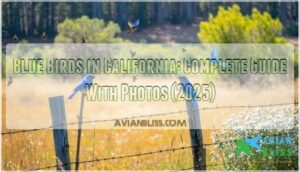 You’ll spot twelve stunning blue birds in California, from the vibrant Western Bluebird to the chatty California Scrub-Jay.
These feathered gems aren’t just pretty faces – they’re nature’s pest controllers and seed spreaders.
The Steller’s Jay rocks a punk-rock crest, while Tree Swallows perform aerial acrobatics that’d make Top Gun pilots jealous.
Indigo Buntings flash electric blue during breeding season, and Purple Martins arrive like tiny purple jets each spring.
Each species has carved out its own niche, from oak woodlands to coastal marshes.
Understanding their unique habits and preferred hangouts makes spotting these azure beauties much easier than you’d think.
Table Of Contents
- Key Takeaways
- Blue Birds Overview
- Blue Bird Species
- Blue Birds Identification
- Blue Birds Behavior
- Blue Birds Conservation
- Frequently Asked Questions (FAQs)
- What does it mean when you see a lot of bluebirds in your yard?
- What birds are mistaken for bluebirds?
- What is special about a western bluebird?
- What California bird looks like a blue jay?
- What birds in California are blue?
- How rare are blue jays in California?
- What birds look like blue jays in California?
- Do bluebirds live in California?
- How do blue birds choose nesting sites?
- What do blue birds eat in California?
- Conclusion
Key Takeaways
- You’ll find 12-14 blue bird species across California’s diverse habitats, from coastal marshes to mountain forests, including Western Bluebirds, Steller’s Jays, and Purple Martins that each occupy specific ecological niches.
- You can identify these birds by looking for key features like male vs. female plumage differences (males typically show brighter blues), distinctive markings such as wing bars or crests, and unique behaviors like aerial acrobatics or ground foraging.
- You’ll witness fascinating behaviors including seasonal migrations spanning thousands of miles, complex social interactions like the Woodhouse’s Scrub-Jay’s tick-removal partnership with mule deer, and specialized feeding strategies from hover-hunting to seed caching.
- You can support blue bird conservation by installing nest boxes, reducing pesticide use in your yard, participating in citizen science projects, and creating bird-friendly habitats with native plants and water sources to help combat habitat loss and climate change threats.
Blue Birds Overview

You’ll find 14 fascinating blue bird species across California’s diverse landscapes, from coastal marshes to mountain forests.
These birds range from tiny swallows to bold jays, with males typically showing brighter blue colors than their female counterparts.
Types of Blue Birds
California hosts an impressive fourteen blue birds california species, each bringing unique charm to the Golden State’s skies.
You’ll discover amazing Bluebird Varieties from tiny buntings to large jays, creating a rainbow of blue hues across diverse landscapes.
Their identification relies on plumage and size.
- Swallow Types: Barn and Cliff Swallows with metallic blue backs
- Kingfisher Species: Belted Kingfisher’s distinctive blue-gray coloring
- Bunting Diversity: Lazuli and Blue Grosbeaks with vivid azure plumage
- Jay Subspecies: Steller’s and Scrub-Jays displaying bold blue crests
- california bluebird species: western bluebird and mountain bluebird as true cavity nesters
Blue Bird Habitats
Blue birds california thrive across diverse environments throughout the Golden State.
Forest Habitats support Steller’s Jays in evergreen woodlands, while Urban Habitats welcome California Scrub-Jays.
Wetland Habitats attract Little Blue Herons and Belted Kingfishers near water sources.
Mountain Habitats provide ideal western bluebird habitat and mountain bluebird range at higher elevations.
Backyard Habitats with proper feeders can attract multiple california bluebird species to your property, including the western bluebird.
Unique Characteristics
When identifying blue colored birds in California, you’ll notice fascinating patterns that make each species unique.
Sexual dimorphism means males typically display vibrant blue bird characteristics while females show muted tones for camouflage during nesting.
Here are five distinctive traits to watch for:
- Plumage Variation – Males showcase brilliant blues while females often appear brown or gray
- Vocalizations – Each species has distinct calls, from jay screeches to bluebird warbles
- Nesting Habits – Some prefer tree cavities while others build mud structures
- Feeding Strategies – Insect hunters versus seed specialists show different foraging behaviors
- Social Behavior – Flocking patterns range from solitary pairs to massive congregations
These bird identification markers help distinguish California’s diverse blue-feathered residents.
Blue Bird Species

You’ll discover 14 distinct blue bird species that call California home, ranging from the metallic Barn Swallow to the sky-blue Mountain Bluebird.
Each species displays unique characteristics, from the Western Bluebird’s rusty chest to the Blue Grosbeak’s chestnut wing bars, making identification both rewarding and straightforward.
Barn Swallow
Glistening with cobalt blue above and tawny underside, you’ll spot California’s most abundant swallow darting over fields.
Cobalt wings flash overhead as California’s most graceful aerial acrobat hunts insects above golden meadows.
This blue colored bird’s forked tail makes bird identification easy during Swallow Migration season.
Barn Swallows excel at Foraging Behavior, catching insects mid-flight over Coastal Habitats.
Their Nest Building skills create mud cups on sheltered ledges, making them fascinating birds of california to observe.
The species has experienced significant population declines in recent decades.
Cliff Swallow
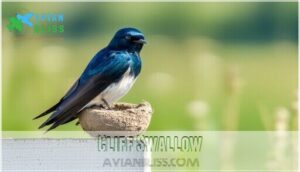
Under bridges and along California’s highways, you’ll spot Cliff Swallows building their gourd-shaped mud nests in massive colonies.
These social birds of California create impressive communal living spaces that can house thousands of individuals.
Here are five key identification features for bird watching California:
- Rust-colored face patches contrasting with dark blue backs
- Square tail distinguishing them from Barn Swallows
- Colonial behavior with hundreds nesting together
- Mud nesting structures attached to vertical surfaces
- Foraging habits involving aerial insect hunting in groups
Their Cliff Swallow diet consists primarily of flying insects caught during coordinated group flights.
Recently, however, there’s been a noted decrease in coordinated foraging behavior.
During Cliff Swallow migration, these remarkable Cliff Swallow flocks travel thousands of miles between breeding and wintering grounds, making them fascinating subjects for bird identification enthusiasts.
Western Bluebird
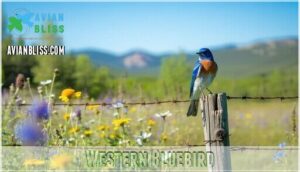
Western Bluebirds stand out among California’s blue birds with their striking plumage variation—males sport vibrant azure heads and rusty-orange chests.
You’ll spot these cavity nesters in oak woodlands and open areas throughout the state.
Their diet preferences include insects and berries, making them excellent pest controllers. California bird identification becomes easier once you recognize their distinctive coloring and nesting habits in tree cavities.
Mountain Bluebird
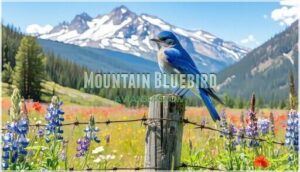
You’ll spot California’s only fully blue bird soaring through alpine habitat above 5,000 feet.
Sky-blue males shine like sapphires against mountain meadows, while females display subtle blue-gray tones.
These California native birds hunt insects from perches, adapting their high-altitude diet seasonally.
Cavity nesting in tree hollows or nest boxes, Mountain Bluebirds face conservation challenges from habitat loss in their specialized blue birds territory.
Blue Grosbeak

Among California’s stunning blue birds, you’ll find the Blue Grosbeak standing out with deep cobalt males and warm cinnamon-brown female plumage.
Their regional distribution spans southern California’s grasslands, where nesting habits include building cup-shaped homes in shrubs.
You can identify them by their distinct chestnut wingbars, and listen for their rich song variations during california blue bird sightings—they’re true california native birds worth celebrating, with preferences for sunflower seed at backyard feeders.
Blue Birds Identification
You’ll need to look for key features like wing patterns, body size, and color intensity to tell California’s blue birds apart.
Each species has distinct markings that make identification easier once you know what to watch for, considering factors like color intensity.
Recognizing Plumage

Bird plumage identification becomes your gateway to recognizing California’s stunning blue birds.
Male coloration typically displays the most vibrant blues, while female variations often show subdued browns and grays.
Juvenile plumage differs substantially from adults, and seasonal changes can alter appearances throughout the year.
Here’s what to watch for:
- Male vs. female differences – Males show brilliant blues; females display muted tones
- Age-related variations – Juveniles lack adult coloring patterns completely
- Regional differences – Coastal birds may appear darker than inland populations
Distinctive Features
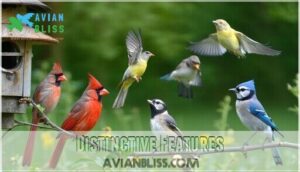
Beyond plumage variations, you’ll notice distinct size differences among California’s blue birds.
Male Blue Grosbeaks stretch seven inches while tiny Lazuli Buntings measure just five.
Listen for unique vocalizations – jays chatter loudly, bluebirds warble sweetly.
Check bird sizes against common objects for california bird identification, these bird identification tips help distinguish species when bird colors appear similar across different blue birds, using unique vocalizations and plumage variations to identify them.
Belted Kingfisher

When identifying California’s Belted Kingfisher, you’ll notice its slate-blue and white plumage with a distinctive heavy bill perfect for its fishing techniques.
Females display more vibrant rusty-red belly bands than males.
This medium-sized bird’s large crested head makes California bird identification easier.
Their Kingfisher diet consists mainly of fish caught through dramatic plunge-diving, though habitat threats from development concern their conservation status.
Purple Martin

Purple Martins stand out with their deep purple-blue plumage that catches sunlight beautifully. Males display rich, iridescent coloring while females show duller tones with grayish undersides.
You’ll spot these aerial acrobats in California’s open areas near water, where their Colony Dynamics create impressive group behaviors during breeding season.
- Martin Housing Requirements – They prefer elevated nesting sites in dead trees (snags) rather than traditional birdhouses in California
- Insect Diet Specialization – Watch them catch flying insects mid-air with incredible precision and agility
- Roosting Behavior Patterns – Large flocks gather at communal roosts, especially during Martin Migration periods
- Size Distinction – Largest North American swallow species, measuring 7-8 inches with distinctive forked tails
- Conservation Concerns – California’s Purple Martin populations face significant challenges, making sightings particularly special for bird identification enthusiasts
Tree Swallow

Gleaming with blue-green iridescence, you’ll spot Tree Swallows performing aerial acrobatics over California’s wetlands.
These streamlined birds catch insects mid-flight with remarkable precision.
Swallow identification becomes easier when you notice their distinctive white bellies contrasting sharply with metallic upperparts during bird watching sessions.
| Feature | Male | Female |
|---|---|---|
| Size | 5-6 inches | 5-6 inches |
| Swallow Diet | Flying insects, berries | Flying insects, berries |
| Swallow Habitat | Open fields, marshes | Open fields, marshes |
| Swallow Migration | Central America winters | Central America winters |
Blue Birds Behavior

You’ll discover that California’s blue birds show fascinating behaviors ranging from seasonal migrations to surprising animal partnerships.
From the Woodhouse’s Scrub-Jay helping mule deer by eating their ticks to Purple Martins gathering in massive roosts before heading south, these birds display complex social patterns and survival strategies.
Migration Patterns
When seasons shift, California’s blue birds follow ancient migratory patterns that span thousands of miles.
You’ll witness incredible journeys as these birds respond to migration triggers like daylight changes and temperature drops, traveling established bird migration routes between breeding grounds and winter destinations.
California’s blue bird migration faces modern challenges:
- Climate impacts disrupt traditional timing, leaving birds vulnerable during critical travel periods
- Migratory threats from habitat loss force birds into dangerous detours through unfamiliar territory
- Shifting weather patterns create unpredictable conditions that test even experienced travelers
These california wildlife movements showcase nature’s remarkable adaptability amid changing environments.
Unique Behaviors
California bluebirds exhibit fascinating behavioral patterns that’ll captivate any observer.
You’ll notice distinct foraging strategies among species, with mountain bluebirds hover-hunting while western bluebirds prefer ground gleaning.
Their social interactions vary dramatically during breeding seasons, and complex vocalizations serve multiple purposes from territory defense to mate attraction.
| Behavior Type | Western Bluebird | Mountain Bluebird | Blue Grosbeak |
|---|---|---|---|
| Foraging Strategies | Ground gleaning insects | Hover-hunting from perches | Seed cracking at feeders |
| Social Interactions | Pairs during breeding | Small flocks year-round | Secretive, solitary feeding |
| Mating Rituals | Wing-fluttering displays | Sky-dancing courtship | Singing from dense cover |
| Predator Avoidance | Quick flight to cover | Open-area vigilance | Brush pile retreats |
Steller’s Jay
You’ll recognize a Steller’s Jay by its striking blue body and bold black crest.
These intelligent birds thrive in California’s coniferous forests, demonstrating remarkable problem-solving abilities that set them apart from California Scrub Jay relatives.
Their complex vocalizations echo through Western Bluebird and Mountain Bluebird territories, while their varied diet preferences help maintain forest ecosystems across diverse Stellers Habitat zones, showcasing their ability to adapt and thrive.
Pinyon Jay
You’ll find Pinyon Jays traveling in massive, noisy flocks through California’s pinyon-juniper woodlands.
Their complex social behavior and constant vocalizations make them easy to spot.
These crestless blue birds depend entirely on pinyon pine seeds, planting thousands annually in their specialized habitat.
Unfortunately, their conservation status is vulnerable due to declining pinyon habitat from drought and climate change.
Woodhouse’s Scrub-Jay
Among California’s most fascinating birds, Woodhouse’s Scrub-Jay stands out for its remarkable tick removal behavior with mule deer.
You’ll spot these intelligent birds in pinyon-juniper woodlands, displaying complex social behavior and distinctive vocalizations.
Unlike the California Scrub-Jay, Woodhouse’s Scrub-Jay requires specific habitat needs in arid environments.
Their bird identification features include light blue coloring and unique symbiotic relationships with wildlife.
They also use food caching techniques for winter survival.
Blue Birds Conservation

You’ll discover that California’s blue birds face real challenges from habitat loss, climate change, and human development that threaten their populations.
Conservation programs now monitor these species closely through research efforts and habitat preservation projects that you can support in your own backyard.
Conservation Status
Most blue bird species in California face mixed conservation outlooks.
Western Bluebird and Mountain Bluebird populations remain stable thanks to ongoing conservation efforts.
However, habitat loss threatens several species across the state.
Population decline affects certain blue birds, particularly those requiring specific nesting sites.
Supporting California native habitats can help these birds thrive.
Bird conservation programs monitor these species closely, tracking changes in their numbers and distribution patterns throughout California’s diverse ecosystems.
Threatened Species
Currently, several California blue bird species face serious challenges from habitat loss and climate change.
You’ll notice population decline in Mountain Bluebirds due to pesticide impact on their insect prey. Western Bluebirds struggle with reduced nesting sites as old-growth forests disappear.
Bird conservation efforts now focus on these vulnerable species, implementing targeted conservation strategies to protect critical bird habitats before it’s too late. These strategies are often supported by NAWCA grants for wetland restoration.
These conservation efforts are crucial for the survival of the species, and it is essential to act quickly to address the issues of climate change and population decline.
Habitat Preservation
Protecting bird habitats in California directly impacts ecosystem health and population stability.
You can support nest box programs that provide safe breeding spaces for bluebirds. These conservation efforts focus on species distribution patterns and research ecology to identify critical areas.
Bird habitat protection requires preserving oak woodlands, grasslands, and riparian zones where California’s blue birds thrive throughout their lifecycles.
Consider purchasing bluebird nesting boxes to further aid conservation efforts and support the well-being of blue birds.
Research Efforts
Scientists across California conduct extensive bird research to understand blue birds better.
Ecology studies track habitat needs while distribution analysis maps where species live.
Population monitoring counts bird numbers each year.
Systematics research examines how different species relate to each other.
Vineyard programs study how wine country affects bird conservation efforts, helping protect these beautiful creatures.
Supporting Conservation
You can make a real difference in blue bird conservation through hands-on action.
Join Citizen Science projects to monitor Western Bluebird and Mountain Bluebird populations across California.
Support Nest Box Programs in your community and practice Reducing Pesticides in your yard.
Participate in Habitat Restoration efforts and advocate for bird conservation projects addressing Climate Change impacts on these beautiful species.
Frequently Asked Questions (FAQs)
What does it mean when you see a lot of bluebirds in your yard?
Seeing many bluebirds in your yard typically means you’ve created an ideal habitat with open spaces, insect-rich areas, and suitable nesting sites. It’s a positive sign of healthy ecosystem balance.
What birds are mistaken for bluebirds?
Several birds can fool you into thinking they’re bluebirds.
You’ll often mistake Indigo Buntings, Blue Grosbeaks, and Blue Jays for true bluebirds.
Even some female bluebirds look gray-brown, confusing identification efforts.
What is special about a western bluebird?
Ironically, while you might expect California’s "Western" bluebird to be unremarkable, it’s actually the state’s most prevalent bluebird species.
Males display striking deep blue heads and backs with distinctive reddish-orange chests that’ll catch your eye instantly, making them a notable sight with their deep blue coloration.
What California bird looks like a blue jay?
You’ll spot the California Scrub-Jay, which closely resembles a blue jay with its bright blue head, wings, and tail.
It’s got that same bold attitude and crest, making it California’s blue jay lookalike.
What birds in California are blue?
You’ll find 14 blue bird species throughout California, including Western Bluebirds, Mountain Bluebirds, California Scrub-Jays, Steller’s Jays, Blue Grosbeaks, Lazuli Buntings, Barn Swallows, and several others in diverse habitats.
How rare are blue jays in California?
Blue jays aren’t actually found in California.
You’ll spot Steller’s Jays and California Scrub-Jays instead.
These native species are common throughout the state, so you won’t have trouble finding them in forests and woodlands.
What birds look like blue jays in California?
Steller’s Jays share blue jays’ crested appearance but display black heads and darker blue bodies.
California Scrub-Jays lack crests entirely, showing lighter blue coloring with gray undersides.
You’ll spot these jay cousins throughout California’s diverse habitats year-round.
Do bluebirds live in California?
Like gems scattered across the Golden State, you’ll absolutely find bluebirds calling California home!
Three species thrive here year-round: Western Bluebirds, Mountain Bluebirds, and occasionally Little Blue Herons in wetland areas.
How do blue birds choose nesting sites?
Nesting sites depend on each species’ unique needs.
You’ll find some prefer tree cavities, others build mud nests under bridges, and many seek areas near water sources with adequate food supply and protection from predators.
What do blue birds eat in California?
Nature’s colorful diners feast like gourmet chefs, sampling diverse menus.
You’ll find them eating insects, berries, seeds, and small animals.
Their diet varies by species—swallows catch flying bugs while jays prefer nuts and fruits, which is a natural part of their behavior.
Conclusion
Spotting these magnificent blue birds in California will transform your backyard into a living kaleidoscope of nature’s finest artwork.
You’ve now got the knowledge to identify twelve stunning species, from the acrobatic Tree Swallow to the bold Steller’s Jay.
Remember, providing water sources and native plants helps these feathered gems thrive.
Whether you’re watching Purple Martins dive or listening to a Scrub-Jay’s calls, each sighting connects you deeper to California’s incredible avian diversity.
- https://birdsoftheworld.org/bow/species/moublu/cur/habitat
- https://www.sandiegobirdalliance.org/what-we-do/conservation-1/california-bluebird-recovery-program.html
- https://www.fs.usda.gov/Internet/FSE_DOCUMENTS/stelprdb5181951.pdf
- https://www.researchgate.net/publication/232671815_Nesting_success_of_Western_Bluebirds_Sialia_mexicana_using_nest_boxes_in_vineyard_and_oak-savannah_habitats_of_California
- http://naturemappingfoundation.org/natmap/ca/facts/birds/barn_swallow.html