This site is supported by our readers. We may earn a commission, at no cost to you, if you purchase through links.
You hang a wooden box on a tree, and within weeks, a bluebird family moves in. That simple act tackles a serious problem: natural tree cavities have disappeared from modern landscapes, leaving dozens of nesting box bird species without safe places to raise their young.
Cavity nesters like chickadees, wrens, and tree swallows evolved to nest in old woodpecker holes and rotting tree stumps, but development and forest management removed those options. The right nest box in the right spot offers these birds a lifeline. Different species need specific entrance hole sizes, mounting heights, and habitat settings to feel secure enough to nest.
Table Of Contents
Key Takeaways
- Cavity-nesting birds like bluebirds, chickadees, and wrens lost natural nesting sites when development removed old trees with woodpecker holes, making properly sized nest boxes essential for their survival.
- Different species need specific entrance hole diameters (1 inch for nuthatches, 1.5 inches for bluebirds, 2 inches for owls), mounting heights (4-15 feet), and habitat types (open fields, woodland edges, or lakesides) to successfully nest.
- You must clean boxes annually after fledging, monitor weekly during breeding season for predators and pests, and install boxes in late February through early May to align with natural nesting cycles.
- Nest boxes directly reverse population declines by providing breeding sites where natural cavities disappeared, and your monitoring data contributes to citizen science programs that guide conservation decisions.
Popular Bird Species for Nesting Boxes
Cavity-nesting birds rely on hollow spaces in trees or structures to raise their young, but you can give them a hand with well-placed nest boxes. Different species have specific needs based on their size, habitat, and behavior.
Here’s a look at the birds most likely to move into your nest boxes if you set them up right.
Bluebirds (Eastern, Western, Mountain)
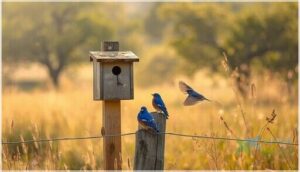
Eastern, Western, and Mountain bluebirds thrive when you offer nest boxes in open fields near scattered trees. These cavity nesters show impressive nesting success with proper birdhouses featuring 1.5-inch entrance holes. Their breeding habits depend on predator-safe boxes placed four to six feet high.
Bluebird migration patterns mean late winter installation works best. Monitor fledgling rates and nesting behavior to support feather care and healthy populations across North America.
To maintain accurate records of these observations, consider using clear science methods for data collection and analysis.
Tree Swallows and Violet-Green Swallows
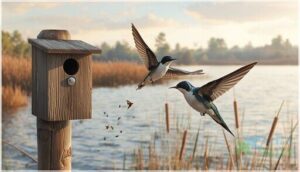
Tree Swallows and Violet-Green Swallows bring joy to lakesides and open woodlands when you install nest boxes that match their needs.
Tree Swallows prefer 1.125-inch entrance holes mounted eight to fifteen feet high near water, where flying insects are plentiful. Violet-green Swallow boxes need slightly larger 1.25-inch openings with predator guards on sturdy poles.
Both cavity nesters benefit from nesting box placement in open flight paths, supporting healthy bird migration and swallow behavior patterns. Understanding the main topic branches helps in creating effective nesting strategies.
Chickadees and Titmice
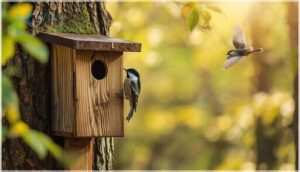
Chickadees and Titmouse species thrive when you offer nest boxes with 1.125 to 1.5-inch entrance holes mounted six to fifteen feet high. These small cavity nesters prefer deciduous forest edges with moderate canopy cover for their nesting box placement.
Install boxes facing away from harsh winter winds to support chickadee behavior and titmouse habitat preferences. Clean annually to boost bird conservation efforts while improving nest box design effectiveness for these beloved bird species identification favorites.
Wrens and Nuthatches
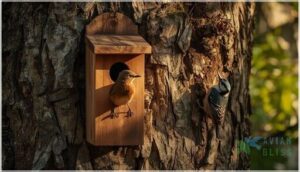
Wrens and nuthatches bring charm to your backyard when you match nest box designs to their cavity preferences. Wrens need 1.125 to 1.25-inch entrance holes, while nuthatches prefer smaller 1-inch openings that limit competition. Mount boxes six to twelve feet high in mixed woodlands for ideal bird species identification and nesting habits support.
Consider these nest box essentials for successful bird behavior observation:
- Use untreated cedar or pine with 6 to 8-inch cavity depths for wrens
- Install entrance baffles to reduce predation during sensitive breeding periods
- Face boxes east or southeast to catch morning sun and avoid afternoon heat
- Space boxes according to territorial ranges to minimize aggressive species interactions
Both groups show strong site fidelity once established, so proper nesting materials and thoughtful placement reward you with returning families season after season.
Owls and Purple Martins
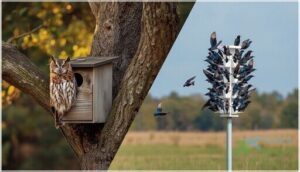
Owls and Purple Martins need specialized nest box designs that differ sharply from smaller cavity nesters. Martin colonies thrive in multi-compartment birdhouse structures on tall poles with 2-inch openings. Both nesting platforms require sturdy, weather-resistant construction and strategic placement near open foraging areas for consistent nesting success.
You’ll mount owl habitats ten to twenty feet high in woodland edges with 1.5 to 2-inch entrance holes for predator control.
European Garden Birds (Great Tit, Blue Tit)
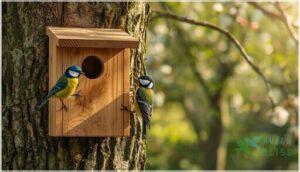
Great Tits and Blue Tits are popular European garden birds that readily occupy nest boxes in parks and wooded yards. You’ll need entrance holes around 25–28 mm for Blue Tits and slightly larger openings of 28–32 mm for Great Tits.
Mount boxes two to six meters high in sheltered locations near mature trees to support nesting success and improve bird-friendly habitat through backyard birding.
Nest Box Requirements by Bird Species
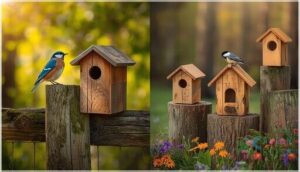
Each bird species has specific needs regarding nest box design. Getting the entrance hole size, box dimensions, and placement right makes all the difference in attracting your target species.
Here’s what you need to know to match the box to the bird.
Entrance Hole Size and Shape
Your entrance hole size directly determines which bird species can use your nest box and how safe they’ll be from predators. Small cavity nesters like chickadees thrive with 1.25-inch hole diameter openings, while bluebirds need 1.5 inches for comfortable access.
Circular entrance shapes with smooth edges prevent injuries and work better than slots for most species. Adding predator guards and weather protection around openings boosts nest safety considerably.
Box Dimensions and Materials
You’ll find that proper nest box size and wood selection make all the difference for cavity nesters. Interior dimensions usually measure 5 to 8 inches high, with cubic shapes working best. Choose untreated wood like cedar to avoid toxins.
Include roof design with 2 to 4 inch overhangs and ventilation systems near the top for temperature control when building nest boxes.
Placement Height and Location Preferences
Mounting your nest box at the right height directly affects which birds will move in and how safe they’ll be. Different species have distinct preferences for nest box heights and surroundings that match their natural nesting sites and bird nesting habits.
Consider these placement guidelines for successful nest box installation:
- Bluebirds thrive in open habitat with boxes mounted 4.0 meters or lower on poles away from overhead branches.
- Tree swallows prefer elevated placements near water, usually 1.5 to 3.0 meters high with clear flight paths.
- Chickadees nest comfortably at eye level in wooded areas with nearby tree proximity for cover.
- Urban boxes benefit from placement within 10 to 25 meters of hedgerows, providing shelter and foraging routes for fledglings.
Position boxes with accessible flight paths and minimal gaps where predators could reach the entrance, though predator guards deserve separate discussion.
Special Features for Predators and Weather Protection
Your nest box won’t protect nestlings without built-in defenses against predators and harsh weather. Predator guards like metal baffles reduce climbing access by up to 90 percent when installed correctly. Proper nest box ventilation prevents overheating, while drainage holes stop flooding. Entrance hole design, customized to specific bird species, blocks competitors and larger threats.
Weather resistance starts with overhanging roofs and rot-resistant materials that shield nesting sites from rain and temperature extremes.
Best Placement Practices for Nesting Boxes
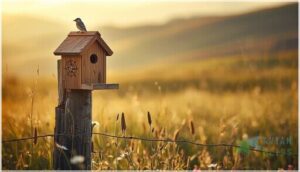
Placing your nest box correctly can make the difference between a thriving bird family and an empty box collecting dust. The right spot depends on the habitat your target species prefers, how you orient the box, and when you get it ready for nesting season.
Let’s look at the key factors that will help you choose the best location for your nest box.
Habitat Considerations (Open Fields, Woodlands, Lakesides)
Your habitat selection directly shapes nesting success for cavity nesters. Place boxes for bluebirds in open fields with short grass, ideally within 100 meters of a tree line for foraging.
Woodland edges attract chickadees and nuthatches to bird-friendly habitat. Near lakesides, tree swallows thrive where aerial insects are plentiful.
These conservation efforts support ecosystem balance while creating backyard habitat through wildlife gardening.
Spacing Between Boxes
Your bird-friendly habitat thrives when you follow box distance guidelines customized to each species. Eastern bluebirds need 100–150 meters between nest boxes, while chickadees do well at 20–40 meters in backyard habitat. Proper species spacing reduces territorial fights and predator avoidance improves with strategic nest box clustering.
Consider these spacing tips to prevent habitat fragmentation:
- Space bluebird boxes 100–150 meters apart in open farmland
- Position chickadee nesting boxes 20–40 meters apart in wooded yards
- Allow 30–60 meters between tree swallow boxes near water
- Maintain 25–50 meters for wrens and nuthatches in woodland edges
- Cluster purple martin boxes 10–20 meters apart for colony dynamics
Orientation and Shelter From Elements
You’ve spaced your nest boxes perfectly—now turn your attention to orientation and shelter from elements to create true bird friendly habitat. Face each nesting box entrance away from prevailing winter winds to reduce drafts and improve solar heating on cold mornings.
Add rain shelter with overhanging roofs and position boxes near natural cover for wind protection and climate control, while predator deterrents near entrances keep your nest box occupants safer year-round.
Seasonal Timing for Installation
Once your boxes face the right direction, think about installation windows. You’ll see the best results by setting up nest boxes in late February through early May before breeding seasons begin. That timing aligns with nesting cycles when cavity nesters arrive and scout for sites.
Climate considerations matter too—warmer regions see earlier activity, so adjust your habitat preparation to match local breeding season patterns.
Maintenance and Monitoring of Nest Boxes
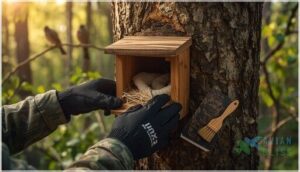
You can’t just put up a nest box and forget about it. Regular maintenance keeps your boxes safe and attractive for birds year after year.
Here’s what you need to do to monitor nesting activity and keep everything running smoothly.
Cleaning and Annual Inspection
Your nest box won’t serve birds well if it’s full of old nest debris and parasites. Regular box sanitizing keeps cavity-nesters healthy and keen to return.
Inspect each nesting box annually for cracks, rot, or loose hinges that compromise bird nesting habits and habitat. Clean after fledging using mild soap and water, then rinse thoroughly.
Document your maintenance scheduling findings to track nest cavities’ condition over time and verify inspection tools are ready.
Monitoring for Predators and Pests
Weekly checks during the breeding season let you spot predation attempts and pest infestations before they derail nesting box safety and bird nesting habits and habitat. Look for bite marks, enlarged entrance holes, or nest lining disruption that signals predator control concerns.
- Check for mites, beetles, and mold growth inside nest boxes to support pest management
- Document fresh gnaw marks or scratches indicating mammal or snake access attempts
- Note nest material disturbance or missing eggs as signs of predation pressure
- Photograph evidence of predators to improve wildlife conservation efforts and ecosystem balance
- Record pest presence patterns across multiple nesting box sites for conservation tips
Troubleshooting Common Nest Box Problems
When you notice abandoned eggs or soaked nest cavities, fast action matters. Most nesting failure events are caused by predator control failures, poor birdhouse installation angles, and drainage gaps. Box inspections often reveal cracks, loose hinges, or entrance holes chewed wider by squirrels. Apply these maintenance tips to ensure your nest box remains safe and dry for next season’s nesters.
| Problem | Solution |
|---|---|
| Water pooling inside | Drill 1/4-inch drainage holes in floor corners |
| Enlarged entrance holes | Install metal predator guards around openings |
| Overheating in direct sun | Relocate box to partial shade or add ventilation |
| Parasites after nesting | Remove old material and scrub interior annually |
| Loose mounting hardware | Tighten screws and replace rusted brackets immediately |
Recording and Reporting Nesting Success
Tracking what happens inside your nest boxes turns backyard observations into conservation outcomes. You’ll want to record fledgling rates, breeding season dates, and bird species diversity for each box using a standardized log.
Programs like NestWatch provide data collection tools that help you spot nesting trends over time. Your notes on completed nests, failures, and predator activity support nest monitoring efforts that inform habitat restoration decisions.
Conservation Impact of Nesting Boxes
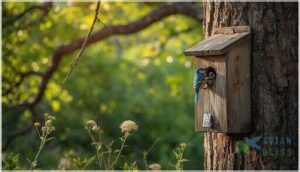
Nest boxes do more than shelter individual birds—they play a real role in reversing population declines and strengthening ecosystems. When you install and monitor boxes, you’re contributing to conservation efforts that scientists track and measure over time.
Nest boxes reverse bird population declines and strengthen ecosystems through conservation efforts scientists track over time
Let’s look at the specific ways your nest box project aids birds and their habitats.
Supporting Declining Cavity-Nesting Birds
Cavity nesters face serious habitat loss as old trees vanish from modern landscapes. Your nest box becomes a lifeline for struggling bird species when natural sites disappear. Conservation efforts show impressive results when you install boxes with proper design and placement:
- Eastern bluebirds rebound in areas where boxes replace lost nesting cavities
- Tree swallows gain essential breeding sites near water bodies
- Chickadees find refuge in boxes with 1.0 inch entrance holes
- Barn owls increase breeding pairs in agricultural regions with protective boxes
Your participation directly aids nesting success and ecological balance for declining cavity-nesting populations.
Enhancing Local Bird Diversity
Your nest boxes create biodiversity hotspots by attracting multiple cavity-nesting species to one location. Combine nest boxes with native plantings and bird-friendly gardens to offer ecosystem services beyond shelter.
This habitat creation bolsters urban wildlife while maintaining ecological balance in fragmented landscapes. You’ll notice wrens, bluebirds, and chickadees sharing your yard when you provide varied entrance sizes and thoughtful placement as part of broader bird conservation efforts.
Citizen Science and Community Projects
You can join citizen science programs like NestWatch to record nesting trends and occupancy data from your nest boxes. These programs rely on volunteer engagement to strengthen bird conservation efforts by providing researchers with community-generated observations across multiple regions.
The data standards established through these programs help track species abundance and breeding success. Additionally, community outreach initiatives connect neighbors through a shared conservation impact. Your monitoring efforts contribute to scientific knowledge that directly influences local habitat management decisions.
Long-Term Habitat Restoration Benefits
Beyond the data you collect today, your nest boxes build habitat resilience that strengthens conservation outcomes for years ahead. Study sites show cavity-nesting bird occupancy stays higher long after installation, gradually boosting biodiversity and species adaptation. These boxes restore ecological balance by supporting insect regulation and other ecosystem services. Wildlife habitat preservation gains momentum through sustained monitoring, improving conservation biology practices that boost biodiversity trends across your region.
- Occupancy increases persist across multiple breeding seasons at monitored sites.
- Local bird diversity improves as habitat creation restores foraging and nesting opportunities.
- Adaptive management uses long-term data to improve box designs for better survival.
- Ecosystem services like insect control grow stronger with stable breeding populations.
- Community engagement sustains habitat restoration through ongoing citizen science efforts.
Frequently Asked Questions (FAQs)
Can nest boxes attract invasive bird species?
Yes—poorly designed boxes can become magnets for aggressive non-natives like starlings and house sparrows, who outcompete bluebirds and chickadees.
Smart entrance holes and vigilant monitoring help you reclaim habitat for native species.
Do different bird species compete for boxes?
Competition dynamics among cavity nesters intensify when box availability is limited. Territorial bird species like bluebirds and swallows show exclusive nesting box occupancy.
Customized entrance holes reduce species interactions by matching specific cavity sharing preferences.
How do urbanization levels affect box usage?
Urban nesting patterns shift as cities grow. Studies reveal higher nest box occupancy in developed areas for some cavity nesters, driven by fewer natural cavities and altered predator pressures affecting habitat creation and restoration efforts.
What materials should be avoided in construction?
Skip Toxic Woods with chemical preservatives, Sharp Metals that overheat, Synthetic Linings trapping moisture, Hazardous Coatings off-gassing fumes, and Harmful Plastics when Building Nest Boxes—your Birdhouse Selection and Installation choices protect cavity nesters.
Are metal nest boxes safe for birds?
Metal boxes can overheat in direct sun and stress nesting birds. Wood or composite materials provide better thermal regulation and insulation. If you choose metal, add ventilation, drainage, and shade protection for bird safety.
Conclusion
Your backyard isn’t a telegraph station, but it can send a lifeline to nesting box bird species that lost their natural homes. Each box you mount becomes shelter for wrens, bluebirds, and chickadees struggling to find safe nesting sites.
Clean it annually, place it thoughtfully, and monitor what moves in. You’re not just watching birds—you’re rebuilding habitat one cavity at a time, giving these species the refuge they desperately need to survive and thrive.
- http://nestwatch.org/
- https://drive.google.com/file/d/0B5mjyGr0wTeDZ1VxQVQyaE4wTzQ/view?usp=sharing
- https://www.audubon.org/news/build-nest-box-welcome-spring-birds
- https://www.nabluebirdsociety.org/PDF/NABSFactsheetMonitoring.pdf
- https://www.pgc.pa.gov/InformationResources/GetInvolved/Pages/WildlifeHomePlans.aspx