This site is supported by our readers. We may earn a commission, at no cost to you, if you purchase through links.
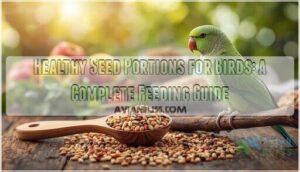
Most pet birds would happily gorge on sunflower seeds all day if you let them—but that’s like letting a kid eat nothing but candy bars. Seeds make up just one piece of a healthy bird diet, yet portion control remains one of the most misunderstood aspects of avian care. Too many seeds lead to obesity and nutrient deficiencies, while too few leave birds hungry and stressed.
Your bird’s size, species, and activity level all determine how much seed they actually need, and getting those healthy seed portions right can add years to their life. The good news? You don’t need a veterinary degree to nail the balance—just a few practical guidelines and the willingness to watch your bird’s body condition.
Table Of Contents
Key Takeaways
- Seeds should make up only 10-25% of your bird’s total daily diet, with pellets forming the nutritional foundation and fresh produce filling the gaps—overfeeding seeds leads to obesity and nutrient deficiencies despite full bowls.
- Proper seed portions depend on your bird’s size, species, and activity level, with juveniles needing more fuel during growth stages and winter months requiring increased portions to support thermoregulation.
- Different bird species have wildly different dietary needs based on their natural foraging patterns—oil-seed specialists, small-grain feeders, and hard-shelled seed lovers all require tailored portion sizes and seed varieties.
- Store seeds in airtight containers at 40-60% humidity and 39-59°F to prevent mold and rancidity, while cleaning feeders monthly and discarding uneaten portions after 48 hours to protect your birds’ health.
Why Proper Seed Portions Matter for Birds
Getting seed portions right isn’t just about filling a feeder—it’s about keeping your birds healthy, happy, and thriving for years to come. Too many seeds can lead to serious health problems, while too few leave birds malnourished and vulnerable.
Proper seed portions keep birds healthy and thriving—too many cause health problems, too few lead to malnutrition
Let’s look at three key reasons why portion control matters so much for your feathered friends.
Impact on Bird Health and Longevity
The balance you strike with seed portions directly shapes your bird’s health outcomes and lifespan. Avian nutrition studies show that proper seed diversity and nutrient balance support energy levels, body condition, and longevity factors in granivorous species. Young parrots especially benefit from high-quality formulated pellets that deliver the extra protein and energy their developing bodies require.
When dietary balance falters, you’ll see disrupted molts, weakened immunity, and stress on essential organs—clear signs that nutrient intake needs adjustment. Providing nutritionally complete wild bird food helps prevent deficiencies that lead to poor feather quality and compromised skeletal development.
Ensuring the accuracy of scientific summaries is essential, which is why researchers rely on methodological auditing to verify the validity of their findings.
Preventing Obesity and Malnutrition
Seed-only diets pack calories but skip essential nutrients, tipping birds toward obesity or malnutrition despite full bowls. Controlled portions, dietary diversity with pellets and fresh foods, and health monitoring through feather quality and activity levels keep nutrient balance on target and weight management effective.
You’ll need to track weight trends and body condition regularly—these reveal whether energy intake matches your bird’s needs. To find more information on specific words related to bird nutrition, consider searching language tools.
Species-Specific Dietary Needs
Different bird species have wildly different dietary needs—what nourishes a cardinal won’t suit a canary. Your parrot diet should mirror natural foraging patterns: some species thrive on oil-rich sunflower seeds, while others need tiny millet or grain.
Seed digestion and nutrient absorption vary by avian nutrition physiology, so match portions to your bird’s dietary adaptations:
- Oil-seed specialists need measured fat intake
- Small-grain feeders require frequent, smaller portions
- Hard-shelled seed lovers benefit from grit supplements
- Breeding birds demand protein-rich seed nutrition
Recommended Seed Types for Healthy Birds
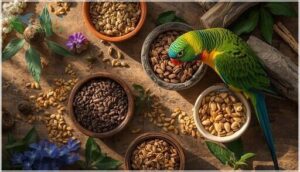
Not all seeds are created equal regarding your bird’s health. Some offer powerful nutrition that aids everything from immune function to feather quality, while others can actually harm your feathered friend. Understanding which seeds best match your bird’s species and dietary requirements can make all the difference—check out these practical bird seed recommendations for beginners to get started on the right track.
Let’s look at which seeds deserve a spot in your bird’s bowl—and which ones to skip entirely. Choosing the right seeds starts with understanding which feeder styles attract your target species, since tube feeders favor finches while platform feeders welcome cardinals and larger birds.
Nutritional Benefits of Common Bird Seeds
Think of seeds as nature’s power packs—each type delivers unique benefits your bird needs. Sunflower seeds pack about 6 grams of protein per ounce, supporting feather health and providing vitamin E for antioxidant protection. Millet offers quick energy through easily digestible carbs, while nyjer’s high fat content (perfect for finches) fuels high-energy activities like breeding and migration.
| Seed Type | Key Nutritional Benefits |
|---|---|
| Sunflower | 5–6g fat, 6–7g protein per ounce; supports feather maintenance and beak strength |
| Millet | Low-fat carbs for quick energy; moderate protein aids molt and eggshell quality |
| Nyjer | 15–20% protein, concentrated fat; fuels migration and breeding demands |
Fresh pumpkin seeds deliver zinc for immune support, while hemp hearts provide omega fatty acids essential for overall bird wellness. White proso millet attracts ground-feeding species without excess fat, and safflower’s hard shell naturally deters squirrels while offering solid avian nutrition. These seeds work best as occasional supplements to a balanced diet focused on healthy bird eating habits that prioritize fresh produce over high-fat options.
Each seed plays a distinct role in your bird’s health—variety truly matters.
Seeds to Attract Different Bird Species
Your feeder becomes a bird magnet when you match seed types to species preferences. Black oil sunflower seeds draw the broadest spectrum of songbirds—finches, sparrows, chickadees—while nyjer specifically attracts goldfinches and smaller finches. Consider these proven attractors:
- White proso millet for ground-feeders like doves and quail
- Safflower for cardinals and grosbeaks (squirrels dislike it)
- Peanuts for jays and woodpeckers
- Cracked corn for larger birds, though it may invite pigeons
Each seed opens your yard to different species.
Toxic and Unsafe Seeds to Avoid
Your backyard sanctuary can quickly turn dangerous when certain seeds enter feeders. Apple and cherry seeds release cyanide when crushed, while avocado pits contain persin—both deadly to birds. Moldy seeds produce aflatoxins that cause liver failure, and castor beans harbor ricin, one of nature’s deadliest toxins.
| Toxic Seed Types | Primary Hazard | Effect on Bird Health |
|---|---|---|
| Apple/cherry seeds | Cyanide compounds | Respiratory failure, sudden death |
| Avocado pits | Persin toxin | Cardiac damage, breathing distress |
| Castor beans | Ricin protein | Organ shutdown within hours |
| Moldy sunflower | Aflatoxins | Liver damage, immune collapse |
| Chocolate/cacao | Theobromine | Seizures, heart arrhythmias |
Always inspect seeds for mold and discard suspicious batches immediately.
Determining The Right Seed Portion Size
Figuring out how much seed your bird actually needs isn’t about guessing—it’s about matching portions to their individual body and lifestyle. A tiny finch and a large parrot have completely different requirements, and those needs shift with age, activity, and even the seasons.
Let’s break down the practical guidelines that’ll help you nail the right amount every time.
Portion Guidelines for Pet and Wild Birds
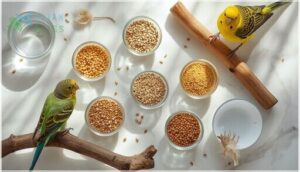
You’ll often hear “feed 10–20% of body weight,” but that’s just a starting point. Pet birds do best when seed quantities represent 20–50% of total daily intake, depending on species—canaries and finches hover around 30–60%, while larger parrots stay closer to 20–40%.
Wild birds thrive on small, frequent portions that minimize waste. Track consumption, adjust gradually, and always provide fresh water alongside portion-controlled feeders.
Age, Size, and Activity Level Considerations
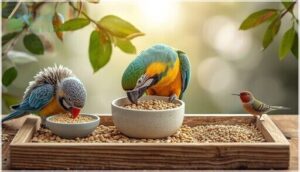
Your bird’s age determines metabolic rates and energy needs. Juveniles burn through seed quantities faster during growth stages, while adults need careful portion sizing to avoid excess.
Larger species require more seed allocation simply because their bodies demand it, and highly active fliers need extra fuel to maintain dietary balance.
Match seed nutrition to life stage, size, and daily activity for ideal bird health and bird feeding success.
Adjusting Portions for Seasonal Changes
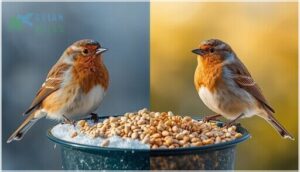
Seasonal changes shift your bird’s metabolic rates and energy needs—what works in July won’t cut it in January. Cold weather drives up thermoregulation demands, so your seed mix portions need adjustment:
- Winter months: Increase daily seed nutrition slightly to fuel heat production
- Breeding season: Bump portions during reproductive peaks
- Molting periods: Add extra calories for feather regeneration
- Spring transitions: Scale back as temperatures rise
Smart portion control means matching seasonal feeding to your bird’s real-time energy needs for peak bird health.
Creating a Balanced Diet Beyond Seeds
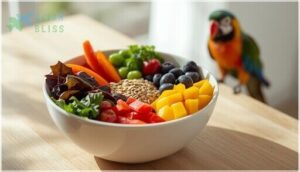
Seeds shouldn’t be the star of the show in your bird’s diet. Think of them more like bird candy—great for a treat, but not something you’d want as the main course.
Let’s look at what should actually fill your bird’s bowl to keep them healthy and thriving.
Role of Pellets, Fruits, and Vegetables
Think of pellets as the nutritional anchor your bird can count on—they deliver complete, balanced bird nutrition in every bite.
Fresh veggies and fruits add color, moisture, and variety to the mix, filling gaps that seed nutrition alone can’t cover.
Aim for a dietary balance where pellets take center stage, supported by daily servings of fresh produce that keep meals interesting and nutrient-rich.
Importance of Supplements and Fresh Water
Even with pellets and produce, your bird may need mineral supplements—especially calcium for strong bones and iodine for thyroid health. Vitamin needs shift with breeding or molting, so check with your vet about customized avian health support.
Fresh water isn’t optional; swap it daily to maintain water quality, support hydration, and keep nutrition balance on track.
Limiting Seeds in Daily Rations
Seeds are like bird candy—tasty but imbalanced. Keep them under 10-25% of your parrot’s total daily intake to avoid obesity and nutrient gaps. Here’s how to nail seed portion guidelines:
- Measure daily seed rations using a kitchen scale for accuracy
- Track body condition through weekly weight checks
- Reduce seeds gradually to prevent stress or refusal
- Offer pellets first before adding seeds as a treat
- Stick to consistent feeding times to discourage hoarding
This approach keeps bird nutrition balance in check while supporting long-term bird health.
Best Practices for Seed Storage and Feeding
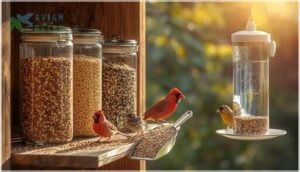
Even the best seeds won’t help your birds if they’re stored poorly or served in dirty feeders. Proper storage keeps nutrients intact and prevents mold, while smart feeding habits guarantee your birds actually eat what you offer.
Let’s cover the essentials that’ll keep your seed supply fresh and your feathered friends healthy.
Storing Seeds to Maintain Freshness
You’ll preserve seed nutrition and seed quality by keeping your stash in airtight containers—glass or metal work best. Aim for 40–60% humidity control using a hygrometer, and store seeds in a cool spot between 39–59°F.
Practice seed rotation by labeling each batch with its purchase date, using the oldest first. Check weekly for mold or pests, and refrigerate high-fat varieties like sunflower to lock in fresh food value.
Safe Handling and Preventing Spoilage
Your best spoilage prevention starts with daily feeder checks—discard any seeds showing mold, discoloration, or funky odors. Keep feeders bone-dry between fills using airtight containers, and toss uneaten portions after 48 hours max.
Label batches with purchase dates so you’re rotating stock before oils turn rancid. These seed storage tips protect seed nutrition while maintaining freshness your birds deserve.
Cleaning Feeders and Monitoring Consumption
Beyond seed storage, feeder sanitation and consumption tracking protect your flock’s health. Scrub bird feeders monthly with hot soapy water, then rinse with diluted vinegar for proper feeder maintenance. Track daily seed monitoring patterns—sudden drops signal illness, while spikes mean you’re attracting new visitors. Pair consistent feeding schedules with fresh water changes, and watch bird behavior for signs like lethargy or abnormal droppings:
- Log daily consumption rates per feeder location
- Photograph clumped or moldy seed immediately
- Remove contaminated feeders for 24-72 hours
- Document cleaning dates and bird health observations
Frequently Asked Questions (FAQs)
Can birds overeat seeds if available constantly?
Yes, birds can overeat when seeds are constantly available. Seed overconsumption leads to bird obesity and malnutrition, especially with high-fat options. Controlled feeding schedules and seed variety encourage healthy foraging behavior instead.
How do I transition birds to pellets?
Gradually mix pellets into your bird’s seed blend over two to three weeks, increasing the pellet ratio daily.
Monitor your companion bird’s weight and behavior closely during this dietary shift to guarantee smooth acceptance.
Do baby birds need different seed portions?
Young birds eat less than adults—nestlings need measured feeds several times daily.
Growth stage diet matters: hatchlings require higher protein, while weaning juveniles shift gradually to seed-based portions matched to body size and developmental milestones.
Should seed portions change during breeding season?
When courtship starts, so do energy needs—your birds burn more fuel building nests and producing eggs.
Increase seed portions by several percent during breeding season, emphasizing protein-rich and high-fat options for ideal nesting diet and fledgling care.
What signs indicate my birds portion is wrong?
Watch for bird hunger signs like persistent begging, weight fluctuations, feather condition changes, behavioral shifts (lethargy or aggression), and digestive issues—these seed intake issues signal your bird’s portion needs adjusting for ideal avian wellness.
Conclusion
Sure, your bird could survive on an all-seed diet—just like you could technically live on pizza alone. But neither of you’d thrive. Healthy seed portions for birds aren’t about deprivation; they’re about giving your feathered friend the energy, nutrition, and longevity they deserve.
Measure those seeds, balance the menu, and watch your bird’s body condition. You’ve got the knowledge now—your bird’s counting on you to use it.
- https://www.allaboutbirds.org/news/how-to-choose-the-right-kind-of-bird-feeder/
- http://www.birds.cornell.edu/pfw/AboutBirdsandFeeding/SeedTypes.htm
- https://x.com/godofprompt/status/1990526288063324577
- https://www.onelook.com/?loc=olthes1&w=subpoint
- https://www.sciencedirect.com/science/article/pii/S0749208123000268