This site is supported by our readers. We may earn a commission, at no cost to you, if you purchase through links.
You hang a beautiful new birdhouse in your backyard, expecting feathered tenants within days. Weeks pass, and it sits empty while birds flock to your neighbor’s yard instead. The problem isn’t bad luck—cavity-nesting birds assess dozens of factors before claiming a nest box, from entrance hole diameter to predator exposure.
Bluebirds won’t touch a house with a 1-inch opening meant for chickadees, and even perfectly sized boxes fail when mounted in the wrong location or surrounded by hostile habitat.
Success comes from understanding what birds need during their most vulnerable season: matching your birdhouse design to local species, positioning it where natural instincts say ‘safe home,’ and creating an environment that aids nesting parents from egg-laying through fledging.
Table Of Contents
Key Takeaways
- Birds choose nesting sites based on specific entrance hole sizes (1⅛ inches for chickadees/wrens, 1½ inches for bluebirds), proper dimensions, and predator-safe positioning 6-10 feet high with southeast-facing orientation.
- A truly bird-friendly habitat requires native plants within 10 feet of the birdhouse, clean shallow water sources refreshed twice daily, and natural nesting materials placed nearby—not just an empty box.
- Predator protection through metal baffles, strategic placement 25-50 feet from feeders and 10-15 meters from dense brush, plus weatherproofing with drainage systems dramatically increases nesting success.
- Annual fall cleaning with diluted bleach solution, regular monitoring every 5-7 days during breeding season, and species-specific timing of installation (at least 2 weeks before local breeding periods) ensures long-term occupancy and healthy fledgling rates.
Choose The Best Birdhouse for Your Yard
Not all birdhouses are created equal, and choosing the right one can make the difference between an empty box and a thriving nest. Different cavity-nesting species have specific requirements for entrance hole size, interior dimensions, and overall design.
Let’s look at the key factors you’ll need to keep in mind when selecting a birdhouse that welcomes your target birds.
Birdhouse Types for Common Cavity Nesters
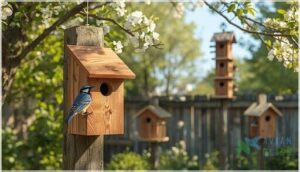
You’ll find traditional wooden nest boxes work best for cavity nesting birds like bluebirds and chickadees. Choose unpainted or lightly stained designs with front-opening access for easy cleaning. Bluebird-specific nest boxes feature 1½-inch entrance holes, while chickadee and wren birdhouses need 1-inch openings. Purple martins prefer multi-apartment structures. Consider predator guard boxes to protect nesting cavity nester species throughout the breeding season.
When researching bird species, consult a language dictionary to learn more about their behaviors and habitats.
Selecting Size and Entrance Hole Dimensions
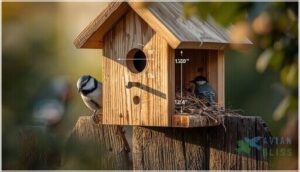
Once you’ve picked your birdhouse type, entrance hole size becomes your most critical decision. Different cavity nesting birds need specific dimensions:
- Chickadees and wrens thrive with 1⅛-inch entrance holes and 6–8 inches of cavity depth for comfortable nesting space.
- Bluebirds prefer 1½-inch openings with 4×4-inch floor area.
- Place holes 5–10 inches above the floor.
- Avoid perches—they invite predators.
- Smaller openings deter squirrels and raccoons.
Proper birdhouse size ensures species adaptation and breeding success. Researchers use scientific study methods to understand bird behavior and preferences.
Material and Color Recommendations for Safety
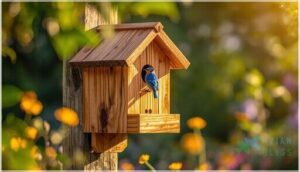
Natural wood like cedar or redwood offers the best thermal insulation while resisting decay without toxic chemicals. Light-colored, unpainted exteriors reflect heat and keep interiors cooler—darker finishes can overheat nestlings.
Your birdhouse needs ventilation holes near the roof for air circulation and drainage openings at the base to prevent water buildup. Avoid metal components inside; they create dangerous heat spikes in summer.
Pick The Perfect Birdhouse Location
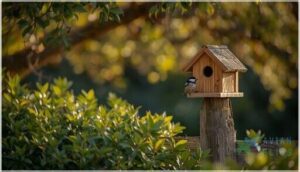
Where you place your birdhouse can make or break your chances of attracting cavity nesters to your yard. Birds won’t settle into even the best-designed house if it’s positioned in a spot that feels unsafe or exposed.
Before you install your birdhouse, make sure you have the right mounting hardware and placement tools to keep it secure and stable through all seasons.
Let’s look at the three key factors that determine whether your birdhouse becomes a thriving home or sits empty all season.
Ideal Height and Orientation for Protection
You’ll increase nesting success by mounting your birdhouse 6 to 10 feet high—a sweet spot for predator avoidance that keeps ground hunters at bay while remaining accessible to adult birds.
Orient the entrance southeast to shield nesting boxes from harsh winds and rain, ensuring wind protection and stable temperatures inside.
This directional placement works especially well when you’re building bird houses for woodpeckers that need consistent shelter throughout nesting season.
These height optimization and positioning choices create bird-friendly conditions that support healthy nesting habits and boost bird safety throughout the breeding season.
Proper placement also makes it easier for bird watchers to help track nesting success and contribute valuable data to conservation efforts.
Distance From Feeders and Busy Areas
To minimize predator risk and support nesting safety, position your birdhouse at least 25 to 50 feet from any birdfeeder—this feeder distance reduces competition and protects nesting habits.
Keeping your bird bath at the proper depth also helps attract a wider variety of species while ensuring safe, stress-free drinking and bathing conditions.
Keep busy areas like patios beyond 100 feet when possible. Smart habitat layout in your bird-friendly backyard creates bird-friendly zones where cavity nesters won’t face constant disturbance or cache conflicts.
Using Natural Cover for Shelter
Shelter Density around your birdhouse gives birds safety nets they’ll actually use. Thick shrubs and evergreen understory slash predation risk by up to 40 percent while stabilizing nest temperature.
Plant clusters of native plants within 10 feet to create visual cover and nesting concealment, then add brush piles nearby.
This layered approach to Native Plant Selection transforms any bird-friendly backyard into premium nesting sites where cavity nesters feel secure enough to raise their young.
Create a Bird-Friendly Habitat

A birdhouse alone won’t bring birds to your yard if the surrounding environment doesn’t meet their needs. Birds look for areas that offer food, water, and shelter throughout the year, not just a place to nest.
A birdhouse alone won’t attract birds—they need food, water, and shelter year-round, not just a nesting box
You can create this welcoming habitat by focusing on three essential elements that support the species you want to attract.
Planting Native Shrubs, Trees, and Flowers
A bird-friendly backyard begins with regional gardening choices that mirror your local ecosystem. You’ll support insect-abundant food sources and nesting cover by selecting native plants suited to your ecoregion—whether oaks and viburnums in the Mid-Atlantic or regionally appropriate alternatives elsewhere.
- Plant understory layers with native shrubs for critical shelter
- Choose seasonal blooming species to guarantee year-round resources
- Replace lawn incrementally with native plant beds for sustainable gardening
This ecosystem restoration approach advances wildlife conservation while attracting cavity nesters to your birdhouse.
Providing Clean Water Sources
A reliable water source completes your bird-friendly backyard habitat just as effectively as native plantings. You’ll attract more species with shallow dishes—no deeper than one inch—that prevent drowning risks for small passerines.
Refresh your bird baths twice daily during warm weather to maintain water quality and support bird hydration while preventing mosquito breeding in stagnant containers.
Offering Food and Natural Nesting Materials
Supporting natural foraging habits helps cavity nesters thrive near your birdhouse. You’ll encourage diverse species by supplying dried grasses, pine needles, and pesticide-free natural fibers alongside quality seed selection at your birdfeeder.
- Offer seeds, suet, and mealworms to support nesting parents
- Place natural nesting material near—never inside—nest boxes
- Select biodegradable, breathable fibers for safe insulation
- Clean feeders biweekly to prevent mold in your bird-friendly backyard
- Replace food regularly to reduce pest buildup
Make Your Birdhouse Safe From Predators
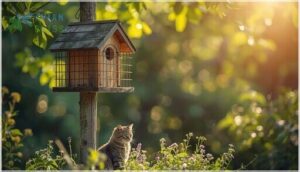
A safe birdhouse protects nesting birds from cats, raccoons, snakes, and other threats that can destroy eggs or harm adults. You’ll need to address three key vulnerability points: physical barriers against climbing predators, smart placement away from danger zones, and structural defenses against harsh weather.
These strategies work together to create a secure environment where cavity nesters can raise their young successfully.
Installing Predator Baffles and Guards
You can give nesting birds real peace of mind by installing predator baffles and guards that block access from climbing threats.
Position guards just below the entrance hole using corrosion-resistant materials like galvanized metal, ensuring the baffle diameter exceeds your birdhouse width by at least 1.5 times.
Mount pole-based designs 2–4 meters high, combining baffles with entrance guards for layered predator deterrence that keeps cavity nesters safe.
Avoiding Placement Near Predator Hotspots
Even with predator baffles and guards in place, strategic birdhouse placement makes all the difference for nesting safety. Position your birdhouse 10–15 meters from dense shrubbery and brush piles where ground predators lurk, choosing open sightlines with moderate terrain variation.
Keep water features separate from nesting bird attraction sites, and trim ground cover near the base to eliminate ambush opportunities while maintaining habitat security.
Weatherproofing for Harsh Conditions
Waterproof coatings on birdhouse joints and ventilation holes prevent rain from compromising your bird-friendly design. Seal entry points with silicone caulk, install drainage channels or mesh to release trapped water, and add a sloped roof overhang that shields the entrance.
These drainage systems and joint sealing methods protect cavity microclimates from moisture while maintaining proper ventilation—keeping nesting birds dry through storms and temperature swings.
Maintain and Monitor The Birdhouse Regularly

Keeping your birdhouse in good condition helps guarantee it remains a safe, welcoming home for returning birds year after year. Regular upkeep prevents disease transmission and protects against structural wear, while also giving you valuable insights into which species are using your boxes.
Here’s how to maintain and monitor your birdhouse effectively.
Cleaning and Annual Maintenance Tips
You should clean your birdhouse each fall after nesting season ends—this simple step dramatically reduces parasite buildup and disease risk.
Remove all nesting material while wearing gloves and a mask, then sanitize the cavity with a 1:9 bleach-to-water solution. Rinse thoroughly, let it dry completely, and your bird-friendly space will be ready for next season’s occupants, supporting essential bird conservation efforts.
Inspecting for Damage or Pests
After you’ve cleaned the interior, examine your birdhouse installation for structural issues. Look for wood rot inspection signs like soft spots or discoloration, check predator guards remain secure, and assess any cracks that compromise bird-friendly conditions.
Pest control matters too: search for carpenter ant trails, rodent droppings near the entrance, or mite infestations on perches. Prompt nest box repair preserves nesting preferences and protects future occupants, supporting proper birdhouse sanitation year-round.
Tracking Occupancy and Nesting Success
You can learn a great deal about bird behavior and nesting preferences by monitoring your nest boxes systematically. Record your findings every 5 to 7 days during breeding season to track occupancy rates and fledgling success:
- Note the species, date, and number of eggs or chicks in each box.
- Calculate nesting success as the percentage of nests producing at least one fledgling.
- Compare nesting trends year-over-year to evaluate habitat quality and birdhouse installation effectiveness.
Attract Target Bird Species to The Birdhouse
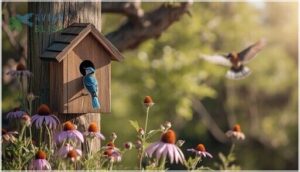
You’ve built the perfect birdhouse, placed it carefully, and created a welcoming habitat—now it’s time to bring in your target species. Success depends on matching your setup to the specific needs of local cavity nesters and respecting their natural rhythms.
These final strategies will help you turn your empty birdhouse into a thriving nesting site.
Matching Birdhouse to Local Species’ Needs
Different bird species have distinct nesting preferences, so you’ll need to match your birdhouse design to the cavity depth and entrance size your local birds prefer. Research which species are native to your area—wrens and chickadees need 1.125-inch entrance holes, while bluebirds require 1.5 inches.
Pairing the right birdhouse dimensions with native plants creates an irresistible combination for your target species.
Timing Installation for Breeding Seasons
To boost nesting success, install your birdhouse at least 2 weeks before breeding season begins in your region. Use local bird records to pinpoint species arrival times—earlier springs demand earlier placement, while late winters buy you extra days.
Prepare habitat readiness by completing nest box prep tasks now:
- Finish cleaning and repairs before nesting birds arrive
- Match entrance dimensions to target species’ cavity preferences
- Install predator guards to avoid setup delays during occupancy peaks
- Verify your bird-friendly site is disturbance-free for final inspection
- Document installation timing to track breeding season success annually
Encouraging Birds With Minimal Disturbance
Once nesting birds settle in, your birdhouse becomes their sanctuary—so keep watch from afar. Position remote cameras or use binoculars to observe cavity nesting activity without approaching the nest box.
Check occupancy only during non-critical breeding windows, reducing abandonment risk by up to 15%. This minimal disturbance approach fosters bird behavior and wildlife conservation while you enjoy bird watching their bird-friendly habitat thrive.
Frequently Asked Questions (FAQs)
What sounds or calls attract specific bird species?
Birdsong patterns and call frequencies vary by species. Northern Cardinals use sharp chips for territorial defense, while Chickadees emit high-pitched “fee-bee” calls.
Recognizing these vocalization types aids species identification during migration cues.
How long before birds discover a new birdhouse?
You can expect birds to discover your new birdhouse within one to two weeks under ideal conditions.
Discovery time varies by bird species, with chickadees and wrens usually inspecting within five to fourteen days of installation.
Can multiple birdhouses be placed in one yard?
You can install multiple birdhouses in your yard if you space them 15–25 feet apart and position boxes at varying heights to support species diversity, reduce territorial disputes, and improve nesting success across your bird-friendly backyard habitat.
Do birds reuse nests from previous seasons?
Many cavity nesting birds reuse nest boxes when structures remain intact and pest-free. Bluebirds and chickadees often refurbish previous nests, adding fresh nesting material while preserving the foundation—boosting nesting success through familiar, secure sites.
Should I remove unhatched eggs from birdhouses?
You shouldn’t remove unhatched eggs from birdhouses during the nesting cycle. Egg removal ethics and conservation guidelines discourage disturbing active nests, as this disrupts nesting birds and may introduce disease risks to bird species.
Conclusion
Building the right home is only half the battle—the rest is patience and placement. When you understand how to attract birds to a birdhouse through species-specific design, strategic positioning, and habitat support, you’re not guessing anymore. You’re creating conditions that align with millions of years of nesting instinct.
Monitor your boxes, adjust what isn’t working, and trust the process. The right tenants will arrive when everything signals safety, resources, and a place worth raising a family.
- https://academichelpexpress.blog/2024/08/please-use-the-bulleted-points-and-the-rubric-below-to-guide-your-work-your-pa/
- https://www.onelook.com/?loc=olthes1&w=subpoint
- https://x.com/godofprompt/status/1990526288063324577
- https://www.sciencedirect.com/science/article/pii/S0749208123000268
- https://www.scribd.com/document/683678057/Academic-Research-Manual-V1-1-April-2016