This site is supported by our readers. We may earn a commission, at no cost to you, if you purchase through links.

Your bird’s internal clock expects food at the same time each day. When meals arrive unpredictably, stress hormones spike and metabolism shifts into survival mode. This isn’t just about convenience—irregular feeding directly shortens lifespan and weakens immune function in captive birds.
Wild parrots forage at dawn and dusk, following nature’s rhythm. Your pet bird carries those same biological expectations, even in a living room cage. A structured pet bird meal schedule anchors their day and bolsters everything from feather quality to organ health.
The right timing and portions prevent the metabolic chaos that leads to fatty liver disease and vitamin deficiencies.
Table Of Contents
Key Takeaways
- Feeding your bird at consistent times each day prevents stress hormone spikes, metabolic disruption, and diseases like fatty liver disease while extending lifespan and strengthening immune function.
- A balanced diet requires 7-15% protein, 4-12% fat, and proper vitamins and minerals delivered through pellets (50-70% of diet) plus fresh vegetables, while avoiding toxic foods like avocado, chocolate, onions, and high-salt items.
- Serve the main meal at dawn when hunger peaks naturally, offer a second feeding in late afternoon (4-6 PM), and remove perishable foods within 2-4 hours to prevent bacterial growth and spoilage.
- Daily dish cleaning with hot soapy water, fresh water replacements twice daily, and species-specific portion adjustments (1-2 tablespoons for small birds, 4-6 for large parrots) form the foundation of safe feeding practices.
Why a Consistent Meal Schedule Matters
Your bird’s body runs like clockwork when meals come at the same time each day. A steady feeding schedule keeps their metabolism humming and helps you spot health issues before they become serious problems.
Pairing this routine with smart supplement choices ensures your feathered friend gets every nutrient they need to stay vibrant.
Let’s look at three ways a consistent routine protects your bird’s wellbeing.
Pairing predictable daily habits with nutritious meal choices helps your bird feel secure and stay physically healthy.
Impact on Bird Health and Longevity
Your bird’s meal schedule is a lifeline connecting nutrition to years of companionship. Poor feeding practices—letting high-calorie foods sit out all day or skipping balanced offerings—fuel obesity, oxidative stress, and organ damage that can steal time from your pet’s life. A structured routine backs stable metabolism and longevity factors that matter:
Following a consistent feeding schedule for your bird prevents energy crashes and supports the natural rhythms that keep their organs functioning smoothly over time.
- Prevent obesity-related damage: Unrestricted access to calorie-dense seeds increases DNA damage markers and fat accumulation.
- Boost immune resilience: Balanced bird nutrition reduces susceptibility to infectious diseases and maintains vitality.
- Protect essential organs: Excess dietary protein strains liver and kidneys, shortening lifespan in companion birds.
Regulating Metabolism and Weight
A portion-controlled schedule prevents the metabolic chaos that derails pet bird health. When you limit high-calorie seeds to timed meals instead of leaving bowls full all day, you cut obesity risk and stabilize energy expenditure.
Pairing portion control with nutrient-dense pellet formulas designed for cockatiels ensures your bird receives balanced vitamins without the metabolic spikes caused by seed-only diets.
Balanced diet timing promotes nutrient regulation, helping your companion maintain a healthy weight and dodge fatty liver disease—common in sedentary parrots with unrestricted caloric intake.
Behavioral Benefits of Routine
Beyond weight control, a consistent routine delivers powerful behavioral stability. Predictable mealtimes anchor your bird’s internal clock, reducing anxiety and curtailing stress-related feather plucking—chronically stressed parrots show corticosterone levels over three times higher than calm peers.
Daily feeding structure provides:
- Stress reduction through environmental predictability
- Anxiety prevention by eliminating feeding uncertainty
- Mental stimulation via foraging anticipation
- Social bonding during shared meal interactions
- Routine enrichment that mimics natural flock schedules
You’ll notice calmer, more engaged companion behavior when meals arrive on schedule.
Key Nutritional Needs for Pet Birds
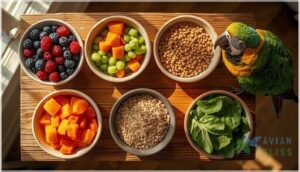
Your bird’s health starts with what’s in the bowl. Getting the right balance of nutrients isn’t complicated, but it does require understanding what your feathered friend actually needs to thrive.
Let’s break down the building blocks of a healthy bird diet so you can make confident choices at mealtime.
Balancing Proteins, Fats, and Carbohydrates
Think of macronutrient ratios as the foundation of pet bird nutrition—getting them right prevents disease and bolsters longevity. Your bird needs 7 to 15 percent protein from quality protein sources, 4 to 12 percent fat intake depending on activity level, and carbohydrate balance through whole grains and vegetables.
You’ll find a complete breakdown of safe foods for your bird’s diet that align with these nutritional targets and feeding routines.
Dietary fiber aids digestion, while proper macronutrient ratios customized to your bird’s species keep weight and metabolism healthy.
Essential Vitamins and Minerals
Micronutrients power every cell in your bird’s body, yet vitamin deficiency remains the leading preventable illness in avian nutrition. Fat-soluble vitamins A and D3 support vision and calcium absorption, while water-soluble B-complex vitamins fuel metabolism. Trace elements like selenium and zinc strengthen immunity.
Here’s what proper mineral balance delivers:
- Calcium and phosphorus build strong bones and prevent metabolic bone disease
- Manganese and zinc facilitate normal skeletal development in growing birds
- Iodine regulates thyroid function and aids healthy growth
Formulated pellets provide complete bird nutrition and diet without risky oversupplementation.
Foods to Avoid for Bird Safety
Fatal diet mistakes kill more pet birds than disease, yet most toxic food list items sit in your pantry right now. Avian poisoning from avocado, chocolate, caffeine, onions, garlic, and xylitol causes organ failure within hours. High-salt snacks trigger kidney damage, while PTFE cookware fumes create respiratory crises during meal prep.
Common pantry items like avocado, chocolate, and onions can cause fatal organ failure in pet birds within hours
| Hazardous Ingredients | Toxic Mechanism | Clinical Signs |
|---|---|---|
| Avocado, chocolate, caffeine | Cardiac/respiratory toxins | Arrhythmias, seizures, sudden death |
| Onions, garlic, rhubarb leaves | Oxidative red cell damage | Anemia, kidney failure |
| Salt, xylitol, fatty foods | Metabolic disruption | Dehydration, hypoglycemia, liver disease |
Prioritize bird-safe foods and consult your avian veterinarian about dietary needs before introducing anything new.
Step-by-Step Guide to Daily Feeding
Setting up a daily feeding routine doesn’t have to be complicated. Your bird will thrive when you offer meals at consistent times and adjust portions based on their species and activity level.
Here’s how to build a schedule that keeps your feathered friend healthy and engaged throughout the day.
Morning Feeding Routine
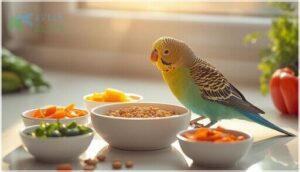
Start your bird’s day right by offering their main meal at dawn, when hunger naturally peaks and they’ll accept nutritious pellets or balanced formulas most readily. This morning feeding schedule mirrors their wild instincts and fosters healthy bird nutrition through a structured daily routine.
- Place fresh pellets or base diet in clean dishes first thing
- Add small portions of chopped vegetables or fruit alongside
- Remove perishable foods within one to two hours to prevent spoilage
Morning meals anchor effective feeding schedules and simplify dietary transitions when you’re introducing healthier options. Your pet bird nutrition improves when you pair consistent timing with quality food choices and prompt cleanup of healthy treats.
Afternoon or Evening Meal Timing

Your second feeding window should close before your pet bird’s bedtime, ideally in late afternoon or early evening.
Offer measured portions between four and six p.m., allowing at least two hours before lights-out to support healthy bird nutrition and proper sleep cycles.
This sunset feeding pattern aligns with natural daytime eating rhythms while preventing overnight snacking that disrupts bird health and metabolism within your daily feeding schedule.
Rotating Foods to Prevent Boredom

Birds thrive on food variety just as you do. Rotate at least three to five vegetables each week alongside your pellet base, and alternate the textures and shapes you offer to spark curiosity.
Switch brands periodically to broaden micronutrient profiles. Add foraging strategies like puzzle feeders or skewered produce to turn meal rotation into dietary enrichment that keeps your companion engaged and prevents selective eating.
Adjusting Schedule by Bird Species
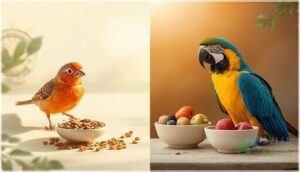
Different species carry wildly different metabolic clocks, so you’ll need to match your feeding windows to your bird’s natural rhythm. Small pet bird species like finches burn through calories fast and benefit from continuous access to food, while larger parrots do well with two structured meals daily.
Age considerations matter too—juveniles demand more frequent feeding than adults. Consult avian nutrition guidelines for your bird species to nail dietary variations and feeding frequency that support peak health.
Safe Food and Water Practices
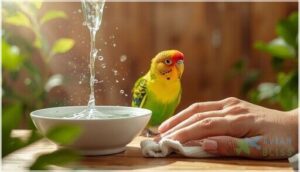
Keeping your bird healthy goes beyond choosing the right foods—you also need to manage how you serve and store those meals.
Clean dishes and fresh water form the foundation of daily hygiene, while proper handling of perishable items prevents illness.
Here’s how to maintain safe feeding practices every day.
Cleaning Food and Water Dishes
Every day, your pet bird depends on spotless dishes to stay healthy. Bacteria and biofilm can build up fast, threatening bird nutrition and water quality. Follow these cage maintenance steps for proper dish sanitation:
- Wash bowls daily with hot water and mild soap using dedicated scrubbing tools for biofilm removal
- Choose stainless steel over plastic to prevent bacterial buildup
- Rinse thoroughly to eliminate residue
- Dry completely before refilling
- Apply disinfection methods weekly using diluted bleach or vinegar solutions
These cleaning techniques protect your bird from harmful pathogens while ensuring access to clean water.
Fresh Water Guidelines
Beyond scrubbing dishes, water quality directly shapes your bird’s health. Replace drinking water at least once daily—twice if your bird bathes or eats wet foods. Use filtered or spring water to avoid chlorine and heavy metals found in tap sources. Cold water slows bacterial growth, so refill with cool fresh water each morning.
Watch for dehydration signs like sunken eyes or reduced activity, which signal your bird needs better hydration practices now.
Managing Perishable Foods and Spoilage
Fresh fruits and vegetables spoil faster in your bird’s cage than they do in your fridge, so timing matters as much as water quality. Remove fresh food within four hours to prevent bacterial growth that threatens bird nutrition and health. High-protein items need even faster removal.
Plan meals around this window—offer fresh vegetables and fruit during your morning routine, then clear uneaten portions by noon for proper food safety and spoilage prevention.
Customizing Schedules for Special Dietary Needs
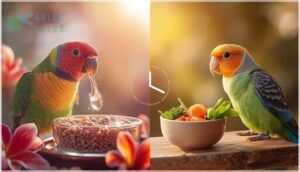
Not every bird eats the same way. Some species need nectar changed multiple times a day, while others thrive on twice-daily pellet meals with fresh foods mixed in.
Understanding your bird’s specific requirements helps you create a feeding schedule that keeps them healthy and happy.
Feeding Requirements for Nectar-Eating Birds
Lorikeets and other nectar feeders run on liquid fuel, and their specialized diet demands more attention than a standard seed mix ever will. Balance their nectar diet with fruit variety like papaya and grapes.
You’ll need to prepare fresh nectar two to three times daily because sugar content makes it spoil fast. Change water dishes twice daily to support proper bird hydration and prevent bacterial buildup.
Meal Planning for Parrots and Other Species
Most parrots thrive when pellets make up 50 to 70 percent of their bird nutrition, with vegetables and fruits filling the rest. Your feeding practices should include two timed meals daily—morning and early evening work best for meal frequency.
- Small parrots need about 5 to 9 grams of pellets plus 2 teaspoons of fresh food daily
- Finches and canaries do well with 20 to 30 percent pellets mixed with varied seeds
- Species specific dietary restrictions mean adjusting portions based on your bird’s size and activity level
When to Consult an Avian Veterinarian
How do you know when your bird needs veterinary care right away? Emergency symptoms like open-mouth breathing, tail bobbing, or active bleeding demand immediate attention. Watch for urgent care needs such as reduced appetite, fluffed feathers, or discharge—these avian medical signs warrant prompt evaluation by your vet. Schedule routine bird health checks annually for early detection of problems.
| Emergency Symptoms | Routine Bird Health and Wellness |
|---|---|
| Open-mouth breathing or wheezing | Annual wellness exams for adults |
| Active bleeding or broken feathers | New bird checkup within 1–2 weeks |
| Seizures or loss of balance | Senior birds every 6–12 months |
Frequently Asked Questions (FAQs)
How often should I weigh my bird?
You should weigh a healthy adult bird once per week at the same time each morning.
Daily weighing becomes necessary during illness, diet changes, or when you notice abnormal behavior or appetite loss.
Can birds eat human snacks or leftovers?
Most human snacks pose serious toxic food and table scrap dangers to your bird. Avoid chocolate, caffeine, onions, garlic, avocado, and salty or sugary treats—even small amounts threaten avian nutrition and health markedly.
What portion sizes are appropriate per meal?
Your bird’s body condition score tells you everything. Small birds need 1–2 tablespoons per meal; medium species thrive on 2–4 tablespoons; large parrots require 4–6 tablespoons adjusted for activity and weight.
Should I feed birds at exactly same time?
You don’t need exact same-minute precision. A consistent daily window—within 30 to 60 minutes—works well for most pet birds. This feeding schedule maintains their daily routine without adding unnecessary stress to yours.
How do I transition birds to new foods?
Introduce new items gradually over 7 to 14 days for palate adaptation. Mix small portions with familiar foods and monitor your bird for distress or digestive upset to confirm safe dietary variety.
Conclusion
Picture your bird waiting at the cage door each morning, bright-eyed and ready. That anticipation means their body already knows what’s coming.
A solid pet bird meal schedule transforms that daily moment into a health anchor—steady metabolism, stronger immunity, and years added to their life.
The steps you’ve learned here aren’t complicated, but their impact runs deep. Consistency isn’t just routine. It’s the difference between surviving and thriving.
- https://pismobeachvet.com/documents/Avian%20nutrition%2001-04-8.doc
- https://hari.ca/avian-care/psittacine-pediatrics-housing-and-feeding-of-baby-parrots/
- https://www.petmd.com/bird/nutrition/how-feed-bird-properly-0
- https://smallanimal.vethospital.ufl.edu/clinical-services/zoological-medicine/how-to-care-for-your-pet-bird/
- https://edis.ifas.ufl.edu/publication/VM067