This site is supported by our readers. We may earn a commission, at no cost to you, if you purchase through links.
You pick up a pair of binoculars at the store, and the label reads “8×42.” Sounds impressive, but what does it actually mean for your morning bird watch or that upcoming safari? Most beginners stare at these numbers like they’re decoding ancient hieroglyphics, then either grab the cheapest option or whatever the sales associate recommends.
The truth is, those digits tell you everything about what you’ll see—how close that hawk will appear, how bright the image stays at dusk, and whether your arms will ache after ten minutes of sky-scanning. Once you crack the code behind magnification, lens diameter, exit pupils, and prism types, you’ll stop guessing and start choosing binoculars that actually match how you plan to use them.
Table Of Contents
Key Takeaways
- Binocular numbers like 8×42 tell you magnification power (8x means objects appear 8 times closer) and objective lens diameter (42mm determines light-gathering ability and low-light performance), which together predict exactly what you’ll see in the field.
- Exit pupil size—calculated by dividing lens diameter by magnification—should match your eye’s natural dilation (4-5mm) for optimal brightness in dawn/dusk conditions, making an 8×42 better for twilight birding than a 10×50.
- Higher magnification (12x+) narrows your field of view and amplifies hand shake, so most birders get better results with 7x-10x binoculars that balance image stability, brightness, and tracking ability for fast-moving subjects.
- Durability features like nitrogen purging (prevents internal fogging), IPX7 waterproof ratings (submersion-proof), and BaK-4 prisms (superior light transmission) matter as much as magnification when you’re actually using binoculars in rain, temperature swings, or rough conditions.
How Binocular Numbers Work
When you pick up a pair of binoculars, you’ll see numbers like 8×42 or 10×50 stamped right on them. Those numbers aren’t random—they’re the key to understanding what you’re getting, and honestly, they tell you almost everything you need to know about how the binoculars will perform.
Whether you’re just getting started or upgrading your gear, understanding these specs helps you choose the right bird watching equipment essentials for your specific needs.
Let’s break down what those numbers actually mean and how they’ll affect your viewing experience.
What Magnification Power Means

Magnification power tells you how many times closer objects appear compared to your naked eye. If you’re eyeing an 8x pair of binoculars, that hummingbird 80 feet away looks like it’s just 10 feet from you.
Understanding magnification for bird watching binoculars helps you choose the right balance between zoom power and field of view for different birding situations.
Here’s what matters for optical performance:
- 7x to 10x magnification balances image quality with brightness for most viewing scenarios
- Higher power limits (12x+) demand steadier hands or image stabilization
- Optical zoom isn’t brightness—magnification enlarges, but doesn’t add light
Understanding Objective Lens Diameter
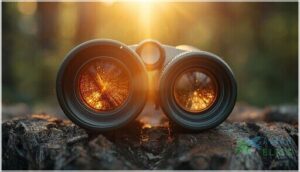
The second number in binocular specs—like the 42 in 8×42—is your objective lens diameter in millimeters. Lens size matters because bigger diameters capture more light, boosting image clarity in dim conditions.
If you wear glasses while birding, you’ll want binoculars with longer eye relief and adjustable eyecups—choosing binoculars designed for eyeglass wearers ensures you get the full field of view without vignetting.
A 42mm objective lens transmits markedly more light than a 26mm, improving optical quality and exit pupil brightness. That diameter directly shapes optical performance, affecting everything from low-light viewing to overall light transmission through the glass.
How Size Affects Performance
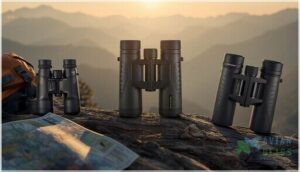
Larger objective lenses gather more light, but they also add weight and bulk—so you’re trading portability for brightness with every extra millimeter. Here’s how lens size impact and weight factors play out:
Bigger lenses capture more light but add weight—you’re trading portability for brightness with every millimeter
- Compact designs (25-30mm) slip into pockets but struggle in dim light
- Mid-size models (32-36mm) balance image stability with ergonomic fit
- Full-size pairs (42mm+) deliver enhanced exit pupil and field of view
- Magnification above 10x demands steady hands or tripod support
Key Specifications That Affect Your Viewing Experience
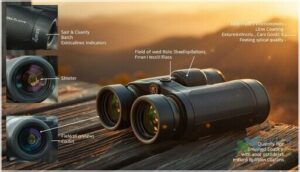
You’ve got the basic numbers down, but there are a few other specs that make a real difference when you’re actually out there using your binoculars. These features affect everything from how well you see in dim light to whether the view feels comfortable for your eyes.
Let’s walk through the key specifications you’ll want to understand before making your purchase.
Quality glass like BaK-4 prisms can make a real difference in what you see, especially if you’re choosing binoculars for astronomy where clarity matters most.
Exit Pupil and Low-Light Performance
Think of the exit pupil as your binocular’s pipeline for light—it’s calculated by dividing the objective lens diameter by the magnification. In twilight conditions, an exit pupil of around 4–5 mm is ideal, as it matches the natural pupil size of the human eye. This optimal range ensures maximum image brightness and clarity when viewing in low-light environments.
Larger exit pupils allow more light to reach your eye, enhancing image quality in dim conditions. However, this benefit is only realized if the exit pupil size matches or exceeds your eye’s dilation capacity.
| Binocular Model | Exit Pupil Size | Best For |
|---|---|---|
| 8×42 | 5.25 mm | Dawn/dusk birding |
| 10×42 | 4.2 mm | Balanced day use |
| 8×32 | 4 mm | Lightweight twilight |
Remember, the key to optimal low-light viewing is matching the exit pupil size to your eye’s natural dilation, ensuring you get the brightest and clearest images possible.
Once you’ve figured out your ideal magnification for birding, the next step is finding a pair that handles low light without sacrificing clarity.
Field of View Considerations
Picture scanning a forest canopy—you’ll need enough visual breadth to track that warbler hopping between branches. Field of view, measured in feet at 1,000 yards, determines how much landscape you’ll see at once.
Higher magnification narrows your view angle, making fast-moving subjects harder to follow. For birding, an 8×42‘s wider field of view beats a 10×50’s tunnel-like perspective every time.
Eye Relief for Eyeglass Wearers
If you wear glasses, you’ll need proper eye relief—the distance from the eyepiece where you’ll see the full image without vignetting effects darkening the edges. Look for 15mm or more to maintain comfortable viewing and avoid that frustrating tunnel vision.
Adjustable eyecups let you dial in the perfect position, and comfort factors matter during long sessions when tracking birds through varied magnification and exit pupil conditions.
Prism Types: Roof Vs Porro
The prism type shapes how light travels through your binoculars, affecting both image formation and ergonomic design. Roof prisms create slim, straight barrels that feel modern and pocket-friendly, while porro prisms use that classic wide-body zigzag path.
Here’s the trade-off: porro designs usually deliver better light transmission and optical quality at lower prices, but roof prisms win on durability and weather sealing. Understanding the differences in prism design types is essential for making an informed decision.
Glass Types: BK-7 Vs BaK-4
The glass inside your binoculars’ prisms determines how clearly light reaches your eyes. BaK-4 prisms offer a higher refractive index and better optical clarity than BK-7, delivering brighter images with sharper edges—especially noticeable in low light. BK-7 remains solid for budget binoculars in daylight.
When comparing prism materials, remember that quality lens coatings and objective lens design matter just as much as glass type alone.
Durability Features in Binocular Specifications
Beyond the optical specs, your binoculars need to survive the real world—rain, fog, bumps, and the occasional drop. The durability features listed in a binocular’s specs tell you exactly how tough they’re and what conditions they can handle.
Let’s break down the protection ratings you’ll actually see on spec sheets and what they mean for your gear.
Waterproof Vs Weather-Resistant Ratings
You’ll often see binoculars labeled waterproof or weather-resistant, and the difference matters for your outdoor activities. Waterproof optics use O-ring seal materials and can handle submersion depth testing—think kayaking accidents or heavy downpours. Weather-resistant models offer basic moisture protection against light rain but won’t survive a dunk.
For serious birding in wet conditions, waterproof designs with fogproof capabilities give you reliable protection.
Nitrogen-Purged Fog-Proof Design
When external temperatures swing fast—say, stepping from your heated car into freezing morning air—nitrogen purge technology keeps your view crystal-clear. This humidity control system replaces internal air with inert nitrogen, protecting optical clarity by preventing condensation on lens surfaces.
If you’re choosing waterproof binoculars with fog proofing capabilities, you’re ensuring reliable eye relief during rapid weather changes. Nitrogen-sealed optics give birders consistent imaging performance when conditions shift unexpectedly.
IPX Ratings Explained
You’ll see IPX ratings stamped on many waterproof binoculars, and they tell you exactly how much water exposure your optics can handle. IPX4 means splashing rain won’t hurt them, while IPX7 lets you drop them in a meter of water for half an hour without damage.
Higher numbers mean better seal materials and moisture control during durability testing—essential for serious outdoor gear that needs fog proofing reliability.
Protective Rubber Armor Coating
Most binoculars wear a textured rubber coating that does more than look rugged—it absorbs shock when you drop them, boosts grip in rain or sweat, and shields the housing from scratches during durability testing.
This armor protection layer keeps your optics waterproof by cushioning seals and adds eye relief comfort where your face meets the eyecups, especially during long birding sessions.
Top 4 Binoculars for Bird Watching
Now that you understand what all those specs mean, let’s talk about binoculars that actually deliver in the field.
I’ve picked four models that birders consistently recommend, ranging from budget-friendly to premium options. Each one excels in different areas, so you can find the right match for your needs and wallet.
1. Zeiss Victory SF Binoculars
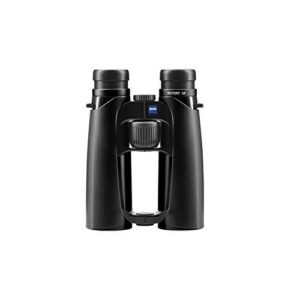
When you’re ready to step up your birding game, the Victory Series delivers optical quality that’ll make you wonder how you ever managed without it. These SF Models come in 8×42 and 10x magnification configurations, both featuring impressive Zeiss optics with 92% light transmission for outstanding color fidelity.
You’ll appreciate the 148-meter field of view at 1,000 meters in the 8x version, while the binocular ergonomics—thanks to the ErgoBalance concept—keep fatigue at bay during marathon birding sessions. The 18mm eye relief accommodates eyeglass wearers comfortably, and the 42mm objective lens gathers enough light for dawn or dusk observations.
| Best For | Serious birders and wildlife observers who want professional-grade optics with exceptional brightness, wide field of view, and all-day comfort for extended observation sessions. |
|---|---|
| Magnification | 8x |
| Objective Lens Diameter | 42mm |
| Exit Pupil | 5.3mm |
| Field of View | 148m at 1000m |
| Waterproof | Yes |
| Weight | Not specified |
| Additional Features |
|
- Outstanding 92% light transmission with Ultra-FL Concept delivers exceptional brightness and true-to-life colors, making birds easier to identify even in challenging lighting conditions.
- Extremely wide 148m field of view at 1,000m (8×42 model) gives you the big picture fast—perfect for tracking fast-moving birds or scanning large areas without constantly repositioning.
- ErgoBalance design and 18mm eye relief make these comfortable for hours of use, whether you wear glasses or not, with minimal hand fatigue during long birding sessions.
- Premium price tag of $2,999.99 puts these out of reach for casual users or beginners who might not need professional-grade features.
- Some quality control concerns reported by users, including scratches or defects on certain units, which is disappointing given the high price point.
- Heavier and bulkier than some competing models, which may be an issue if you’re hiking long distances or have smaller hands.
2. Leica Trinovid Hd Binoculars
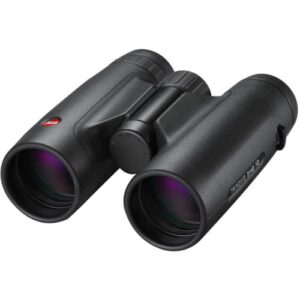
If you’re considering a step down in price without sacrificing serious quality, the Trinovid HD models deserve your attention. You’ll find 8×42 configurations that balance portability with performance—magnification sits right in that sweet spot for birding, while the 42mm objective lens pulls in solid light for crisp images.
The BaK-4 prisms with phase-correction coatings deliver edge-to-edge sharpness that rivals pricier options, and at roughly $950, these binoculars offer excellent value. Plus, the 124-meter field of view keeps fast-moving warblers in frame when they won’t sit still.
| Best For | Serious birders and outdoor enthusiasts who want professional-grade optics with edge-to-edge sharpness but don’t need to jump to the most expensive tier. |
|---|---|
| Magnification | 8x |
| Objective Lens Diameter | 42mm |
| Exit Pupil | 5.25mm |
| Field of View | 124m at 1000m |
| Waterproof | Yes (to 3ft/4m) |
| Weight | Lightweight |
| Additional Features |
|
- BaK-4 prisms with phase-correction coatings deliver crisp, high-contrast images right to the edges
- 8×42 setup hits the sweet spot for brightness and stability without feeling too heavy
- Wide 124-meter field of view makes tracking fast birds way easier
- At $953, still a significant investment compared to mid-tier options
- Some buyers report the advertised carrying strap doesn’t always come in the box
- If you need higher magnification for distant wildlife, you’ll have to look elsewhere
3. Nikon Monarch Binoculars
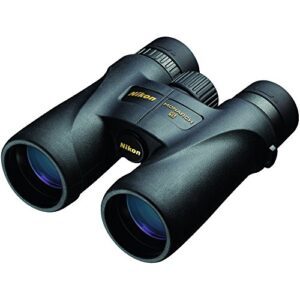
Budget-conscious birders won’t go wrong with Nikon Monarch binoculars, which pack surprising optical quality into a sub-$400 package. You’re looking at 8×42 configurations with ED glass that minimizes color fringing, plus BaK-4 prisms and multicoated lenses for bright, clear images.
The waterproof, fog-proof body manages wet mornings without complaint, and the turn-and-slide eyecups offer 19.5mm eye relief—perfect if you wear glasses.
Field of view measures around 330 feet at 1,000 yards, keeping active songbirds in sight while you’re learning their calls.
| Best For | Budget-conscious birders and outdoor enthusiasts who want solid optical performance and weather resistance without breaking the bank. |
|---|---|
| Magnification | 8x |
| Objective Lens Diameter | 42mm |
| Exit Pupil | Not specified |
| Field of View | Not specified |
| Waterproof | Yes |
| Weight | 1.3 pounds |
| Additional Features |
|
- ED glass and multicoated lenses deliver sharp, color-accurate images even in low light
- Waterproof and fog-proof construction handles morning dew and unexpected rain
- Comfortable 19.5mm eye relief with adjustable eyecups works great for eyeglass wearers
- Lens caps can be loose and may fall off during active use
- Build quality issues reported by some users, like logos coming off
- May need a tripod for steady viewing at higher magnifications
4. Leica Ultravid Binoculars
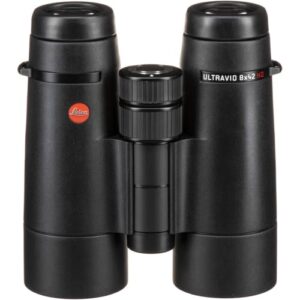
Premium German engineering meets field-tested reliability with Leica Ultravid binoculars, offering configurations from compact 8×20 models to full-size 8×42 HD-Plus versions.
You’ll appreciate the SCHOTT HT glass and HDC multicoating that deliver outstanding color fidelity, plus phase-correcting P40 prisms that boost contrast when you’re tracking warblers through dappled foliage.
The 8×42 provides a 7.7-degree field of view and 15-16mm eye relief for eyeglass wearers.
At $2,134, they’re an investment—but waterproof construction, AquaDura lens coatings, and nitrogen fog-proofing mean decades of faithful service on the trail.
| Best For | Serious birders and nature observers who want premium German optics with exceptional color accuracy and durability for decades of regular field use. |
|---|---|
| Magnification | 8x |
| Objective Lens Diameter | 42mm |
| Exit Pupil | Not specified |
| Field of View | Wide field of view |
| Waterproof | Yes |
| Weight | Not specified |
| Additional Features |
|
- SCHOTT HT glass with HDC multicoating and P40 phase correction delivers outstanding color fidelity and contrast, even in challenging light conditions
- Waterproof to 5m with nitrogen filling and AquaDura coatings means these binoculars handle rain, humidity, and rough conditions without fogging or water spots
- Multiple configurations from compact 8×20 (8.5 oz) to full-size 8×42 let you choose the right balance of portability, brightness, and field of view for your specific birding needs
- Premium price point at $2,134 puts them out of reach for casual users or beginners who don’t need professional-grade optics
- Eye cups may be too short for some users and lack intermediate stops, which can cause blackouts or discomfort during extended viewing sessions
- 10×42 models trade steadiness for magnification—the 7×42 provides more stable handheld views in low light, so higher magnification isn’t always better for every birding scenario
Frequently Asked Questions (FAQs)
What accessories should I purchase with binoculars?
The best binoculars mean nothing without protection. You’ll need protective cases with padding, lens cleaning kits with microfiber cloths, binocular straps for weight distribution, and tripod adapters for stability during extended viewing sessions.
How do I properly clean binocular lenses?
Start with a blower to remove dust, then use optics-safe cleaning solution on a microfiber cloth. Wipe gently in circles from the center outward.
Avoid household cleaners that damage optical coatings on your binoculars’ lens surfaces.
What is the ideal binocular weight for hiking?
You’ll want binoculars between 600 and 800 grams for hiking comfort and optical quality. Lighter models sacrifice brightness, while heavier ones—over 1,000 grams—increase fatigue on long backpacking treks, affecting your outdoor activities enjoyment.
How long do quality binoculars typically last?
With proper care, quality binoculars last 10 to 20 years—lens durability and coating lifespan depend on maintenance.
Waterproof models with rubber armor handle tough conditions better, extending your optical instrumentation’s service life considerably.
Can I use binoculars for astronomy viewing?
You’d think stargazing demands a telescope, but binoculars work brilliantly. Look for 7x to 10x magnification with 50mm+ objective lenses—they’ll reveal constellations, clusters, and celestial viewing details telescopes often miss.
Add a tripod for steadier night vision.
Conclusion
Think of understanding binocular specifications for beginners as learning a new language—awkward at first, but suddenly everything clicks. You’ve now got the vocabulary to decode those cryptic numbers, match exit pupils to your twilight adventures, and spot the difference between budget glass and premium optics.
Next time you’re comparing 8x42s to 10x50s, you won’t just guess. You’ll know exactly which pair delivers the view you’re after, every single time.
- https://www.rei.com/learn/expert-advice/binoculars.html
- https://www.celestron.com/blogs/knowledgebase/understanding-the-magnification-and-objective-size-of-my-binocular-and-spotting-scope
- https://www.leupold.com/blog/post/understanding-the-numbers-on-your-binoculars
- https://www.svbony.com/blog/a-guide-for-optics-enthusiasts
- https://www.birdwatchingdaily.com/gear/binoculars/waterproofing/