This site is supported by our readers. We may earn a commission, at no cost to you, if you purchase through links.

Your bird’s diet doesn’t just fuel its daily flights and songs—it literally constructs each feather from the inside out, determining whether those feathers emerge glossy and resilient or brittle and dull. Every shaft, barb, and barbule forms through a complex assembly line of sulfur-rich amino acids, antioxidant vitamins, and essential minerals that must arrive at feather follicles in precise quantities and timing.
Without adequate protein during molting, your parrot might grow weak, stress-marked feathers that snap easily, while a deficiency in vitamin A could leave your canary with faded, poorly structured plumage that compromises both flight and temperature regulation.
The connection between what fills your bird’s food dish and the quality of its feather coat runs deeper than most owners realize, involving intricate biochemical processes that transform nutrients into the extraordinary structures covering your feathered companion.
Table Of Contents
Key Takeaways
- Your bird’s feathers are built from sulfur-rich amino acids, antioxidant vitamins, and essential minerals that must arrive at follicles in precise quantities during molting, meaning what you feed directly determines whether plumage emerges glossy and resilient or brittle and dull.
- Protein quality matters more than quantity for feather strength—methionine and cystine (comprising 10-12% of feather mass) are non-negotiable for keratin synthesis, while stress from illness or parasites spikes protein needs even when overall nutrition seems adequate.
- Omega-3 and omega-6 fatty acids shape the preen oil composition your bird spreads on feathers, creating waterproofing through specialized wax esters, but imbalances toward omega-6 trigger inflammation that dulls plumage and causes breakage.
- A foundation of quality pellets (50-80% of diet) combined with fresh dark leafy greens, orange vegetables, and protein-rich legumes delivers complete nutrition, while seed-only diets cause vitamin A deficiency that leads to faded, poorly structured feathers compromising both flight and temperature regulation.
How Diet Influences Feather Growth and Quality
Your bird’s diet doesn’t just fuel daily activity—it directly shapes the quality, strength, and appearance of every feather. From the amino acids that build keratin structures to the vitamins that intensify color and resilience, nutrition influences feather growth at every stage.
A well-rounded diet rich in proteins, vitamins, and minerals ensures your bird grows vibrant, durable feathers that reflect optimizing feather condition from the inside out.
Let’s explore how dietary choices affect feather anatomy, the molting cycle, and the visible signs that something’s off in your bird’s plumage.
Poor nutrition often shows up as brittle feathers, delayed molting, or dull coloring—issues you can address by choosing high-protein bird food options that support healthy feather growth.
Feather Anatomy and Dietary Needs
Feather follicles house living cells that orchestrate keratin synthesis, the very foundation of plumage. Your bird’s avian nutrition directly fuels this intricate process, affecting everything from structural integrity to feather pigmentation. Without the right building blocks, even the most vibrant species can’t achieve their full potential.
A balanced diet rich in sulfur-containing amino acids supports optimal feather development, and you can explore practical bird feather health tips to ensure your companion maintains vibrant, resilient plumage year-round.
Consider what proper feather health demands:
- Sulfur-rich amino acids that build strong keratin networks in each shaft
- Antioxidant vitamins protecting developing feathers from cellular damage
- Essential minerals supporting enzymatic reactions during feather formation
- Quality fats maintaining waterproofing and insulation properties
Nutritional supplements can’t rescue a fundamentally imbalanced diet during critical molting cycles.
The Feather Molting Cycle and Nutrition
Understanding molting phases helps you time nutrient delivery when your bird needs it most. During feather regrowth, keratin synthesis accelerates dramatically, demanding higher protein intake and energy balance to support healthy development.
Avian nutrition must shift alongside these cycles—inadequate nutrient timing leads to weak shafts and dull plumage. Your bird’s feather growth literally reflects what you’ve fed during each molting window.
Feed your bird strategically during molting—feather quality mirrors the nutrients you provided during each growth window
Signs of Poor Feather Health Due to Diet
When nutrient deficits take hold, you’ll notice feather breakage along the shaft, especially at the tips, signaling inadequate amino acids. Molting issues surface as irregular or stalled cycles, while plumage dullness reveals insufficient protein and micronutrient intake.
Vitamin deficiency manifests through feather deformities—barbs separating from shafts, weak structures that won’t hold together. These visible markers demand immediate nutritional intervention.
Key Macronutrients for Healthy Plumage
Think of macronutrients as the building blocks your bird’s body uses to construct those stunning feathers you admire every day. Proteins, fats, and carbohydrates each play distinct roles in creating strong, flexible, and vibrant plumage, and you can’t afford to skimp on any of them.
Let’s break down how each macronutrient contributes to feather quality, so you can make informed choices about what goes into your bird’s bowl.
Protein Requirements and Keratin Synthesis

Think of keratin as the scaffolding that holds your bird’s feathers together—without the right amino acid balance, that structure crumbles.
That’s why choosing organic bird food rich in amino acids helps maintain feather integrity from the inside out.
Here’s what you need to know about protein digestibility and feather strength:
- Quality trumps quantity: High-quality, protein-rich foods with proper nutrient interactions matter more than simply increasing total protein intake
- Methionine and cystine are non-negotiable: These sulfur-containing nutrients directly build keratin structure, comprising 10-12% of feather mass
- Stress changes everything: Illness or parasites spike protein needs, weakening feather health even when avian nutrition seems adequate
The Role of Fats in Feather Waterproofing

When you feed your bird diets rich in omega-3 and omega-6 fatty acids, you’re directly shaping its preen oil composition—the lipid-rich secretion that coats feathers and creates waterproofing mechanisms through hydrophobic barriers.
Lipid metabolism converts dietary fats into specialized wax esters within the uropygial gland, altering fatty acid profiles that determine how effectively water beads off feather structure, keeping your bird dry and protected.
The presence of endogenous feather lipids can also influence the overall quality and water repellency of the feathers.
Carbohydrates and Energy for Feather Development
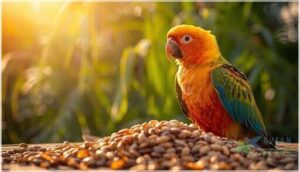
Your bird’s molting cycle demands substantial energy—feather synthesis costs over 100 kJ per gram, requiring carb metabolism to fuel this intensive regrowth period. When energy balance falters, molt slows and feather regrowth stalls, compromising plumage quality.
That’s why avian nutrition experts emphasize adequate dietary carbohydrates: they provide the metabolic fuel essential for maintaining feather health throughout the bird’s demanding molt and growth phases. Understanding the energy expenditure factors is vital for peak feather care.
Essential Vitamins and Minerals for Feathers
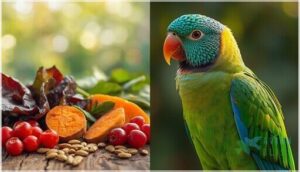
You’ve already nailed the big three macronutrients, but your bird’s feathers need more than just protein, fat, and carbs to truly shine.
Vitamins and minerals act like the behind-the-scenes crew, orchestrating everything from pigment production to structural integrity at the cellular level.
Let’s break down which micronutrients matter most and what happens when your bird doesn’t get enough of them.
Vitamin A, D, and E in Feather Integrity
You can’t build strong feathers without three key players: Vitamin A, Vitamin D, and Vitamin E. Vitamin A shapes feather pigmentation and structure—without it, you’ll see brittle, frayed plumage and abnormal color. Vitamin D aids calcium absorption for sturdy shafts, while Vitamin E delivers antioxidant effects that shield follicles during molting cycles.
Nutrient deficiencies in avian nutrition directly compromise feather health through disrupted vitamin interactions.
Importance of Zinc, Copper, and Iodine
When your bird’s feathers lose their luster, trace minerals might be the missing link. Zinc supplementation at 60–120 mg/kg maintains feather structure and reduces fraying under stress, while copper deficiency strips pigmentation from colored plumage.
Iodine intake drives thyroid function—without it, you’ll see feather loss and abnormal regrowth.
Mineral balance isn’t optional; it’s the foundation of avian nutrition and health, directly shaping feather health and overall avian wellness.
Effects of Vitamin and Mineral Deficiencies
Deficiency signals manifest faster than most owners realize—brittle shafts, faded colors, and patchy molts all trace back to specific nutrient gaps. When your bird’s diet falls short, you’ll witness:
- Vitamin A deficits producing frayed, discolored feathers and scattered white streaks
- Vitamin D shortages causing blackened plumage and skeletal weakness
- Zinc deficiency creating blistered wing feathers that snap easily
- Iron or copper gaps stripping pigmentation from colored breeds
- Iodine imbalances triggering thyroid enlargement and curly, fragile feathers
Avian malnutrition doesn’t whisper—it screams through feather disorders you can’t ignore.
Fatty Acids and Feather Appearance
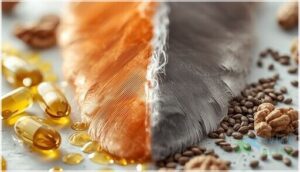
You mightn’t realize it, but the fats in your bird’s diet do more than just provide energy—they’re the secret behind those glossy, water-resistant feathers that catch the light just right. Omega-3 and omega-6 fatty acids work together to keep plumage sleek and insulating, but getting the balance wrong can leave feathers looking dull and brittle.
Let’s break down how these essential fats shape feather appearance, where to find them in your bird’s meals, and what happens when the ratio tips too far in either direction.
Omega-3 and Omega-6 for Feather Gloss and Insulation
Think of omega-3 and omega-6 fatty acids as the secret sauce for feather shine and insulation. These polyunsaturated benefits work at the surface level, influencing those lipid layers that give feathers their glossy sheen and waterproof barrier.
When you maintain proper fatty acid balance, you’re supporting avian skin health and plumage that’s both vibrant and thermally efficient—critical for omega-rich foods in nutrition.
Sources of Healthy Fats in Avian Diets
You’ll find the richest omega-3 and omega-6 sources in specific seeds, oils, and nuts that transform avian fatty acids profiles:
- Flaxseed benefits shine with 50–57% alpha-linolenic acid, boosting omega-3 in bird diet formulations substantially
- Chia seed oil delivers roughly 60% omega-3 content for feather gloss
- Hemp nutrition offers a balanced 3:1 omega-6 to omega-3 ratio
- Walnuts provide dense plant-based omega-3 as seed supplements
Consequences of Fatty Acid Imbalances
When your bird’s omega balance tips too far toward omega-6, you’re setting the stage for avian inflammation that dulls plumage and triggers feather breakage. Fatty acid deficiency weakens keratin structure, leaving feathers brittle and prone to damage.
These nutrient interactions affect more than appearance—chronic imbalances compromise skin integrity, slow molt recovery, and can even spark overpreening behaviors that worsen feather health considerably.
Optimizing Diet for Vibrant, Resilient Feathers
You’ve learned how individual nutrients shape your bird’s feathers, but putting that knowledge into practice means building a complete dietary strategy. The right combination of foods, careful avoidance of harmful ingredients, and proper hydration work together to transform dull, brittle plumage into vibrant, resilient feathers.
Let’s explore the practical steps you can take to fine-tune your bird’s diet for peak feather health.
Balanced Diet Recommendations for Birds
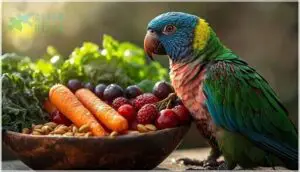
Achieving nutrient balance starts with a foundation of quality pellet nutrition, which should comprise 50 to 80 percent of your bird’s daily intake to guarantee complete micronutrient coverage.
Add fresh foods—dark leafy greens, orange vegetables, and protein-rich options like cooked legumes—to round out the remaining portion. Limit seeds to 10 percent to prevent avian obesity while incorporating omega-3 fatty acids for feather health.
Dietary supplements aren’t usually needed unless your avian veterinarian recommends them.
Foods to Include and Avoid for Feather Health
Once you’ve nailed nutrient balance, selecting the right fresh produce, protein-rich foods, and omega-3 sources becomes your roadmap for excellent feather health and vibrant avian nutrition.
- Dark leafy greens like kale and spinach deliver vitamin A and carotenoids that boost pigmentation
- Cooked eggs, legumes, and unsalted nuts supply essential amino acids for keratin synthesis
- Berries and peppers add antioxidants supporting feather resilience
- Avoid seed-only diets—they cause vitamin A deficiency and dull plumage
- Skip toxic foods like avocado and chocolate, which compromise overall feather supplements effectiveness
Hydration and Its Impact on Plumage
Beyond nutrients, adequate hydration shapes feather microstructure and plumage insulation in ways you can’t ignore. Water restriction reduces feed intake, limiting resources for feather health during molting. Proper moisture management aids avian thermoregulation, keeping waterproofing intact and preventing breakage.
| Hydration Factor | Impact on Plumage |
|---|---|
| Systemic water balance | Aids keratin synthesis, feather growth rate |
| Environmental moisture | Maintains waterproofing, prevents wetting |
| Preen oil distribution | Controls surface wettability, allows water shedding |
| Stress-related dehydration | Weakens feather structure, reduces vane cohesion |
Clean bowls daily for ideal avian nutrition and feather care.
Frequently Asked Questions (FAQs)
Can supplements replace a balanced avian diet?
Supplements can’t replace whole foods because they lack the synergistic nutrients and natural balance found in a varied diet.
Over-supplementing risks toxicity, particularly with Vitamin A, while deficiencies persist without proper foundational nutrition.
How does age affect feather nutrition needs?
Growth stages shift nutrient priorities dramatically. Nestlings demand high protein for rapid feather growth, while adults need balanced amino acids during molting cycles. Aging feathers in older birds require antioxidant-rich dietary adjustments to prevent avian nutrition deficiencies affecting feather health.
Do wild and captive birds need different diets?
Wild and captive birds need different diets—it’s not comparing apples to oranges, but matching fuel to flight paths.
Wild bird nutrition demands flexibility; captive diet formulation requires nutrient-dense consistency due to reduced activity and environmental factors.
What role does gut health play in feather quality?
Your bird’s intestinal health directly shapes feather pigmentation and structure.
A balanced gut microbiome enhances nutrient absorption for keratin synthesis, while probiotic benefits include improved omega-3 uptake, supporting vibrant, resilient plumage through superior avian nutrition.
How quickly does dietary change improve feather appearance?
How long until you see results from dietary corrections? Visible improvement in feather health often appears within two to four weeks as nutrient timing aligns with molt cycles, though complete feather regrowth requires a full molting period.
Conclusion
The smallest seeds you offer can trigger the grandest transformation in plumage quality. How diet affects bird feather quality becomes most visible when you witness a struggling bird bloom with proper nutrition.
Each meal either builds resilient, vibrant feathers or compromises their structure at the molecular level. Your daily feeding choices are the foundation of your bird’s protective, beautiful coat.
You’re not just filling a dish; you’re crafting feathers from the inside out.