This site is supported by our readers. We may earn a commission, at no cost to you, if you purchase through links.

Your canary deserves more than four walls and a swing. These small birds are built for flight—they dart horizontally across branches in the wild, covering impressive distances throughout the day. Cramming them into a narrow, tall cage is like asking a marathon runner to train in a closet.
The right cage gives your bird room to stretch those wings properly, with horizontal space that actually matters. But here’s the thing: not all “canary cages” deliver on that promise. Some have bars spaced too wide, risking injury. Others use flimsy materials that rust or warp within months.
Getting this choice right means understanding what canaries actually need—not just what looks nice in your living room. We’ve tested and reviewed seven solid options that balance safety, space, and value, so you can skip the guesswork and find a home your bird will thrive in.
Table Of Contents
Key Takeaways
- Canaries need horizontal flight space more than height—aim for at least 18 inches wide with bar spacing under 0.5 inches to prevent injury and allow natural movement patterns.
- Stainless steel cages outlast powder-coated options by years and resist rust better, while materials like galvanized wire pose zinc toxicity risks that can seriously harm your bird.
- Natural wood perches in varied diameters (3/8 to 3/4 inches) prevent foot problems way better than plastic dowels, and you should skip sandpaper-covered perches entirely since they cause abrasions.
- Daily cage maintenance—fresh water, clean bowls, wiped perches—prevents most health issues before they start, while weekly deep cleans and monthly rust checks keep the environment safe long-term.
Key Features of Canary Bird Cages
Choosing the right cage for your canary isn’t just about picking something pretty—it’s about meeting specific needs that keep your bird healthy and happy. From the dimensions and materials to wire spacing and cleaning features, each element plays a role in your canary’s daily life.
That’s why understanding bird care fundamentals helps you make informed decisions when choosing the right size and setup for your canary’s home.
Let’s break down the must-have features you should look for before making your purchase.
Our expert guide to squirrel-proof bird feeders covers design quality, durability, and feeding capacity to help you pick the right model.
Optimal Cage Dimensions and Space
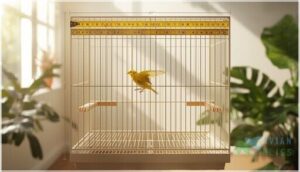
Your canary’s cage isn’t just a home—it’s their entire world, and getting the size right can mean the difference between a bird that thrives and one that just survives. To create an ideal environment, consider the importance of proper cage size requirements for your canary’s health and well-being.
Here’s what you need to know about space requirements:
- Minimum cage dimensions: Aim for at least 18 inches wide to allow proper flight capacity and bird movement.
- Wingspan rule: Your avian housing should measure 1.5 times your canary’s wingspan for comfortable stretching.
- Horizontal space matters: Canaries fly side-to-side, so prioritize width over height in bird enclosures.
Recommended Materials and Durability

The cage design and materials you choose directly impact your bird’s long-term avian health and safety. Stainless steel stands out as the benchmark—it’s non-toxic, rust-resistant, and can last decades without degrading. Powder coating over metal offers solid durability at a lower price point, but inspect regularly for chips that expose bare metal. Skip galvanized wire entirely; zinc toxicity from chewed flakes poses serious risks to your canary’s wellbeing.
Beyond cage materials, proper bar spacing and perch placement also play a role in preventing common beak health issues like overgrowth or misalignment.
When selecting a cage, consider the benefits of stainless steel cages for ideal safety and durability.
Safe Wire Spacing and Bar Orientation

Between durability and safety sits a detail many bird cage reviews overlook: wire spacing. For canaries, bar spacing should never exceed 0.5 inches—anything wider risks head entrapment or wing injuries.
Horizontal bars boost cage stability while encouraging climbing, but check bar junctions carefully. Rough welds or exposed edges at bar thickness transitions can lacerate delicate feet, undermining even the smartest cage design choices in bird keeping.
Secure Access Points and Locking Mechanisms

Spacing checks mean nothing if a canary can lift the door latch from inside. Look for cages with spring-loaded slide bolts or rotating swing latches—simple friction closures won’t cut it.
Food-bowl doors need secondary clips or carabiners; even gentle birds exploit gaps during feeding time.
Bird cage reviews often skip locking mechanisms, but escape prevention hinges on hardware that resists both vibration and curious beaks.
Ease of Cleaning and Maintenance
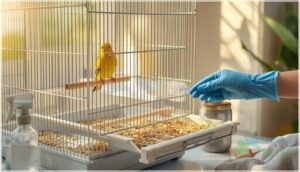
A dirty cage breeds respiratory illness faster than most owners realize. Your daily routine shouldn’t feel like a second job—removable trays that slide out in seconds make all the difference.
- Powder-coated surfaces wipe clean quickly but may chip over time, demanding more intensive maintenance routines
- Stainless steel tolerates repeated scrubbing and bird-safe disinfectants without corroding, supporting long-term cage hygiene
- Seed guards and deep pans contain mess at the source, cutting your floor-sweeping time in half
Top 7 Canary Cages Reviewed
You’ve got the basics down, so now it’s time to see what’s actually out there. I’ve reviewed seven solid canary cages that cover different needs, budgets, and styles.
Each one brings something different to the table, so you can pick what works best for your bird.
1. Prevue Metal Bird Flight Cage
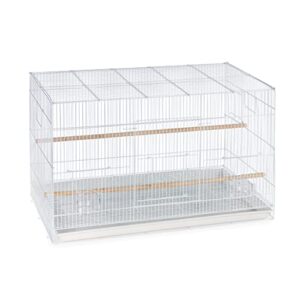
If you’re looking for a bird cage that gives your canary room to really stretch their wings, Prevue Pet Products has you covered. This small bird flight cage measures around 30 inches wide with horizontal bars that encourage natural flight patterns—exactly what canaries need.
The powder-coated metal durability means it’ll handle daily wear without rusting. You’ll love the removable tray for quick cleaning, and the stackable design allows cage expansion if you add more birds. It’s perfect for bird socialization while keeping maintenance simple.
| Best For | Bird owners with canaries or small finches who want a spacious horizontal cage that encourages natural flight and exercise while keeping cleanup simple. |
|---|---|
| Dimensions | 30″L x 18″W x 18″H |
| Material | Alloy Steel |
| Bar Spacing | ⅜ inch (9.5mm) |
| Cleaning Method | Removable plastic tray |
| Included Accessories | Feeder cups and perches |
| Suitable Birds | Parakeets, finches, budgies |
| Additional Features |
|
- Horizontal layout gives canaries plenty of room to fly back and forth, which keeps them healthier and happier than tall vertical cages
- Powder-coated metal finish resists rust and wipes clean easily, plus the removable bottom tray makes weekly maintenance quick
- Stackable design lets you expand upward if you get more birds, and the multiple access doors make it easy to reach food dishes and perches
- Lightweight construction means the wire bars can bend if you’re not careful with heavy accessories or cleaning tools
- No stand included, so you’ll need to buy one separately or find a sturdy table that fits the 30×18 inch footprint
- Not strong enough for larger parrots or aggressive chewers—this is strictly for small, gentle birds like canaries and finches
2. Prevue Small Bird Travel Cage
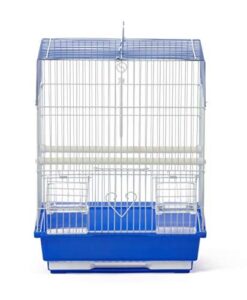
When vet visits or short trips come up, this compact bird cage from Prevue Pet Products is your answer. The 12″L x 9″W x 15″H dimensions make it perfect for transport ease without stressing your canary.
You’ll appreciate the 0.5-inch wire spacing that keeps small birds secure, plus the carrying handle adds serious cage portability. It includes two plastic perches and cups for bird comfort during travel.
During moves or vet visits, reducing travel-related stress in birds becomes much easier with a secure, well-designed carrier like this.
Just remember—this is designed for travel safety, not permanent housing. Think of it as your canary’s suitcase, not their home.
| Best For | Bird owners who need a reliable, compact cage for short car trips to the vet or temporary stays away from home. |
|---|---|
| Dimensions | 12″L x 9″W x 15″H |
| Material | Alloy Steel, Plastic |
| Bar Spacing | 0.5 inches |
| Cleaning Method | Removable tray |
| Included Accessories | 2 cups, swing, 2 perches |
| Suitable Birds | Canaries, budgies, finches |
| Additional Features |
|
- Lightweight at just over a pound with a built-in handle, making it easy to carry with one hand
- Includes everything you need right out of the box—two perches, two cups, and a swing to keep your bird comfortable during short trips
- Removable bottom tray makes post-travel cleanup quick and simple
- The door locking mechanism can be tricky to operate and may require extra attention to ensure it stays secure
- Build quality is on the cheaper side and some users report needing cable ties or extra support to prevent the cage from feeling flimsy
- Not suitable for long-term housing due to the small interior space—strictly a travel solution
3. A&E Cage Flight Bird Cage
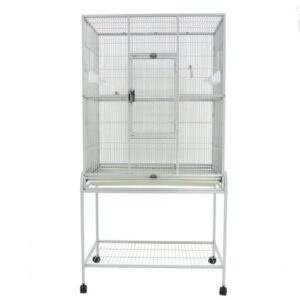
The A&E Cage Company delivers a solid small bird flight cage that truly facilitates flight exercise—your canary gets horizontal space to stretch their wings, not just hop between perches. At 31×20 inches, the dimensions encourage natural flight patterns while the bar spacing keeps tiny beaks safe.
Cage assembly takes about 20 minutes, and those removable trays make daily cleanup manageable. The powder-coated steel frame resists rust better than basic wire options.
If you’re housing multiple canaries, this setup facilitates healthy bird socialization without overcrowding. Just watch for occasional quality control hiccups with hardware.
| Best For | Bird owners with small to medium canaries who want to prioritize flight exercise and natural movement over basic perch-hopping. |
|---|---|
| Dimensions | 31″L x 20″W |
| Material | Alloy Steel |
| Bar Spacing | Not specified |
| Cleaning Method | Plastic tray |
| Included Accessories | Dual perches, 2 feed stations |
| Suitable Birds | Small to medium birds |
| Additional Features |
|
- Horizontal 31×20-inch design gives canaries real room to fly and stretch their wings naturally
- Removable trays and accessible doors make daily cleaning quick and straightforward
- Powder-coated steel construction holds up better against rust compared to standard wire cages
- Some users report rust developing faster than expected despite the coating
- Quality control issues pop up occasionally, like wrong screws shipped with the cage
- Hardware inconsistencies may require contacting customer service for replacements
4. Vision Large Bird Cage

The Vision Cage offers a curved design that maximizes interior space—your canary gets roughly 24 inches of width for real bird exercise, not just token flapping room. This pet bird enclosure model features powder-coated metal that resists moisture damage, which matters when you’re cleaning water bowls daily.
Cage assembly runs smoother than most competitors, and the front-opening door simplifies bird care routines. The Vision II Model L01 specifically provides excellent value for canaries needing generous large enclosures. Just confirm your canary habitat accommodates the footprint before purchasing.
| Best For | Bird owners with canaries, finches, or small parrots who want a spacious, easy-to-clean cage with a curved design that gives their birds plenty of room to fly and move around. |
|---|---|
| Dimensions | 17″L x 31″W x 22″H |
| Material | Terracotta and Metal |
| Bar Spacing | 0.81 inches |
| Cleaning Method | Detachable base |
| Included Accessories | 2 dishes, 2 perches |
| Suitable Birds | Budgies, canaries, finches |
| Additional Features |
|
- Curved design and wide horizontal space (around 24 inches) give birds real room to exercise and spread their wings
- Powder-coated metal frame resists rust and moisture, so it holds up well even with daily water bowl cleaning
- Front-opening door and removable bottom trays make feeding and cleaning way easier than cages where you have to reach through small openings
- The larger footprint means you need a decent amount of space and a sturdy surface to set it up
- Assembly can be tricky if you’re not handy with putting things together
- Plastic accessories like perches or feeding cups might wear out over time and need replacing
5. Prevue Wrought Iron Bird Cage
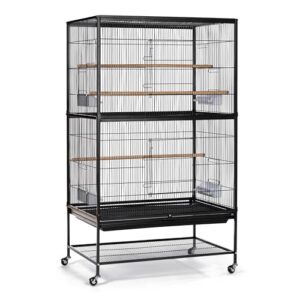
If you’re serious about iron durability, Prevue Pet Products delivers with their wrought iron construction—31 inches long, 20.5 inches wide, and 53 inches tall. This canary bird cage accommodates multiple small birds without the flimsy feel cheaper bird cages show after six months.
The 0.5-inch bar spacing keeps your canary safe during bird exercise routines, while slide-out trays make bird care genuinely manageable.
Cage assembly takes patience, but once you’ve got it together, the included perches and cups give you functional cage accessories from day one.
| Best For | Bird owners who want a sturdy, long-lasting cage for multiple small birds like canaries, parakeets, or finches, and don’t mind spending extra time on assembly. |
|---|---|
| Dimensions | 31″L x 20.5″W x 53″H |
| Material | Metal |
| Bar Spacing | 0.5 inches |
| Cleaning Method | Bottom grille and drawer |
| Included Accessories | 4 cups, 3 perches |
| Suitable Birds | Parakeets, canaries, finches |
| Additional Features |
|
- Wrought iron construction means this cage won’t bend or break like cheaper wire models—it’s built to last years.
- The slide-out bottom tray and grille make daily cleaning way easier than cages where you’re reaching through tiny doors.
- At 31″L x 53″H, there’s actual room for birds to move around and get exercise, plus it comes with perches and cups ready to go.
- Assembly can be frustrating and might need two people or extra tools to get everything lined up properly.
- The 0.5-inch bar spacing works great for small birds but rules out larger parrots completely.
- Some users report the feed cups and rubber tray aren’t as durable as the cage itself and may need replacing.
6. Yaheetech Stackable Bird Breeding Cage
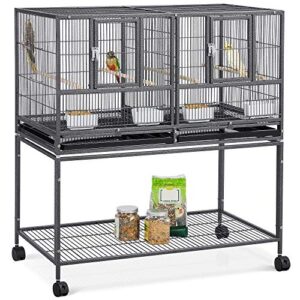
Stackable designs ensure breeding success when space gets tight—YAHEETECH Stackable Divided Bird Cage delivers 37.6 inches of length with a removable divider that separates pairs during nesting or facilitates bird socialization once chicks fledge.
The 0.4-inch bar spacing prevents escapes, and the rolling stand adds mobility during cage assembly or deep cleans.
Breeder reviews highlight sturdy iron construction and slide-out trays that cut daily maintenance time. At around $50, you get functional canary bird cages that scale with your flock without breaking your budget.
| Best For | Breeders managing multiple pairs of canaries or small birds who need flexible separation options and want a budget-friendly cage that’s easy to clean and move around. |
|---|---|
| Dimensions | 37.6″L x 18″W x 41.5″H |
| Material | Iron, Plastic, Wood |
| Bar Spacing | 10mm (0.4 inches) |
| Cleaning Method | Slide-out tray |
| Included Accessories | Perches, feeders, nesting doors |
| Suitable Birds | Lovebirds, canaries, finches |
| Additional Features |
|
- Removable divider lets you separate breeding pairs or give birds more room once chicks are ready to socialize
- Rolling stand and slide-out trays make moving and cleaning the cage quick and hassle-free
- Sturdy iron frame with 0.4-inch bar spacing keeps small birds secure without breaking the bank at around $50
- Feeding dish doors can feel flimsy and may need reinforcement over time
- Center divider has sharp edges that could snag feathers and can be tricky to clean thoroughly
- Dark gray finish and design may not fit every room aesthetic or smaller spaces
7. Prevue Scrollwork Bird Cage
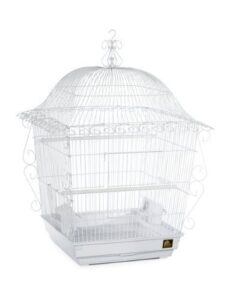
If you want vintage charm that doesn’t sacrifice your canary’s health, the Prevue Scrollwork Bird Cage blends decorative appeal with the 18-inch width and horizontal bars your bird needs for natural exercise. The scrollwork design adds elegance to any room while maintaining proper 5/8-inch wire spacing for bird safety.
Prevue Pet Products includes two hooded cups and plastic perches, though I’d swap those for natural branches to support better bird behavior and foot health. Cage assembly relies on tension fittings, so expect a bit of patience during setup.
At 25 inches tall, it offers solid vertical space for canary cages that prioritize both bird comfort and aesthetic appeal.
| Best For | Bird owners who want a stylish, vintage-looking cage for small to medium-sized birds like canaries, parakeets, or cockatiels without compromising on space or safety. |
|---|---|
| Dimensions | 18″L x 18″W x 25″H |
| Material | Plastic |
| Bar Spacing | ⅝ inch (0.6 inches) |
| Cleaning Method | Pull-out drawer |
| Included Accessories | 2 cups, 2 perches |
| Suitable Birds | Cockatiels, parakeets, conures |
| Additional Features |
|
- Generous 18″L x 18″W dimensions give birds plenty of room to move and play
- Decorative scrollwork design looks great in any home while maintaining proper 5/8-inch bar spacing
- Easy cleanup with removable bottom grille and pull-out drawer
- Tension-based assembly can be tricky and may feel less sturdy than welded cages
- Plastic perches should be replaced with natural branches for better foot health
- Higher price point compared to similar-sized basic cages
Choosing The Right Cage for Your Canary

Picking the right cage isn’t just about size—it’s about matching your setup to your canary’s lifestyle and your own needs. Whether you’re housing one bird or a whole flock, you’ll need to weigh factors like flight space, your budget, and how the cage fits into your home.
Let’s break down the key decisions that’ll help you find the perfect match.
Single Vs. Multiple Canary Housing
Most canaries thrive solo—especially males, who sing more boldly when housed alone in their bird cage. Male canary behavior shifts when cage mates arrive, often sparking territorial spats in standard canary cages.
You’ll need aviary-scale housing options if you’re keeping multiple birds, giving flock dynamics room to breathe and reducing stress through proper bird care and canary care and housing practices.
Flight Cages Vs. Decorative Cages
Flight cages beat decorative cages hands-down for canary bird cages—they offer horizontal space that matches natural flight patterns, while ornate designs trap your bird in vertical limits.
You’ll notice better bird exercise and cage ventilation in a small bird flight cage with 1/2-inch bar spacing. Decorative options might look pretty in your living room, but they sacrifice the movement your canary craves for form over function.
Budget Considerations and Value
Your canary bird cages budget planning starts around $70–$150 for solid mid-range options that won’t fail in a year. Cheaper pet bird enclosures under $50 often mean thin wire and poor finishes—false financial savings when you’re replacing them soon.
A proper cost analysis shows quality flight cages deliver better value assessment through durability and ease of bird care over time.
Customization and Aesthetic Options
Your cage design considerations extend beyond function—aesthetic finishes like powder-coated metals or decorative wrought iron let canary bird cages complement your home without sacrificing safety. Custom cages offer modular upgrades and color options that adapt as your needs shift.
- Custom designs blend visual appeal with practical bird enclosure design
- Stackable panels enable phased expansions without replacing everything
- Texture choices should remain non-toxic and easy to clean
Essential Accessories for Canary Cages
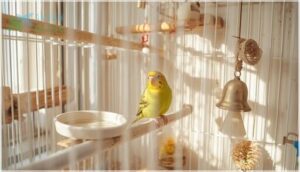
You’ve got the perfect cage picked out, but here’s the thing—your canary needs more than just four walls and some bars. The right accessories turn a basic enclosure into a space where your bird can actually thrive, not just survive.
Let’s walk through the must-have items that’ll keep your canary healthy, entertained, and singing their heart out.
Perches and Climbing Bars
Your canary’s feet deserve better than plastic dowels. Natural wood perches between 3/8 and 3/4 inches in diameter support healthy foot posture and prevent bumblefoot.
Here’s what works:
| Perch Type | Benefits |
|---|---|
| Natural wood (apple, manzanita) | Better grip, varied texture |
| Multiple diameters | Reduces pressure sores |
| Rope climbing bars (cotton/sisal) | Enrichment, exercise |
| Different heights | Encourages movement |
Skip sandpaper-covered perches—they cause abrasions. Place perches at varied levels, but don’t overcrowd your bird cage. Position them away from food bowls to maintain hygiene.
Toys and Enrichment Items
Your canary’s brain craves challenge as much as their body needs flight. Puzzle feeders that make birds work for seeds reduce boredom and stereotypic behaviors—plus they’re entertaining to watch.
Smart enrichment choices:
- Foraging toys with hidden treats encourage natural searching behaviors
- Bird swings and bells (cow-style, not jingle) provide sensory stimulation safely
- Rotating options weekly—mirrors, chew toys, little bird swings—maintain novelty
Stick with bird-safe materials like untreated wood and avoid frayed rope.
Food and Water Bowls
You’ll want 304-grade stainless steel or certified BPA-free plastic bowls—anything else risks chipped paint or bacterial buildup.
Offer separate dishes for pellets, fresh foods, and water (deep enough for bathing). Never place bowls under perches; side-mount them to avoid droppings.
Wash daily with hot water and bird-safe soap, then sanitize weekly.
Multiple canaries need their own feeding stations to prevent squabbles.
Removable Trays and Cage Covers
Think of trays as your first line of defense against bacterial buildup—lightweight metal or plastic options with mesh inserts separate droppings from perches, making daily hygiene simple. Choose trays that extend beyond cage edges to catch overflow, and you’ll transform tedious cleaning into a 30-second routine.
Breathable covers reduce drafts while maintaining proper cage ventilation, calming your bird overnight.
Maintaining Health and Safety in Canary Cages
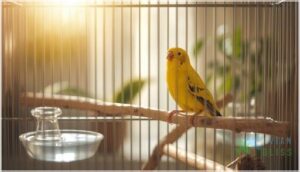
Your canary’s cage isn’t just a home—it’s their entire world, so keeping it clean and safe makes all the difference. A good setup prevents escapes, reduces stress, and helps you catch health issues before they become serious problems.
Let’s walk through the daily habits and smart placement choices that’ll keep your feathered friend healthy and happy.
Cleaning Routines and Hygiene Tips
Honestly, daily bird care makes all the difference in bird health. Replace food and water bowls every morning, then wipe perches with pet-safe cleaners.
Weekly deep cleans tackle the whole bird cage—scrub surfaces, rinse thoroughly, and let everything air-dry.
Monthly maintenance checks catch rust early. Proper cage sanitation and ventilation systems prevent illness, making easy cleaning routines essential for bird welfare.
Preventing Escapes and Injuries
Cage security starts with bar spacing under 0.5 inches—wider gaps let small birds squeeze through or get their heads stuck. Check your door latches daily; gravity-assisted or spring-loaded designs work best for injury prevention and escape proofing.
Here’s what keeps your canary safe:
- Smooth, powder-coated frames prevent metal poisoning
- Secondary clips on doors stop clever beaks
- Interior checks catch sharp edges before they cause trauma
Strong frame construction and secure door design protect bird welfare without compromise.
Placement for Reduced Stress
Your bird cage location matters as much as the cage itself. Put your canary’s home in a quiet, low-traffic spot away from drafts and temperature swings. Raise it to eye level so your pet birds feel secure—not exposed or threatened. Skip areas near loud appliances or constant foot traffic.
Stress reduction starts with smart cage placement that lets canaries observe without feeling cornered.
Monitoring Canary Well-being in The Cage
Once your canary’s cage is in the right spot, keep a daily eye on how your bird actually behaves—changes in singing, eating, or movement often signal health issues before they become serious. Watch for fluffed feathers, reduced activity, or appetite shifts.
Canary behavior tells you everything about cage environment quality and bird health. Regular health checks catch problems early, making stress reduction and proper bird nutrition easier to maintain.
Your canary’s daily behavior reveals cage quality and health issues before they escalate into serious problems
Frequently Asked Questions (FAQs)
What temperature range is safe for canaries?
Your canary thrives between 65–75°F with steady temps—think cozy room temperature. Avoid extremes above 85°F (heat stress) or below 60°F (respiratory trouble). Gradual climate management protects bird health year-round.
Can canaries live with other bird species?
Generally, it’s best to keep your canaries separate from other species. Mixed flocks can work with careful planning—think similar-sized, non-aggressive birds—but single-species housing in appropriate canary bird cages reduces stress markedly.
How often should perches be replaced?
Like a well-worn pair of shoes, perches need replacing every 4-6 months.
Check weekly for cracks or splinters—your canary’s foot health depends on safe, sturdy footing in their bird cage.
Do canaries need natural sunlight or UVB?
Yes, your canary needs UVB lighting for vitamin D synthesis and calcium metabolism. Natural sunlight works best, but full-spectrum UVB bulbs can substitute indoors—just avoid direct sun that causes overheating.
What bedding materials are safest for canaries?
Honestly, most bedding isn’t even necessary—paper-based or aspen shavings work if you must.
Skip cedar and aromatic woods entirely; they’re toxic.
Dust-free options protect your canary’s delicate respiratory health best.
Conclusion
Your canary’s wings weren’t made to clip walls—they’re built for distance, for movement, for freedom within reach. The right cage doesn’t just hold a bird; it gives them room to be what they’re.
You’ve seen the options, weighed the trade-offs, and now you know what separates flimsy from solid. Choose one of these bird cages for canaries, set it up right, and watch your bird actually live—not just survive.
- https://centerforanimalrehab.org/guidelines-for-cage-size-and-bar-spacing/
- https://www.petmd.com/bird/canary-care-sheet
- https://avianenrichment.com/index.php/learn/physical-needs/environment/cage-size-guide
- https://www.omlet.us/guide/finches_and_canaries/finch_cages/
- https://staravian.org/cage-sizes-and-requirements/