
This site is supported by our readers. We may earn a commission, at no cost to you, if you purchase through links.

Your parrot’s beak can generate up to 500 pounds per square inch of pressure—enough to snap through inadequate cage bars like twigs. That’s why choosing bird cages for large parrots isn’t about aesthetics or convenience. It’s about preventing escape, injury, and destructive boredom that leads to feather plucking and aggression.
The wrong cage becomes a prison that damages your bird’s physical and mental health. The right one? It’s a secure home base where your macaw, cockatoo, or African grey can stretch, climb, and thrive.
Bar spacing, construction materials, and enrichment features aren’t optional extras—they’re non-negotiables that directly impact your parrot’s safety and well-being.
Table Of Contents
Key Takeaways
- Large parrot cages need minimum dimensions of 4 feet tall, 4 feet wide, and 3 feet deep with bar spacing between 1 and 1.25 inches to prevent escape and injury while accommodating natural movement.
- Construction materials must be powder-coated or stainless steel with 0.5-inch bar thickness to resist corrosion and withstand the 500 PSI bite force of large parrots like macaws and cockatoos.
- Enrichment features including natural wood perches with varied diameters, foraging toys, and puzzle feeders are essential to prevent destructive boredom behaviors like feather plucking and aggression.
- Daily cleaning of food bowls and perches, weekly full cage disinfection, and monthly hardware inspections cut disease risk by 70 percent and extend cage lifespan by a decade.
Essential Features in Large Parrot Cages
Your parrot’s cage isn’t just a home—it’s their entire world. The right cage protects their health, gives them room to move, and keeps them safe from injury.
That’s why understanding cage safety and injury prevention is essential before you bring your parrot home.
Your parrot’s cage isn’t just a home—it’s their entire world, protecting their health and safety
Let’s break down the must-have features that separate a good cage from a great one.
A thoughtfully designed cage with the right accessories creates the foundation for keeping your bird healthy and mentally stimulated every day.
Cage Size and Dimensions for Large Parrots
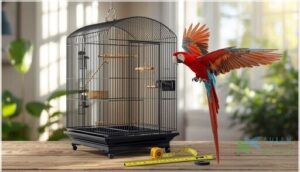
Your parrot’s home isn’t just a cage—it’s their kingdom. Large bird cages need careful sizing to protect wing health and mental well-being.
Knowing how to evaluate bar spacing, perch placement, and floor space will help you choose the right bird cage that keeps your feathered friend thriving.
- Minimum dimensions: 4 feet tall, 4 feet wide, 3 feet deep for average large parrots
- Wing space: exceed 5 feet width for species with 2+ foot wingspans
- Cage volume: larger prevents feather damage during movement
- Perch height: adequate cage depth allows varied placement
Choose big bird cage options that respect natural behavior.
Make sure your setup includes essential bird cage accessories like perches at varying heights and textures to encourage movement and foot health.
Bar Spacing and Construction Material
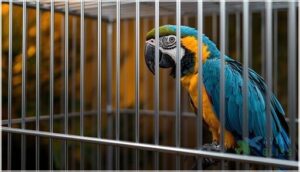
Bar spacing between 1 and 1.25 inches prevents escape and head injuries in your large parrot cages. Metal coatings matter too. Powder-coated or stainless steel cage frames resist humidity corrosion better than bare metal.
You’ll want bar thickness of at least 0.5 inches—cockatoo and macaw beaks bend weaker wire gauges.
Vertical orientation in avian housing discourages dangerous climbing into lower openings.
Pair this design choice with non-toxic cleaning supplies to maintain a safe, germ-free environment your bird can thrive in.
Door Size and Access for Easy Handling

Once you’ve sorted bar spacing, door dimensions become your next checkpoint. You need at least 14 inches wide—anything smaller traps wings during handling.
Access panels at chest height save your back and reduce stress for your bird.
Safety latches with two-step locks prevent escape artists from breaking out.
Large parrot cages with double-door entry systems give you control when transferring perches or toys.
Play Gyms, Perches, and Enrichment Options
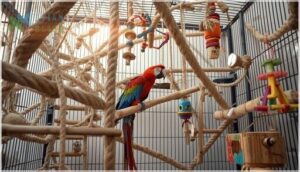
After securing proper door access, your cage needs avian enrichment elements that fight boredom. Here’s what you can’t skip:
- Natural wood perches with varied diameters prevent foot sores
- Rope ladders boost bird agility and climbing skills
- Foraging toys hide treats to trigger natural parrot behavior
- Puzzle feeders extend enrichment time by 5–15 minutes
- Rotating toy stations reduce repetitive habits
Perch variety and enrichment toys form the foundation of parrot stimulation.
Safety Features for Parrot Health and Well-being
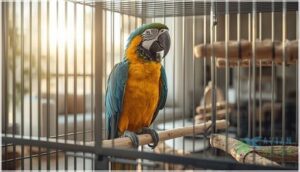
Vigilance protects your parrot from hidden cage hazards. You need corrosion-resistant, non-toxic materials with smooth welds—no sharp edges that risk injury or zinc poisoning.
Safe door latches guarantee escape prevention, while sturdy perches reduce slippage injuries.
Proper ventilation systems fight respiratory issues by eliminating mold and ammonia buildup. Cable management prevents entanglement with toys or feeders.
Bird-safe design isn’t optional—it’s your parrot’s lifeline.
Top Large Parrot Cages Reviewed
You’ve learned what makes a safe, functional cage for your large parrot.
Now let’s look at specific options that deliver on size, safety, and enrichment. These six cages represent solid choices across different budgets and bird species.
1. Yaheetech Large Parrot Bird Cage
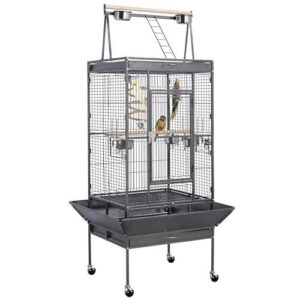
When you’re ready to take control of your parrot’s habitat, Yaheetech’s large parrot cage delivers solid wrought iron construction with a 32″L x 30.5″W x 68.5″H footprint—spacious enough for conures, cockatiels, and Senegals to stretch their wings.
You’ll appreciate the rooftop playground and 0.7-inch bar spacing that prioritizes bird safety while deterring escape. Cage assembly is straightforward, and the slide-out tray makes maintenance a breeze.
This durable large bird cage option balances parrot habitat quality with practical cage durability, giving large species the freedom they deserve.
- Solid wrought iron frame with rust-resistant finish holds up well over time
- Rooftop playground and included perches give birds plenty of room to climb and exercise
- Slide-out tray and four-sided seed guard make daily cleaning quick and hassle-free
- Bar spacing at 0.7 inches may be too wide for smaller birds like budgies
- Not large enough for bigger parrots such as macaws or moluccan cockatoos
- Some buyers report missing parts or unclear instructions, though assembly is generally easy
2. Wrought Iron Parrot Cage Stand
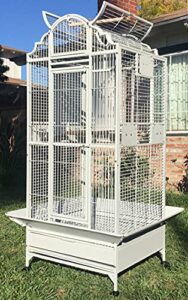
You’ll want a wrought iron parrot cage stand that won’t buckle when your macaw shifts weight or flaps hard—this dark-gray option supports a 15 kg cage load plus a 10-kg storage shelf without tipping.
The powder-coated metal durability resists rust and chipping, while four swivel casters let you roll the entire setup for cleaning or sunlight.
Iron construction with reinforced welds keeps large parrot cages stable at 63 inches tall, and the bottom shelf stores seed bags right where you need them. It’s the backbone your feathered companion deserves.
- Supports up to 15 kg of cage weight plus 10 kg on the storage shelf, so it handles large setups and accessories without wobbling.
- Four swivel casters let you roll the whole cage for cleaning or repositioning, with locking wheels to keep it still when your bird’s moving around.
- Powder-coated wrought iron resists rust and chipping better than bare metal, keeping the stand looking good and structurally sound for years.
- Some users report unclear assembly instructions and occasional quality-control issues like bent frames or missing hardware.
- Once the powder coating chips and exposes the iron underneath, rust can start forming at those spots.
- The door openings may feel small for larger hands or birds, and the cage can look more compact in person than the dimensions suggest.
3. Yaheetech Large Bird Cage
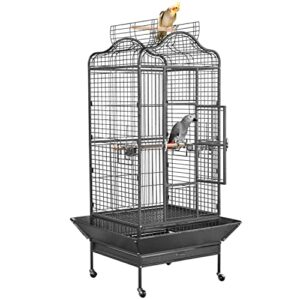
You need 32 inches of length and 30.5 inches of width when your African Grey or Amazon stretches both wings—this hammered-black wrought iron option delivers that room plus a 44.5-inch interior height.
Large parrot cages with one-inch bar spacing prevent toe jams while letting you secure three feeders and two dowel perches through feeder doors. Cage assembly takes patience, but the stainless-steel locks and slide-out tray protect bird safety long-term.
Roll it on 360° wheels for cage materials that won’t rust, keeping large species enriched on the open play top.
- Generous 32″ x 30.5″ footprint with 44.5″ interior height gives large parrots room to stretch wings and move comfortably
- 360° rolling wheels and slide-out tray make cleaning and relocating the cage simple
- Open play top, stainless-steel locks, and hammertone finish provide safe enrichment space with rust-resistant durability
- 1-inch bar spacing is too wide for smaller birds like parakeets and risks escape or injury
- Assembly can be difficult and time-consuming, often requiring multiple people
- Some users report issues with the seed skirt having large holes that allow food waste to spill out
4. Zeny Large Bird Cage With Stand
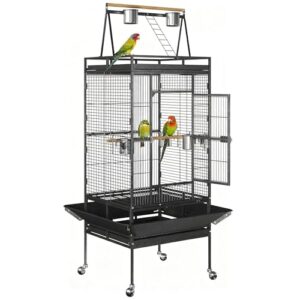
You’ll wrestle through cage assembly with Zeny’s 31×30-inch footprint—instructions confuse even experienced keepers—but once locked down, those 15-millimeter bar gaps and wrought-iron stand stability outperform flimsier large bird cages.
Wire thickness resists chewing from macaws and cockatoos, while five stainless feeding bowls and three feeder doors let you rotate enrichment without disrupting bird socialization.
Cage ventilation flows freely through the open play balcony, and 360° casters roll smoothly when you’re deep-cleaning.
Just inspect welds monthly—some parrot cage frames arrive with weak side panels that compromise bird cage safety long-term.
- Five stainless steel bowls and three feeding doors make it easy to swap food and toys without stressing your bird
- 360° swivel casters let you move the cage for cleaning or repositioning without lifting the heavy frame
- 15-millimeter bar spacing and wrought-iron construction hold up against powerful beaks and chewing
- Assembly instructions are confusing and parts sometimes don’t align properly, requiring DIY adjustments
- Side panels use thinner gauge wire without reinforcement, so aggressive chewers might damage the cage over time
- Some units arrive with damaged components, and customer service has been hit-or-miss for replacements
5. Yaheetech Large Bird Cage Aviary
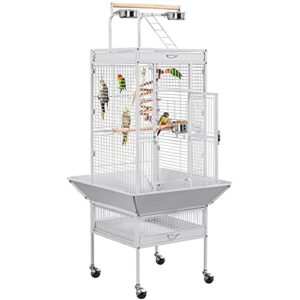
At 60 inches tall and 40 wide, this Yaheetech aviary design gives your macaw real parrot exercise space—no more cramped wings. Powder-coated wrought iron shrugs off humidity, while ¾-inch bar spacing keeps even determined beaks from escaping.
You’ll appreciate the removable bottom tray during weekly cleanouts, and those reinforced door latches prevent jailbreaks better than flimsy large bird cages.
Cage assembly demands patience—pre-drilled holes don’t always align—but once secured, integrated perches and enrichment ports support bird socialization and avian nutrition routines that keep large parrot cages feeling like home.
- Generous 60″H x 40″W dimensions give macaws actual wing-stretching space and room for multiple perches and toys
- Powder-coated wrought iron resists rust and humidity damage while reinforced latches prevent escape attempts
- Removable bottom tray and smooth-glide mechanism make weekly cleanouts quick and stress-free for both you and your bird
- Assembly can be frustrating since pre-drilled holes don’t always line up properly and require patience to secure
- Takes up significant floor space—you’ll need at least 3 feet of clearance on all sides for safe access
- Initial setup demands time and attention to detail, though the sturdy result is worth the effort
6. Wrought Iron Parrot Bird Cage
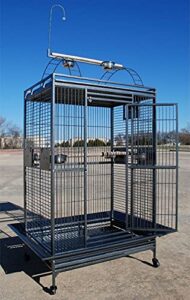
Mcage’s 28″×22″×65″ design weighs less than bulkier options, yet wrought iron construction delivers cage durability that outlasts aluminum alternatives in humid homes. You’ll notice the black vein powder coat resists chipping better than bargain finishes—critical for bird safety when beaks test every surface.
Four stainless cups and swing-out doors simplify parrot care and housing, though some owners report flimsy latches on feeder panels. At 0.6-inch bar spacing, it suits medium parrots but won’t contain smaller finches.
Cage aesthetics blend traditional design with function, making iron maintenance worthwhile for long-term large bird cage options.
- Wrought iron construction with powder-coated finish outlasts cheaper aluminum cages and resists rust in humid environments
- Four stainless steel cups and swing-out door make daily feeding and cleaning straightforward
- Includes useful features like slide-out tray, seed guards, and rolling casters for easy movement
- Some users receive damaged parts during shipping, particularly bent bars and seed catch panels
- Feeder door latches can be flimsy and prone to loosening, creating potential escape risks
- 0.6-inch bar spacing works for medium parrots but won’t safely contain smaller birds like finches
Choosing The Right Cage for Your Parrot
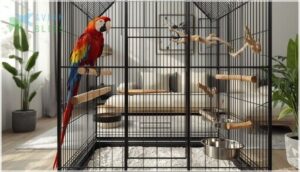
Finding the right cage for your parrot isn’t always straightforward. You want something that fits your bird’s size, habits, and your living space.
Here’s how different cage options measure up for popular large parrot species.
Matching Cage Type to Parrot Species (Macaw, Cockatoo, African Grey)
Your parrot’s personality and physique demand cage customization that goes beyond generic “large bird cage options.” Species compatibility isn’t negotiable—macaws require single-compartment enclosures with rust-resistant bars and wide doors, while cockatoos thrive in multi-level setups supporting their high energy. African Greys need secure latches and smooth finishes to prevent injury. Understanding avian psychology transforms parrot cage selection from guesswork into evidence-based welfare.
- Match bar orientation to natural climbing patterns
- Prioritize perch diversity for beak health
- Verify door width accommodates safe handling
- Consider bird socialization through cage placement
Assessing Space Needs for Wing Span and Movement
Your bird’s wingspan—not weight—dictates enclosure success. Measure full extension, then demand cages offering 2.5 to 3 times that width for authentic flight path clearance.
African Greys averaging 45 cm wingspans need 120 cm minimum widths, while macaws require 1.5–2 meters.
Movement simulation depends on perch placement creating scenic routes between points.
Spatial orientation matters: verify vertical clearance reaches 1.8 times wingspan for natural stretching during large bird cage selection.
Importance of Cage Placement in The Home
You can’t just shove large parrot cages anywhere and call it done. Room layout drives everything—position your bird away from kitchen fumes and high-traffic zones to cut stress.
Light exposure matters: aim for natural daylight without harsh glare. Air quality tanks near cooking areas, so skip those spots entirely.
Noise reduction starts with choosing quieter rooms where your parrot won’t face constant chaos.
Balancing Aesthetics and Functionality
Your cage design principles shouldn’t clash with your living room—but safety trumps style every time. Color scheme selection with lighter, non-toxic finishes makes spaces feel bigger while resisting beak damage.
Material choices in play top cage models demand rust-proof construction that accommodates vigorous climbing.
Visual harmony works when space optimization meets proper bar spacing, keeping your large parrot cages functional without sacrificing bird cage safety features.
Maintenance and Cleaning Tips for Big Cages

A clean cage isn’t just about appearances—it’s your parrot’s first line of defense against disease.
Your large cage needs a realistic maintenance plan that actually fits your schedule, or it won’t get done.
Here’s how to keep your bird healthy without turning cage cleaning into a full-time job.
Recommended Cleaning Schedules and Routines
You’ll protect your parrot’s health by tackling Daily Sanitation first—clean food bowls and perches every morning to stop bacterial buildup.
Do a full Cage Disinfection weekly using bird-safe solutions and thorough wipe-downs. Replace cage bottom litter three times weekly for Routine Maintenance.
Monthly, inspect bars and hardware for rust or wear. Consistent Cleaning with proper tools prevents respiratory infections and keeps your bird thriving.
Preventing Health Issues Through Proper Sanitation
Vigilance in Cage Hygiene cuts microbial threats by 70 percent when you clean daily instead of weekly. Use hot water and bird-safe cleaning products to scrub droppings without toxic residues.
Disinfect perches weekly—this Disease Prevention step blocks fungal growth and respiratory irritants.
Air the enclosure regularly to reduce ammonia buildup that damages eyes and lungs, safeguarding Bird Health and Parrot Health through proven Sanitation Methods.
Tips for Easy Cage Upkeep and Longevity
You’ll stretch your cage’s life by a decade when you pair smart Bird Cage Design and Construction with relentless Daily Cleaning. Adopt these Cage Liner Tips for trouble-free Waste Management:
- Swap liners every morning to shield metal from corrosion and protect Bird Health.
- Inspect welds monthly—early detection prevents collapse.
- Rotate perch locations quarterly so bars wear evenly.
Consistent Enclosure Maintenance and Parrot Care and Maintenance preserve Cage Durability without exhausting you.
Enhancing Parrot Well-Being in Large Cages
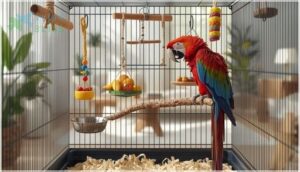
Your cage can be spotless and spacious, but your parrot won’t thrive without the right enrichment inside. A bare cage is like a mansion with no furniture—technically functional, but emotionally barren.
Let’s look at how you can transform that empty space into an environment that keeps your bird mentally sharp and genuinely content.
Selecting Toys and Accessories for Enrichment
Your parrot’s mind craves challenge—boredom breeds destructive habits you can prevent. Mix chewable wooden toys with safe acrylic puzzle pieces to spark cognitive play and foraging behavior. Rotate enrichment activities every 1–2 weeks to maintain parrot stimulation and reduce stereotypic patterns.
Provide at least two different foraging toys weekly—puzzle feeders and foraging cups work brilliantly. Size matters: choose accessories that prevent entanglement while encouraging natural avian enrichment behaviors.
Setting Up Feeding and Water Stations
You’ll want your feeding station elevated 12–18 inches above the floor—this simple positioning cuts contamination from droppings instantly. Use separate containers for pellets and fresh produce to encourage balanced food variety while maintaining hygiene practices.
Position water quality sources away from seed debris, replacing daily with bird-safe cleaning routines.
Stainless steel stations in large parrot cages resist chewing and simplify your pet bird care schedule dramatically.
Creating a Stimulating and Comfortable Environment
Your bird’s cage isn’t just shelter—it’s their world, so you’ve got to make it count with enrichment that sparks natural behaviors and prevents boredom-driven stress. Rotate foraging toys weekly to challenge your parrot’s intelligence while maintaining natural lighting exposure near windows.
Strategic cage layout with varied perch heights encourages climbing and exploration—core elements of bird wellness that directly support parrot socialization and healthy avian enrichment.
Monitoring Parrot Behavior and Stress Levels
Even the best environmental enrichment fails if you can’t spot trouble brewing. Watch for shifts in parrot vocalization—increased noise suggests they’re craving social interaction, while sudden silence signals stress. Feather ruffling, repetitive beak grinding, and pacing reveal inadequate enrichment in your bird’s space.
Key stress indicators demanding immediate attention:
- Abnormal repetitive behaviors during cage time
- Decreased heart rate variability after environmental changes
- Extended periods of social withdrawal despite proper avian care and housing
- Elevated cortisol from confinement without rotation of behavioral patterns
Frequently Asked Questions (FAQs)
Can large parrot cages be used outdoors?
Most large parrot cages aren’t built for outdoor placement. Weather protection, predator safety, and proper ventilation systems require specialized bird enclosures.
If you’re considering outdoor aviaries, invest in weatherproof, bird-safe designs with sunshade options.
How do I prevent cage rust and corrosion?
Choose powder-coated steel or stainless steel for rust prevention and corrosion control. Inspect coating regularly for scratches.
Clean with bird-safe, non-toxic solutions. Dry thoroughly after cage cleaning and maintenance to protect metal.
What noise levels do large cages produce?
Decibel measurements matter—parrots vocalize at 60-85 dB during excited calls, sometimes hitting 90 dB. Cage acoustics and vocalization patterns affect sound levels. Proper placement helps with noise reduction while maintaining parrot care routines.
Are wheeled cages stable for large parrots?
You’ll want locking casters on all four wheels—that’s non-negotiable for parrot safety.
A wide base and heavy-gauge construction prevent tipping when your bird climbs or plays on the play top cage.
How often should I replace cage components?
Your parrot’s safety depends on timely replacement. Swap toys and perches every 1-3 months, liners weekly, and hardware every 1-2 years.
Watch for rust, fraying, or chipping—those signal immediate danger.
Conclusion
Like Goldilocks finally finding the bed that fits just right, your parrot deserves a cage that matches their size, strength, and spirit. The best bird cages for large parrots don’t compromise on bar spacing, materials, or enrichment.
Your macaw won’t forgive flimsy construction. Your cockatoo won’t tolerate boredom. Choose wisely now—because the cage you select today shapes whether your bird simply survives or genuinely thrives tomorrow.
- https://blog.wordvice.com/formatting-research-paper-headings-and-subheadings/
- https://www.sciencedirect.com/science/article/pii/S0749208123000268
- https://mirianlima.github.io/research_guidelines/chapters/indepth-research.html
- https://www.scribd.com/document/736544882/Research-Process
- https://dmc-nordic.com/Cage-With-Stand-Rolling-Parrot-Cage-For-Small-To-Medium-Birds/459727