This site is supported by our readers. We may earn a commission, at no cost to you, if you purchase through links.
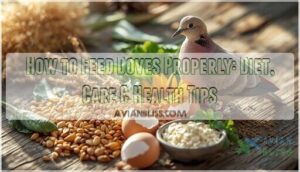
A dove sitting at a seed feeder might look perfectly content, but many birds suffer from hidden nutritional gaps that weaken their immune systems and shorten their lives. Wild doves spend hours each day selecting specific seeds that balance their protein, mineral, and energy needs.
In captivity, though, they depend entirely on you to recreate that natural variety. Feeding doves properly means understanding which seeds provide complete nutrition, when calcium becomes critical, and which common foods actually poison their delicate systems.
Small adjustments to their daily diet can prevent bone disorders, strengthen feathers during molting, and support healthy egg production without expensive supplements or guesswork.
Table Of Contents
- Key Takeaways
- What Do Doves Eat Naturally?
- Creating a Balanced Diet for Doves
- Key Foods to Include in Dove Diets
- Essential Supplements for Doves
- Foods Doves Should Never Eat
- Proper Feeding Schedules and Quantities
- Feeding Doves at Different Life Stages
- Providing Fresh Water for Doves
- Safe Feeding Practices and Environment
- Recognizing Signs of Dietary Problems
- Frequently Asked Questions (FAQs)
- Conclusion
Key Takeaways
- Doves need a varied diet of seeds, grains, pellets, and fresh greens to stay healthy and avoid nutritional gaps.
- Proper calcium supplements, grit, and omega-3 supplements are important for strong bones, good digestion, and healthy feathers.
- Avoid giving doves toxic foods like avocado, chocolate, and salty or moldy items, as these can cause serious harm.
- Feeding schedules and quantities should be consistent, with daily monitoring to prevent overeating, waste, and health problems.
What Do Doves Eat Naturally?
In the wild, doves are surprisingly resourceful eaters who’ve adapted to find nourishment in a variety of natural food sources. Their diet isn’t as simple as you might think—it includes more than just seeds scattered on the ground.
Let’s look at what makes up a dove’s natural menu and how these birds fuel their daily activities.
While doves focus on seeds and grains for energy, other birds rely on complex vocal abilities to communicate, which you can explore in detail at why birds produce such diverse and intricate songs.
Seeds and Grains in Wild Diets
Seeds and grains make up nearly all of a wild dove’s diet. When your doves forage naturally, they seek out small grass seeds, weed seeds, and waste grain from fields. Millet, safflower seeds, and other seed mixes mirror this wild foraging behavior.
Their bodies are built for seed storage and dove digestion, with specialized crops that hold thousands of tiny seeds at once. This grain-focused bird nutrition caters to their energy needs perfectly. Understanding the importance of turtle dove diets is vital for their health and well-being.
Occasional Insects and Invertebrates
Though seeds dominate, doves occasionally pick up insects and snails while wild foraging. These invertebrate sources add protein supplements to their avian nutrition, especially insects rich in amino acids that seeds lack.
Don’t worry—your doves won’t need bug hunting for digestive health. Insects make up less than one percent of a mourning dove’s natural diet, so balanced seed mixes cover their bird nutrition needs for excellent dove care.
If your dove does get injured, keep them warm and calm while following proper bird injury home treatment steps to support their recovery.
The unique ability of doves to produce crop milk production allows them to thrive without relying heavily on insects.
Creating a Balanced Diet for Doves
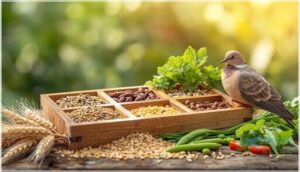
Building a balanced diet for your dove isn’t complicated, but it does require attention to a few key nutritional areas. Your dove needs the right mix of carbohydrates, proteins, fats, vitamins, and minerals to stay healthy and thrive.
Let’s look at the essential nutrients, which seeds and grains work best, and why variety matters so much in your dove’s daily meals.
While doves thrive on seeds and grains, hummingbirds have completely different nutritional needs during their nesting season, relying primarily on nectar and small insects.
Essential Nutrients for Doves
Your dove needs more than just seeds to thrive. Essential nutrients include protein sources rich in amino acids like methionine and lysine, which support strong feathers and healthy muscles.
Vitamin balance—especially vitamins A and D3—protects against infections and ensures proper calcium absorption. Mineral supplements, particularly calcium, become essential during egg-laying.
Don’t forget dietary fiber from quality seed mixes, which aids digestion and overall avian health.
Pairing nutritious seed mixes with a ceramic bird bath for garden setups ensures your feathered visitors stay healthy and hydrated year-round.
Recommended Seed and Grain Mixes
You can choose from commercial seed mixes or create your own blend. Look for products listing millet, safflower seeds, milo, and wheat—these provide balanced bird nutrition for your dove diet.
Commercial mixes often contain 10-11% protein and added vitamins A, D3, and E. Custom mixing lets you control grain composition while ensuring nutrient balance, though quality pre-made blends work well too.
Importance of Dietary Variety
Feeding just seeds won’t cut it—your dove needs more than one-note nutrition. A varied bird diet and digestion system thrives when you rotate foods regularly, promoting dietary balance and nutrient diversity through seed variation and fresh additions.
Here’s why food rotation matters for dove feeding and health:
- Prevents vitamin deficiencies that seed-only diets cause
- Promotes digestive health with diverse fiber sources
- Strengthens immune function through varied nutrients
- Mimics natural foraging patterns wild doves experience
Incorporate pellets, greens, and different grains into your pet bird care and nutrition routine to meet all dietary needs.
Key Foods to Include in Dove Diets
Building the right menu for your dove starts with choosing foods that match their natural nutritional needs. Some seeds provide quick energy, while others offer protein and healthy fats that support everything from feather growth to immune function.
Let’s look at the core foods that should make up your dove’s daily diet.
Millet, Sorghum, and Canary Seed
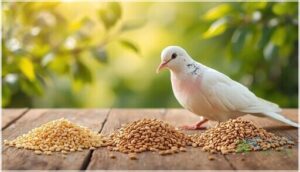
Think of millet, sorghum, and canary seed as the foundation of good dove nutrition. Millet provides easy-to-digest carbohydrates your dove’s crop can handle without strain. Sorghum adds bulk and energy, while canary seed brings essential fats for feather health.
Together, these grains create a balanced mix that promotes seed digestion and keeps your bird thriving through natural variety.
Pellets for Complete Nutrition
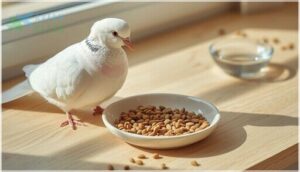
Commercial pellets offer your dove balanced diets with precise nutrient ratios, making them excellent seed supplements. These dietary formulas support bird health by delivering consistent vitamins and minerals, reducing selective eating that undermines avian wellness.
- Pellet nutrition provides complete macronutrients and micronutrients formulated for modern dove health
- Pellets promote uniform calcium-to-phosphorus ratios essential during breeding and molt
- Choose products designed for small passerines with minimal fillers
- Complement pellets with quality seeds to maintain palatability
- Supplements intake without nutritional gaps is facilitated
Fresh Greens and Safe Treats
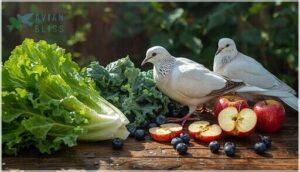
Adding small amounts of leafy greens like romaine lettuce and kale enriches your dove’s diet with vitamins A, C, and K. These vegetables should compose just 5-10% of daily intake to maintain nutrient balance.
Fresh fruits such as apples and berries work as healthy treats, never exceeding 10% of calories. Always wash produce thoroughly, serve at room temperature, and remove uneaten greens after a few hours to preserve bird health.
Essential Supplements for Doves
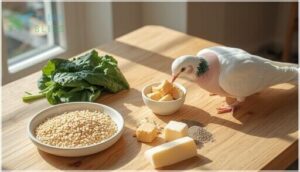
Even when you offer your dove a balanced mix of seeds and grains, there are a few key supplements that play an essential role in keeping them healthy.
These additions support digestion, bone strength, and feather quality in ways that seeds alone can’t quite manage. Let’s look at the key supplements that help your dove thrive.
Grit for Digestion
You mightn’t think about it, but your dove’s digestive health depends on grit—a coarse material that acts like tiny grinding stones in the gizzard. This helps crush seed shells and boost nutrient absorption, keeping your bird healthy.
Offer medium-sized grit particles in a separate dish and refresh them regularly. It’s a simple step that promotes avian wellness and overall health.
Calcium and Mineral Sources
Calcium supplements like oyster shell and crushed eggshell support strong bones and quality eggshells, especially during breeding. Mineral balance matters—aim for a calcium-to-phosphorus ratio near 1:1 to 2:1 for ideal bird health.
Pellet nutrition often includes these minerals already, but check labels. Vitamin D3 helps your dove absorb calcium effectively. Fresh greens and varied seeds provide trace minerals, supporting overall avian wellness without overdoing any single nutrient.
Omega-3 Fatty Acids for Feather Health
Omega-3 fatty acids from fish oil or specialized avian supplements can strengthen feather condition and reduce brittleness in your dove. Plant-based sources require conversion, which varies by bird. Measurable improvements often appear within weeks when used properly.
- Choose species-appropriate doses to avoid disrupting lipid metabolism
- Look for balanced commercial pellets containing omega-3
- Monitor feather quality as your dove benefits from supplementation
Moderation promotes avian wellness without overdoing it.
Foods Doves Should Never Eat
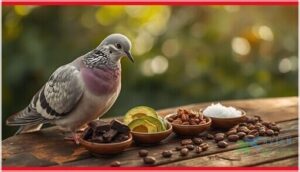
Just like you wouldn’t feed your kids something harmful, you need to know which foods can seriously hurt your doves. Some everyday items that seem harmless can actually be toxic or cause major health problems for these birds.
Just as you protect your children from harmful foods, you must guard your doves from everyday items that can poison or seriously injure them
Let’s look at the specific foods you should always keep away from your doves.
Toxic Foods (Avocado, Chocolate, Etc.)
You should never give your dove avocado, chocolate, or caffeine—these cause serious avian health problems, including heart damage and breathing trouble.
Avocado toxicity can be fatal within hours.
Chocolate poisoning and caffeine risks lead to tremors and seizures in pet bird care.
Onion hazards damage red blood cells, while salt overload stresses kidneys.
Protecting bird nutrition and diet means avoiding these dangers for bird health and avian wellness and supplements.
Moldy or Expired Seeds
Just as toxic foods harm doves, moldy or expired seeds pose serious avian health risks. Mold prevention starts with proper seed storage in cool, dry containers.
Mycotoxin risks from spoiled seed mix can cause liver damage and fungal infections like aspergillosis. Check your dove care supplies regularly—discard clumping, musty-smelling seeds immediately.
Fresh bird feeding practices protect bird nutrition and avian toxicity concerns in your flock.
Salty and Sugary Foods
Beyond spoiled seeds, chips, pretzels, and sweet treats pose equally serious dietary risks. Sodium toxicity develops when doves consume salty snacks—birds tolerate far less salt than mammals, risking neurologic damage and dehydration.
Sugar intake from candies or cookies leads to avian obesity and nutrient imbalance, displacing balanced bird nutrition. Instead, offer fresh fruits like apples (never avocado) to safely provide vitamins without metabolic harm.
Proper Feeding Schedules and Quantities
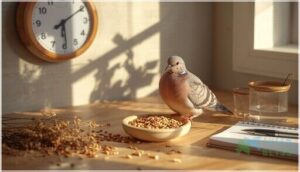
Getting the portion size and timing right makes all the difference in keeping your dove healthy and happy.
Too much food can lead to waste and selective eating, while too little can leave your bird undernourished. Let’s look at how much to feed, when to offer meals, and how to keep track of what your dove actually eats.
Daily Serving Recommendations
Your dove’s body is a little engine that needs the right amount of fuel each day. Start with about 2 tablespoons of seed and pellet mix each morning, enough to keep the bowl three-quarters full. Most doves eat roughly 12 to 20 percent of their body weight daily—around 17 grams for a typical bird.
Key feeding guidelines for proper dove nutrition:
- Seed portions: Offer 1-2 tablespoons per dove based on size and activity
- Food quantity: Adjust until your dove finishes by evening, avoiding waste
- Nutrient balance: Combine 50-60% seeds with 15-25% pellets for complete bird nutrition
Monitor what’s left in the bowl each day. If food remains untouched, you’re offering too much; if it disappears too quickly, increase slightly. This daily check helps you spot appetite changes early—often the first sign something’s wrong. Proper meal timing and seed portions support healthy weight, keeping your dove between 130 and 200 grams depending on breed.
Meal Frequency and Timing
Usually, it’s best for your dove’s health to stick with daily feeding—one meal every morning, matched to their natural rhythm. A steady meal scheduling routine encourages normal digestion cycles, allowing your bird to fill up, then rest and digest in peace.
Consistent feeding routines help maintain proper nutrient timing and contribute to overall dove care and maintenance for lasting bird health.
Monitoring Food Intake
Each day, pay close attention to how much your dove actually eats—this simple habit can be your first clue if something’s wrong. Food intake tracking acts as a window into your bird’s overall well-being and helps you fine-tune daily ration control.
- Watch for uneaten seed at day’s end, signaling overfeeding or selective eating
- Use weight monitoring tips by feeling the keel bone weekly for body condition changes
- Keep nutrition record keeping logs noting amounts offered and consumed
- Analyze feeding behavior patterns to detect subtle appetite shifts early
Feeding Doves at Different Life Stages
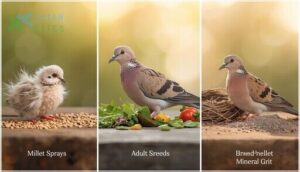
A dove’s nutritional needs shift as it moves through different stages of life, from the demanding early days as a squab to the energy-intensive periods of breeding and molting.
Knowing what to adjust in their diet during these times helps you support their health when they need it most. Here’s how to feed doves properly at each key life stage.
Feeding Baby Doves (Squabs)
Nothing compares to seeing a squab’s rapid transformation fueled by true Crop Milk—nature’s powerhouse for Squab Nutrition.
In Baby Dove Care, feedings come every few hours at first. Shifting to gentle Handfeeding Tips with age-appropriate formulas aids healthy Dove Weaning.
Careful timing, monitoring crop emptying, and adapting Bird Nutrition and Diet all help safeguard strong Avian Nutrition and happy development.
Dietary Needs During Breeding
Did you know a breeding pair‘s diet can make or break success in the nest? During dove breeding, you want to boost Protein Requirements to support egg and chick growth, meet higher Calcium Demands for strong eggshells, and fine-tune Energy Intake for stamina.
Remember: 1) extra protein, 2) calcium-rich supplements, and 3) balanced Seed and Grain Options sustain peak Avian Health and Wellness.
Adjustments for Molting Season
Think of Molting Nutrition as your dove’s “reset button”—every feather is replaced, so Molting Nutrition and Feather Care deserve extra attention.
Increase their Protein Boost with foods like beans or pellets, fine-tune Energy Adjustment to avoid weight gain, and provide Vitamin Support with leafy greens. The right Dove Diet during Molting Season keeps Bird Nutrition, Dove Care and Health, and Avian Wellness on track.
Providing Fresh Water for Doves
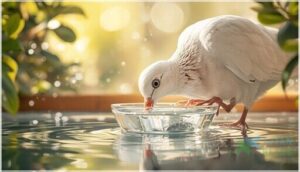
Providing clean water is just as important for your doves as a healthy diet. There are a few ways you can set up water in their enclosure to keep it accessible and safe.
Here’s what you need to know before choosing the best option for your birds.
Water Bowl Placement and Cleanliness
From the first sip to the last, keeping your dove’s water bowl in the right spot and sparkling clean is just as important as the food you give. Staying thoughtful about Water Quality and Bowl Sanitation helps create reliable Hydration Stations.
Try these tips for Dove Care and Health:
- Place bowls away from food to prevent mess.
- Change water daily—Fresh Supply matters.
- Clean bowls every day for Bird Wellness.
Bathing Needs and Water Changes
Just as a spotless drinking bowl matters, Bath Water Quality can shape your dove’s mood and feathers.
Offer a wide, shallow dish filled with Fresh Water two to three times a week, changing it after each splashy session. This simple Water Change Schedule promotes Dove Hygiene, Feather Maintenance, Bird Bathing Safety, and overall Bird Wellness—little routines that keep your companion looking and feeling well.
Safe Feeding Practices and Environment
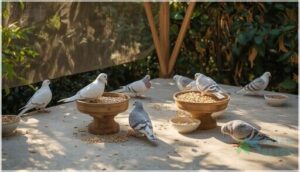
Giving your doves a safe space to eat every day sets the stage for strong habits and lasting health.
The way you arrange their feeding area can make a big difference in their comfort and safety. Let’s look at some of the best options for where to set up feeders and water dishes.
Cleanliness of Feeders and Dishes
When you care for doves, keeping feeders and dishes clean is like resetting the table for good health. Regular Feeder Sanitation using bird-safe cleaning methods—like a ten percent bleach solution—stops germs in their tracks.
Dish Hygiene isn’t just a chore; it’s essential Disease Prevention. Consistent Feeder Maintenance protects your flock, anchoring every Bird Feeding Guide and Dove Care tip.
Placement to Avoid Predators
After cleaning, your next safeguard is smart feeder placement. To boost bird safety and reduce ambushes, set feeders 10–15 feet from shrubs, keep open sightlines, and choose feeding heights around five feet.
Use these bird feeding tips:
- Leave open space for escape routes
- Use predator barriers on poles
- Avoid ground-level feeding stations
- Place feeders near moderate human activity
Reducing Seed Waste
With every handful of seed you offer, efficient waste management makes all the difference.
Smart feeder design—think trays and shallow ports—reduces scatter. Use a seed mix suited to dove seed preferences for better results.
Feed measured amounts daily to avoid leftovers. Here’s how choices shape results:
| Factor | Practical Tip |
|---|---|
| Feeder Design | Tray feeders cut scatter |
| Seed Selection | Dove mixes reduce discarded seed |
| Feeding Schedules | Small, daily feedings prevent waste |
Recognizing Signs of Dietary Problems

Even with the best feeding routine, doves can still develop nutritional issues that affect their health.
Knowing what warning signs to watch for helps you catch problems early, before they become serious. Here’s what to look for and when it’s time to call an avian veterinarian.
Symptoms of Malnutrition
When your dove isn’t getting the nutrients it needs, its body will send out clear warning signs that something’s wrong. Watch for feather loss, dull plumage, or beak problems like unusual softness or flaking.
Weight issues—either sudden loss or inability to maintain healthy mass—often signal malnutrition signs. Digestive issues, lethargy, and labored breathing also point to poor bird nutrition and diet, requiring immediate attention to restore avian health.
When to Seek Avian Veterinary Help
If you notice any of the malnutrition symptoms we just talked about, don’t wait to contact an avian veterinarian who specializes in bird health. These vet visit signs need prompt attention because doves can decline quickly.
Your vet consultation tips include bringing feeding records and noting when symptoms started. Emergency care matters most for breathing problems or sudden weakness.
Regular avian health checks support dove health and overall avian wellness and health long-term.
Frequently Asked Questions (FAQs)
Can doves eat leftover cooked rice or pasta?
Plain cooked rice offers doves mostly carbohydrates with little protein or vitamins.
Pasta with salt or sauce can harm digestive health. Offer tiny portions only as rare treats, prioritizing species-appropriate seeds and pellets instead.
How do seasonal changes affect dove appetites?
Seasonal appetite shifts reflect thermoregulation needs and foraging patterns. Cooler months increase energy reserves demand, while breeding cycles boost intake.
Heat stress in summer alters dove behavior, prompting dietary adjustments for ideal bird nutrition and health.
Should I offer multiple feeder types simultaneously?
You can absolutely offer multiple feeder types at once—ground and platform stations for doves, plus tube or hopper designs for other species.
This bird feeding tip boosts bird species diversity while reducing crowding and disease prevention concerns at any single location.
Do different dove species have different preferences?
Yes, different dove species have distinct dietary adaptations.
Mourning doves focus almost entirely on seeds, while fruit doves prefer soft fruits.
Foraging behavior and habitat influences shape these species specific needs substantially.
Can doves overeat if food is unlimited?
Like cars running smoothly until they’re overfilled with high-energy diets, doves naturally regulate intake under stable conditions.
However, unlimited access to high-energy diets can overwhelm their dietary self-regulation, creating overeating risks and obesity concerns despite their innate energy intake management abilities.
Conclusion
Every seed you choose becomes a building block for stronger bones, brighter feathers, and years added to your dove’s life. Feeding doves properly isn’t just about filling a dish—it’s about honoring their trust with knowledge that prevents suffering before it starts.
Watch their energy climb, their colors deepen, and their songs grow steadier when nutrition finally matches instinct. Small choices at the feeder create health that lasts a lifetime.