This site is supported by our readers. We may earn a commission, at no cost to you, if you purchase through links.
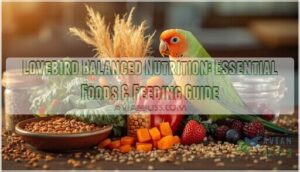
Most lovebird owners don’t realize that a seed-only diet can shorten their pet’s lifespan by years. These vibrant little parrots need far more than what wild lovebirds forage in African grasslands.
In captivity, your feathered companion depends entirely on you to provide lovebird balanced nutrition that fuels their boundless energy and keeps their plumage radiant.
The good news? Creating a proper diet isn’t complicated once you understand the basic building blocks. Quality pellets, fresh produce, and strategic treats work together to prevent common deficiencies that lead to feather plucking, lethargy, and serious health problems.
Getting the ratios right makes all the difference between a lovebird that merely survives and one that thrives for 15-plus years.
Table Of Contents
- Key Takeaways
- What is Balanced Nutrition for Lovebirds?
- Essential Food Groups for Lovebirds
- Importance of Pellets in Lovebird Diets
- Role of Fruits and Vegetables
- Seeds: Benefits and Limitations
- Protein, Fats, and Carbohydrates Needs
- Vitamins and Minerals for Lovebird Health
- Foods to Avoid for Lovebirds
- Feeding Schedules and Portion Control
- Monitoring Lovebird Nutrition and Health
- Frequently Asked Questions (FAQs)
- Conclusion
Key Takeaways
- A seed-only diet can shorten your lovebird’s lifespan by years, while proper nutrition combining 75-80% quality pellets, 15-20% fresh produce, and limited seeds (5-10%) supports 15+ years of healthy life.
- High-quality pellets deliver complete balanced nutrition with 14-21% protein, essential vitamins A, D, and E, plus proper calcium-to-phosphorus ratios that seeds alone can’t provide, making them the foundation of your bird’s diet.
- Fresh fruits and vegetables supply critical vitamins and moisture that pellets lack, but you’ll need to wash them thoroughly, chop into pea-sized pieces, and remove uneaten portions after 2-3 hours to prevent spoilage and bacterial growth.
- Warning signs like feather plucking, beak deformities, weight loss, or behavioral changes reveal nutritional deficiencies early, requiring immediate dietary adjustments or veterinary consultation to prevent serious health problems.
What is Balanced Nutrition for Lovebirds?
Balanced nutrition for lovebirds means giving your bird the right mix of foods to support their energy, health, and happiness. In the wild, lovebirds eat a variety of seeds, fruits, and plants, but captive birds need a more controlled diet to avoid deficiencies.
A well-planned avian diet and nutrition guide helps prevent common issues like obesity and nutritional gaps in captive lovebirds.
Understanding the key principles and differences between wild and captive feeding will help you build the best meal plan for your feathered friend.
For a comprehensive breakdown of species-specific nutritional needs and portion guidelines, check out these expert-crafted avian diet plans.
Key Principles of Lovebird Nutrition
Balanced nutrition for your lovebird rests on nutrient balance and dietary variety. Formulated pellets should provide 60 to 80 percent of their daily intake, ensuring consistent vitamins, minerals, and protein in every bite. Fresh fruits and vegetables complement pellets with added nutrients and moisture.
Pairing pellets with healthy seeds for pet birds as occasional treats adds enrichment while keeping nutritional priorities intact.
Feeding strategies must limit seeds to about 5 to 10 percent to prevent deficiencies. Regular health monitoring helps you adjust nutrition planning as your bird’s needs change. A well-planned diet includes understanding bird care basics to guarantee peak health.
Differences Between Wild and Captive Diets
Wild lovebirds forage 4 to 8 hours daily, consuming seeds, fruits, leafy greens, and even insects across miles of territory. Your captive bird’s life looks completely different:
- Formulated pellets replace scattered wild foods, delivering balanced nutrition in minutes
- Seed bowls eliminate foraging effort, risking obesity and nutrient deficiency risks
- Controlled portions prevent the variety wild flocks naturally find
- Reduced activity demands careful dietary adaptation strategies to maintain health
Understanding these contrasts shapes better captive bird nutrition. A well-planned diet should include high quality pellets to guarantee superior health.
Essential Food Groups for Lovebirds
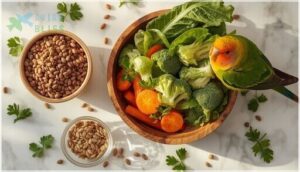
Your lovebird’s diet should be built around three core food groups that work together to keep them healthy and thriving. Each group plays a specific role in meeting their nutritional needs, from vitamins and minerals to energy and protein.
Here’s what you need to include in their daily feeding routine.
A strong foundation in avian nutrition and wellness ensures your bird gets the right balance of proteins, vitamins, and minerals every day.
High-Quality Pellets
Your lovebird’s health hinges on high-quality pellets designed for small parrots. These formulated feeds deliver balanced nutrition—around 14–21 percent protein, essential vitamins A, D, and E, plus calcium and phosphorus in proper ratios.
Pellets should form 60–80 percent of your bird’s daily diet, providing complete nutrient profiles that seeds alone can’t match. Choose products with clear guaranteed analyses and appropriate kibble size for lovebirds.
Fresh Fruits and Vegetables
Fresh fruits and vegetables bring color, flavor, and essential micronutrients that pellets can’t fully replicate. Aim for 15–20 percent of your lovebird’s balanced diet from fresh produce.
Offer apples, berries, kale, and carrots as healthy snacks. Wash thoroughly, chop into small pieces for safe eating, and remove uneaten portions after two to three hours.
This dietary variety promotes nutrient balance and keeps mealtime interesting.
Seeds in Moderation
Seeds can serve as healthy treats and behavioral enrichment, but they shouldn’t dominate your lovebird’s balanced diet. Think of them as dessert, not dinner.
- Offer sunflower and millet as occasional rewards for nutrient balance
- Limit seed portions to 10–20 percent of total daily intake
- Choose seed variety to support different nutritional needs
- Monitor body condition closely, adjusting amounts to prevent obesity
- Combine seeds with pellets and fresh produce for moderation tips that work
Importance of Pellets in Lovebird Diets
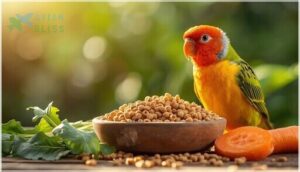
Pellets are the foundation of a healthy lovebird diet, and they’re designed to deliver complete nutrition in every bite. Unlike seeds, which can leave gaps in essential vitamins and minerals, high-quality pellets provide a balanced mix your bird needs to thrive.
Let’s look at what makes pellets so important and how much your lovebird should be eating.
Nutrient Composition of Pellets
Think of pellets as tiny nutritional powerhouses—each one packs a precise blend of vitamins, minerals, and proteins your lovebird needs to thrive. High-quality pellets contain balanced ratios of essential nutrients that support healthy feathers, strong bones, and vibrant energy.
| Nutrient Category | Key Components | Primary Function |
|---|---|---|
| Vitamins | A, D3, E, B-complex | Vision, immunity, metabolism |
| Minerals | Calcium, phosphorus, iron | Bone strength, egg production |
| Protein | 12-15% content | Muscle development, tissue repair |
| Fats | 4-6% healthy oils | Energy, vitamin absorption |
| Carbohydrates | Grains, vegetables | Sustained energy source |
Quality pellet ingredients guarantee your bird receives complete nutrition planning for lovebirds in every bite.
Pairing pellets with bird feeding and nutrition tips helps you create balanced meal plans that support your lovebird’s health and energy.
Recommended Pellet Percentages
Avian veterinarians strongly recommend that high-quality pellets make up 75 to 80 percent of your lovebird’s diet for ideal dietary balance. This pellet ratio ensures your bird meets essential nutrient needs while limiting seeds to just 10 to 20 percent.
The remaining portion should include fresh vegetables and limited fruit, creating a balanced diet for birds that prevents malnutrition and aids long-term health.
Role of Fruits and Vegetables
Fresh fruits and vegetables aren’t just extras—they’re essential for your lovebird’s health, providing vitamins, minerals, and fiber that pellets alone can’t offer.
You’ll want to know which options are safe and nutritious, since not all produce is appropriate for birds. Here’s what you can confidently add to your lovebird’s daily menu.
Safe Fruit Options for Lovebirds
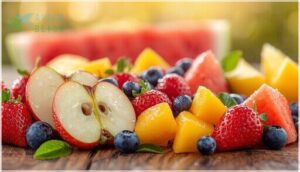
You’ll be happy to know that most fruits won’t harm your lovebird when properly prepared. Fresh fruits should comprise only 10 to 20 percent of your bird’s intake to prevent sugar overload. Safe, nutrient-rich options include:
- Apples (seeds removed, as they contain cyanide compounds)
- Berries like blueberries and strawberries for antioxidants
- Mango to support vision and immune function
- Melons for hydration in small portions
Nutritious Vegetables to Include
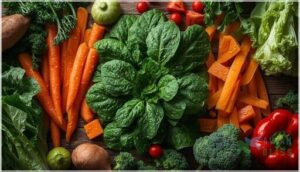
Vegetables pack even more nutritional punch than fruits, offering your lovebird essential vitamins without the sugar spike. Fresh kale, spinach, and other leafy greens deliver vitamin A for sharp vision. Colorful veggies like carrots and bell peppers guarantee nutritional balance across the spectrum.
| Vegetable Type | Examples | Key Nutrients |
|---|---|---|
| Leafy Greens | Kale, Spinach, Romaine | Vitamin A, Calcium |
| Orange Veggies | Carrots, Sweet Potato | Beta-carotene, Fiber |
| Colorful Veggies | Bell Peppers, Broccoli | Vitamin C, Antioxidants |
This variety bolsters your bird’s diet and health while preventing nutritional deficiencies.
Preparation and Serving Tips
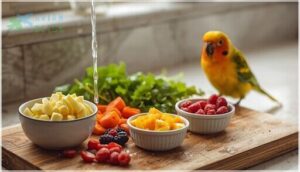
Proper fresh prep is your first line of food safety defense. Wash all fruits and vegetables thoroughly, even prewashed items, to remove pesticide residues and bacteria. Remove apple seeds, stone fruit pits, and any spoiled portions before serving.
Chop produce into pea-sized pieces that match your lovebird’s beak—this encourages food variety and prevents selective eating.
Fresh foods spoil quickly, so remove uneaten portions after two hours to maintain nutrient balance.
Seeds: Benefits and Limitations
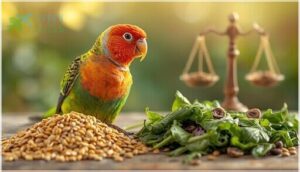
Seeds have a complicated reputation in lovebird nutrition—they’re familiar and birds love them, but they come with real risks if you’re not careful. Your lovebird needs some seeds for variety and mental stimulation, but relying on them too heavily can create serious health problems down the road.
Let’s look at which seeds work best and why a seed-only diet won’t cut it.
Common Seed Types
You’ll encounter several seed varieties when building your lovebird’s nutrition plan. Pellets remain the foundation, but seeds offer texture and foraging enrichment alongside fresh fruits.
- Millet (white and red varieties) provides B vitamins and quick energy with lower fat than oil seeds
- Sunflower seeds deliver vitamin E but carry obesity risks due to 50% fat content
- Safflower seeds offer a moderate-fat alternative with calcium and trace minerals
- Canary grass seed supplies balanced protein and amino acids for small parrots
Risks of Seed-Heavy Diets
While seeds enrich your lovebird diet with variety, relying too heavily on them creates serious health risks. Seed-heavy diets cause fatty liver disease, obesity, and malnutrition because they lack vitamin A, calcium, and balanced nutrition your bird needs. Seed toxicity from rancid kernels compounds these dietary imbalance problems.
That’s why pellets should dominate—75-80% of daily intake—while seeds stay under 20% to meet your lovebird’s true dietary needs.
Protein, Fats, and Carbohydrates Needs
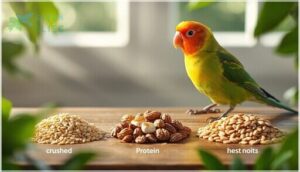
Your lovebird needs more than just vitamins and minerals to thrive. Protein, fats, and carbohydrates work together to fuel your bird’s daily activities, maintain healthy feathers, and support strong muscles.
Let’s break down each nutrient and where your lovebird should get it.
Protein Sources for Lovebirds
Your lovebird’s protein needs are met primarily through high-quality pellets, which provide 14 to 20 percent crude protein along with balanced amino acids like lysine and methionine.
You can supplement with small portions of cooked egg once or twice weekly, or offer cooked legumes such as beans and lentils in teaspoon-sized servings.
Sprouted seeds deliver better protein quality than dry seed varieties.
Healthy Fats and Energy
Fats don’t just keep your lovebird’s feathers glossy—they also fuel daily activities and help absorb those essential fat-soluble vitamins you’ve been offering. High-quality pellets deliver balanced fats for proper fat metabolism and energy sources without excessive caloric intake.
Seeds like sunflower contain healthy oils but shouldn’t dominate your bird’s nutrition. Monitor your lovebird’s weight, as too much dietary fat disrupts nutrient balance and leads to obesity.
Role of Carbohydrates
Carbohydrates power your lovebird’s daily energy needs and keep metabolic balance in check. Complex carbs from pellets and fresh fruits deliver sustained fuel without the blood sugar spikes that simple sugars cause.
Balanced lovebird nutrition emphasizes quality carbohydrate sources over refined options.
- Whole grains in pellets provide fiber benefits and steady carb energy sources
- Sprouted seeds offer digestible starches for active metabolism
- Berries and apples add natural sugars with vitamins
- Leafy greens contribute fiber for proper digestion
Vitamins and Minerals for Lovebird Health
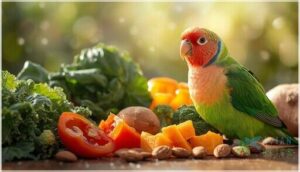
Your lovebird’s body relies on specific vitamins and minerals to stay healthy, just like yours does. Without the right balance, you’ll see problems ranging from weak bones to dull feathers and a compromised immune system.
Let’s look at the essential nutrients your bird needs and how to make sure they’re getting enough.
Essential Vitamins (A, D, E)
Your lovebird’s health depends on three powerhouse vitamins. Vitamin A keeps respiratory and digestive tracts strong, preventing infections—deficiency causes white mouth plaques and breathing problems in seed-fed birds. Vitamin D3 builds sturdy bones by helping absorb calcium, requiring UVB light or dietary supplements. Vitamin E protects cells from damage and aids reproduction.
High-quality pellets supply these nutrients, but dark leafy greens like spinach and carrots boost vitamin A naturally.
Critical Minerals (Calcium, Phosphorus)
Bone health in your lovebird hinges on two minerals working together. Calcium builds strong skeletons and facilitates egg production, while phosphorus strengthens bones and aids metabolism. The catch? You need a balanced ratio—ideally 1.5 to 2 parts calcium to 1 part phosphorus.
Seed-heavy diets flip this ratio, causing deficiencies. Offer cuttlebone, dark leafy greens, and quality pellets to maintain proper mineral intake and prevent fractures.
Supplementation Guidelines
Most lovebirds don’t need extra vitamins if you’re feeding them right, but there are exceptions worth knowing. Breeding females require calcium supplements to prevent egg-binding. Birds recovering from illness may benefit from probiotic benefits and targeted nutrient boosters. Vitamin D3 becomes critical if your lovebird lacks natural sunlight exposure.
Always consult an avian vet before adding vitamin supplements or dietary enhancers—overdosing causes toxicity, and mineral intake must stay balanced.
Foods to Avoid for Lovebirds

Keeping your lovebird safe means knowing which foods can harm them. Some everyday items in your kitchen are actually toxic to birds, even in small amounts.
Let’s look at the specific foods you need to keep away from your feathered friend.
Toxic Foods List
Some foods act like silent threats to your lovebird’s health. Avocado toxicity can cause sudden respiratory distress and death within 12-24 hours. Chocolate hazards include tremors and seizures from methylxanthines. Heavy metals from galvanized cages poison slowly. Xylitol risks triggering fatal hypoglycemia within minutes.
Food poisoning from moldy items, onions causing anemia, and fruit pits releasing cyanide complete the toxic foods list.
Harmful Human Foods
Your kitchen cupboard holds surprising dangers for your feathered friend. Human snack risks extend far beyond toxic foods and substances already mentioned, creating hidden dietary toxin effects that cause serious bird health problems:
- Salted chips and crackers deliver sodium levels that trigger kidney failure and dehydration in small bodies.
- Caffeinated drinks cause rapid heartbeat, hyperactivity, and potential cardiac arrest.
- Fried foods contribute to obesity, vitamin A deficiency, and fatty liver disease.
- Sugar-laden desserts disrupt metabolism, leading to calcium deficiency and food poisoning signs.
These seemingly harmless treats appear on every avian toxicology toxic food lists for good reason.
Spoiled or Moldy Foods
Beyond what’s clearly unsafe, old or moldy food poses severe risks to your lovebird’s avian health. Mold prevention is crucial because fungi produce dangerous mycotoxins that attack liver tissue and red blood cells, even when contamination isn’t visible.
Proper food storage is essential to protect against mycotoxin risks and nutrition-related bird health problems. Discard anything discolored, clumped, or musty-smelling immediately, as vitamin A deficiency and worse can follow exposure to toxic foods and substances.
| Storage Method | Mold Prevention Benefit |
|---|---|
| Sealed containers in cool, dry areas | Blocks moisture, stops fungal diseases |
| Daily water changes | Prevents bacterial growth |
| Remove fresh foods after 30–60 minutes | Limits toxic effects exposure |
Feeding Schedules and Portion Control
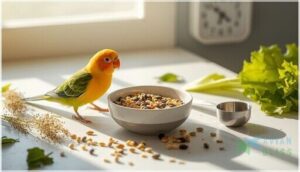
Getting the right amount of food into your lovebird at the right time isn’t complicated, but it does matter for their health. You’ll want to know how much to offer each day, when to put fresh food out, and how to adjust portions as your bird grows or if health needs change.
Let’s walk through the practical details that’ll keep your lovebird thriving.
Daily Feeding Amounts
Your lovebird needs about 1.5 to 2 tablespoons of food each day to stay healthy and energized. Adjust portion sizes based on your bird’s activity level, age, and body condition.
This daily ration should include pellets (75-80%), fresh vegetables (15-20%), and a small amount of seeds and fruits (5-10%). Monitor food intake carefully—uneaten food signals dietary needs may require tweaking.
Best Times to Feed
Feeding schedules matter more than you might think. Offer your lovebird a morning feeding soon after waking—this matches their natural foraging rhythms and ensures they consume balanced pellets before anything else.
Provide fresh vegetables and fruits during this window, then remove uneaten portions after 1-2 hours. Evening meals replenish energy before the overnight fast.
This structured nutrient timing promotes ideal lovebird nutrition and discourages selective eating habits.
Adjusting Diet for Age and Health
As days shape routines, dietary needs of lovebirds shift with age and health. Age Specific Nutrition means watching for slowing activity, weight changes, or illness. Senior Care calls for softer foods, lower fat, and careful Nutrient Balance. Prioritize Health Monitoring, and be ready to make Dietary Adjustments:
- Track weight regularly
- Adjust protein or fat as needed
- Offer softer foods for seniors
- Reduce high-fat seeds
- Consult avian nutrition experts
Attentive Avian nutrition keeps birds thriving, whatever stage they’re in.
Monitoring Lovebird Nutrition and Health
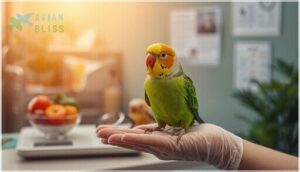
You can’t just set up a great diet and walk away—you need to keep an eye on how your lovebird’s actually doing. Watching for warning signs, mixing things up at mealtime, and knowing when to call in a vet can make all the difference in your bird’s long-term health.
Here’s what to watch for and when to take action.
Signs of Nutritional Imbalance
A lovebird’s feathers, energy levels, and droppings tell you everything you need to know about whether their diet is working or failing them. Watch for feather plucking, beak deformity, or weight loss—these signal serious nutrition gaps. Behavioral changes and poor molting also point to avian nutrition issues. Catching bird health problems early protects your lovebird’s wellbeing.
Your lovebird’s feathers, energy, and droppings reveal whether their diet is working—watch for plucking, beak issues, or weight loss as early warning signs
| Warning Sign | Possible Nutritional Deficiency |
|---|---|
| Feather plucking or dull plumage | Vitamin A, protein, or essential fats |
| Beak deformity or overgrowth | Calcium, vitamin D, or mineral imbalance |
| Weight loss or lethargy | Insufficient calories or protein |
| Behavioral changes (aggression, anxiety) | B vitamins or overall malnutrition |
| Poor molting or delayed feather regrowth | Protein, zinc, or vitamin deficiencies |
Encouraging Dietary Variety
Gradual novel food introduction works wonders when lovebirds refuse new items. Mix small amounts of unfamiliar vegetables or fruits with their preferred pellets, then slowly increase proportions over seven to ten days.
Food rotation—alternating safe produce weekly rather than repeating the same items—mimics wild dietary diversity and builds nutrient variety.
Foraging strategies like puzzle feeders and multiple dishes transform mealtime into dietary enrichment, encouraging exploration of colorful veggies and different pellet shapes without stress.
When to Consult an Avian Vet
When should you seek veterinary care for lovebird nutrition concerns? Schedule wellness visits with an avian veterinarian twice yearly to catch early bird health problems, especially if your bird eats mostly seeds.
Emergency symptoms—sudden refusal to eat, respiratory issues like tail bobbing, or poor feather quality—demand immediate avian health checks.
Proactive nutrition counseling prevents many lovebird care and health crises before they start.
Frequently Asked Questions (FAQs)
How do lovebirds nutritional needs change seasonally?
Throughout the year, your bird’s body battles bigger demands during molting and mating seasons.
You’ll need to boost protein, calcium, and vitamin-rich foods when feathers grow or eggs develop, adjusting portions accordingly.
Can lovebirds eat sprouts or germinated seeds?
Yes, you can offer your lovebird sprouts or germinated seeds as healthy treats. Sprouting boosts nutrition by increasing vitamins and protein.
Always rinse thoroughly to prevent bacteria, and feed sprouts fresh for peak avian wellness.
What treats are safe for lovebirds?
You can safely offer your lovebird fresh fruit options like berries and apples, nutritious pellet additives, safe veggie treats including leafy greens, and wholesome snack ideas.
Limit healthy seed choices to prevent nutrition imbalances.
How does diet affect lovebird breeding success?
Proper breeding nutrition directly impacts your lovebirds’ fertility factors and egg production. Calcium-rich foods support nesting success, while balanced proteins improve mating habits.
Deficiencies in avian nutrition and wellness can lessen reproductive health markedly.
Do lovebirds need grit for digestion?
Grit isn’t necessary for your lovebird’s digestive health—their muscular gizzard grinds food naturally.
Insoluble grit poses impaction risks, though soluble supplements like cuttlebone safely provide calcium when needed for avian nutrition and wellness.
Conclusion
Your lovebird’s vibrant feathers and lively chirps aren’t just personality—they’re direct reflections of the meals you serve. Birds eating proper lovebird balanced nutrition consistently outlive those on seed-heavy diets by nearly a decade.
The pellets, fresh produce, and careful portion control you provide today determine whether your companion thrives or merely survives. Start with small changes, monitor their response, and watch their energy transform. Your daily choices literally shape their lifespan.
- https://vcahospitals.com/know-your-pet/lovebirds-feeding
- https://www.northernparrots.com/blog/seeds-vs-pellets/
- https://www.merckvetmanual.com/management-and-nutrition/nutrition-exotic-and-zoo-animals/nutrition-in-psittacines
- https://zupreem.com/what-are-the-best-veggies-for-birds/
- https://lafeber.com/pet-birds/questions/calcium-rich-foods/