This site is supported by our readers. We may earn a commission, at no cost to you, if you purchase through links.
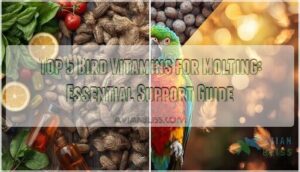
Your bird’s feathers don’t just fall out and magically grow back perfect—molting demands more nutrients than almost any other life stage, rivaling breeding season for sheer metabolic intensity. Without targeted nutritional support, you’ll see ragged, discolored plumage that never quite fills in properly, leaving your bird vulnerable to temperature stress and infections.
The difference between a smooth molt and a prolonged struggle often comes down to specific vitamins, amino acids, and minerals that standard seed mixes simply don’t provide in adequate amounts. Smart supplementation transforms this stressful period into an opportunity for your bird to emerge with stronger, more vibrant feathers than before.
Table Of Contents
Key Takeaways
- Molting demands metabolic intensity rivaling breeding season, requiring targeted supplementation with vitamin A for follicle integrity, B-complex for keratin synthesis, and sulfur amino acids (methionine and cystine) that compose 90 percent of feather protein structure.
- Protein deficiency causes incomplete molts and weak feathers since feathers require up to 90 percent protein by dry weight, while inadequate methionine below 0.48 percent dramatically reduces plumage coverage and triggers pecking behaviors.
- Strategic supplementation during molt should deliver at least 16 percent crude protein alongside omega-3 fats for inflammation reduction, proper calcium-phosphorus ratios to prevent bone problems, and zinc to prevent frayed feathers and structural weakness.
- Vitamin A supplementation at 600 IU per kilogram feed reduces Newcastle disease mortality by 36 percent during molting when immune systems are temporarily weakened, making infection control and environmental stress management critical for successful feather regrowth.
Essential Vitamins for Molting Birds
When your bird starts molting, it’s burning through nutrients faster than usual, and a few specific vitamins make all the difference between smooth regrowth and patchy, brittle feathers. You’ll want to focus on the heavy hitters—vitamins that directly support keratin production, cell repair, and metabolic functions that keep feather follicles working overtime.
A well-rounded bird molt care routine ensures your feathered friend gets the right balance of vitamins A, D3, and biotin to power through this energy-intensive phase.
Here’s what your feathered friend actually needs to make it through molt season without the stress.
A diet packed with vitamin-rich foods for birds can help support healthy feather regrowth and keep energy levels steady during this demanding time.
Key Vitamins for Feather Regrowth
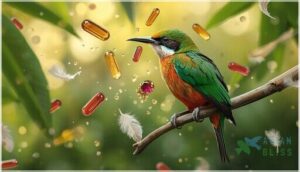
Vitamin A benefits your bird’s follicle integrity and skin health, directly supporting feather regeneration when old plumage falls away. B complex vitamins drive feather keratin synthesis during this energy-intensive process, while vitamin E delivers antioxidant support to protect rapidly dividing follicle cells. Together with vitamin D3 for calcium metabolism, these molting supplements create the foundation your bird needs for strong feather growth. Adequate protein and amino acids are also essential for healthy feathers, as explained in this resource.
You can explore a full breakdown of essential feather health vitamins and minerals to tailor your bird’s diet during molting season.
Amino Acids Needed During Molting
Feather keratin relies on sulfur amino acids—methionine and cystine—for roughly 90 percent of its protein structure during molting. Your bird’s protein synthesis depends on adequate methionine role, as deficiencies slow feather growth and trigger pecking behaviors. Lysine benefits include pigment formation and efficient feed conversion, while balanced supplements containing:
- Methionine at 16-18% crude protein levels
- Lysine for ideal plumage density
- Valine near 0.83% for feather structure
- Glycine and proline supporting follicle integrity
secure amino acid balance drives healthy avian nutrition throughout molting cycles. The importance of a is supported by research showing deficiencies can quickly lead to feather abnormalities.
Common Deficiencies Affecting Molting
When your bird’s diet falls short, protein deficiency leads directly to weak feathers and incomplete molts, as feathers require up to 90 percent protein by dry weight. Vitamin A insufficiency causes dry, flaky skin, complicating feather replacement, while amino acid deficiency—particularly methionine below 0.48 percent—dramatically reduces coverage. Mineral imbalance manifests as brittle, frayed plumage, and fatty acid deficit triggers dull feathers with fragile shafts during regrowth.
Protein deficiency causes weak feathers and incomplete molts, while vitamin A, amino acids, minerals, and fatty acids prevent dry skin, reduced coverage, brittle plumage, and fragile shafts
| Deficiency Type | Visible Signs During Molting |
|---|---|
| Protein & Amino Acids | Incomplete molts, chronic pinfeathering, easily broken wing feathers |
| Vitamin A | Dry skin, retained feather sheaths, weak plumage quality |
| B Complex Vitamins | Brittle shafts, depigmentation, ragged feather condition |
| Trace Minerals (Zinc) | Frayed feathers, stress lines, structural weakness and breakage |
Bird vitamins and supplements correct these nutrition gaps, supporting normal feather growth when seed-based diets lack essential nutrients.
Nutritional Support for Healthy Molting
Your bird’s diet becomes more critical than ever during molt, when their body works overtime to regenerate feathers. The right balance of protein, fats, and minerals determines whether your feathered friend emerges with vibrant, healthy plumage or struggles with brittle, malformed feathers.
Choosing specialized molting food fortified with extra amino acids and vitamins can significantly strengthen their defenses during this taxing transition.
Here’s what you need to know about feeding your bird through this demanding phase.
High-Protein Foods for Birds
During molting season, your feathered friends need serious fuel to regrow those feathers. Here are three top protein sources that deliver real results:
- Mealworms – dried versions pack roughly 50 percent crude protein, making them excellent choices for finches and small birds
- Cooked eggs – offer 12-13 g protein per 100 g as digestible bird food
- Legumes – well-cooked lentils and beans provide 8-9 g protein per serving
These high-protein foods support vigorous feather growth when incorporated strategically into molting diets.
Importance of Fats and Minerals
Beyond protein, your bird needs strategic fat and mineral support during molting season. Omega 3 benefits include reduced inflammation, while fats deliver double the energy of protein, preserving amino acids for feather growth.
Molting supplements with the proper calcium phosphorus ratio prevent bone problems, and electrolyte regulation maintains hydration. Zinc deficiency directly impairs feather development, making mineral supplements essential for bird health and full plumage.
Balancing Diets for Molting Success
During molting season, you’ll need to adjust your bird’s diet carefully—aim for at least 16 percent crude protein while monitoring feed intake to prevent weight loss. Feather nutrition demands strategic dietary adjustments, balancing high-protein foods with mineral supplements and adequate fats.
Your molting strategies should include complete, fortified rations rather than single ingredients, ensuring nutritional support for ideal feather growth without overfeeding energy.
Top 5 Bird Vitamins for Molting
You need vitamin supplements that actually work when your bird’s going through molt. The right blend of protein, amino acids, and B vitamins can make the difference between patchy regrowth and healthy, vibrant feathers.
Here are five clinically-backed options that support feather regeneration during this demanding metabolic period.
1. Kaytee Forti Diet Bird Supplement
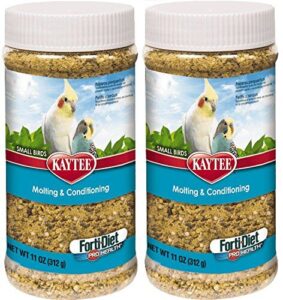
When your parrot’s plumage looks more scraggly than stunning during molt, Kaytee Forti-Diet Pro Health provides a targeted blend of essential amino acids, B-complex vitamins, and biotin to support keratin synthesis and restore feather quality within 3-4 weeks of daily supplementation.
This 11-ounce supplement benefits birds at all life stages, mixing easily with your regular feed to address common dietary needs during molting, breeding, and color enhancement phases.
You’ll find it reduces that uncomfortable pin feather stage while supporting overall feather growth, though results vary depending on your bird’s baseline nutrition and individual molting patterns.
| Best For | Bird owners dealing with molting issues or wanting to support healthy feather growth during breeding and color enhancement phases. |
|---|---|
| Form | Seed |
| Age Range | All Life Stages |
| Primary Use | Molting & Conditioning |
| Brand | Kaytee |
| Weight | 11 ounces |
| Made in USA | Not specified |
| Additional Features |
|
- Mixes easily with regular feed and provides essential amino acids and vitamins that target feather quality
- Works for birds at all life stages and can reduce the uncomfortable scraggly pin feather stage
- Shows visible results within 3-4 weeks when used as a daily supplement
- Some packs contain more powder than seeds, which can affect consistency and value
- Results vary depending on your bird’s existing diet and individual molting patterns
- Works best as part of a complete nutrition plan rather than as a standalone solution
2. Vitakraft Egg Food Supplement for Birds
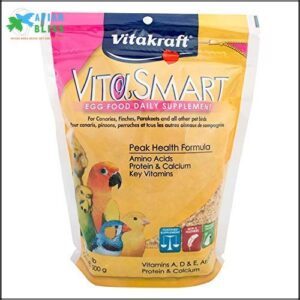
Your feathered companion deserves targeted nutritional reinforcement when shedding old plumage, and Vitakraft Egg Food Supplement delivers 17.5% crude protein from dried egg and soybean meal alongside 49,940 IU/kg vitamin A and 0.75% lysine—levels formulated specifically for feather growth and keratin synthesis during molting periods.
This crumbly egg food benefits birds experiencing stressful environment changes, breeding cycles, or active molt by providing digestible amino acids that standard seed diets often lack.
You’ll sprinkle 2 tablespoons over daily feed or moisten it with water for enhanced palatability and absorption.
| Best For | Bird owners with canaries, finches, parakeets, or parrots going through molting, breeding, or stressful transitions who need a protein-rich supplement to support feather regrowth and overall vitality. |
|---|---|
| Form | Seeds |
| Age Range | All Life Stages |
| Primary Use | Breeding & Molting |
| Brand | Higgins |
| Weight | 1.1 pounds |
| Made in USA | Not specified |
| Additional Features |
|
- High protein content (17.5%) with dried egg and essential amino acids like lysine and methionine supports strong feather development during molting
- Flexible feeding options—sprinkle dry over regular food or moisten with water/juice for picky eaters
- Fortified with vitamins A, D3, and E at therapeutic levels to support immune function, calcium absorption, and skin health
- Some customers report receiving damaged or open packages, raising freshness and safety concerns
- Higher price point compared to basic seed supplements may not fit all budgets
- Contains wheat flour and sugar, which may not suit birds with specific dietary sensitivities or owners preferring grain-free options
3. Wild Harvest Molting Bird Supplement
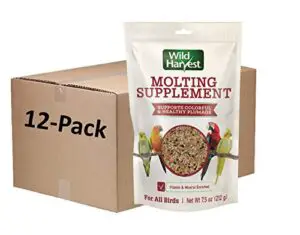
You’ll find Wild Harvest Molting Supplement an economical molting support option formulated with seed nutrition, including millet, oat groats, and canary grass seed, fortified with vitamin A palmitate, D3, and eight B vitamins for feather growth.
This 7.5-ounce supplement supports bird wellness during active molt cycles by delivering essential amino acids through sesame, safflower, and nyjer seeds while providing manganese, zinc, and copper for keratin synthesis.
Sprinkle it over your bird’s regular feed as a vitamins for molting birds boost, not a complete diet, ensuring supplement safety through intermittent use.
| Best For | Bird owners looking for an affordable, vitamin-enriched seed supplement to support their pet’s feather health and color during molting periods. |
|---|---|
| Form | Seeds |
| Age Range | All Life Stages |
| Primary Use | Plumage Health |
| Brand | Wild Harvest |
| Weight | 7.5 ounces |
| Made in USA | Not specified |
| Additional Features |
|
- Fortified with a comprehensive range of vitamins (A, D3, E, and eight B vitamins) plus trace minerals like zinc and manganese to support healthy feather regrowth
- Economically priced at around $3 for 7.5 oz, making it an accessible option for regular supplementation during molt cycles
- Highly rated by users (4.8 out of 5 stars) with positive feedback on noticeable improvements in plumage quality and feather condition
- Not a complete nutritional source and must be used alongside a balanced daily diet, requiring careful feeding management
- Packaging issues reported by some customers, including difficulty resealing and occasional shipping damage
- Effectiveness relies on anecdotal user reports rather than controlled scientific studies, so results may vary between individual birds
4. KikiBirds Premium Parrot Food Blend
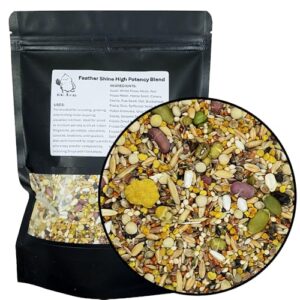
KikiBirds Premium Parrot Food Blend delivers 17.5% plant protein through omega-rich seeds, bee pollen, and freeze-dried sprouts, making it an excellent choice for parrots experiencing heavy feather loss during molt.
This American-made blend promotes feather growth and bird wellness by providing amino acids and essential fats your parrot needs during molting season.
You can use it as a foraging-friendly supplement alongside pellets, offering muscle care and skin health benefits across all life stages.
The variety of seeds and herbs makes it particularly valuable for parrot nutrition when feather regeneration demands peak.
| Best For | Parrot owners dealing with molting issues who want a high-protein supplement to support feather regrowth and overall health. |
|---|---|
| Form | Seed |
| Age Range | All Life Stages |
| Primary Use | Molting & Breeding |
| Brand | KikiBirds |
| Weight | 1 pound |
| Made in USA | Yes |
| Additional Features |
|
- High 17.5% plant protein with omega-rich seeds and bee pollen supports molting, breeding, and muscle care
- American-made with no artificial colors and variety of seeds encourages natural foraging behavior
- Works well as a supplement to pellet diets across all life stages and parrot species
- Expensive compared to other bird food options with limited quantity for the price
- Large seed size may not work for smaller birds, and some parrots may reject the taste or texture
- Parrots may pick through ingredients and waste what they don’t like, requiring mixing with other foods
5. Missing Link Avian Superfood Supplement Powder
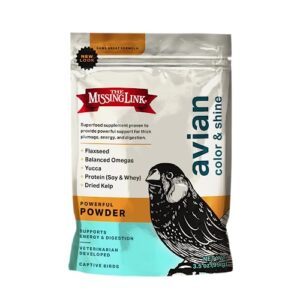
Missing Link Avian Superfood Supplement Powder provides fresh-ground flaxseed packed with omega fatty acids to support feather growth and plumage thickness during molting season. This veterinarian-formulated bird supplement includes soy and whey proteins, dried kelp, and yucca to boost avian nutrition when your bird needs it most.
The 3.5 oz powder works as a top dressing for seed or pellet diets, delivering digestive and immune support alongside molting supplement benefits. You’ll find it particularly effective for canaries, parakeets, conures, and cockatiels experiencing active molt.
| Best For | Bird owners with canaries, parakeets, conures, or cockatiels going through molting season who want a flaxseed-based supplement to support feather health and overall nutrition. |
|---|---|
| Form | Powder |
| Age Range | All Life Stages |
| Primary Use | Plumage & Energy |
| Brand | Guardian Angel |
| Weight | 3.5 ounces |
| Made in USA | Yes |
| Additional Features |
|
- Fresh-ground flaxseed provides natural omega fatty acids that promote thick, healthy plumage and vibrant feather color
- Veterinarian-formulated with superfood ingredients like kelp and yucca for digestive and immune support
- Easy to use as a powder top dressing that mixes well with existing seed or pellet diets
- Packaging has reported ziplock seal issues that can affect product freshness
- Some birds refuse to eat it due to texture or taste preferences
- May not show results for birds with underlying health conditions, and can get pricey for long-term daily use
Molting Bird Health Considerations
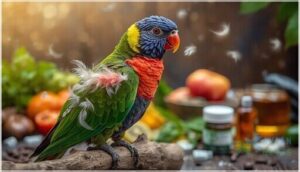
Your bird’s immune system takes a real hit during molting, leaving them vulnerable to infections and complications you can’t afford to ignore. Managing their environment, stress levels, and nutrition becomes non-negotiable when their bodies are working overtime to grow new feathers.
Here’s what you need to watch for to keep your molting bird healthy and thriving.
Preventing Infections and Diseases
Vulnerability peaks during molting season when your bird’s immune system temporarily weakens, making infection control and disease prevention critical.
You’ll want to implement strict biosecurity measures, including frequent cage cleaning and quarantine protocols, while providing targeted bird supplements rich in vitamins for molting birds.
Vitamin A supplementation at 600 IU per kilogram feed reduces Newcastle disease mortality by 36 percent, supporting feather growth and avian health and wellness through enhanced antibody production and mucosal barrier integrity.
Managing Stress and Environmental Factors
Beyond infection control, you’ll need to address environmental stress factors that directly impact feather growth during molting season. Temperature regulation and lighting management affect your bird’s circadian rhythm, while noise reduction prevents cortisol spikes that compromise molting supplements’ effectiveness.
Humidity control softens emerging pin feathers, and consistent cage cleanliness minimizes pathogen exposure, creating ideal conditions for bird health and successful molt completion.
Monitoring Feather Quality and Growth
Once you’ve optimized environmental conditions, track feather regrowth by measuring new vane length after each molting cycle and recording preening behavior patterns.
Feather inspection should reveal uniform sheen across coverts, with consistent vane density indicating adequate bird vitamins and protein intake.
Check for broken barbules or persistent gaps between wings—these asymmetries signal nutritional deficiencies requiring immediate supplements for birds and veterinary consultation.
Frequently Asked Questions (FAQs)
How often should I supplement my birds diet?
Your bird’s supplement schedule isn’t one-size-fits-all. During active molting, daily vitamins for molting birds support feather growth. Once molt completes, scale back to 3-5 days weekly to prevent oversupplementation risks.
Can I give human vitamins to my bird?
No—human vitamins pose serious risks of vitamin toxicity because dosing for humans far exceeds safe avian nutrition levels.
Always choose bird-specific supplements formulated for safe dosing and proper feather growth during molting.
What signs indicate vitamin overdose in birds?
Watch for hyperexcitability, muscle weakness, or diarrhea—signs of vitamin toxicity in your bird. Feather loss, beak problems, and skin issues can also signal overdose.
Behavioral changes like lethargy warrant immediate veterinary attention.
Are liquid or powder supplements better for molting?
Liquid vitamins for molting birds absorb faster, delivering nutrients quickly during active feather regrowth.
Powder supplements offer steady, all-day intake when mixed into food, though your bird’s taste preferences ultimately determine which molting supplements work best.
Do outdoor birds need molting supplements too?
Sunlight provides everything, yet outdoor birds often lack critical nutrients during molting cycles.
Wild bird care usually doesn’t require molting supplements if your feathered friends access diverse foods, but environmental factors and poor nutrition may warrant veterinarian-guided supplementation.
Conclusion
Think of molting as your bird rebuilding its armor, one feather at a time—without the right materials, that armor comes out weak and incomplete.
The bird vitamins for molting we’ve covered deliver the protein, amino acids, and minerals your bird’s body desperately needs during this metabolic marathon.
Choose a targeted supplement, monitor feather quality closely, and you’ll see the difference in vibrant, resilient plumage that protects your bird through every season ahead.
- https://pmc.ncbi.nlm.nih.gov/articles/PMC6985464/
- https://birdsupplies.com/blogs/news/8-critical-bird-vitamins-for-vibrant-parrot-feathers
- https://birdpalproducts.com/products/multivet-molting-aid
- https://petfoodpassion.co.uk/2025/02/12/when-and-how-to-use-supplements-for-cage-and-aviary-birds/
- https://kreamerfeed.com/blogs/articles/feeding-for-feather-growth-nutrition-that-supports-strong-plumage