This site is supported by our readers. We may earn a commission, at no cost to you, if you purchase through links.
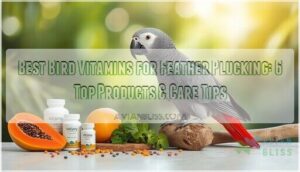
When your parrot methodically strips every chest feather down to bare skin, the culprit isn’t always psychological—nutritional deficiencies fuel a significant percentage of chronic plucking cases, creating a cascade of follicle damage, weakened keratin structures, and compulsive self-grooming that doesn’t stop without intervention.
Bird vitamins for feather plucking work by restoring the micronutrients essential for healthy plumage regeneration, addressing deficits in vitamin A, D3, biotin, and amino acids that leave follicles unable to produce resilient feathers. Yet not all supplements deliver the bioavailable forms your bird’s system can absorb, and pairing the wrong product with an underlying infection or behavioral trigger won’t yield regrowth.
Targeted vitamin therapy, combined with environmental adjustments and veterinary oversight, offers the most reliable path toward repairing damaged feather tracts and breaking the plucking cycle.
Table Of Contents
- Key Takeaways
- Causes of Feather Plucking in Birds
- Essential Vitamins for Feather Health
- Top Bird Vitamins for Feather Plucking
- Choosing The Right Supplement for Your Bird
- Nutrition and Care Strategies for Feather Regrowth
- Frequently Asked Questions (FAQs)
- How do you treat feather plucking in birds?
- How to improve feather quality in birds?
- How to treat feather loss in birds with home remedies?
- How do I know if my bird has a vitamin deficiency?
- Can vitamin overdose harm my birds feathers?
- How long until feather regrowth becomes visible?
- Do wild birds experience feather plucking behavior?
- Are liquid vitamins better than powder forms?
- Can feather plucking spread to other cage birds?
- Conclusion
Key Takeaways
- Feather plucking often stems from nutritional deficiencies in vitamin A, D3, biotin, and amino acids that weaken follicles and keratin structures, making targeted supplementation essential alongside medical evaluation to rule out infections, pain, or psychological triggers before starting any vitamin regimen.
- Effective supplements combine bioavailable forms of B-vitamins for keratin synthesis, omega-3 fatty acids to reduce skin inflammation, and probiotics with chelated minerals to improve nutrient absorption, though no single product works without addressing underlying stressors like poor diet, inadequate lighting, or environmental monotony.
- Proper treatment requires a multi-pronged approach pairing high-quality pellet-based diets (60-80% of intake), consistent light schedules, foraging enrichment, and weekly monitoring of weight and feather regrowth, with visible pin feathers typically appearing within two to four weeks once plucking stops and nutritional gaps close.
- Over-supplementation with fat-soluble vitamins (A, D3, E, K) can worsen feather quality and trigger inflammation, making veterinary consultation critical to establish safe species-specific dosing, interpret blood work, and adjust supplements as your bird’s condition improves or changes over time.
Causes of Feather Plucking in Birds
Feather plucking doesn’t happen in a vacuum—it’s your bird’s way of signaling that something in their physical, psychological, or environmental world has gone off track. Understanding the root cause, whether it’s a hidden infection, chronic stress, or a nutritional gap, is the first step toward helping your bird heal and regrow healthy plumage.
Watching for early signs of viral bird diseases like PBFD or Polyomavirus can help you catch these serious conditions before permanent feather damage sets in.
Feather plucking signals that something in your bird’s physical, psychological, or environmental world has gone off track
Let’s look at the three main categories of triggers that can drive this distressing behavior.
Understanding what’s behind these triggers is crucial—if you’ve noticed your parrot showing signs like lethargy or appetite loss, those behaviors often point to underlying stress or health issues.
Physical Triggers (Infections, Allergies, Pain)
Physical discomfort often drives feather plucking before behavioral issues come into play. Bacterial or respiratory infections create irritation that prompts pulling, allergies to pollen or cage materials trigger itching and dermatitis, and musculoskeletal or nerve pain intensifies grooming to the point of self-mutilation. Infection control, allergy testing, pain management, and skin health assessments support feather regrowth by addressing root medical causes before you layer in supplements like biotin for feather growth.
Vitamin A deficiency may compound these issues by weakening the respiratory tract, so monitoring your cockatiel’s coughing and breathing patterns helps distinguish infection from nutritional gaps.
- Bacterial infections cause oral or systemic discomfort that alters self-care and grooming patterns
- Respiratory infections lead to throat irritation, prompting rubbing and feather removal around the neck
- Food or environmental allergies manifest as itching that triggers compulsive plucking
- Musculoskeletal or neuropathic pain drives birds to pluck accessible feathers for relief
- Chronic follicle infections or mites irritate feather bases, perpetuating repetitive removal cycles
Psychological Factors (Stress, Anxiety, Boredom)
Once you’ve ruled out infection and pain, psychological factors—stress, anxiety, and boredom—frequently explain why your bird won’t stop plucking. Loud noises, cage moves, or inconsistent routines trigger chronic stress, while separation anxiety manifests as screaming and over-preening when you leave.
Understimulated birds sitting idle for hours develop destructive habits, making stress management, behavioral therapy, and boredom prevention through enrichment non-negotiable for anxiety relief and emotional support. Birds are especially sensitive to environmental changes and stress, which can increase feather plucking and related behaviors.
Environmental Issues (Diet, Lighting, Hygiene)
Beyond stress lies the environment itself—inadequate avian nutrition, broken lighting systems, and poor air quality drive feather plucking when your bird’s basic needs go unmet. Seed-heavy diets starve feathers of vitamin A and calcium, while low humidity control dries skin until pin feathers itch unbearably:
- Nutritional deficiencies weaken keratin and slow molts
- Irregular photoperiods disrupt hormones and increase restless grooming
- Dirty cages, stale water hygiene, and skipped cage cleaning irritate skin and airways
Supplements alone won’t fix these foundational gaps in bird health. For a deeper understanding of the impact of environmental health factors on feather plucking, consider reviewing expert recommendations.
Essential Vitamins for Feather Health
Your bird’s feathers aren’t just beautiful—they’re living tissue that depends on a steady supply of specific vitamins, amino acids, and minerals to grow strong and stay healthy.
When feather plucking becomes a problem, addressing nutritional gaps can be one of the most effective ways to support regrowth and discourage destructive behaviors. Let’s look at the core nutrients your bird needs to rebuild damaged plumage and maintain resilient, vibrant feathers.
Stress-related plucking often stems from respiratory discomfort, so monitoring signs your cockatiel might be breathing heavy can help you identify underlying health triggers early.
Vitamin A, D3, and E for Plumage
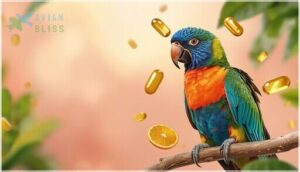
Vitamins A, D3, and E form the foundation of plumage health and work together to protect feather follicles, support strong shaft development, and reduce skin irritation that often triggers feather plucking.
Vitamin A keeps follicle linings smooth, vitamin D3 helps absorb minerals for resilient feather structure, and vitamin E acts as an antioxidant shielding cells from damage, so balanced avian nutrition requires careful attention to these fatty acid-dependent nutrients and their interactions for ideal feather growth.
B-Vitamins for Feather Growth
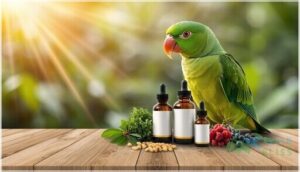
B-vitamin complex supplements deliver the cellular fuel your bird needs to transform dietary protein into strong feather keratin, making biotin, riboflavin, and folic acid essential during regrowth after feather plucking.
- Biotin benefits feather keratin production, strengthening shafts and improving follicle anchoring in plucking-prone birds
- Riboflavin effects include proper barb formation and protection against clubbed-down deformities
- Folic acid role promotes normal pigmentation and rapid cell turnover in active follicles
- Vitamin B complex provides energy conversion for continuous feather growth cycles
- Water-soluble B vitamins require daily replenishment because your bird can’t store reserves for extended molt periods
Amino Acids and Omega Fatty Acids
Your bird’s feathers are built from about 90 percent keratin protein, so amino acid benefits from methionine, lysine, and cysteine provide the sulfur-rich building blocks that create resilient shafts resistant to breakage.
Fatty acid balance between omega-3 and omega-6 controls inflammatory pathways in skin, reducing the itch and irritation that often drive feather plucking while omega-rich foods support flexible follicle membranes and vibrant feather nutrition throughout molt.
A balanced approach to feeding doves properly ensures they receive adequate omega-3 sources like flaxseed and chia without overdoing inflammatory omega-6 grains.
Role of Probiotics and Minerals
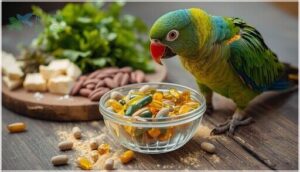
Gut health sits at the foundation of every feather growth, because probiotic benefits from Lactobacillus and Bacillus species improve nutrient absorption while mineral balance—especially calcium, zinc, and iodine—directly strengthens shaft structure and promotes thyroid-driven feather regrowth.
When you pair avian nutrition probiotics with trace minerals, you address both the inflammatory gut triggers and structural deficits that fuel feather plucking in captive birds.
Top Bird Vitamins for Feather Plucking
When you’re dealing with feather plucking, selecting the right vitamin supplement can feel overwhelming given the sheer number of products available, each claiming to address nutritional gaps that may be contributing to your bird’s behavior.
The following six supplements represent formulations that target specific deficiencies commonly associated with feather plucking, including B-vitamins for keratin synthesis, omega fatty acids for skin health, and calming compounds that address stress-related plucking. Each product offers a distinct approach to supporting feather regrowth and overall wellness, allowing you to choose based on your bird’s individual needs and your avian veterinarian’s recommendations.
1. UnRuffledRx Bird Vitamin Supplement
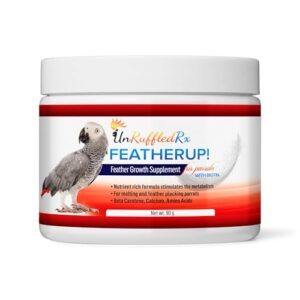
When your parrot constantly replaces damaged plumage, UnRuffledRx FeatherUp bird vitamin supplement delivers concentrated nutrition to support that demanding cycle of feather growth. This powder blends 13 amino acids with trace minerals and omega vitamins to provide the building blocks for keratin production, addressing the nutritional gaps common in seed-heavy diets.
You’ll sprinkle it onto moist vegetables or fruit twice daily during active plucking, then reduce to once daily as pin feathers emerge, making it a practical cornerstone of any feather plucking recovery plan focused on avian wellness and supplement safety.
| Best For | Parrot owners dealing with molting or chronic feather plucking who need a targeted supplement to fill nutritional gaps and support healthy feather regrowth. |
|---|---|
| Form | Powder |
| Brand | UnRuffledRx |
| Target Use | Feather growth support |
| Weight | 90 Grams |
| Age Range | All birds |
| Natural Ingredients | Yes |
| Additional Features |
|
- Contains 13 amino acids and trace minerals specifically formulated to support keratin production and strong feather structure
- Easy to mix into moist foods like vegetables or fruit, with a mild nutty flavor that most birds accept
- Can be used twice daily during active plucking or molting, then scaled back to once daily as new pin feathers appear
- Some birds may refuse the supplement despite efforts to mix it into favorite foods
- May not solve feather plucking caused by behavioral or environmental issues rather than nutritional deficits
- At $28.99 for 90 grams, the cost can add up for long-term use or multi-bird households
2. Hemp Well Bird Oil Supplement
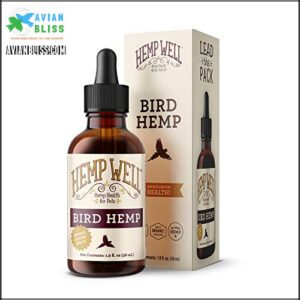
When anxiety or dry skin drives your bird’s feather plucking, Hemp Well Bird Oil Supplement offers a plant-based alternative rich in omega fatty acids that support bird skin health and feather regrowth.
This organic, cold-pressed hemp oil delivers an ideal omega-6 to omega-3 ratio that surpasses many fish oils, promoting moisture balance that can reduce the discomfort triggering destructive behaviors. You’ll administer it daily by mixing into moist foods or applying topically to bare patches, though you must consult your avian veterinarian to determine the proper supplement dosage for your parrot’s weight and species.
| Best For | Bird owners dealing with feather plucking or dry skin issues who want an organic, plant-based supplement to support their parrot’s skin and feather health. |
|---|---|
| Form | Oil |
| Brand | Hemp Well |
| Target Use | Skin and feather health |
| Weight | 2 Ounces |
| Age Range | All birds |
| Natural Ingredients | Organic |
| Additional Features |
|
- Delivers an optimal omega-6 to omega-3 ratio that outperforms many fish oils for moisture balance and skin comfort
- Versatile administration—mix into food or apply directly to bare patches where plucking occurs
- Organic, GMO-free, and sustainably sourced in the USA with cold-pressed processing that preserves natural nutrients
- Requires consultation with an avian vet to determine correct dosage, adding an extra step before use
- Some users report adverse reactions or skin problems, meaning it may not work for every bird
- Packaging instructions sometimes contradict the product listing, creating confusion about proper use
3. Morning Bird Calming Supplement for Birds
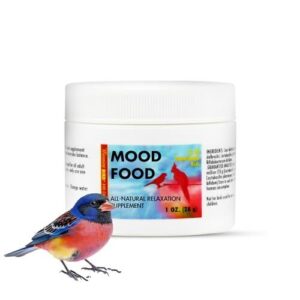
When your bird’s feather plucking stems from stress, anxiety, or aggression rather than nutritional gaps, Morning Bird Mood Food provides targeted calming effects through L-theanine, a non-sedating amino acid that aids bird behavior modification and stress reduction without making your parrot drowsy.
This supplement safety profile includes human-grade ingredients, B-vitamins for nervous system support, and lecithin for healthy nerve membranes, all formulated to address stress management for birds and promote feather health by reducing the psychological triggers behind destructive plucking episodes in your companion.
| Best For | Bird owners dealing with stress-related feather plucking, aggression, or excessive screaming who want a non-sedating supplement to support calmer behavior alongside environmental improvements and veterinary care. |
|---|---|
| Form | Powder |
| Brand | Morning Bird |
| Target Use | Calming and stress reduction |
| Weight | 6 Ounces |
| Age Range | All Life Stages |
| Natural Ingredients | Yes |
| Additional Features |
|
- Contains L-theanine and B-vitamins to reduce anxiety and stress behaviors without making birds drowsy or lethargic
- Made with human-grade ingredients and free from pesticides, herbicides, and preservatives for safe daily use
- Sweet-tasting powder format mixes easily with moist food or vegetables, making it simple to give to birds of all sizes
- Can take anywhere from several days to two weeks before you see noticeable changes in your bird’s behavior
- At $48.36 for 6 ounces, the cost adds up quickly, especially for owners with multiple birds or large parrots requiring higher doses
- Some users report the powder becomes sticky or clumpy and doesn’t always mix well with water, limiting administration options
4. KikiBirds Premium Parrot Food Blend
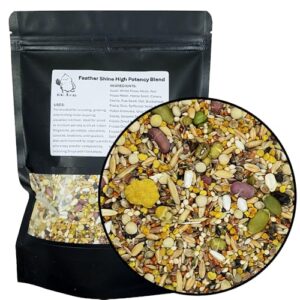
While calming supplements address behavioral triggers, your bird’s foundation for feather growth begins with what fills the food dish, which is where KikiBirds Premium Parrot Food Blend enters the conversation as a whole-grain option that promotes bird wellness through foraging benefits and seed quality rather than artificial additives.
This corn-free, soy-free, peanut-free formula offers 17.5% plant protein alongside omega fatty acids and freeze-dried sprouts, creating a textured mix that encourages natural foraging behavior in cockatiels, conures, lovebirds, and Quakers while complementing your pellet-based parrot nutrition strategy for thorough parrot care.
| Best For | Parrot owners looking for a natural foraging mix to complement pellets and support feather health in small to medium birds like cockatiels, conures, and lovebirds. |
|---|---|
| Form | Seed |
| Brand | KikiBirds |
| Target Use | Molting and breeding support |
| Weight | 1 Pound |
| Age Range | All Life Stages |
| Natural Ingredients | Yes |
| Additional Features |
|
- Encourages natural foraging behavior with varied textures and whole seeds, which can reduce boredom and feather-plucking tendencies.
- Clean formula without corn, soy, or peanuts means fewer fillers and common allergens that can affect skin and feather condition.
- High protein content (17.5%) and omega-rich ingredients support molting, breeding, and overall feather quality when paired with a balanced diet.
- Pricey compared to standard seed mixes, and the 1-pound bag may run out quickly depending on flock size.
- Larger seed sizes might not work well for very small birds, and some parrots may be picky about certain ingredients.
- Not a complete diet on its own—you’ll still need pellets and fresh foods to cover all nutritional bases, especially for birds with feather issues.
5. UnRuffledRx Red Palm Oil for Birds
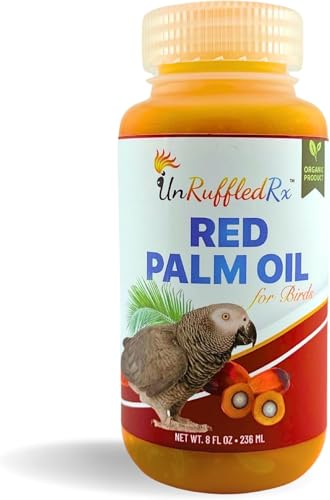
When foraging enrichment isn’t enough to address dull or damaged plumage, you may need to nourish your bird from the inside out, which is where UnRuffledRx Red Palm Oil for Birds offers concentrated red palm benefits through 100% RSPO-certified cold-pressed virgin oil that promotes feather regrowth and bird health with natural carotenoids, vitamin E, and omega fatty acids.
Mix one-quarter teaspoon per 350 grams of body weight into chop or soft foods two to five times weekly, monitoring supplement efficacy as improved feather growth and skin comfort emerge over consistent weeks of oil administration in your parrot care routine.
| Best For | Bird owners looking to improve their parrot’s feather quality, skin health, and overall wellness through a natural supplement rich in vitamin E, beta carotene, and omega fatty acids. |
|---|---|
| Form | Oil |
| Brand | UnRuffledRx |
| Target Use | Feather and immune health |
| Weight | 8 Ounces |
| Age Range | All birds |
| Natural Ingredients | 100% natural |
| Additional Features |
|
- Supports healthier, shinier feathers and can help reduce skin dryness that leads to plucking or over-preening
- 100% natural, cold-pressed virgin red palm oil with no fillers or preservatives, certified by RSPO for ethical sourcing
- Provides antioxidants and provitamin A carotenoids that support immune health, liver function, and respiratory wellness in birds
- Strong smell and thick, sticky consistency can be messy to work with and may stain surfaces
- Dosage can be tricky to figure out, especially for first-time users trying to match their bird’s body weight
- Some birds may resist the bright orange color or taste, requiring gradual introduction and patience
6. Equa Holistics Biofeather Supplement
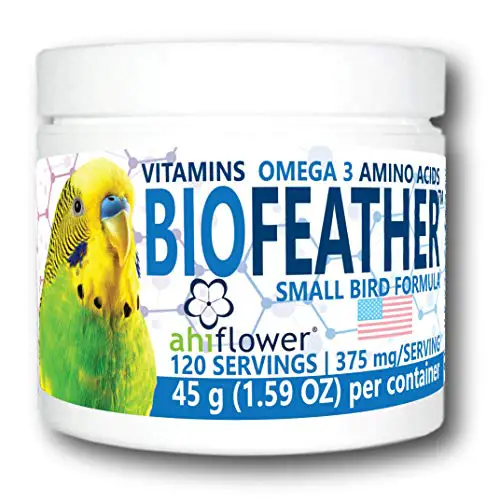
While palm oil delivers fat-soluble vitamins, your bird’s feather regrowth often hinges on protein precursors and structural cofactors, which is why Equa Holistics Biofeather Supplement combines Ahiflower-derived omega-3s, methionine, cystine, biotin, and chelated minerals into a thorough powder that targets keratin synthesis and skin integrity in birds recovering from feather plucking episodes.
Sprinkle the measured dose over soft food daily, watching for improved feather density and sheen as the biofeather ingredients support avian wellness through sustained bird nutrition and supplement efficacy in your overall avian nutrition and diet program alongside veterinary care.
| Best For | Parrot owners looking to support healthy feather regrowth during molting or after plucking episodes with a daily supplement that delivers amino acids, omega-3s, and chelated minerals in an easy-to-use powder form. |
|---|---|
| Form | Powder |
| Brand | Not specified |
| Target Use | Healthy feather growth |
| Weight | 2.89 ounces |
| Age Range | All ages |
| Natural Ingredients | Non-GMO |
| Additional Features |
|
- Combines Ahiflower omega-3s, keratin-building amino acids like methionine and cystine, and chelated minerals to target feather structure and skin health from multiple angles.
- Powder format mixes easily into soft food or mash, making daily dosing simple even for picky eaters, with one 2.89-ounce jar offering around 120 servings.
- Made with human-grade, non-GMO ingredients in the USA, giving you a quality assurance baseline for what you’re adding to your bird’s diet.
- Some users reported clumping, moisture issues, or an off-putting smell that may require careful storage in a cool, dry spot to maintain freshness.
- Results vary by bird—a few owners saw no noticeable improvement in feather condition, suggesting the formula may not address every underlying cause of poor plumage.
- Works as a nutritional support tool, not a standalone fix, so you’ll still need veterinary guidance to rule out infections, parasites, or medical reasons behind feather plucking.
Choosing The Right Supplement for Your Bird
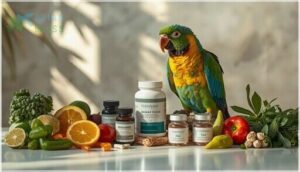
Selecting the right supplement for your feather-plucking bird isn’t a one-size-fits-all decision, and you’ll need to take into account several critical factors before making your purchase. The species you’re caring for, your bird’s current age and health status, the quality of ingredients in the formulation, and how easily you can administer the product all play significant roles in determining which supplement will deliver the best results.
Let’s examine the key considerations that will guide you toward the most appropriate choice for your individual bird’s needs.
Assessing Species and Age Requirements
You can’t treat every species and life stage the same when addressing feather plucking, because small seed-eating parrots like budgerigars clear supplements faster than macaws, and African greys need balanced calcium more than high-dose multivitamins.
Young birds demand more biotin and amino acids for feather growth during rapid development, while seniors with reduced liver function require conservative dosing to prevent toxicity, so careful health monitoring and species nutrition matching are essential for safe, effective avian nutrition and diet management.
Nutrient Balance and Ingredient Quality
You want supplements that deliver amino acids like methionine and lysine alongside B-complex biotin for feather growth, maintain calcium-to-phosphorus mineral balance around 2:1 to avoid kidney stress, and supply omega-3 fatty acids without excess omega-6 that triggers inflammation.
Quality makers test every batch for heavy metals and contaminants, follow good manufacturing practices, and display transparent ingredient lists so you’re not guessing what’s fueling feather plucking recovery.
Ease of Use and Administration
Beyond nutrient quality, practical administration separates products you’ll actually use from bottles gathering dust. Look for formats that match your bird’s habits—liquids for mixing into water, powders for sprinkling on moist foods, or oil-based drops—and confirm dosing guidelines specify clear measurement tools by species.
Simple daily routines boost compliance, turning feather plucking prevention into a sustainable, stress-free habit for both you and your bird.
Importance of Veterinary Consultation
Before you add any vitamin supplement, schedule a veterinary consultation to rule out hidden liver disease, hormonal problems, or infections that supplements alone can’t fix.
Your avian vet will run blood tests and skin scrapings for accurate medical diagnosis, calculate safe doses by body weight to guarantee supplement safety, and create a stepwise plan addressing both bird health and wellness and the behavioral roots of feather plucking.
Nutrition and Care Strategies for Feather Regrowth
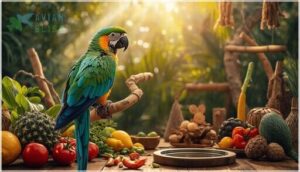
Supplements alone won’t reverse feather plucking if your bird’s overall care isn’t meeting their physical and emotional needs, which means you’ll need to look beyond vitamins to address the root causes.
A well-rounded approach combines dietary improvements, environmental adjustments, and consistent monitoring to give feathers the best chance to regrow. The following strategies work together to create conditions that support healthy plumage and discourage destructive behaviors.
Balanced Diet and Feeding Practices
Feather regrowth depends on strong nutritional foundations, beginning with a core diet that includes 60 to 80 percent high-quality pellets alongside fresh vegetables and controlled portions of fruit to deliver consistent vitamin and mineral support. You’ll want to establish structured feeding schedules and track body weight weekly while shifting seed-dependent birds gradually to pellets, ensuring nutrient balance that reduces plucking triggers and promotes healthy feather health.
- Offer dark leafy greens and colorful vegetables daily for vitamin A and antioxidant protection that strengthens follicles.
- Use sprouted seeds and cooked legumes to supply essential amino acids during molts and recovery periods.
- Limit high-fat treats to small training rewards, preventing obesity and liver stress that worsen plucking behavior.
- Place portions in foraging toys to encourage natural searching routines that support mental well-being alongside dietary supplements.
Creating a Stress-Free Environment
Environmental stability acts as the foundation for stopping feather plucking, requiring thoughtful cage setup in areas with moderate foot traffic, consistent light management through 10 to 12 hours of darkness, temperature control between 65 and 80 degrees, and environmental enrichment via rotating toys that redirect nervous energy.
Social bonding through gentle daily interaction and stress management for birds by eliminating fumes build trust and support parrot calming while addressing parrot behavior and psychology.
Monitoring Progress and Adjusting Supplements
Tracking your bird’s response to vitamins requires systematic health monitoring through weekly gram-scale weighing, monthly feather tracking photos, and written logs of droppings, behavior, and plucking episodes to assess vitamin efficacy and guide supplement dosage adjustments over time.
- Weight changes of 5 to 10 percent signal a need to review your supplement plan with an avian vet
- New pin feathers appearing within 6 to 8 weeks indicate effective feather regeneration support
- Stress bars on fresh feathers suggest environmental or nutritional problems despite bird health supplements
- Calmer preening and reduced plucking over several weeks confirm your progress evaluation is moving in the right direction
- Sudden worsening after dosage increases requires immediate supplement停止 and veterinary consultation
Coordinate these observations with your avian veterinarian every few months, bringing weight charts and feather growth documentation to fine-tune products, adjust doses, and determine whether to continue, taper, or stop specific supplements as your bird’s feather plucking resolves.
Frequently Asked Questions (FAQs)
How do you treat feather plucking in birds?
Treating feather plucking requires a combined approach that tackles medical causes through veterinary exams, corrects nutritional gaps with targeted supplements, reduces stress through environmental enrichment, and promotes feather regeneration by fostering avian wellness and plucking prevention strategies.
How to improve feather quality in birds?
You’ll notice results when you pair quality pellets with fresh vegetables, omega-3-rich supplements, daily bathing, and foraging enrichment—this blend promotes parrot feather growth, molting tips, plume care, biotin delivery, and beak health through improved bird nutrition.
How to treat feather loss in birds with home remedies?
Home treatments for feather loss include offering dark leafy greens and orange vegetables for natural vitamin A, soaked chia seeds for omega-3s, consistent light schedules, stress-reducing foraging toys, and avian-specific probiotics to support gut health and nutrient absorption.
How do I know if my bird has a vitamin deficiency?
When feather quality takes a turn for the worse, visible signs like dull plumage, brittle shafts, flaky skin around the beak, and lethargy paired with a seed-heavy diet review often reveal hidden vitamin deficiency before blood tests confirm it.
Can vitamin overdose harm my birds feathers?
Yes, over supplementation with fat-soluble vitamins A, D3, E, and K can inflame skin and follicles, producing brittle, damaged feathers and potentially triggering or worsening feather plucking through chronic discomfort and nutrient imbalance.
How long until feather regrowth becomes visible?
Like watching grass grow after a long winter, feather regrowth unfolds gradually—you’ll usually spot new pin feathers within two to four weeks once plucking stops, though follicle recovery and molt cycle impact determine final regrowth visibility.
Do wild birds experience feather plucking behavior?
Wild birds rarely show chronic feather plucking like captive parrots.
Natural molt patterns, constant flight, foraging activity, and predator pressure keep them too engaged for repetitive self-destructive plucking typical in confined settings.
Are liquid vitamins better than powder forms?
Neither form holds a decisive edge in absorption rates or bioavailability; instead, dosing control, supplement stability, and your bird’s format preferences determine which vitamin supplements work best for consistent feather growth and development.
Can feather plucking spread to other cage birds?
Feather plucking doesn’t spread like a contagious disease, but parrots can copy plucking through social learning.
While shared environmental stress, parasite control issues, or direct transmission of infections like Psittacine Beak and Feather Disease may affect flock dynamics simultaneously.
Conclusion
Like a puzzle piece, feather plucking requires you to address nutrition, environment, and veterinary oversight in tandem rather than relying on supplements alone.
The right bird vitamins for feather plucking restore deficient micronutrients and support follicle repair, yet sustained regrowth depends on eliminating stressors, optimizing diet quality, and monitoring your parrot’s response through each adjustment—a thorough approach that transforms barren skin into healthy plumage.
- https://www.youtube.com/watch?v=TfOCjf6YgV8
- https://www.revivalanimal.com/learning-center/dealing-with-a-stressed-bird
- https://birdsupplies.com/blogs/news/2-important-things-you-need-to-do-now-to-help-your-bird-with-separation-anxiety
- https://bestfriends.org/pet-care-resources/bird-feather-plucking-what-know
- https://yarmouthvetcenter.com/yvcipedia/feather-damaging-behavior-in-our-pet-birds-yarmouth-veterinary-center/