This site is supported by our readers. We may earn a commission, at no cost to you, if you purchase through links.

Your parakeet’s feet aren’t designed for smooth, uniform dowels—they evolved to grip irregular branches with varying diameters and textures. When perches don’t match this natural design, pressure sores develop, joints weaken, and bumblefoot becomes a serious risk.
The right bird perches for parakeets transform a cage from a static box into a vibrant environment that promotes podiatric health, strengthens leg muscles, and prevents the chronic foot problems that veterinarians treat daily. Natural wood varieties with textured bark provide the grip and diameter variation that keeps your bird’s feet healthy, while strategic placement at multiple heights encourages the climbing and perching behaviors parakeets need for physical and mental well-being.
Table Of Contents
- Key Takeaways
- Best Bird Perches for Parakeets Reviewed
- Benefits of Varied Parakeet Perches
- Choosing The Right Perch Size and Material
- Proper Placement and Setup in The Cage
- Cleaning and Maintaining Parakeet Perches
- Frequently Asked Questions (FAQs)
- What perches are good for parakeets?
- How many perches should a parakeet have?
- Can parakeets sleep on rope perches safely?
- Do parakeets prefer horizontal or vertical perches?
- How many perches does one parakeet need?
- Are cement perches harmful to parakeet feet?
- Can I make DIY perches from backyard branches?
- Conclusion
Key Takeaways
- Your parakeet’s feet need varied perch diameters (3/8 to 3/4 inch) and irregular textures to prevent pressure sores, bumblefoot, and joint problems that develop from gripping uniform dowels day after day.
- Natural wood perches with bark textures exercise different foot muscles with each grip while supporting healthy nail wear and beak conditioning through safe chewing, unlike smooth plastic alternatives that offer no therapeutic benefit.
- Strategic perch placement at multiple heights creates climbing opportunities that strengthen legs and prevent the sedentary behavior that leads to muscle weakness, while proper spacing (2-3 inches apart) prevents neck strain and territorial crowding.
- Weekly cleaning with mild soap or vinegar solutions prevents bacterial infections and respiratory disease, though you’ll need to replace perches every 6-12 months when cracks exceed 1/8 inch or surfaces become dangerously slippery from wear.
Best Bird Perches for Parakeets Reviewed
Selecting the right perches for your parakeet can feel overwhelming when you’re faced with dozens of options, each claiming to be the best choice for your bird’s health and happiness.
The products reviewed below represent a range of materials, textures, and designs that address the specific anatomical needs of parakeets, from foot health to beak maintenance.
For beak care insights that extend beyond parakeets, explore woodpecker species and their unique anatomical adaptations across different habitats.
Each option has been evaluated based on safety, functionality, and how well it mimics the natural perching surfaces your parakeet would encounter in the wild.
If your parakeet shows signs of feather damage or stress-related plucking, exploring nutritional support options for feather health alongside proper perch selection can address underlying wellness concerns.
1. Natural Wood Bird Perches Set
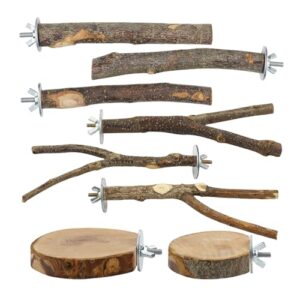
Natural wood perch sets offer wood perch benefits that plastic alternatives can’t match. You’ll find natural branches with irregular surfaces that encourage your parakeet’s feet to grip differently with each step, promoting healthy muscle development.
The Rliguanrui 8-piece set includes various wooden textures and perch types, from fork toys to swings, giving your bird climbing opportunities throughout the day. When selecting materials for perches, prioritize untreated wood that’s safe for chewing.
This parakeet perch selection fosters both physical exercise and natural behaviors in your bird’s environment.
| Best For | Bird owners with smaller species like parakeets, budgies, canaries, and finches who want to create a natural, stimulating cage environment that promotes healthy foot exercise and natural climbing behaviors. |
|---|---|
| Material | Wood |
| Color | Brown |
| Installation Method | Clamp system |
| Suitable Bird Types | Parakeets, Budgies, Canaries, Finches |
| Number of Pieces | 8-piece set |
| Weight | 12 ounces |
| Additional Features |
|
- Natural wood construction provides varying textures and diameters that promote healthy foot muscle development and prevent foot problems
- 8-piece variety set offers multiple activity options including perches, swings, and fork toys to keep birds mentally and physically engaged
- Non-toxic, untreated wood is safe for chewing and easy to clean, creating a healthier habitat than plastic alternatives
- Perches may be smaller than expected and too small for medium or larger bird species
- Clamp attachment system can be unreliable, with some users reporting slipping or difficulty securing perches to cage bars
- Limited variety in perch lengths may not provide enough diversity for optimal cage setup
2. Natural Grapevine Bird Perch Stand
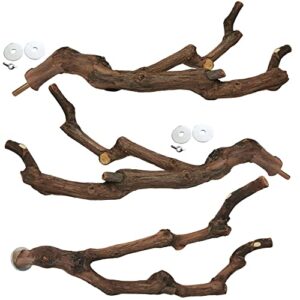
Grapevine perches bring texture variety that goes beyond what standard wood stands provide. The irregular surface of this stand, measuring about 9 inches with diameters from 0.7 to 1.1 inches, gives your parakeet’s feet a genuine workout while reducing aggression and loneliness.
You’ll appreciate the natural materials and built-in bolt for easy installation. This bird perch selection promotes healthy nail wear and satisfies chewing instincts, though you should inspect it regularly for sharp points or cracks to maintain perch safety and stand durability in your parakeet’s habitat.
| Best For | Parakeet owners looking for a natural perch that exercises their bird’s feet while satisfying chewing instincts. |
|---|---|
| Material | Wood |
| Color | Brown |
| Installation Method | Built-in bolts and wing nuts |
| Suitable Bird Types | Budgies, Cockatiels, Parakeets |
| Number of Pieces | Multiple pieces |
| Weight | Not specified |
| Additional Features |
|
- Natural grapevine texture promotes healthy nail wear and gives feet a genuine workout
- Easy to install with built-in bolt and metal wing nut
- Satisfies birds’ natural chewing needs while reducing aggression and loneliness
- May arrive with cracks or breaks due to the natural material
- Not suitable for larger bird species
- Size and shape vary since each piece is unique, so you can’t predict exact dimensions
3. JW Pet Sand Bird Perch
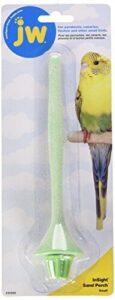
If you’re looking to support your parakeet’s nail and beak health without frequent vet visits, the JW Pet Sand Bird Perch offers a practical solution. This sand-coated perch, about 10.5 inches long with varying diameters, delivers real sand perch benefits through natural abrasion that keeps claws trimmed during daily perching.
You’ll find it fits most cage setups using a simple nut fastener, making your cage setup tips easier to follow. The textured grip exercises foot muscles while promoting pet bird wellness, though you should replace it once the coating wears thin to maintain effective bird foot care.
For first-time owners selecting cage accessories, this guide to purple parakeets as pets covers perch placement and habitat essentials that complement these textured grips perfectly.
| Best For | Parakeet and cockatiel owners who want a low-maintenance way to help their birds naturally maintain their nails and beaks while exercising their feet. |
|---|---|
| Material | Wood (natural grapevine) |
| Color | Natural |
| Installation Method | Metal wing nut and built-in bolt |
| Suitable Bird Types | Budgies, Cockatiels, Lovebirds |
| Number of Pieces | Single perch |
| Weight | 11.6 ounces |
| Additional Features |
|
- Sand coating naturally trims nails and beaks during regular perching, reducing the need for vet visits
- Varying diameters along the perch exercise foot muscles and help prevent arthritis
- Easy to install in most cages with included nut fastener
- Sand coating can flake off over time and needs replacement to stay effective
- May not fit cages with widely spaced bars without extra hardware
- Not suitable for larger bird species beyond parakeets and cockatiels
4. LIMIO Natural Wood Bird Perch Stand
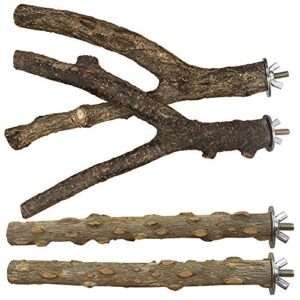
While abrasive surfaces help with nail care, your parakeet also needs variety in texture and grip. The LIMIO Natural Wood Bird Perch Stand brings that diversity with untreated wood in multiple diameters and shapes, including grape stick and platform styles.
Natural perches also encourage your budgie to shift its grip and balance, which can help reduce repetitive budgie bobs head movements caused by discomfort.
This bird perch selection and installation set offers excellent stand stability through standard cage fittings, letting you create a habitat that mimics natural wood varieties. The irregular surfaces promote healthy foot development while supporting perch durability, and since parakeets show strong bird preference for gnawing chemical-free wood, these natural aesthetics encourage both exercise and beak conditioning without synthetic coatings.
| Best For | Small bird owners looking for natural, chemical-free perches that offer different diameters and textures to promote healthy feet and natural behavior. |
|---|---|
| Material | Wood (prickly ash) |
| Color | Wooden |
| Installation Method | Metal wing nuts and built-in bolts |
| Suitable Bird Types | Cockatiels, Parakeets, Conures |
| Number of Pieces | 4-piece set |
| Weight | 10.5 ounces |
| Additional Features |
|
- Made from untreated pepper wood for a safe, natural play environment
- Easy to install and fits most standard cages
- Varied shapes support exercise, beak conditioning, and healthy foot development
- Not ideal for larger birds due to its smaller size and weight limit
- Some birds may chew or damage the wood over time
- Limited to four perches per set, which may not be enough for bigger cages
5. Bird Bungee Climbing Swing Perch
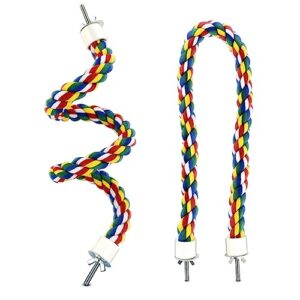
When your parakeet craves energetic movement, a Bird Bungee delivers flexible exercise that static bird perches can’t match. These parakeet perches use non-toxic cotton rope and bungee materials to encourage climbing techniques that strengthen legs and improve balance, while swing safety features guarantee secure attachment to cage bars.
Rope durability matters—inspect weekly for fraying—and perch accessories like wooden beads add tactile variety. Proper bird perch selection and installation transforms your parakeet’s habitat into an engaging vertical playground that promotes coordination and reduces boredom.
| Best For | Parakeet owners looking for a flexible climbing toy that encourages active play and foot exercise in small to medium-sized birds. |
|---|---|
| Material | Blend |
| Color | Assorted Colors |
| Installation Method | Standard cage mount |
| Suitable Bird Types | Parakeets, Cockatiels |
| Number of Pieces | Single perch |
| Weight | 1.76 ounces |
| Additional Features |
|
- Soft cotton rope is gentle on birds’ feet while providing a secure grip for climbing and swinging
- Bendable wire lets you customize the shape to fit any cage layout or create fun climbing paths
- Lightweight and easy to install, making it simple to rearrange your bird’s environment for variety
- Requires regular cleaning with hot water and scrubbing, which can be time-consuming
- Only includes one perch despite product photos that might suggest otherwise
- Not suitable for larger parrot species due to weight and size limitations
Benefits of Varied Parakeet Perches
Providing your parakeet with different types of perches isn’t just about filling cage space—it’s about supporting their physical health and mental well-being. When you offer varied perch textures, diameters, and materials, you’re giving your bird’s feet, legs, and beak the workout they need to stay strong and healthy.
Varied perches aren’t just cage filler—they’re essential fitness equipment that keeps your parakeet’s feet, legs, and beak strong and healthy
Let’s look at the key benefits that make perch variety essential for your parakeet’s overall quality of life.
Foot and Leg Health Support
Think of your parakeet’s feet as mini athletes that need the right equipment to stay strong. Varied perch materials and perch sizes strengthen foot and leg health by exercising different muscle groups with each grip.
Here’s how smart perch choices support avian foot and leg care:
- Textured natural wood stimulates toe grip and improves flexor strength over time
- Irregular diameters force natural toe spreading, supporting healthy arch development
- Flexible surfaces reduce pressure points by about 20 percent during climbing
These leg exercise opportunities, combined with proper foot care tips, keep your bird moving comfortably between bird perches while maintaining claw health naturally.
Prevention of Bumblefoot and Injuries
Vigilance protects your parakeet from bumblefoot and foot injuries that emerge from repetitive pressure and poor hygiene. Daily foot inspections catch injury signs, such as reddening or swelling, before they escalate into serious avian foot and leg care emergencies.
| Prevention Strategy | How It Protects Foot and Leg Health |
|---|---|
| Rotate perch sizes weekly | Redistributes pressure across different toe areas |
| Clean bird perches with disinfectant | Eliminates bumblefoot causes like bacteria buildup |
| Trim nails regularly | Prevents snagging and tears requiring avian first aid |
Early intervention and proper care can help prevent severe outcomes related to Pododermatitis causes and prevention.
Beak and Claw Maintenance
Wood perches act like nature’s grooming salon, maintaining beak health and keratin health through daily gnawing, which prevents overgrowth that impedes eating.
Varied textures support thorough nail maintenance and claw care simultaneously:
- Rough bark naturally files down claws during movement, reducing beak trimming frequency
- Irregular surfaces exercise feet while promoting claw maintenance
- Natural branches encourage rhythmic beak grinding
- Textured perches support foot and leg health through gentle wear
Regular claw and beak care is essential as explained in this.
Mental Stimulation and Enrichment
Environmental enrichment transforms your parakeet’s cage into an exploration zone, where problem-solving skills flourish through puzzle perches that challenge cognitive development daily. Varied perch size and textures create sensory play opportunities that mirror behavioral therapy principles, keeping your bird mentally sharp and engaged.
| Bird Enrichment Feature | Cognitive Benefit |
|---|---|
| Rotating perches | Balance adjustment, spatial awareness |
| Foraging mats | Extended exploration time |
| Hide-and-seek compartments | Reward-based problem solving |
This vibrant setup promotes pet bird enrichment by reducing boredom through natural bird behavior and psychology principles, where each parakeet perch becomes a tool for mental growth.
Choosing The Right Perch Size and Material
Not all perches are created equal, and choosing the wrong size or material can lead to foot problems, beak issues, or even injuries in your parakeet.
The diameter, texture, and composition of each perch directly affect your bird’s physical comfort and long-term health. Here’s what you need to know to select perches that keep your parakeet happy and healthy.
Ideal Perch Diameters for Parakeets
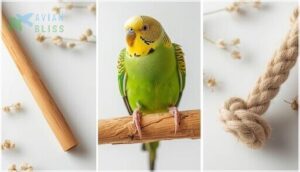
You need to match perch diameters to your parakeet’s foot size, allowing the toes to wrap two-thirds to three-quarters around each perch for proper grip and foot health. Small to mid-size parakeets thrive with perch sizes ranging from 3/8 to 3/4 inch in diameter.
- Narrower perches around 3/8 inch reduce fatigue and improve grip for younger or smaller birds.
- Mid-range perches at 1/2 inch provide balanced support for daily activity.
- Wider perches up to 3/4 inch accommodate larger individuals and strengthen grasp.
Natural Wood Vs. Synthetic Options
Once you’ve selected the right diameter, you’ll choose between natural and synthetic perches.
Natural wood grain types like maple and beech offer varied surfaces that exercise your parakeet’s feet, while twisted twigs and nontoxic stick options encourage healthy chewing.
Synthetic materials resist moisture and simplify cleaning, though many birds prefer the authentic feel and eco-friendliness of wood perches with a natural finish for long-term perch durability.
Importance of Textured and Irregular Surfaces
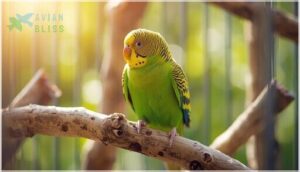
Beyond choosing wood or synthetic materials, you’ll want to prioritize textured and irregular surfaces for ideal bird comfort and tactile stimulation. Twisted twigs and nontoxic stick options deliver surface variety that keeps your parakeet’s feet healthy through varied perch grip points.
- Different textures prevent pressure sores by distributing weight across multiple foot areas.
- Irregular patterns stimulate natural toe grasping, supporting healthier foot arches.
- Grooved surfaces reduce slipping on wet or soiled perches.
- Texture benefits include gentle beak wear during normal foraging.
- Contrasting parakeet perch types add cognitive variety to daily routines.
Safe and Non-toxic Materials
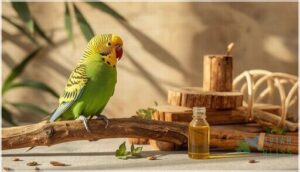
Once you’ve selected textured surfaces, toxic material risks become your next concern. Safe wood options like untreated maple or beech work best, while bamboo and rattan resist mold naturally.
Non-toxic coatings such as food-grade mineral oil protect bird perches without harmful fumes. Eco-friendly perches from sustainable sources guarantee your parakeet care and accessories support both bird cage setup and maintenance safely.
Proper Placement and Setup in The Cage
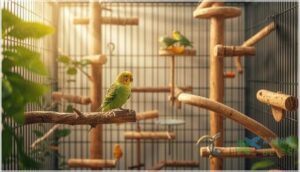
Getting the perches into your cage isn’t just about clipping them in and calling it done. Where you place them, how you space them out, and what combinations you use can make a real difference in your parakeet’s daily comfort and activity levels.
Let’s break down the key strategies for setting up a cage that fosters healthy movement, prevents common issues, and keeps your bird engaged.
Positioning Perches at Different Heights
Positioning perches at multiple heights transforms your bird cage into a varied climbing route that mirrors natural habitats.
Height variety gives parakeets visual stimulation from elevated vantage points while encouraging active movement between levels.
Aim for perch spacing that allows adequate vertical clearance, so wings can extend fully during ascents.
This setup promotes foot muscle development and prevents the monotony that leads to sedentary behavior.
Avoiding Overcrowding and Neck Strain
Thoughtful perch spacing shields your parakeets from neck alignment problems and crowding prevention challenges that compromise avian health. Position bird perches so each bird can rest with its head neutral, not craning downward constantly, while bird cage accessories maintain clearance that facilitates vertical movement without competition.
- Space perches 2 to 3 inches apart to reduce crowding on any single perch area.
- Use varied grip textures like natural bark to distribute foot pressure evenly.
- Position perches for neutral head posture so your parakeets don’t constantly look down.
- Create distinct zones for feeding, resting, and playing to prevent clustering and promote bird ergonomics.
Creating Climbing and Exercise Opportunities
Install climbing structures like rope ladders and cargo nets to ignite vertical movement across your parakeet’s cage, transforming static perch variations into energetic activity stations.
Position bird perches at staggered heights to fuel natural exercise routines, while adding textured bird accessories and avian enrichment tools—like wooden blocks and sisal tubes—that condition beaks and strengthen feet during bird cage decoration upgrades.
Integrating Swings and Bungee Perches
You’ll want to add swings and bungee perches using wide-diameter surfaces that support grip during kinetic motion cycles, choosing non-toxic materials with rust-resistant hardware rated for repeated movement.
Maintain at least two inches of clearance from other bird perches to prevent collisions, and inspect elastic components every two weeks for fraying.
These bird accessories deliver motion therapy while boosting avian enrichment through varied resistance patterns.
Cleaning and Maintaining Parakeet Perches
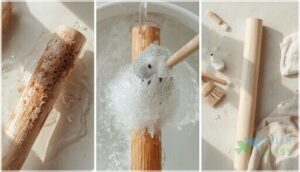
You can’t just set up the perfect perch system and forget about it—regular cleaning protects your parakeet from bacteria, fungi, and disease.
Dirty perches become breeding grounds for harmful organisms that can lead to foot infections and respiratory issues, so maintenance isn’t optional.
Here’s how to keep your parakeet’s perches clean, when to replace them, and what you need to do for long-term hygiene.
Routine Cleaning Methods
Keeping your parakeet’s perches clean isn’t just about appearance—it’s fundamental to preventing respiratory infections and foot disease. Establishing a regular cleaning schedule protects your bird’s health while maintaining proper cage hygiene.
- Weekly maintenance: Remove droppings and debris with a damp cloth or scrub brush, then rinse and air dry completely before returning perches to the cage.
- Deep cleaning: Use mild soap or bird-safe cleaners on heavily soiled perches, avoiding harsh chemicals that leave harmful residues affecting beak health and overall bird health.
- Periodic sanitizing: Soak washable perches in warm water with white vinegar to loosen minerals, then scrub and rinse until the smell disappears—effective perch sanitizing without toxic disinfectant use.
When to Replace Worn or Damaged Perches
Even a pristine-looking perch can hide danger if you’re not checking for perch wear signs and damage indicators. Replace bird perches when cracks exceed 1/8 inch deep, surfaces become slippery from wear, or you spot black mold that won’t scrub away during hygiene checks.
Safety inspections every month protect your pet bird—most parakeet replacement perches need swapping every 6-12 months depending on use.
Preventing Bacteria and Disease
Your parakeet’s immune system battles invisible threats every time it grips a contaminated perch. Bacterial control starts with daily observation and consistent hygiene practices that protect avian health and wellbeing.
- Wash hands thoroughly before handling perches to prevent cross-contamination
- Change water twice daily to eliminate breeding grounds for microbes
- Wipe cage bars daily with bird-safe solutions for effective disease prevention
- Maintain proper ventilation to reduce humidity that promotes infection risks
Tips for Long-lasting Perch Hygiene
Smart perch sanitizing extends far beyond basic cage cleaning. Rotate bird perches every two to four weeks to limit bacteria control challenges, then sanitize with a one-to-one vinegar solution.
Don’t overlook moisture-trapping joints that compromise avian health and wellbeing. Your parakeet’s beak health and care, along with bird claw maintenance, depends on dry, structurally sound surfaces that won’t harbor hidden threats.
Frequently Asked Questions (FAQs)
What perches are good for parakeets?
Your feathered friend won’t just perch—they’ll party on natural wood branches, textured grapevine stands, gentle sand perches, varied-diameter wood sets, and playful bungee swings that support parakeet foot care and beak health tips naturally.
How many perches should a parakeet have?
Your parakeet thrives with three to four fixed perches in a standard cage, plus a swing or two.
Larger spaces can handle five to eight, giving your bird room to climb without blocking flight paths.
Can parakeets sleep on rope perches safely?
You might think rope perches sound cozy, but they’re risky for sleep if frayed strands snag toes or birds swallow fibers overnight—tightly woven natural options work when inspected daily and paired with safer wood alternatives.
Do parakeets prefer horizontal or vertical perches?
Your parakeet’s feet are built for horizontal branches, not vertical clinging.
Wild birds rest on mostly horizontal perches, so a cage layout with horizontal perches promotes natural perching behaviors and parakeet foot health.
How many perches does one parakeet need?
Your single bird does best with three to four fixed perches, plus a swing or platform if space allows, ensuring varied perch variety promotes parakeet behavior, bird exercise, and overall parakeet health and wellness.
Are cement perches harmful to parakeet feet?
Cement perches pose real Foot Health Risks for parakeets because their abrasive surfaces create pressure sores and bumblefoot.
Avian Foot Care experts recommend Cement Perch Alternatives like natural wood for Parakeet Injury Prevention and lasting wellness.
Can I make DIY perches from backyard branches?
You’ll discover your backyard is an absolute treasure when you select safe, untreated branches from apple, birch, or willow trees, creating natural avian accessories your parakeets will adore.
Conclusion
Think of perches as the foundation of your parakeet’s daily life—everything from joint health to mental engagement depends on what’s beneath their feet.
Choosing the right bird perches for parakeets isn’t about decoration; it’s about preventing painful conditions that develop silently over months.
Natural wood varieties with varied textures, strategic placement at multiple heights, and routine maintenance create an environment where your bird doesn’t just survive—they thrive with strong, healthy feet.