This site is supported by our readers. We may earn a commission, at no cost to you, if you purchase through links.
When highly pathogenic avian influ
Table Of Contents
- Key Takeaways
- Risks of Avian Viruses in Bird Environments
- Essential Safety Precautions Before Cleaning
- Step-by-Step Cleaning Process After Avian Viruses
- Disinfection Methods for Avian Virus Control
- Safe Waste Disposal and Post-Cleaning Protocols
- Frequently Asked Questions (FAQs)
- How to disinfect after avian influenza?
- How long does bird flu virus last on surfaces?
- What is the best disinfectant for avian flu?
- How to clean your house after a virus?
- Can avian viruses survive in frozen bird feed?
- How often should disinfectant solutions be replaced?
- Are natural disinfectants effective against avian influenza?
- What temperature water works best for cleaning?
- How long before birds can return after cleaning?
- Conclusion
Key Takeaways
- Avian influenza viruses persist on surfaces for days to weeks depending on material type, temperature, and humidity, with nonporous surfaces like stainless steel retaining infectious virus longer than porous materials, requiring targeted disinfection of high-risk zones including water sources, feed stations, and shared equipment.
- Effective cleaning requires sequential removal of all organic matter before disinfectant application, as proper cleaning alone reduces microbial load by approximately 90-91%, and surfaces must remain visibly wet throughout the EPA-labeled contact time to achieve complete virus inactivation.
- Personal protective equipment including NIOSH-approved N95 respirators, chemical-resistant safety goggles, and nitrile gloves forms a critical barrier against viral particles in droppings, secretions, and aerosols, and must be combined with strict zone restrictions and one-way cleaning routes to prevent cross-contamination between dirty and clean areas.
- Post-cleaning protocols demand proper containment of contaminated materials in labeled, leak-proof containers, thorough decontamination of reusable tools and protective clothing at minimum 60°C for 25 minutes, and mandatory documentation with surface sampling verification before authorizing facility reentry after a 14 to 21 day downtime period.
Risks of Avian Viruses in Bird Environments
Before you can clean safely, you need to understand what you’re up against. Avian influenza viruses don’t simply disappear when an infected bird is removed—they persist on surfaces, in materials, and throughout the environment in ways that can catch even experienced handlers off guard.
That’s why knowing proper bird viral infection prevention protocols is essential—especially if you’ve already handled potentially contaminated birds or equipment.
Let’s examine how these viruses survive, where they spread most easily, and which areas in your facility demand the most vigilant attention.
How Avian Viruses Survive on Surfaces
Understanding how avian influenza persists on surfaces helps you protect your flock and prevent transmission. Surface persistence depends on several environmental factors and material interactions that affect viral stability—knowing these variables facilitates better biosecurity and virus disinfection methods.
For practical tips on keeping surfaces clean and reducing viral risks, check out these.
- Nonporous surfaces like stainless steel and glass retain infectious virus longer than porous materials such as wood or fabric, with detectable activity persisting for days to weeks under favorable conditions.
- Low ambient humidity and cooler temperatures extend viral survival on surfaces, particularly on metal and plastic materials where the virus remains viable longer.
- Organic matter such as bird droppings or feed residues protects viruses and prolongs their viability on surfaces, shielding them from environmental stressors and disinfection efforts.
- Higher absolute humidity levels generally accelerate inactivation on many surfaces, while dry conditions create ideal environments for extended virus persistence.
- Light exposure reduces survival considerably, meaning viruses persist longer in shaded or indoor conditions compared to areas with direct sunlight exposure.
Notably, the relationship between absolute humidity and virus persistence on surfaces is clearly demonstrated by data from a study on.
Common Transmission Pathways in Bird Areas
Avian influenza spreads through multiple interconnected pathways in bird environments, making stringent biosecurity and disinfection practices non-negotiable for effective virus transmission control. Waterborne spread occurs when birds share drinking or bathing sources contaminated with viral particles, while fecal transmission remains the dominant route—droppings shed high viral loads onto surfaces, soil, and vegetation. Direct contact during feeding, mating, and social behaviors enables rapid spread within flocks, and vector-borne transmission through flies, beetles, and mosquitoes extends environmental risk beyond immediate contact zones. To further reduce risks, poultry caretakers should understand and apply key.
| Transmission Pathway | Primary Mechanism | Key Risk Factors |
|---|---|---|
| Waterborne Spread | Contaminated water bodies | Shared drinking/bathing sources |
| Fecal Transmission | Droppings on surfaces | High viral shedding loads |
| Direct Contact | Bird-to-bird interaction | Social behaviors, crowding |
Understanding these pathways allows you to target interventions where avian influenza is most likely to spread.
High-Risk Zones for Contamination
Once you identify transmission pathways, you’ll need to focus cleaning and disinfection efforts on specific contamination hotspots. Floor corners, cage crevices, and water trough bases collect droppings and moisture that support biofilm formation and virus transmission. Enclosure design affects surface contamination patterns—mesh seams, stacked tiers, and ventilation ducts trap feather residues that resist routine cleaning. Your biosecurity protocols must target:
For practical advice on which disinfectants work best for bird flu hotspots, check out these.
- Feed stations and water bowls where organic matter accumulates
- Bedding storage areas that harbor dust and viral particles
- Shared equipment wheels that transfer contaminants between zones
Essential Safety Precautions Before Cleaning

Before you begin any cleaning operation in an area exposed to avian viruses, you must establish thorough safety protocols to protect yourself, prevent viral spread to unaffected areas, and maintain control over the contaminated zone throughout the decontamination process.
These precautions aren’t optional steps you can skip when you’re pressed for time—they form the foundation that determines whether your cleaning efforts will successfully eliminate the pathogen or inadvertently spread it to new locations.
Safety precautions before cleaning aren’t optional—they determine whether you eliminate the pathogen or spread it to new locations
The following guidelines address personal protection, zone management, and movement restrictions that must be in place before any cleaning materials or personnel enter the affected area.
Personal Protective Equipment (PPE) Guidelines
Before entering areas contaminated by Avian Influenza, you must select and properly don personal protective equipment to establish a critical barrier between yourself and viral particles present in droppings, secretions, and aerosols.
For additional insight into biosecurity measures and disease prevention, explore these.
Effective Infection Control Strategies and Biosecurity depend upon thorough PPE Training that encompasses respiratory safety, eye protection, glove selection, and decontamination procedures to safeguard your health during disinfection activities.
| PPE Category | Minimum Standard | Critical Application Note |
|---|---|---|
| Respiratory Safety | NIOSH-approved N95 respirator with proper fit testing and user seal checks prior to each use | Disposable respirators must be discarded after one shift or if soiled, damaged, or breathing becomes difficult |
| Eye Protection | Safety goggles forming a seal around eyes, rated for chemical splash resistance | Face shields offer full facial coverage from splashes and aerosols when cleaning enclosed cages or aviaries |
| Glove Selection | Nitrile gloves resistant to punctures and chemical exposure, changed between rooms | Double gloving recommended in high-risk situations or when handling concentrated disinfectants |
You should inspect all protective equipment for tears or damage before donning, replace compromised items immediately, and follow Public Health Measures requiring hand hygiene before and after glove use to reduce contamination risk during cleaning and disinfection operations.
Quarantine and Restricted Area Setup
To protect clean areas from viral spread, you must establish a restricted zone with clear boundary control around infected premises, using visible signage and physical barriers for zone segregation.
Implement access management by designating a single controlled entry point, documented through logbooks, and establish decontamination protocols at shift areas where quarantine meets buffer zones, ensuring biosecurity measures prevent cross-contamination during avian influenza prevention and sanitation practices.
Minimizing Movement and Cross-Contamination
Beyond physical barriers, strict zone restrictions and movement control form your next defense against cross-contamination during cleaning protocols. When personnel or equipment travel between dirty and clean zones without proper biosecurity measures, they carry infectious particles that compromise disinfection and sanitation practices.
- Assign color-coded tools and clothing to each zone, preventing cross-transfer of pathogens between areas
- Map one-way cleaning routes that eliminate backtracking through bird habitats or contaminated spaces
- Schedule cleaning during off-hours to reduce overlap with routine animal handling and feeding activities
Step-by-Step Cleaning Process After Avian Viruses
Effective cleaning after avian virus contamination requires a systematic approach that tackles organic matter removal before any disinfectant can perform its intended function, as research demonstrates that proper cleaning alone reduces microbial load by approximately 90-91%.
The following procedures outline the critical steps you must complete in sequence to guarantee surfaces are adequately prepared for subsequent disinfection, with particular attention to the removal of visible debris, selection of appropriate cleaning tools for avian environments, and thorough rinsing techniques that boost the effectiveness of later disinfection efforts.
Each step builds upon the previous one to create the foundation for successful virus inactivation.
Removing Organic Matter and Visible Debris
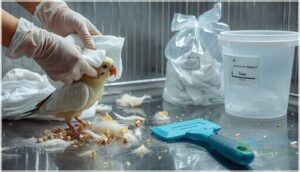
You can’t sanitize what you can’t see—organic matter such as feces, saliva, and feather debris shields pathogens from disinfection and fuels bacterial growth, so debris removal forms the foundation of every effective biosecurity and sanitation protocol. Use disposable absorbent towels and plastic scrapers to lift residues from cages, floors, and perches before applying surface sanitizing agents, ensuring biohazard control through proper waste containment in sealed, labeled bags.
| Task | Tool/Method | Purpose |
|---|---|---|
| Lift loose debris | Disposable absorbent towels | Prevent splatter during organic matter removal |
| Remove dried material | Plastic scrapers on smooth surfaces | Avoid scratching while ensuring complete debris removal |
| Pre-loosen residues | Warm water rinse between passes | Stop redeposition and prepare for cleaning protocols |
| Contain waste | Sealable, labeled bags | Limit odor escape and support disinfection methods compliance |
Cleaning Tools and Techniques for Bird Areas
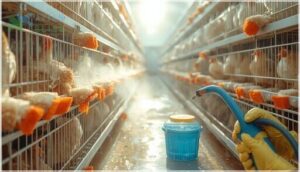
Sanitizing surfaces demands tool precision. Stiff nylon brushes scrub cage bars and perches without scratching, while microfiber cloths trap feather dust during nest box maintenance, preventing pathogen dispersal across poultry facilities.
You’ll need non-abrasive sponges for cleaning feeders and waterers, steam cleaners for chemical-free disinfection, and disposable gloves to prevent cross-contamination when applying avian disinfectants according to cleaning protocols.
Rinsing and Drying Procedures for Maximum Effectiveness
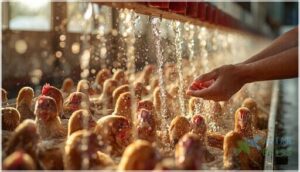
Rinsing, cleaning, and disinfection in poultry farm biosecurity are critical steps to prevent avian influenza. Use warm water at 90 to 110°F to flush residues from cages and feeders, maintaining a steady flow for at least 15 seconds per surface.
Air-dry surfaces completely, as moisture control determines contact times for disinfectants. Wet surfaces dilute disinfection effectiveness. Verify dryness with visual checks before applying EPA-registered solutions.
Disinfection Methods for Avian Virus Control

Once you’ve removed all visible debris and thoroughly cleaned the surfaces, it’s time to apply the right disinfectant to eliminate the avian influenza virus. This step requires careful selection of EPA-registered products that are proven effective against avian pathogens, proper application techniques to guarantee adequate contact time, and systematic coverage of every surface that could harbor the virus.
The following sections will guide you through choosing the appropriate disinfectant, applying it correctly, and guaranteeing complete decontamination of all equipment and contact points.
Choosing EPA-Registered Avian Disinfectants
When you’re selecting disinfectants for avian influenza control, EPA registration isn’t just a formality—it’s your assurance that the product has proven efficacy against avian viruses. Look for labels that specifically claim effectiveness against Avian Influenza A and verify compatibility with your surfaces, whether you’re treating barn walls, cages, or equipment in poultry farm biosecurity protocols.
Key factors in choosing EPA-registered disinfectants include:
- Active ingredients such as quaternary ammonium compounds, hydrogen peroxide, or peracetic acid formulations proven for disinfection protocols
- Required contact time ranging from 60 seconds to several minutes for complete avian virus control
- Surface compatibility ensuring the product works on hard nonporous surfaces common in your facility
- Application method matching your equipment capabilities, from ready-to-use sprays to dilutable concentrates for biosecurity measures
Always confirm the disinfectant’s spectrum of activity covers enveloped viruses and common poultry pathogens, and verify that storage conditions haven’t compromised disinfectant efficacy before use.
Proper Disinfectant Application and Contact Time
Once you’ve chosen your disinfectant, application technique determines whether you achieve true avian virus inactivation or merely wet the surface.
Apply the product uniformly across pre-cleaned areas, ensuring complete coverage without pooling or gaps that compromise disinfectant efficacy.
Keep surfaces visibly wet for the entire contact time listed on the EPA label—if drying occurs prematurely, reapply immediately and restart the timer to guarantee effective pathogen control against avian influenza.
Targeting All Contact Surfaces and Equipment
Complete coverage means more than floors and walls—you must target every surface birds touched or contaminated. Disinfect cages, feeders, waterers, and all handling equipment using your EPA-registered product with verified contact time.
Don’t overlook latches, doors, and trough surfaces where biosecurity measures often fail.
Proper equipment disinfection and facility decontamination across every contact point cleaning zone protects your entire operation from reintroduction of avian pathogens.
Safe Waste Disposal and Post-Cleaning Protocols

After you’ve cleaned and disinfected the contaminated areas, your work isn’t quite finished—proper waste disposal and post-cleaning protocols are just as critical to preventing viral spread. You’ll need to handle contaminated materials with the same care you applied during cleaning, decontaminate everything that’s been in the dirty zone, and document each step before allowing anyone back into the space.
The following protocols will walk you through safe waste containment, equipment decontamination, and the clearance procedures required before reentry.
Handling and Containment of Contaminated Materials
Proper waste management forms the backbone of effective biosecurity measures when you’re controlling avian influenza transmission. After cleaning and disinfection procedures, you’ll need sturdy containment protocols to prevent virus transmission through contaminated materials and guarantee complete disease transmission control.
- Use labeled, leak-proof containers with secure lids for all contaminated waste before removal from the area
- Separate infectious waste from noninfectious waste using color-coded bags and clearly marked totes to prevent cross-contamination
- Maintain a dedicated route for waste transport that avoids high-traffic areas and clean zones to limit exposure
- Store contaminated materials in a controlled area with restricted access and secondary containment to catch leaks or spills
- Track waste quantities with written logs including type, date, and destination to guarantee proper material disposal
Decontaminating Reusable Tools and Clothing
Beyond securing contaminated waste, you’ll need stringent tool sanitization and cloth disinfection protocols to prevent ongoing virus transmission.
Start by pre-rinsing reusable equipment in warm water (40-60°C) to loosen organic material, then apply a heavy-duty degreasing soap before scrubbing with soft bristles.
For protective gear, rinse fabrics in cold water first, then wash at minimum 60°C for 25 minutes with an appropriate laundry sanitizer to eliminate avian influenza pathogens effectively.
Documentation and Clearance Before Reentry
Before you reopen any poultry facilities, thorough safety verification and clearance procedures must confirm that all disinfection and sanitation steps meet regulatory compliance standards for avian influenza control.
- Collect final surface swab samples from high-touch points to verify viral clearance before authorizing reentry protocols
- Document all cleaning and disinfection activities with signed decontamination records noting dates, personnel, and products used
- Obtain written approval from your designated clearance official after cross-checking disinfectant contact times and test results
- Restrict access until you’ve completed all safety verification steps and issued formal reentry authorization
Frequently Asked Questions (FAQs)
How to disinfect after avian influenza?
You’ll need EPA-registered disinfectants labeled for avian flu, thorough cleaning to remove organic matter first, proper contact time maintenance, and complete surface coverage to achieve effective virus inactivation and biosecurity measures.
How long does bird flu virus last on surfaces?
Bird Flu’s silent threat: the virus lingers longest where you’d expect it least.
On hard surfaces like stainless steel, it survives 24 to 48 hours, while porous materials limit persistence to under 12 hours.
What is the best disinfectant for avian flu?
You’ll want EPA-registered disinfectants proven effective against avian flu viruses—Virkon S, accelerated hydrogen peroxide products, and sodium hypochlorite bleach at proper dilutions all provide reliable virus inactivation when surfaces are pre-cleaned and contact times followed.
How to clean your house after a virus?
Like clearing storm debris before rebuilding, you’ll remove organic matter with hot, soapy water, then apply EPA-registered disinfectants to high-touch surfaces, ensuring proper contact time for effective virus removal and home sanitizing.
Can avian viruses survive in frozen bird feed?
Yes, avian influenza viruses can survive in frozen bird feed for extended periods, especially at subzero temperatures. This persistence increases Frozen Feed Risks and Feed Contamination, requiring strict Avian Infection Control and Cold Climate Biosecurity to prevent Avian Flu outbreaks.
How often should disinfectant solutions be replaced?
You should replace disinfectant solutions daily during routine cleaning schedules to maintain virus inactivation effectiveness.
In outbreak conditions or high-traffic areas, replace after each cleaning cycle to guarantee proper disinfection protocols against avian flu infection.
Are natural disinfectants effective against avian influenza?
Most natural disinfectants lack proven efficacy against avian influenza under field conditions, though EPA-registered botanical products with specific influenza claims may work when organic matter is removed and proper contact time is maintained.
What temperature water works best for cleaning?
Hot water above 120 degrees Fahrenheit maximizes cleaning efficiency and disinfection in poultry facilities, yet cold water prevents heat damage. Your heat settings must balance pathogen removal against surface integrity during avian flu infection protocols and warm rinsing cycles.
How long before birds can return after cleaning?
After proper cleaning protocols and disinfection for highly pathogenic avian flu, poultry facilities must observe a mandatory empty period of 14 to 21 days downtime, pending negative environmental sampling results, before bird repopulation can safely proceed.
Conclusion
While safe cleaning after avian viruses may initially seem overwhelming, following established protocols transforms uncertainty into control. You’ve now acquired the technical knowledge to protect yourself, your flock, and your environment from persistent viral threats.
Each step—from donning proper PPE to applying EPA-registered disinfectants with correct contact times—builds layers of protection that break transmission pathways. Your diligence in these procedures doesn’t just clean surfaces; it safeguards animal health, human safety, and biosecurity integrity for your entire operation.
- https://hub.diversey.com/diversey-food-and-beverage-contact
- https://www.cdc.gov/flu/avianflu/index.htm
- https://www.gov.uk/guidance/avian-influenza-bird-flu
- https://www.fda.gov/food/alerts-advisories-safety-information/updates-highly-pathogenic-avian-influenza-hpai
- https://washingtonstatestandard.com/2024/10/18/bird-flu-infects-flock-of-800000-poultry-in-southeast-washington/