This site is supported by our readers. We may earn a commission, at no cost to you, if you purchase through links.
Your bird’s cage isn’t just a place to sleep—it’s their entire world, their home base, their gym, and their safe haven all rolled into one. What you choose to put inside a bird cage directly shapes your feathered friend’s physical health, mental sharpness, and overall happiness.
A bare cage with just a perch and food dish won’t cut it, but an overcrowded cage creates stress and safety hazards. The sweet spot lies in selecting the right combination of essential items that support natural behaviors like climbing, foraging, and preening.
From perches that protect tiny feet to toys that challenge curious minds, each accessory plays a specific role in creating a space where your bird can truly thrive.
Table Of Contents
- Key Takeaways
- Essential Items for Every Bird Cage
- Choosing Safe and Non-Toxic Accessories
- Creating a Comfortable and Stimulating Environment
- Hygiene and Maintenance Essentials
- Special Additions for Bird Health and Wellbeing
- Frequently Asked Questions (FAQs)
- What should I put in my bird’s cage?
- What should you not put in a bird cage?
- Is Dawn dish soap safe for bird cages?
- How often should I replace cage perches?
- Can I use scented candles near my birds cage?
- What temperature range is safe for pet birds?
- Should I cover my birds cage at night?
- How do I prevent my bird from escaping?
- Conclusion
Key Takeaways
- Your bird’s cage needs the essentials—stainless steel bowls, varied perches in different textures and diameters, safe toys for mental stimulation, and fresh cage liners—to create a foundation for daily health and comfort.
- Choose only non-toxic materials like untreated wood, stainless steel, and natural fibers while avoiding painted surfaces, plastic that cracks, and any coatings with VOCs that can poison your bird’s respiratory system.
- Rotate toys weekly and add foraging puzzles to keep your bird’s mind sharp, but don’t overcrowd the cage—leave room for climbing, wing stretching, and safe movement between perches.
- Daily cleaning of food bowls, weekly perch wipes, and monthly full cage disinfecting with bird-safe products prevent bacteria buildup and protect your bird’s delicate respiratory health.
Essential Items for Every Bird Cage
Setting up your bird’s cage starts with the basics, and getting them right makes all the difference. Your bird needs a few core items to stay healthy, safe, and comfortable every single day.
Start by choosing the right bird cage material—it affects everything from safety to how long the cage lasts.
Let’s walk through the essentials that belong in every cage, no matter what species you’re caring for.
Food and Water Bowls
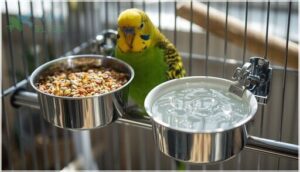
Your pet bird needs two separate bowls: one for food and one for fresh water. Choose stainless steel or ceramic options, as they resist bacteria and clean up easily. Avoid cracked plastic bowls that trap germs.
Clip them securely to cage bars, away from perches, to keep droppings out. Replace water daily to guarantee quality hydration and rinse food bowls after each meal.
Perches of Varying Sizes and Textures

Just like bowls, perches shape your bird’s daily comfort and foot health. Offer at least three perches in different diameters—0.5 to 2 inches works for most species—and mix materials like natural wood, bamboo, or cork.
Textured surfaces trim the beak naturally and strengthen grip, while smooth spots give tired feet a break.
- Natural wood perches mimic wild branches and prevent foot problems
- Rough bark textures improve bird grip and reduce slipping
- Rotating perch placement encourages climbing and exercise
- Replace worn perches promptly to maintain birdcage setup safety
For more information about infection risk and perch variety, regular inspections and cleaning are recommended to support foot health.
Safe Bird Toys and Enrichment
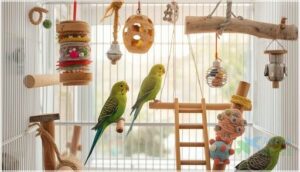
Toys fuel bird enrichment and curb destructive behavior by offering natural stimulation your bird craves. Choose toxic-free toys with untreated hardwood, stainless steel, or sisal rope—skip painted pieces that chip.
Rotate foraging toys weekly to spark curiosity, and include puzzle feeders that reward problem-solving. Mirrors and bells add sound variety, but inspect everything for frayed edges or loose parts that threaten bird welfare.
Providing diverse enrichment activities helps support your bird’s natural instincts and overall well-being.
Cage Liners and Bedding
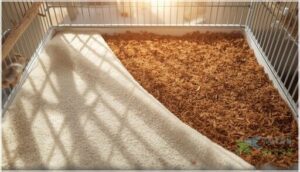
Your choice of cage liner directly impacts bird cage maintenance and daily hygiene. Here are smart cage lining options that simplify cleanup:
- Fleece liners trap moisture beneath a dry surface, wash easily, and reuse for months.
- Paper bedding offers quick disposal and controls odor without irritating airways.
- Coconut coir or hybrid liners blend absorbent mats with non-slip backing for custom fits.
Replace liners every few days to prevent bacteria buildup.
Bird Bath or Water Dish
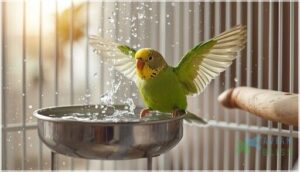
A clean bird bath or water dish lets your bird splash and preen, supporting avian health and hygiene. Choose shallow bowls—about one to two inches of water depth—in safe bowl materials like stainless steel or BPA-free plastic.
Just like the bath itself, remember that keeping bird toys sanitized helps prevent bacteria buildup in your bird’s environment.
Bath placement near a perch encourages use, and water circulation or filtration systems keep the supply fresh, making your bird cage setup complete.
Choosing Safe and Non-Toxic Accessories
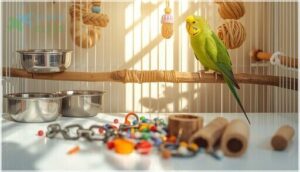
Your bird’s safety starts with the accessories you choose. Birds are curious, playful, and prone to chewing everything in sight, which means toxic materials can quickly become a health hazard.
Let’s look at the safest materials for bowls, perches, and toys, plus what to avoid.
Best Materials for Bowls and Perches
Your bird’s bowls and perches deserve careful thought, because the wrong materials can harm health. Stainless steel bowls resist rust and don’t release toxins, while ceramic options stay stable and heavy to prevent spills.
For perches inside your bird cage, consider these safe choices:
- Natural wooden perches in varied diameters exercise feet
- Rope toys made from untreated cotton cushion aging joints
- Natural fibers that mimic wild branches
Avoiding Harmful Paints and Coatings
Harmful finishes on your bird cage or accessories can quietly poison your pet, so choose non-toxic coatings with zero or very low VOC levels. Water-based paints offer eco-friendly options that won’t release fumes into your bird’s lungs.
Skip glossy finishes that chip easily, and always cure new coatings in a separate room before introducing them to safeguard respiratory health in birds.
Toy Safety and Durability
A toy that crumbles under your bird’s beak creates choking risks and wasted money, so test construction integrity before you buy. Strong fasteners embedded into the design won’t pull loose during play, protecting your bird from small part hazards and material toxicity.
Watch for these wear indicators:
- Frayed strings that trap toes or beaks
- Cracked beads that splinter when chewed
- Rust spots showing failed coatings
Inspect weekly and follow a cleaning regimen with bird-safe soap to extend toy life.
Creating a Comfortable and Stimulating Environment
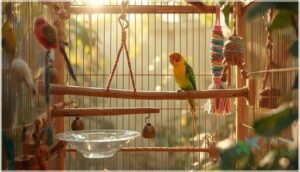
Your bird’s cage isn’t just a place to sleep and eat—it’s their home, gym, and playground all rolled into one. A well-designed setup keeps your feathered friend physically active, mentally sharp, and genuinely happy throughout the day.
Your bird’s cage is their home, gym, and playground—a well-designed setup keeps them physically active, mentally sharp, and genuinely happy
Here’s how to arrange perches, toys, and enrichment items that transform a basic cage into a thriving space.
Proper Perch Placement and Variety
Think of perches as your bird’s furniture—they’re where they’ll spend most of their time, so variety matters. Arrange three to four levels vertically to encourage climbing and exercise. Mix natural wood with textured options like rope or cement for foot health, as smooth plastic can cause sores. Space them so your bird can hop comfortably without banging its tail on the cage bars, and keep food dishes clear below.
| Perch Type | Best Placement |
|---|---|
| Natural wood branch | Mid-level, diagonal angle |
| Rope or fiber perch | Near cage entrance |
| Cement or grooming perch | Lower level, away from food |
| High sleeping perch | Top corner, stable and draft-free |
| Flexible vine perch | Mid-cage for movement practice |
Choose perch material that’s 0.5 to 2.0 inches in diameter for small to medium birds. This birdcage setup fosters natural bird behavior, helps with beak care, and keeps your bird engaged in their cage design.
Rotating Toys for Mental Engagement
Movement captures attention like nothing else, which is why rotating toys bring fresh energy to your bird cage setup. These mental exercise tools challenge your pet bird with changing visuals and motion, encouraging bird cognitive stimulation through interactive play. Spin speed control lets you match the challenge to your bird’s comfort level, supporting healthy bird behavior.
- Dual rotor designs offer three distinct spin speeds without overwhelming senses
- Toy rotation patterns create varying visual sequences that reward repeated interaction
- Rotating puzzle feeders combine foraging with motion for extended engagement
These bird care tips transform routine playtime into lively exploration.
Foraging Toys and Puzzle Feeders
Your bird’s natural instinct to hunt for food doesn’t vanish in captivity, which is why puzzle feeders and foraging toys are game-changers for bird engagement. These foraging techniques turn meals into cognitive stimulation sessions, letting your pet work for treats using puzzle designs like sliding panels or rotating grids.
Bird toy and accessory selection should include treat-dispensing levers and vine ball feeders that promote bird behavior management while transforming the foraging area into an active playground.
Ramps and Ladders for Exercise
While foraging toys keep your bird’s mind sharp, climbing equipment builds physical strength and agility. Ramps and ladders create multi-level exercise routes that target leg muscles and coordination.
Choose non-toxic polymer or natural wood options with textured surfaces to prevent slipping. Space ladder rungs between 1.0 and 1.5 inches for safe stepping, and supervise initial climbing sessions to teach proper techniques while preventing falls.
Hygiene and Maintenance Essentials

A clean cage isn’t just about appearances—it’s essential for your bird’s respiratory health and overall wellbeing. Regular maintenance prevents bacteria buildup, controls odors, and keeps your feathered friend safe from harmful germs.
Let’s walk through the key hygiene practices that’ll make cage care simple and effective.
Cage Liners for Easy Cleaning
You’ll want to choose cage liners that match your routine and your bird’s habits. Disposable liners drop into the tray in seconds, often with waterproof backing to block moisture, and you can toss them out every few days to keep cage odor down.
Reusable washable liners cut waste, absorb droppings quickly, and support bird hygiene when you machine wash them weekly for easy cleaning and solid waste management.
Cleaning Schedules for Accessories
Once liners are handled, you’ll keep your bird healthy with consistent accessory cleaning. Daily sanitizing of food bowls removes bacteria, while toy rotation every week prevents mold buildup on fabric items.
Regular maintenance includes wiping perches every few days and scheduling full cage disinfecting monthly with bird-safe products to support bird health and proper cage cleaning and hygiene.
Managing Waste and Odor
Odor control starts with smart waste management. Change your cage liner daily to seal in moisture and smells before they spread. Use absorbent materials like kiln-dried paper, and store soiled liners in a sealed bag.
For air purification, position the cage away from living areas, and rinse perches often.
Regular sanitation tips include spot-cleaning high-waste zones and emptying bins promptly to keep your home fresh.
Safe Cleaning Products for Birds
The right cleaner protects your bird’s delicate respiratory system. Choose products free of ammonia, bleach, and harsh fumes, and always rinse surfaces thoroughly after each cage cleaning.
Here are five bird-safe options:
- Vinegar solutions – dilute white vinegar 1:1 with water for gentle sanitizers
- Food-grade hydrogen peroxide – use 3% strength for non-toxic disinfectants
- Commercial bird-safe cleaners – verify labels confirm eco-friendly products
- Warm soapy water – mild dish soap works for routine maintenance
- Nontoxic liners – simplify odor control between deep cleans
Special Additions for Bird Health and Wellbeing
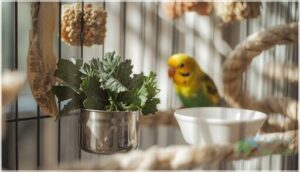
Beyond the basics, a few simple additions can make a real difference in your bird’s health and happiness. These extras support natural behaviors, boost nutrition, and give your bird the comfort they need to thrive.
Here’s what to think about adding to your setup.
Mineral Blocks and Cuttlebones
Your bird’s bones and beak depend on calcium, and that’s where mineral blocks and cuttlebones come in. These simple additions support eggshell formation, beak health, and overall avian health while giving your bird something satisfying to nibble.
| Item | Primary Benefit |
|---|---|
| Mineral Block | Steady calcium and trace minerals for metabolism |
| Cuttlebone | Natural calcium carbonate source for beak conditioning |
| Both | Mental stimulation through foraging-like chewing |
Mount them within easy reach but away from perches to prevent falls. Rotate between the two to maintain interest and balance mineral intake. Choose options free from artificial colors or coatings—safety matters as much as bird nutrition. Check monthly for wear patterns, and replace crumbling pieces to avoid choking hazards. Fresh water nearby helps since calcium processing increases thirst during the initial introduction to your bird cage setup and design.
Natural Wood Chewing Branches
Chewing branches satisfy your bird’s instinct to gnaw while promoting beak health and mental stimulation. Apple, maple, and birch offer safe, pesticide-free options when sourced sustainably from untreated trees. Proper branch preparation—washing with bird-safe soap and air drying completely—prevents mold in your avian environment.
- Vary diameter from 0.5 to 1.25 inches to exercise different beak muscles
- Rotate branches weekly to maintain interest and support bird behavior and psychology
- Inspect for splinters or decay during routine bird care and maintenance
Textured bark aids natural beak conditioning within your bird cage setup and design.
Privacy Covers or Sleep Shelters
Quality sleep is just as essential as nutrition for your bird’s long-term health. Cage covers and privacy screens transform the bird cage into a calming hideaway, blocking light and visual distractions so your bird enters a restful state.
Choose breathable fabrics designed for avian habitat creation, sized to allow full wingspan clearance. These bird shelters support natural sleep cycles, reduce stress, and create secure resting areas within your bird’s everyday cage furnishing.
Fresh Greens and Safe Treats
A handful of fresh greens transforms your bird cage into a mini salad bar that promotes bird health and healthy foraging. Nutritious treats keep your feathered friend engaged while boosting greens nutrition and avian care routines.
- Wash romaine, kale, or parsley under cool water before serving
- Remove wilted leaves to prevent mold in your birdcage selection
- Offer small portions of carrot shreds or apple slices for treat safety
- Rotate fresh feeding options weekly for variety
- Remove uneaten bird snacks promptly to maintain pet bird care standards
Frequently Asked Questions (FAQs)
What should I put in my bird’s cage?
Your feathered companion needs stainless steel bowls, varied perches, safe toys, fresh cage lining options, and a bird bath.
Include swings, proper cage lighting, and items supporting feather care to create a thriving birdcage environment.
What should you not put in a bird cage?
Never place toxic substances like chocolate, avocado, or nonstick fumes near your bird. Avoid choking hazards, unsafe foods, painted wood, and frayed rope.
These entanglement risks and hazardous items seriously compromise avian health and bird safety.
Is Dawn dish soap safe for bird cages?
Dawn can clean bird cages if heavily diluted—one part soap to twenty parts water—and thoroughly rinsed.
However, bird-friendly cleaners or vinegar solutions offer safer alternatives without soap residue risks that harm avian health.
How often should I replace cage perches?
Check your perches weekly for wear signs like splintering or cracks. Natural wood and rubber perches need replacing every 6–12 months, while metal ones last years.
Rotation benefits include injury prevention and mental stimulation.
Can I use scented candles near my birds cage?
Scented candles are a recipe for disaster near bird cages. The fumes, soot, and volatile compounds pose serious Air Quality Risks and Candle Safety concerns, threatening Bird Respiratory health even with Ventilation Systems running nearby.
What temperature range is safe for pet birds?
Most pet birds thrive between 65 and 80 degrees Fahrenheit for daily comfort, supporting bird thermoregulation and respiratory health.
Avoid sudden shifts exceeding 10 to 15 degrees, and monitor ambient conditions with a thermometer to prevent heat stress.
Should I cover my birds cage at night?
Your bird’s personality matters more than a one-size-fits-all rule. Covering can reduce night frights and stress, but make sure cage ventilation stays strong with breathable cover materials that allow fresh airflow.
How do I prevent my bird from escaping?
You’ll want cages with secure locking mechanisms and tight bar spacing to block escapes. Train your bird with positive reinforcement, position the cage away from open windows, and inspect latches regularly for wear.
Conclusion
You might worry that setting up the perfect cage takes too much time or money, but start small—add one natural perch, rotate a few toys weekly, and watch your bird come alive.
What to put inside a bird cage isn’t about filling every inch; it’s about choosing items that let your feathered companion climb, explore, and feel secure. Their daily joy depends on the thoughtful choices you make today.