This site is supported by our readers. We may earn a commission, at no cost to you, if you purchase through links.
Your parrot’s subtle shift from chattering to silence isn’t shyness—it’s often the first whisper of bacterial invasion, a pathogen already colonizing mucosal barriers before visible symptoms emerge. By the time you notice labored breathing or mucoid diarrhea, opportunistic bacteria like Chlamydia psittaci or Escherichia coli may have compromised multiple organ systems, demanding immediate intervention to prevent septicemia or neurological sequelae.
Early recognition of these clinical markers—paired with rigorous hygiene protocols and evidence-based nutrition—creates a defensive perimeter against infection. Understanding bird health tips for bacterial illness transforms you from passive observer to proactive guardian, capable of distinguishing benign stress from life-threatening disease and initiating the precise interventions that determine whether your avian companion recovers swiftly or deteriorates into critical condition.
Table Of Contents
- Key Takeaways
- Recognizing Bacterial Illness in Birds
- Essential Hygiene to Prevent Bacterial Disease
- Veterinary Diagnosis and Treatment Options
- Nutrition and Immune Support for Sick Birds
- Preventing Future Bacterial Infections
- Frequently Asked Questions (FAQs)
- How do you treat a bacterial infection in birds?
- How to make a sick bird better?
- How do I know if my bird has a bacterial infection?
- What can I give my bird for an infection?
- Can bacterial infections spread between different bird species?
- How long does bacterial illness recovery typically take?
- Are certain bird breeds more susceptible to infections?
- What temperature range prevents bacterial growth in aviaries?
- Conclusion
Key Takeaways
- Early detection of bacterial illness in birds is critical because avian physiology deteriorates rapidly once clinical signs emerge—subtle behavioral shifts like silence replacing chatter, combined with respiratory distress or mucoid diarrhea, often indicate pathogens like Chlamydia psittaci or E. coli have already compromised multiple organ systems before visible symptoms appear.
- Daily cage sanitation, bird-safe disinfection protocols, and strict water/food safety measures form the essential first line of defense against bacterial infections, as gram-negative organisms thrive in contaminated environments where droppings, spoiled food, and stagnant water create ideal breeding grounds for opportunistic pathogens.
- Professional veterinary diagnosis using blood tests, fecal cultures, PCR panels, and imaging is non-negotiable when infection is suspected, and antibiotic therapy must follow evidence-based protocols with precise species-appropriate dosing to prevent antimicrobial resistance while completing full treatment courses even when symptoms improve.
- Recovery demands targeted nutritional support including easily digestible proteins, avian-formulated probiotics to restore gut flora disrupted by antibiotics, and meticulous hydration management alongside ongoing biosecurity measures like quarantine protocols and stress reduction to prevent recurrence of bacterial illness.
Recognizing Bacterial Illness in Birds
Early detection of bacterial illness can mean the difference between a swift recovery and a life-threatening crisis—particularly in avian species, where physiological decline accelerates rapidly once clinical signs emerge.
That’s why understanding key warning signs of bacterial infections in birds is essential for every bird owner who wants to act before symptoms spiral out of control.
In birds, bacterial illness escalates rapidly—early detection separates swift recovery from life-threatening crisis
Your bird won’t announce its illness with words, but its body will telegraph distress through gastrointestinal disruption, respiratory compromise, and subtle behavioral shifts that demand your immediate attention.
Understanding which symptoms warrant concern, how to interpret physical warning signs, and when laboratory confirmation becomes non-negotiable will equip you to respond decisively when infection strikes.
Common Symptoms of Bacterial Infection
Fever signs—temperatures exceeding 105.0°F (40.6°C) in most species—demand immediate attention, particularly when accompanied by lethargy and diminished responsiveness to environmental stimuli.
Respiratory issues, including thick nasal discharge, wheezing, or labored breathing patterns, often indicate bacterial pneumonia or tracheitis; gastrointestinal problems manifest as mucoid diarrhea, regurgitation, or bloody stool, while neurological symptoms such as seizure-like episodes, ataxia, or profound weakness suggest systemic infection indicators requiring urgent veterinary intervention for diagnosing and treating bird infections.
For a broader understanding of how similar symptoms present in mammals and people, review these common signs of bacterial infections.
Behavioral and Physical Warning Signs
Beyond fever and gastrointestinal distress, behavioral changes—lethargy signs, weight loss exceeding 5–10 percent weekly, and mobility problems like impaired perching or tremors—reveal systemic infection progressing beneath the surface.
Feather changes, including persistent fluffing and poor grooming, combined with respiratory issues such as open-mouth breathing or tail bobbing, constitute critical symptoms of avian disease that you shouldn’t overlook when evaluating signs of infection.
Laboratory Tests for Confirmation
When symptoms point toward infection, laboratory tests transform suspicion into diagnosis. Fecal analysis, blood work, and swab culture isolate the bacterial culprit, while microscopy tests and blood culture detect pathogens circulating in your bird’s system.
PCR testing—employing PCR panels that replicate bacterial DNA—supplies findings within hours, guiding precise antibiotic selection before resistance derails recovery.
Essential Hygiene to Prevent Bacterial Disease
Your bird’s environment is the first line of defense against bacterial pathogens—what you do daily matters more than any medication. Preventing infection starts with eliminating the breeding grounds where gram-negative organisms like E. coli and Klebsiella thrive, which means establishing rigorous cleaning protocols and maintaining strict biosecurity standards.
Here’s what you need to focus on to keep your bird’s living space safe.
Remove any cleaning products, air fresheners, or scented candles that could irritate their respiratory system and lead to issues like understanding avian bacterial infections.
Daily Cage Cleaning Best Practices

Your bird’s cage isn’t just a home—it’s the frontline defense against bacterial illness, and daily cage cleaning forms the cornerstone of bird hygiene. Implement these three bird health and wellness essentials: remove fresh droppings and spilled water each morning to prevent bacterial colonization; sanitize food and water bowls after every cleaning to eliminate cross-contamination; and wipe perches with bird-safe solutions during your routine to maintain thorough biosecurity measures.
For more guidance on best, consider incorporating pet-safe disinfectants and sturdy materials in your cleaning practices.
Safe Disinfection of Bird Supplies

After you’ve scrubbed away droppings and debris, proper disinfectant selection becomes your next line of defense in effective biosecurity measures.
Choose bird-safe products labeled for avian habitats—dilute bleach (one part to ten parts water) works on hard surfaces when rinsed thoroughly, while dedicated disinfectants require manufacturer-specified contact times.
Always rinse three times, allow complete air-drying, and never mix cleaning agents to maintain ideal bird hygiene.
Water and Food Safety Measures
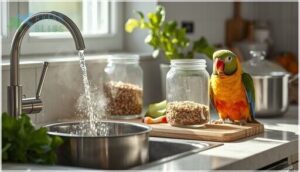
Contamination control starts with water purification—filter or boil drinking sources for immunocompromised species, then replace bowls twice daily to limit bacterial proliferation.
Store pellets and produce in sealed containers within refrigerated environments; rinse fresh vegetables under running water before serving.
Safe handling demands dedicated cutting surfaces, thorough hand hygiene, and immediate removal of spoiled items to fortify nutrition while preventing bacterial diseases in pet birds.
Veterinary Diagnosis and Treatment Options
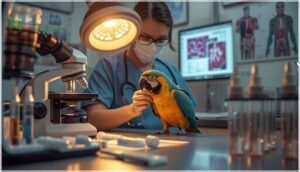
When your bird shows signs of bacterial illness, knowing when to seek professional help—and what to expect once you do—can make all the difference between swift recovery and prolonged suffering.
Avian veterinarians use a combination of clinical examination, laboratory diagnostics, and species-specific protocols to identify the causative pathogen and design targeted treatment plans.
Understanding the diagnostic process, antibiotic options, resistance risks, and supportive care strategies will help you partner effectively with your veterinarian throughout your bird’s recovery journey.
When to Consult an Avian Veterinarian
You can’t afford to play the waiting game when signs of infection appear—bacterial diseases progress rapidly in birds, and timely veterinary care often determines whether your companion survives or succumbs.
Urgent symptoms that demand immediate avian vet consultation include:
- Labored breathing, tail bobbing, or open-mouth respiration indicating respiratory distress
- Bright blood in droppings or vomiting accompanied by dehydration
- Sudden collapse, inability to perch, or severe lethargy persisting beyond six hours
- Complete refusal to eat for twenty-four hours or longer
Avian expertise matters; seek board-certified practitioners experienced with your species for accurate identification of bird infections and evidence-based treatment protocols.
Diagnostic Tools and Procedures
Once you arrive at the clinic, your veterinarian deploys an extensive diagnostic arsenal. Blood tests measure white cell counts and inflammatory markers; imaging techniques like radiography and ultrasonography reveal internal lesions; microbiological analysis through fecal gram stain, PCR testing, and cultures identifies causative organisms.
Cytology exams and biopsy samples confirm tissue-level invasion, while endoscopy permits direct visualization of respiratory or gastrointestinal pathology, ensuring accurate diagnosis and targeted intervention.
Antibiotic Therapy and Resistance Concerns
Once your veterinarian identifies the pathogen, antibiotic therapy begins—yet resistance mechanisms like enzymatic inactivation, efflux pumps, and bacterial mutations threaten drug efficacy.
Antibiotic stewardship demands precise medication selection: narrow-spectrum agents minimize collateral damage to beneficial flora, while completing prescribed courses prevents antimicrobial resistance.
Overuse accelerates resistance development, compromising treatment outcomes; inadequate dosing selects resistant strains, undermining future antimicrobial therapy for treating bacterial infections.
Supportive Care During Recovery
Recovery demands careful supportive care—environmental stability, nutritional therapy, and vigilant monitoring safeguard your bird’s convalescence after antibiotic therapy initiates pathogen clearance.
Implement these critical protocols for ideal pet bird recovery:
- Gentle Handling and Temperature Control: Maintain ambient warmth between 75–85°F in draft-free zones; minimize stress through soft lighting and quiet environments that support immune reconstitution.
- Hydration Support and Nutrition Therapy: Offer fresh water hourly alongside easily digestible, species-appropriate foods; warmed mash enhances palatability when appetite diminishes during bacterial illness recovery.
- Recovery Monitoring and Medication Adherence: Document daily weight, stool consistency, and respiratory patterns; complete prescribed antimicrobial courses precisely as directed to prevent relapse and guarantee successful home care for birds.
Nutrition and Immune Support for Sick Birds
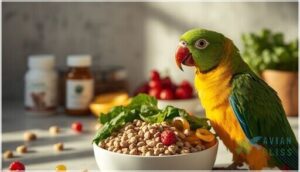
When your bird is battling a bacterial infection, nutrition becomes one of your most powerful tools—not just for recovery, but for rebuilding the immune defenses that were compromised during illness.
The right dietary approach, combined with targeted supplementation, can mean the difference between a prolonged convalescence and a swift return to health.
Let’s examine the specific nutritional strategies that support your bird’s immune system during this critical period.
Species-Appropriate Diets for Recovery
Your bird’s nutrition during bacterial illness demands the same precision you’d apply to any medical protocol—caloric intake, meal frequency, and food texture all shift to meet recovery metabolism.
Offer softened, nutrient-dense staples every two to three hours; digestive enzymes in fresh organ meats support mucosal repair, while easily digestible proteins prevent energy deficits and strengthen avian health against preventing bacterial diseases in pet birds.
Beneficial Supplements and Probiotics
Beyond food itself, your bird’s immune system flourishes when you layer in targeted probiotics—Lactobacillus and Bifidobacterium strains restore gut health disrupted by antimicrobial therapy, while Saccharomyces boulardii eases diarrhea.
These immune boosters offer real probiotic benefits:
- Compete with pathogens for intestinal real estate
- Produce fatty acids that nourish gut lining
- Normalize pH to block harmful colonizers
- Support avian nutrition and supplement safety during recovery
Always choose avian-formulated products to prevent adverse reactions.
Hydration and Feeding Tips for Ill Birds
When your bird won’t drink enough to maintain electrolyte balance, fluid therapy becomes non-negotiable. Offer Pedialyte or avian-formulated solutions at room temperature—cool fluids discourage intake, while overly warm liquids risk mucosal burns. Pair hydration with recovery diets featuring soaked pellets and mashed vegetables to deliver water quality and nutrient supplements simultaneously, supporting nutritionally balanced avian health management.
| Hydration Method | Application & Timing |
|---|---|
| Fresh water (multiple dishes) | Changed every 6–12 hours; placed at eye level |
| Oral electrolyte solutions | 2–3 mL every 2–4 hours via syringe for moderate dehydration |
| Soaked pellets & soft fruits | Small portions every 3–4 hours to increase water content |
| Subcutaneous fluids | Veterinary administration for severe cases; monitoring required |
Preventing Future Bacterial Infections
Once your bird has recovered from a bacterial infection, your primary goal shifts to preventing recurrence. That requires a multi-layered approach combining biosecurity measures, environmental optimization, and vigilant health monitoring. The strategies you implement now will determine whether your bird remains healthy or faces repeated cycles of illness and treatment.
Below, we’ll examine three critical prevention protocols that address the most common pathways through which bacterial pathogens re-enter your aviary.
Quarantine and Biosecurity Protocols
Think of your home as a fortress—strong biosecurity measures form the first line of defense against avian bacterial infections. You’ll need to quarantine new birds in separate enclosures for four weeks, implementing isolation techniques with dedicated equipment that never crosses containment zones.
Disease containment demands restricted access, protective clothing changes between birds, and rigorous avian sanitation protocols; these quarantine procedures greatly reduce zoonotic disease transmission while protecting your existing flock from opportunistic pathogens.
Reducing Stress and Environmental Risks
Invariably, stress compromises your bird’s mucosal barriers, rendering them vulnerable to opportunistic pathogens despite stringent biosecurity measures. Maintaining air quality through HEPA filtration, implementing noise reduction below 50 decibels, and establishing a calm environment with consistent temperatures between 65–80°F (18–27°C) are essential steps.
Environmental enrichment combined with stress monitoring tools—tracking appetite shifts, feather plucking, and behavioral changes—transforms your cage cleaning routines into thorough stress reduction protocols that strengthen immune resilience.
Routine Health Monitoring and Follow-Up
Proactive routine health monitoring—anchored in scheduled checkups, detailed medical records, and bird behavior observation—transforms follow-up care into a precision tool for recovery tracking and disease prevention. Your veterinary care regimen should include:
- Annual wellness visits with bacterial culture updates
- Weekly weight logs and appetite trends
- Daily droppings and behavioral notes
- Post-treatment reassessments at 3–7 day intervals
These protocols fortify avian bacterial infections defenses and sustain long-term bird health.
Frequently Asked Questions (FAQs)
How do you treat a bacterial infection in birds?
Ironically, most owners Google “antibiotic dosage” while their parrot sneezes—yet treating avian bacterial infections demands immediate veterinary diagnosis, culture-guided antimicrobial therapy, precise medication management, and supportive care to achieve positive treatment outcomes and bird recovery.
How to make a sick bird better?
Your sick bird demands immediate veterinary care. Avian bacterial infections require professional diagnosis, targeted antibiotic therapy, supportive hydration, and species-appropriate nutrition.
Natural remedies and bird health supplements complement, but never replace, evidence-based treatment protocols.
How do I know if my bird has a bacterial infection?
When your feathered companion shows diarrhea, nasal discharge, lethargy, or fluffed feathers that won’t smooth, you’re likely witnessing bacterial infection signs—telltale symptoms of avian illness demanding veterinary blood tests and cultures for definitive diagnosis.
What can I give my bird for an infection?
Only an avian veterinarian can prescribe appropriate antibiotic medications—such as doxycycline or enrofloxacin—after identifying the specific pathogen.
You must never administer human antibiotics, herbal remedies, or unverified treatments without professional guidance.
Can bacterial infections spread between different bird species?
Yes—bacterial infections readily cross species boundaries through direct contact, contaminated water sources, and environmental reservoirs; this cross-species transmission demands stringent avian biosecurity measures, especially in mixed flocks where disease transmission accelerates rapidly.
How long does bacterial illness recovery typically take?
Your bird’s bacterial clearance depends on infection severity. Mild cases resolve within 3 to 7 days, while moderate infections improve over 1 to 2 weeks. Serious bacterial infections demand 2 to 4 weeks of intensive treatment and careful healing process monitoring.
Are certain bird breeds more susceptible to infections?
Like a lock and key, genetic factors determine immune variability in pet birds. Budgerigars, cockatiels, and canaries face elevated species risk from avian bacterial infections due to captivity stress, breed susceptibility, and zoonotic disease exposure.
What temperature range prevents bacterial growth in aviaries?
Maintaining environmental temperature between 21 and 24 degrees Celsius—paired with 40 to 60 percent humidity levels—limits opportunistic bacterial growth in aviaries.
This controlled environment also supports your bird’s immune function and overall avian health during antimicrobial therapy.
Conclusion
Think of bacterial illness as an invisible tide—silent until it breaches your defenses, overwhelming fragile avian systems in hours rather than days.
These bird health tips for bacterial illness aren’t optional precautions; they’re the calculated interventions that separate rapid recovery from irreversible organ compromise.
Your vigilance—daily cage sanitation, immediate veterinary consultation at symptom onset, evidence-based nutrition—constructs the barrier between thriving companionship and preventable tragedy. Bacterial pathogens don’t negotiate; neither should your commitment to proactive care.