This site is supported by our readers. We may earn a commission, at no cost to you, if you purchase through links.
A bird cage with bars spaced too wide killed my patient last Tuesday. The young finch slipped through a half-inch gap its owner thought was safe, hit the floor, and died from the trauma.
Bar spacing isn’t about aesthetics or airflow—it’s the difference between a secure home and a death trap. Small birds need bars no wider than 1/2 inch, while macaws require 1 to 1.5 inches to prevent beak entrapment.
The wrong measurement puts your bird at risk for escape, injury, or worse. Getting bar spacing right from day one protects your bird from preventable accidents and gives you peace of mind.
Table Of Contents
- Key Takeaways
- Why Bird Cage Bar Spacing Matters
- Bar Spacing Guidelines by Bird Size
- How to Measure Bar Spacing Correctly
- Choosing The Right Cage for Your Bird
- Top 5 Bird Cage Accessories for Safety
- Bar Spacing Safety Tips and Maintenance
- Frequently Asked Questions (FAQs)
- How wide should the bars be on a budgie cage?
- What bar spacing do cockatiels need?
- Can mice squeeze through cage bars?
- Can different bar coatings affect bird safety?
- What bar shapes work best for birds?
- Do baby birds need different bar spacing?
- How does bar thickness impact cage strength?
- Should outdoor cages have tighter bar spacing?
- Conclusion
Key Takeaways
- Bar spacing must match your bird’s size exactly—1/2 inch for finches and budgies, 5/8 inch for cockatiels, and 1 to 1.5 inches for macaws—because even a slight mismatch can lead to escape, entrapment, or fatal injury.
- Incorrect bar spacing doesn’t just risk physical harm; it directly impacts your bird’s mental health by triggering stress behaviors like feather-picking and pacing when gaps are too wide or ventilation suffers from bars that are too narrow.
- Don’t trust manufacturer labels alone—measure bar spacing yourself with digital calipers at multiple points across the cage, since welds and coating inconsistencies create dangerous gaps that product descriptions won’t reveal.
- Weekly inspections for bent bars, rust spots, and wear are non-negotiable because cages degrade over time, and a gap that was safe last month could become a death trap if you’re not actively monitoring structural integrity.
Why Bird Cage Bar Spacing Matters
Bar spacing isn’t just a small detail—it’s the difference between a safe home and a serious hazard. When bars are spaced incorrectly, your bird can get stuck, escape, or suffer injuries that range from minor scrapes to life-threatening situations.
Before you buy or set up any cage, check a comprehensive bird cage setup guide to ensure every safety detail is covered from the start.
Bar spacing is the difference between a safe home and a serious hazard for your bird
Here’s why getting this right matters so much for your bird’s safety and quality of life.
Preventing Escape and Injury
The wrong bar spacing turns your cage into an escape hatch or injury trap. Your bird’s safety depends on matching gaps to body size, since even small misjudgments create serious risks.
- Use 1/2 inch gaps for finches to block escape attempts
- Install two-motion latches to prevent accidental door openings
- Position perches away from cage doors to avoid entrapment
- Choose smooth, corrosion-resistant bars to eliminate sharp edges
- Conduct weekly gap inspections to catch structural shifts early
Supporting Bird Health and Safety
Beyond preventing escapes, proper bar spacing protects your bird’s overall avian health and wellness. Gaps that are too wide risk toe or beak entrapment, while overly narrow bars restrict airflow needed for feather care and respiratory function.
| Spacing Issue | Health Risk |
|---|---|
| Too wide | Toe/beak injuries, escape |
| Too narrow | Poor ventilation, stress |
| Uneven bars | Feather damage, frustration |
Correct cage size and bar spacing support bird nutrition access, cage hygiene, and long-term avian wellness—your bird’s safety depends on it.
For additional information on animal care, see these Animal Welfare Act standards for birds.
Impact on Bird Behavior and Well-Being
Bar spacing shapes bird behavior in ways you mightn’t expect. Improper gaps trigger avian stress, driving feather-picking and pacing that signal frustration.
Correct cage size and bar spacing encourage behavioral enrichment—climbing, safe beak care, and bird socialization—while poor spacing disrupts routines and elevates stress hormones.
Your bird’s feather health and overall well-being depend on spacing that fosters natural activity without causing injury or limiting bird safety. For a deeper understanding of ideal care, it’s vital to examine avian ethology and welfare.
Bar Spacing Guidelines by Bird Size

Bar spacing isn’t one-size-fits-all, it varies based on your bird’s size and species. A finch needs completely different spacing than a macaw, and using the wrong size puts your bird at risk.
Here’s what you need to know for each size category to keep your feathered friend safe.
Small Birds (Finches, Canaries, Budgies)
Small birds like finches, canaries, and budgies need careful attention to bar spacing and cage dimensions for bird safety. Proper cage size prevents injuries and promotes feather care while allowing natural behaviors.
- Bar spacing of 1/2 to 5/8 inches prevents escapes and foot injuries
- Weekly cage cleaning reduces bacterial buildup affecting beak health
- Varied perch diameters promote proper foot positioning and comfort
- Social enrichment through proper grouping improves bird nutrition and reduces stress
Medium Birds (Cockatiels, Parakeets)
Cockatiels and parakeets thrive in cages with bar spacing of 1/2 to 5/8 inch to prevent head entrapment and wing injuries. Your medium bird species need a cage size of at least 24″ x 24″ x 36″ for exercise requirements and social interaction.
For a complete breakdown of how to calculate the ideal cage dimensions for your specific bird, including perch placement and activity zones, proper measurements ensure both safety and comfort.
Cage placement in calm, draft-free areas promotes bird behavior and reduces stress. Proper cage design with horizontal bars encourages climbing while maintaining bird safety and accommodating dietary needs.
Large Birds (Amazons, African Greys, Macaws)
Amazons, African Greys, and macaws demand bar spacing between 3/4 and 1 inch to accommodate powerful beaks and prevent beak entrapment.
Your large bird species requires a minimum cage size of 36 x 28 x 48, though macaws benefit from even larger dimensions given their wingspan of up to 40 inches.
Proper spacing promotes parrot behavior, macaw health, and avian enrichment while ensuring bird safety and promoting bird socialization through secure environmental design.
Multi-Species and Mixed Aviaries
Mixed aviaries demand precision in aviary design to balance species compatibility and bird socialization across different sizes. When housing multiple bird species together, your bar spacing must protect the smallest resident while cage size accommodates the largest, creating a harmonious avian habitat.
Critical multi-species management considerations:
- Barrier placement — Visual mesh partitions reduce territorial aggression while maintaining shared habitat enrichment zones for peaceful coexistence.
- Feeding stations — Separate food areas prevent interspecific competition and guarantee nutritional access for ground feeders and tree-dwelling species alike.
- Escape routes — Cage design with vertical complexity and discrete perching heights allows vulnerable birds to retreat from dominant flock members.
How to Measure Bar Spacing Correctly
You can’t rely on manufacturer labels alone in the context of bar spacing. Getting the measurement right yourself ensures your bird stays safe and can’t slip through, get stuck, or hurt themselves.
Here’s what you need to know to measure accurately and avoid the common pitfalls that put birds at risk.
Tools Needed for Accurate Measurement

You don’t need fancy equipment to check bar spacing, but precision matters. A digital caliper gives you accurate readings to 0.01 mm, perfect for confirming cage dimensions and bar thickness match your bird’s wingspan needs.
For quick checks, a standard tape measure works fine. Laser measurement tools help with larger aviaries, while gauge blocks calibrate your instruments. Simple calipers prevent costly mistakes when selecting safe bar spacing.
Measuring Vertical Vs. Horizontal Bars

Bar orientation changes how you measure cage dimensions. Vertical bars run from base to top, so you measure the gap between them horizontally. Horizontal bars extend side to side, requiring vertical measurement with your calipers.
- Position your measurement tools perpendicular to the bar direction for accurate readings
- Check bar thickness at multiple points since welds can affect spacing
- Horizontal bars benefit climbing species but need careful axis labeling when comparing data visualization
- Reading speed improves when you measure consistently at the cage’s center point
Both orientations demand the same bar spacing standards for your bird’s safety.
Common Mistakes to Avoid

Assuming all bars wear evenly is your first mistake. Check multiple points, since welds and coating chips create sizing mis-calculations that turn safe bar spacing into escape risks.
Don’t eyeball dimensions or skip the cage size chart for your bird species—guessing bar gaps invites hygiene errors and structural flaws. Verify bird cage size matches measurements, not just product labels.
Choosing The Right Cage for Your Bird

Choosing the right cage size isn’t just about picking the biggest one on the shelf. You need to match bar spacing to your bird’s size, check the materials for safety, and think about how your bird will use the space as it grows.
Let’s break down what matters most when you’re shopping for a cage.
Matching Bar Spacing to Bird Species
Your bird’s species determines the right bar spacing. Match the measurement to your bird’s body and beak size to prevent injury or escape. Here’s a quick Cage Size Chart for safe bar spacing by species:
- Finches and canaries – 1/4 to 3/8 inch spacing protects tiny beaks from slipping through.
- Cockatiels and small conures – 1/2 to 5/8 inch balances airflow with escape prevention.
- Amazons and African greys – 3/4 to 1 inch accommodates larger bodies safely.
- Macaws and large cockatoos – 1 to 1.5 inch spacing withstands strong beaks.
Proper Cage Selection promotes Avian Welfare and healthy Bird Behavior by preventing head entrapment and wing snags.
Evaluating Cage Quality and Materials
Once you’ve matched bar spacing to your bird’s size, focus on what the cage is made from. Cage Frame Materials like stainless steel or powder coated aluminum resist rust and bending. Check Construction Quality—uniform welds, smooth Bar Finish Options, and sturdy joints keep your bird safe. Durability Testing shows quality cages handle daily climbing without warping.
| Material Feature | Safety Benefit |
|---|---|
| Stainless steel bars | Resists corrosion and chewing damage |
| Epoxy powder coating | Prevents rust and toxic flaking |
| Uniform welds | Eliminates sharp edges and snags |
| Non-toxic hardware | Protects from chemical exposure |
| Rounded corners | Reduces feather and beak injuries |
Strong Cage Design and Features with proper cage material and cage dimensions outlast cheaper alternatives.
Considering Future Growth and Activity
Quality construction won’t help if your cage becomes too small in six months. Young birds grow, and active species need room to spread their wings. That’s why smart owners plan ahead—choosing Cage Expansion options with Flexible Bar systems and Adaptive Environments that accommodate Species Diversity as your flock changes.
- Modular panels let you increase cage size without replacing the entire structure
- Adjustable bar spacing responds to bird species transitions from finches to cockatiels
- Multi-tier designs optimize vertical space for climbing and Bird Socialization
- Wingspan clearance of 1.5 to 2 times prevents feather damage during growth phases
- Convertible layouts support mixed aviaries when adding compatible companions
Top 5 Bird Cage Accessories for Safety
The right cage accessories don’t just add convenience—they directly impact your bird’s safety and well-being. From spacious corner cages with proper bar spacing to natural perches that prevent foot injuries, each accessory plays a critical role in creating a secure environment.
Here are five essential options that combine smart design with species-appropriate features.
1. Extra Large Corner Bird Parrot Cage
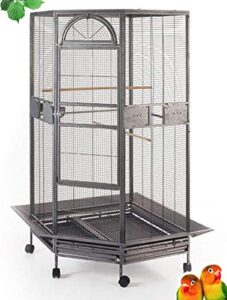
Your bird needs room to spread its wings without risking its head or feet. This wrought iron corner cage delivers 37.5″ x 37.5″ x 63.5″ of flight space with 1/2-inch bar spacing—perfect for cockatiels, parakeets, and budgies.
The powder-coated finish blocks zinc and lead toxins, while slide-out metal trays simplify daily cleaning. Large access doors and feeder cups with swivel doors let you manage feeding without stress.
The corner design saves floor space, and metal seed skirts catch debris before it hits your carpet.
| Best For | Bird owners with small to medium-sized pets like parakeets, cockatiels, or budgies who need a spacious cage that fits neatly into a corner without taking over the room. |
|---|---|
| Material | Wrought Iron |
| Finish | Powder coating |
| Installation | Assembly required |
| Suitable For | Small to medium birds |
| Cleaning | Slide-out trays |
| Safety | Zinc and lead free |
| Additional Features |
|
- The 1/2-inch bar spacing keeps smaller birds safe while giving them plenty of room to climb and fly in a 37.5″ x 37.5″ space.
- Slide-out trays and metal seed skirts make daily cleaning way easier—no more scrubbing the floor around the cage.
- The powder-coated finish is free from zinc and lead, so you don’t have to worry about toxic materials harming your bird.
- Assembly instructions are confusing and hard to follow, which can make setup frustrating.
- Some cages arrive with bent bars or chipped coating, and the feed doors don’t always latch securely—potential escape risk.
- Quality control seems inconsistent, with reports of missing parts or damage right out of the box.
2. Flyline Corner Bird Cage
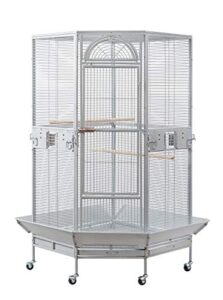
You’ll save space without compromising safety features when you choose this corner cage. Its 5/8-inch bar spacing fits cockatiels, conures, and lovebirds perfectly, while vertical and horizontal bars encourage natural climbing.
The powder-coated wrought iron frame resists rust and eliminates zinc and lead exposure. A 360-degree seed skirt contains debris, and slide-out trays speed up cleaning.
The large front door and play-top design give your bird room to stretch outside its enclosure. At 63.5″ tall, it provides vertical flight space most rectangular cages can’t match.
| Best For | Bird owners with limited floor space who need a safe, easy-to-clean cage for small to medium parrots like cockatiels, conures, and lovebirds. |
|---|---|
| Material | Wrought Iron |
| Finish | Powder coating |
| Installation | Assembly required |
| Suitable For | Small to medium birds |
| Cleaning | Slide-out trays |
| Safety | Zinc and lead free |
| Additional Features |
|
- Corner design maximizes vertical space while minimizing the cage’s footprint in your room
- Powder-coated wrought iron is free from zinc and lead, keeping your bird safe from toxic metals
- 360-degree seed skirt and slide-out trays make daily cleaning much faster and less messy
- Assembly instructions are often unclear and you’ll likely need help putting it together
- Bar spacing might be too wide for very small birds or too weak for strong-beaked species like African Greys
- Parts sometimes arrive bent and need manual straightening before assembly
3. Natural Wood Bird Perch Platform Stand
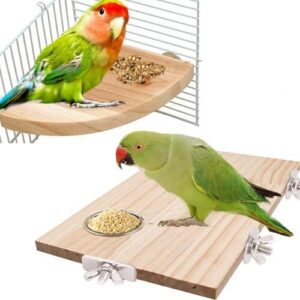
Your bird needs stable footing to prevent joint stress and foot injuries. This natural hardwood platform delivers a flat, splinter-free surface that accommodates resting, feeding, and play without crowding toes.
The stainless steel mounting hardware resists corrosion and locks securely to cage bars. You’ll appreciate the wide base that catches droppings and reduces mess on surrounding surfaces.
At 8.2 x 4.8 inches, it fits canaries, parakeets, and cockatiels. The untreated wood is safe for chewing, and textured knobs strengthen foot muscles.
| Best For | Bird owners with small to medium-sized birds like canaries, parakeets, or cockatiels who want a safe, natural perch that doubles as a play and feeding area. |
|---|---|
| Material | Wood |
| Finish | Polished smooth |
| Installation | Easy to install |
| Suitable For | Small to medium birds |
| Cleaning | Requires cleaning |
| Safety | Polished smooth surface |
| Additional Features |
|
- Natural hardwood surface is safe for chewing and helps strengthen foot muscles through textured knobs
- Stainless steel mounting hardware resists rust and provides secure attachment to cage bars
- Wide 8.2 x 4.8-inch platform catches droppings and gives birds room to move without crowding
- May not fit all cage bar sizes or configurations, as some reviewers noted compatibility issues
- Wood surface can be difficult to clean without gravel paper or bird-safe covering over it
- Not designed for larger bird species or heavy use from multiple birds at once
4. Prevue Natural Wood Bird Perch
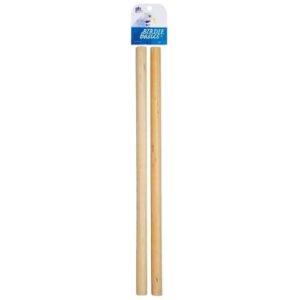
Dense Coffea wood ensures these perches withstand years of gripping, climbing, and chewing. You won’t need replacements every few months—the ultra-hardwood construction resists splintering and cracking.
At 17 inches long with natural irregular contours, the perch exercises foot muscles and reduces boredom. The 0.75-inch diameter suits parakeets, cockatiels, and cockatoos.
Mounting hardware bolts directly to standard cage bars without special tools. Inspect weekly for wear, clean with mild soap and water, then air dry completely before reinstalling.
| Best For | Bird owners with medium-sized birds like cockatiels and cockatoos who want a durable, low-maintenance perch that promotes natural foot exercise. |
|---|---|
| Material | Wood |
| Finish | Natural wood |
| Installation | Easy to install |
| Suitable For | Parakeets, cockatiels, cockatoos |
| Cleaning | Easy to clean |
| Safety | Natural wood |
| Additional Features |
|
- Ultra-hard Coffea wood resists splintering and lasts for years without frequent replacement
- 17-inch length with natural contours exercises foot muscles and prevents boredom
- Simple installation with included hardware that fits standard cage bars
- 0.75-inch diameter may be too thick for smaller birds like parakeets
- 17-inch length might not fit all cage sizes or configurations
- Requires weekly inspections and cleaning to maintain safety and hygiene
5. Begeterday Bendable Bird Perch

Flexible repositioning keeps your bird’s feet healthy and engaged. The Begeterday Bendable Bird Perch stretches 25 inches long, wrapped with premium forest moss and artificial vines around a 5mm aluminum core.
You can twist it into zigzags, loops, or curves to match your bird’s activity level. Simple end clips attach to standard cage bars without tools. Machine wash regularly to prevent bacterial buildup, and inspect weekly for fraying that might expose the metal core or create ingestion risks.
| Best For | Bird owners who want a customizable perch that exercises their bird’s feet and adds natural texture to the cage. |
|---|---|
| Material | Premium forest moss |
| Finish | Natural color |
| Installation | Easy to hang |
| Suitable For | Finches, canaries, cockatiels |
| Cleaning | Hand wash only |
| Safety | Natural materials |
| Additional Features |
|
- Bendable aluminum core lets you reshape the perch to create varied perching angles and foot exercise
- Premium forest moss covering provides a comfortable, natural-feeling grip for birds’ feet
- 25-inch length works well in most standard bird cages and offers plenty of repositioning options
- Moss may shed over time and expose the metal core underneath, creating potential safety hazards
- Not ideal for heavy chewers since birds can destroy the moss covering and reach the wire
- Some birds may catch their toes in any exposed netting or mesh as the perch wears down
Bar Spacing Safety Tips and Maintenance
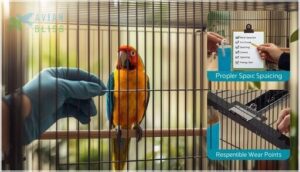
Keeping your bird’s cage in top condition isn’t a one-time setup—it’s an ongoing responsibility. Regular inspections catch problems before they become hazards, and proper maintenance keeps bacteria at bay.
Here’s how to maintain safe bar spacing and keep your bird’s environment secure.
Inspecting for Wear and Damage
Your bird cage needs monthly inspection to catch bar damage before it threatens avian health and safety. Check each weld for cracks, especially at corners where stress accumulates. Run your fingers along bars to detect rust spots or sharp burrs that snag feathers.
Bent bars signal replacement time. Document each inspection with dated notes to track wear detection patterns and maintain scheduling consistency across cage size variations.
Cleaning and Preventing Bacterial Buildup
Bacterial control protects your bird’s respiratory system and overall avian health and wellness. Wipe bars and perches daily with 70 percent isopropyl alcohol or 1:10 bleach solution, then air dry completely before reintroducing birds.
Proper ventilation systems prevent moisture accumulation that encourages microbial growth. Use bird-safe cleaning products and establish hygiene practices that include washing hands before and after cage sanitation to maintain ideal avian health and safety.
Adjusting Accessories for Safe Bar Spacing
After scrubbing down your bird cage, check that perches sit flush against bars without creating gaps. Secure clip-on feeders within two to three bar spaces from vertical bars to block escape routes.
Install removable guard inserts to fill openings larger than your species’ safe bar spacing. Schedule monthly checks for loosened screws that alter cage dimensions and compromise safety.
Frequently Asked Questions (FAQs)
How wide should the bars be on a budgie cage?
Your budgie’s cage bars should sit no more than 1 centimeter apart—around 3/8 inch—to stop their head from slipping through. Go narrower if possible, never wider than half an inch.
What bar spacing do cockatiels need?
Cockatiels need bar spacing between 1/2 and 5/8 inches. This range prevents head entrapment while allowing comfortable movement. Wider gaps risk escape or injury, so measure carefully before choosing your cage.
Can mice squeeze through cage bars?
Mice may squeeze through cage bar gaps as small as half an inch.
Bar spacing under this threshold and solid cage design reduce rodent escape factors, keeping your bird’s space secure.
Can different bar coatings affect bird safety?
Yes, coatings directly impact bird welfare and animal health. Stainless steel with non-toxic finishes offers chewing resistance and cleaning compatibility.
Choose UV visibility patterns, odor-free surfaces, and toxicity-free cage materials for ideal cage design and safety.
What bar shapes work best for birds?
The safest bar shapes minimize injury risk and escape attempts.
Vertical bars with rounded edges prevent toe pinches, while smooth cylindrical designs reduce feather wear and distribute perch weight evenly across spacing.
Do baby birds need different bar spacing?
Absolutely. Nestling care demands tighter bar width guidelines than adult setups.
Baby bird safety hinges on spacing under 1/2 inch to prevent escape, while fledgling development requires gaps that protect tiny heads and wings from entrapment.
How does bar thickness impact cage strength?
Thicker bars don’t just beef up your cage—they turn it into a fortress.
Bar thickness boosts structural integrity by increasing load capacity, enhancing cage stability, and resisting deformation when your bird perches, climbs, or plays energetically.
Should outdoor cages have tighter bar spacing?
Outdoor cages need tighter bar spacing to protect your bird from predators like raccoons or hawks.
Weather-resistant materials like powder-coated steel maintain spacing integrity while ensuring proper cage ventilation and predator-proofing for outdoor safety.
Conclusion
Like a seatbelt that’s properly fastened, the right bird cage bar spacing guide protects your bird from preventable tragedy. You’ve learned the measurements—1/2 inch for finches, 3/4 inch for cockatiels, 1 to 1.5 inches for macaws.
You know how to measure accurately and inspect for damage. Now apply this knowledge. Choose a cage that matches your bird’s size, check the bars weekly, and never compromise on bar spacing. Your bird’s life depends on it.