This site is supported by our readers. We may earn a commission, at no cost to you, if you purchase through links.
You bring home a parrot, set up a beautiful cage by the window, and assume the natural sunlight will keep your bird healthy. Three months later, your vet diagnoses vitamin D deficiency despite all that sunshine, because standard window glass blocks the UVB rays birds need to synthesize nutrients.
This common scenario illustrates why choosing between indoor and outdoor housing isn’t just about space or convenience—it’s about understanding how environmental factors affect your bird’s physiology in ways that aren’t always visible. The decision involves weighing temperature stability against natural light exposure, predator protection against flight opportunities, and controlled conditions against the enrichment of outdoor elements, with each choice creating distinct health implications for different species.
Table Of Contents
- Key Takeaways
- Key Differences Between Indoor and Outdoor Cages
- Health and Safety Considerations
- Maintenance and Cleaning Requirements
- Bird Welfare and Enrichment Needs
- Choosing The Right Cage for Your Birds
- Cost and Practical Considerations
- Frequently Asked Questions (FAQs)
- Should I put my bird cage outside?
- What temperature is too cold for birds outside?
- Can birds transition between indoor and outdoor cages?
- Do indoor birds need UV light supplements?
- What permits are required for outdoor aviaries?
- How does noise level differ indoors versus outdoors?
- Are hybrid setups combining both environments feasible?
- Conclusion
Key Takeaways
- Your choice between indoor and outdoor cages fundamentally shapes your bird’s access to UVB light for vitamin D synthesis, since standard window glass blocks the rays needed for proper calcium metabolism and bone health.
- Indoor setups give you stable temperature control and predator protection but demand mechanical ventilation and UV supplements, while outdoor aviaries provide natural enrichment at the cost of weather exposure and increased security risks.
- Daily cleaning routines differ significantly between environments—indoor cages require dust and dander management through air filtration, whereas outdoor setups need drainage checks, rust prevention, and weatherproofing maintenance tied to seasonal shifts.
- Species-specific needs, your available space, and honest assessment of your daily time commitment matter more than cage cost alone, since mismatched housing affects everything from feather quality to behavioral stress regardless of how much you spend.
Key Differences Between Indoor and Outdoor Cages
Choosing between an indoor and outdoor cage isn’t just about where you have space—it’s about understanding how location shapes every aspect of your bird’s daily life.
Before you commit to indoor or outdoor placement, it helps to explore the key differences between bird cage types so you can match design features to your bird’s specific needs.
Your cage choice defines your bird’s environment—temperature, safety, space, and daily exposure to natural elements
The environment you create affects temperature stability, predator exposure, access to natural elements, and how much room your bird has to move. Let’s break down the key differences so you can see what each setup really offers.
Environmental Control and Temperature
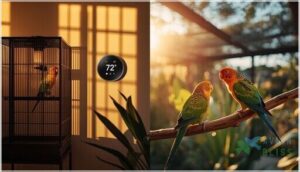
When you keep birds indoors, you control temperature regulation through climate systems and HVAC integration, holding steady between 65 and 85 degrees year-round. Indoor setups let you fine-tune humidity control and thermal insulation, while ventilation systems and air purification reduce respiratory risks that weather-exposed birds face.
Outdoor cages rely on natural air, which means diurnal swings can stress your flock.
Proper management of energy consumption and environmental impacts plays a key role in maintaining healthy indoor habitats.
Protection From Predators and Hazards
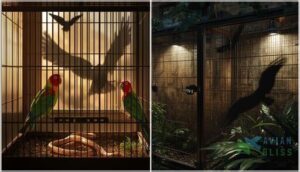
Indoor cages shield your birds from predators like raccoons, hawks, and snakes through walls and climate control systems that double as safety features.
Outdoor setups demand predator protection through secure enclosures—sturdy mesh buried 8 to 12 inches deep, double-locking latches, and motion-activated lights for predator control.
Risk assessment matters most outdoors, where hazard mitigation requires regular checks for gaps, weak points, and ambush cover near your avian health and wellness zone. Effective outdoor deterrence involves strategies such as predator deterrents and barriers to guarantee your birds’ safety.
Exposure to Sunlight and Fresh Air
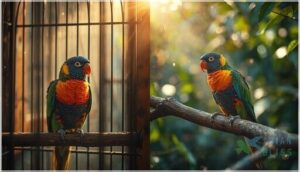
Beyond physical barriers, your birds need quality light and air—two factors where indoor aviaries and outdoor aviaries differ dramatically. Natural sunlight promotes feather health through vitamin D synthesis and brighter plumage, while fresh air reduces ammonia buildup that climate control and ventilation systems can’t fully eliminate indoors.
- Sunlight therapy regulates circadian rhythms and sleep-wake cycles
- Natural lighting encourages foraging behaviors and temperature choice
- Direct sun requires shade access to prevent overheating
- Air quality improves with cross ventilation and filtered outdoor access
- UV exposure reduces surface bacteria when paired with good hygiene
Space and Flight Opportunities
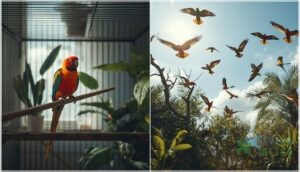
Light and air matter, but space dictates how your bird actually moves. Indoor aviaries rarely exceed one square meter per bird, limiting flight patterns to quick hops between perches.
Outdoor aviaries offer two to five square meters, enabling extended glides and vertical flight that strengthen pectorals. Airspace design—especially unobstructed clearance and aviary layout—directly impacts bird exercise and long-term cardiovascular health.
Health and Safety Considerations
Keeping your birds healthy and safe isn’t just about feeding them well, it’s about creating an environment that protects them from invisible threats and physical dangers.
Whether you choose indoor or outdoor housing, you’ll face different challenges in terms of disease control, air quality, harmful materials, and security from predators. Let’s walk through the key health and safety factors you need to take into account for each setup.
Disease and Pest Management
Disease prevention starts with vigilance, because catching illness early protects your entire flock. Indoor cages give you tighter control over biosecurity measures and pest management, while outdoor setups demand extra sanitizing and health monitoring against wild bird contact and environmental parasites.
Each species also brings unique needs—tropical bird species information can help you tailor prevention strategies to temperature-sensitive breeds that struggle with sudden climate shifts.
- Quarantine new birds for 30 days to stop infections before they spread
- Inspect weekly for mites, lice, and signs of respiratory distress
- Disinfect perches and feeding stations every two weeks with bird-safe products
- Store feed in sealed containers to block mold and insect contamination
- Schedule routine avian health checks for early disease detection
Your diligence safeguards animal welfare and predator protection alike.
Air Quality and Ventilation
Stale air can feel invisible, yet poor ventilation quietly harms your birds’ respiratory health every day. Indoor aviaries need fresh exchange to keep CO₂ below 1000 ppm and humidity between 40 and 60 percent, supporting oxygen levels and preventing ammonia buildup. Outdoor aviaries benefit from natural airflow but require thoughtful positioning away from pollutants and drafts.
| Feature | Indoor Aviaries | Outdoor Aviaries |
|---|---|---|
| Air exchange | Mechanical fans or cross ventilation through windows | Natural breezes and openings provide continuous fresh air |
| Filtration | HEPA filters reduce dust and dander for cleaner breathing | Less need for air filtration, but pollen and outdoor contaminants enter freely |
| Humidity control | Controlled with sensors and misters for stable moisture | Variable with weather, requiring monitoring in extreme conditions |
You’ll want to check CO₂ and humidity monitors weekly, keeping logs of temperature shifts and any coughing or labored breathing in your flock. Air purification systems help indoor setups manage particulate matter, while outdoor aviary setups rely on strategic vent placement to avoid direct drafts that stress birds. Use water-based cleaners and store harsh solvents away from the bird room to limit volatile organic compounds. Remove waste promptly so ammonia doesn’t build up and compromise air quality, supporting natural behavior and long-term bird health in both environments.
Toxic Hazards and Safe Materials
Hidden poisons in cage materials can silently undermine bird health, even when the setup looks picture-perfect. You need non-toxic coatings and eco-friendly options to protect your flock from hazardous chemicals that off-gas or leach into food and water, supporting animal welfare through thoughtful aviary setup and environmental enrichment.
- Non-toxic powder coatings release fewer than 50 grams per liter of volatile organic compounds, protecting respiratory systems
- Stainless steel and polished aluminum resist corrosion without leaching metals into droppings or drinking water
- Natural fiber cages using untreated sisal or hemp avoid lead and chromium found in some synthetic materials
- Water-based wood sealants limit indoor air contaminants while preserving durability for perches and frames
- Food-grade plastics prevent chemical migration into the dishes your birds access daily
Predator Prevention and Structural Security
A poorly secured outdoor aviary is like leaving the front door open for raccoons, hawks, and snakes. You’ll need fence materials with one-inch mesh buried twelve inches deep for burrow prevention, secure latches that resist tampering, and roof designs with sealed joints to block overhead predators.
Alarm systems and motion cameras add layers of predator protection, preserving structural integrity in bird enclosures while you sleep soundly.
Maintenance and Cleaning Requirements

Keeping your bird’s space clean isn’t just about appearances, it’s about protecting their health and yours.
Indoor and outdoor cages come with different challenges, from managing dust and dander inside to dealing with weather and wildlife outside.
Let’s walk through what you’ll need to stay on top of, whether you’re cleaning daily or planning for long-term upkeep.
Daily and Weekly Cleaning Routines
Your birds rely on you for a clean space, and daily sanitation makes all the difference. Wipe food dishes and perches each morning, then sweep cage floors to remove droppings and feather debris.
Weekly, deep-clean all surfaces with bird-safe disinfectant, check ventilation for dust buildup, and inspect beaks during handling. Consistent cleaning time protects bird health and reduces sanitizing costs long-term.
Long-Term Maintenance Tasks
Think of cage inspection like your annual physical—you catch problems before they become emergencies. Maintenance scheduling protects your investment and your birds’ safety through proactive care.
- Cage inspection annually verifies frame integrity, replacing worn joints before failure threatens avian health and safety protocols
- Repair logistics include a 12-month replacement cycle for perches and feeding accessories
- Seasonal preparation means weatherproofing checks and resealing to prevent moisture intrusion
- Upkeep budgeting requires maintaining spare parts inventory with repair logs
- Long-term sustainability depends on updating protocols with safer materials yearly
This approach to aviary maintenance and costs ensures bird care and maintenance remain manageable.
Managing Waste and Odor
Regular maintenance manages the structural pieces, but keeping your bird’s space fresh comes down to smart odor control and waste reduction.
Ventilation systems with air purification layers tackle airborne particles, while daily cage hygiene—emptying drip trays, spot-cleaning perches—limits food waste buildup.
Enzyme cleaners break down organic residues without harsh fumes, cutting sanitizing cost and cleaning time while supporting bird care and maintenance that feels manageable, not overwhelming.
Weather Impact on Upkeep
Weather shifts the upkeep workload between indoor and outdoor aviaries. Temperature control indoors keeps humidity steady year-round, while precipitation effects outdoors demand drainage checks and rust prevention.
Wind protection becomes critical during storms, and seasonal adaptation means adjusting shade cloth in summer or managing snow in winter. Environmental control simplifies climate and weather considerations inside, but outdoor setups require temperature regulation that adapts to nature’s timeline.
Bird Welfare and Enrichment Needs
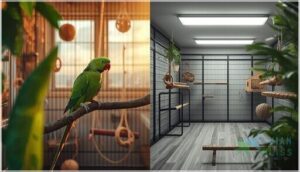
A safe cage isn’t enough if your bird feels bored or isolated, or unable to express instinctive behaviors. Whether you choose an indoor or outdoor setup, you need to think about your bird’s emotional health, mental engagement, and opportunities for natural activity.
Let’s look at four welfare essentials that should guide your cage choice and daily care routine.
Social Interaction and Supervision
Your bird’s well-being depends on consistent social interaction and supervised play, especially during those vital out-of-cage sessions. Plan at least 30 minutes daily for smaller species, up to two hours for larger ones.
Watch for fluffed feathers or rapid breathing during handling—these signal stress. Morning sessions work best for training since birds are most alert then, improving bonding and reducing fear responses over time.
Access to Natural Behaviors
Beyond supervised time, your birds need space for natural behavior like foraging techniques and flight patterns. Indoor aviaries that support climbing, hopping, and short bursts replicate wild movement, while perches of varying textures exercise foot muscles.
Scatter feeding on safe substrates encourages ground foraging, and shallow water dishes invite bathing—behaviors essential for bird welfare and physical health in confined avian care settings.
Mental Stimulation and Enrichment
Mental stimulation through behavioral enrichment keeps your birds alert and content. Rotate at least three foraging games each week to prevent boredom, and introduce sensory play with safe textures and scents.
Social bonding during ten-minute training sessions reinforces trust, while environmental enrichment—puzzle feeders, varied perches, cooperative tasks—promotes social interaction and prevents repetitive behaviors that signal poor bird enrichment and welfare.
Adapting to Seasonal Changes
Throughout the year, temperature fluctuations and humidity control shape your bird’s comfort and health. You’ll need to adjust seasonal lighting as photoperiods shift, while weather protection becomes critical during extreme heat or cold snaps.
Climate adaptation through environmental control—insulated covers in winter, shade cloth in summer—facilitates temperature regulation and avian health and safety, ensuring your birds thrive despite seasonal considerations and natural climate regulation challenges.
Choosing The Right Cage for Your Birds
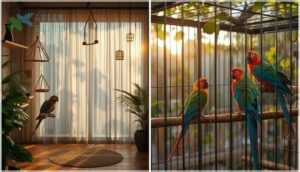
You can’t pick the right cage without first understanding your bird’s needs, your own daily routine, and the space you have available. Different species thrive under different conditions, and what works for a single budgie won’t suit a pair of macaws.
Let’s walk through the key factors that’ll help you make the best choice for your feathered companions.
Assessing Bird Species and Size
Your first step involves evaluating each bird species carefully, since body mass, wing span considerations, and beak analysis reveal what they truly need. A finch weighing nine grams needs less clearance than a parrot over a kilogram, and feather maintenance improves when enclosure design matches natural movement patterns.
Species compatibility also depends on size disparities, so pairing similarly proportioned birds reduces stress and promotes better bird health long-term.
Considering Number of Birds
Adding more birds changes flock dynamics quickly, so you’ll want cage capacity that accommodates social balance without creating crowding stress.
A single large cage can comfortably house two small to medium parrots when each bird has two to three square feet of perch space. Doubling your bird population means expanding total cage volume by twenty-five to forty percent to maintain proper space allocation and prevent behavioral issues.
Space Availability in Home or Garden
Your room layout determines whether you can fit an indoor aviary without sacrificing livable space, while garden size dictates whether outdoor aviaries become practical.
Measure floor planning zones carefully—indoor bird cages need clearance around all sides for cleaning access.
Yard optimization focuses on using vertical space efficiently, so even compact gardens can support well-designed aviary structures when you plan thoughtfully around existing features.
Owner Lifestyle and Commitment
Your schedule honestly matters more than cage size when choosing between indoor and outdoor aviaries. Daily routines demand about one to two hours for cleaning, feeding, and health checks—time that fosters bird bonding and keeps owner responsibilities manageable.
Indoor aviaries simplify morning care during your busiest weekdays, while outdoor setups require lifestyle balance since weather affects access and time management throughout seasonal changes.
Cost and Practical Considerations
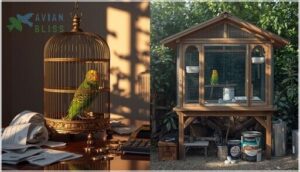
Setting up a bird cage, whether indoors or out, isn’t just about the upfront price tag. You’ll want to factor in everything from utilities and repairs to the accessories your birds will need over time.
Understanding the full financial picture helps you choose a setup that fits your budget now and down the road.
Initial Investment and Setup Costs
Before you commit to aviary construction, you’ll need to understand the real numbers behind material costs and installation budget. Indoor cages start lower, but outdoor setups often require weatherproof foundations and labor charges that add up quickly.
Here’s what shapes your equipment expenses and setup fees:
- Cage materials: Stainless steel starts around $2,000 for quality construction, while powder-coated aluminum runs $1,200 to $1,800 for similar dimensions.
- Size matters: Compact 24-inch cages cost $200 to $500, medium 30 to 36-inch units range $600 to $1,200, and multi-unit setups can reach $3,000 total.
- Installation needs: Professional labor charges commonly run $100 to $250 for mid-size indoor setups, while outdoor installations may require concrete bases adding $100 to $500.
- Essential accessories: Budget $50 to $150 for perches, dishes, and enrichment items that support your birds’ well-being from day one.
- Shipping and permits: Large cages carry $50 to $300 freight fees, and some locations require HOA approvals before you can proceed with aviary design and planning.
Ongoing Expenses (Utilities, Repairs)
After you’ve covered the initial setup, utility bills and repair costs become your monthly reality. Indoor cages rely on climate control, which can lower heating or cooling fees for that room, while outdoor enclosures may push electricity use higher with heat lamps or fans.
Weatherproofing maintenance, like sealant reapplications and mesh replacement after storms, cuts weather-related repair costs by up to 60 percent indoors.
Budgeting for Accessories and Supplies
Beyond utilities and repairs, accessory costs and supply chains demand careful budget planning. Feeders, perches, and toys total 40 to 120 dollars upfront, then you’ll spend about 10 to 20 percent of that annually on replacements.
Outdoor weatherproof bowls and UV-resistant toys run 25 to 70 dollars each. Cost savings come from stocking spares and choosing items with warranties, which streamlines financial management and keeps sanitizing cost predictable.
Long-Term Value and Resale Potential
Thinking beyond monthly bills, you want a cage that holds its worth over time. Stainless steel frames resist corrosion and command higher resale market prices, while powder-coated outdoor aviaries maintain finish for five to seven years with routine care. Brand reputation and documented maintenance costs signal quality to buyers, making upgrade options smoother.
- Stainless steel construction resists corrosion and retains value longer
- Well-known brands offer multi-year warranties boosting buyer confidence
- Modular designs allow reconfiguration, supporting premium resale pricing
- Maintenance records and receipts increase transparency and trust
- Neutral finishes and smooth edges boost broad appeal in homes
Frequently Asked Questions (FAQs)
Should I put my bird cage outside?
Outdoor time isn’t always a walk in the park for your bird.
Cage Security, Weather Protection, and outdoor Risks like predators can trigger serious Bird Stress, compromising Avian Health unless you’ve planned carefully.
What temperature is too cold for birds outside?
Most birds struggle when outdoor temperature drops below 40°F, with small species facing bird hypothermia risk around 32°F.
Cold stress depends on wind chill, humidity, and whether your avian physiology allows proper temperature regulation.
Can birds transition between indoor and outdoor cages?
Your birds can handle shifts between indoor aviaries and outdoor aviaries, but you’ll need gradual exposure and careful stress management.
Changeover strategies depend on cage design, environmental adaptation, and consistent bird acclimation monitoring throughout the process.
Do indoor birds need UV light supplements?
Yes, your indoor birds need UV light supplements because glass blocks essential UVB rays that support calcium metabolism, vitamin D3 synthesis, and feather health—critical benefits outdoor birds receive naturally from direct sunlight.
What permits are required for outdoor aviaries?
Many jurisdictions require aviculture permits under migratory bird laws for outdoor aviaries.
Applications detail enclosure dimensions, predator-proofing, and shelter provisions, with wildlife regulations varying by region—so check local zoning and wildlife authorities annually.
How does noise level differ indoors versus outdoors?
Indoor acoustics create noise reduction of around 16-18 decibels when windows close, offering sound barriers that steady ambient levels.
Outdoor noise fluctuates more with traffic peaks, affecting bird health and avian welfare in outdoor aviaries differently than indoor aviaries.
Are hybrid setups combining both environments feasible?
Combining indoor aviaries with sheltered outdoor access works well when you integrate proper weatherproofing, secure locks, and climate controls—letting your birds enjoy natural sunlight while you maintain safety year-round.
Conclusion
A finch owner recently shared how switching her canaries from a protected indoor setup to a ventilated outdoor aviary transformed their molting cycles and singing patterns within weeks—proof that your indoor vs outdoor bird cage considerations directly reshape physiology, not just lifestyle.
Evaluate your species’ UV requirements, your climate’s predictability, and your ability to monitor conditions daily. The right environment doesn’t just house your bird; it becomes the foundation for everything from bone density to behavioral health.