This site is supported by our readers. We may earn a commission, at no cost to you, if you purchase through links.
One invisible sneeze in the aviary—thousands of bacteria carried on a single particle. That’s how quickly Escherichia coli and other pathogens can spark a crisis in a flock. Feathered residents are outnumbered by microscopic threats that thrive on a favorite perch or in a shared water tray, waiting for a moment’s lapse in routine.
Understanding bacterial infection risks in aviary birds isn’t about fear—it’s about vigilance. Every cage, every beak, every breath holds potential for trouble or for safety, depending on what you do next. Recognizing these threats is the first step in defending your flock’s future.
Table Of Contents
- Key Takeaways
- Common Bacterial Infections in Aviary Birds
- Transmission Routes and Risk Factors
- Recognizing Symptoms of Bacterial Infections
- Prevention and Control Strategies
- Zoonotic Risks and Public Health Concerns
- Frequently Asked Questions (FAQs)
- How do birds get bacterial infections?
- What is the best treatment for bacterial infection in birds?
- Which bacterial disease of birds can be transmitted to humans?
- How do antibiotics affect bird gut microbiota?
- Are some bird species more susceptible than others?
- What role does diet play in infection resistance?
- How can pet owners spot early warning signs?
- Conclusion
Key Takeaways
- Bacterial infections in aviary birds spread rapidly through contaminated surfaces, water, air, and eggs, as well as stressful, overcrowded conditions.
- Early detection and species-specific treatment—including culture-guided antibiotics and PCR testing—are critical for preventing severe health impacts and losses.
- Rigorous sanitation, strict quarantine protocols, regular vaccination, and ongoing surveillance form the foundation of effective infection control.
- Some bacteria like Chlamydophila psittaci can transmit from birds to humans, emphasizing the need for strong biosecurity and occupational safeguards.
Common Bacterial Infections in Aviary Birds
Your aviary birds face five primary bacterial threats—each with distinct transmission patterns, clinical presentations, and management protocols. Recognizing these pathogens isn’t just academic; it directly determines whether you’ll catch infections early or face treatment complications and potential flock losses.
For a deeper look at identifying symptoms and protecting your flock, check out this detailed guide on understanding avian bacterial infections.
Catching bacterial infections early in aviary birds means the difference between safeguarding your flock and facing serious losses
Here’s what you need to know about the bacterial infections most likely to compromise your birds’ health.
Escherichia Coli Infections
Escherichia coli—specifically avian pathogenic E coli—causes 57.5% of bacterial infections in your birds through E coli transmission via contaminated surfaces, water, and respiratory aerosols. This Gram-negative pathogen triggers respiratory disease, septicemia, and organ failure; antibiotic resistance complicates treatment.
Your defense strategy requires:
- Culture-guided antimicrobial selection
- Rigorous bird sanitation protocols
- Quarantine measures for new arrivals
- Emerging E coli vaccines
- Regular susceptibility testing
For deeper insight into the role of pathogenic strains, see how E. coli variants affect both humans and animals.
Mycoplasma Gallisepticum and Mycoplasma Synoviae
Mycoplasma gallisepticum and Mycoplasma synoviae lack cell walls—making them resistant to beta-lactam antibiotics and capable of evading your bird’s immune defenses through surface protein modification.
MG transmission occurs via aerosols, contaminated equipment, and vertical routes through infected eggs; MS diagnosis requires PCR and serology since clinical signs—synovitis, respiratory distress—often appear intermittently.
Effective flock management combines vaccination, strict biosecurity measures, and quarantine protocols to limit avian mycoplasma establishment in your aviary. For further insight into chronic respiratory disease signs, reviewing such references can aid in early detection and prevention.
Staphylococcus Aureus and Staphylococcosis
While Mycoplasma challenges your flock through cell-wall-deficient persistence, Staphylococcus aureus—a gram-positive bacteria—attacks through bacterial toxins and coagulase activity that trap infection within tissues.
Avian staphylococcosis manifests as skin abscesses, cellulitis, and systemic illness; methicillin-resistant strains complicate treatment and demand rigorous infection control.
Your biosecurity measures—sanitation protocols, staff hygiene, equipment disinfection—directly determine whether Staphylococcus becomes an opportunistic invader or a controlled risk in your aviary.
Bordetella Avium (Turkey Coryza)
Beyond staphylococcal concerns, Bordetella avium—the gram-negative coccobacillus behind Turkey Coryza—targets your poultry’s upper respiratory tract with bacterial toxins that cause tissue damage, high morbidity, and persistent shedding.
This strictly avian pathogen spreads through respiratory aerosols and contaminated equipment, demanding enhanced biosecurity measures:
- Isolate new birds during quarantine periods
- Disinfect waterers and feed troughs between flocks
- Monitor for sneezing, nasal discharge, and swollen sinuses
- Use PCR assays for rapid, specific detection
- Implement vaccination protocols where regionally available
Your flock management directly determines whether B. avium becomes a controlled risk or a costly outbreak in your aviary.
Staying informed about rare but serious risks like vertical transmission can help you make smarter flock health decisions—read more in this practical guide to parrot disease challenges and solutions here.
Chlamydophila Psittaci (Avian Chlamydiosis)
Perhaps no other avian pathogen carries greater zoonotic risks than Chlamydophila psittaci—the obligate intracellular bacterium behind Avian Chlamydiosis.
This organism infects diverse bird species through contaminated feather dust and droppings; you’ll observe nasal discharge, conjunctivitis, and intermittent shedding that persists for months.
PCR testing of choanal swabs provides definitive Chlamydia diagnosis, protecting both Avian Health and human safety in your facility.
Transmission Routes and Risk Factors

Understanding how bacterial pathogens spread through your aviary is the first step toward meaningful prevention. These infections don’t appear out of nowhere—they follow predictable pathways that you can identify and interrupt.
Let’s examine the five primary transmission routes and risk factors that put your birds in danger.
Contaminated Surfaces and Equipment
Your cages and feeders aren’t just holding food—they’re harboring invisible threats. Bacteria survive on contaminated surfaces for days to weeks, turning routine equipment into vectors for avian bacterial infections. Surface sanitation and equipment disinfection form your first line of defense against fomite transmission.
- Use EPA-approved disinfectants with proper contact time for effective biofilm removal
- Pre-clean soiled surfaces before applying sanitizers to improve efficacy
- Implement cleaning protocols that rotate disinfectants to prevent resistant bacteria
- Include biosecurity measures like dedicated tools and quarantine protocols for new birds
Respiratory Aerosols and Airborne Spread
A single sneeze or burst of song fills the air with respiratory particles—fine aerosols teeming with bacterial respiratory pathogens. Inadequate ventilation systems let airborne pathogens linger, amplifying bioaerosol risk and undermining avian respiratory health.
Strengthen biosecurity measures and enhance airflow; without stringent control, Avian Bacterial Infections will ride the currents, exposing your flock to invisible dangers day after day.
Vertical Transmission via Eggs
Bacterial infection can reach chicks before they even hatch—through eggs contaminated during formation in the hen’s oviduct. Intraovarian transfer bypasses external defenses, embedding pathogens like Salmonella directly into yolk or embryonic membranes; your breeding stock becomes a silent conduit for vertical transmission that antibiotics can’t reverse.
- Bacteria colonize the embryo during oogenesis, establishing infection before hatchling day
- High stocking density and poor oviduct sanitation increase egg contamination risks
- PCR testing and hatchery monitoring detect embryo infection early
- Strict biosecurity measures—quarantine, vaccination, nest disinfection—reduce intraovarian transfer and curb antibiotic resistance pressures
Environmental Contamination (Water, Waste)
Contaminated water and waste turn your aviary into a bacterial breeding ground—imagine biofilm in water lines quietly fueling surges of avian bacterial infections. Solid Avian Hygiene and proactive Waste Management prevent these invisible threats. Daily attention to water quality, stringent Environmental Sanitation, and strong biosecurity measures work like a firewall, protecting your birds from preventable disease outbreaks.
| Practice | Impact |
|---|---|
| Biofilm Control | Cuts E. coli, Salmonella risks |
| Water Pollution Check | Detects contamination events |
| Waste Management | Reduces exposure, boosts hygiene |
High Stocking Density and Stress
What do you sacrifice when your birds have no space to roam? High stocking density amplifies Crowding Effects and stress, undermining both Avian Welfare and your biosecurity measures—inviting bacterial infection. Stress Response and Behavioral Changes surge; disease becomes predictable, not unusual.
- Immune suppression
- Faster avian bacterial infections
- Reduced growth
- Aggression spikes
- Compromised avian disease management with poor Density Management
Recognizing Symptoms of Bacterial Infections
Spotting bacterial infections early makes all the difference for your birds’ health. You’ll want to watch for key warning signs that can show up in several ways. Here’s what you should look for next.
Respiratory Signs (Nasal Discharge, Labored Breathing)

Nasal discharge—clear at first, then thick and colored—signals avian rhinitis or sinus infections from bacterial respiratory pathogens. Labored breathing, chest effort, and wheezing reveal respiratory distress.
If you notice persistent discharge, crusting, or substernal retractions, act swiftly; these signs point to bacterial infection threatening avian health and disease control in your flock.
Digestive Symptoms (Diarrhea, Weight Loss)

When gut health falters, you’ll see watery stools, rapid weight loss, and pale fat reserves—signals of malabsorption causes and nutrient deficits from bacterial infection. Birds with digestive enzyme disruption can lose body condition quickly. Watch for:
- Green diarrhea or blood in droppings
- Lethargy and poor feather quality
- Weight restoration challenges
- Stool changes despite normal appetite
Behavioral Changes and Lethargy

When digestive symptoms persist, watch for Lethargy Signs—birds perch quietly, avoid flock interaction, and show marked Behavioral Shifts. Activity levels plummet, with flight attempts rare and foraging effort minimal. Stress factors like overcrowding or poor ventilation worsen fatigue. Effective Fatigue Management starts with vigilance. Use this table to sharpen your observational skills:
| Lethargy Signs | Behavioral Shifts |
|---|---|
| Prolonged resting | Social withdrawal |
| Reduced appetite | Minimal vocalization |
| Slouched posture | Delayed response |
Diagnostic Techniques (PCR, CT Imaging)
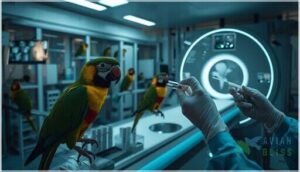
As you track behavioral shifts, rely on precise diagnostic techniques. PCR Sensitivity means molecular testing can catch bacterial DNA before outward symptoms—speed is your ally. CT Imaging offers diagnostic accuracy, pinpointing infected tissues even when traditional X-rays come up short.
Four steps you’ll want to master:
- Strategic Sample Handling
- Rapid PCR Analysis
- High-Detail CT Imaging
- Integrated Infectious Disease Control
Prevention and Control Strategies

Preventing bacterial infections in aviary birds starts with thoughtful management, not luck. Each strategy below helps close a gap where bacteria can slip through.
Let’s look at what makes the biggest difference for your flock.
Sanitation and Disinfection Practices
Think infection control is a luxury? In aviaries, precision is non-negotiable. Use EPA-registered disinfectants—apply after pre-cleaning with water and detergent, and verify dwell time is followed for Disinfectant Efficacy.
Weekly equipment maintenance, daily debris removal, and Water Sanitization anchor your biosecurity and hygiene program.
| Surface Cleaning | Biosecurity Measures |
|---|---|
| EPA disinfectant usage | Daily waste removal |
| Scrub feeders/cages | Footbaths at entry |
| Rinse & air dry | Color-coded tools |
| Remove debris daily | Waste bin sanitation |
| Dry before disinfecting | Record-keeping protocols |
Quarantine and Isolation Procedures
Within the framework of avian hygiene, strict quarantine protocols and targeted isolation methods are your line in the sand between health and havoc.
Quarantine and isolation shield the flock, employing separate cages, unidirectional traffic, and rigorous daily disease surveillance.
Every interface—equipment, people, or birds—must obey enforced biosecurity measures, ensuring bacterial infections don’t travel unchecked through your aviary’s ecosystem.
Vaccination and Prophylactic Measures
You can rarely overstate the importance of vaccination programs—these are your birds’ first shield against avian bacterial infections. Vaccines prime the immune response, raising the bar for disease prevention in even the highest-risk environments.
Lean on biosecurity protocols and, where warranted, prophylactic antibiotics, but always weigh these against antibiotic resistance. Vaccine efficacy hinges on schedule, handling, and customized prevention strategies.
Monitoring and Early Detection Programs
Every seasoned caretaker knows early detection saves lives—yours, quite literally, begins with thorough Health Monitoring. Rapid-response Surveillance Systems flag subtle changes before bacterial infections run rampant.
Use diagnostic tools and data analytics to dissect patterns. When your dashboard signals trouble, deploy immediate Outbreak Response.
Rigorous disease diagnosis and surveillance drive biosecurity measures that protect not just birds, but your entire operation.
Biosecurity and Waste Management
Picture your aviary as a fortress—biosecurity measures are the walls. Strict waste disposal, keen avian hygiene, and vigilant environmental cleaning act as sentries guarding against avian bacterial infections.
Avian hygiene isn’t just a routine; it’s your insurance. Sanitation protocols and biosecurity and quarantine protocols close the loopholes, making biosecurity and hygiene central to safeguarding flock health and operational stability.
Zoonotic Risks and Public Health Concerns

Birds can carry infections with serious consequences for people and entire communities. Understanding which bacteria in your aviary pose a risk to human health is essential.
Here’s what you need to pay close attention to next.
Zoonotic Pathogens in Aviary Birds
If you think your aviary’s only concern is flock health, think again—zoonotic disease risks are real. Avian Disease Transmission crosses the Bird Human Interface daily, especially as bacteria like Chlamydophila psittaci or Salmonella shed silently into cages.
Strong Aviary Biosecurity and Biosecurity and Quarantine Protocols stand as your firewall against pathogen shedding and other zoonotic risk factors, protecting both birds and people.
Human Health Implications and Occupational Exposure
When you’re face-to-face with birds, zoonotic disease risks are more than theoretical—your own Occupational Hazards are in play. Direct handling means Exposure Risks for zoonotic diseases, touting significant Public Health and Ecological Impacts:
- Airborne particle inhalation
- Contact with contaminated surfaces
- Minor cuts becoming serious portals
Strong Health Protocols and Disease Surveillance are non-negotiable measures for Worker Safety and minimized Public Health Risks.
Antibiotic Resistance and Surveillance
As your protocols get tighter, antibiotic resistance still finds its way in—blurring boundaries between animal and human health. Surveillance Networks track shifting Resistance Patterns using Molecular Detection and Genomic Analysis, revealing where antimicrobial therapy might fail.
That’s why Antibiotic Stewardship matters: oversights in managing bacterial infections in aviary birds can complicate zoonotic diseases and undermine even your best biosecurity measures.
One Health Approach for Disease Control
When antibiotic resistance complicates response, you don’t stand alone—Collaborative Surveillance and Integrated Research link veterinary and human health.
Policy Alignment and transparent Risk Communication allow you to act swiftly, while environmental governance bolsters biosecurity measures.
By addressing zoonotic diseases across agencies, you safeguard both avian and human populations from public health risks tied to avian bacterial infections.
Frequently Asked Questions (FAQs)
How do birds get bacterial infections?
Picture a crowded aviary: one bird perches, another preens, and suddenly invisible Airborne Pathogens swirl from a sneeze.
Fecal Transmission, Water Contamination, and Direct Infection all intertwine—spreading Avian Bacterial Infections in an instant, sometimes before symptoms appear.
What is the best treatment for bacterial infection in birds?
Always consult an avian veterinarian for bacterial culture and diagnosis—then initiate targeted antibiotic therapy, such as doxycycline, enrofloxacin, or amoxicillin.
Individualized antimicrobial therapy is essential in Avian Medicine to limit resistance and optimize your bird’s recovery.
Which bacterial disease of birds can be transmitted to humans?
Avian Chlamydiosis is the classic zoonotic disease in pet birds, commonly linked to Psittacosis risk in humans. Bacterial transmission occurs through inhaled dust—so vigilant hygiene and PPE are your best allies against these zoonotic diseases.
How do antibiotics affect bird gut microbiota?
Disrupting the gut microbiome with antimicrobial therapy lowers microbial balance, enabling dysbiosis effects such as nutrient malabsorption and heightened pathogen risk.
Probiotic therapy aids recovery, but antibiotic resistance genes may persist, complicating avian bacterial disease control.
Are some bird species more susceptible than others?
Like a patchwork quilt, species vulnerability varies—ground nesters face greater risk from environmental factors, while small passerines experience increased bacterial infections due to habitat shifts.
Avian immunity, genetic predisposition, and bird behavior influence susceptibility to avian bacterial infections.
What role does diet play in infection resistance?
Nutrient balance in avian diets is foundational—immune boosters like vitamin A, zinc, and selenium sharpen defenses, while dietary fiber and antimicrobial foods promote gut health.
Quality feed bolsters bird health and welfare, directly aiding bacterial infection control.
How can pet owners spot early warning signs?
Early warning signs creep in quietly—like a shadow at dusk—so watch for subtle Respiratory Issues, sudden Behavioral Changes, Digestive Problems, altered Feather Condition, or Beak Symptoms.
These often precede bacterial diseases in pet birds and signal Avian Health concerns.
Conclusion
It’s a paradox: safeguarding what you love often means mastering what you can’t see. Regarding bacterial infection risks in aviary birds, vigilance becomes the most powerful tool at your disposal—more so than any antibiotic.
Watchful habits, scientific understanding, and decisive action work in tandem. Your flock’s survival hinges not on luck, but on the daily rituals you choose.
In the background noise of feathers and song, your awareness draws a line between crisis and calm.