This site is supported by our readers. We may earn a commission, at no cost to you, if you purchase through links.
Your bird’s feathers aren’t just beautiful—they’re a living health report card, broadcasting nutritional deficiencies long before other symptoms appear. When essential vitamins fall short, keratin production stalls, pigmentation fades, and those once-glossy plumes turn brittle and dull.
The connection between diet and feather quality isn’t subtle: vitamin A drives the growth of new feathers, vitamin E shields delicate structures from cellular damage, and B vitamins strengthen each strand from the inside out.
Understanding how these nutrients work at the molecular level gives you the power to prevent common feather problems before they start, transforming lackluster plumage into the vibrant, resilient coating your bird deserves.
Table Of Contents
- Key Takeaways
- The Role of Vitamins in Feather Health
- Key Vitamins for Feather Quality
- Best Foods for Vitamin-Rich Bird Diets
- Preventing and Addressing Feather Problems
- Top Supplements for Feather Improvement
- Tips to Enhance Bird Feather Quality
- Frequently Asked Questions (FAQs)
- How to improve feather quality in birds?
- What vitamin is essential for the health of bird feathers?
- What supplements are good for feather growth?
- What boosts divine bird feathers?
- How does water quality affect vitamin absorption?
- Can seasonal changes impact vitamin requirements for birds?
- How long does feather regrowth take after supplementation?
- Can vitamin deficiencies cause permanent feather damage?
- Conclusion
Key Takeaways
- Your bird’s feathers reveal nutritional deficiencies before other symptoms appear because keratin production requires specific vitamins—vitamin A drives new feather growth, vitamin E protects cellular structures from oxidative damage, and B vitamins strengthen each strand internally.
- Vitamin A acts as the master switch for keratin synthesis in feather follicles, while vitamin D3 orchestrates calcium absorption necessary for strong feather shafts, and deficiencies in either vitamin produce visible problems like brittle texture, weak shafts, and slowed molt cycles.
- Over-supplementation creates serious toxicity risks because fat-soluble vitamins like A and D3 accumulate in tissues and cause liver damage, vision problems, and heart dysfunction—precision in dosing matters more than quantity when correcting deficiencies.
- Chronic stress undermines even perfectly balanced nutrition by elevating cortisol levels that disrupt molt cycles and divert resources from keratin production, making environmental stability and stress management essential partners to dietary interventions for optimal feather regrowth.
The Role of Vitamins in Feather Health
Your bird’s feathers don’t just help it fly—they’re a direct window into its nutritional health, revealing deficiencies long before other symptoms appear.
If you’re curious about what specific feather changes to watch for, breaks it all down with helpful photos.
Your bird’s feathers reveal nutritional deficiencies long before any other symptoms appear
When vitamins are missing from the diet, feather quality suffers in predictable, observable ways that you can learn to recognize.
Understanding how specific vitamins interact with feather structure gives you the power to prevent common plumage problems before they start.
Why Feathers Reflect Bird Nutrition
Your bird’s plumage is a living nutritional report card. Because keratin production demands specific amino acids and minerals from food, each feather shaft reflects what you’ve fed during growth cycles.
Proper avian nutrition fosters feather growth through three critical pathways:
- Protein supplies amino acids for keratin strength and barbule integrity
- Fat-soluble vitamins maintain gloss and resilience against environmental stress
- Mineral balance, especially zinc and sulfur compounds, strengthens disulfide bonds in feather structure
Learn more about the complexity of feathers, including. Bird wellness starts with understanding these avian dietetics fundamentals.
Common Feather Issues From Vitamin Deficiency
When nutrient imbalance strikes, your bird’s plumage tells the story first. Vitamin deficiency triggers feather breakage, dull coloration, and patchy regrowth that no amount of preening can fix.
You’ll notice brittle shafts from low biotin, slow molting issues tied to vitamin D3 deficits, and increased feather plucking when vitamin A runs low—each symptom points directly to what’s missing from the bowl.
| Vitamin Deficit | Visible Feather Problem |
|---|---|
| Vitamin A | Dry, brittle texture with uneven keratin quality |
| Vitamin D3 | Weak shafts that bend easily, slower molt cycles |
| Vitamin E | Frayed edges, increased breakage after stress |
| Biotin & B Vitamins | Thinning fibers, reduced feather growth rate |
| Combined Deficiencies | Chronic plucking, patchy plumage, faded pigment |
To better understand how diet influences these symptoms, review this detailed guide on feather loss and vitamin deficiency.
How Vitamins Influence Feather Structure
Vitamins don’t just prevent damage—they actively build each feather from the follicle up. Your bird’s plumage develops through three vitamin-driven stages:
- Follicle activation relies on vitamin A to trigger keratin health and initiate feather growth.
- Shaft construction demands biotin and vitamin D3 for nutrient absorption, ensuring proper feather texture.
- Color deposition depends on vitamin balance to deliver vibrant hues and resilient keratin.
Key Vitamins for Feather Quality
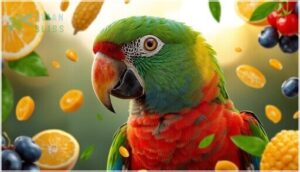
Your bird’s feathers rely on specific vitamins to maintain their strength, color, and structure throughout every molt and growth cycle. Without adequate levels of these nutrients, you’ll notice dull plumage, brittle shafts, and incomplete feather development that compromises both appearance and function.
Let’s examine the four essential vitamins that directly influence feather quality and how each one facilitates the complex biological processes behind healthy plumage.
Vitamin a and Keratin Production
Think of vitamin A as the master switch controlling keratin production in your bird’s feather follicle. Retinoid effects directly modulate the genes that determine keratin structure, turning dietary nutrients into resilient shafts during feather growth.
When vitamin A deficiency strikes, keratin synthesis falters, leaving you with brittle, discolored plumage that signals deeper nutritional trouble requiring immediate correction.
The Importance of Vitamin D3
Calcium absorption forms the bedrock of skeletal integrity, and without adequate vitamin D3, your bird’s body can’t mobilize the mineral reserves needed for strong feather growth.
Pairing D3 supplementation with natural feather conditioning methods helps ensure your bird develops resilient plumage from the inside out.
This vitamin orchestrates interactions between calcium, phosphorus, and the follicle matrix where keratin forms, directly linking bone health to plumage quality.
When vitamin D3 levels drop, feather shafts weaken and structural problems emerge rapidly.
Vitamin E’s Antioxidant Effects
Oxidative stress from flight and metabolism damages feather follicle cells at the molecular level, but vitamin E intercepts free radicals before they disrupt lipid membranes. This antioxidant shields the polyunsaturated fatty acids in skin tissues, preserving the structural integrity your bird needs for feather regrowth.
Vitamin E sources include:
- Vegetable oils and leafy greens for alpha-tocopherol
- Nuts delivering bioavailable lipid protection
- Minimally processed foods retaining antioxidant benefits
Biotin and B Vitamins for Resilient Feathers
Keratin health demands a steady supply of biotin and B complex vitamins, fueling the protein synthesis that builds resilient feather shafts during molt cycles. Biotin benefits your bird by supporting smooth keratin layering, reducing brittleness and nicked edges, while vitamins B1, B2, B3, B5, and B12 drive cellular energy for feather regrowth. Vitamin supplements for birds deliver these nutrients when diet alone falls short, though vitamin interactions require careful balancing.
| Vitamin | Primary Role in Feather Growth and Regeneration |
|---|---|
| Biotin | Builds keratin structure, prevents brittleness |
| B1, B2, B3 | Powers cell metabolism for new feather formation |
| B5, B12 | Aids DNA function and protein synthesis |
Commercial feeds usually include 0.1 mg biotin per kilogram, paired with zinc to enhance bird nutrition and health during feather growth cycles.
Best Foods for Vitamin-Rich Bird Diets
You can’t build healthy feathers without the right raw materials showing up in your bird’s bowl every day. The challenge isn’t just knowing which vitamins matter—it’s understanding which foods actually deliver them in forms your bird’s body can use.
Let’s break down the most effective dietary sources that support vibrant, resilient plumage from the inside out.
Fresh Produce High in Essential Vitamins

Your bird’s plumage thrives when you offer fresh vegetables and vitamin-rich fruits that deliver real nutritional power. Leafy greens like spinach and kale supply vitamin A and vitamin E, while red bell peppers provide more vitamin C than oranges.
These nutrient-dense foods support feather growth by fueling keratin production and protecting follicles. A balanced diet anchored in fresh produce transforms bird nutrition from the inside out, giving you visible results in stronger, glossier plumage.
Seeds, Grains, and Their Nutritional Value
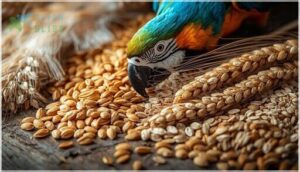
When you add seeds and grains to your bird’s diet, you’re unlocking powerhouses of essential fatty acids, fiber content, and vitamin E that commercial mixes often lack. Sunflower seeds deliver vitamin E and healthy fats, while oats and barley provide B vitamins and up to 4 grams of fiber per serving.
This seed nutrition and grain benefits combination builds nutrient density that directly bolsters feather strength without relying solely on nutritional supplements.
The Role of Commercial Bird Food
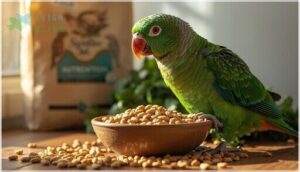
High-quality commercial diets deliver consistent vitamin fortification and balanced avian nutrition that many homemade feed formulas can’t match. Pellet quality matters because well-designed blends supply vitamin A, D3, and biotin in precise ratios to support feather growth without the guesswork of mixing seed-only diets.
- Species-specific formulations guarantee your bird receives targeted bird nutrition for peak plumage
- Uniform pellet quality prevents selective eating that creates vitamin gaps
- Fortified commercial diets simplify daily feeding while maintaining feather health
Safe Supplementation Practices
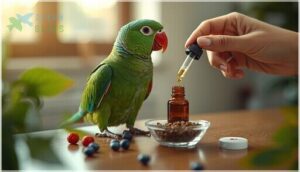
While fortified pellets cover baseline needs, vitamin supplements demand careful oversight to avoid toxicity risks and nutrient imbalance. Exceeding dosage guidelines for vitamin A or D3 creates serious health consequences, so always verify third-party testing seals and consult your avian veterinarian before adding bird vitamins to your feeding routine.
Proper supplement safety protects feather growth and prevents vitamin deficiency without triggering dangerous vitamin interactions.
Preventing and Addressing Feather Problems
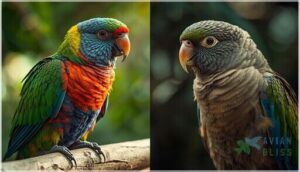
You can’t fix feather problems if you don’t know what you’re looking for, and spotting deficiency signs early gives your bird the best shot at recovery.
Balanced nutrition isn’t just about adding more vitamins—it’s about understanding when you’re doing too much or not enough, and how factors beyond diet shape feather health.
Here’s what you need to watch for and adjust to keep your bird’s plumage in top condition.
Recognizing Signs of Vitamin Deficiency
Sharp health monitoring starts with regular feather inspection, because subtle vitamin deficits appear long before your bird plucks. Watch for brittle feathers signaling biotin insufficiency, pale beaks suggesting vitamin A shortfalls, or poor sheen pointing to vitamin E imbalance.
Restlessness often accompanies B-vitamin gaps, while stunted growth in young birds flags inadequate vitamin D3. These vitamin alerts demand immediate nutritional adjustments to prevent feather plucking and restore plumage vitality.
Dangers of Over-Supplementation
Correcting vitamin deficiency with supplements sounds safe, but over-supplementation carries serious toxicity risks. Fat-soluble vitamins like vitamin A accumulate in tissues, causing liver damage and vision changes, while excess calcium disrupts heart function and raises kidney stone risk.
Nutrient imbalance from too much iron or zinc blocks absorption of other minerals, triggering digestive issues and long-term consequences.
Supplement interactions with medications and metabolic disruption mean more isn’t better—precision matters.
Balancing Diet for Optimal Feather Regrowth
You don’t need extremes to support feather regrowth—you need balance. A diet combining high-quality pellets with fresh dark greens delivers vitamin A for keratin, while vitamin D3 from sunlight or supplements strengthens follicles.
Add biotin-rich sweet potatoes and zinc from wheat germ to fuel avian nutrition pathways that drive feather growth. Smart diet planning with targeted feather supplements builds regrowth strategies without toxicity risk.
The Impact of Stress and Environment
Even perfectly balanced avian nutrition can’t overcome chronic stress—elevated cortisol disrupts molt cycles, accelerates feather loss, and diverts resources from keratin production. Environmental factors like noise, drafts, and unstable temperatures trigger stress management challenges that damage plumage quality.
You’ll see feather regrowth improve when you pair calming techniques with environmental enrichment for birds: stable routines, natural light cycles, safe perches, and bird socialization opportunities that support bird wellness and care.
Top Supplements for Feather Improvement
You’ve got the nutritional foundation in place, but targeted supplements can push your bird’s feather quality from adequate to outstanding. The right formulation delivers concentrated vitamins, essential fatty acids, and minerals that standard diets often miss, filling gaps that leave feathers dull or brittle.
Here are five supplements proven to support vibrant, resilient plumage in companion birds.
1. UnRuffledRx Bird Vitamin Supplement
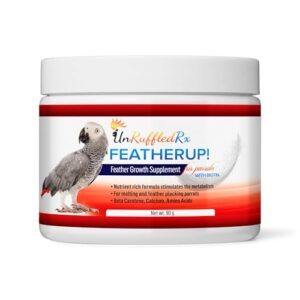
UnRuffledRx delivers a strategic blend of biotin, calcium, and vitamins A, E, and K in a powder you can sprinkle directly onto moist food. This formula contains 25 nutrients targeting the keratin production pathways that determine feather strength, addressing both molting cycles and plucking behavior.
You’ll start with a pinch and gradually increase to the full dose, allowing your bird’s system to adapt. The nutty flavor encourages acceptance in most species, though individual taste preferences vary, and some birds may initially resist the supplement’s texture.
| Best For | Bird owners dealing with molting cycles, feather plucking behaviors, or looking to maintain vibrant plumage through a complete daily nutritional supplement. |
|---|---|
| Form | Powder |
| Primary Benefit | Feather health support |
| Age Range | All life stages |
| Natural Ingredients | Yes |
| Application Method | Sprinkle on food |
| Weight | 90 Grams |
| Additional Features |
|
- Contains 25 essential nutrients including biotin and omega-3s that target keratin production for stronger, healthier feathers
- Easy application by sprinkling on moist food with flexible dosing that lets you start small and build up gradually
- Addresses nutritional gaps that often contribute to poor feather quality and plucking issues
- Some birds reject the nutty flavor or powder texture, making acceptance inconsistent across different species
- May not resolve severe plucking cases or bald spots caused by behavioral or medical issues beyond nutrition
- At $28.99 for 90 grams, the price point can add up for owners with multiple birds or long-term supplementation needs
2. Hemp Well Bird Oil Supplement
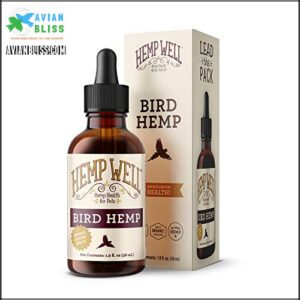
Hemp Well offers organically sourced hemp seed oil with a balanced omega 6 to omega 3 ratio that promotes skin moisture and cellular health underlying healthy plumage. Administered orally, this USA-grown, GMO-free formula contains zero THC, ensuring safety for daily use.
The anti-inflammatory fatty acids may reduce the discomfort that drives feather plucking while promoting immune function during molts.
Consult your avian veterinarian before starting supplementation, since proper dosing varies by species and individual health status, and some birds may show adverse reactions.
| Best For | Bird owners looking for a natural supplement to support feather health, reduce plucking behavior, and calm anxious parrots during stressful periods like molting. |
|---|---|
| Form | Oil |
| Primary Benefit | Skin and feather health |
| Age Range | All life stages |
| Natural Ingredients | Yes (Organic) |
| Application Method | Mix with food |
| Weight | 2 Ounces |
| Additional Features |
|
- Organic, GMO-free hemp seed oil with no THC provides safe daily supplementation for birds
- Balanced omega fatty acids support healthy skin, feathers, and immune function
- May help reduce anxiety-driven behaviors like feather plucking and destructive habits
- Requires consultation with an avian vet to determine proper dosage for your bird’s species and size
- Some birds may experience adverse reactions or skin issues
- Effectiveness varies between individual birds and may not work for all behavioral problems
3. Morning Bird Calming Supplement for Birds
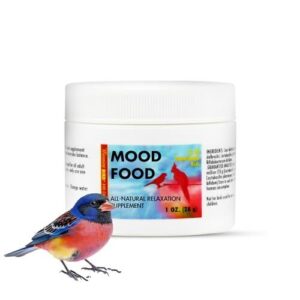
When stress and anxiety drive your bird to pluck, Morning Bird Calming Supplement—now labeled Mood Food—tackles the behavioral roots of feather damage.
L-theanine, B vitamins, and lecithin work together to support nervous system balance without sedation, helping reduce screaming, aggression, and destructive chewing that often accompany feather picking.
You’ll sprinkle the sweet-tasting powder on soft foods one to two times daily, adjusting the dose by species size.
Many owners report noticeable improvement within two weeks, though individual response varies and consistent use matters most.
| Best For | Bird owners dealing with stress-driven feather plucking, aggression, or screaming who want a natural supplement to support calmer behavior without sedation. |
|---|---|
| Form | Powder |
| Primary Benefit | Stress reduction |
| Age Range | All life stages |
| Natural Ingredients | Yes |
| Application Method | Mix with food or water |
| Weight | 6 Ounces |
| Additional Features |
|
- Contains L-theanine and B vitamins that target nervous system balance to reduce anxiety-related behaviors like plucking and aggression
- Sweet-tasting powder mixes easily into soft foods, making daily dosing straightforward for most birds
- Many owners see noticeable behavioral improvements within two weeks with consistent use
- Results aren’t immediate—it can take days to two weeks before you notice a difference in your bird’s behavior
- At $48.36 for 6 ounces, it’s a pricey supplement that adds up with long-term use
- Some users report the powder can be sticky or doesn’t dissolve well in water, and effectiveness varies by individual bird
4. KikiBirds Premium Parrot Food Blend
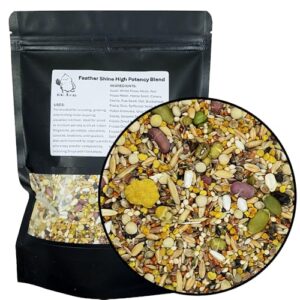
KikiBirds Premium Parrot Food Blend supplies concentrated plant protein and omega fatty acids from flax, hemp, and sprouted seeds to nourish feathers during molt and breeding.
This USA-made mix combines whole seeds, freeze-dried sprouts, and bee pollen without artificial dyes, delivering vitamin A precursors, vitamin E, biotin, and balanced calcium for keratin production and plumage shine.
You’ll shift gradually over seven to ten days, pairing it with pellets rather than using it as a standalone diet, then monitor feather condition and droppings to gauge your bird’s response.
| Best For | Parrot owners looking for a high-quality supplement to support molting, breeding, and overall feather health with nutrient-dense whole seeds and natural ingredients. |
|---|---|
| Form | Seed |
| Primary Benefit | Molting and growth support |
| Age Range | All life stages |
| Natural Ingredients | Yes |
| Application Method | Supplement to diet |
| Weight | 1 Pound |
| Additional Features |
|
- Packed with omega-rich seeds, freeze-dried sprouts, and bee pollen for feather conditioning and skin health
- Made in the USA with no artificial colors, providing clean nutrition across all life stages
- Delivers 17.5% plant protein plus key vitamins for keratin production and plumage shine
- Pricey compared to standard bird food, and the 1-pound bag doesn’t last long
- Large seed size may not work for smaller parrot species
- Some birds are picky and won’t eat all the ingredients, which can lead to waste
5. UnRuffledRx Red Palm Oil for Birds
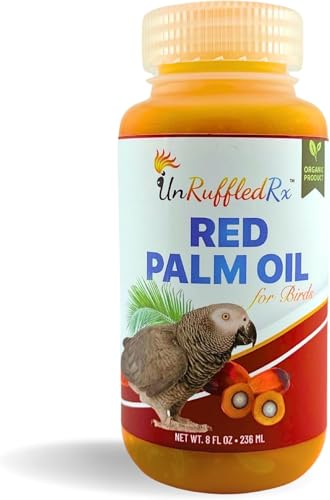
When feather color fades or skin turns flaky, you’re often looking at a vitamin A shortage that dietary pellets alone can’t fix.
UnRuffledRx Red Palm Oil delivers natural beta carotene, vitamin E, and balanced omega fatty acids in a virgin, cold-pressed formula.
You’ll measure a quarter teaspoon per 350 grams of body weight, mix it into chop or mash two to three times weekly, and warm it slightly to boost aroma—ensuring your bird gets antioxidant support that protects follicles and deepens plumage shine without artificial additives.
| Best For | Bird owners who want to naturally boost feather color, skin health, and immune function through a nutrient-dense oil supplement rich in beta carotene and vitamin E. |
|---|---|
| Form | Oil |
| Primary Benefit | Skin and feather health |
| Age Range | All life stages |
| Natural Ingredients | Yes (100% natural) |
| Application Method | Coat pellet food |
| Weight | 8 Ounces |
| Additional Features |
|
- Delivers natural antioxidants and omega fatty acids that support vibrant plumage and healthy skin
- Cold-pressed and 100% natural with no artificial additives or fillers
- Easy to mix into chop or mash for convenient feeding two to three times per week
- Strong smell may discourage picky birds from eating treated food
- Thick, sticky consistency can stain surfaces and requires soap to clean up
- Dosage can be tricky to measure accurately for smaller birds
Tips to Enhance Bird Feather Quality
You’ve learned which vitamins matter and how supplements support feather health, but practical application makes the difference between theory and transformation.
The strategies that follow address the physical, nutritional, and psychological factors that determine whether your bird’s plumage thrives or struggles.
These four approaches work together to create the conditions feathers need to grow strong, vibrant, and resilient.
Creating a Feather-Friendly Environment
In your quest for bird wellness, start with clean air quality and humidity control—aim for 40–60% humidity and well-ventilated spaces. Feather-friendly lighting, like full-spectrum bulbs, promotes feather growth and vitamin synthesis.
Thoughtful perch design and noise reduction minimize stress, while regular feather care and safe vitamin supplements round out an environment that truly fosters avian nutrition and radiant plumage.
Monitoring and Adjusting Bird Diet
Once you’ve set up that feather-friendly space, nutrition balance becomes your next power move. Weigh your bird weekly to catch subtle shifts in body condition, and keep a diet tracking journal of daily intake amounts, droppings consistency, and feather analysis observations.
This bird monitoring approach reveals nutritional deficiencies early, letting you refine avian diet and nutrition before dull plumage or brittleness takes hold.
Consulting Avian Veterinarians
When your diet journal and weekly weigh-ins reveal patterns you can’t explain, bring that data straight to an avian veterinarian.
They’ll run blood work, fecal tests, and feather diagnosis exams to pinpoint deficiencies or infections blocking feather growth.
This avian expertise turns guesswork into targeted veterinary care, giving you a precise bird health roadmap that fosters true avian wellness and vibrant plumage.
Enrichment Activities for Healthier Feathers
Beyond the vet visit, enrichment transforms feather development by lowering stress and encouraging natural preening. Sensory stimulation through rotating puzzles and gentle music fosters bird health, turning avian nutrition into visible feather growth and lasting plumage resilience.
Offer foraging mats, feather toys with varied texture variety, and regular water play—misting two to three times weekly keeps shafts flexible and boosts vitamin D3 absorption from natural light.
Frequently Asked Questions (FAQs)
How to improve feather quality in birds?
Improving feather quality demands a multi-pronged approach combining feather nutrition through vitamin-rich diets, proper bird grooming, and environmental optimization.
Focus on vitamins for feather growth like vitamin D3 and biotin to support keratin synthesis during the molting process, ensuring excellent avian wellness and feather growth.
What vitamin is essential for the health of bird feathers?
Vitamin A stands out as the cornerstone nutrient for feather health, supporting keratin production and keratinocyte differentiation. Without adequate Vitamin A benefits, your bird’s plumage becomes dull, brittle, and prone to breakage, compromising avian wellness.
What supplements are good for feather growth?
Think of feather growth supplements as your bird’s nutritional safety net. Biotin, vitamin E, omega fatty acids, and amino acids top the list, strengthening feather shafts while supporting keratin production during molt and regrowth periods.
What boosts divine bird feathers?
You’ll boost feather shine and plumage health through vitamin balance—especially vitamin A, biotin, and vitamin E—paired with amino acids that fuel feather growth and development, supporting bird nutrition from the inside out.
How does water quality affect vitamin absorption?
Water solubility determines how efficiently your bird’s gut absorbs vitamins like C and B-complex. Meanwhile, mineral balance and contaminants in drinking water directly influence vitamin deficiency risks, making hydration strategies essential for preventing nutritional deficiencies.
Can seasonal changes impact vitamin requirements for birds?
Your bird’s metabolism shifts with the seasons—winter cold drives higher energy and fat-soluble vitamin demands, while spring molt spikes protein and biotin needs.
Seasonal vitamin needs are essential for peak feather growth cycles and avian nutritional adaptation.
How long does feather regrowth take after supplementation?
Your bird’s new feathers usually emerge within days of starting vitamin supplements, though full replacement takes 4 to 6 weeks in smaller species and up to 8 weeks in larger parrots, depending on individual feather growth rates.
Can vitamin deficiencies cause permanent feather damage?
Vitamin deficiency rarely causes permanent plumage loss, though chronic malnutrition can prolong recovery and weaken new feather growth.
Early nutrient replacement therapy and feather damage prevention through balanced vitamin supplements support avian feather restoration and healthy regrowth.
Conclusion
The smallest dietary adjustments often deliver the most dramatic transformations—that’s the paradox of understanding how vitamins improve bird feather quality. You’ve gained the clinical knowledge to interpret what your bird’s plumage reveals about internal health, identify deficiencies before damage accumulates, and deliver targeted nutritional interventions.
Armed with evidence-based feeding strategies and quality supplements, you’re no longer reacting to feather problems—you’re preventing them, ensuring every molt produces stronger, more vibrant plumage than before.
- https://youtu.be/15hD13AhE70
- http://www.wildbirdsgpw.com/molting-birds-need-fat-and-protein/
- https://www.healthline.com/nutrition/foods-high-in-vitamin-a
- https://www.petstopnh.com/morning-bird-mood-food-avian-calming-formula-
- https://s3.smu.edu/apps/virtual-tours/ware-2/tour/warecommons.html?pano=data%3Atext%2Fxml%2C%3Ckrpano+onstart%3D%22loadpano%28%27%2F%5C%2Fp6.pics%2Fp%2F7956622750%27%29%3B%22%3E%3C%2Fkrpano%3E