This site is supported by our readers. We may earn a commission, at no cost to you, if you purchase through links.
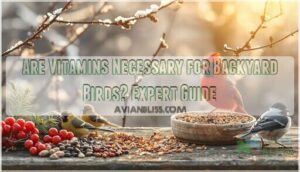
Your backyard feeder attracts cardinals, finches, and chickadees daily, but you can’t shake the question: are vitamins necessary for backyard birds? Most wild birds obtain complete nutrition from diverse natural sources—insects, seeds, berries, and vegetation. However, birds that rely heavily on feeders face potential nutritional gaps, particularly during winter months when natural food becomes scarce.
The line between helpful supplementation and harmful over-dosing remains thin. Vitamin A deficiency can compromise immune function, while excess vitamin D3 causes kidney damage. Understanding when supplementation helps versus when it harms requires looking at what your backyard visitors actually need, recognizing deficiency signs, and knowing safe ways to bridge dietary gaps without tipping into toxicity.
Table Of Contents
- Key Takeaways
- Are Vitamins Necessary for Backyard Birds?
- Essential Vitamins for Bird Health
- Signs of Vitamin Deficiency in Backyard Birds
- Safe Ways to Supplement Backyard Birds’ Diets
- When to Consult an Avian Veterinarian
- Frequently Asked Questions (FAQs)
- How do I know if my bird has a vitamin deficiency?
- What are the most important vitamins for birds?
- Do backyard chickens need vitamins?
- Is it better to give birds seeds or pellets?
- Can vitamin supplements attract unwanted pests or predators?
- How does seasonal change affect birds vitamin needs?
- Are organic or synthetic vitamins better for birds?
- Can backyard birds share vitamins with pet birds?
- Conclusion
Key Takeaways
- Most backyard birds obtain complete nutrition from diverse natural sources like insects, seeds, and berries, making vitamin supplementation unnecessary unless you’ve identified genuine deficiencies through observation or veterinary assessment.
- Seed-heavy feeder diets can miss up to 80% of essential nutrients, creating gaps in vitamin A, vitamin D3, and calcium that compromise immune function, bone strength, and reproductive success.
- Over-supplementation poses serious risks since fat-soluble vitamins accumulate in tissues and cause toxicity—symptoms include lethargy, tremors, and organ damage when multiple fortified products are offered simultaneously.
- Natural food sources like leafy greens, berries, and insects provide better nutrient absorption than synthetic supplements because they contain cofactors and phytonutrients that enhance bioavailability without overdose risk.
Are Vitamins Necessary for Backyard Birds?
Most backyard birds get what they need from a varied, natural diet—seeds, berries, insects, and greens—without any added vitamins. Still, certain situations can create nutritional gaps, especially when food sources are limited or birds rely heavily on human-provided feeders.
Seed-heavy diets can miss up to 80% of essential nutrients, which is why many bird owners turn to avian vitamin supplements to fill those gaps.
Understanding the difference between what wild birds naturally find and what captive birds require will help you decide if supplementation makes sense for the birds visiting your yard.
Natural Diets Vs. Supplementation
Natural food sources like berries, leafy greens, and seeds generally supply the dietary variety backyard birds need for balanced avian nutrition. Wild food sources offer fiber, phytochemicals, and nutrient balance that single supplements can’t replicate.
When you provide diverse options, most species meet their nutritional needs without vitamin supplementation for birds. Supplement safety becomes essential only when dietary gaps exist or veterinary guidance recommends intervention.
For further reading on the advantages of a, check expert insights comparing natural and supplemental nutrition.
Common Nutritional Gaps in Wild Birds
Even with abundant wild foods, vitamin deficits and mineral imbalances arise when calcium drops during breeding or vitamin D3 synthesis falters in shaded habitats.
Nutrient shortfalls in vitamin A, vitamin E, and calcium often follow dietary inconsistencies—like seed-heavy foraging or limited insect access.
Environmental factors such as drought, pesticide use, and monoculture plantings reduce the variety needed to prevent nutrient deficiency without dietary supplements.
Experts emphasize the importance of understanding avian diets and nutrient requirements in maintaining bird health.
Differences Between Wild and Captive Bird Needs
Wild foraging delivers varied proteins, fats, and micronutrients that shift with season and habitat, while captive diets rely on fortified feeds that may miss trace nutrients found in diverse wild bird fare.
Wild bird avian physiology adjusts to fluctuating nutrient cycling through flexible environmental adaptation, but indoor captives need dietary vitamin D3 for calcium metabolism since sun exposure is limited.
Understanding these differences in bird nutrition and diet bolsters avian health and wellness.
Essential Vitamins for Bird Health
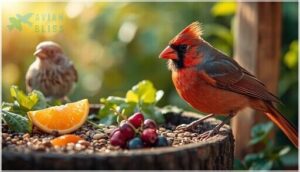
Your backyard birds rely on a handful of critical vitamins to stay healthy, maintain vibrant feathers, and raise strong chicks. Without these nutrients, even the most well-fed birds can develop deficiencies that compromise their immune systems and reproductive success.
When deficiencies become severe, they can even lead to serious neurological symptoms that affect coordination and behavior.
Backyard birds need critical vitamins to maintain healthy feathers, strong immunity, and successful reproduction
Let’s examine the specific vitamins that matter most and what each one does for the birds visiting your yard.
Vitamin a for Immunity and Feathers
Vitamin A benefits your birds by fortifying their immune system support through healthy mucosal barriers in the respiratory and digestive tracts. This fat-soluble nutrient also drives feather health, supporting keratin production and preventing brittle plumage.
Adequate vitamin A in avian nutrition enhances resistance to infections, maintains vibrant coloration, and helps regulate proper molt cycles, making it essential for backyard flocks.
Vitamin D3 and Calcium Absorption
Strong bones and quality eggshells depend on calcium metabolism, but your birds can’t utilize calcium without adequate vitamin D3. This nutrient drives intestinal absorption by upregulating transport proteins in gut cells, shuttling mineral balance into the bloodstream.
Vitamin D3 benefits bone health directly, preventing soft shells and fractures. Without it, even calcium-rich diets fail, making vitamin supplementation for birds vital in avian nutrition management.
Vitamin E and Antioxidant Support
Your birds face oxidative stress from metabolic activity and environmental challenges, so antioxidant benefits from vitamin E become essential. This fat-soluble vitamin, primarily alpha-tocopherol, protects cell membranes from damage while supporting immune function and tissue integrity.
You can provide vitamin E sources through natural plant oils, seeds, and leafy greens. Tocopherol supplements may help when diets lack these components, but always balance nutritional needs carefully.
B-Complex and Other Key Micronutrients
Beyond fat-soluble vitamins, your birds depend on B complex vitamins for energy metabolism, nerve function, and feather health. These eight water-soluble micronutrients support everything from beak strength to red blood cell formation.
A balanced avian nutrition plan provides thiamine, riboflavin, niacin, and others through seeds, insects, and leafy greens, reducing the need for vitamin supplementation unless breeding or deficiency signs appear.
Signs of Vitamin Deficiency in Backyard Birds
Spotting vitamin deficiencies in backyard birds isn’t always straightforward, but certain physical and behavioral changes serve as clear warning signs. When birds lack essential nutrients, their bodies can’t maintain normal functions, and you’ll notice problems ranging from poor feather condition to serious reproductive failures.
Here are the key indicators that signal a bird may be struggling with nutritional gaps.
Feather Quality and Molting Issues
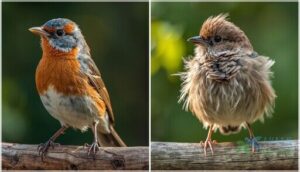
You’ll notice feather health declining when nutrients fall short. Poor keratin development produces dull, brittle plumage with frayed edges, while molting cycles may drag on for weeks longer than normal.
Adequate protein and B vitamins speed feather growth and restore plumage integrity, but without them, you might see excessive feather plucking or patchy regrowth that signals your birds need better vitamin supplementation for birds.
Weak Bones and Eggshell Abnormalities
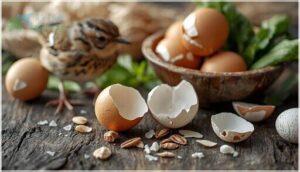
When calcium deficiency takes hold, you’ll see skeletal weakness and fragile eggshells that crack easily during handling. Vitamin D3 enhances calcium absorption, so without it, bone health deteriorates and shell formation suffers.
Thin, pimpled, or dented shells signal poor mineral balance, while chronic low dietary calcium forces bone demineralization that compromises your birds’ structural integrity and eggshell quality over time.
Immune System and Reproductive Problems

Frequent respiratory infections reveal vitamin A deficiency undermining immune function, while reproductive health falters when vitamin E shortfalls disrupt hormone balance and fertility issues emerge. Without adequate vitamin D3, your birds’ immune system support weakens, leaving them vulnerable to pathogens.
Antioxidants from proper vitamin supplementation guard cellular integrity, yet infection risks climb sharply when nutritional gaps persist and immune defenses crumble.
Behavioral and Neurological Symptoms
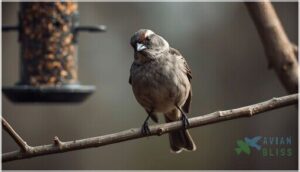
When vitamin deficiency affects your bird’s brain, you’ll notice neurological signs like tremors, unsteady perching, or even seizure-like episodes with head tilts and sudden collapses.
Behavioral changes emerge too—watch for excessive pacing, reduced chirping, social withdrawal, and cognitive decline shown through forgotten routes or ignored feeders.
Calcium and vitamin E shortfalls frequently trigger these motor dysfunction and anxiety disorders, demanding immediate attention.
Safe Ways to Supplement Backyard Birds’ Diets
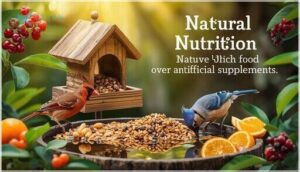
You can support your backyard birds without causing harm, but you’ll need to proceed carefully. The key is offering nutrient-rich natural foods rather than relying on synthetic supplements, which carry real risks if used incorrectly.
Let’s walk through the safest approaches to filling nutritional gaps while protecting the birds that visit your yard.
Choosing The Right Vitamin Products
When you’re evaluating dietary supplements for your backyard visitors, product labels tell the whole story. You’ll want to confirm bioavailability and proper vitamin forms before adding anything to their balanced avian diet. Here’s what matters most:
- Third-party testing certifications guarantee supplement safety and ingredient accuracy
- Clear dosing guidelines prevent vitamin overdose and toxicity risks
- Species-appropriate formulations designed specifically for avian vitamin and mineral supplementation for pets
Skip products with unnecessary fillers or vague sourcing.
Natural Food Sources of Essential Nutrients
Berries, leafy greens, and seed options form the foundation of natural food sources that meet nutritional needs without synthetic mineral supplements.
You’ll see birds thrive on fresh fruits like citrus for vitamin C, spinach and kale delivering vitamin A, and insects providing protein plus calcium.
This balanced avian diet sustains bird nutrition and health through essential vitamins found in whole foods rather than manufactured additives.
Risks of Over-Supplementation and Toxicity
Too much of a good thing can backfire. Fat-soluble vitamins like A and D accumulate in tissues, and vitamin toxicity develops when you offer multiple enriched products at once.
Overdose symptoms include lethargy, vomiting, and tremors, while chronic oversupplementation strains organs and disrupts nutrient imbalance.
Supplement risks climb fast with poorly labeled products, so stick to whole foods and consult your avian vet before adding vitamins to prevent avian poisoning.
Importance of Clean Water and Balanced Feeding
Beyond vitamin supplementation, your feeding strategies must begin with the foundation—clean water and a balanced diet. Bird hydration directly affects nutrient balance, because water quality influences digestion and absorption of vitamins from fresh food sources.
- Change water daily to prevent bacterial buildup
- Offer varied seeds, fruits, and suet to meet dietary needs of birds
- Monitor feeders for spoilage and mold
- Rinse containers between refills
- Provide shallow dishes for smaller species
This approach prevents nutritional deficiencies better than any single supplement.
When to Consult an Avian Veterinarian

You don’t need a vet for every backyard feeding decision, but certain situations call for professional expertise. If you notice consistent health issues in your visiting birds, dramatic changes in feeding behavior, or you’re considering adding supplements to your offerings, it’s time to reach out.
An avian veterinarian can help you distinguish between normal seasonal variations and genuine nutritional concerns that require intervention.
Assessing Bird Health and Dietary Needs
Your bird’s health tells a story, but you need an expert to read between the lines. An avian veterinarian can conduct a thorough dietary assessment, examining weight trends, feather condition, and droppings to identify nutritional deficiencies before they become serious.
They’ll tailor a nutrition planning strategy to your bird species’ unique needs, ensuring proper nutrient balance through health monitoring rather than guesswork with vitamin supplementation.
Professional Guidance on Supplement Use
Frequently, your veterinarian’s advice forms the foundation of safe vitamin supplementation. They’ll confirm nutritional deficiencies through dietary review before recommending targeted doses, not routine high-level use.
- Product verification includes checking third-party testing seals and clear ingredient lists
- Dosing guidelines specify start and stop dates based on your bird’s species and life stage
- Supplement regulation helps you avoid unverified internet sources
- Vet consultation ensures compatibility with existing medications and overall nutrition plans
Monitoring for Adverse Reactions or Overdose
Even a well-intentioned dose can turn harmful if you miss early toxicity signs. Watch for lethargy, ruffled feathers, or heavy breathing within hours to days of starting supplementation. Vomiting, swelling, or abnormal droppings signal oversupplementation risks requiring immediate cessation.
Keep a daily behavior log, start low, and stop any product at the first hint of toxic buildup to protect your birds.
Frequently Asked Questions (FAQs)
How do I know if my bird has a vitamin deficiency?
Watch for dull feathers, brittle growth, or frequent sneezing—these deficiency signs point to nutritional gaps.
Poor preening, soft eggshells, and lethargy also signal vitamin deficiency, so identifying vitamin deficiencies in birds requires careful observation of behavior and feather health.
What are the most important vitamins for birds?
Your backyard birds need vitamin A for immunity and feather health, vitamin D3 for calcium absorption and bone strength, and vitamin E for antioxidant protection and reproduction, plus essential B-complex vitamins for energy metabolism.
Do backyard chickens need vitamins?
Most backyard chickens meet their vitamin requirements through complete layer feed and natural sunlight.
Supplementation becomes necessary when flock nutrition relies heavily on scratch grains or when birds lack outdoor access for adequate vitamin D3 synthesis.
Is it better to give birds seeds or pellets?
Pelleted diets deliver complete, balanced nutrition and prevent selective feeding that creates vitamin gaps.
Seeds offer enrichment but lack essential nutrients, so pellets as the staple with seeds as treats supports ideal bird health.
Can vitamin supplements attract unwanted pests or predators?
Like a medieval feast drawing unwanted guests, vitamin supplements can attract pests and predators if stored improperly or spilled near feeders. This creates wildlife safety concerns that demand careful feeder security and supplement storage practices.
How does seasonal change affect birds vitamin needs?
Seasonal change drives shifts in avian nutrition: winter demands fat-soluble vitamins like A and E for cold stress, while molting periods require extra protein and vitamin A for feather regeneration and immune support.
Are organic or synthetic vitamins better for birds?
Natural vitamins come with cofactors that improve absorption, while synthetic versions allow precise dosing. Organic sources deliver better bioavailability and accompanying phytonutrients, though synthetic supplements prevent deficiency when whole foods fall short.
Can backyard birds share vitamins with pet birds?
You shouldn’t share vitamins between wild backyard birds and pet birds.
Different bird species have distinct dietary needs, metabolisms, and supplement safety thresholds, making vitamin transfer through avian interaction risky and potentially toxic.
Conclusion
Feeding backyard birds without understanding whether vitamins are necessary is like prescribing medicine without a diagnosis—you might help, but you could also harm. Most species thrive on diverse natural foods alone.
Supplement only when you’ve identified genuine deficiencies through observation or professional assessment. Monitor feather quality, behavior, and reproductive success instead of defaulting to products.
When in doubt, consult an avian veterinarian before adding anything to feeders. Your restraint protects them.