This site is supported by our readers. We may earn a commission, at no cost to you, if you purchase through links.
Your parakeet’s once-glossy plumage now looks dull and ragged, or perhaps your cockatiel has been losing weight despite eating normally—these subtle changes often signal parasitic diseases in pet birds, conditions that millions of avian companions face each year.
Parasites, ranging from microscopic protozoa to visible mites, don’t just irritate your bird; they systematically drain nutrients, damage delicate tissues, and compromise immune defenses that protect against more serious illnesses.
The challenge lies in early detection, since birds instinctively hide vulnerability until parasitic infestations have already taken hold. Understanding how these organisms colonize your bird’s body, recognizing the warning signs they leave behind, and implementing targeted prevention strategies can mean the difference between a minor health issue and a life-threatening crisis.
Table Of Contents
- Key Takeaways
- What Are Parasitic Diseases in Pet Birds?
- Common Parasites Affecting Pet Birds
- Symptoms of Parasitic Diseases in Birds
- Diagnosing Parasitic Infections in Birds
- Preventing and Treating Parasitic Diseases
- Frequently Asked Questions (FAQs)
- What is the most common parasite in birds?
- How do pet birds get parasites?
- What can I give my bird for parasites?
- What are the symptoms of flukes in birds?
- Can parasites spread between different bird species?
- How often should birds be tested for parasites?
- Are parasitic diseases contagious to humans or pets?
- What environmental factors increase parasite risk in birds?
- Can outdoor aviary birds get different parasites?
- Conclusion
Key Takeaways
- Parasitic diseases in pet birds involve both internal parasites (protozoa, roundworms, tapeworms affecting digestive and systemic tissues) and external parasites (mites and lice colonizing skin and feathers), with early detection critical since birds instinctively hide vulnerability until infestations have significantly progressed.
- Clinical signs requiring immediate attention include deteriorating feather quality, persistent diarrhea with unusual color or consistency, progressive weight loss despite normal eating, and visible parasites or crusty skin lesions, particularly scaly leg syndrome in budgerigars caused by Knemidocoptes mites.
- Definitive diagnosis requires veterinary examination combining physical assessment, microscopic fecal analysis to identify eggs or cysts, and differential diagnosis to distinguish parasitic infections from bacterial or viral diseases with similar presentations.
- Prevention demands rigorous cage hygiene with daily dropping removal and weekly disinfection using bird-safe products, strict 30-60 day quarantine protocols for new birds including fecal testing before flock integration, and species-appropriate diets with adequate vitamin A and probiotics to maintain intestinal barriers and immune competence.
What Are Parasitic Diseases in Pet Birds?
Parasitic diseases in pet birds occur when microscopic organisms establish themselves on or within your bird’s body, disrupting normal physiological function and potentially causing significant morbidity.
Early detection matters because recognizing signs of bacterial infections in birds can prevent parasitic complications from progressing into life-threatening systemic illness.
You’ll encounter two primary categories of parasites in avian medicine: internal parasites that colonize organs such as the gastrointestinal tract, and external parasites that infest the integumentary system including skin and feather structures. Understanding how these organisms compromise your bird’s health requires examining their classification, anatomical distribution, and pathophysiological impact on avian systems.
Definition and Overview
Parasitic diseases in pet birds are illnesses caused by organisms that live on or inside your bird, depending on it for survival.
These parasites range from microscopic single-celled protozoa to visible mites, nematodes, and cestodes.
They infect multiple body systems including digestive, respiratory, and integumentary tissues, compromising avian health and medicine through nutrient depletion, tissue damage, and immune compromise.
Internal Vs. External Parasites
Understanding parasite classification helps you recognize infestation signs and protect your bird’s immunity.
Internal parasites—endoparasites like roundworms, tapeworms, and protozoa including Giardia—colonize digestive or systemic tissues, completing their parasite lifecycle inside your bird.
External parasites, or ectoparasites such as mites and lice, inhabit skin and feather surfaces, provoking host response through irritation.
Recognizing these avian parasites aids early intervention against parasitic diseases in birds and intestinal parasites. For more information about the types and risks, review this overview of intestinal parasites and protozoa.
How Parasites Affect Bird Health
Beyond identifying parasite types, you’ll want to know how these invaders undermine your bird’s well-being. Avian parasites compromise bird immunity by draining nutrients, causing protozoal infections that disrupt gut health, and producing parasite stress that weakens defenses against secondary bacterial pathogens.
Parasites undermine your bird’s immunity by stealing nutrients, disrupting gut health, and triggering stress that invites secondary infections
| Health Impact | Physical Signs | Severity |
|---|---|---|
| Nutrient malabsorption | Weight loss, poor body condition | Moderate to severe |
| Feather damage | Excessive preening, broken plumage | Mild to moderate |
| Respiratory issues | Nasal discharge, coughing | Moderate to severe |
| Immune suppression | Increased infections, lethargy | Severe |
Effective parasite control protects bird health and restores vitality. Early recognition and testing for diagnosis of parasite infections are critical to prevent severe complications in pet birds.
Common Parasites Affecting Pet Birds
Your bird’s health depends on recognizing which parasites pose the greatest risk in captive avian populations. While parasitic diseases occur less frequently in modern pet birds compared to wild-caught specimens, several organisms continue to affect domestic flocks with species-specific patterns of infection.
Some parasitic infections can reduce your bird’s appetite significantly, and recognizing early warning signs of decreased appetite and disease helps you intervene before complications develop.
Understanding the four major categories of parasites—protozoans, helminths, ectoparasites, and species-dependent infections—will help you identify potential health threats in your bird.
Protozoal Infections (e.g., Giardia, Sarcocystis)
When your bird develops soft droppings despite eating normally, you’re likely witnessing giardiasis, an intestinal protozoal infection transmitted through contaminated water bowls and cage surfaces.
Giardia symptoms include malabsorption and chronic diarrhea, particularly in cockatiels, while sarcocystosis, requiring two-host cycles, manifests with muscle weakness in larger parrots; accurate avian diagnosis through fecal microscopy guides sarcocystis treatment and parasite prevention protocols.
Helminth Infections (Roundworms, Threadworms)
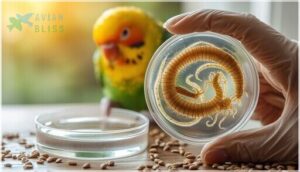
Your bird’s intestinal health faces threats from helminth infections, primarily roundworms (Ascaridia species) and threadworms (Capillaria species), which inhabit the small intestine and crop. Nematode infections in pet birds cause vomiting, weight loss, and poor feather quality through nutrient depletion.
The helminth lifecycle involves eggs shed in feces that contaminate bedding and water, enabling parasite transmission between cagemates. Intestinal parasites require prompt threadworm treatment and thorough parasite control to prevent chronic debilitation.
Mite and Lice Infestations

External parasites, including mites and lice, colonize your bird’s skin, plumage, and feather shafts, causing feather damage, dermatitis, and respiratory compromise through persistent irritation.
Mite species such as scaly leg mites (Knemidocoptes pilae), air sac mites, and tracheal mites inhabit distinct anatomical sites, while lice remain host-specific ectoparasites. Parasite transmission occurs through contaminated perches and direct contact, necessitating routine bird inspection and targeted lice control protocols.
Species-Specific Parasite Issues
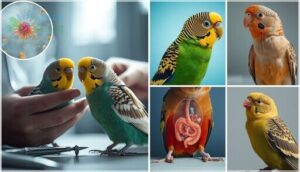
Your bird’s susceptibility to parasites depends heavily on species-specific factors, including immune response variability, gut microbiome composition, and behavioral traits that influence parasite host range and life cycles.
- Cockatiels show increased vulnerability to avian protozoan pathogens like Giardia, requiring species-specific treatments targeting parasites of the gastrointestinal system in birds
- Budgerigars frequently harbor Knemidocoptes pilae and intestinal helminths due to genetic predispositions affecting bird species susceptibility
- Larger parrots demonstrate elevated risk for sarcocystosis, necessitating customized diagnostic and therapeutic protocols
- Canaries remain prone to Atoxoplasma-induced hepatosplenomegaly with limited treatment efficacy
- Common parasites affecting pet bird species vary by host ecology, diet, and preening behavior patterns
Symptoms of Parasitic Diseases in Birds
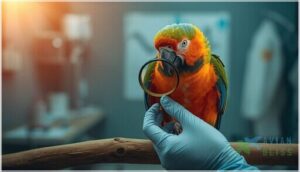
Recognizing the clinical manifestations of parasitic infestation in your avian companion requires careful observation of multiple physiological and behavioral parameters.
The presentation of parasitic disease in birds demonstrates considerable variability depending on the specific pathogen involved, the duration of infection, and your bird’s overall immune competence. You should monitor for the following key indicators that may suggest underlying parasitic compromise in your pet bird.
Changes in Feather Condition
When external parasites establish themselves on your bird’s body, feather texture and plumage quality deteriorate rapidly, manifesting as frayed barbules, split tips, or uneven color distribution along wing and tail regions.
You’ll notice skin irritation and itching that trigger feather plucking or feather destructive behavior, creating bare patches on the neck, chest, or flanks.
Abnormal molt patterns, combined with feather loss around the vent and underwing areas, signal parasitic activity requiring immediate veterinary assessment, as chronic infestations compromise structural integrity of individual feather shafts and disrupt normal growth cycles.
Unusual Droppings and Digestive Issues
Your bird’s droppings analysis reveals critical insights into digestive health, as parasitic infections disrupt normal fecal composition, color, and consistency, producing telltale signs of gut inflammation and intestinal parasites.
Watch for these gastrointestinal issues:
- Diarrhea with mucus or foam indicating giardiasis or coccidia
- Green-to-yellow discoloration persisting beyond dietary changes
- Undigested seeds reflecting rapid transit or malabsorption
- Visible parasite eggs requiring immediate fecal testing
These abnormalities demand veterinary assessment to preserve bird nutrition and restore intestinal function.
Weight Loss and Weakness
Parasitic infections silently drain your bird’s vitality through chronic nutrient deficiency and malabsorption, causing progressive weight loss despite adequate food intake.
Intestinal parasites compromise energy levels by depleting essential vitamins and minerals, leading to muscle atrophy, anemia, and profound malnutrition risks. You’ll notice decreased activity, lethargy from dehydration effects, and visible keel prominence—clinical indicators demanding immediate veterinary intervention to restore bird health.
Visible Parasites or Skin Lesions
Beyond internal weakness, you may observe actual parasites or parasite lesions directly on your bird’s body, providing unmistakable diagnostic evidence requiring immediate intervention.
- Scaly face (Knemidokoptes pilae) produces raised, crusty encrustations around the cere, beak, and legs in budgerigars
- Mites create scaly, porous patches with excessive skin irritation and hyperpigmented areas
- Feather mites appear as fine white specks along plumage, particularly around vent regions
- External parasites like Dermanyssus gallinae cause visible dark fecal specks on perches
- Skin scraping microscopy confirms mite infestations and guides targeted antiparasitic treatment protocols
Behavioral Changes
While physical signs provide important clues, behavioral shifts often reveal parasitic stress before visible lesions emerge, giving you early warning signals that shouldn’t be ignored.
Watch for feather picking, social withdrawal from flock mates, decreased activity levels, and altered vocalization patterns—all stress signals indicating compromised avian health and potential zoonotic disease transmission risks that warrant immediate veterinary assessment to protect both bird care outcomes and animal welfare.
Diagnosing Parasitic Infections in Birds

Diagnosing parasitic infections in your bird requires a systematic approach combining clinical observation with laboratory analysis, as many parasites remain invisible to the naked eye while producing similar clinical manifestations across different species.
Your avian veterinarian will employ multiple diagnostic modalities to discern between protozoal, helminth, and ectoparasitic infestations, ensuring appropriate species-specific treatment protocols. The diagnostic process usually encompasses three fundamental components that work together to establish a definitive parasitological diagnosis.
Physical Examination and Clinical Signs
Your avian veterinarian will conduct a thorough physical examination to detect clinical signs suggesting parasitic infection. During this evaluation, the veterinarian assesses multiple body systems to identify bird symptoms that may indicate underlying parasitism.
The examination includes the following assessments:
- Feather Condition reveals fraying tips, dulling plumage, or visible mites appearing as small white specks on quills
- Beak Inspection identifies abnormal shape, overgrowth, oral lesions, or excessive salivation accompanying secondary infections
- Respiratory Signs include labored breathing, wheezes, crackles, or exaggerated chest movement indicating air sac involvement
- Abdominal Palpation detects distension, tenderness, organomegaly, or masses from parasitic burden
- Neurological Assessment evaluates alertness, activity level, tremors, tail bobbing, or behavioral changes reflecting systemic disease
Monitoring bird behavior and health during examination provides critical diagnostic information for effective avian care and parasite control.
Microscopic Fecal Analysis
After completing the physical examination, your veterinarian will perform microscopic fecal analysis to identify intestinal parasites—a cornerstone of parasitology.
Fresh fecal material undergoes stool prep techniques including flotation, sedimentation, and direct wet mount to detect microscopic organisms such as protozoan cysts, helminth eggs, and mite debris.
Interpretation limits exist because intermittent shedding may yield false negatives, necessitating quality control measures and repeated fecal tests for definitive diagnosis.
Veterinary Assessment and Differential Diagnosis
Your veterinarian synthesizes clinical signs, medical history, and physical exam findings to construct a prioritized differential diagnosis in avian diagnostics, distinguishing parasitic diseases from mimicking conditions through systematic analysis.
Diagnostic tests including fecal examinations, molecular assays, and imaging confirm or exclude suspected parasites, guiding therapeutic interventions for bird parasites. This evidence-based approach in veterinary parasitology ensures accurate avian pathology interpretation and appropriate treatment plans customized to your bird’s specific needs.
Preventing and Treating Parasitic Diseases
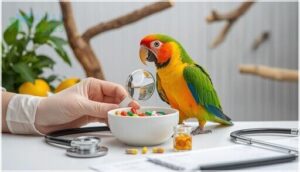
Once you’ve identified a parasitic infection in your bird, swift and appropriate intervention becomes essential to prevent further debilitation and potential transmission to other avian companions.
Treatment protocols vary substantially depending on the specific parasite involved, requiring precise medication selection, accurate dosing based on species and body weight, and thorough environmental management to eliminate reservoirs of infection.
The following sections outline evidence-based treatment modalities, preventive husbandry practices, quarantine procedures, nutritional support strategies, and clinical indicators that necessitate immediate veterinary consultation.
Effective Treatment Options and Medications
Treating your bird’s parasitic infection demands precision and veterinary medicine expertise, as antiparasitic drugs carry narrow therapeutic margins requiring strict dosing guidelines based on species and weight.
Metronidazole targets protozoal infections like Giardia over five to ten days, while ivermectin eliminates mites and certain nematodes through topical or systemic routes, and praziquantel treats cestodes.
Medication safety hinges on monitoring for drug interactions with concurrent antibiotics or antifungals, adhering to treatment protocols, and scheduling fecal recheck examinations two to four weeks post-therapy to confirm parasite clearance and prevent relapse in your companion bird.
Cage Hygiene and Disinfection Practices
Proper cage hygiene and disinfection practices eliminate parasite reservoirs and interrupt transmission cycles within your bird’s immediate environment. You should implement the following sanitation protocols to safeguard avian health:
- Clean cages daily, removing droppings and uneaten food with dedicated tools to prevent cross-contamination between enclosures.
- Apply bird-safe disinfectants weekly after pre-cleaning organic matter, ensuring manufacturer-specified contact times for maximum efficacy.
- Replace absorbent bedding daily to minimize moisture accumulation and microbial growth supporting parasite survival.
Quarantine and New Bird Protocols
New bird introductions represent a critical juncture for biosecurity measures, requiring strict isolation procedures to prevent parasitic infections in pet birds spreading through your flock.
You should maintain a quarantine duration of 30 to 60 days, positioning newcomers at least 10 feet from existing birds in a dedicated space.
Health monitoring during this period includes weekly weight checks, daily behavioral observation, and veterinary fecal testing before integration.
Diet, Water, and General Health Maintenance
A balanced diet supplying adequate vitamin A, vitamin E, and essential minerals fortifies the intestinal lining and immune defenses necessary for effective avian parasite management.
You can support your bird’s resilience by providing:
- A pelleted base comprising 50 to 60 percent of total intake
- Fresh, filtered water changed daily to eliminate oocyst contamination
- Avian-specific probiotics that promote gut wellness and nutrient absorption
- Regular weighing on a gram scale to monitor body condition and detect subtle weight loss
When to Seek Veterinary Help
Emergency signs such as severe labored breathing, uncontrolled bleeding from any body orifice, or sudden paralysis warrant immediate veterinary guidance.
If your bird can’t perch, shows persistent open-mouth breathing with tail bobbing, or demonstrates blue-tinged facial skin indicating critical oxygen shortage, urgent care becomes essential for effective avian parasite diagnosis and treatment and overall animal welfare and health.
Frequently Asked Questions (FAQs)
What is the most common parasite in birds?
Feather mites, particularly Knemidocoptes mutans, represent the most prevalent ectoparasitic burden in companion avian species, manifesting clinically as scaly leg syndrome and feather loss mainly in budgerigars and canaries.
How do pet birds get parasites?
Your pet birds acquire parasites through contaminated food, dirty water, infected vectors like insects, or environmental exposure to parasite carriers.
Your pet birds can also acquire parasites through new untested birds, shared cages, and soiled bedding harboring eggs or oocysts.
What can I give my bird for parasites?
Antiparasitic medications such as ivermectin, fenbendazole, praziquantel, metronidazole, and moxidectin require veterinarian-prescribed dosages customized to your bird’s species, weight, and specific parasite infection—never administer over-the-counter avian treatments or pyrantel pamoate without professional guidance.
What are the symptoms of flukes in birds?
Flukes often cause subtle signs—reduced appetite, unexplained weight loss, and abnormal droppings with digestive issues in your bird’s intestinal tract, alongside behavioral changes including lethargy, decreased activity, and poor feather condition reflecting chronic helminth burden.
Can parasites spread between different bird species?
Yes, parasites can spread between bird species through shared habitats, feeding areas, and water sources.
Ectoparasite transfer occurs during close contact, while vectors like biting flies transmit blood parasites across species with overlapping ranges.
How often should birds be tested for parasites?
Your feathered companion deserves a yearly fecal analysis at minimum, though high-risk birds—breeders or newcomers—benefit from parasite screening every six months.
With quarantine protocols, testing is required within two weeks and again after three months.
Are parasitic diseases contagious to humans or pets?
Some bird parasites pose a zoonotic risk to humans and other pets, especially through contaminated surfaces or direct contact, but most infections remain species-specific when proper hygiene and quarantine protocols are maintained.
What environmental factors increase parasite risk in birds?
Your bird’s environment shapes parasite risk profoundly: urban density concentrates transmission, climate change expands parasite ranges, water pollution introduces protozoans, cage hygiene lapses harbor eggs, and dietary factors compromise immunity—essential bird husbandry components for avian diseases prevention.
Can outdoor aviary birds get different parasites?
Like an open door inviting unwelcome guests, outdoor aviaries expose pet birds to avian parasites including nematodes, Syngamus trachea, Giardia from contaminated water, feather mites, and lice through wild bird interactions, emphasizing environmental factors and fecal screening needs.
Conclusion
Think of your bird’s health as a delicate ecosystem—when parasites invade, every system suffers. You’ve now gained the clinical knowledge to recognize parasitic diseases in pet birds before they escalate, from feather degradation to life-threatening weight loss.
Armed with diagnostic awareness, rigorous hygiene protocols, and evidence-based treatment strategies, you can protect your avian companion from these silent invaders. Vigilance isn’t just recommended—it’s the cornerstone of responsible bird ownership.
- https://publons.com/publon/10.1002/vms3.967
- https://figshare.com/s/55f1e42a8fe83eed02e6
- https://doi.org/10.3329/ralf.v8i1.53276
- https://www.frontiersin.org/journals/animal-science/articles/10.3389/fanim.2023.1197802/full
- https://www.merckvetmanual.com/exotic-and-laboratory-animals/pet-birds/parasitic-diseases-of-pet-birds