This site is supported by our readers. We may earn a commission, at no cost to you, if you purchase through links.
Your bird’s feet spend every waking hour gripping perches, yet most owners never consider how those surfaces shape foot health, joint mobility, and long-term comfort. A cockatiel clinging to the same smooth dowel rod for years develops pressure sores and weakened toe muscles, while a parakeet offered varied natural branches builds strength with every shift in grip.
The natural vs artificial bird perches comparison isn’t just about aesthetics or convenience—it’s about matching your feathered friend’s physical needs to the right surface texture, diameter variation, and material safety. Each perch type delivers distinct advantages for foot dexterity, cleaning routines, and species-specific requirements, and understanding these differences helps you create a cage environment that fosters healthy movement rather than causing hidden harm.
Table Of Contents
- Key Takeaways
- Key Differences Between Natural and Artificial Perches
- Impact on Bird Health and Comfort
- Safety and Maintenance Considerations
- Practicality for Bird Owners
- Choosing The Best Perch for Your Bird
- Frequently Asked Questions (FAQs)
- What is the best material for a bird perch?
- What perches are best for birds?
- Do birds like their cages covered at night?
- Can birds sleep comfortably on rope perches overnight?
- Do certain perch materials affect feather condition?
- How often should perches be rotated or rearranged?
- Are there seasonal considerations for perch material choices?
- Can perch placement influence breeding behavior in birds?
- Conclusion
Key Takeaways
- Natural perches with varied diameters and textures prevent pressure sores and arthritis by forcing your bird to shift its grip constantly, while uniform dowels create fixed pressure points that stress joints over time.
- Mixing at least three distinct perch diameters—from natural branches to textured artificial options—builds foot strength and dexterity through the varied grip placements your bird uses during daily movement.
- Natural wood perches cost nearly nothing if you gather branches yourself and need replacement less often than artificial perches, which typically require changing every 6 to 12 months.
- Weekly perch rotation between different heights and materials maintains your bird’s curiosity while preventing habituation, turning routine cage maintenance into ongoing behavioral enrichment.
Key Differences Between Natural and Artificial Perches
When you’re standing in the pet store aisle staring at perch options, the choice between natural branches and manufactured perches isn’t always obvious.
Understanding the differences between natural and manufactured bird perches for parakeets can help you make the best choice for your bird’s comfort and foot health.
Each type offers distinct advantages in how it’s made, how it feels under your bird’s feet, and what variety it brings to the cage. Let’s break down the three main differences that matter most for your feathered friend’s daily comfort.
Materials and Construction
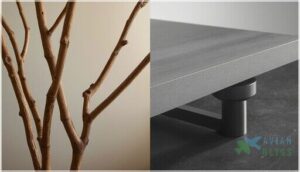
Natural wood perches start with hardwood branches—oak, maple, or fruitwoods—that bring dense fiber and built-in diameter variation from 0.5 to 2.5 centimeters. Construction methods preserve the bark for natural grip, and many undergo kiln drying to reduce mold risk.
Man-made perches use BPA-free resin or metal alloys with rubberized overlays, offering precise perch diameter control and consistent safety features through durability testing.
Surface Texture and Grip
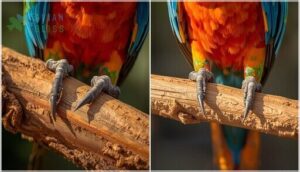
Grip variety matters more than most bird owners realize. Natural wood perches deliver variable roughness through bark texture, creating uneven surfaces that shift with your bird’s foot pressure. This perch roughness builds surface friction and prevents foot fatigue.
Artificial perches offer smooth consistency, but you’ll want textured overlays to boost foot support. Without that natural variation, your feathered friend may develop pressure points that compromise long-term foot health and overall bird health.
Research on surface texture and prehension control highlights how grip texture affects movement patterns and stability.
Variety in Shapes and Sizes
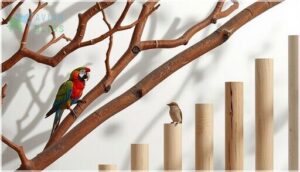
Beyond texture, you’ll find natural wood perches ranging from 10 mm to 60 mm in diameter, creating essential perch shape diversity. Manzanita branches twist naturally, while artificial perches offer modular perch systems with customizable perches.
Small birds need 8 mm to 15 mm perches, whereas macaws require 40 mm to 60 mm. Mixing three distinct diameters delivers size variation benefits that maintain comfortable perches and prevent foot stiffness.
Paying attention to variety in natural forms can help create a more natural and comfortable environment for your bird.
Impact on Bird Health and Comfort
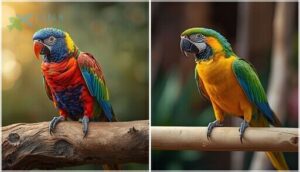
Your bird’s perch isn’t just a place to rest—it’s where they’ll spend most of their waking hours. The type of perch you choose directly affects their foot strength, joint health, and overall well-being.
Your bird’s perch isn’t just furniture—it’s the foundation of their foot strength, joint health, and daily comfort
Let’s look at three critical ways perches shape your bird’s daily comfort and long-term health.
Understanding why bird perches are important for health starts with how different perch types prevent pressure sores and strengthen grip muscles over time.
Foot Health and Dexterity
Your bird’s feet are tiny gymnasts in constant motion. Natural wood perches boost foot health by challenging toe mobility and ankle flexibility through varied perch textures and diameters. Every grip becomes a foot exercise that builds foot strength and dexterity:
- Irregular bark surfaces engage each toe independently
- Shifting branch thickness trains different grip placements
- Textured wood sharpens sensory feedback for better balance
- Varied diameters prevent repetitive strain on joints
This active environment promotes lifelong avian wellbeing and natural bird behavior.
Prevention of Pressure Sores and Arthritis
Comfort is your bird’s shield against chronic pain. Natural wood perches with varied diameters let your feathered friend shift grip constantly, distributing weight across different toe angles to prevent pressure sores and arthritis. Comfortable perches in multiple thicknesses support healthy joint care through bird ergonomics that mimic wild branches.
| Perch Material | Pressure Relief Benefit |
|---|---|
| Uniform dowels | Fixed pressure points stress joints |
| Natural branches | Irregular diameter reduces sustained load |
| Synthetic smooth | Repetitive grip causes foot stiffness |
| Textured wood | Grip variety protects joint alignment |
Proper perch diameter—allowing two-thirds foot wrap—ensures ideal foot health and long-term mobility.
Psychological and Behavioral Enrichment
Curiosity drives your bird’s day-to-day joy. Natural perches spark environmental stimulation and cognitive development by inviting climbing, foraging, and chewing—behaviors that prevent boredom and promote emotional wellbeing.
Varied textures mimic wild habitats, encouraging social learning and exploration that artificial dowels can’t offer. This animal enrichment fosters bird behavior and psychology, turning routine pet bird care and maintenance into behavioral therapy through natural engagement.
Safety and Maintenance Considerations
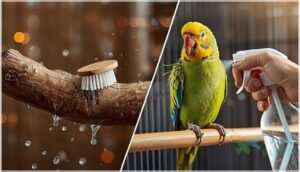
Keeping your bird safe and healthy means thinking beyond comfort alone. Both natural and artificial perches come with their own maintenance needs and potential risks you’ll want to understand.
Let’s look at what you need to know about cleaning, durability, and safety hazards for each type.
Cleaning and Hygiene Requirements
Your daily hygiene practices shape your bird’s foot health more than you might realize. Natural wood requires gentle brushing to clear debris from bark grooves, then thorough rinsing and sun drying to prevent mold in porous surfaces.
Artificial perches need different care:
- Wash plastic perches weekly with warm soapy water to remove foot oils
- Disinfect monthly using diluted vinegar for bacterial control
- Dry completely before reinstalling to avoid slippery textures
Durability and Wear Over Time
Expect different perch materials to show distinct wear patterns as your feathered friend climbs, chews, and rests day after day. Natural wood resists breaking until birds chew through roughly 20 percent of its diameter, while hardwoods like oak outlast softer species. Plastic perches can crack at junctions, and fiber perches shed strands within a few months.
| Perch Material | Average Lifespan |
|---|---|
| Hardwood (oak, maple) | 12–24 months |
| Plastic/resin | 12–24 months |
| Fiber/rope | 2–8 months |
Lifespan factors include bird size, chewing habits, and environmental conditions—sun exposure degrades natural wood faster, while humidity warps untreated branches. Rotating perches distributes wear and extends durability by six to twelve months. Regular inspections catch degradation rates before surfaces become unsafe, protecting foot health through proactive perch maintenance and cleaning. Durable perches save you money and keep your bird comfortable longer.
Potential Hazards and Toxicity
Your feathered friend’s perch can harbor hidden dangers if you overlook toxic material risks. Treated woods may leach chemicals onto delicate foot pads, while hazardous coatings on metal or plastic perches can chip and expose sharp edges.
Regular perch safety checks catch mold growth and chemical exposure before respiratory dangers develop. Always choose bird-safe perch material free from toxic woods, pesticides, and harmful sealants to protect foot health.
Practicality for Bird Owners
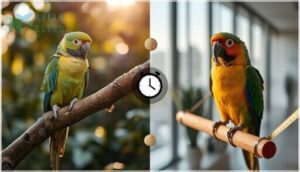
Beyond health and safety, you’ll want perches that fit your daily routine and budget. Natural and artificial options differ substantially in how easy they’re to install, what they cost over time, and where you can find them.
Let’s break down the practical side of perch ownership so you can make a choice that works for both you and your feathered friend.
Ease of Installation and Replacement
Quick removal and secure fastening matter when you’re juggling perch maintenance and cleaning schedules. Artificial bird perches usually snap into place with simple clamps, allowing easy installation in under five minutes without tools.
Natural perches require perch mounting hardware like screws or zip ties for stable cage setup. Both need monthly checks to keep perch placement safe, though replacement tips vary by material and design.
Cost Comparison
Once you’ve sorted out installation, budget planning becomes your next consideration. Here’s a practical perch price analysis comparing material costs for bird cage setup:
- Natural perches cost nearly nothing if you gather branches from your yard
- Basic artificial perches run 5 to 25 dollars each
- Premium synthetic options with textures reach 15 to 40 dollars
- Natural branches need replacement less often, offering long term savings
- Artificial perches require replacement every 6 to 12 months
The economic benefits of natural perches add up when you’re managing pet bird care on a budget.
Availability and Sourcing Options
Beyond price, finding the right perches matters. Local suppliers within 10 miles of most areas stock natural wood and basic artificial options. Regional availability varies by season—natural perches from sustainable forests peak during harvest cycles, while artificial cage accessories remain consistent year-round.
Look for quality certification like FSC marks on natural wood. Australian native trees and other specialty perch materials appear through online retailers with 2–5 day shipping.
| Material Sourcing | Regional Availability | Sustainable Options |
|---|---|---|
| Local wood mills, farmers markets | Mid-Atlantic pet stores, online hubs | FSC-certified natural wood |
| National pet brands | Year-round artificial stock | Selective harvest branches |
| Specialty aviary shops | Seasonal natural perch cycles | Non-toxic treated options |
Choosing The Best Perch for Your Bird
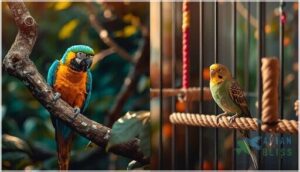
Choosing the right perch decision isn’t a one-size-fits-all decision. Your bird’s species, size, and natural behaviors should guide your selection.
Let’s look at practical ways to match perches to your feathered friend’s needs.
Matching Perch Type to Bird Species
Your bird’s anatomy shapes perch selection. Large parrots need thick natural branches that mimic tree limbs and support their weight, while small finches thrive on slender, rounded artificial perches.
Foot anatomy differences matter—budgies require narrow diameters allowing three toes to wrap comfortably, whereas African greys benefit from manzanita’s dense grain. Match perch material variety and diameter to your bird species for ideal foot health and beak maintenance.
Combining Perch Types for Optimal Benefits
Once you’ve matched perch types to your bird’s species, layer different materials throughout the cage. Natural perches on upper levels paired with safe artificial perches below create texture variety that exercises foot muscles.
This cage layout fosters bird enrichment through vertical space exploration. Rotate perch placement every two weeks to prevent habituation and maintain your feathered friend’s curiosity about their environment.
Expert Tips for Perch Selection
Start with perch diameter that lets your bird wrap two-thirds around the surface. Watch your feathered friend’s foot health by offering perch texture variety—natural perches with bark alongside smooth artificial options.
Bird preference guides cage layout adjustments. Monthly perch rotation between heights and materials keeps bird perches functional while preventing pressure sores. Your perch material choices directly shape long-term wellness.
Frequently Asked Questions (FAQs)
What is the best material for a bird perch?
There’s no single best material—your feathered friend thrives on variety.
Natural wood branches with textured bark, varied perch diameter options, and rope combinations promote outstanding foot health through diverse grip surfaces.
What perches are best for birds?
The best bird perches combine varied diameters and textures—natural wood branches alongside rope or concrete options—to support foot health, encourage dexterity, and prevent arthritis while keeping your feathered friend mentally engaged.
Do birds like their cages covered at night?
Many feathered friends thrive with covers that reduce night frights and support sleep rhythm, yet ventilation needs matter—breathable fabrics prevent overheating while blocking light, positively influencing behavioral impacts and overall pet bird care routines.
Can birds sleep comfortably on rope perches overnight?
Yes, rope perches provide comfortable sleep surfaces when properly sized. Their soft texture cushions feet and reduces pressure points overnight.
Choose bird-safe materials and make certain the diameter allows for secure gripping for restful sleep.
Do certain perch materials affect feather condition?
Rough perch texture can wear feather tips, while smooth plastics may cause sliding and fraying.
Natural perches with varied grip promote better feather alignment during grooming, and material safety prevents residue transfer when birds preen.
How often should perches be rotated or rearranged?
Rotate bird perches weekly to maintain novelty and encourage movement.
Swap at least two locations during cage cleaning, adjusting the rotation schedule based on your bird’s stress response and activity patterns for ideal environmental enrichment.
Are there seasonal considerations for perch material choices?
Seasonal considerations for bird perches include humidity effects on natural materials, temperature considerations for foot comfort, and climate adaptation through material durability—ensuring your feathered friend’s perch remains safe year-round.
Can perch placement influence breeding behavior in birds?
Pairing finches near food perches can trigger courtship displays faster than when perches sit far from resources.
Strategic placement of bird perches near nesting zones facilitates mate selection and improves nesting success through enhanced breeding signals.
Conclusion
Your bird’s feet will thank you a thousand times over when you move beyond the single-perch setup. The natural vs artificial bird perches comparison reveals one truth: variety matters more than flawlessness.
Blend safe branches with easy-clean synthetics, rotate diameters weekly, and watch your feathered friend grip with newfound confidence. Those tiny toes carry your bird through every moment—give them surfaces that strengthen rather than strain, and you’ll notice the difference in every landing.
- https://geoffpark.wordpress.com/2024/03/11/perching-birds/
- https://www.dpi.nsw.gov.au/__data/assets/pdf_file/0005/193739/managing_bird_damage-full-version.pdf
- https://doi.org/10.1029/2020JG005677
- https://pubmed.ncbi.nlm.nih.gov/32999796/
- https://scholar.google.com/scholar_lookup?Harris%20NL,%20Gibbs%20DA,%20Baccini%20A,%20Birdsey%20RA,%20de%20Bruin%20S,%20Farina%20M,%20et%20al.%20Global%20maps%20of%20twenty-first%20century%20forest%20carbon%20fluxes.%20Nat%20Clim%20Change%202021.%202021;11:3.%2010.1038/s41558-020-00976-6