This site is supported by our readers. We may earn a commission, at no cost to you, if you purchase through links.
Your bird’s constant scratching isn’t just a quirk—it’s often the first warning sign of a parasitic infestation that can quickly spiral into serious health problems. Parasites, whether burrowing into feathers, feeding on blood, or colonizing the digestive tract, weaken your bird’s immune system and leave them vulnerable to secondary infections.
The challenge is that many infestations remain invisible until they’ve already caused damage. Mites hide beneath plumage, intestinal worms silently steal nutrients, and blood parasites circulate undetected for weeks. Learning to spot the subtle clues—feather damage, behavioral shifts, changes in droppings—gives you the power to intervene before a manageable problem becomes a medical emergency.
Recognizing these signs early doesn’t just shorten treatment time; it can save your bird’s life.
Table Of Contents
- Key Takeaways
- What Are Bird Parasites?
- Why Identifying Parasite Infestations Matters
- Step 1–2: Check Feathers and Skin
- Step 3–4: Watch for Behavioral Changes
- Step 5–6: Monitor Appetite and Droppings
- Diagnostic Tests to Confirm an Infestation
- When to See a Veterinarian
- Frequently Asked Questions (FAQs)
- How do you tell if your bird has parasites?
- What is the most common parasite in birds?
- How do you know if you have a bird mite infestation?
- Can humans get parasites from birds?
- Can parasites transfer from wild birds to pets?
- Do certain bird species resist parasites better?
- Are parasite infestations more common in specific seasons?
- Can humans contract parasites from infected birds?
- How long do parasites survive without a host?
- Conclusion
Key Takeaways
- Early detection of bird parasites, especially within 48 hours of first symptoms, cuts parasite load by over 70 percent and speeds recovery to just 3–5 days, making vigilant observation of feather damage, scratching, and droppings your most powerful tool.
- Both external parasites like mites and lice and internal parasites such as intestinal worms and blood parasites weaken your bird’s immune system, cause malnutrition and anemia, and can spread rapidly through flocks via direct contact or contaminated food and water sources.
- Behavioral changes including excessive preening, lethargy, unexplained weight loss despite normal eating, and abnormal droppings with diarrhea or blood often signal parasitic infestations before physical signs become obvious.
- Professional veterinary diagnosis through fecal exams, blood tests, and skin scrapings confirms the exact parasite type and enables targeted treatment, while preventing re-infestation requires repeat medications, thorough environmental cleaning, quarantine of new birds, and ongoing weekly monitoring.
What Are Bird Parasites?
Bird parasites are organisms that live on or inside your bird, feeding off their body at your pet’s expense. They come in two main forms, and each affects your bird in a different way.
While domestic birds face these threats, common parasites affecting wild birds follow similar patterns of infestation and harm.
Here’s what you need to know about both.
Internal Parasites (Worms, Protozoa, Blood Parasites)
Internal parasites—or endoparasites—are organisms that set up shop inside your bird’s body.
Worm infestations, such as roundworms, can cause intestinal blockage and diarrhea. Protozoa infections, like coccidia or giardia, damage the gut lining. Blood parasite transmission often involves insect vectors like mosquitoes.
Understanding these parasite life cycles is the foundation of effective avian parasites identification and parasitology-informed care. For a deeper dive into the distinction between single-cell organisms and helminths, consult reputable scientific resources.
External Parasites (Mites, Lice, Fleas, Ticks)
External parasites—also called ectoparasites—live on your bird’s feathers and skin.
Mite infestations cause irritation and feather damage, while lice control becomes necessary when you spot chewing or sucking species feeding on debris or blood.
Fleas bite skin and can lead to anemia in small birds. Ticks attach to feed and may transmit disease.
Understanding these parasite life cycles helps you catch problems early, before flea prevention and tick removal become urgent. Diagnosis and treatment recommendations for bird parasite infestations are best provided by an avian vet.
How Parasites Survive on a Host
Once parasites—whether mite, lice, or endoparasites—find a host, they employ clever survival tactics to stay put and thrive.
How they endure:
- Parasite attachment uses hooks, suckers, or adhesive proteins to anchor firmly to feathers, skin, or gut lining.
- Host immunity gets sidestepped through surface disguises or immune-suppressing secretions.
- Nutrient uptake occurs via specialized feeding structures that tap blood or tissue fluids.
- Reproduction strategies sync with your bird’s biology, maximizing spread.
Why Identifying Parasite Infestations Matters

Catching a parasite problem early can mean the difference between a quick recovery and a serious health crisis.
Left unchecked, these infections don’t just harm your bird—they can spread to others and become much harder to treat. Understanding why swift identification matters will help you protect your bird’s health and prevent complications down the line.
Health Risks of Untreated Infestations
When you ignore bird parasites, you’re not just risking discomfort—you’re inviting serious health complications. Untreated infestations trigger disease outbreaks, compromise immunity, and can lead to bird mortality through malnutrition and anemia.
Ectoparasites damage skin and feathers, while endoparasites devastate internal organs. The table below shows how different parasite transmission routes affect your bird’s health and survival.
Early detection through regular health checks and understanding common parasitic diseases in pet birds can prevent severe complications before irreversible damage occurs.
| Parasite Type | Primary Health Impact | Severe Infestation Consequences |
|---|---|---|
| Intestinal worms (endoparasites) | Weight loss, poor nutrient absorption | Intestinal blockage, organ failure |
| Blood parasites | Anemia, reduced flight endurance | Weakness, potential mortality |
| Mites & lice (ectoparasites) | Skin irritation, feather damage | Open wounds, secondary bacterial infections |
| Protozoa | Digestive upset, lethargy | Dehydration, immune suppression |
| Ticks & fleas | Blood loss, disease transmission | Avian disease spread, chronic weakness |
These infestation consequences worsen rapidly without treatment, making early detection critical for your bird’s survival.
How Parasites Spread to Other Birds
Through direct contact during roosting and preening, your birds transfer ectoparasites between flock mates. Shared water bowls and feeding stations spread endoparasites when droppings contaminate these resources.
Environmental factors like nest reuse and dense housing exacerbate parasite transmission, while your clothing and equipment act as contagion routes between flocks. Bird socialization during breeding season accelerates this spread, making flock dynamics critical for parasite control.
Early Detection Improves Recovery Outcomes
Catching bird parasites early transforms recovery outcomes. When you initiate treatment within 48 hours of first infestation symptoms, parasite load drops by over 70 percent in many cases. Your bird’s appetite and normal activity resume within 3 to 5 days, while timely intervention minimizes feather loss and aids faster plumage re-maturation.
Early detection of bird parasites transforms recovery—treatment within 48 hours cuts parasite load by over 70 percent and restores normal activity within days
Early detection delivers measurable benefits:
- Short course therapies require only 7 to 10 days for mild ectoparasites
- Prompt treatment lowers secondary bacterial infection risk
- Recovery rates improve when treatment timing aligns with parasite life cycles
- Birds regain baseline behavior within 2 to 4 days
- Prevention methods work best after swift parasite identification
Treatment timing directly influences how quickly your bird bounces back from internal parasites and external infestations alike.
Step 1–2: Check Feathers and Skin
The first place to look for external parasites is right on your bird’s body. Feathers and skin can reveal a lot about what’s happening underneath, and many external parasites leave visible clues.
Here’s what to check during your initial examination.
Signs of Feather Damage From Mites or Lice
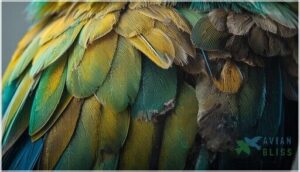
When you inspect your bird’s plumage closely, feather damage from mite infestation or lice often shows up as frayed tips, broken shafts, or unusual gaps. You might notice ragged edges along wing and tail feathers, dull or crusty quills, or patches of premature feather loss on the chest and back.
These ectoparasites weaken feathers at their base, leaving visible signs that demand careful parasite inspection.
Spotting Visible Parasites on Feathers or Skin
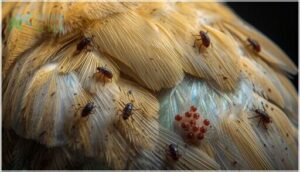
Sometimes you’ll spot tiny crawlers on your bird’s body during parasite inspection—clear evidence of external parasites at work.
Look for:
- Small moving insects along feather shafts and skin folds
- Dark specks clinging to quill bases, especially near the vent
- Red mite clusters under wings where they hide during daylight
- Lice eggs attached firmly to individual feather barbs
- Visible ticks embedded in skin around the head or neck
These visible infestations confirm active ectoparasites requiring immediate attention.
Recognizing Inflammation, Scabs, or Irritation
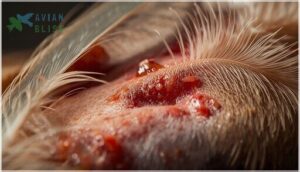
Look closely at the skin beneath your bird’s feathers for redness, swelling, or warmth—inflammation signs that point to ectoparasites feeding or moving across tissue.
You might notice scab formation over small wounds where mites have bitten, or raw patches of skin irritation surrounded by feather damage. These skin lesions confirm active parasitic infestations needing immediate veterinary care.
Step 3–4: Watch for Behavioral Changes
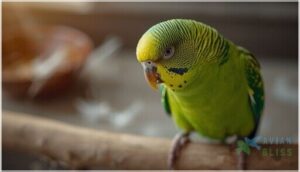
Birds don’t always show obvious physical signs of parasite problems—sometimes the clearest clues come from how they act. When something’s wrong, your bird’s daily habits and energy levels can shift in ways that are easy to miss if you’re not watching closely.
Here are three behavioral changes that often signal a parasite problem.
Excessive Preening or Scratching
If your bird can’t stop grooming itself, external parasites like mites or lice infestation may be the culprit. Excessive preening often signals parasite stress, especially when you notice feather damage, bare patches, or skin irritation around the head and neck.
This compulsive grooming can break feathers and worsen discomfort. Watch for scratching marks—they’re tell-tale signs bird parasites are causing real trouble.
Lethargy and Decreased Activity Levels
When parasite infestations take hold, your bird’s energy levels often tell the story. Watch for fatigue signs like prolonged perching, slower responses to treats, and reluctance to fly short distances.
Internal parasites—especially intestinal worms and blood parasites—drain nutrients and oxygen, triggering weight loss and chronic tiredness. If your normally active bird suddenly seems dull or spends hours motionless, suspect parasites and schedule a vet visit.
Plumage Abnormalities Like Ruffled or Matted Feathers
Beyond lethargy, watch your bird’s feathers for telltale plumage abnormalities. Ruffled feathers that stick out along the neck or back, matted clumps near the vent, and frayed edges all point to mite infestations or lice.
Excessive preening that leaves plumage disheveled suggests external parasites irritating the skin. When feather damage lowers plumage scores below normal, you’re seeing clear evidence of an active infestation.
Step 5–6: Monitor Appetite and Droppings
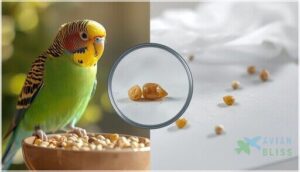
Your bird’s appetite and droppings act like a window into what’s happening inside its digestive system.
When internal parasites take hold, they often leave telltale signs in both what your bird eats and what comes out the other end. Watch for these three key indicators that something isn’t right.
Unexplained Weight Loss Despite Normal Eating
Unexplained weight loss paired with a healthy appetite is one of the clearest red flags for internal parasites.
Nutrient theft by intestinal worms, malabsorption issues from damaged gut lining, and the energy drain of chronic infection all work together to rob your bird of calories.
Even when your avian companion eats normally, metabolic stress from parasites can cause lethargy and steady weight decline.
Changes in Droppings (Diarrhea, Blood, Undigested Food)
Droppings tell the story of what’s happening inside your bird’s gut. Diarrhea causes range from coccidiosis to Giardia, both showing loose, unformed feces. Blood detection—whether bright red streaks or dark, tarry stool—signals intestinal damage that needs immediate attention.
Undigested food visible in droppings means parasites have disrupted normal digestion. Dropping texture, color, and odor all shift when internal parasites take hold, making fecal analysis your most accessible diagnostic tool for parasite identification and avian disease prevention.
Connecting Digestive Symptoms to Internal Parasites
Malabsorption issues link weight loss to internal parasites even when your bird keeps eating. Gut damage from protozoa or worms prevents nutrient uptake, so digestive disorders appear before visible parasites do.
Intestinal health breaks down as parasite life cycles repeat, turning mild diarrhea into chronic avian illness. When you connect appetite changes to dropping abnormalities, you’re catching internal parasites early—exactly when treatment works best.
Diagnostic Tests to Confirm an Infestation

If you suspect your bird has parasites, a veterinarian can run specific diagnostic tests to confirm what’s going on.
These tests help identify the exact type of parasite so treatment can be targeted and effective. Here’s what your vet might recommend.
Fecal Exams for Worms and Protozoa
Your vet will likely start with a fecal exam—checking droppings under a microscope for eggs, larvae, or cysts from intestinal worms and protozoa like coccidia or Giardia. This noninvasive test uses fresh samples mixed with flotation solution or saline wet mounts to reveal hidden parasites.
Because shedding can be intermittent, repeated tests improve accuracy and guide targeted parasite control instead of guessing.
Blood Tests for Blood Parasites
When you suspect internal blood parasites—like avian malaria, Haemoproteus, or Leucocytozoon—your vet will draw a small blood sample and examine a stained smear under the microscope.
This blood smear reveals parasites hiding inside red or white blood cells. For harder-to-spot infections, PCR testing detects parasite DNA even at low levels, making these diagnostic methods essential for accurate parasite identification and protecting bird health.
Skin and Feather Scrapings Under a Microscope
When crusting lesions or broken feathers won’t explain themselves, your vet collects skin scrapings or feather debris using a scalpel blade or fine comb. Under microscopy at low magnification, burrowing mites like Knemidocoptes, chewing lice, and quill mites become visible among skin scales and feather fragments.
Mineral oil mounts keep these ectoparasites mobile on the slide, making parasite identification quick and reliable for targeted treatment.
Crop Washes and Physical Vet Examinations
When feather scrapings aren’t enough, your vet may perform a crop wash—a quick procedure using a soft tube to flush sterile saline into your bird’s crop, then draw it back out.
The recovered fluid is examined immediately under microscopy for flagellated protozoa like Trichomonas, yeast overgrowth, or abnormal bacteria.
Combined with a thorough physical examination—checking body condition, crop fullness, and vent staining—these diagnostic testing methods pinpoint the exact parasite behind your bird’s symptoms, guiding targeted treatment instead of guesswork.
When to See a Veterinarian

You can monitor your bird at home, but some situations demand professional help. Knowing when to call your vet can mean the difference between a quick recovery and a serious health crisis.
Here’s when you should schedule that appointment.
Persistent or Worsening Symptoms
When symptoms like scratching, skin irritation, or poor droppings don’t improve after a week—or actually get worse—you’re likely dealing with active parasites rather than a passing issue.
Chronic infection from bird parasites leads to ongoing health decline: feather damage spreads, weight drops despite normal eating, and behavioral changes deepen. Symptom progression signals that parasitic infestations need professional attention now.
Getting a Proper Diagnosis and Treatment Plan
Your veterinarian will combine a thorough bird examination with diagnostic methods like fecal exams, blood tests, and skin scrapings to achieve accurate parasite identification. Once the specific pest is confirmed, they’ll design treatment options that match your bird’s species and weight—medication safety matters because doses safe for parrots can harm finches.
This customized veterinary care targets the parasite while protecting your bird’s health through evidence-based parasite testing and avian disease prevention protocols.
Preventing Re-Infestation After Treatment
Successful parasite control doesn’t end when symptoms disappear—you must actively block re-infestation to keep your bird healthy. Vigilant parasite prevention protects all the progress you’ve made through treatment and avian parasite control.
- Repeat Treatment: Follow your vet’s schedule for second doses, usually every 4–7 days for ectoparasite management, to kill newly hatched stages.
- Environmental Cleaning: Scrub cages, perches, and nest boxes with bird-safe disinfectant weekly to eliminate eggs and larvae.
- Quarantine Protocols: Isolate new birds for 2–3 weeks, complete with fecal exams, before introducing them to your flock.
- Wild Bird Control and Ongoing Monitoring: Block access to eaves, remove abandoned nests, and inspect your birds weekly for early signs of parasites.
Frequently Asked Questions (FAQs)
How do you tell if your bird has parasites?
Look for visible changes: damaged or missing feathers, crusty patches on the beak or legs, persistent scratching, watery droppings, and unexplained weight loss all signal that external parasites or internal parasites may be affecting your bird’s health.
What is the most common parasite in birds?
Feather lice rank as the most widespread external parasites, found on up to 80 percent of backyard flocks.
Intestinal worms like Ascaridia galli dominate internal infestations, while blood parasites affect roughly 30 percent of wild birds.
How do you know if you have a bird mite infestation?
You’ll notice tiny red bumps in clusters on your skin, intense nighttime itching, and small specks crawling near windows or bedding—especially if birds recently nested on your roof or eaves.
Can humans get parasites from birds?
Yes, humans can contract zoonotic diseases from bird hosts through parasite transmission.
Bird mites, roundworm larvae, and protozoa pose public health risks, requiring proper parasite control to protect wildlife health and prevent human infection.
Can parasites transfer from wild birds to pets?
Wild birds can transfer parasites to pets through contaminated droppings, shared water sources, or direct contact.
Cross-species parasite transmission occurs when dogs or cats explore areas where infected birds roost or feed.
Do certain bird species resist parasites better?
Though all birds face parasite threats, evolutionary adaptations and genetic factors drive significant species variance in parasite resistance.
Strong bird immunity, varied preening behaviors, and specialized habitat choices reduce infestation risk among certain avian groups.
Are parasite infestations more common in specific seasons?
Parasite infestations in birds peak during warmer months—late spring through summer—when mites, lice, and mosquito-borne blood parasites thrive.
Climate effects, regional variations, and breeding season crowding all shape these seasonal peaks.
Can humans contract parasites from infected birds?
Certain bird parasites can infect humans. Bird mite bites cause itchy rashes, while fungal exposure from pigeon droppings may trigger lung infections.
Zoonotic diseases like psittacosis spread through contaminated dust, making parasite control and prevention essential.
How long do parasites survive without a host?
Like uninvited guests, parasites can’t survive long without their host.
Mites and lice usually die within days to three weeks off-host, while worm eggs persist months in soil—environmental factors and parasite type determine off-host persistence.
Conclusion
The moment you notice your bird scratching more than usual, the clock starts ticking. What begins as a minor irritation can rapidly escalate into a life-threatening crisis if left unchecked.
By mastering the process of identifying bird parasite infestations—watching behavior, inspecting feathers, monitoring droppings—you’re not just treating symptoms. You’re preventing disaster. Early intervention turns a potential emergency into a manageable problem, keeping your bird healthy, active, and parasite-free for years to come.
- https://pmc.ncbi.nlm.nih.gov/articles/PMC9048790/
- https://www.frontiersin.org/journals/veterinary-science/articles/10.3389/fvets.2022.791412/full
- https://www.massaudubon.org/nature-wildlife/birds/common-bird-diseases-parasites
- https://pubmed.ncbi.nlm.nih.gov/28547687/
- https://rvsvet.com/mastering-parasite-control-expert-tips-for-healthy-free-range-poultry/