This site is supported by our readers. We may earn a commission, at no cost to you, if you purchase through links.
Your parrot’s feet weren’t designed for uniform, unchanging surfaces—yet that’s exactly what many commercial perches provide. In the wild, birds spend their days gripping branches of varying diameters and textures, naturally exercising their feet and preventing pressure points.
When a perch begins to deteriorate or was never the right fit to begin with, your bird’s feet bear the consequences through inflammation, sores, and chronic discomfort that can escalate into serious infections. The warning signs range from obvious surface damage like cracks and splinters to subtler indicators like your bird’s reluctance to perch or constant weight shifting between feet.
Recognizing these red flags early protects your bird from pododermatitis and other painful foot conditions that require veterinary intervention.
Table Of Contents
- Key Takeaways
- Visible Damage on The Perch Surface
- Changes in Perch Texture
- Structural Issues and Instability
- Signs of Foot Problems in Your Bird
- Incorrect Perch Size for Your Bird
- Time-Based Replacement Indicators
- When to Consult an Avian Veterinarian
- Frequently Asked Questions (FAQs)
- What are the signs of a sick parrot?
- Can a perch be too big for a bird?
- How often should I rearrange my birds perches?
- Can humidity levels damage perches faster than normal?
- What perch materials are safest for my bird?
- Should perches be placed above food and water?
- How many perches does my bird actually need?
- Conclusion
Key Takeaways
- Replace perches showing visible damage, such as cracks, splinters, discoloration, mold growth, or foul odors, immediately, as these signs indicate bacterial colonization and structural weakness that threaten your bird’s foot health.
- Monitor your bird’s feet for red patches, shiny skin, sores, or behavioral changes like limping and weight shifting—these symptoms reveal that current perches are causing pressure points and potential pododermatitis requiring urgent intervention.
- Verify that the perch diameter allows your bird’s toes to wrap approximately 75% around the surface without overlapping or flattening, since incorrect sizing creates concentrated pressure that leads to strain, circulation problems, and open wounds.
- Follow material-specific replacement schedules—natural wood every 6-12 months, plastic every 6 months—because microscopic deterioration, bacterial colonization, and structural fatigue occur even when perches appear visually intact.
Visible Damage on The Perch Surface
Surface damage tells you more about perch safety than any replacement schedule ever could. Cracks, stains, and unusual smells aren’t just cosmetic issues—they’re warning signs that bacteria, mold, or structural weakness has taken hold.
Before tossing a perch just because it looks old, check how often bird perches actually need replacing based on material type and visible wear.
Here’s what demands your immediate attention when you inspect your bird’s perches.
Cracks, Splinters, and Bite Marks
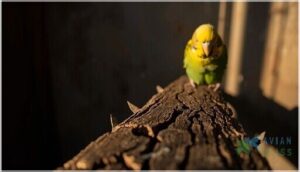
Wood decay starts with small warnings—cracks that catch your bird’s delicate toes or splinters that pierce soft foot pads with each hop. During perch inspection, run your fingers along the surface to detect:
- Sharp edges from cracked perch material that slice skin
- Protruding splinters snagging feet during movement
- Irregular beak marks creating uneven grip zones
- Moisture-filled fissures harboring bacteria
- Surface damage near joints signaling imminent breakage
These signs demand immediate perch replacement to protect bird health and foot health.
Discoloration and Mold Growth
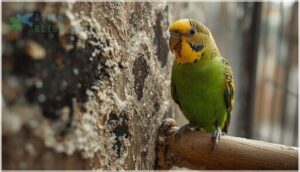
Beyond visible cracks, mold growth — signaled by discoloration patterns, such as black, green, or white patches with a fuzzy texture — threatens bird health.
Humidity above 60% accelerates decay on porous perch materials like natural wood.
Surface cleaning with vinegar or hydrogen peroxide slows the spread, but persistent stains demand perch replacement. Mold prevention through humidity control and weekly perch cleaning protects your bird’s respiratory system and foot pads from contamination during daily perch maintenance.
Foul Odors From The Perch
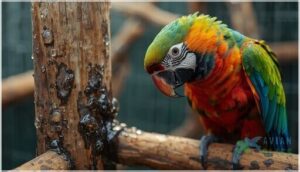
A musty smell rising from the perch signals bacterial buildup converting organic matter into trimethylamine — especially on wood surfaces holding moisture above 60% humidity.
Persistent odors after routine perch cleaning indicate mold intrusion or biofilm in cracks. Improve air quality through ventilation, reduce humidity control failures, and inspect perch materials for deep contamination that demands immediate replacement to protect bird health.
Changes in Perch Texture
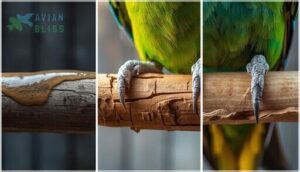
A perch’s texture changes over time, and those shifts matter more than you might think.
Your bird’s feet depend on the right amount of grip—not too smooth, not too rough—to stay healthy and comfortable.
Here are three texture changes that signal it’s time for a replacement.
Excessively Smooth or Slippery Surfaces
When your perch feels glossy under your fingers, it’s lost the surface texture your bird needs for proper foot grip. Over time, repeated perch cleaning with harsh chemicals or natural wear flattens wood grain and creates slippery zones where slip resistance drops dangerously.
If you notice your bird hesitating or slipping during landings, lightly roughen the surface with fine sandpaper or consider perch replacement to protect foot health.
Rough Patches That Could Injure Feet
Irregular grain, raised edges, or splintered zones create friction hotspots that rub foot pads raw with every step. When perch material degrades unevenly, surface irregularities concentrate pressure on small toe areas, risking cuts and abrasions that threaten bird comfort.
Run your hand along bird perches weekly—if you feel sharp ridges or rough patches, perch replacement protects foot health and prevents painful foot injuries.
Flaking or Peeling Material
Thin sheets that lift and shed during routine bird perch maintenance signal coating failure that puts your bird at risk. Material flaking creates jagged edges and ingestion hazards that threaten bird health if ignored.
Inspect painted or coated surfaces weekly for these warning signs:
- Visible patches where underlying layers show through protective finishes
- Sharp fragments that detach when you run your thumb across the perch coating
- Lighter or darker spots exposing base material beneath decorative treatments
- Edge lifting around joints where perch material separates from bonding agents
- Brittle sections that crumble under normal cleaning pressure
Active flaking demands immediate perch replacement—toxicity risks from ingested particles and foot injuries from exposed edges outweigh any delay. Surface durability fails when coatings peel, so swap compromised perches for safer alternatives that support proper perch material selection and flake prevention through quality construction.
Structural Issues and Instability
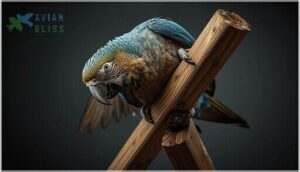
A perch that shifts or moves under your bird’s weight creates a dangerous environment where falls and foot injuries become inevitable.
Even minor instability compounds over time, threatening both your bird’s confidence and physical safety. Watch for these three structural red flags that demand immediate perch replacement.
Loose or Wobbly Perch Attachments
A stable perch isn’t just about comfort—it’s about preventing falls and foot injuries. Perch hardware that shifts under your bird’s weight signals immediate replacement. Loose mounting techniques let the perch rotate or slide, creating pressure sores when your bird compensates with uneven grip.
Inspect weekly—press each perch firmly to detect movement before your bird does. Tighten loose connections within 24 hours, or swap the entire perch if threads are damaged. Backing plates behind cage bars distribute load and stop wobble at the source. For bird perch maintenance that protects foot health, stability beats every other factor in perch material selection and bird cage setup.
| Attachment Problem | Safety Risk |
|---|---|
| Stripped screws | Sudden detachment during landing |
| Worn plastic anchors | Perch swings or drops under weight |
| Cross-threaded bolts | Uneven foot pressure, wobble prevention failure |
Rust on Metal Components
When moisture meets metal, corrosion risk skyrockets—and rusted hardware threatens bird safety and hygiene more than you’d expect. Reddish-brown flaking or visible pitting on metal perches signals metal deterioration that can injure delicate foot pads.
Replace affected metal perches immediately; light surface rust removal won’t restore structural integrity. For bird perch maintenance focused on bird health, rust prevention beats reactive perch replacement every time.
Warping or Bending of The Perch
A bent perch isn’t just ugly—it’s a setup for foot injuries and falls. Perch warping causes range from moisture absorption in wood to material fatigue in plastic exposed to heat. Watch for visible bowing, uneven mounting, or surface delamination that changes perch geometry.
- Warped sections create pressure hotspots leading to calluses
- Curved surfaces increase slip risk and reduce safe footing
- Bent perch edges pull away from mounting cups, creating wobble
Warped perch risks escalate quickly. Plastic bird perches usually warp after 6-12 months of constant exposure, while wooden perches bend faster in high-humidity climates. Bend prevention starts with proper perch selection—choose materials suited to your environment and inspect monthly. If you spot warping during routine checks, immediate perch replacement protects your bird’s feet from uneven grip and trapped toes.
Signs of Foot Problems in Your Bird
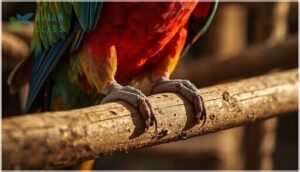
Your bird’s feet tell the story of perch quality better than any inspection can. When a perch fails to support proper foot health, you’ll notice warning signs on the skin, behavior changes that signal discomfort, or physical injuries that demand immediate attention.
Your bird’s feet reveal perch quality failures through visible skin damage, behavioral shifts, and physical injuries that demand immediate action
Watch for these three critical indicators that your bird needs a perch replacement now.
Red Patches or Shiny Skin on Foot Pads
When you notice red patches or shiny skin on your bird’s foot pads, you’re looking at early signs of skin inflammation—often linked to poor perch materials or improper perch selection.
These shiny areas signal that constant pressure from the same perch surface is irritating delicate foot tissue, compromising avian foot health. Swap out worn bird perches immediately to restore foot comfort and prevent progression to serious infection requiring perch replacement.
Sores, Scabs, or Open Wounds
If red patches progress, you’ll see sores, scabs, or open wounds—clear indicators of foot irritation demanding immediate perch replacement.
Scab formation over a wound suggests your bird’s body is fighting bacterial growth, but infected wounds may ooze discharge or smell foul. Practice avian first aid by cleaning minor wounds gently, then consult your vet to prevent wound infection from compromising avian foot health permanently.
Limping or Weight Shifting Behavior
When wounds persist, limping behavior often follows as your bird attempts to offload pressure from painful foot pads. Foot pain causes can include rough perches or prolonged contact on hard surfaces, triggering protective weight shift signs you shouldn’t ignore. Bird gait analysis reveals discomfort that demands immediate perch replacement to restore avian health and wellness.
- Lifting one foot for extended periods signals pressure-point pain from poor perch comfort factors
- Reduced hopping distance reflects reluctance to bear weight on an injured limb
- Vocalizations during perching may accompany foot health deterioration
- Fluffed feathers during weight shifting indicate your bird is conserving energy while uncomfortable
If limping behaviors persist beyond 48 hours, seek veterinary evaluation to prevent chronic foot damage from compromising your bird’s quality of life.
Incorrect Perch Size for Your Bird
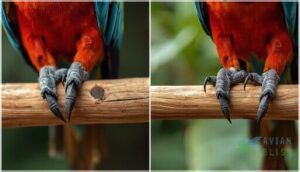
The wrong perch size creates constant stress on your bird’s feet, even when there’s no visible damage to the perch itself.
Your bird’s toes should wrap about 75% around the perch—not touching, not stretching flat. Here’s what happens when the fit isn’t right.
Toes Overlapping or Not Gripping Properly
When your bird’s toes slide over each other instead of gripping securely, perch ergonomics need immediate attention. Poor toe alignment signals a diameter mismatch—usually when the perch is too large for your bird’s foot anatomy.
You’ll notice reduced grip strength, abnormal bird posture during rest, and reluctance to perch comfortably. This compromises both foot health and overall avian health and wellness, making perch replacement essential.
Pressure Sores From Too-Large Perches
Oversized perch diameter forces your bird’s foot to flatten across the surface rather than wrapping securely, concentrating weight on a few small contact points. That sustained pressure restricts blood flow and triggers inflammation—red patches appear first, then shiny skin, and eventually open sores.
Proper perch size lets toes wrap three-quarters around, distributing load evenly and protecting foot health. For more details on the importance of perch variety and placement, consult expert avian care resources: perch variety and placement.
Foot Strain From Too-Small Perches
Inadequate perch diameter forces your bird’s toes to flex too tightly, straining tendons and fatiguing foot muscles during every climb. Small surfaces concentrate weight on tiny pad areas, limiting ankle rotation and reducing circulation—watch for frequent grip adjustments or compensatory weight shifts to one leg.
Proper perch size exercises foot anatomy naturally, while varied perch material and texture prevent localized pressure that undermines long-term foot health.
Switching to options that mimic natural branch perch benefits is essential for daily foot comfort and muscular conditioning.
Time-Based Replacement Indicators
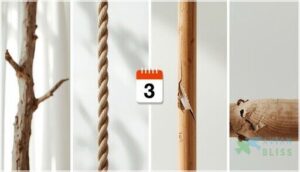
Even perches that look fine won’t last forever—material breakdown happens whether you see it or not.
Setting replacement schedules based on perch type helps you stay ahead of invisible wear that could compromise your bird’s foot health.
Here’s when different materials reach the end of their safe lifespan.
Natural Wood Perches Beyond 6-12 Months
Even high-quality natural wood perches hit a functional expiration point between 6 and 12 months, regardless of visible damage. Here’s why timeline matters for wood perch maintenance and bird foot health.
- Bacterial colonization deepens into porous grain even when surfaces look clean
- Structural integrity weakens from moisture cycles in your bird cage environment
- Natural oils evaporate, reducing antimicrobial properties inherent to fresh wood
- Microscopic fissures accumulate stress points that threaten stability
- Perch material selection should prioritize replacement over indefinite repair
Plastic Perches Older Than 6 Months
You should replace plastic perches every six months, even if they appear intact. Micro-scratches trap bacteria deep in the surface despite weekly perch sanitizing with mild soap.
Plastic deterioration from UV exposure or harsh cleaners creates slick spots that compromise bird footcare and increase fall risk. Inspect your bird cage monthly—discoloration, brittleness, or texture changes signal immediate replacement to protect avian health regardless of your cleaning routine.
Environmental Factors Accelerating Wear
Your bird’s environment determines how fast perches degrade. Humidity above 60% promotes mold growth within 48 hours, while temperature fluctuations cause micro-cracks through repeated expansion cycles.
UV damage fades and roughens wood surfaces in weeks. Air pollution corrodes metal cage accessories and softens finishes. Check rope perches monthly in high-moisture areas—cage maintenance intervals shrink when environmental stress accelerates material breakdown regardless of perch size.
When to Consult an Avian Veterinarian
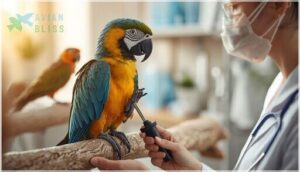
Sometimes the best move isn’t replacing the perch yourself—it’s picking up the phone. If your bird’s foot problems persist despite new perches, or you’re unsure whether you’ve chosen the right size and material, an avian veterinarian can provide clarity.
Here are three situations that warrant professional guidance.
Persistent Foot Health Issues
If your bird’s foot pain, toe injuries, or limping persists beyond a week despite replacing perches, schedule an avian exam. Chronic foot health problems often signal deeper issues.
Chronic foot health problems can manifest in various ways, including:
- Ongoing pressure sores that won’t heal indicate infection or pododermatitis
- Persistent leg strain suggests systemic joint inflammation
- Claw issues or overgrowth may stem from perch-related nutritional deficiencies
- Beak problems affecting balance require diagnostic imaging
- Abnormal bird behavior like refusing to perch signals undiagnosed pain
Uncertainty About Proper Perch Selection
Choosing the right perch can feel like working through a maze of diameter charts and material debates. When you’re unsure about Perch Material Options, Bird Species Compatibility, or whether your finch needs a different Perch size than your cockatiel, consult an avian veterinarian. We’ll assess Foot Health Considerations, recommend proper Perch Diameter Guidelines, and tailor Perch Selection and Placement to your bird’s unique anatomy and behavior patterns.
| Concern | What to Ask Your Vet | Why It Matters |
|---|---|---|
| Material confusion | “Which perch material suits my species?” | Different textures affect grip security and foot conditioning |
| Diameter uncertainty | “What diameter range is safe for my bird?” | Incorrect sizing causes pressure sores or cramped toes |
| Placement questions | “How should I arrange multiple perches?” | Strategic positioning prevents contamination and encourages exercise |
| Behavior changes | “Could perch choice explain my bird’s reluctance to roost?” | Avian Behavior Analysis links perching preferences to comfort and safety |
Signs of Pododermatitis or Infection
Beyond choosing wisely, watch for pododermatitis red flags that demand immediate veterinary intervention:
- Swelling or heat radiating from foot pads—inflammation spreads quickly in birds.
- Non-healing foot lesions or oozing sores that worsen despite improved perch hygiene.
- Behavioral changes like refusing to perch or constant beak adjustments while roosting.
- Feather issues around legs, signaling systemic infection affecting pet bird health.
Frequently Asked Questions (FAQs)
What are the signs of a sick parrot?
When your feathered companion isn’t quite itself, watch for fluffed feathers, respiratory issues like wheezing, digestive health changes, beak problems, unusual behavioral changes, and declining feather condition—all critical pet bird health indicators demanding immediate attention.
Can a perch be too big for a bird?
Yes, oversized perch diameter prevents your bird’s toes from gripping properly, causing pressure sores, foot strain, and balance issues.
Proper perch size allows toes to wrap about three-quarters around for secure grip strength and ideal bird comfort.
How often should I rearrange my birds perches?
Most bird owners rotate perches every 1 to 4 weeks to maintain environmental novelty and encourage exploration.
Shorter intervals help prevent boredom in intelligent species, while monthly rearrangements suit larger setups requiring consistent bird enrichment.
Can humidity levels damage perches faster than normal?
High moisture accelerates perch Materials wear—wood swells and cracks, metal rusts, plastic delaminates.
Humidity Effects above 60% fuel mold growth and shorten Deterioration Rates.
Moisture Control through proper ventilation extends perch life considerably.
What perch materials are safest for my bird?
Untreated hardwood branches like manzanita or elm offer the safest grip because their natural texture prevents slipping while exercising feet.
Avoid chemically treated plastic or rusted metal perches—both can damage delicate foot pads.
Should perches be placed above food and water?
Ideally, no—overhead placement creates contamination risks when droppings fall into dishes.
If cage design demands it, install shielding solutions like protective barriers while ensuring stability and foot health through textured perches that support behavioral impact and safe gripping.
How many perches does my bird actually need?
You need at least three perch diameters—ranging from 5 mm to 40 mm—to maintain foot health and guarantee bird comfort through varied perch placement and natural perch variety within your cage design.
Conclusion
The next time your bird shifts its weight repeatedly or hesitates before stepping onto its favorite spot, you’ll know what that subtle warning means. Recognizing these signs your bird needs a new perch before inflammation sets in separates proactive care from reactive treatment.
Your attentiveness to deteriorating surfaces, structural instability, and behavioral changes directly determines whether your bird enjoys comfortable mobility or endures preventable foot trauma. Don’t wait for visible sores—replace compromised perches immediately.