This site is supported by our readers. We may earn a commission, at no cost to you, if you purchase through links.

Your bird’s feet weren’t designed to grip a single wooden dowel for twelve hours a day, yet that’s exactly what happens in most cages equipped with factory-standard perches. In the wild, birds navigate an ever-changing landscape of branches that vary in diameter, texture, and angle with every hop, which keeps their feet flexible, their muscles engaged, and their minds alert to new possibilities.
When you provide multiple perches with different widths, materials, and locations throughout the cage, you’re not just adding décor—you’re preventing painful conditions like bumblefoot, arthritis, and pressure sores that develop when the same pressure points bear weight day after day. The difference between a monotonous perch setup and a thoughtfully varied one can determine whether your bird spends years standing comfortably or struggling with chronic foot problems that limit mobility and quality of life.
Table Of Contents
Key Takeaways
- Providing perches with varied diameters, textures, and materials prevents chronic foot conditions like bumblefoot, pressure sores, and arthritis by distributing weight across different pressure points rather than concentrating force on the same foot pads throughout the day.
- Multiple perch types—including natural wood, rope, concrete, and sand—serve distinct health functions: natural wood strengthens foot muscles through uneven grip surfaces, concrete and sand naturally file nails and beaks during daily movement, and rope perches deliver balance training while reducing pressure concentration.
- Strategic perch placement at different heights (with the highest positioned at least 60 cm for roosting) mimics wild branch-hopping behavior, encourages vertical movement and muscle engagement, and prevents food and water contamination when positioned away from feeding stations.
- Regular perch rotation every seven days combined with cleaning every one to three days maintains both environmental novelty for mental stimulation and hygiene standards that allow early detection of health issues through inspection during handling.
Why Multiple Perches Matter for Birds
Your bird’s feet aren’t designed to grip one smooth dowel all day, and that simple setup can lead to real problems down the line. In the wild, birds navigate different widths, angles, and textures, which keeps their feet healthy and their minds engaged.
If you’re noticing awkward posture, reluctance to perch, or flaky skin on their feet, those are clear signs your bird needs a new perch setup.
Offering multiple perches in your bird’s cage isn’t just nice to have—it’s essential for preventing injury, supporting natural behavior, and giving your bird the freedom to move comfortably.
Mimicking Natural Habitats
In the wild, birds navigate forest floors, natural terrain, and diverse wildlife habitats with ease, gripping branches of varying thickness and texture.
Your cage setup should mirror these bird sanctuaries through naturalistic cage design and environmental enrichment. Natural wood perches, irregular natural branch perches, and wildlife simulation elements recreate avian habitat enrichment, allowing your bird to experience the variety that wild populations encounter daily, fostering instinctive movement patterns and exploratory behaviors.
This approach reflects key ideas from biophilic and ecosystem-focused design, which highlight the value of harmonizing constructed environments with natural surroundings.
Supporting Physical and Mental Health
Beyond habitat mimicry, offering diverse perches delivers measurable gains in bird exercise and avian physical fitness, keeping leg muscles, feet, and core engaged through varied gripping postures. Mental stimulation follows naturally when your bird chooses among natural perching surfaces, reducing boredom and feather plucking.
Health monitoring becomes easier as you observe perch preferences, spotting early signs of discomfort or illness. The benefits of diverse perches include:
- Encourages active movement and strengthens foot muscles
- Reduces stress and boredom through enriched choice
- Promotes avian foot health and joint flexibility
- Simplifies perch safety checks and behavior tracking
Preventing Foot and Joint Problems
Those fitness gains translate directly into foot health—without variety, your bird risks bumblefoot, pressure sores, and joint stiffness from gripping a single diameter all day.
Natural wood perches with varied thicknesses shift pressure points across different muscles and joints, preventing chronic foot injuries and supporting long-term avian foot health through daily movement patterns that mirror wild branch-hopping.
Health Benefits of Perch Variety
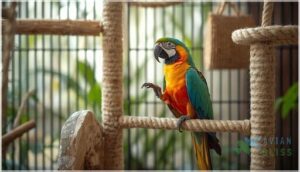
When you give your bird multiple perches with different diameters, textures, and materials, you’re doing more than just decorating the cage—you’re actively protecting their long-term health. The variety works much like cross-training does for human athletes, engaging different muscle groups and preventing repetitive strain injuries that can lead to serious problems.
Just like replacing worn-out athletic gear, knowing when to swap out old perches ensures your bird always has safe, supportive surfaces that won’t compromise their foot health.
Multiple perches with varied textures and diameters protect your bird’s long-term health like cross-training protects an athlete’s body
Let’s look at three specific ways perch diversity keeps your bird healthier and more comfortable.
Promoting Strong Feet and Muscles
Think of your bird’s feet like your own: they need varied workouts to stay resilient. Perch variety drives muscle strengthening across intrinsic foot muscles, improving grip, balance, and overall bird mobility.
Natural wood perches with different diameters challenge your bird’s feet to adapt, flex, and strengthen with each shift in position, while diverse textures boost proprioception and support avian foot health through daily, natural movement patterns.
Reducing Risk of Bumblefoot and Sores
Pressure points are bumblefoot’s breeding ground, and single-perch setups concentrate force on the same foot pads hour after hour, creating ulcerations and bacterial invasion sites that demand avian podiatry intervention.
Rotating perch material safety choices—soft rope, textured wood, and varied diameters—spreads weight across different surfaces, dramatically lowering bumblefoot prevention challenges while supporting thorough foot health through simple, strategic foot care tips and thoughtful foot injury treatment pathways.
Supporting Nail and Beak Maintenance
Natural beak and nail maintenance begins with bird perch selection and placement that includes abrasive surfaces like mineral and natural wooden perches, which file nails and shape beaks during daily movement, reducing grooming intervention.
Perch textures ranging from rough bark to cement encourage natural beak trimming and nail filing, supporting avian foot health while minimizing the need for stressful bird grooming sessions or professional beak nail wear correction.
Regular health checks by veterinarians are also important for safe bird nail trimming.
Types of Perches and Their Advantages
Not all perches serve the same purpose, and choosing the right mix can make a real difference in your bird’s daily comfort and long-term health.
Each material and design offers specific advantages, from keeping nails naturally trimmed to providing soft surfaces that reduce pressure on feet. Let’s break down the main types you’ll encounter and what makes each one worth considering.
Natural Wood Vs. Synthetic Perches
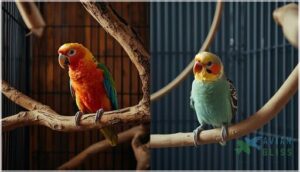
Choosing between natural wood and synthetic perches affects your bird’s well-being in meaningful ways, so let’s break down what each brings to the cage.
Natural wood, especially dense hardwoods like manzanita, delivers uneven wood grain benefits that strengthen foot muscles, promote natural aesthetics, and offer eco-friendly options without chemical residues, ensuring perch material safety through organic texture and durability comparison advantages over plastic perches.
Rope, Concrete, and Sand Perches
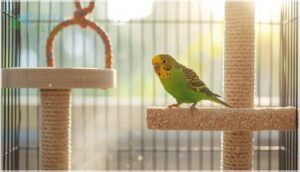
Beyond wood, rope grip benefits, concrete abrasion advantages, and sand texture features expand your bird’s perch diversity in ways that support foot health and natural behaviors.
Rope perches wrap around shapes to create varied surfaces for toe exercise, concrete perches file nails through rigid wear, and sand perches offer gentle trimming through abrasive contact, so rotating these multiple bird perches prevents pressure sores while distributing grip stress across different foot areas.
Swinging and Flat Perch Options
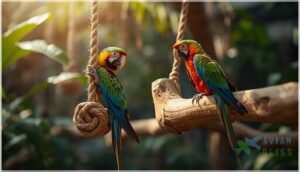
Swinging perches deliver balance training through gentle motion that engages foot muscles and coordination, while flat natural wooden perches offer broad contact surfaces that distribute weight evenly to prevent pressure points.
So combining both perch material types gives your bird essential foot exercise and bird comfort through varied perch texture and adaptive perch placement strategies.
Placement and Setup for Maximum Benefit
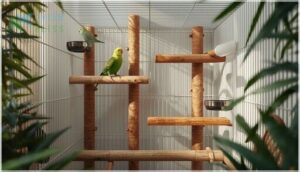
You’ve chosen the right perches, but where you put them makes all the difference in your bird’s daily life.
Strategic placement turns a simple cage into a vibrant environment that fosters natural movement, prevents health issues, and keeps droppings away from food and water.
Let’s break down the three key principles that’ll help you set up perches the right way.
Positioning Perches at Different Heights
Think of perch height variations as a vertical playground that leverages your bird’s natural climbing behaviors and avian roosting preferences.
Proper cage setup includes positioning multiple bird perches at staggered heights, with the highest natural wooden perches placed at least 60 cm above ground for nighttime rest, while mid-level perches around 30-45 cm below encourage height-based exercise and vertical space management throughout the day.
Avoiding Food and Water Contamination
Once you’ve got your perches at the right heights, don’t overlook hygiene practices that protect bird health. Never position perches directly above food or water bowls, since droppings can introduce bacterial control issues and compromise food safety.
A smart cage setup elevates water dishes away from high-traffic perches, aids water purification efforts through daily replacement, and includes regular cage cleaning to maintain avian foot health.
Ensuring Safe and Secure Installation
After addressing hygiene, your attention shifts to structural integrity, because even the best perch placement fails if installations collapse or wobble during use. Secure fastening starts with identifying anchor points in wall studs or ceiling joists, then selecting mounting hardware rated for indoor humidity and corrosion resistance.
Safety clearance and environmental protection work together in successful cage setup:
- Mount perches at least 12 inches from walls to allow wing movement
- Keep natural wood perches and cage accessories away from electrical cords
- Use stainless steel bolts longer than 1.5 inches for solid bite
- Seal mounting holes to prevent moisture damage and rot
- Inspect weekly for loose hardware or cracks exceeding 1/4 inch
Your bird cage design benefits from thread-locking compound on screws, which reduces loosening from pecking vibrations, and rounded surfaces that minimize splinter risk during daily activity.
Tips for Choosing and Maintaining Perches
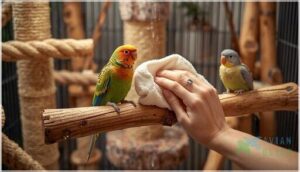
You can’t just toss any perch size into your bird’s cage and hope for the best—choosing the right ones requires attention to size, material, and your bird’s specific needs.
Beyond selection, maintaining those perches through regular cleaning and rotation keeps your feathered companion healthy and comfortable. Here’s what you need to know about picking perches that work and keeping them in top condition.
Selecting The Right Size and Texture
You’ll want to choose perch diameter options ranging from 1 cm to 2.5 cm to encourage healthy grip surfaces and support natural foot comfort through size variety. Natural wood perches with slightly textured surfaces provide the best combination of traction and cushioning for avian foot care, while smooth synthetic materials can work if they’re certified non-toxic and allow your bird’s feet to flex naturally during perch placement.
| Perch Feature | Recommended Choice |
|---|---|
| Diameter Range | 1 cm to 2.5 cm for size variety |
| Surface Texture | Smooth wood with slight natural ridges |
| Material Type | Hardwood or non-toxic sealed synthetic |
| Edge Design | Rounded to prevent calluses |
| Grip Quality | Textured but not abrasive for bird feet |
Rotating and Replacing Perches Regularly
Once you’ve selected the right size and texture, perch rotation schedules become your secret weapon for keeping things fresh and your bird’s feet in top shape. Swapping natural wood perches weekly prevents overuse injuries, stimulates bird behavior analysis through environmental changes, and promotes ongoing foot health monitoring as your feathered friend gets used to new cage perch variety.
- Rotate at least two perches every seven days to maintain novelty
- Change perch placement heights by 8 to 12 inches for balance training
- Replace rope perches every 4 to 6 weeks before fraying occurs
- Track rotation frequency optimization by noting which bird perches your companion favors most
Cleaning and Inspecting for Bird Health
Vigilance during perch sanitation transforms routine cage hygiene into a powerful health check that protects avian foot health and overall bird comfort and wellbeing. Scrub natural perching solutions for birds with warm water every one to three days, inspect for cracks or splinters, and examine your companion’s beak maintenance needs, feather inspection results, and droppings during handling to catch early signs of illness.
| Cleaning Task | Frequency |
|---|---|
| Water and food dishes | Daily |
| Perches and cage bars | Every 1-3 days |
| Full cage disinfection | Weekly |
Frequently Asked Questions (FAQs)
How many perches should a bird have?
Think of perch quantity like branches in a tree—your bird needs at least 2 to 5 perches in a standard cage layout, varying in diameter and texture, to support foot health and natural movement.
Why should birds have a variety of perches in their cage?
Cage perch variety prevents foot problems by spreading pressure across different surfaces, strengthens muscles through natural wooden perches and varied diameters.
It promotes bird exercise and avian comfort while encouraging your bird to explore multiple perch placement options daily.
How many perches does my bird need?
Your bird needs three to four perches of varying diameters to promote foot health, support natural movement, and prevent pressure sores.
With larger parrots benefiting from four to six well-placed cage perches.
Can perches help with bird behavior issues?
Ever wonder why your feathered companion seems restless? Strategic perch placement offers mental stimulation for birds, helping reduce aggression, combat boredom, and lessen fearfulness by encouraging natural avian behavior and promoting foot health simultaneously.
Are heated perches safe for birds?
Heated perches carry electrical hazards and burn risks if temperature controls fail, so you should prioritize ambient warmth and natural perches instead, keeping any heated option as a secondary choice with vigilant thermal safety monitoring.
What perch diameter is best for parrots?
Your parrot’s foot shouldn’t stretch like a telegraph wire—choose perches where the toes wrap about two-thirds around, usually ranging from half an inch for budgies to one and a half inches for larger species.
Do outdoor aviaries need different perch types?
Yes, outdoor aviaries require weather resistant perches like coated synthetic options and sealed natural wood, plus diverse aviary perch layout strategies that accommodate exposure, prevent slipping on damp days, and support avian enrichment through custom perch designs.
Conclusion
What if the simplest change you could make today prevented years of long-term suffering tomorrow? The benefits of multiple perches for birds extend far beyond convenience—they protect your companion from debilitating foot conditions, strengthen muscles through natural movement, and honor the active climbing instincts evolution built into every species.
A varied perch setup isn’t optional enrichment; it’s the foundation of long-term mobility, comfort, and the kind of cage environment that fosters thriving rather than mere survival.