This site is supported by our readers. We may earn a commission, at no cost to you, if you purchase through links.
A single northern red mite can drain approximately 0.04 milliliters of blood from its host—a trivial amount until you realize that severe infestations involve thousands of these parasites feeding nightly, potentially extracting 5-10% of a bird’s total blood volume within a week.
The impact of parasites on bird health extends far beyond simple discomfort, triggering cascading physiological failures that compromise immune function, reproductive success, and survival rates across both captive and wild populations. Understanding how ectoparasites like mites, lice, and fleas—alongside internal invaders such as intestinal worms and blood protozoa—compromise avian health requires examining the mechanisms through which these organisms exploit their hosts, the diagnostic tools that reveal hidden infections, and evidence-based prevention strategies that protect your birds from these persistent biological threats.
Table Of Contents
- Key Takeaways
- Types of Parasites Affecting Birds
- How Parasites Impact Bird Health
- Identifying Parasite Infections in Birds
- Factors Influencing Parasite Prevalence
- Disease Transmission and Population Effects
- Parasite Prevention and Control Strategies
- Conservation and Research Implications
- Frequently Asked Questions (FAQs)
- What do parasites do to birds?
- How do parasites affect the health of animals?
- What are the harmful effects of parasites?
- Can parasites affect bird migration patterns or timing?
- Do urban birds face different parasite challenges?
- How do parasites impact bird vocalization and singing?
- Are certain age groups more vulnerable to parasites?
- Can birds develop immunity to common parasite species?
- Conclusion
Key Takeaways
- Parasites compromise bird health through multiple mechanisms—blood-feeding ectoparasites like northern red mites can extract 5-10% of total blood volume weekly during severe infestations, while endoparasites damage intestinal tissues and trigger cascading physiological failures affecting immune function, reproduction, and survival rates.
- Early detection requires combining visual inspection for external signs (feather damage, skin lesions, behavioral changes like lethargy) with diagnostic methods including fecal exams and skin scrapings, since birds instinctively mask illness until infections become severe.
- Prevention strategies must address multiple transmission pathways—direct contact between birds, contaminated environmental surfaces, and vector-borne spread—through rigorous hygiene protocols, 21-30 day quarantine periods for new birds, and targeted environmental modifications that disrupt parasite life cycles.
- Climate change intensifies parasite threats by extending vector activity seasons and enabling parasites to survive in previously inhospitable regions, creating emerging disease risks that demand integrated monitoring combining veterinary surveillance, citizen science reporting, and cross-sector collaboration linking wildlife management to public health preparedness.
Types of Parasites Affecting Birds
Birds face threats from parasites that live both on and inside their bodies—each type bringing its own set of challenges to avian health. You’ll encounter ectoparasites like mites and lice crawling across feathers and skin, alongside endoparasites such as worms and protozoa that colonize internal organs.
Recognizing symptoms early is essential, since birds often mask illness until infestations become severe—parasitic diseases in pet birds require vigilant monitoring and prompt intervention.
Understanding how these organisms operate and spread between hosts gives you the foundation to recognize, prevent, and manage infestations effectively.
Ectoparasites (mites, Lice, Fleas)
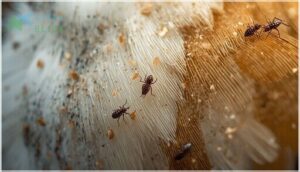
Ectoparasites—mites, lice, and fleas—are external parasites you’ll find on feathers, skin, and in downy areas of infested birds.
Mites feed on keratin debris and oils, while lice consume feather material and skin fragments; fleas, like sticktight fleas, draw blood.
Heavy mite infestations appear as fine moving specks along plumage, lice cause feather matting, and flea dirt resembles pepper-like debris.
Understanding the distinction between arachnids and insects is essential for proper identification, as detailed in this veterinary ectoparasite overview.
Endoparasites (worms, Protozoa)
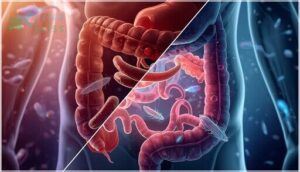
While external pests crawl across feathers, endoparasites live inside your bird—targeting the gastrointestinal tract and other internal tissues.
Gastrointestinal worms such as roundworms (Ascaridia galli), hairworms, and tapeworms attach to intestinal walls, causing intestinal damage, malabsorption, and weight loss. Protozoa types like coccidia, Giardia, and Cryptosporidium replicate within gut cells, producing diarrhea and dehydration—particularly devastating in young birds with immature immune systems.
Understanding the risks of intestinal parasite infections can help bird owners recognize and prevent health problems early.
Parasite Life Cycles and Transmission
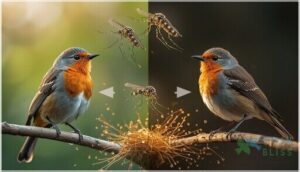
Knowing how parasites invade—and spread—between birds gives you real control over infection risk. Some avian parasites complete their life cycle stages entirely within one host, while others require intermediate vectors like mosquitoes or biting flies to enable host switching.
Transmission dynamics vary:
- Direct contact between infected and susceptible birds
- Ingestion of contaminated water, food, or nesting material
- Vector ecology: bloodsucking insects transfer pathogens during feeding
- Environmental stages allowing parasite adaptation outside the host
Understanding these pathways helps you disrupt parasite transmission before ectoparasites and endoparasites establish damaging infections.
How Parasites Impact Bird Health

Parasites don’t just irritate birds—they compromise nearly every aspect of their physical health, behavior, and long-term survival.
Parasites compromise every aspect of a bird’s physical health, behavior, and long-term survival
From blood loss and damaged plumage to altered feeding patterns and reproductive failure, these organisms create cascading effects throughout a bird’s body.
Understanding these impacts helps you recognize when intervention becomes necessary and why prevention matters so much.
Physical Effects (anemia, Feather Damage)
When parasite infestations reach critical levels, you’ll notice two primary physical consequences: anemia and feather damage. Blood-feeding mites, lice, and internal worms deplete red blood cells—leading to pale membranes, rapid breathing, and weakened flight capacity. Meanwhile, ectoparasites physically damage plumage, causing dull feathers, brittle shafts, and compromised insulation that disrupts thermoregulation and waterproofing.
| Health Consequence | Observable Signs | Underlying Mechanism |
|---|---|---|
| Anemia Symptoms | Pale mucous membranes, shortness of breath | Reduced oxygen delivery to tissues |
| Feather Loss | Sparse plumage, broken feather shafts | Direct ectoparasite feeding damage |
| Blood Disorders | Increased heart rate, weakness | Depleted red blood cell numbers |
| Physical Decline | Inability to perch, irregular molt cycles | Systemic stress and nutritional deficits |
Behavioral Changes (lethargy, Appetite Loss)
Behavioral shifts reveal the hidden toll parasites take on your bird’s daily life. You might see extended resting periods, slower wing flaps, and reluctance to interact with companions—clear lethargy signs that signal systemic stress.
Weak or unsteady gripping on perches designed for parakeets can also indicate that parasites are draining your bird’s strength and coordination.
Appetite loss follows when gastrointestinal inflammation or metabolic disturbance disrupts feeding motivation, manifesting as:
- Rejected favorite treats and minimal seed consumption
- Smaller, less frequent droppings with altered consistency
- Restlessness, tail bobbing, or shallow breathing during meals
These behavioral changes demand prompt veterinary evaluation for effective bird parasite awareness and parasite prevention.
Reproductive and Survival Consequences
The reproductive price tag of infection runs steep—you’ll see laying rates plummet by up to 40 percent during breeding season, egg size shrink by 12 percent, and fledging delays stretch three extra days.
Chick mortality climbs as growth rates drop 15 percent and hatching success falls 8 to 12 percent, driving population decline that threatens survival rates and breeding success across affected populations.
Identifying Parasite Infections in Birds
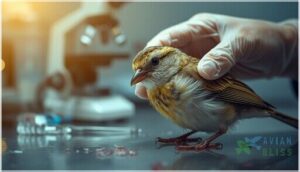
Spotting a parasite problem early can make all the difference in a bird’s recovery and long-term health.
You’ll need to combine careful observation with practical diagnostic techniques—some you can do in the field, others requiring lab equipment. Let’s walk through the signs to watch for and the methods that confirm what’s really going on.
Visual Signs and Symptoms
You’ll notice parasite symptoms before your bird tells you something’s wrong. Eye irritation—bloodshot, watery, or crusty—often signals mites along the lash line. Visual inspection reveals feather loss, dull plumage, and red skin lesions where external parasites feed.
Watch for beak discharge, excessive preening, and bare patches. Internal parasites show through weight loss and lethargy, while feather damage points to ectoparasites disrupting your bird’s health.
Diagnostic Methods (fecal Exams, Skin Scraping)
When visual inspection isn’t enough, you’ll need diagnostic methods to confirm what’s plaguing your bird.
Fecal exam techniques detect intestinal parasites by concentrating eggs, cysts, or larvae through flotation and sedimentation—laboratory testing that reveals hidden endoparasites.
Skin scraping methods use a sterile blade with mineral oil to collect superficial cells for microscopic analysis, exposing mites and fungal elements that parasite detection through observation alone can’t identify.
Laboratory and Microscopic Analysis
Once your samples reach the lab, microscope techniques transform invisible threats into identifiable adversaries—microscopic diagnosis that pinpoints exactly what you’re dealing with.
Laboratory testing follows precise protocols:
- Sample preparation fixes tissue in formalin and fecal concentrates through flotation, preserving parasite structures at 100–400× magnification for accurate parasite identification
- Staining methods like Wright-Giemsa highlight protozoa and blood parasites invisible in standard brightfield microscopy
- Quantitative egg counts measure parasite load severity, correlating clinical signs with treatment urgency
- Quality controls using dual-technician review prevent misidentification and confirm diagnostic methods accuracy
Factors Influencing Parasite Prevalence
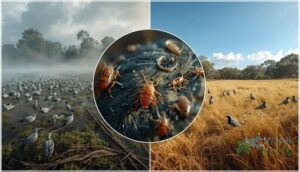
Parasite loads in bird populations don’t occur randomly—they’re shaped by a complex web of environmental factors that you need to understand if you’re serious about protecting avian health. Some species face higher risks due to their social structures or immune profiles.
While climate and habitat conditions create hotspots where parasites thrive, it’s crucial to consider these elements. Let’s examine the three primary factors that determine when and where these infestations take hold.
Environmental and Climatic Conditions
Climate change effects on bird parasites show up in surprising ways—temperature effects and humidity impact determine how long mites and lice survive off their hosts.
When precipitation role shifts, you’ll see altered parasite life cycles and transmission rates.
Drought consequences concentrate birds at shrinking water sources, intensifying host-parasite interactions.
Wind influence and seasonal temperature swings shape prevalence patterns you can’t ignore.
Bird Species and Social Behavior
Beyond weather patterns, the way birds live together profoundly shapes their parasite load. Flock dynamics and social interactions create transmission highways—cooperative breeding clusters and group foraging increase contact rates. Social learning means younger birds mimic older flock members, inheriting not just survival skills but exposure risks.
Here’s what you need to watch:
- Dense colonies intensify ectoparasite spread through shared nesting sites and preening contact
- Bird communication calls attract mixed flocks, concentrating diverse host species and their parasites
- Territorial species show lower infestation rates compared to gregarious flocks in avian ecology studies
Habitat and Seasonal Variation
Where birds spend their time—and when—determines parasite exposure more than you’d expect. Habitat fragmentation compresses host densities, accelerating parasite transmission during seasonal migration when stopovers overlap.
Nesting ecology shifts with climate shifts, altering food web dynamics and disease windows. Spring wetlands harbor different threats than autumn woodlands, directly impacting bird health, avian ecology, and broader wildlife conservation efforts across fragmented ecosystems.
Disease Transmission and Population Effects

Parasites don’t just harm individual birds—they can trigger cascading effects across entire populations and ecosystems.
Understanding how these organisms spread between hosts, both through direct contact and environmental pathways, reveals why some flocks experience devastating outbreaks while others remain relatively unscathed.
Let’s examine the transmission routes parasites use, the population-level consequences you’ll observe in wild birds, and how localized infections can escalate into widespread disease events.
Direct and Indirect Parasite Transmission
When examining transmission dynamics, you’ll find parasites spread through both direct and indirect routes—each pathway shaped by host-parasite interactions and vector ecology. Direct contact during mating or roosting transfers mites and lice, while indirect avian disease transmission occurs via contaminated water, feed, or environmental reservoirs.
Cross species and host switching increase parasite load risks, especially where mixed flocks share vectors:
- Biting, pecking, or social grooming transfers ectoparasites between flock members
- Contaminated feed and water introduce digestive tract parasites through ingestion
- Blood-sucking insects act as vectors, carrying parasites from infected to healthy birds
- Parasite eggs survive in litter, bedding, or soil, enabling environmental pickup
- Vertical transmission passes infections from parent birds to offspring via eggs
Impact on Wild Bird Populations
At the population level, parasite-driven declines reshape community dynamics—you’ll see localized crashes, skewed age structures, and reduced nest success rippling through generations.
Habitat fragmentation concentrates stressed wild birds, amplifying transmission and complicating conservation efforts. Bird migration routes expose flocks to high-risk zones, while parasite ecology interacts with climate shifts, threatening avian ecology and demanding proactive wildlife conservation and parasite control interventions.
Parasite-driven Disease Outbreaks
Outbreaks ignite when overdispersion—where a few heavily infected birds drive most parasite transmission—combines with dense roosting aggregations and seasonal warming.
You’ll witness rapid disease ecology shifts as vector species accelerate host-parasite spread across flocks that never directly interact.
Epidemiology studies reveal that targeted disease management, including enhanced parasite prevention during high-risk periods, disrupts outbreak patterns and protects vulnerable avian disease hotspots before population-level impacts cascade.
Parasite Prevention and Control Strategies
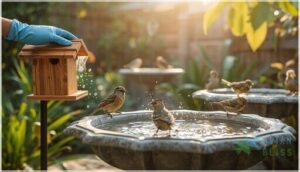
You don’t have to sit back and wait for parasites to take hold—there are practical steps you can take to protect the birds in your care or around your property. From basic sanitation to strategic environmental tweaks, effective prevention comes down to disrupting the parasite life cycle before it gains momentum.
Let’s walk through four key approaches that can substantially reduce your birds’ parasite risk.
Hygiene and Enclosure Management
You can’t fight parasites without good sanitation protocols—it’s the foundation of effective parasite prevention. Proper enclosure design with smooth, non-porous surfaces makes regular cleaning straightforward, while adequate ventilation systems reduce humidity that mites love.
Here’s your action plan for bird cage hygiene:
- Daily spot cleaning of droppings and food waste management
- Weekly deep cleaning with bird-safe disinfectants
- Monthly inspections of nest boxes and perches
Consistent cleaning schedules lower surface contamination by up to 70 percent.
Quarantine Procedures for New Birds
Before adding any new bird to your flock, implementing strict quarantine procedures protects your existing population from parasites and disease. You’ll need a biosecurity-focused quarantine setup that isolates newcomers for 21 to 30 days—giving hidden infections time to surface before introduction protocols begin.
The quarantine process can be broken down into several phases, which are outlined in the following table:
| Quarantine Phase | Duration | Key Actions |
|---|---|---|
| Initial Isolation | Days 1–7 | Bird isolation in dedicated space 10+ meters away; veterinary health screening within 7 days; fecal testing for worms and protozoa |
| Observation Period | Days 8–21 | Daily monitoring of droppings, breathing, feather condition; weekly weight checks; maintain separate clothing and feeding equipment |
| Pre-Introduction | Days 22–30 | Visual contact without direct interaction; final vet clearance; gradual scent and sight exchange through partitioned spaces |
| Health Documentation | Throughout | Log arrival date, symptoms, test results; photograph plumage weekly; share updates with avian veterinarian |
| Biosecurity Measures | Ongoing | Sanitize all utensils after each use; store quarantine food separately; wash hands and change footwear between areas. |
This systematic approach to avian health reduces parasite transmission risk and catches problems early—protecting both newcomers and your established birds.
Use of Insecticides and Natural Deterrents
When ectoparasites overwhelm bird hygiene practices, you’ll need targeted insecticides or natural repellents—but selecting bird-friendly options requires understanding chemical controls versus organic solutions. Consider these ectoparasite management approaches for effective pest control for birds:
- Pyrethroid-based products disrupt insect nervous systems with lower avian toxicity
- Neem oil deters pests without immediate chemical risk at label rates
- Diatomaceous earth abrades parasite cuticles through mechanical action
- Rotation prevents insecticide resistance by varying modes of action
Target surfaces like perches and nest boxes rather than direct bird contact for safer parasite prevention.
Environmental Modifications
Habitat design shapes parasite loads more than you might expect—strategic environmental factors reduce ectoparasite survival while supporting bird health and hygiene. Consider these modifications for effective parasite prevention:
| Modification | Parasite Prevention Benefit |
|---|---|
| Feeder Placement | Spacing reduces crowding and transmission |
| Nesting Boxes | Removable floors enable thorough cleaning |
| Aviary Ventilation | Air circulation decreases humidity and fungal growth |
Proper bird baths with frequent water changes and strategic habitat design maintain ecosystem health while limiting parasite persistence.
Conservation and Research Implications

Understanding bird parasites isn’t just about treating sick birds—it’s about protecting entire populations and ecosystems from collapse.
Researchers and conservationists track where parasites thrive, how climate shifts exacerbate threats, and what role you can play in safeguarding avian health. Here’s what matters most in the bigger picture of bird parasite management.
Monitoring Parasite Hotspots
You’ll want to know where parasite transmission concentrates—spatial mapping and hotspot prediction tools now identify high-risk zones before outbreaks spread.
Sentinel bird surveillance at key sites tracks avian health and disease in real time, while migration patterns reveal how lineages move between continents.
Risk assessment frameworks combining parasite life cycles and transmission data help you prioritize monitoring efforts where parasite hotspots threaten vulnerable populations most.
Climate Change and Emerging Threats
Climate change accelerates parasite transmission by extending vector activity—warmer winters let ticks and mosquitoes survive in temperate zones, exposing your backyard birds to avian malaria and other emerging diseases.
Thermal stress weakens immune defenses precisely when vector ecology shifts. You’re watching ecosystem balance unravel as parasite adaptation outpaces host resilience, raising risks of avian disease outbreaks and potential zoonotic diseases spillover.
Role of Veterinary Care and Public Involvement
Veterinary guidance can’t stand alone—you need public awareness to close detection gaps and protect bird sanctuaries from parasite-driven population crashes. One Health initiatives link avian disease surveillance to zoonotic risks, so community outreach becomes your first line of defense.
- Diagnostic data from veterinary care informs regional parasite control strategies
- Citizen science projects accelerate identification of bird health anomalies
- Cross-sector collaboration bridges wildlife management and public health preparedness
Frequently Asked Questions (FAQs)
What do parasites do to birds?
Ironically, these tiny hitchhikers wield enormous power—parasites drain blood, damage feathers, steal nutrients, and compromise immune systems, transforming vibrant birds into lethargic shadows struggling with anemia, infections, and plummeting survival odds.
How do parasites affect the health of animals?
Parasites steal nutrients, trigger anemia through blood loss, and compromise the animal immune response—weakening hosts systemically.
Parasite host interaction damages tissues, disrupts digestion, and elevates disease susceptibility, ultimately reducing survival and reproductive success across wildlife populations.
What are the harmful effects of parasites?
When parasite infestations take hold, you’ll see nutrient deficiency, organ damage, and immune suppression that weaken your birds—external parasites cause feather loss while internal ones trigger anemia, raising mortality rates substantially.
Can parasites affect bird migration patterns or timing?
Yes—parasite load disrupts migration timing and stopover ecology in migratory birds.
Infections delay departure, slow fueling strategies, and prolong rest periods, creating timing shifts that affect your birds’ journey success and survival.
Do urban birds face different parasite challenges?
Ever wondered why city pigeons look scruffier than their countryside cousins? Urban birds face intense parasite pressure—crowding at feeders, pollution-weakened immunity, and heat islands extend transmission seasons, creating unique challenges for wild bird health in fragmented habitats.
How do parasites impact bird vocalization and singing?
When you’re listening to a songbird, you’re hearing its health status—parasite load directly weakens vocal performance, reducing song complexity and intensity through anemia, neurological effects, and chronic stress that disrupts normal bird behavior.
Are certain age groups more vulnerable to parasites?
Like armor forming, plate by plate, bird immune system development determines who takes the hardest hits—young and aging individuals face higher parasite infestations than prime adults, creating distinct vulnerable life stages in host parasite interaction.
Can birds develop immunity to common parasite species?
Your backyard visitors can absolutely develop immunity to parasites. Birds mount antibody-mediated immune responses after exposure, building resistance that reduces future parasite loads—though tolerance strategies and nutritional status substantially influence how effectively they defend themselves.
Conclusion
An ounce of prevention is worth a pound of cure—particularly when that cure involves treating anemia, feather loss, and immune collapse in birds already compromised by parasitic assault. The impact of parasites on bird health demands vigilance: routine fecal screening, quarantine protocols for new arrivals, and environmental management that disrupts transmission cycles.
You can’t eliminate every ectoparasite or intestinal worm from your birds’ world, but proactive monitoring transforms parasitism from a catastrophic threat into a manageable challenge.
- https://www.bing.com/ck/a?!&&p=890f22149a6eb4ef2bc8714e792437847ae8fffab620421be437124d59f902b3JmltdHM9MTc2NjI3NTIwMA&ptn=3&ver=2&hsh=4&fclid=1779d011-b739-6108-005a-c6bcb653603b&psq=Do+pet+birds+have+parasites&u=a1aHR0cHM6Ly93d3cubWVyY2t2ZXRtYW51YWwuY29tL2V4b3RpYy1hbmQtbGFib3JhdG9yeS1hbmltYWxzL3BldC1iaXJkcy9wYXJhc2l0aWMtZGlzZWFzZXMtb2YtcGV0LWJpcmRz
- https://pmc.ncbi.nlm.nih.gov/articles/PMC3049032/
- https://pubmed.ncbi.nlm.nih.gov/11797805/
- https://ecology.uga.edu/study-shows-hotspots-for-avian-disease-connected-by-bird-migration/
- https://royalsocietypublishing.org/rsif/article/22/232/20250430/356295/Urban-environmental-drivers-of-eukaryotic